9 rare-earth-free motor technologies to watch 2027

Western carmakers and their suppliers are designing the rare-earth magnet out of the electric motor. Chinese companies are making the magnet cheaper by reducing rare earths, replacing them with ferrite, and recycling them. Chinese carmakers keep building conventional magnet motors. That is the split in 2,154 patent families on rare-earth-free and reduced-rare-earth motors first filed since January 2024.
In 2025, Chinese export controls on heavy rare earths and magnets showed how quickly a magnet shortage reaches the assembly line. Ford stopped Explorer production in Chicago for lack of magnets. On the ITONICS automotive trend radar, rare-earth-free traction motors are rated a high-impact trend for the next two to four years, with optionality as the winning strategy: platforms that can switch motor designs or magnet sources.
For this Prism Technology Watch, ITONICS screened 2,154 patent families from eight searches and kept 895 that avoid or reduce rare earths in an electric machine or its magnets. The nine technologies to watch in 2027 are listed in Exhibit 1, grouped by what they do with the magnet.
| Technology | Families | What it cuts | Who is building it |
| 1. Wound rotors built for traction duty | 179 | The rotor magnet, replaced by a copper field winding | BMW, Mahle, Denso, Volkswagen, Valeo |
| 2. Contactless rotor excitation | 54 | Brushes and slip rings that wear | ZF, Schaeffler, Mahle, Volkswagen, Hyundai with Chalmers |
| 3. Traction-grade slip rings | 30 | Parts and wear in the brush system | Schaeffler, BMW, GM, Renault (Ampere) |
| 4. Heavy-rare-earth-lean NdFeB magnets | 65 | Dysprosium and terbium in the magnet | TDK, Zhejiang Sheensen, Guangxi Baoci, AT&M, Hyundai |
| 5. Cerium and lanthanum substitution | 55 | Part of the neodymium and praseodymium | Beijing Zhong Ke San Huan, Ningbo Jinlun, Anhui One Magnet |
| 6. Magnet-lean rotor designs | 20 | Rare-earth magnet mass per rotor | Li Auto, Lucid, Schaeffler, Vitesco, Dongfeng |
| 7. Ferrite and iron-nitride magnets | 86 | Rare earths in the magnet altogether | Sinosteel, BGRIMM, DMEGC, Niron Magnetics, ABB |
| 8. Magnet-to-magnet recycling | 48 | Newly mined rare earths in magnet production | University of Science and Technology Beijing, Ganjiang Innovation Institute (CAS), Beijing Jingci |
| 9. Rare-earth recovery from magnet scrap | 80 | Rare earths lost in scrap, sludge and end-of-life rotors | Jiangxi University of Science and Technology, Ionic Technologies, Brunp, Nissan, Toyota |
Exhibit 1: Rare-earth-free motor technologies to watch in 2027.
The West removes the magnet. Wound-field motors, which replace the rotor magnet with a copper winding fed with current, account for 269 of the 895 families. Four in five were first filed outside China. Carmakers and their suppliers lead three in four of them, and BMW alone holds one in five. Close to two in three are filed in more than one country, a sign that the applicants plan to build these motors in several markets.
China keeps the magnet and changes what goes into it. The four magnet technologies (less heavy rare earth, cerium substitution, ferrite and iron nitride, and recycling) add up to 354 families. Eight in ten were first filed in China, mostly by magnet makers and universities. Carmakers lead one in twenty. Three in four of these families stay in a single country.
Chinese carmakers keep building magnet motors. A separate search of Chinese carmakers and drive-unit makers, among them BYD and its subsidiary FinDreams, Huawei, Inovance, Geely, Chery and Xiaomi, returned 155 further families on rotors and magnets. Nine in ten describe a conventional rare-earth magnet motor. BYD has 61 families in these classes, and five of them reduce rare earths.
The direction of travel is harder to read. Wound-field motors fell from about a third of the 2024 filings to a fifth of those first filed in 2025 and 2026, while magnets with less heavy rare earth rose from one in ten to one in five. Chinese applications are published sooner than most, so part of that shift may reflect publication timing. The 2027 publications will show whether it holds.
A wound-field motor, also called an electrically excited synchronous motor (EESM), creates its rotor field with current. That moves the engineering problem from the magnet supply chain to the rotor: a winding that has to survive high speeds, stay cool, and receive power while it turns. These three technologies solve those problems.
What it is. A wound rotor for traction duty carries a copper field winding instead of magnets and is built to hold that winding in place at high speed and to remove the heat it produces.
BMW covers the winding heads with end-face elements that carry their own cooling channels (WO 2026/037458 A1) and supports them with star discs that have a thermally conductive insulation layer (WO 2026/082232 A1). Mahle patented a production method that seals rotors with grouped windings (WO 2026/130878 A1). Denso and Volkswagen go a step further and mount electronics on the rotor itself: a circuit module at the rotor end (WO 2025/150452 A1) and an active rectifier that feeds the winding (US 2025/0364876 A1).
What changes. Wound rotors are an established design. Renault has used one in the Zoe since 2012, and BMW's fifth-generation eDrive moved to the same principle. The new filings target the limits that kept the design out of high-performance drives: centrifugal forces on the winding, rotor heat, and the space needed for power transfer.
Who is building it. 179 families from 58 applicants, more than four in five first filed outside China. BMW holds 48, Mahle 19, Denso 13, Volkswagen 11 and Valeo 8. Carmakers lead more than two in five families, a higher share than in any other technology here.
What to watch. A wound-rotor motor from a supplier such as Mahle, ZF or Valeo in a carmaker that does not build its own motors. That would turn the BMW and Renault approach into a product other carmakers can buy.
What it is. Contactless excitation transfers the field current into the rotating winding through a rotary transformer or inductive coupling, with a rectifier on the rotor, so the motor needs no brushes.
ZF patented the rotating secondary side of such a system with its own rectifier and cooling (WO 2026/008291 A1), and Schaeffler a complete contactless energy transmission device for separately excited drives (WO 2026/082236 A1). BMW added a free-wheeling circuit that removes the energy stored in the winding if the transfer fails (US 2025/0379497 A1). Hyundai and Chalmers University of Technology filed a wireless exciter system in three jurisdictions (US 2026/0302895 A1), and Polestar integrated the transformer into the rotor end plate (WO 2025/186415 A1).
What changes. Brushes wear and shed dust, which makes them a wear part over a vehicle's life. Moving power across an air gap removes that item and adds electronics that have to survive heat and vibration inside a spinning rotor.
Who is building it. 54 families from 32 applicants. Seven in ten are filed internationally, the highest share of all nine technologies, and four in five come from outside China. ZF holds 10 and Schaeffler 7.
What to watch. The cost of the rotor electronics against the cost of a slip ring that lasts the vehicle's life. Suppliers that can offer both will be able to serve either decision.
What it is. A traction-grade slip ring feeds the field winding through brushes, engineered to last the life of the vehicle and to fit into the rotor shaft without extra length.
Schaeffler integrates the slip rings into the rotor shaft with a plastic overmould (WO 2026/092800 A1). BMW patented a method for building a one-piece rotor shaft that carries the slip ring module (WO 2025/232945 A1). GM filed an axial slip ring assembly (US 2026/0238095 A1) and a control that periodically reverses brush polarity to even out wear (US 2026/0246407 A1).
What changes. Slip rings are long established in generators and alternators. These filings adapt them to traction motors: slip rings built into the rotor shaft and brush wear managed by software.
Who is building it. 30 families from 17 applicants, four in five first filed outside China. Schaeffler leads with 11, ahead of BMW and Renault with three each. GM's filings make it the one US carmaker active here.
What to watch. Whether slip rings or contactless excitation becomes the default. The slip ring is cheaper today; contactless excitation wins if rotor electronics fall in cost.
These technologies keep the permanent-magnet motor, which remains the most efficient design per kilogram, and reduce the rare earths in it. Most of this work happens in Chinese magnet companies, and most of it is filed in China only.
What it is. A heavy-rare-earth-lean magnet is a neodymium-iron-boron (NdFeB) magnet that reaches the heat resistance a traction motor needs with less or no dysprosium and terbium, the two scarcest elements in the magnet.
The Korea Institute of Materials Science diffuses a light rare-earth alloy with refractory metals into the grain boundaries in place of costly heavy rare earths (WO 2025/146900 A1). Hyundai and Star Group split one magnet into segments and use the high-coercivity material only at the ends, where the reverse field is strongest (US 2026/0155284 A1). AT&M and Antaiaike filed a 54H grade made without any heavy rare earth (CN 121839343 A).
What changes. Grain boundary diffusion, which places dysprosium or terbium at the grain surfaces instead of throughout the magnet, is an established way to cut heavy rare earth in motor magnets. The new filings push the same logic further: lighter diffusion sources, heavy rare earth only where the motor needs it, and high-coercivity grades without it.
Who is building it. 65 families from 62 applicants, more than four in five first filed in China. Magnet makers lead two in three. No applicant holds more than four families, so the field is broad and fragmented. Three families come from carmakers: Hyundai, Toyota and Dongfeng hold one each.
What to watch. Carmakers writing heavy-rare-earth-free grades into magnet tenders. Hyundai's segmented magnet shows how a carmaker can specify where in the rotor the scarce elements go.
What it is. Cerium and lanthanum substitution replaces part of the neodymium and praseodymium in a magnet with cerium and lanthanum, the most abundant and cheapest rare earths.
Beijing Zhong Ke San Huan patented a cerium-containing NdFeB magnet with engineered grain shells that keep coercivity up (US 2025/0285789 A1). Ningbo Jinlun went further with a sintered cerium-iron-boron magnet filed in China, Europe and the US (US 2026/0001126 A1). Zhejiang Sheensen and Inner Mongolia Qianshan filed magnets rich in cerium and lanthanum for volume grades (CN 121601377 A, CN 121641623 A).
What changes. Mining produces cerium and lanthanum in larger amounts than the market uses, so substitution lowers magnet cost. The trade-off is weaker magnetic performance, which the filings address with grain-boundary engineering.
Who is building it. 55 families from 50 applicants. Nineteen in twenty were first filed in China, the highest share of the nine technologies, and three in five were filed in 2025 or later. FAW and Chery hold the two carmaker families.
What to watch. Cerium-rich magnets in a traction motor. Since cerium also comes from Chinese refining, this route lowers cost without reducing dependence on China.
What it is. A magnet-lean rotor uses its geometry to produce more of the torque from reluctance, or combines a small rare-earth magnet with cheaper rare-earth-free magnets, to cut the rare-earth mass per motor.
Lucid patented rotor topologies with a rare-earth magnet only in the outermost cavity and rare-earth-free magnets further in (US 2026/0196883 A1). Schaeffler and Vitesco shaped the flux barriers of permanent-magnet-assisted reluctance rotors to raise the share of reluctance torque (WO 2025/240583 A1, US 2025/0357805 A1). Li Auto filed five families on rotor and magnet-slot structures (CN 120855712 A), and Dalian Zhiding filed a split rotor mixing NdFeB and ferrite (CN 118983966 A).
What changes. Interior permanent-magnet rotors have used reluctance torque for years. These filings make the magnet mass itself a design variable, so the same rotor can run with different magnet grades.
Who is building it. 20 families from 26 applicants. Carmakers lead two in five. Li Auto is the most active applicant and the one Chinese carmaker with a sustained line of filings in this corpus.
What to watch. Rotors qualified for more than one magnet type. That is the optionality the trend radar calls the winning strategy: a platform that keeps running when one magnet source stops.
The last three technologies either take rare earths out of the magnet entirely or bring them back after use. Together they account for 214 families, and carmakers lead five of them.
What it is. A rare-earth-free magnet produces its field from iron-based compounds such as hard ferrite, iron nitride or manganese-bismuth (MnBi), and the motor around it is designed to work with its lower field strength.
Niron Magnetics patented rotors that arrange iron-nitride magnets with a coercivity of 2,000 to 4,000 oersted in pairs to concentrate flux (WO 2025/178978 A1), and an outrunner motor built on the same magnets (US 2026/0196894 A1). ABB filed a traction motor with bonded MnBi magnets (US 2026/0106496 A1), and Iowa State University a method for making them (US 2025/0336577 A1). GHSP filed a ferrite-assisted reluctance rotor in six jurisdictions (US 2025/0260277 A1).
What changes. Ferrite magnets are cheap and have long been used in loudspeakers, pumps and small motors. The new filings push them into drive motors through rotor geometry, and add iron nitride and MnBi as stronger rare-earth-free materials.
Who is building it. 86 families from 67 applicants. Four in five were first filed in China, most of them by ferrite producers such as Sinosteel, BGRIMM and DMEGC working on the material. The filings on complete motors include Niron, ABB and GHSP, alongside Chinese universities and appliance makers such as Gree. Carmakers lead none of the 86.
What to watch. The first traction motor with an iron-nitride or MnBi magnet. Until a carmaker files on these magnets, the route depends on start-ups and industrial motor makers to prove it.
What it is. Magnet-to-magnet recycling turns scrap magnets back into new magnets without separating the elements, typically by breaking the old magnet into powder, adjusting its composition and sintering it again.
Beijing Jingci patented a regenerated sintered NdFeB magnet with a defined composition window for the recycled feed (CN 118155968 A). Hyundai and Star Group filed a process that keeps the oxygen pickup of waste magnets low enough to match the performance of new ones (KR 20260106265 A). Rolls-Royce applied the same idea to samarium-cobalt magnets (US 2025/0391594 A1).
What changes. The short loop keeps the alloy intact and skips the chemical separation of rare earths, which saves energy and cost. Its limit is contamination: oxygen and impurities accumulate with each cycle.
Who is building it. 48 families from 47 applicants, close to nine in ten first filed in China. The University of Science and Technology Beijing leads with eight. Hyundai holds the one carmaker family.
What to watch. Recycled content requirements in magnet purchasing. A carmaker that sets a minimum share of recycled NdFeB gives this short loop a market.
What it is. Rare-earth recovery dissolves or melts magnet scrap, grinding sludge and end-of-life magnets and separates the rare earths as oxides or metals for new magnet production.
Ionic Technologies filed three families on removing iron from rare-earth solutions taken from magnets (WO 2026/041884 A1). Brunp, CATL's battery-recycling subsidiary, recovers rare earths from NdFeB waste slag and turns the iron into battery-grade iron phosphate (WO 2025/145364 A1). Nissan and Waseda University recover rare-earth oxides with a boron-free flux (WO 2025/164758 A1), and Toyota patented a device that pulls magnets out of rotor slots (EP 4765597 A1).
What changes. Recovery from production scrap is an established business in China. The filings extend it to end-of-life motors, where the magnets first have to come out of the rotor, and to cleaner separation chemistry.
Who is building it. 80 families from about 70 applicants; three in four first filed in China. Jiangxi University of Science and Technology leads with ten. Nissan, Hyundai and Toyota hold the four carmaker families.
What to watch. European and US carmakers. Across both recycling technologies, none of them holds a family, although the EU Critical Raw Materials Act sets a benchmark of recycling capacity for at least 25% of the EU's annual consumption of strategic raw materials by 2030.
Three more motor types avoid rare earths without forming a technology to watch in 2027, and one company stands out by its silence.
Induction motors: established and in use. Induction motors need no magnets and already drive many electric cars, often on a secondary axle; Volkswagen's all-wheel-drive ID.4 uses one on the front. The search found 162 families, but only 50 relate to vehicles or come from carmakers and their suppliers. Volkswagen holds 14 of them, followed by Tianweilan Electric Drive, Schaeffler, GM, and Jaguar Land Rover. The rest are industrial motors. Watch induction as the fallback a carmaker can use today.
Reluctance motors: mostly industrial and academic. Synchronous and switched reluctance motors contribute 98 families. Ten fall into the traction-relevant group; the rest come from universities and industrial motor makers such as ABB. Kyungsung University alone holds nine switched reluctance families. Torque ripple and noise are the usual obstacles in passenger car drives, and carmakers lead only two of the 98 families.
Hybrid excitation: small and early. Six families combine a field winding with small magnets in the same rotor. The idea offers a middle path between the two strategies above, and Volkswagen holds one of the six.
Tesla: announced, and absent from the filings. Tesla said at its Investor Day in March 2023 that its next permanent-magnet motor would use no rare earths. Since January 2024, Tesla has filed 10 families in motor and magnet classes. The only motor family covers a rotor with a non-magnetic filler and leaves the magnet material open (US 2026/0155691 A1). Tesla's filings from 2025 are still being published, and the company may keep the magnet as a trade secret, so this absence is a filing signal and should be read as one.
The filings describe two strategies for the same risk. Western carmakers and suppliers treat the magnet as a supply risk and engineer it out of the rotor. Chinese industry treats it as a cost and keeps improving it, from the alloy to the scrap. The second strategy lowers the price of a magnet; only the first lowers the dependence on its supply chain.
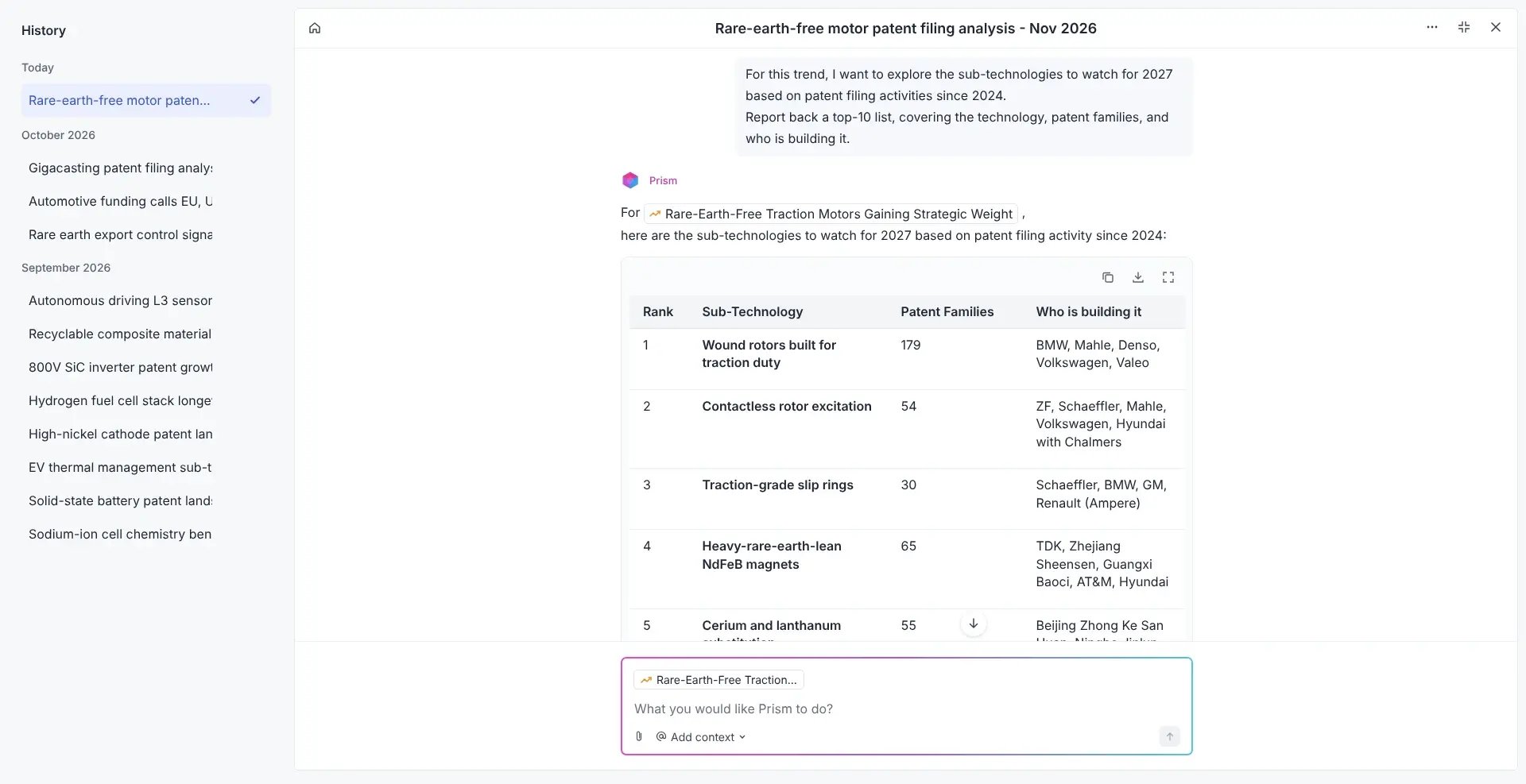 Exhibit 2: Prism detecting rare-earth-free motor technologies to watch in 2027
Three groups should act on this in 2027.
Carmakers decide whether to own a magnet-free rotor. BMW's 53 wound-field families show what that commitment looks like in patents. A carmaker that stays with magnet motors needs at least one platform qualified for a second magnet grade or a magnet-lean rotor, which is the optionality the trend radar rates as the winning strategy.
Motor and drive suppliers hold much of the wound-rotor and excitation know-how: Schaeffler, Mahle, ZF, Denso and Valeo together lead more than 80 families. Their opportunity is to sell a complete magnet-free rotor, with slip rings or contactless excitation, to carmakers that lack the volume to develop one.
Purchasing and supply-chain teams should separate cost from security. Magnets with less heavy rare earth or more cerium come mainly from Chinese suppliers and cut the cost of each magnet. Ferrite and iron-nitride magnets, and recycled rare earths, are the routes that reduce the dependence itself. Writing heavy-rare-earth-free grades and recycled content into magnet tenders is the step that turns those filings into supply.
Most of the filings behind this watch were first made in 2024 and 2025 and are being published now. In 2027, the next round of publications will show whether the shift from wound-field rotors to leaner magnets continues, and which carmakers start filing on recycling.
This analysis uses Filing Signal Analysis, which treats the decision to file as the signal. Drafting and prosecuting a patent application costs real money, so every filing stands for R&D spend a company has already committed. Applications are published about 18 months after they are first filed. Families first filed in 2025 and 2026 are therefore still coming in, and to keep that delay from looking like a decline, we compare each technology's share of the 2024 filings with its share of the later ones, leaving out Chinese utility models because they publish faster.
Prism screened 2,154 patent families from eight searches and kept 895 that avoid or reduce rare earths in an electric machine or its magnets. A patent family is one invention, counted once however many countries it is filed in. The data comes from lens.org, extracted on 2 November 2026, and covers inventions first filed from 1 January 2024 in all jurisdictions, China included. The main search combined the patent classes for wound-field, reluctance and induction machines (H02K19, H02K17 and H02K1/24); electric machines described as rare-earth-free or magnetless; permanent-magnet rotors with ferrite (H02K1/27 and H02K21); and the NdFeB magnet classes H01F1/057 and H01F41/0293 where dysprosium, terbium or grain boundary diffusion appear. Four further searches covered rotor winding, slip ring and exciter classes; rare-earth recovery and magnet recycling (C22B59 and C22B7); rare-earth-free hard-magnet materials; and the rotor and magnet filings of Chinese carmakers and drive-unit makers. Tesla's filings were read one by one.
Each family was screened by hand on its title and abstract. About two in five passed, because the same classes also hold wind generators, vehicle alternators, power tools, washing-machine motors and magnets that add dysprosium instead of saving it. The class searches close a language gap. English keywords miss Chinese patents published only in Chinese, and the search by international patent class (IPC) also catches Chinese utility models, which rarely carry a CPC code. Applicants are counted as groups, with subsidiaries merged into their parent, such as Audi and Porsche into Volkswagen Group and FinDreams into BYD.
A company missing from these results may file under ordinary permanent-magnet classes, describe its work in other terms, or keep it as a trade secret. Its absence here is a filing signal and should be read as one.
The technologies that will define your market in 2027 are already documented. ITONICS Prism finds and reads them for you. Prism reads 500M+ patents and scientific publications and connects to the Web in real-time.
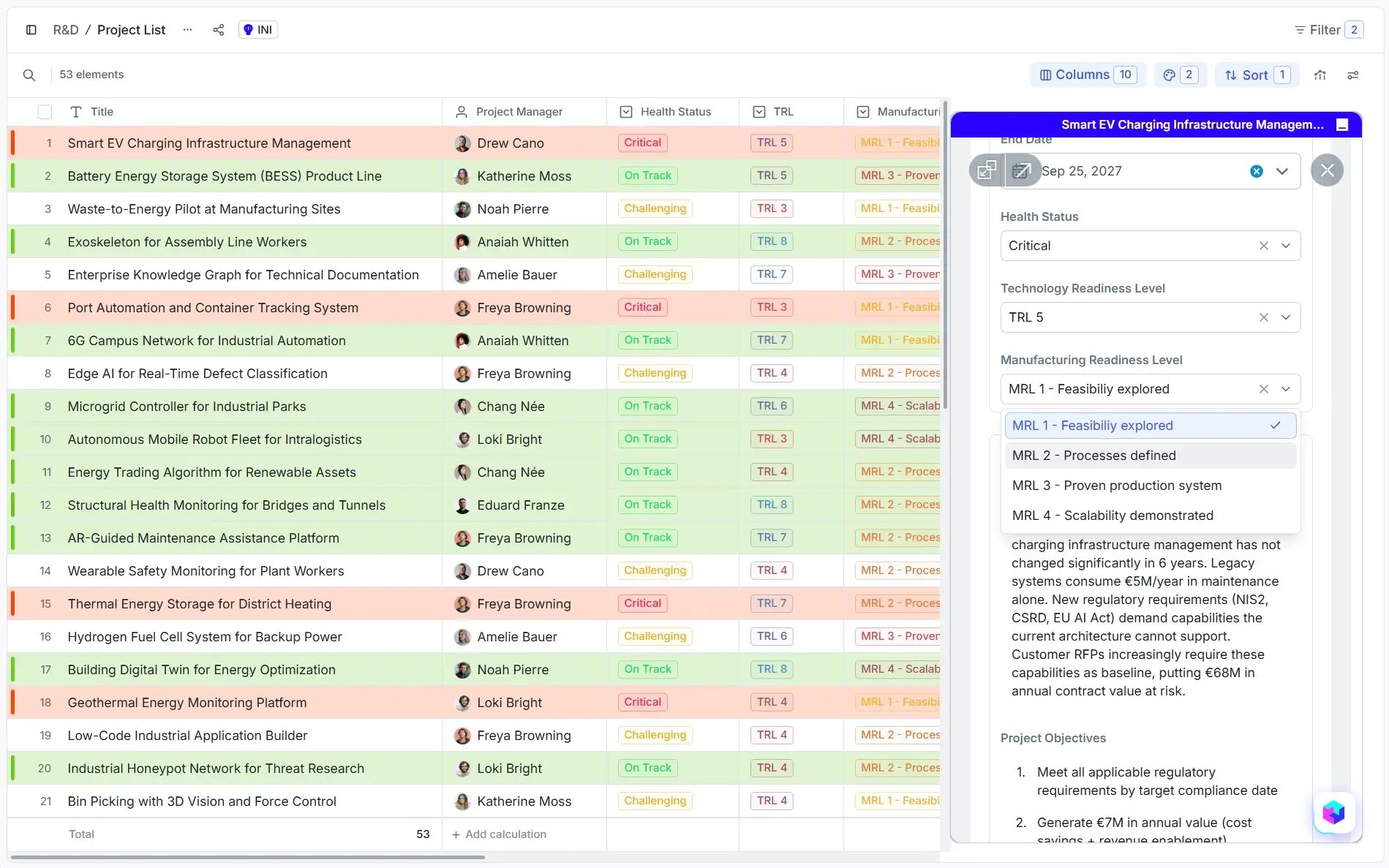 Exhibit 3: Technologies scored by readiness inside ITONICS
It uses your individually defined context and configurable AI agents to work on the questions your team actually needs answered:
ITONICS is the #1 operating software for innovation and R&D management. It helps innovation and R&D leaders identify emerging technologies, prioritize investment opportunities with evidence, and steer execution across business units.
Recognized by Gartner in four innovation categories in the Hype Cycle for Innovation Practices, ITONICS supports over 500 companies worldwide, including Amazon, adidas, Johnson & Johnson, Toyota, Mondelez, and Siemens.