R&D portfolio management software: 8 tools scored for 2027


R&D portfolio management software earns its budget when it changes a fund, stop, or scale decision before money is sunk. We scored eight options on 15 documented checks. ITONICS leads with 9.0/10, followed by Planview Portfolios (7.0), OnePlan (5.9), and Planisware (5.0). Spreadsheets with homegrown AI score 4.4, level with Wellspring Accolade.
Most project portfolio management software optimizes the portfolio you already have. It schedules work, balances the resource pool and rolls up budgets. That is the inside half of the job. The expensive half sits outside the building: which projects has the market already made obsolete? Outside-in intelligence carries the same weight as governance, because R&D capital leaks through late stop decisions. This review scores every tool on both halves.
|
Rank |
Tool |
Score |
Best for |
|---|---|---|---|
|
1 |
ITONICS |
9.0 |
Enterprise R&D linking technology and market intelligence to portfolio decisions |
|
2 |
Planview Portfolios |
7.0 |
Enterprise PMOs that run R&D next to IT portfolios |
|
3 |
OnePlan |
5.9 |
Microsoft-centric organizations that want stage-gates inside Teams and Power BI |
|
4 |
Planisware |
5.0 |
Complex R&D scheduling and skill-based resource planning |
|
5 |
Spreadsheets and homegrown AI |
4.4 |
Small portfolios with one owner |
|
6 |
Wellspring Accolade |
4.4 |
Stage-Gate purists with a technology scouting team |
|
7 |
Planview ProjectAdvantage |
3.8 |
Growing PMOs that need phase-gates and business-case ranking |
|
8 |
SharpCloud |
3.0 |
Executive storytelling across existing project data |
Exhibit 1: R&D portfolio management software at a glance
R&D portfolio management fails at the kill decision. Classic project portfolio management records that decision and leaves the evidence for it outside the system. Leaders keep adding projects while the market quietly retires them.
Ambition outruns capacity in most innovation portfolios. In BCG's 2024 innovation survey, 63% of companies said they want more projects in their portfolio. Only 12% reported a strong link between business strategy and innovation strategy. More projects with weak strategic alignment spread funding thin.
Robert Cooper's 2021 analysis of pipeline gridlock describes the mechanics. Gates often lack teeth, and the kill option is rarely exercised. In one company, 16 projects in the project portfolio needed 60.7 full-time staff against 26 available. Demand ran at 2.3 times the real resource capacity. Resource constraints were ignored at the gate return later as delays in project execution.
Excel is the real incumbent in R&D portfolio management. Across 2,193 ITONICS sales calls in 2024 and 2025, buyers named Excel as their alternative in 19.8% of calls. The most-cited specialist competitor appeared in 3.3% of calls.
Spreadsheets survive because they are flexible and already licensed. They fail at three jobs:
Each failure costs analyst time and slows decision-making when speed matters most.
Internal scoring models measure what the company already believes. Ford took a $19.5 billion write-down in December 2025, mostly for cancelled EV models and a dissolved battery joint venture. CEO Jim Farley tied the call to a market that had changed within a couple of months. GM booked about $6.0 billion in EV charges for the fourth quarter of 2025, citing slower North American EV demand.
Both companies funded these programs through their own approval processes. The evidence that ended them came from the market. The IEEE Spectrum and Wiley 2026 R&D benchmark surveyed more than 200 senior R&D professionals. Over a third spend 25% to 40% of their R&D budget on projects that fail to reach market. Part of that spend is the price of exploration. The rest is the financial impact of stop decisions taken too late.
Pharma companies show the alternative. Novartis discontinued or out-licensed about 10% of its clinical programs in 2023, from 152 to 136. It refocused on five core therapeutic areas. Pruning on purpose frees capital for the right projects.
R&D portfolio management software must do five jobs:
It brings the outside in,
forces gate decisions,
models balance and capacity,
reports to the board, and
connects to existing tools.
Exhibit 2 splits them into the two halves and shows how the eight reviewed tools score on each. Inside-half capabilities average 59% of the available points, and five of eight tools reach at least half. Outside-in capabilities average 30%, and only ITONICS and Wellspring Accolade reach half. Integration averages 66%, with seven of eight tools at half or above.
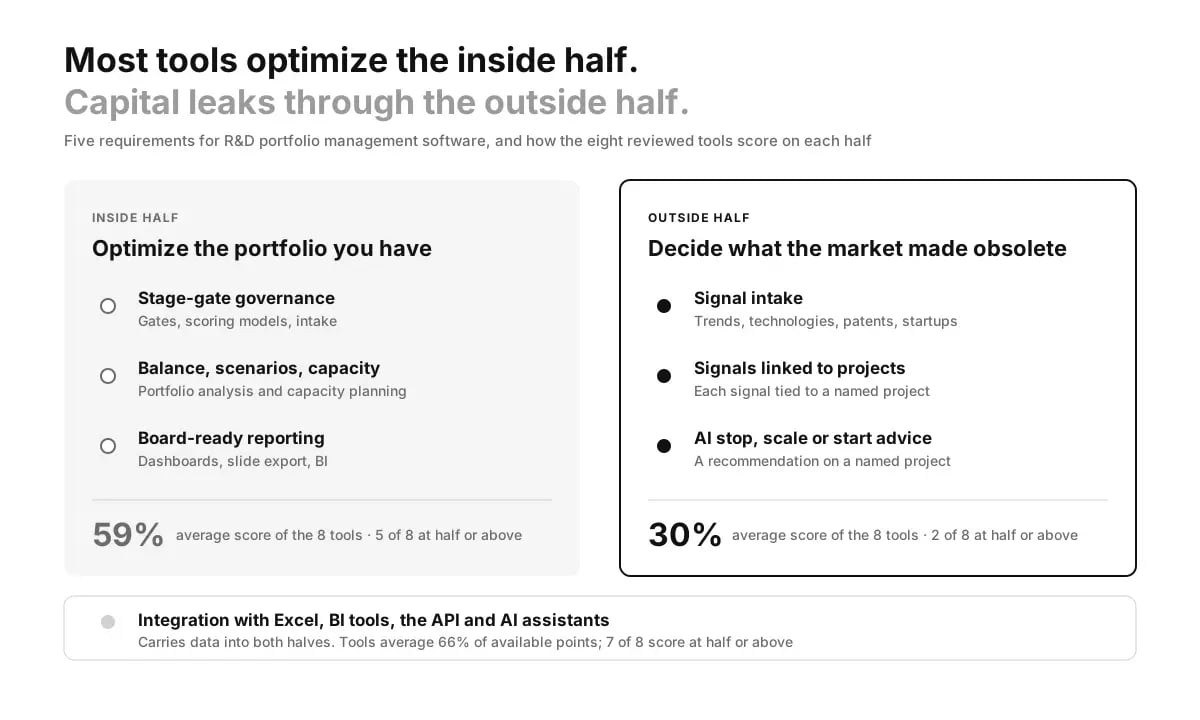 Exhibit 2: The two halves of R&D portfolio management software compared
The platform should scan trends, technologies, patents, and startups, then link each signal to the research and development projects it affects. A signal stored in a separate scouting tool reaches the portfolio committee after the budget round. AI-driven insights add more value when they recommend a decision on a named project.
Gates need criteria, owners, and a recorded outcome: go, kill, hold, or recycle. Configurable scoring models let each gate weigh strategic fit, technical risk and business value consistently against business goals. Project prioritization only counts when a low score ends funding. Ideas and business cases should enter the same pipeline management process the board reviews.
Portfolio analysis shows whether the mix of bets matches strategic goals and business priorities. A bubble chart or matrix makes balance visible across horizons, such as the 70-20-10 split. Scenario planning tests what happens to portfolio plans and resource allocation when a program stops. Demand management and capacity planning compare requested work with the people you actually have before project execution starts. Resource management pays off most when it flags resource constraints at the gate.
Steering committees still read PowerPoint. The software should generate executive dashboards and export them as slides, so analysts stop rebuilding status decks by hand. Portfolio leaders use the same reports to measure performance against portfolio plans, strategic goals and business outcomes between reviews. Real-time visibility into portfolio health catches a slipping project in its first month.
Adoption dies when the platform becomes another place to update. Excel import and export, an open API, and BI connections keep financial data and project data flowing. In 2026, connection to AI assistants such as Copilot or Claude belongs on the list too.
The ranking splits into two groups. ITONICS and Wellspring Accolade document a route from external signals into the pipeline. The other six manage projects and gates well inside the portfolio, and Planview Portfolios leads that group on balance and scenarios.
Score: 9.0/10 (outside-in 25/25, governance 25/25, balance and capacity 10/20, reporting 15/15, integration 15/15)
Best for: Enterprise R&D teams that need grounded market and technology intelligence to drive fund, stop, and scale decisions.
ITONICS connects outside-in intelligence and portfolio governance on one set of elements. Prism, the platform's AI, scouts signals, trends, technologies, and startups from the web and a curated data lake. It creates elements, helps evaluate ideas and technologies, and reviews the portfolio for what to stop, scale or start.
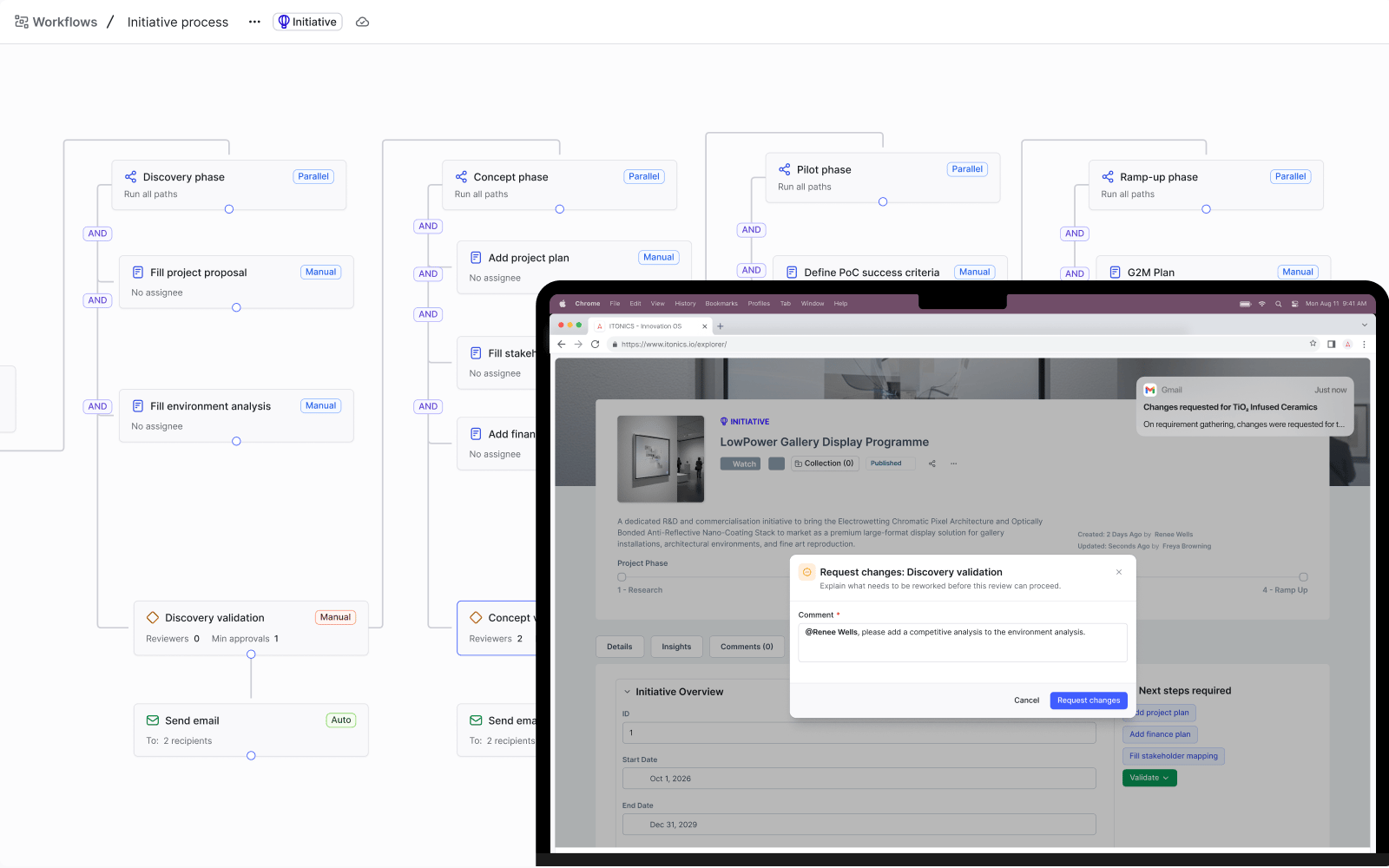 Exhibit 3: ITONICS Workflow allows structured progression and recording of results
Pricing: Core, professional and enterprise editions, each with unlimited viewing users. Pricing starts at $250 per full user per month. Workflow and advanced reporting start at professional. Prism and Roadmap are add-ons.
Security: SOC 2 and ISO 27001 certified, with SSO and full audit trails.
Score: 7.0/10 (outside-in 8.3/25, governance 16.7/25, balance and capacity 18.3/20, reporting 12.5/15, integration 13.8/15)
Best for: Enterprise PMOs that run R&D portfolio management next to IT and business portfolios.
Planview Portfolios is strategic portfolio management with capacity and demand planning. A dedicated new product development solution adds gated process automation and R&D project ranking. It earns the highest balance score in this review.
Pricing: By quote, per user.
Security: SOC 2 Type 2 and ISO 27001, with SAML SSO.
Score: 5.9/10 (outside-in 6.2/25, governance 22.9/25, balance and capacity 10.0/20, reporting 8.8/15, integration 11.2/15)
Best for: Organizations standardized on MS Project, Teams, Planner and Power BI.
OnePlan runs portfolio and work management on the Microsoft cloud. Its support documentation covers stage-gate configuration step by step, which earns a 22.9 governance score. Teams approve projects inside the tools they already use.
Pricing: Basic costs $10 per user per month, billed annually, with a five-user minimum. Enterprise adds scenario planning and resource plans by quote.
Security: Claims SOC 2 Type 2 and ISO 27001; the trust report is gated. Entra ID SSO appears on a reseller listing.
Score: 5.0/10 (outside-in 0/25, governance 18.8/25, balance and capacity 10.0/20, reporting 10.0/15, integration 11.2/15)
Best for: R&D portfolio management teams with complex schedules and skill-based resource management.
Planisware's Nova product targets product development. It combines scoring models, Stage-Gate workflows, what-if analysis and skill-based capacity planning. Its AI features, Prisma and Oscar, add predictive analytics for project risk management.
Pricing: By quote.
Security: ISO 27001, SOC 1 and SOC 2, TISAX and CSA STAR Level 2. Single sign-on is unconfirmed on public pages.
Score: 4.4/10 (outside-in 8.3/25, governance 8.3/25, balance and capacity 10.0/20, reporting 7.5/15, integration 10.0/15)
Best for: Small portfolios with a single owner.
Excel with Power BI and Copilot or ChatGPT is the incumbent most R&D teams start from. These project management tools are flexible, familiar and already licensed. They manage projects well and struggle to govern a portfolio.
Pricing: License costs stay low while analyst hours climb.
Security: Follows your Microsoft tenant.
Score: 4.4/10 (outside-in 12.5/25, governance 16.7/25, balance and capacity 3.3/20, reporting 3.8/15, integration 7.5/15)
Best for: Teams that run a classic Stage-Gate process for innovation portfolios with a dedicated technology scouting group.
Accolade began as a Stage-Gate tool, and Wellspring acquired its maker, Sopheon, in February 2024. Accolade Core, launched in May 2025, spans ideation to launch.
Pricing: Per module, by quote.
Security: ISO 27001 for its Chicago and Tokyo locations. SOC 2 and SSO are unconfirmed.
Score: 3.8/10 (outside-in 0/25, governance 18.8/25, balance and capacity 10.0/20, reporting 6.2/15, integration 2.5/15)
Best for: Growing PMOs that need project management, configurable approval gates and business-case scoring in one tool.
ProjectAdvantage is the former Sciforma, acquired by Planview in February 2025. LISI Aerospace runs APQP phase-gates in it.
Pricing: By quote.
Security: Planview states its certifications at group level; coverage of ProjectAdvantage is unconfirmed.
Score: 3.0/10 (outside-in 0/25, governance 0/25, balance and capacity 13.3/20, reporting 8.8/15, integration 7.5/15)
Best for: Executive teams that want visual roadmaps and portfolio stories on top of existing portfolio management tools.
Lumivero acquired SharpCloud in January 2026 and plans to combine it with @RISK and Predict!. Its documented scope is visualization and scenarios, so strategic decisions run through connected tools.
Pricing: By quote, with seat minimums per role.
Security: SAML SSO and Azure hosting in the US, UK, EU and government regions. Certifications are unconfirmed on vendor pages.
Pick the tool that matches the decision you get wrong most often. Industry analysts compare portfolio management vendors across IT, product and enterprise portfolios. Shortlist the right tools on your own bottleneck instead.
|
Choose |
If your program |
|---|---|
|
ITONICS |
Needs technology, patent and market signals to drive fund, stop and scale decisions across business units |
|
Planview Portfolios |
Runs R&D inside an enterprise PMO that already manages IT portfolios |
|
OnePlan |
Lives in Microsoft 365 and wants gates in Teams and reports in Power BI |
|
Planisware |
Is constrained by complex schedules and scarce specialist skills |
|
Spreadsheets and homegrown AI |
Has a short project list and one portfolio owner |
|
Wellspring Accolade |
Runs textbook Stage-Gate with a separate scouting team |
|
Planview ProjectAdvantage |
Is a growing PMO formalizing phase-gates and business-case scoring |
|
SharpCloud |
Needs a visual story for executives on top of existing tools |
Exhibit 4: Choose R&D portfolio management software by your program type
ITONICS is strategic portfolio intelligence for enterprise R&D and innovation. It runs both halves of R&D portfolio management on one set of elements, so evidence, portfolio priorities, and decisions share a record.
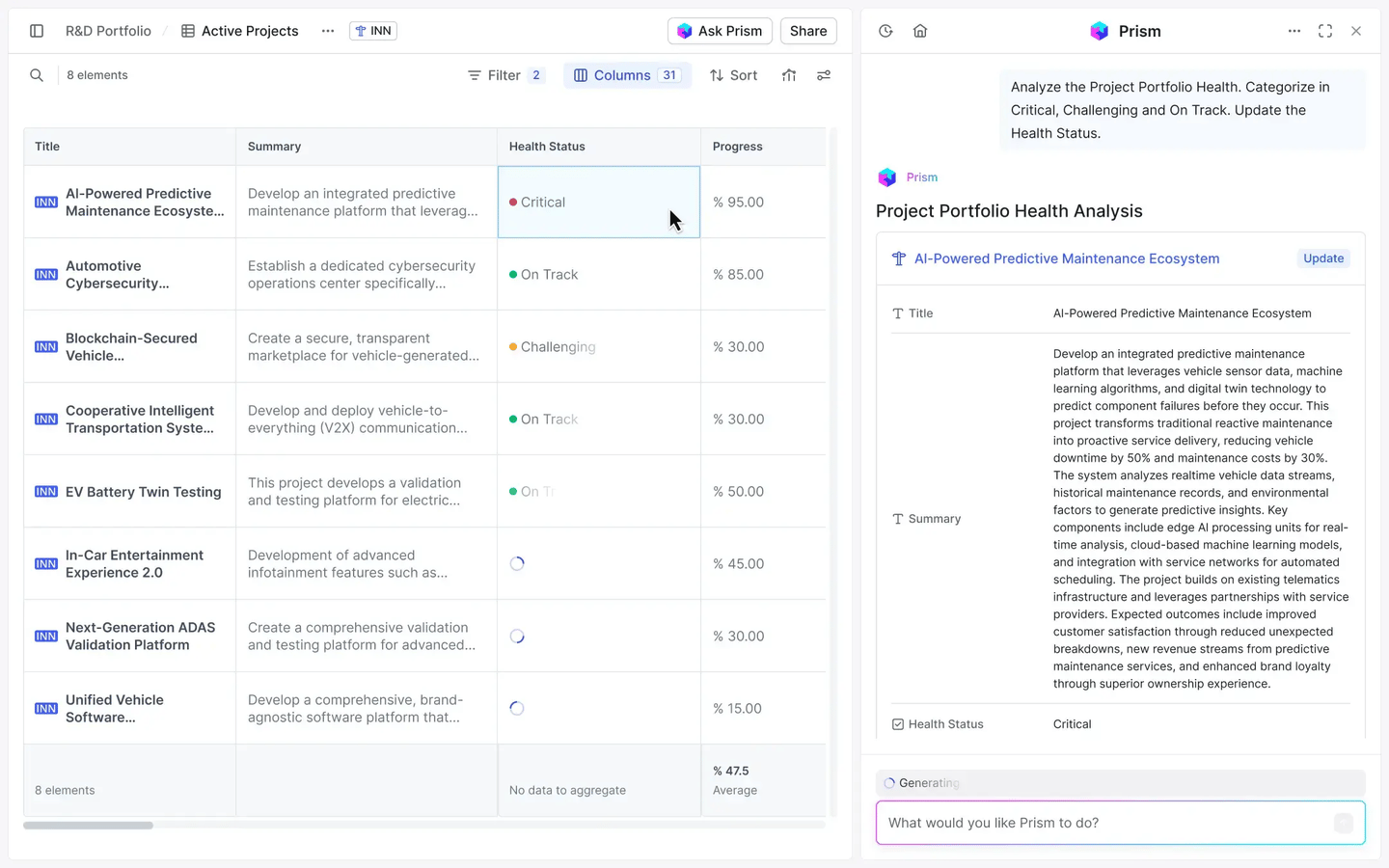
Exhibit 5: ITONICS project list with Prism recommendations
Toyota Motor Europe tested 40 innovation software systems before choosing ITONICS. It now manages more than 200 R&D projects on the platform. Dräxlmaier cut manual project reporting effort by 70% after centralizing idea management and pre-development workflows. Hours saved on reporting go back into decision-making, which drives business results and long-term growth.