Stage gate software: 8 best tools for R&D projects in 2027

The best stage gate software turns every gate review into a recorded decision with portfolio context. ITONICS scores highest at 4.8 out of 5 across 18 checks. The next three tools score between 4.1 and 4.4. Exhibit 1 ranks all eight tools.
A gate earns its cost on the day it stops a project. A classic stage gate process runs from discovery to launch through five gates. A gate review that approves all projects adds cost and removes zero risk. Gatekeepers who see individual projects one at a time have little ground to stop them. They miss the capacity each project consumes, the projects it displaces and the market shift that weakens its business case.
Stage gate software records each gate decision, builds the gate paper from live data and shows the whole pipeline at the moment of the vote. Teams that already compare R&D portfolio management software find that the gate is where portfolio logic holds or breaks.
This review scores eight tools on that decision, for heads of R&D, portfolio management offices and process leaders who run gate processes across business units. If your R&D pipeline still moves through manual processes, the ranking shows which workflows to test first.
| Tool | Score | Best for | Key capabilities |
|---|---|---|---|
| ITONICS | 4.8 | R&D teams linking gates to portfolio and market signals | No-code Workflow builder, approval rules, Prism AI |
| Planisware Nova | 4.4 | Product portfolios with skill-based capacity | Gate templates, scenarios, AI scoring, PLM and SAP connectors |
| HYPE Innovation | 4.2 | Programs that turn ideas into gated projects | Unlimited phase gate and agile processes, scoring, trends module |
| Planview Portfolios | 4.1 | PMOs sharing capacity across R&D, IT and engineering | Lifecycle approvals, capacity planning, PLM integrations |
| Wellspring Accolade | 3.9 | CPG, chemicals and manufacturing teams | Industry stage gate templates, gate paper automation |
| Cerri Project | 3.3 | PMOs wanting explicit gate outcomes on premise | Gate readiness score, conditional approvals, capacity checks |
| Smartsheet | 3.3 | Small portfolios with simple gate processes | Approval workflows, dashboards, resource add-on |
| Spreadsheets and homegrown AI | 2.5 | Pilots that test a stage gate model before buying | Familiar tools, free-form scoring, AI drafting |
Exhibit 1: The 8 best stage gate software tools ranked by score
Every grade rests on public vendor pages, knowledge bases, and user reviews checked on 13 November 2026.
Stage gate software runs projects through defined stages and decision points. It stores gate criteria, collects deliverables, routes each gate review to cross-functional gatekeepers, and records the outcome. Strong tools also show portfolio-level visibility, so every gate decision weighs one project against the others.
Robert G. Cooper developed the stage gate model from research on why new products succeed or fail. Stage-Gate International, the firm he co-founded, trains companies in the method and certifies software. Robert G. Cooper framed each gate as a go, kill, hold, or recycle decision. Stage-Gate® is a registered trademark of Stage-Gate Inc.
Both terms describe the same project management methodology. A phase gate process splits work into phases and places a formal decision point after each project phase. Engineering and IT teams say phase gate. Product innovation and new product development teams say stage gate.
A typical stage gate process covers five stages. Discovery and scoping lead into product definition and the business case. Then follow the development phase, testing with trial production runs, launch and a post-launch review. Each gate checks the previous stage and funds the next stage.
The stage gate framework flexes the number of decision points by project types. A platform project may pass five gates. A line extension may pass two. Good stage gate governance scales the process to the risk.
Generic project management tools track tasks, dates and owners inside one project plan. They answer whether project execution is on schedule. A gate decision asks whether a project deserves the next phase of funding at all.
That question needs portfolio data, technical feasibility evidence and a record of who decided what. Generic project management tools hold parts of that data and rarely hold the decision. Portfolio management offices then keep a second system, usually a spreadsheet, for stage gate projects.
Two forces push R&D leaders to change tools now: a forced migration and an underestimated business case.
Microsoft retired Project Online on 30 September 2026. Its demand management module organized proposals into phases and stages, with workflows that moved projects from gate to gate. Every portfolio management office that ran its stage gate process there now runs it somewhere else.
A forced migration is the best moment to redesign gate processes. Copying old stages into new stage gate process software repeats their weaknesses.
Stage gate software pays for itself through stopped projects, while faster approvals add little. Exhibit 2 shows an illustrative model.
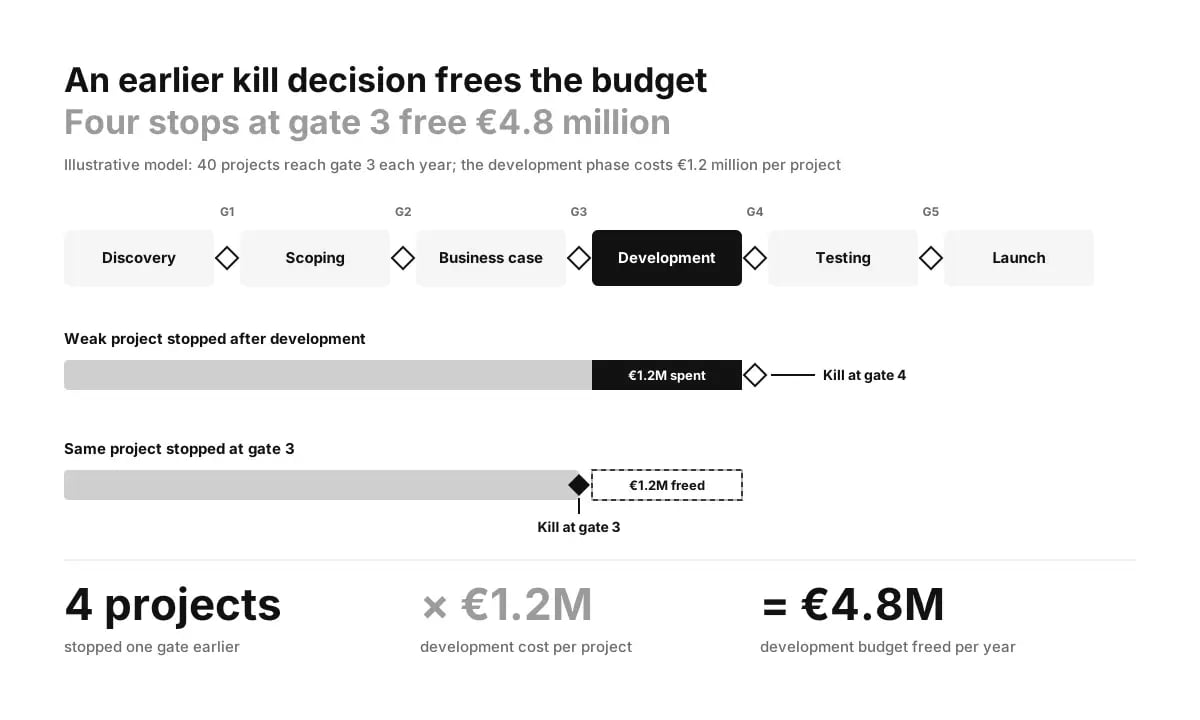
Exhibit 2: An earlier kill decision frees the development budget
Take 40 product development projects that reach gate 3 in a year, with a development phase costing €1.2 million per project. Stop four weak projects at gate 3 instead of after development, and the portfolio frees €4.8 million a year. The figures are illustrative; the logic holds at any scale.
The gain depends on reliable data at the gate. Gatekeepers stop projects when they see opportunity cost: the capacity a project blocks and the better projects waiting behind it. If that view stays hidden, the process loses credibility and every gate turns into a formality. Teams face the same issue when Excel stops working for R&D portfolio management.
Six requirements separate stage gate software that changes decisions from software that digitizes forms. Each holds three checks, weighted as Exhibit 3 shows.
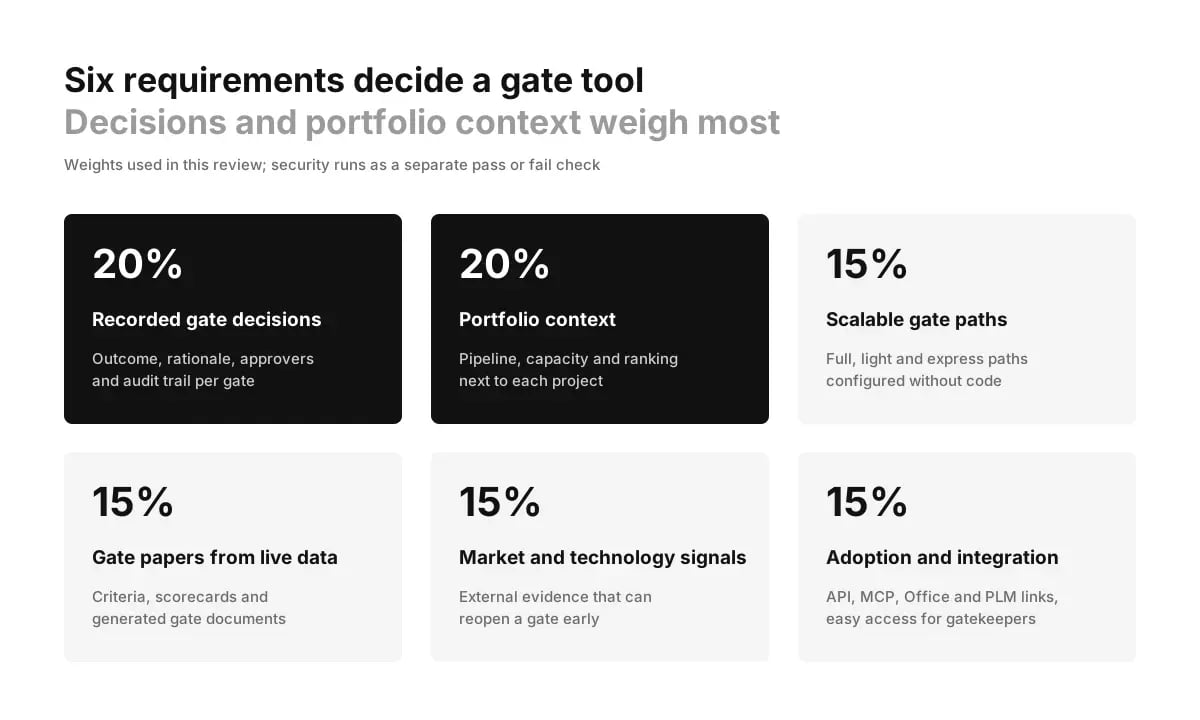
Exhibit 3: Six requirements and their weights in this review
Security is a separate pass or fail check. A tool passes with a published, current ISO 27001 or SOC 2 certificate, and a fail leaves the score unchanged.
The gate decision is the product. Stage gate software must capture the outcome, the rationale and the approvers, and keep that record on the project. Look for explicit outcomes such as go, kill, hold and recycle. Look for approval rules that combine an approval count with a budget threshold. Look for an audit trail with old and new values, from gate 1 to the post launch review. This requirement carries 20% of the score.
A gate review that shows one project produces an approval. A gate review that shows the pipeline, its capacity and the ranking of projects produces a decision. Stage gate software should put portfolio data, resource utilization and scoring next to each project at the vote. This ties gate reviews to portfolio management processes and resource allocation decisions. Strategic alignment stays visible for executive decision making. This requirement carries 20%.
Robert G. Cooper recommends a full process for new platform projects, a lighter one for extensions and an express path for small projects. Stage gate software should run several gate processes for different project types, with conditional routing between them. A hybrid approach mixes gates with agile sprints, and hybrid methodologies suit complex projects with uncertain specs. Regulated industries such as life sciences add compliance requirements on top. Admins should configure all of this in a no-code editor. This requirement carries 15%.
Gate preparation consumes expert time and delays time to market. Project managers copy status, budget and risk data into slides the week before each gate. Stage gate software should collect gate criteria, deliverables and scorecards in forms and generate the gate paper from live data. This requirement carries 15%.
A product development business case ages between gates. A competitor files a patent, a regulation shifts or a supplier exits. Stage gate software should connect external market and technology data to projects, so a signal can reopen a gate before the next gate date. Market attractiveness and market potential then rest on current evidence. This requirement carries 15%.
Cross functional gatekeepers come from finance, manufacturing, marketing and R&D. Each of them needs easy access to the gate paper and a fast way to vote. Stage gate software should offer an open API or MCP connection and native integrations with Office, BI, PLM or ERP tools. Occasional users need light access. Active engagement of these gatekeepers keeps teams aligned. This requirement carries 15%.
Each tool scores 1 to 5 per requirement, built from three checks, as Exhibit 4 shows.
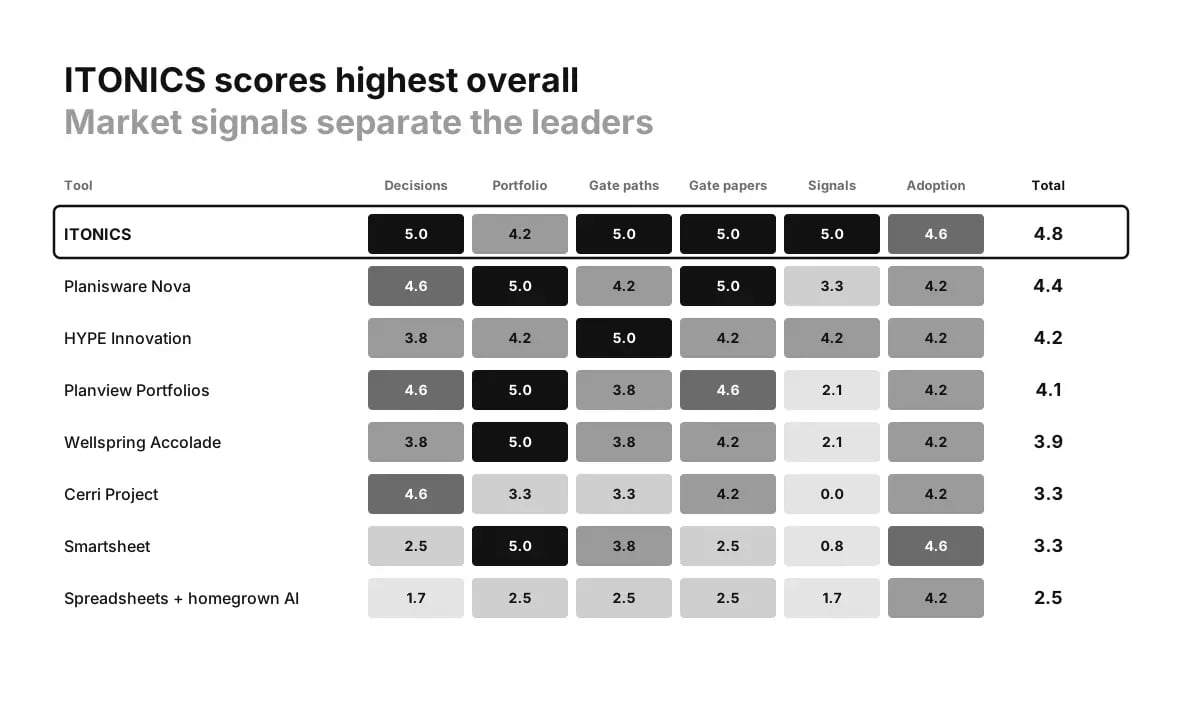
Exhibit 4: Stage gate software scores by requirement
Score: 4.8/5 (decisions 5.0, portfolio 4.2, paths 5.0, gate papers 5.0, signals 5.0, adoption 4.6)
Best for: Enterprise R&D and innovation teams that link gate decisions to the portfolio and to market signals.
ITONICS is strategic portfolio intelligence for enterprise R&D and innovation. Its Workflow builder models gate processes as forms, reviews, routing and automation nodes on a no-code canvas. Prism, the ITONICS AI, scans more than 500 million curated signals plus live web search and links them to projects.
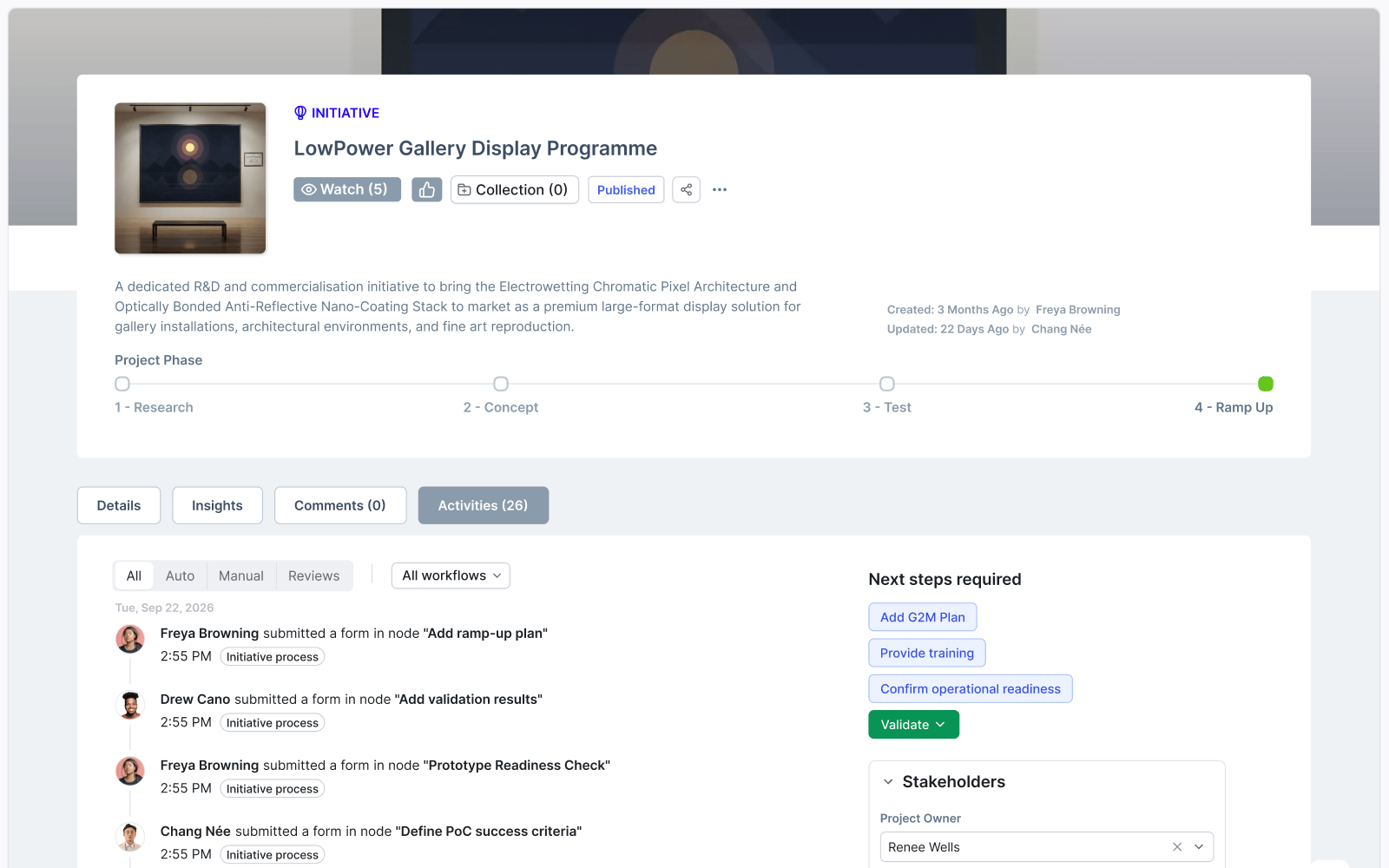
Exhibit 5: A workflow with decision gate configuration inside ITONICS
Pricing: €250 per month per full user, with unlimited viewers. The Workflow builder starts with the Professional edition.
Security: ISO/IEC 27001:2022 and SOC 2. Passes the security check.
Score: 4.4/5 (decisions 4.6, portfolio 5.0, paths 4.2, gate papers 5.0, signals 3.3, adoption 4.2)
Best for: Product-centric R&D portfolios where skill-based capacity decides which projects move to the next stage.
Planisware Nova is the R&D and new product development edition of Planisware. It treats products and product families as the unit of decision and helps leaders decide which products and technologies to fund, accelerate or stop.
Pricing: On request.
Security: ISO 27001, SOC 1, SOC 2, TISAX Level 3, ISO 27017 and ISO 27018. Passes the security check.
Score: 4.2/5 (decisions 3.8, portfolio 4.2, paths 5.0, gate papers 4.2, signals 4.2, adoption 4.2)
Best for: Product innovation programs that move ideas through phase gate reviews into funded projects.
HYPE Innovation is an enterprise innovation software suite for ideation, trends, partnering and initiative portfolios. Its phase gate workflows review, approve, advance, pause or stop initiatives.
Pricing: Software Advice lists a starting price of $16,000 at a flat rate.
Security: ISO/IEC 27001:2022, renewed in 2025. Passes the security check.
Score: 4.1/5 (decisions 4.6, portfolio 5.0, paths 3.8, gate papers 4.6, signals 2.1, adoption 4.2)
Best for: Large PMOs that run R&D, IT and engineering on one shared capacity model.
Planview Portfolios is a strategic portfolio management suite. For R&D, Planview connects pipeline investments, capacity and outcomes and supports decisions to pivot, kill or double down on projects.
Pricing: On request.
Security: SOC 2 Type 2, ISO 27001 and ISO 27701 across multiple products. Passes the security check.
Score: 3.9/5 (decisions 3.8, portfolio 5.0, paths 3.8, gate papers 4.2, signals 2.1, adoption 4.2)
Best for: CPG, chemicals and manufacturing teams that want pre-built stage gate process templates.
Accolade began as a purpose-built stage gate tool, and Wellspring (formerly Sopheon) now sells it for new product development and portfolio management. Mondelēz reports a 50% reduction in time preparing for gate meetings with Accolade.
Pricing: Modular licensing on request.
Security: Wellspring announced ISO/IEC 27001:2013 certification in November 2023. A current certificate is absent from public pages, so the security check fails.
Score: 3.3/5 (decisions 4.6, portfolio 3.3, paths 3.3, gate papers 4.2, signals 0.0, adoption 4.2)
Best for: PMOs that want explicit go, kill, hold and recycle decisions and an on-premise option.
Cerri Project, formerly Genius Project, is project portfolio management software with a stage gate module. It targets manufacturing PMOs, with customers such as ABB, Schott and Bühler.
Pricing: On request, with a trial.
Security: ISO 27001 and SOC 2 certificates are absent from public pages, so the security check fails.
Score: 3.3/5 (decisions 2.5, portfolio 5.0, paths 3.8, gate papers 2.5, signals 0.8, adoption 4.6)
Best for: Small portfolios with simple gate processes and teams that already work in Smartsheet.
Smartsheet is a work and project management platform. Project teams build a stage gate process from sheets, forms, approval workflows and dashboards, often from a new product development template.
Pricing: Pro at $9 and Business at $19 per member per month, billed yearly. Enterprise on request.
Security: SOC 2 Type II, ISO 27001, ISO 27701, ISO 27017, ISO 22301 and FedRAMP. Passes the security check.
Score: 2.5/5 (decisions 1.7, portfolio 2.5, paths 2.5, gate papers 2.5, signals 1.7, adoption 4.2)
Best for: A pilot that tests a new stage gate process with a few projects before a software decision.
Buyers named Excel as their current alternative in 435 of 2,193 ITONICS sales calls from 2024 and 2025. Many stage gate projects still run on Excel trackers, slide decks and email approvals. AI assistants now draft gate papers from the same files.
Pricing: Existing office licenses, plus AI licenses per user.
Security: Inherits your Microsoft 365 or Google Workspace controls. Passes the security check.
Start from the gate decisions your portfolio needs and leave the feature list for later. Map your current stage gate process first: which gates stop projects, which check readiness and which projects deserve an express path. Stage-Gate International certifies software against its own criteria. Treat that label as one input next to your demo results.
Run the demo on your own gate processes and projects. Ask for six live tests.
| Test | What to ask | Pass signal |
|---|---|---|
| Kill a project | Stop a project at gate 3 and show the record | Outcome, rationale and approvers on record |
| Route an express path | Send a small extension through a two-gate path | Admin changes routing in minutes |
| Build the gate paper | Generate the gate 3 document from live data | One-click export from live data |
| Show the portfolio | Show capacity and ranking next to other projects | Same screen as the gate review |
| Reopen a gate | Link a new competitor patent to the project | Signal triggers a review task |
| Involve occasional users | Let a finance gatekeeper review and approve | Clear license rules for occasional approvers |
Exhibit 6: Six demo tests for stage gate software
Deploying enterprise innovation software works best as a small digital transformation. Most organizations should start with one business unit and one gate model. Move to the next gate once the first one produces recorded decisions. This builds process discipline, supports risk mitigation, and earns trust with cross-functional teams.
Track two numbers from day one:
the share of projects stopped at each gate,
and the days from submission to decision.
Time to market and project success rates improve when weak projects leave the pipeline early.
ITONICS leads because it connects three things a gate decision needs. These are the gate record, the portfolio around it and the market evidence behind the business case. Its core capabilities cover all three in one platform for managing innovation, R&D and product development.
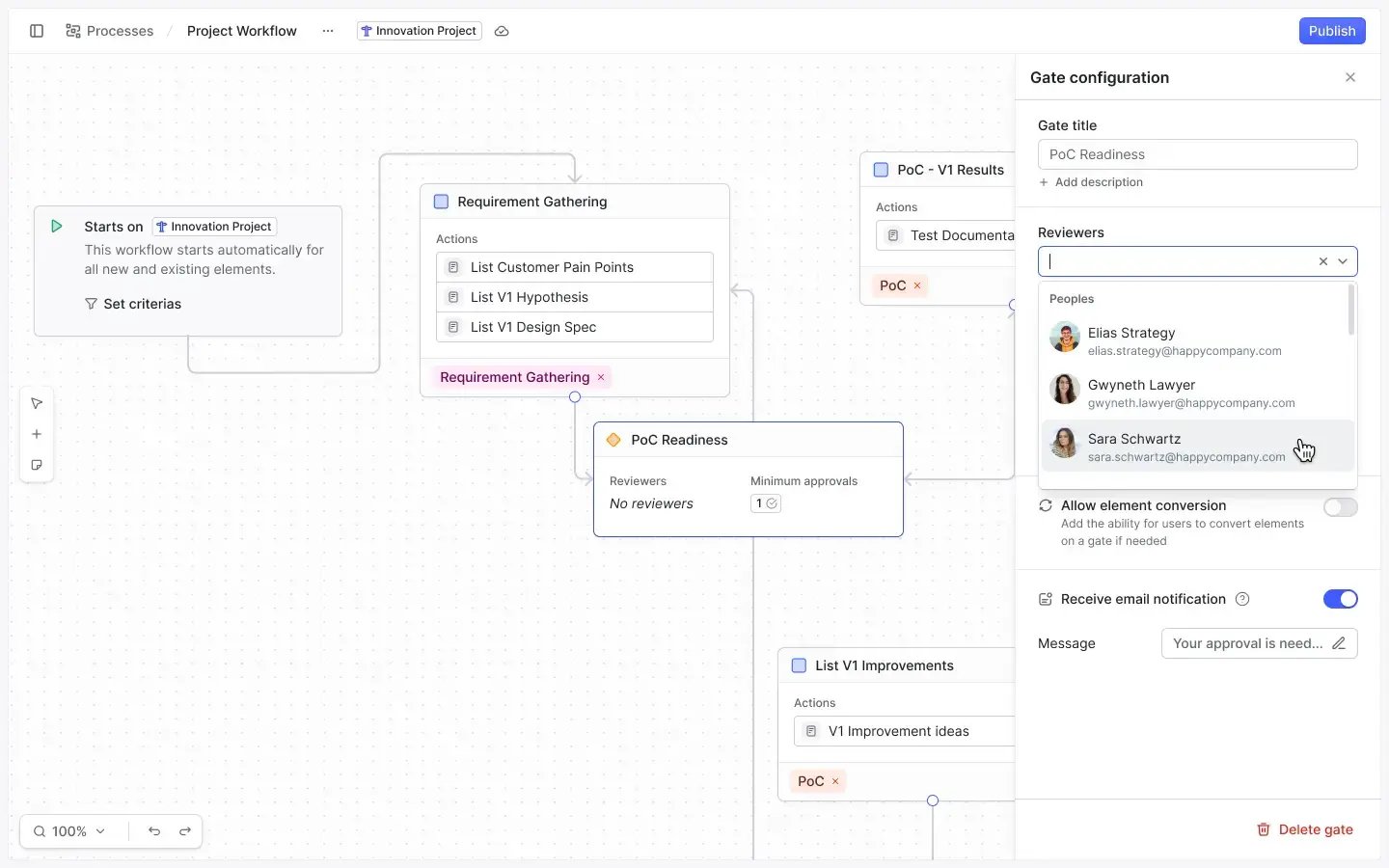
Exhibit 7: A custom workflow builder to design stages and gates inside ITONICS
Dräxlmaier cut manual project reporting effort by 70% after moving pre-development workflows into ITONICS.