Technology scouting: The process of funding mature-enough technologies


Competition is won by making the right technology investment decisions at the right time. Innovators fund an emerging technology two years before competitors and absorb the innovation rent: prestige, a dominant market position, and early returns. Betting on the right technologies at the right time is the core challenge, and it decides your competitive advantage.
Technology scouting is the systematic practice of finding, assessing, and acting on emerging technologies before they reshape your market. Most companies handle the finding well. They produce radars, reports, and weekly signal digests.
Then the work stalls. The output lands in a slide deck, budget stays put, and the window closes. Signals are abundant. Patent databases, scientific publications, and startup feeds generate millions of data points a year. The hard part sits between a discovered technology and a funding decision.
This guide gives you a 5-stage technology scouting process that closes that gap. Every cycle ends in informed decisions. Teams that reach that bar move budget in weeks. The rest review the same emerging technologies quarter after quarter.
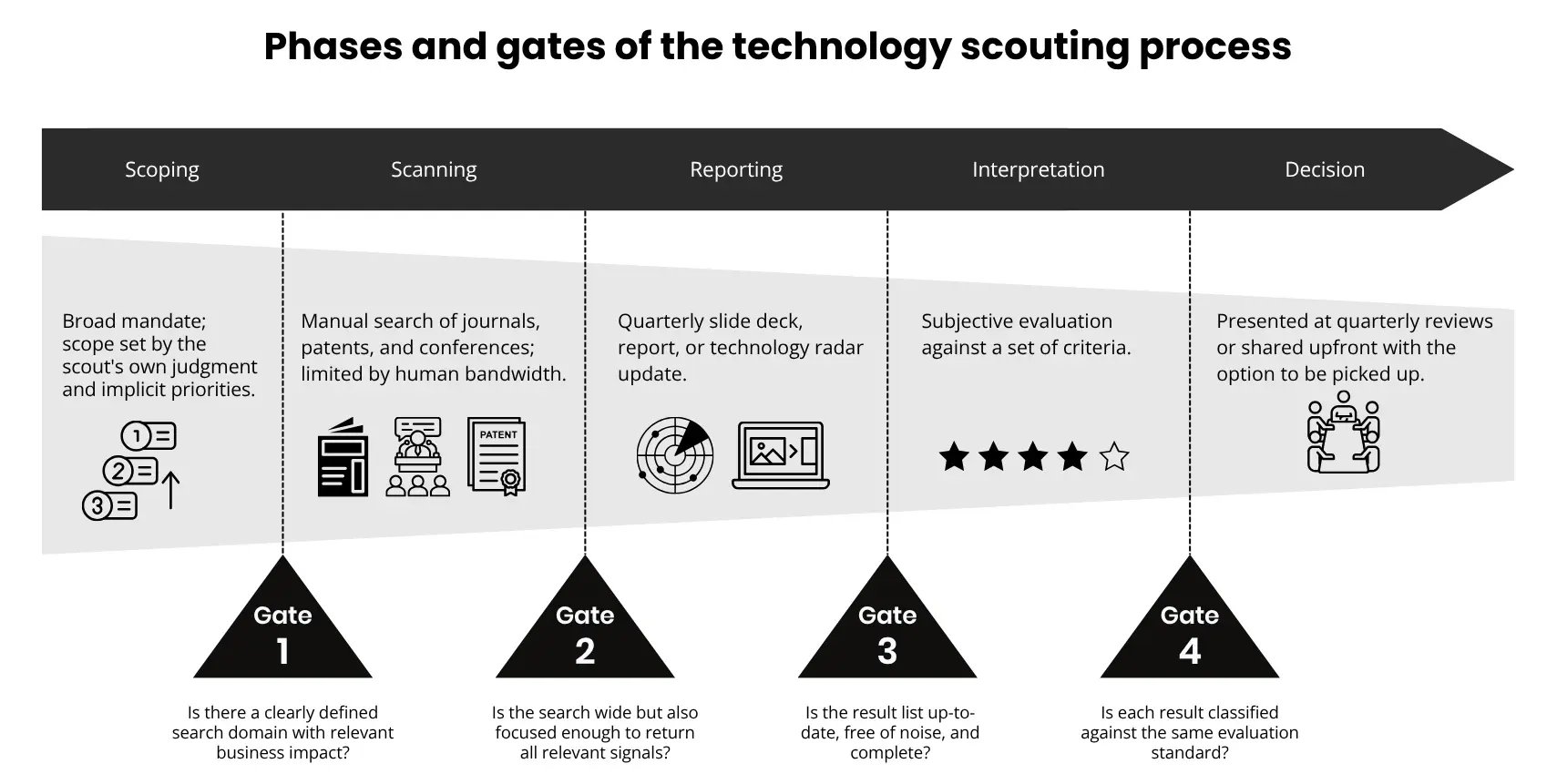
Exhibit 1: Phases and gates of the technology scouting process
Technology scouting is the systematic search for emerging technologies that strengthen existing products, processes, or business objectives. It scans patents, scientific publications, startups, and research institutes for solutions your organization has not built in-house. The goal is a competitive edge: adopt a cutting-edge technology faster than rivals, or license it before it becomes standard.
Technology scouting differs from open research. Research explores questions. Scouting hunts for a standalone technology or innovative solutions that map to specific challenges. Every scouted technology answers one question: does this move a strategic priority, and is it mature enough to fund?
Done well, technology scouting reads the competitive landscape, flags new technologies early, and feeds them into product strategy before rivals react. Companies run it to improve existing products, feed the innovation pipeline, and open new markets. Businesses that scout continuously spot shifts early and act while windows of market opportunities stay open.
Most businesses scout reactively. They learn about a technology from a vendor pitch, a conference keynote, or a competitor launch. By then the early-mover window has closed. This pattern repeats across companies and industries. Three gaps explain why reactive technology scouting rarely produces a decision.
Vendor demos and trade shows surface new technologies late. Adoption windows close before a technology reaches a board committee. Experimentation and partnership terms are set during a technology's formative stage. Teams that wait for external proof points forfeit that position.
Scouting without criteria drifts toward interesting, not useful. Teams chase novelty that maps to no strategic priority. They also miss adjacent technologies that fall outside their innovation categories. Tie every search field to a strategic question, and the scan returns insights instead of noise.
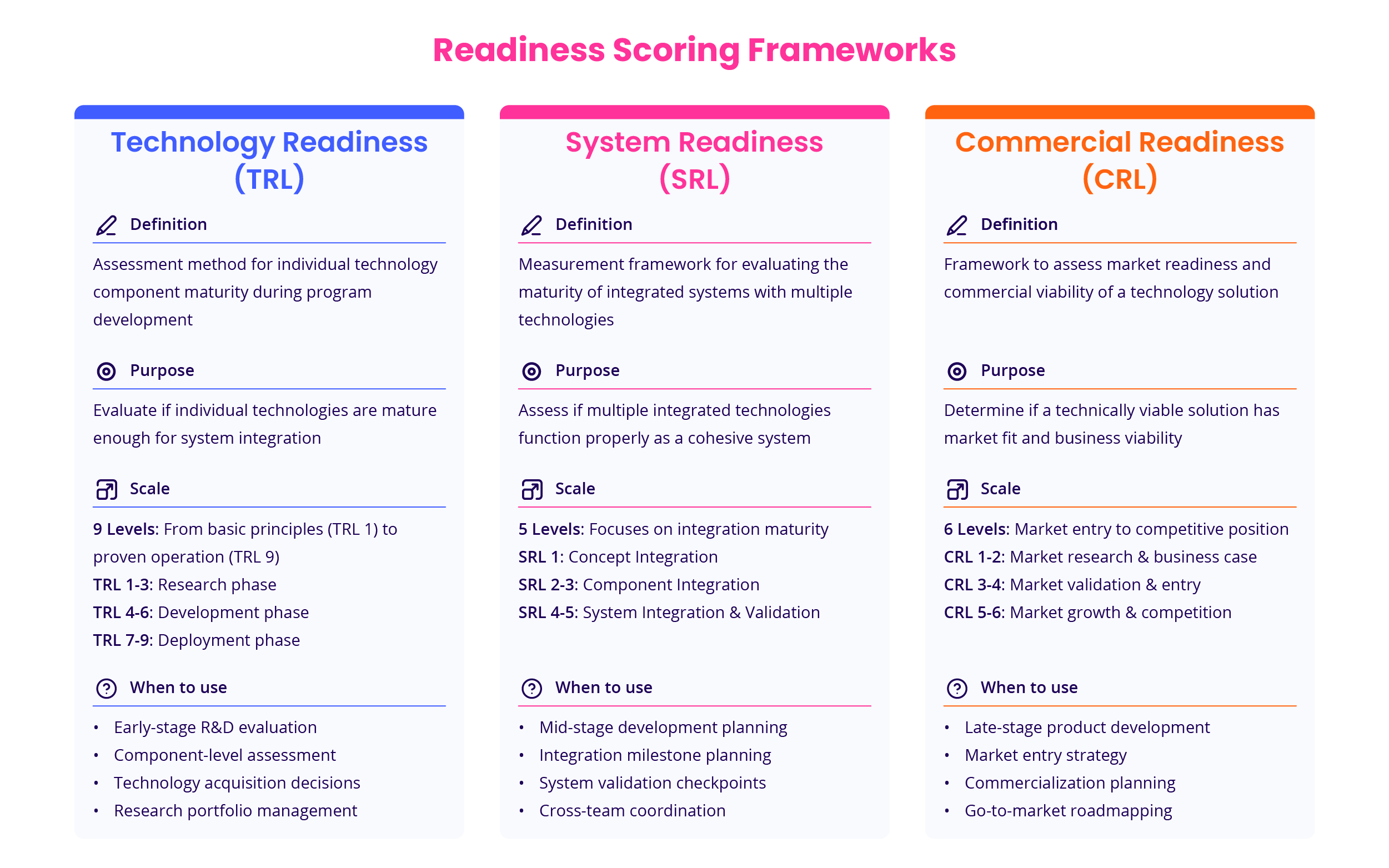
Exhibit 2: Readiness scoring frameworks for research and development
Discovered technologies get trapped in inboxes and decks. Teams lack a shared way to compare a battery chemistry against a sensor platform. They lack a defined path from discovery to a portfolio review across the organization. Scouting that ends in a report changes nothing.
Signal collection produces volume. A scouting process produces decisions. The difference is a closed loop with four properties.
Together, these properties convert emerging technologies into ranked, decision-ready candidates. Organizations that treat the fourth property as optional collect signals for years without funding one.
Companies that build the loop once reuse it across every innovation field. The four stages above build the loop.
Run technology scouting as a repeatable loop. These five stages move you from a strategic question to a committed decision and into your innovation pipeline.
Break your domain into themes and sub-themes. An automotive team sets the theme as mobility, then splits it into autonomous driving, battery technology, predictive maintenance, connectivity, and alternative fuels.
Each sub-theme becomes a technology scouting search field with a named owner. Attach each field to a strategic question: which capability do we need, and by when. This focuses limited scouting capacity on spaces that change a business roadmap.
Single sources mislead. Patents show where R&D money concentrates. Scientific publications flag breakthroughs nearing commercialization. Startup funding shows where venture capital places bets. News confirms the latest trends and adoption.
Scan all four continuously in your technology scouting process. Provide each scout with an intelligent system that automates the previous manual scouting effort. Ask them to keep their technology scouting reports current. Continuous coverage is how you identify opportunities before the competitive landscape changes.
A list of 300 signals is a backlog. It looks busy, but it destroys focus. A technology radar turns it into a landscape. Position each technology by distance to the center for readiness, segment by field, and encode maturity and impact in color and size.
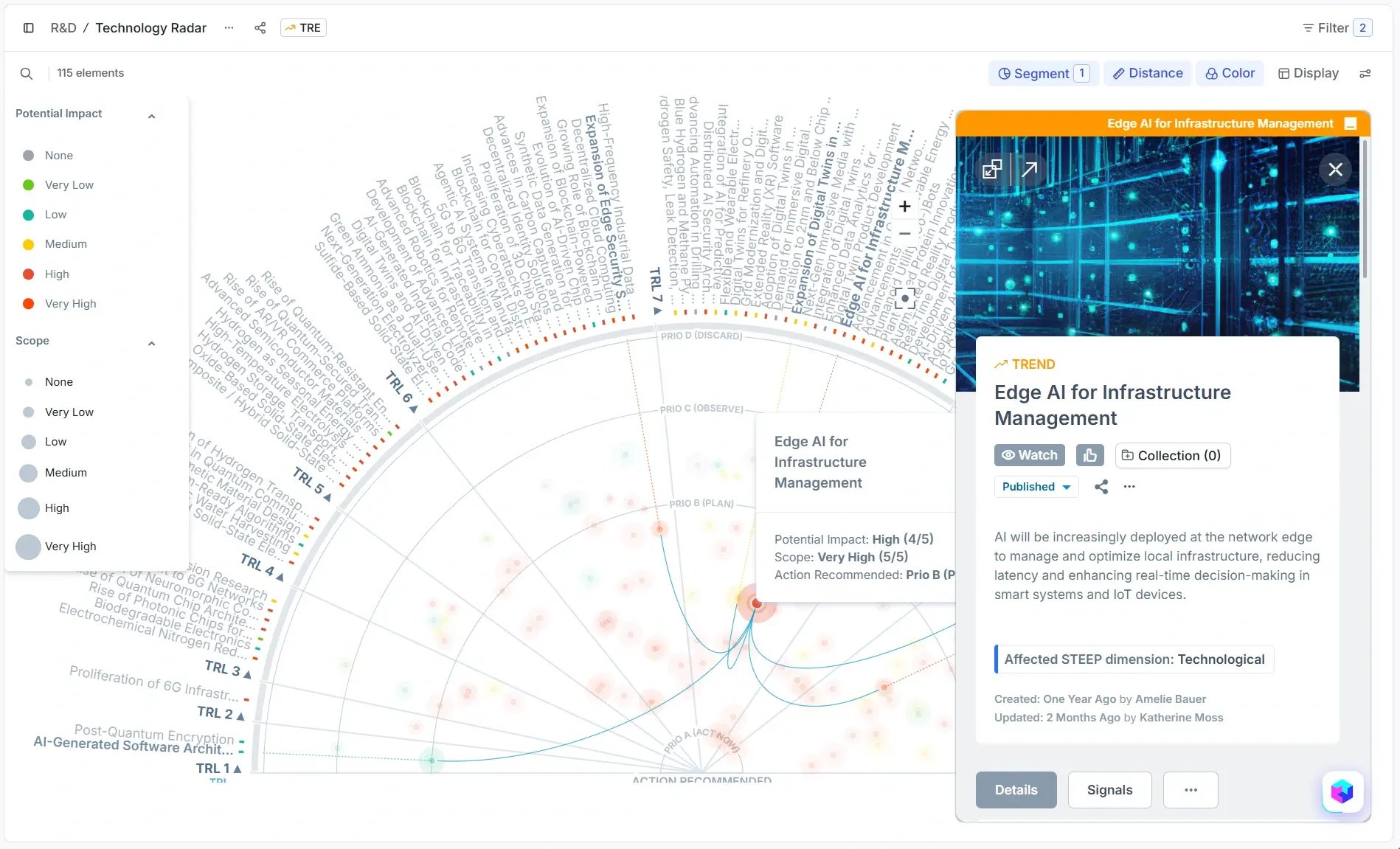
Exhibit 3: A technology radar inside ITONICS
One radar makes a battery chemistry and a sensor platform comparable on the same axes. Leaders read the whole space, and the innovation opportunities inside it, in a single view.
Score each technology on consistent criteria: strategic fit, time-to-impact, feasibility, and potential impact.
Consistent scoring removes recency bias in technology scouting, where the newest signal looks best because it is top of mind. Double-check the highest-priority candidates with a domain expert. Keep humans in the loop on every score that moves the innovation budget.
Every cycle ends with a call. Fund a proof of concept, stop monitoring a dead end, or scale a validated bet into a project.
Assign each surviving technology an owner, a budget line, and a next milestone. Hand the winners into your innovation portfolio and report to the board. Consistent decision-making beats gut calls, and a technology with no decision attached returns to the queue next quarter and wastes the scan.
Single sources bias your view. A complete technology scouting process pulls from different source types, each revealing a different signal about emerging technologies.
Patents show where R&D money concentrates. IP professionals read filing trends to see which players invest in a technology and when protection expires. A rise in filings signals a technology approaching maturity.
Scientific publications and research institutes flag breakthroughs before commercialization. A university lab or a national research institute often proves a concept years ahead of the market, sometimes across several industries. Track their output to identify opportunities early.
Startup funding shows where venture capital places innovation bets across domains. A funded startup is a technology with a team attached. Track funding rounds to find innovation partners and acquisition targets.
News confirms adoption across industries and surfaces the cutting-edge trends. Conferences reveal expert consensus. Environmental scanning ties these signals to long-range shifts, so scanning covers both near-term products and distant disruption.
Finding a technology is step one. The real decision is whether to build, buy, or partner. This is part of the innovation strategy and innovation framework design. Businesses weigh each path against speed, costs, and control, and the right choice varies across industries. Choosing wrong wastes costs and time.
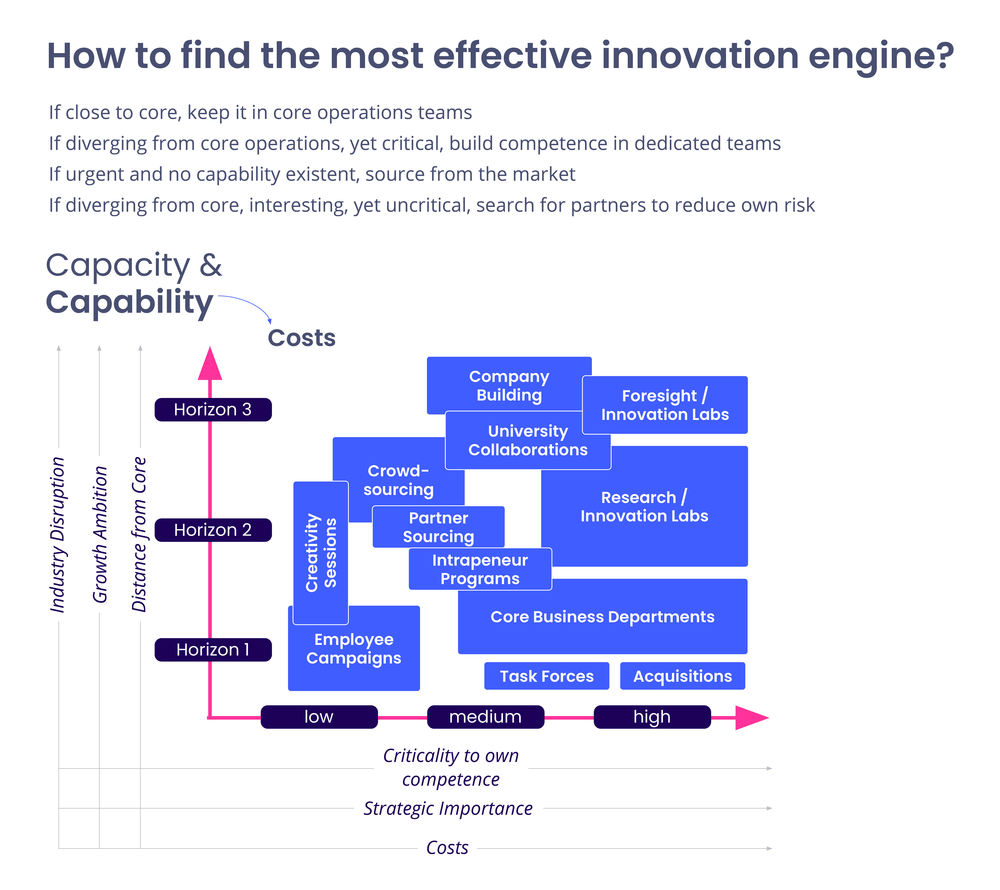
Exhibit 4: Framework to find the most efficient innovation program per criteria
Build alone when the technology is core to your competitive advantage and your resources can deliver it. In-house builds protect IP and keep quality control internal. They raise development costs and carry execution risk. But they can also be the game changer that no competitor can copy quickly.
License or acquire when speed matters more than ownership. Licensing decisions move a proven technology into your product offerings in months, not years, and cap upfront costs. Acquisition buys the team and the IP together.
Partner through open innovation when the technology sits outside your core. Work with startups, research institutes, or suppliers to co-develop a new solution. Open innovation spreads costs across partners and speeds access to external technologies you would not build alone.

Scouting without metrics drifts back to activity for its own sake. Track KPIs to prove the implementation works and to justify internal resources to leadership.
These four numbers turn scouting efforts into evidence for faster decision-making. They expose where costs run high for little return, so you redirect budget to fields that drive innovation.
Measured this way, scanning success becomes a number leadership can defend, and the implementation improves each cycle. Businesses that measure scouting fund faster, and companies that skip metrics repeat the same reviews.
Scouting needs owners. A scouting team of two to five people can cover a mid-size portfolio when the process is structured. Large organizations often run several teams, one per business unit, and connect them on one innovation system.
Assign each search field to one scout. Route evaluation to subject matter experts who judge feasibility. Keep leadership in the decision meeting so decision-making connects to budget.
Small internal resources work when the loop is repeatable, and the tools do the heavy scanning. Most businesses underestimate how few people this takes. Smaller companies often run scouting with a single owner and the right tooling. Businesses scale the model by adding scouts, not process.
/Still%20images/Kanban%20Board%20Mockups%202025/capabilities-views-kpi-aggregation.webp?width=1440&height=900&name=capabilities-views-kpi-aggregation.webp)
Exhibit 5: A technology portfolio board with KPI aggregation inside ITONICS
These companies run the loop above on one system, across industries from automotive to logistics to life sciences.
Toyota Motor Europe, part of one of the world's largest automotive manufacturers, assesses future trends, technologies, competitors, and projects on the platform. Before committing, Toyota put 40 innovation systems through evaluation across teams and departments. ITONICS met its bar for a top-level innovation system. More than 500 Toyota members across Europe now scout and submit R&D and production engineering proposals, which experts evaluate and turn into real initiatives.
DB Schenker manages global supply chains and centralized its startup collaborations on ITONICS as its operating system for innovation. The move replaced scattered tools with one collaborative, data-driven process. DB Schenker now manages startup collaborations 25% faster.
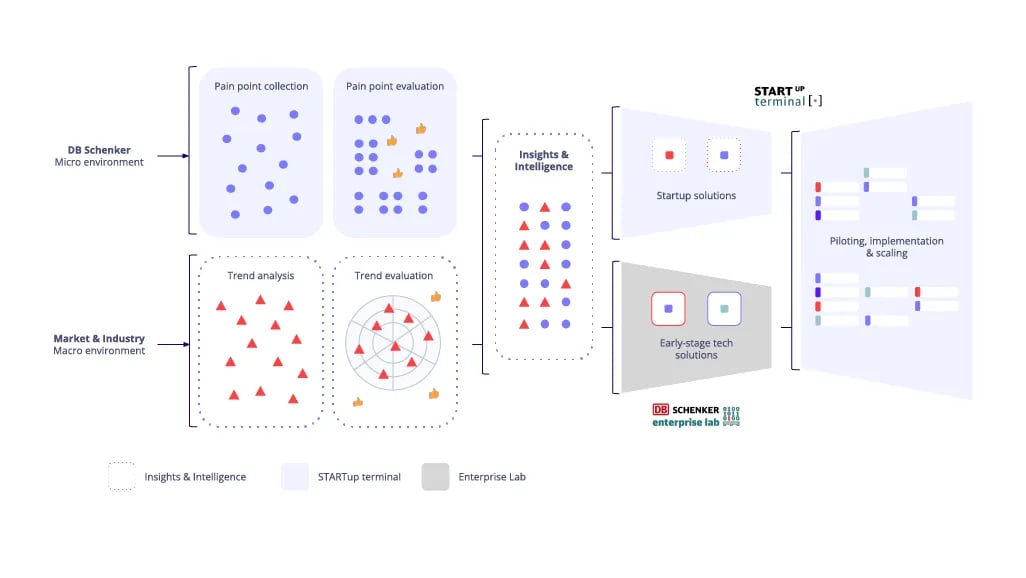
Exhibit 6: DB Schenker Innovation process diagram
Sartorius connected trends, technologies, and innovation projects in a single system for its corporate research team. 60 members across product development areas track and analyze signals in one place. The connected view surfaced 450 collaboration opportunities.
Across these companies, one pattern holds. Scouting earns its budget when it changes an innovation decision based on data-driven insights. Businesses in regulated industries and markets see the sharpest gains, where one funded technology can reset the competitive landscape.
Technology scouting and funding fail when they live in five different tools. ITONICS runs the entire loop on a single connected system and helps teams reduce scouting effort.
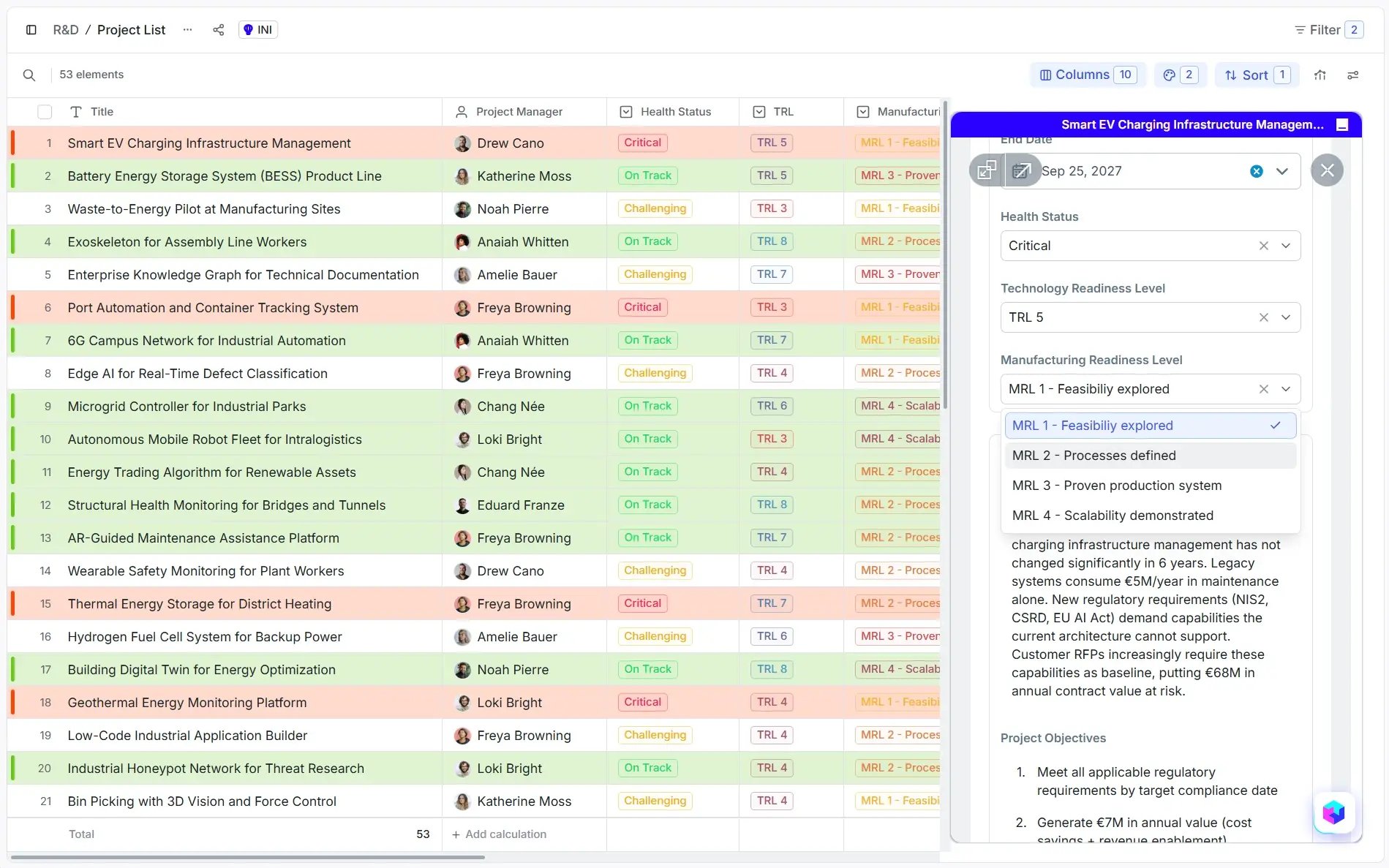
Exhibit 7: A technology list with technology readiness levels inside ITONICS
Prism, the ITONICS artificial intelligence, scans a curated pool of more than 500 million signals from news, patents, and scientific publications. It also connects to the web in real-time. Provide a technology domain, and it returns a fitting technology radar in seconds, segments it, and auto-evaluates entries against your criteria. It tracks momentum over time and alerts you when a technology shifts.
Every signal converts into a technology profile element, the core content unit in ITONICS. Watch an element to receive alerts on its movement. Relate it to projects, score it on a matrix, and move it through configurable phases and gates.
Prism reviews the portfolio and answers the decision question directly: what to stop, scale, or start. Winners hand over into roadmaps and workflows. Board-ready reports export to PowerPoint without a manual rebuild.