7 innovation intelligence skills that create competitive advantages


75% of failed innovation projects cite "market changed" or "competitor moved faster" as the root cause. When your innovation intelligence is not continuously connected to the market, even perfect execution cannot correct research failure.
Barnes & Noble's Nook demonstrates the high risk of missing the market window. They launched their e-reader in 2009. By then, Kindle had captured 84% market share through early customer lock-in. Nook peaked at $933 million annually but crashed to $146 million by 2016. Barnes & Noble missed critical signals: Amazon's 2007 patents, accelerating customer adoption, and ecosystem strategies.
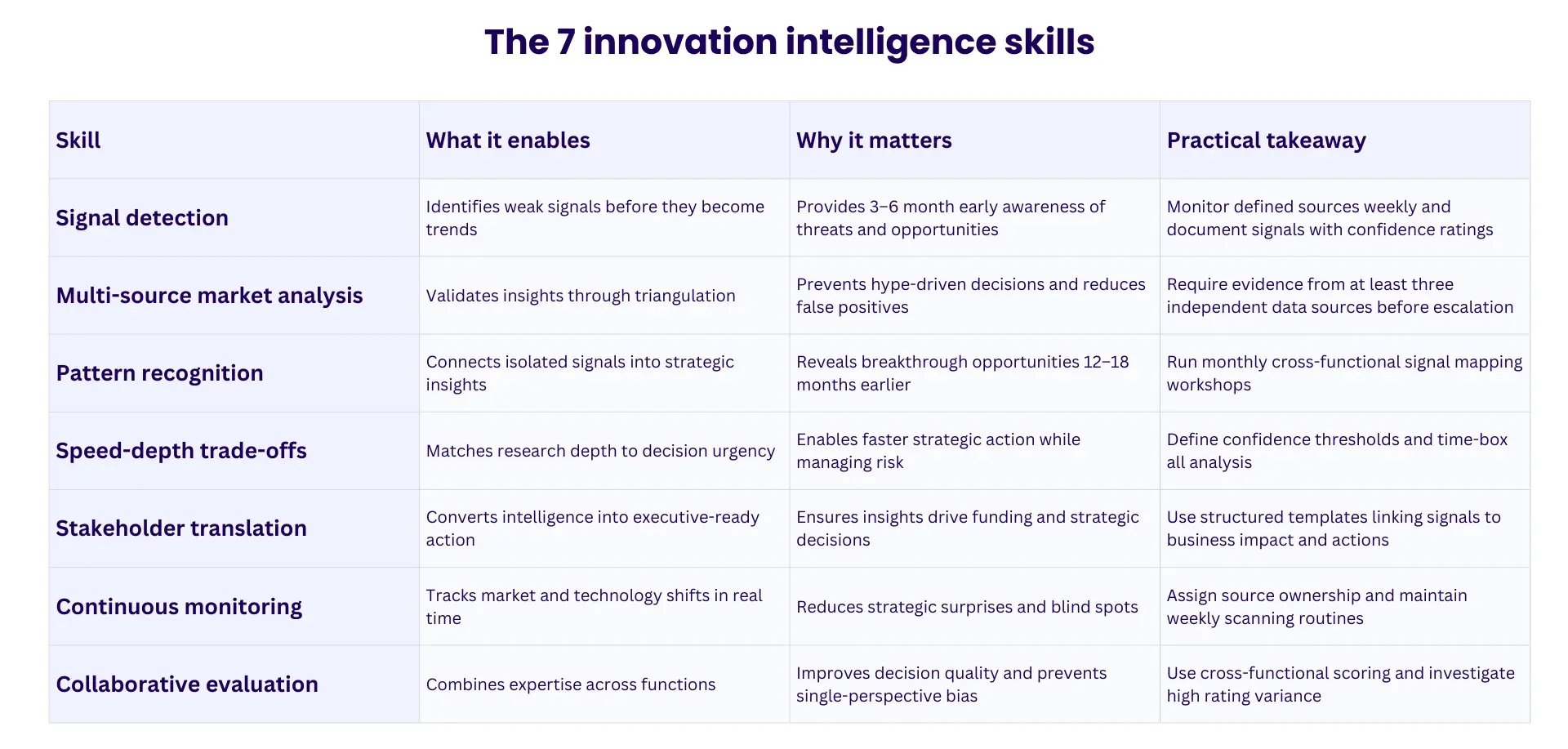
Exhibit 1: The 7 innovation intelligence skills
The failure point sits in intelligence gathering. Teams lack systematic technology scouting to track competitors, innovation scouting to identify threats early, and competitive intelligence to detect market landscape shifts. Strategic decision-making proceeds on outdated assumptions.
This article reveals seven skills that transform competitive intelligence from data collection into early warning systems that protect innovation investments. It also presents a four-step process for skill development by need and capacity.
Competitive intelligence professionals make three systematic innovation intelligence mistakes repeatedly. Each creates blind spots in the competitive landscape that turn into project failures.
Teams scan the market conditions once, during project kickoff. They screen competitor websites, analyze market trends, and document findings in reports for the C-suite. Then they execute for 12-18 months without updating their view of the competitive environment.
/environmental-scanning-process.webp?width=2500&height=1408&name=environmental-scanning-process.webp)
Exhibit 2: 5 steps of the environmental scanning process
Markets don't stand still during development cycles. A medical device company scanned glucose monitoring competitors in January 2023 and found three players. By their March 2024 launch, the competitive landscape had seven major companies. Apple filed 12 non-invasive sensing patents by June 2023. Two startups announced FDA submissions by September 2023. Samsung partnered with a diabetes research institute by December 2023.
The company's intelligence needs were clear, but their one-time approach meant missing five critical market shifts. In a market dominated by Abbott (57% share), Dexcom (35%), and Medtronic (7%), they captured 0.4% market share instead of the projected 1.8%. Their $47 million revenue shortfall traced directly to outdated competitive intelligence.
Companies invest heavily in competitive intelligence and market research subscriptions. Information gathered grows exponentially. Teams present the C-suite with 50-slide decks full of data points.
Yet competitive intelligence professionals know: collecting data differs fundamentally from building intelligence capability. Intelligence develops through practiced interpretation, not accumulated information.
Here's what actually happens in organizations: Automated alerts track patent filings. Market research databases provide industry reports. Startup trackers monitor funding rounds. Teams gather extensive information but lack the skills to extract meaning.
One industrial automation company collected data on 200 robotics startups over 18 months. They tracked funding, patents, and product launches. But they missed Veo Robotics' strategic significance until competitors had already signed partnerships. The information gathered sat unused because no one in the organization could translate signals into strategic recommendations for leadership.
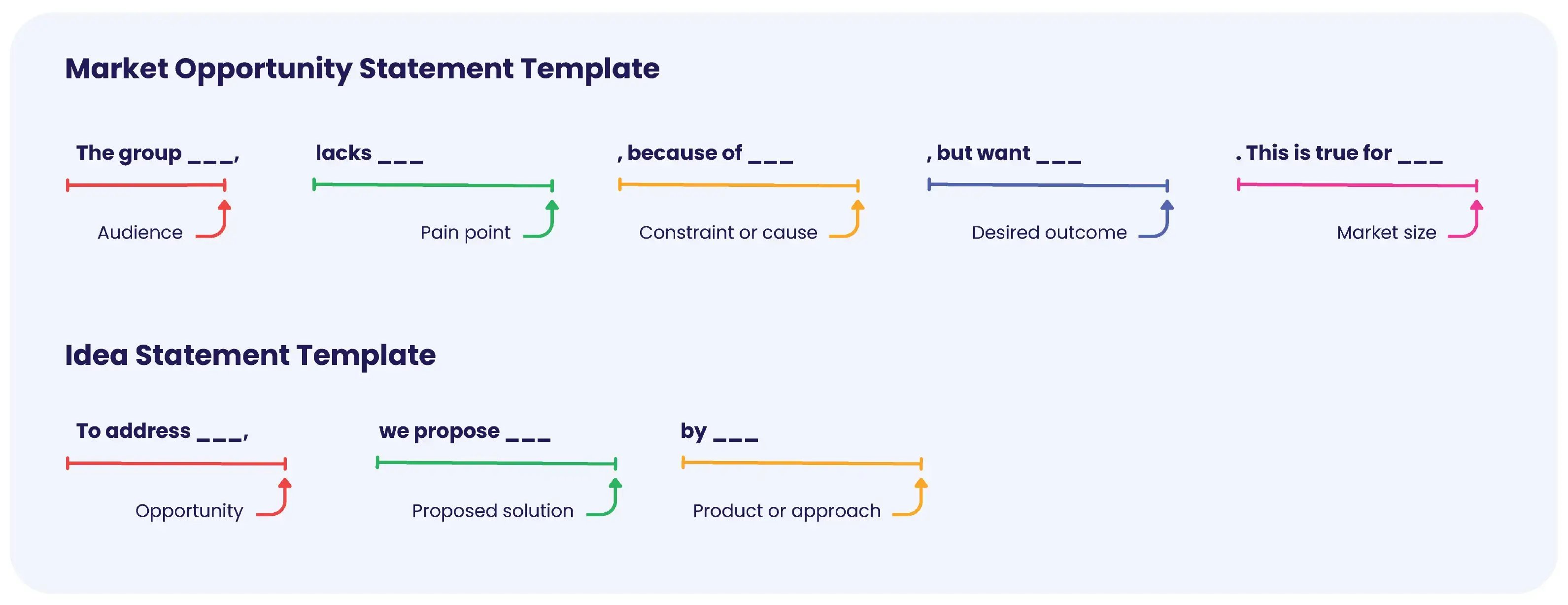
Exhibit 3: Template for formulating an opportunity statement
The interpretation gap determines whether companies anticipate market changes or react after competitors move. Teams produce reports while missing signals. Information accumulates without generating innovative solutions to intelligence needs.
Research shows companies with systematic competitive intelligence processes reduce strategic surprises by 60%. Organizations without early warning capabilities discover threats when response options have narrowed.
90% of innovation projects fail. Many failures stem from strategic surprises that competitive intelligence professionals could have detected: competitor partnerships, technology breakthroughs, regulatory changes, and shifts in competitors' strategies.
A semiconductor company demonstrates the value of early detection. Their competitive intelligence professionals systematically monitored chiplet architecture signals in 2021: AMD filed three patents in six weeks, two startups raised $35M for chiplet AI designs, and four academic papers cited the same interconnect breakthrough. The organization recognized the pattern by October 2021, initiated university partnerships, and filed defensive patents by December 2021.
When the industry shifted to chiplets in 2023, they held a 14-month time-to-market advantage worth $180M in first-mover revenue. Teams with trained technology scouting and innovation scouting skills detect these signals 3-6 months before they become mainstream knowledge across companies in the industry.
Innovation intelligence transforms scattered data sources into strategic advantage. It's an organizational capability that identifies potential opportunities before competitors, allocates resources to high-impact initiatives, and connects relevant information to business strategy decisions.
The capability combines three practices: Technology scouting tracks breakthrough and emerging technologies. Innovation scouting identifies startups and innovation opportunities. Competitive intelligence monitors market shifts and competitor movements.
Most organizations collect data. Few extract meaning. Innovation intelligence builds specific interpretation skills: recognizing patterns across patent filings, startup funding, and academic research; triangulating signals from multiple data sources to validate insights; and setting explicit confidence thresholds before analysis begins.
Teams practicing these skills reach decisions at 80% confidence in two weeks by knowing when enough relevant information exists, while others spend two months gathering every data point before acting. Being supported by competitive intelligence tools for innovation significantly reduces effort and increases decision confidence.
Innovation intelligence consists of seven trainable skills that create competitive edge through early detection of market insights and technology shifts. These skills transform how organizations identify innovative ideas, allocate resources, and stay ahead of competitors.

Signal detection spots weak signals in noise before they become obvious trends. It separates meaningful technology developments from hype, identifying threats and opportunities 3-6 months before mainstream awareness.
What it is: A systematic process for monitoring specific sources daily. Technology leads scan for "breakthroughs" or "novel approaches" in target domains. Market leads track startup funding patterns. Strategy leads monitor USPTO patent filings from competitors and tech companies. Each person saves 2-3 key signals weekly in a shared database with source links and confidence ratings.
What it avoids: Random browsing that wastes time. Teams without signal detection rely on conferences, industry reports, or chance discoveries. They miss critical signals because no one monitors systematically. Challenges include separating genuine breakthroughs from marketing claims and academic research that won't commercialize for decades.
How to train: Subscribe to domains of interest and activate AI alerts to receive relevant updates. Each team member can further define sources: patent databases, startup trackers, academic journals, technology news. Check domains and sources for 30 minutes daily. After three months, pattern recognition improves 3x. The key is consistency. Daily scanning beats quarterly deep dives for developing this skill.
/Still%20images/Element%20Mockups%202025/foresight-stay-in-the-loop-2025.webp?width=2160&height=1350&name=foresight-stay-in-the-loop-2025.webp)
Exhibit 4: ITONICS alert informing about an increase in the trend "Autonomous Networks"
Single-source intelligence creates blind spots. Market analysis requires triangulating across an extensive range of data: patents reveal where R&D investments concentrate, startup funding shows where capital sees potential, academic research indicates breakthroughs approaching commercialization.
What it is: A validation process requiring three different signals showing the same pattern. New patents filed. Increasing investment in a startup. Competitive moves from product launches, partnerships, and M&A announcements.
What it avoids: Chasing hype cycles based on single events. One startup raising funding doesn't signal a trend. One patent doesn't indicate market movement. One research paper doesn't confirm technology viability. Teams practicing source triangulation waste less time on false signals. The process catches when technology looks promising in research but has no commercial path, or when startups raise funding despite weak market fit.
How to implement: Before any strategic recommendation, complete a triangulation checklist. Score each insight: Patent evidence (found/not found), startup activity (company names, funding amounts), academic research (paper titles, citation counts), market signals (revenue data, adoption rates), competitive moves (product launches, partnerships). Require validation across three of five categories. This process takes 2-3 hours for routine opportunities, one week for major strategic decisions.
Pattern recognition connects disparate signals into actionable strategic insights. It reveals convergences that create breakthrough opportunities while competitors still see isolated data points.
What it is: Insights connected from cross-functional teams. All detected signals are classified by technology domain, market segment, and competitive landscape. Visualized on an innovation radar.
What it avoids: Siloed analysis where technology teams miss market implications and strategy teams miss technology shifts. Without pattern recognition, organizations see individual signals but miss the larger trend. Tech companies working separately on similar innovations signal market readiness that single-function teams miss. Teams practicing pattern recognition spot opportunities to improve existing products or develop new platforms 12-18 months before competitors.
How to train: Nominate one person to own the innovation radar. Review all insights captured (typically 50-60 key items) monthly. Check for changes in interest. Add new insights, deprecate irrelevant trends. Re-evaluate all trends with business unit leaders every quarter.
Cross-functional participation is critical (incl. R&D, strategy, business development, and competitive intelligence professionals), each spot different connections. After six months, teams develop intuition for meaningful patterns versus coincidence.
/Still%20images/Radar%20Mockups%202025/capability-views-ease-multi-criteria-decisions-2025.webp?width=2160&height=1350&name=capability-views-ease-multi-criteria-decisions-2025.webp)
Exhibit 5: A trend radar, highlighting the impact of the trend convergence of AI
Perfect intelligence arriving too late delivers zero value. Speed-depth trade-offs match confidence requirements to decision reversibility, creating competitive edge through faster strategic planning.
What it is: Decision frameworks by investment size. Routine updates: 70% confidence, one week, three sources. Strategic partnerships <$1M: 80% confidence, two weeks, five sources. Major platforms >$5M: 90% confidence, four weeks, eight sources. Time-box every analysis before research begins.
What it avoids: Analysis paralysis, where teams research indefinitely while competitors act. Also avoids reckless speed, e.g., major investments at 60% confidence. Challenges include executives uncomfortable with probabilistic thinking.
How to implement: Create decision trees explicitly documenting required confidence by dollar amount and reversibility. Time-box all requests. After the deadline, present findings with confidence assessment. Train teams to articulate: "We're at 75% confidence. Reaching 85% requires four more weeks. Is delay worth the certainty?"
Intelligence in reports doesn't drive action. Strategic planning requires translating innovation intelligence into executive-ready recommendations, connecting technology trends to business strategy.
What it is: Six-question rule for every insight: (1) What changed. (2) Confidence level with sources. (3) Timeline to impact. (4) Revenue opportunity or risk in dollars. (5) Action options with owners. (6) No-action consequence. Example: "AMD filed three chiplet patents (85% confidence). Impacts in 18 months. Risk: $50M advantage to competitors. Options: partnerships, acquisitions, licensing. No action: 12-month market delay."
What it avoids: Data dumps overwhelming decision-makers. Executives can't act on "17 startups raised funding." They can act on "startups raised $340M, signaling 24-month commercialization timeline."
How to train: Define the six-question decision rule as Prism context for all recommendations. Role-play presentations with skeptical executives asking "So what?" Review what drives decisions versus generates discussion without action.
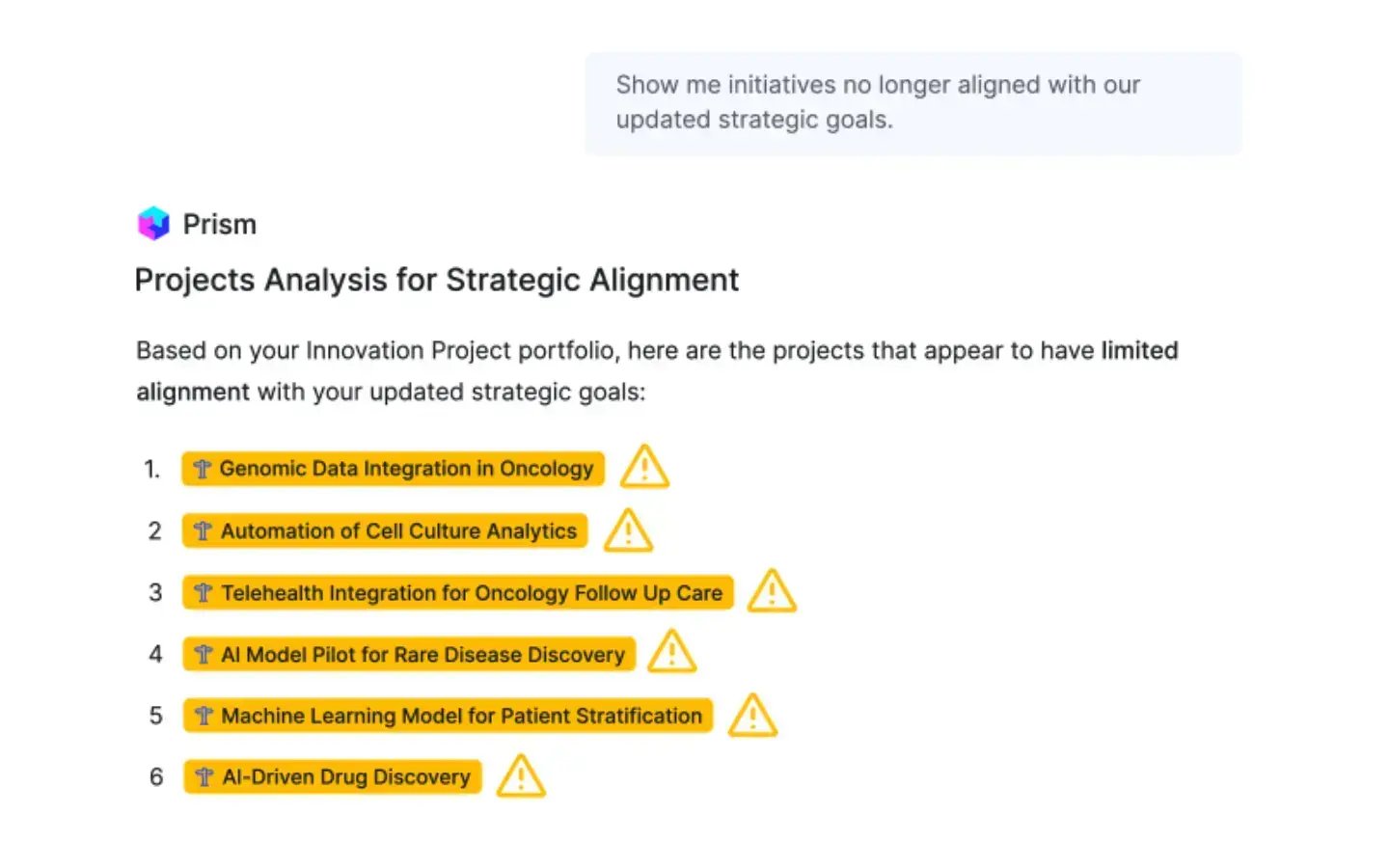
Exhibit 6: ITONICS AI assistant flags off-strategy projects
Periodic scans create intelligence gaps. Continuous monitoring establishes routines that register shifts as they occur, helping organizations stay ahead of technology developments.
What it is: Distributed ownership with velocity-matched cadences. Technology lead: weekly patent searches, monthly landscape updates. Market lead: weekly startup funding checks, monthly ecosystem maps. Strategy lead: weekly competitor news, monthly profile updates. Each maintains dashboard showing signals and update frequency.
What it avoids: Strategic surprises from competitor moves or tech companies announcing partnerships that blindside your organization. Challenges include maintaining discipline during busy periods and avoiding alert fatigue.
How to implement: Assign 3-5 sources per person, 20-30 minutes weekly. Automated alerts provide baseline but require human review. Weekly 15-minute syncs sharing significant signals. Adjust sources quarterly based on what are predicted to be important shifts versus consumed time.
Individual analysis creates blind spots. Collaborative evaluation leverages distributed expertise, surfacing innovative ideas that homogeneous teams miss.
What it is: Cross-functional scoring across seven dimensions: technical feasibility, market opportunity, customer value, strategic fit, partnership quality, financial attractiveness, and competitive dynamics. Each function scores independently (1-5), then discusses the highest variance items. Variance >2 points triggers: "Why do you see this differently?"
What it avoids: Groupthink and single-perspective failures. R&D rates technology breakthrough, while Product knows 40-minute setup makes it commercially unviable. Without collaborative evaluation, organizations pursue technically impressive projects that fail commercially.
/Still%20images/Element%20Mockups%202025/ideation-collaborative-communities-2025.webp?width=2160&height=1350&name=ideation-collaborative-communities-2025.webp)
Exhibit 7: Alert on a new evaluation of an idea with comments | ITONICS
How to train: Start small with three partnership evaluations. Enforce independent scoring before meetings. Practice surfacing disagreements constructively. High variance reveals valuable hidden assumptions. After 5-10 evaluations, teams develop shared language and trust, and diverse perspectives strengthen decisions.
The seven innovation intelligence skills enable four critical functions: innovation scouting, startup scouting, technology scouting, and open innovation. Each requires specific approaches to generate informed decisions about emerging trends.
Innovation scouting identifies opportunities before markets consolidate through signal detection, pattern recognition, and speed-depth trade-offs.
Structure: Assign scouts to three domains: (1) Technology (patents, research, conferences). (2) Market (customer needs, business intelligence, emerging trends). (3) Competitive (startups, tool companies, industry shifts) via search engines and data mining. Each scout monitors 3-5 sources weekly (2-3 hours), documenting signals with confidence ratings.
Monthly synthesis: Cross-functional workshop maps signals. When technology, market, and competitive signals converge on the same theme, opportunity is maturing. Three independent sources at medium+ confidence trigger evaluation.
Decision protocol: 75% confidence launches pilots. 85% initiates partnerships. 90% commits resources for internal development. Speed creates competitive advantage when decisions are reversible.
Critical factors: Define 3-5 technology focus areas. Establish decision authority. Secure buy-in from leadership to act at 75% confidence rather than waiting for certainty.
Startup scouting prevents disruption through early identification. Without intelligence skills, companies discover threats after market share losses.
Funnel structure: Monitor 100 startups (Crunchbase, industry news), track 40 actively (quarterly reviews), evaluate 10 deeply (partnership assessment).
Evaluation framework: Score 1-5 across six dimensions: Technology moats (patents, proprietary data), team expertise (experience, exits), funding quality (investors, runway), customer traction (pilots, revenue), competitive positioning (differentiation), strategic fit (resources required). Only 22+ scores advance to partnership.
Monitoring cadence: Top tier (monthly funding checks), middle tier (bi-weekly updates), bottom tier (weekly dedicated tracking, immediate alerts).
Partnership triggers: Startup scores 22+, technology aligns with roadmap, exclusive partnership window open (pre-Series B), internal factors support partnership (budget, resources, executive buy-in).
Critical factors: Define "relevant" clearly (technology areas, use cases). Assign dedicated resources - fails when added to existing roles. Protect confidential insights when evaluating overlapping technologies.
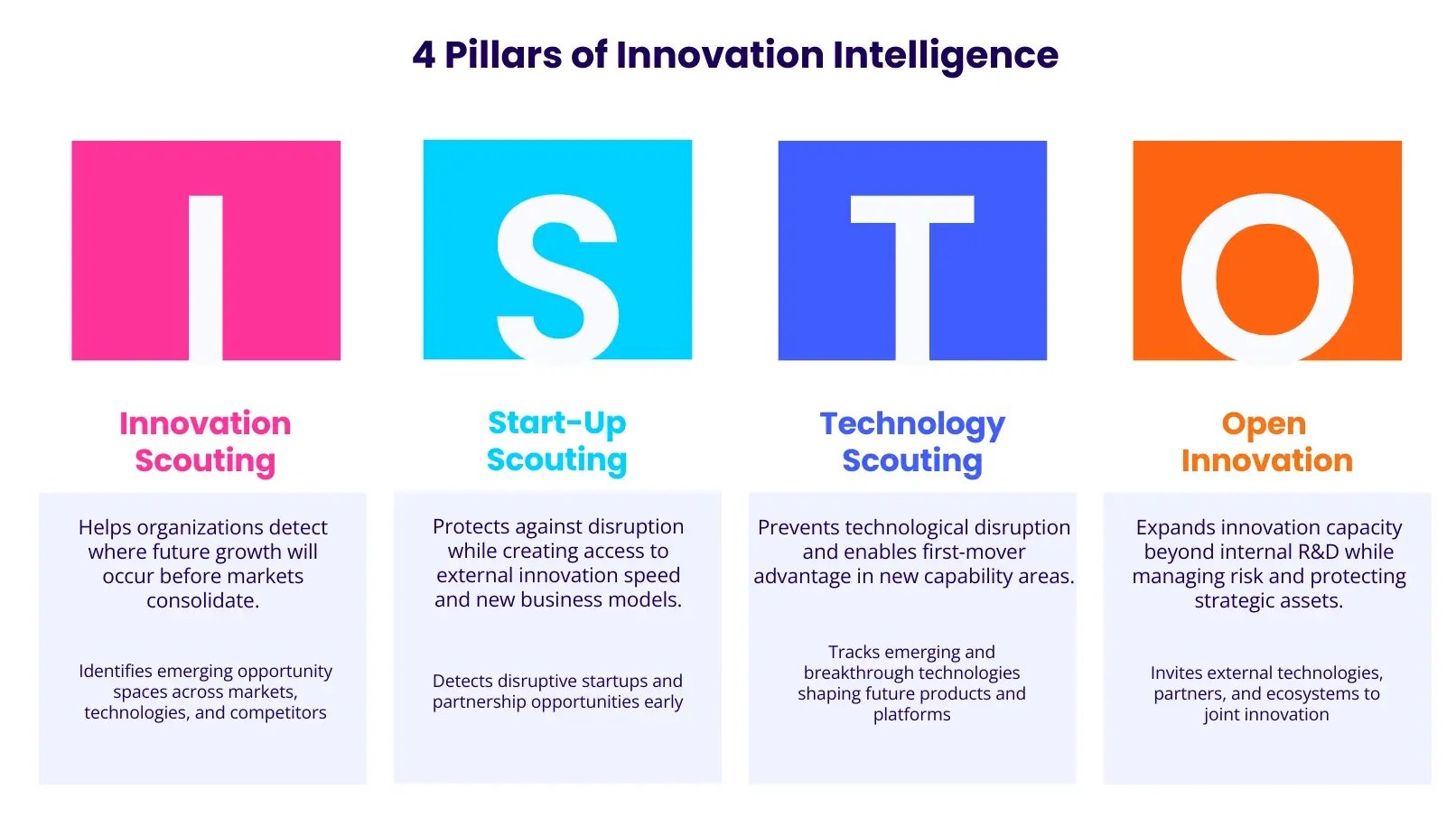
Exhibit 8: 4 pillars of innovation intelligence
Technology scouting detects breakthroughs 24-36 months early, playing a critical role in protecting existing products from disruption.
Four-channel structure: (1) Patent intelligence: weekly USPTO searches tracking 10-15 tool companies. (2) Academic research: monthly conference/journal monitoring, citation velocity tracking. (3) Prototypes: industry shows, press releases for demonstrations. (4) Startup funding: venture investment in technology-specific companies.
Signal classification: One channel = monitor. Two channels = investigate. Three+ channels = evaluate for roadmap impact.
Technology readiness timeline: Lab demonstration (5+ years), working prototype (3-4 years), industry pilots (2-3 years), multiple launches (12-18 months). Informs when to act.
Critical factors: Define 4-6 technology areas (too narrow misses disruption, too broad spreads resources thin). Assign dedicated resources per channel. Establish clear escalation from detection to strategic planning. Act on emerging trends before industry consensus.
Open innovation internalizes external technologies through partnerships, licensing, or acquisition while managing high risk and protecting internal factors.
Validation framework: Before partnerships, validate across five sources: (1) Patent landscape: defensible IP or hype? (2) Startup metrics: funding quality, burn rate. (3) Academic research: proven or speculative? (4) Regulatory status: clear path or risk? (5) Market validation: customer pilots, revenue.
Build-buy-partner decision: Build when internal capabilities are strong and the technology is core to advantage. License when the technology is proven and faster than internal development. Partner when complementary capabilities and shared risk are appropriate. Acquire when technology is critical and the partnership is insufficient.
Negotiation preparation: Map partner's alternatives. Assess leverage. Define must-haves (exclusivity, IP rights) versus nice-to-haves. Secure executive commitment on terms before discussions.
Critical factors: Clear build-buy-partner criteria prevent endless evaluation. Dedicated business development resources for execution. Legal framework protecting confidential information. Integration resources post-partnership. Open innovation fails when external assets sit unused.
Building competitive intelligence for innovation requires systematic skill development. This four-step process creates a lasting competitive intelligence capability that improves decision-making and risk management.
Audit which of the seven skills your team has. Most teams have 2-3 skills partially developed and 4-5 skills absent.
Assess how well you:
detect emerging trends fast enough?
validate insights across multiple sources?
spot patterns in data collected from patents, startups, and research?
make strategic decisions with incomplete information?
stakeholders act on intelligence?
monitor continuously or scan periodically?
cross-functional teams evaluate opportunities together?
Action: Score each skill 1-5. Identifies the starting point and the biggest gaps. Takes 10 minutes.
Don't build all seven simultaneously. Focus on 2-3 skills addressing your biggest gaps and delivering the fastest value.
Quick wins (4-6 weeks): Signal detection plus continuous monitoring creates early warning foundations with low investment. Establish weekly scanning routines across a broad range of sources: patent databases, startup trackers, trade shows, academic conferences, and networking opportunities.
High impact (3-6 months): Stakeholder translation ensures intelligence drives decisions. Pattern recognition and collaborative evaluation deliver innovative solutions but require cultural change.
Role-specific priorities: Technology scouting teams prioritize signal detection and source triangulation. Innovation scouting teams emphasize pattern recognition and speed-depth trade-offs for finding new ideas.
Skills improve through practice. Create specific routines generating repeatable competitive intelligence.
Signal detection: Weekly 30-minute sessions. Each person monitors assigned sources: patents, startups, technology news, generative AI developments, and trade shows. Document 2-3 signals with confidence ratings in the shared database.
Source triangulation: Require validation across three independent sources before escalating to strategic planning. Prevents chasing hype, improves decision-making quality.
Pattern recognition: Monthly 90-minute workshops mapping all data collected. Identify convergences across competitive intelligence, market trends, and technology scouting. Three+ related signals indicate emerging opportunities worth investigation.
Speed-depth trade-offs: Set explicit confidence thresholds by decision type. Reversible pilots: 70-75% confidence. Strategic partnerships: 85-90%. Major platforms: 90-95%. Time-box all analysis.
Stakeholder translation: Template for every insight: What changed? Confidence level? Timeline to impact? Revenue opportunity/risk? Action options with owners? No-action consequence?
Continuous monitoring: Assign ownership. Technology lead: patents (weekly). Market lead: startups, funding (weekly). Strategy lead: competitors, partnerships (weekly). 15-minute weekly syncs sharing significant signals.
Collaborative evaluation: Score opportunities across 5-7 dimensions (technical feasibility, market opportunity, risk management, strategic fit, financial attractiveness). Discuss variance >2 points to surface hidden assumptions.
Tools amplify trained skills. Teams with dedicated market and tech intelligence software become 10x more effective with the right competitive intelligence platforms.
Essential capabilities: Automated scanning across patents, startups, research, and news for signal detection. Unified platforms connecting patent intelligence, startup databases, and market data for source triangulation. Visualization tools (innovation radars) reveal patterns across the data collected. Pre-built templates accelerate analysis. Shareable dashboards for stakeholder translation. Real-time alerts for continuous monitoring. Shared workspaces for collaborative evaluation.
Selection criteria: Supports your prioritized skills. Integrates data sources you actually use. Fits team workflow and decision-making process. Provides ROI through reduced manual work.
Implementation: Start with free resources to build foundational skills. Scale to specialized tools once routines are established. Tools work when skills exist. Purchasing platforms without trained capabilities generate data, not innovative solutions or new ideas.
ITONICS provides the infrastructure for competitive intelligence in innovation, accelerating technology scouting and scaling this foresight capability across organizational teams.
/Still%20images/Radar%20Mockups%202025/foresight-keep-everything-on-your-radar.webp?width=2160&height=1350&name=foresight-keep-everything-on-your-radar.webp)
Exhibit 9: A trend radar is shared with R&D and IT to highlight the updated industry landscape
Centralize scouting intel: Gathering data from diverse external sources, such as industry publications, market reports, competitor websites, and customer feedback, is often inefficient. ITONICS centralizes scouting in one user-friendly platform, allowing you to organize insights on startups, emerging technologies, and trends in interactive radars. This facilitates collaboration among key stakeholders, helps identify patterns, and maintains your competitive edge.
Build engaging reports: Transform your environmental scanning process into actionable insights with customizable, insight-driven reports in ITONICS. Export your results into PowerPoint, embed interactive radars on webpages, or sync your data with digital tools like Power BI or Tableau, supporting the communication of your market intelligence, innovation scouting, and technology scouting results.
Automate opportunity discovery: Manually tracking and innovation scouting requires significant time and resources. ITONICS automates opportunity discovery using artificial intelligence, integrating data from multiple platforms and various tools. It keeps you up to date with the latest political, economic, social, technological, environmental, and legal factors, ensuring you stay ahead of emerging trends, regulatory changes, and potential risks. This provides vital insights for your innovation strategies and process, while respecting data privacy requirements.