A, b or c: Multi-criteria scenario analysis to nail strategic planning


Your strategy team spent three months on strategic planning. Six months later, half your strategic portfolio doesn't work. Markets shifted. Customers changed priorities. Key engineers left.
McKinsey research shows companies that dynamically reallocate resources through strategic portfolio management outperform peers by 2.4 times. Yet most organizations lock portfolios at annual planning and defend single plans regardless of changing reality.
The problem is mathematical. Your firm has finite budget - 100% of available capital. Fifty potential projects compete for funding. Different combinations of projects sum to that 100% but create different risk profiles, time horizons, and strategic outcomes.
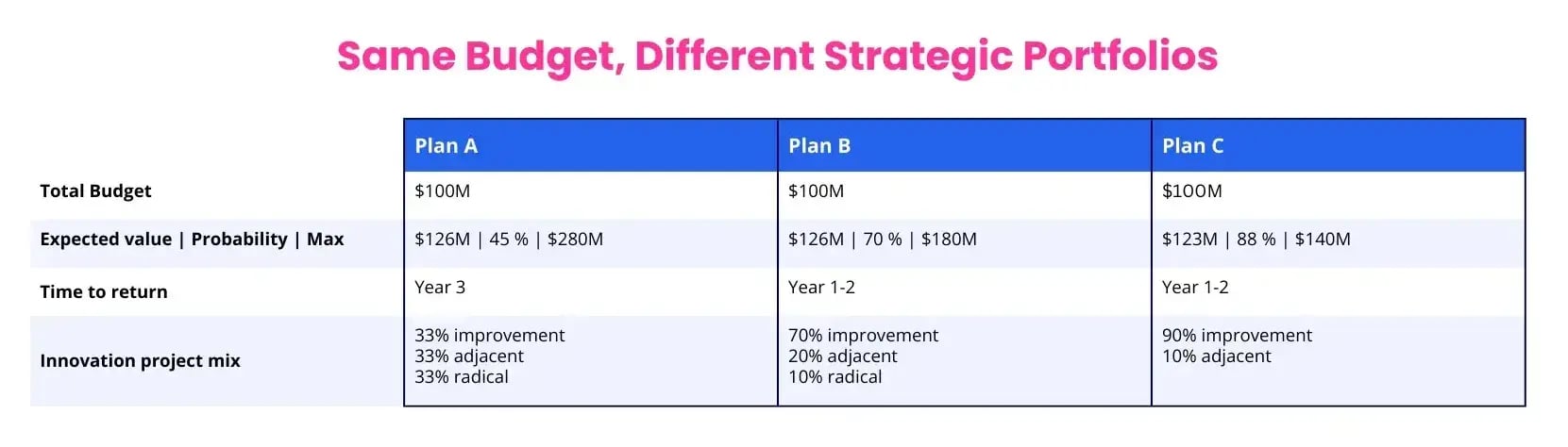
Exhibit 1: Different strategic portfolio scenarios for the same budget
Three large innovation projects versus ten medium improvement projects versus fifteen small customer-focused projects - all fit the budget, all have positive returns, all are fundamentally different strategic choices.
Yes. Strategic planning outperforms ad-hoc decisions by wide margins.
Organizations using strategic portfolio management achieve 2.4 times higher performance than ad-hoc resource allocation, according to McKinsey research. PMI data shows structured strategic planning wastes 12% less investment than ad-hoc resource allocation.
The mechanism? Strategic portfolio management creates enterprise-wide visibility. Transparent frameworks allow the use of the same criteria for evaluating strategic initiatives. It balances resource management across initiatives. It aligns program management with strategic objectives.
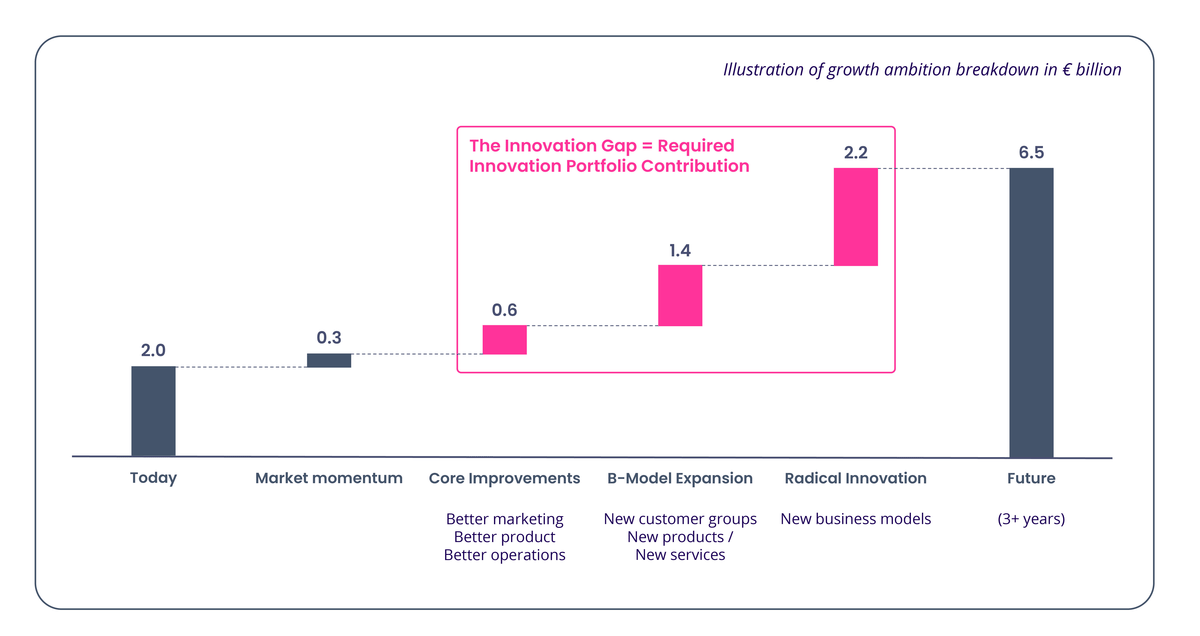 Exhibit 2: Translation of a growth ambition into a strategic portfolio mix
Strategic planning pays off, yet not all strategic plans work as expected. Business priorities change. Resources get thin. Projects delay. Three decision patterns cause most strategic planning failures. Each creates predictable breakdowns in strategic portfolio management.
Strategy teams rank 50 strategic initiatives by projected ROI. They fund the top 15 in business value. Three months later, 8 projects stall because of inefficient resource allocation. Specialized engineers aren't available.
The strategic portfolio is optimized for revenue. It ignored talent constraints in resource management.
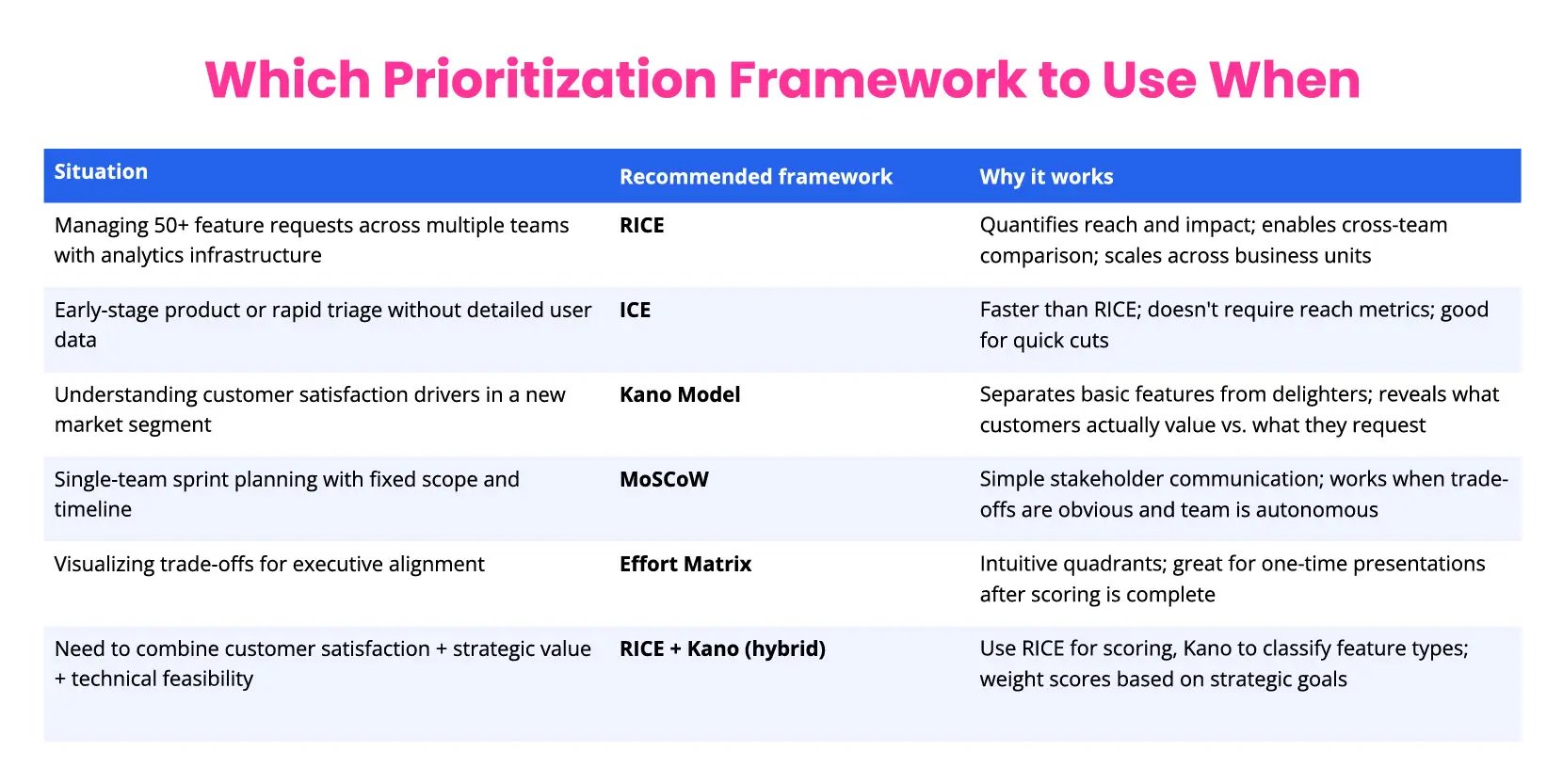
Exhibit 3: Decision matrix showing when to use which prioritization framework
Strategic portfolios require balancing maximizing ROI, capacity planning, customer satisfaction needs, market windows, and capital limits. Optimizing only for one dimension breaks the expected business outcomes.
Single-criteria strategic portfolio management (SPM) risks successful strategy execution. Projects approved in strategic planning fail later because they become irrelevant or have limited resources.
An industrial manufacturer ranked business objectives in January: growth first, efficiency second, innovation third. Portfolio managers allocated 60% of resources to growth initiatives in the project portfolio.
By April, customer satisfaction declined significantly. Retention suddenly determines the portfolio priorities. But portfolio managers had already committed engineering talent to growth projects. Rebalancing meant stopping business work mid-stream.
Strategic trade-offs compete in strategic decision-making. Growth demands investment. Efficiency requires cutting costs. Both can't win simultaneously in resource allocation.
Context changes fast. Basing corporate strategy on one single, irreversible plan puts organizational goals at risk from the beginning.
Minimizing risk means balancing trade-offs and constructing multiple roadmaps. Comparing plans makes potential threats and possible outcomes visible to business leaders. Based on this, organizations can better ensure business agility and connect strategy to market conditions.
A software company completes strategic planning in December. They approve their strategic portfolio investments for the year. Program management starts execution in January.
By March, a competitor launches a feature that customers demand. By May, two key engineers quit. By July, a major customer requests urgent capabilities.
The strategic portfolio can't adapt. Rebalancing requires waiting until December because that is when the next strategy review meeting occurs.
Real-time performance dashboards stop the waiting and enable agile strategy adaptations.
Multi-criteria scenario planning builds three different strategic portfolios: Plan A, Plan B, and Plan C. Each portfolio composition faces the same constraints: talent availability, investment capital limits, and strategic ambition.
Based on each project's costs, expected revenue, cost of delay, and probability of success, different strategic portfolio compositions are tested. Each balances multiple constraints and aligns with the organization's strategic objectives (Exhibit 4).
The goal of this approach is not to predict which strategy will succeed but to identify which strategic portfolio composition remains executable and aligned with windows of opportunity and ambitions.
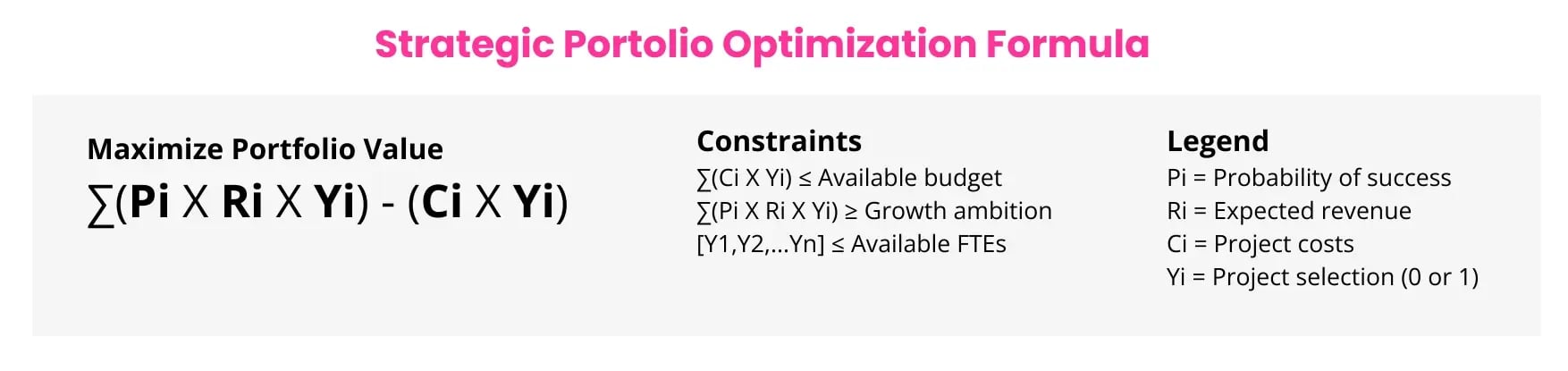
Exhibit 4: Strategic portfolio optimization formula
Strategic portfolio management is a constrained optimization problem with subjective inputs.
Your budget is fixed. Call it $100M or 100% of available capital. You have 50 projects requesting $400M total. You must choose which combination fits your budget constraint.
But "optimal" depends on four variables:
Risk appetite. Three projects at $33M each concentrate risk. Ten projects at $10M each diversify risk. Fifteen projects at $6.7M each spreads risk thin. Same budget. Different risk profiles. A startup surviving on remaining cash chooses differently than a mature firm with $2B reserves.
Time horizon. Large platform investments return value in Year 3. Medium vertical solutions return in Year 1-2. Small improvements return in Months 6-12. Which timing matches your strategic situation? Public companies facing quarterly earnings pressure need different portfolios than private firms with patient capital.
Project characteristics. Fifteen small projects could mean fifteen innovation bets serving future customers. Or fifteen improvement projects optimizing current operations. Same budget allocation. Same diversification. Completely different strategic outcomes. Innovation builds future capabilities. Improvement maximizes current performance.
Organizational constraints. The "optimal" portfolio on paper falls apart if you lack the talent to execute it. Manufacturing bottlenecks. Capital availability. These binding constraints eliminate portfolios regardless of expected returns.
This is why scenario planning beats optimization formulas.
You can't calculate the "best" portfolio without first deciding: What's our risk tolerance? When do we need returns? Are we prioritizing the future or today? Is our organization ready?
Multi-criteria scenario planning makes these choices explicit before project selection, rather than hiding them within weighted scoring formulas.
Traditional strategic planning separates three functions.
Strategy teams set strategic objectives.
Program management executes project portfolios.
Market intelligence tracks competitors.
This separation creates failures. Strategy commits to strategic management priorities. Two months later, program management discovers talent constraints making execution impossible. Nobody connected the dots.
Organizations connecting these three functions in one system reduce failures by 60-70%. When program management identifies a constraint, strategy immediately sees it in the decision-making process. When market signals shift, both strategy and execution respond together to stay competitive.
/Still%20images/AI%20Mockups%202025/capabilities-collaboration-one-single-source-of-truth.webp?width=2160&height=1350&name=capabilities-collaboration-one-single-source-of-truth.webp)
Exhibit 5: AI-powered Strategy Operating System
Strategic portfolios require simultaneous optimization across five dimensions. Business strategy breaks when you optimize one dimension and ignore others.
Ambition: Growth vs. stability. Aggressive expansion requires capital and talent. Conservative approaches preserve resources. Most strategic management does not explicate the ambition, leading to wrong prioritization of desired strategic outcomes, resources, and manufacturing timing.
Scope: Innovation vs. improvement. What is more important: maintaining alignment with the existing customer base or future customers, securing the current operating model, or investing in the future operating model? Without a clear connection between ambition, scope, and portfolio risk assessment, plans put the strategy execution process on the wrong track.
Talent: Available vs. not available. Strategic objectives requiring specialized skills you don't have will fail. Key performance indicators must include talent feasibility.
Timing: First mover vs. fast follower. Being first requires heavy investment with uncertain returns. Following requires watching competitors spend first. Both strategies need different available resources and an initiative sequencing.
Capital: Debt-financed vs. conservative. Leverage accelerates growth but increases risk. Conservative approaches limit upside but preserve stability. Strategic management must choose explicitly in business strategy.
List all strategic initiatives currently in your portfolio management plan.
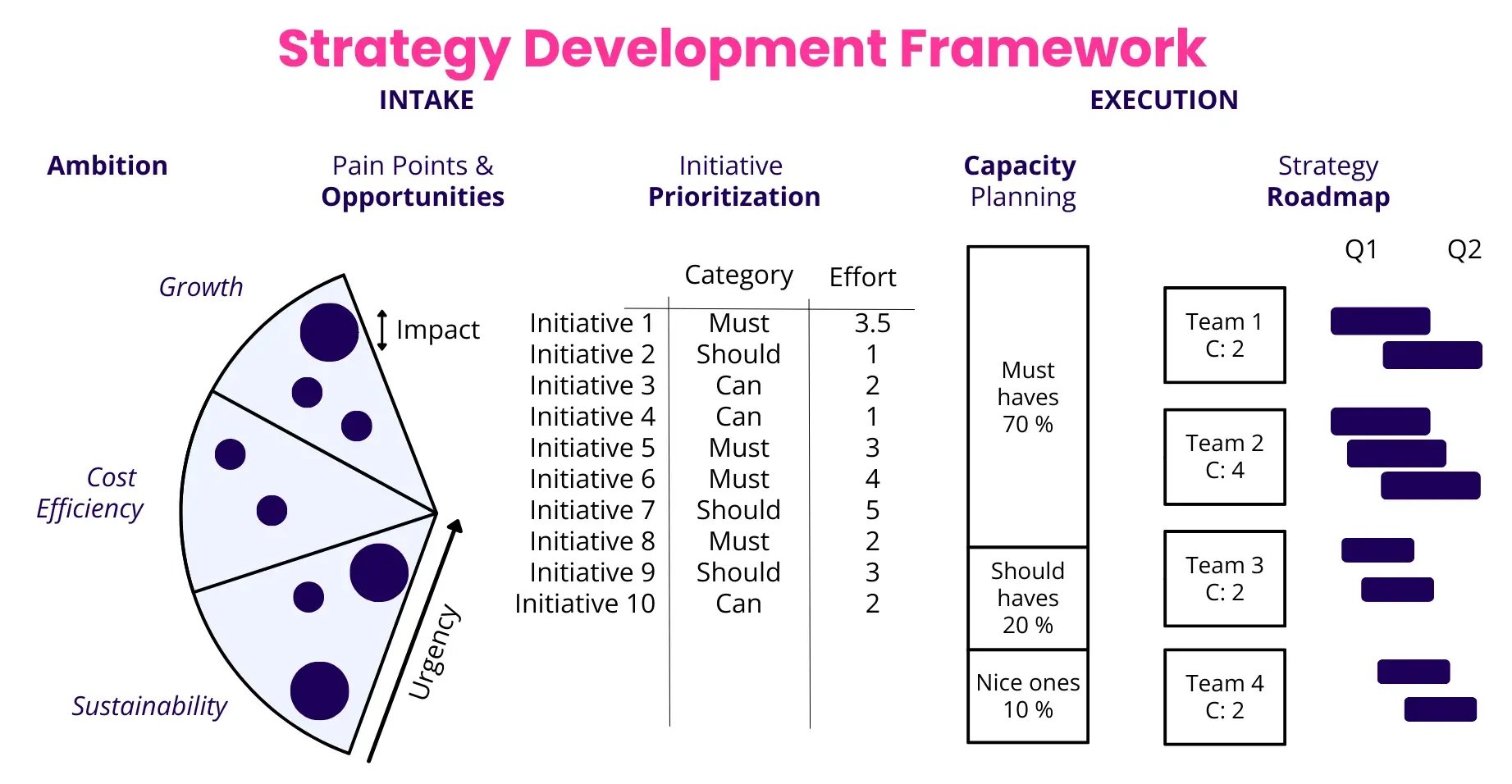
Exhibit 6: Strategy development framework
For each initiative, document: engineering headcount, capital investment as % of total budget, specialized skills required, manufacturing capacity needed, time to revenue, project type (innovation vs. improvement).
Your budget is finite - call it 100%. Different combinations of projects sum to 100% but reflect different strategic choices. The math is simple. The strategy is complex.
Identify your primary strategic tension. Most organizations face one of three core trade-offs:
Risk-reward spread: Concentration (3 large projects) vs. diversification (15 small projects)
Time horizon: Returns now (quick improvements) vs. returns later (platform investments)
Strategic scope: Innovation (future capabilities) vs. improvement (current optimization)
These decisions interact. Concentrated portfolios with innovation projects and long time horizons require high risk appetite and patient capital. Diversified portfolios with improvement projects and short time horizons fit conservative risk profiles and immediate revenue needs.
Build Plan A, optimizing for concentration. An automation company puts 80% of engineering into platform development. Fewer initiatives. Deeper investment. Longer revenue timeline. Lower execution risk from focused talent in program management.
Build Plan B, optimizing for diversification. The same company spreads engineering across platform work, three vertical solutions, and geographic expansion. More initiatives. Faster revenue. Higher execution risk from fragmented talent.
Build Plan C as a hedge. Balance platform investment with selective vertical expansion. Medium concentration. Medium risk. Tests whether the middle path maintains strategic objectives better than extremes.
Test each plan against all five dimensions. Score talent availability (can you actually staff this?), capital requirements (do you have the money?), market timing (will windows stay open?), risk tolerance (can you handle failures?), and strategic alignment (does this serve your ambition?).
Calculate which strategic portfolio stays coherent when key performance indicators shift. Plan A might score highest on talent utilization but lowest on revenue speed. Plan B might maximize revenue but break on talent constraints. Plan C might balance dimensions but excel at nothing.
The comparison reveals trade-offs. You're not predicting which strategy succeeds. You're matching which portfolio management approach fits your resources, markets, or strategy.
Three companies show how scenario-based strategy management changes portfolio decision-making when trade-offs become explicit.
Procter & Gamble managed 100+ brands as market leader. The strategic portfolio generated significant revenue but spread resources thin across initiatives.
Three scenarios emerged in decision-making. Plan A maintained all brands with incremental allocation. Plan B concentrated on 65-70 core brands with deeper investment per brand. Plan C pursued aggressive pruning to 40-50 flagships.
Plan A projected the highest revenue. Multi-criteria analysis revealed resource constraints would hinder progress. Marketing, R&D, and supply chain spread across brands with varying strategic value. Talent is diluted rather than concentrated on business goals.
Plan B scored lower on revenue but higher on resource efficiency. Fewer brands enabled deeper investment in innovation per brand. The concentrated strategic portfolio aligned better with business objectives.
P&G chose Plan B, divesting dozens of brands.
Learning 1: When resources constrain execution, concentration outperforms diversification in strategy management even when diversification projects higher revenue for strategic goals.
A pharmaceutical company evaluated 10 clinical programs across 5 therapeutic areas in its strategic portfolio.
Plan A pursued all 10 programs. Plan B concentrated on 6 programs plus a manufacturing scale-up investment. Plan C focused on 4 programs plus digital infrastructure.
Standard analysis favored Plan A for business goals. Multi-criteria scenario planning revealed that manufacturing capacity was limited. If multiple programs succeeded, the company couldn't scale more than 2-3 products commercially.
Plan A created a success trap. Clinical wins would hit manufacturing bottlenecks and hinder progress toward business objectives. Plan B addressed constraints proactively with specific initiatives for capacity.
The company chose Plan B to maintain alignment between pipeline and manufacturing.
Learning 2: Strategic management requires identifying operational constraints beyond business metrics. Plans ignoring scaling challenges create a success trap - technically successful, failing organizationally.
An industrial manufacturer evaluated vertical expansion, geographic growth, or platform investment in decision-making for their strategic portfolio.
Plan A pursued vertical solutions. Plan B emphasized geography. Plan C prioritized platform capabilities.
Revenue projections favored Plan A. Talent analysis revealed that Plan A required specialized engineers that the company couldn't hire within the timelines to achieve strategic goals.
Plan C scored lowest on Year 1 revenue but highest on talent utilization. Platform work used existing capacity efficiently and built capabilities for future expansion aligned with business objectives.
The company chose Plan C to maintain alignment between ambition and resources.
Learning 3: Strategic ambitions cannot go beyond resource constraints.
Most organizations manage strategic portfolios across disconnected tools. Finance uses Excel. Strategy uses PowerPoint. Program management uses project software. Market intelligence sits separately.
This breaks decision-making. Strategy commits resources based on outdated data. Market signals don't trigger rebalancing.
Strategic portfolio management (SPM) software centralizes these functions to connect strategy with execution and enable informed decisions.
Evaluating 40 initiatives against 7 criteria creates 280 data points. Spreadsheets can't handle this complexity at scale.
SPM platforms integrate data from all functions. Financial models, resource capacity, talent availability, customer priorities, and market intelligence operate together. When manufacturing capacity changes, portfolio scenarios update immediately. When strategic priorities shift, alignment scores recalculate across initiatives.
/Still%20images/Radar%20Mockups%202025/capabilities-collaboration-clustering-evaluating-viewing.webp?width=2160&height=1350&name=capabilities-collaboration-clustering-evaluating-viewing.webp)
Exhibit 7: Project radar showing projects with status "challenging"
Everyone stays on the same page for portfolio decisions to measure progress toward business outcomes.
Comparing three portfolio scenarios across seven dimensions generates hundreds of trade-offs. Human teams can't synthesize this complexity in decision-making.
AI evaluates portfolio compositions against all constraints simultaneously. It identifies bottlenecks. It flags when market signals suggest breaking assumptions. It surfaces which scenario matches emerging conditions.
ITONICS uses Prism, AI understanding strategic portfolio context. When program management reports delays, Prism assesses portfolio impact immediately. When customer priorities shift, Prism recalculates strategic alignment. When market changes threaten business priorities, Prism identifies which composition stays resilient.
AI synthesizes complexity humans can't hold and surfaces trade-offs for business outcomes.
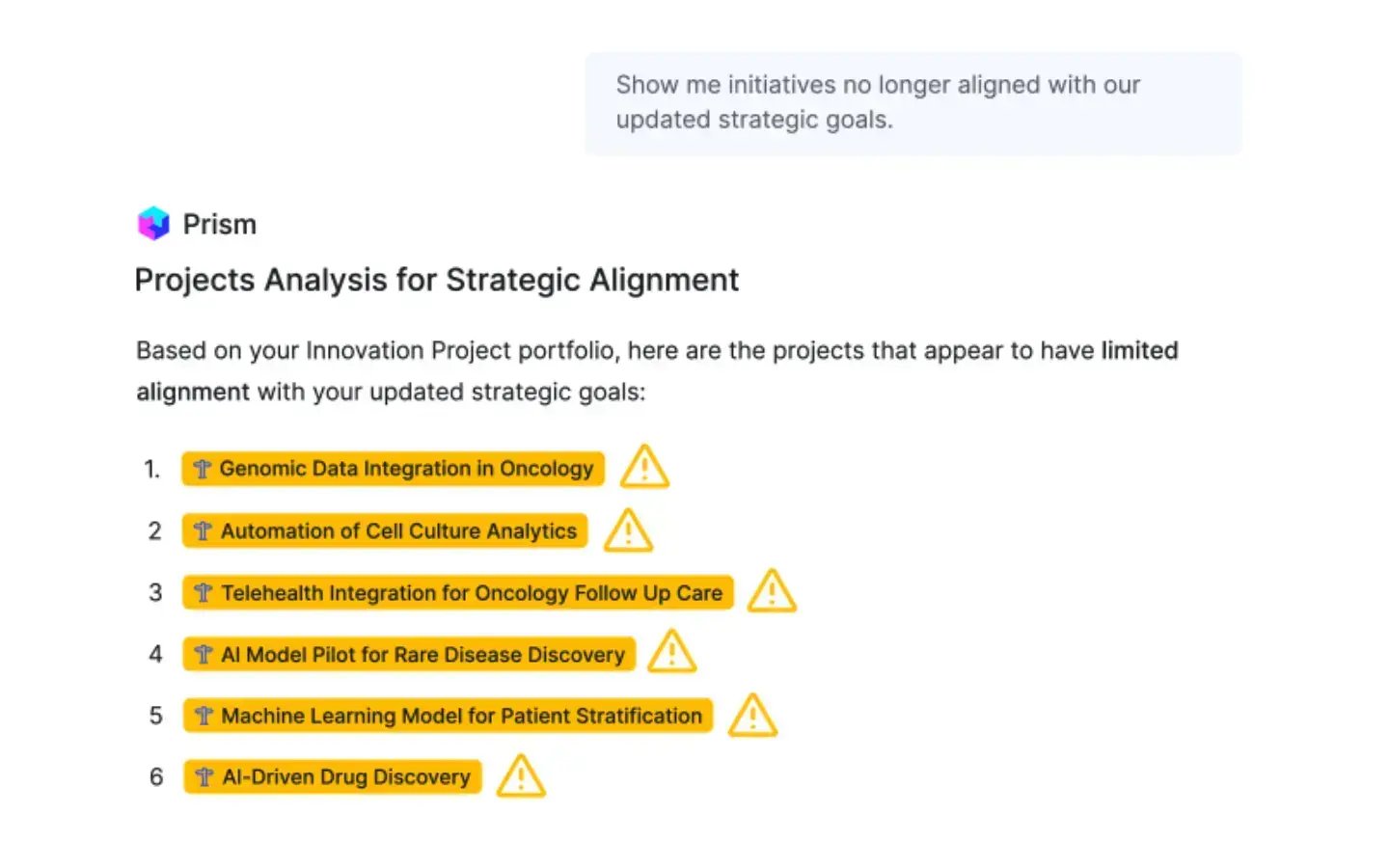
Exhibit 8: ITONICS AI assistant flags off-strategy projects
Traditional SPM requires weekly meetings to synchronize. That is the definition of resource waste.
Unified platforms synchronize automatically. When engineering updates capacity, strategy sees it. When finance adjusts budgets, scenarios reflect constraints. When marketing reports shift, alignment recalculates.
ITONICS connects strategy definition, program execution, and resource management. Updates propagate instantly. Teams work from the current reality to connect strategy with execution and measure progress toward shared business priorities.
Strategic portfolio management (SPM) requires continuous prioritization. ITONICS enables scenario-based decisions through integrated capabilities connecting market signals, priorities, and resource constraints.
Test portfolios before committing resources: ITONICS lets strategy teams build and compare Plans A, B, and C before locking in resources. Leadership sees which strategic portfolio management composition maintains alignment with measurable goals when assumptions break, enabling informed decisions about initiative planning.
Rebalance portfolios as conditions change: ITONICS monitors leading indicators and alerts when signals suggest breaking assumptions. Strategy teams rebalance strategic portfolio management within weeks instead of waiting for annual cycles to maintain alignment with the business direction.
Synchronize cross-functional perspectives: When functions work from different data, scenarios diverge and progress slips. ITONICS provides unified visibility for strategic portfolio management. When program management updates its status, strategy sees reality immediately. This ensures everyone aligns on which specific projects advance strategic objectives and measurable goals.