Venture clienting vs corporate venture capital in industrial companies

Most industrial companies have a startup access problem in their heads and a startup adoption problem in reality. They build a corporate venture capital fund, write checks, and collect logos. Then the equity sits in a portfolio while the production line never changes.
Across two decades, roughly 1,000 CVC units launched globally, covering about 5% of corporations above $1 billion in revenue. Yet only about 10% of startups in CVC portfolios ever form an operating partnership with the parent.
That gap is the real cost. You can own a stake in a startup and still never use its technology. For industrial companies under margin and time-to-market pressure, ownership is the wrong goal. The strategic benefit comes from adopting the product, not holding the equity.
This article compares venture clienting and corporate venture capital on the terms that matter to industrial firms: speed, cost, risk, and measurable business impact. But with the help of the 7-step process for venture clienting, industrial companies can turn startup engagement into repeatable system (Exhibit 1).

Exhibit 1: The 7-step venture client process for industrial companies
Corporate venture capital (short: CVC) works as designed. The design is just aimed at the wrong outcome for most industrial companies. CVC optimizes for equity exposure to promising startups, but not for getting startup technology into your plants, products, and internal processes.
A corporate venture capital unit positions the company as a minority, non-controlling investor. The pitch is strategic access plus financial returns. The data tells a harder story.
Only about 10% of startups inside CVC portfolios ever enter any partnership with the parent corporation.
The other 90% deliver a cap-table line item and little operational change.
For industrial companies, that ratio is brutal. You wanted faster brake-sensor calibration or a new battery-inspection method. You got a 4% equity stake and a quarterly valuation update. Equity investments tie up capital without guaranteeing that the startup technology reaches a single business unit.
Venture capital deals are slow and expensive by nature. A typical CVC stake runs $0.5M to $5M for up to 5% equity. Add $50,000 to $100,000 in due diligence, plus legal and board cycles measured in months. Every deal carries that overhead before any startup product touches your operations.
Speed matters more in industrial settings. A competitor running a venture client model can pilot the same startup solution in weeks. By the time your investment committee approves a stake, the early adopters have already validated the technology. Significant risks pile up when the vehicle is built for ownership rather than use.
Venture clienting flips the logic of corporate venturing. Instead of buying equity in a startup, you buy and use the startup's product to solve a real business challenge. Gregor Gimmy coined the term venture client at BMW in 2014 and built the world's first dedicated venture client unit, the BMW Startup Garage.
Venture clienting focuses on direct integration and adoption of startup solutions. You pay for the product, run a paid pilot, and measure business value against defined success criteria. The startup gets a marquee early customer and revenue. You get the technology in production without equity risk.
This reframes the build-versus-buy question for industrial companies. You are not betting on a startup's valuation. You are buying access to innovative technologies that solve specific business goals. If the pilot fails, you stop. There is no stranded equity to write down.
A dedicated venture client unit operates like an internal procurement and adoption engine for external innovation. Venture client teams run startup scouting against defined challenges, then move winners into pilot projects fast. The job is adoption, not investment.
The structure changes outcomes. The State of Venture Client report from 27pilots found that companies with dedicated units are twice as likely to be satisfied with both the quantity and quality of startup solutions they adopt. Of those with dedicated units, 75% report satisfaction with startup quality. Half of the companies without a unit cannot reliably identify high-quality startup products at all.
Neither model is universally better as they answer different questions.
Corporate venture capital answers "how do we gain financial exposure to a startup we believe in."
Venture clienting answers "how do we use the best startup technology to win, now, at low risk.".
Therefore, a comparison of both can be found below (Exhibit 2).
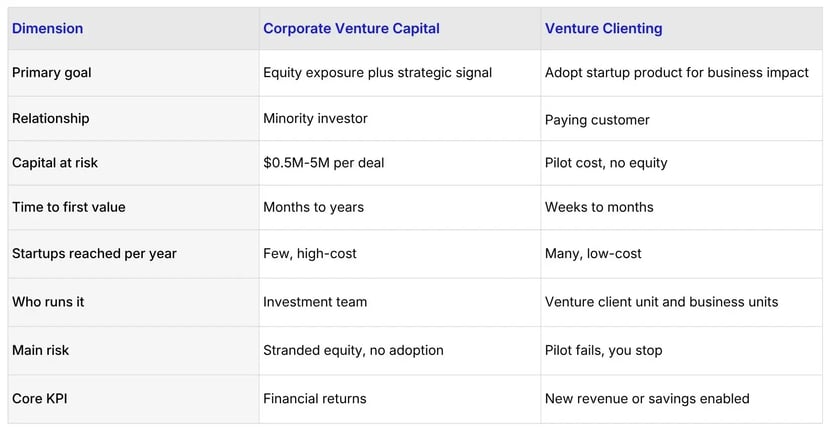
Exhibit 2: Comparison of corporate venture capital and venture clienting
Corporate venture capital fits specific situations.
Use it when you want a financial stake in a startup whose category you intend to enter through acquisition.
Use it when board-level signaling to an ecosystem matters as much as the technology.
Use it when a controlling investment or future M&A is the real plan.
Some companies run both. BMW kept investment vehicles alongside the BMW Startup Garage. The two are complementary when each is pointed at the goal it actually serves: equity for ownership plays, venture clienting for adoption.
For most industrial business challenges, venture clienting wins on every operational metric. It reaches more relevant startups, at lower cost, with faster pilots and clearer measurable outcomes. BMW used the venture client model to adopt 10x more startup technologies, at higher speed and quality and lower cost and risk than its alternative venturing approach.
The market has noticed. Familiarity with the term venture client among corporates rose from 73% in 2023 to 92% in 2024. Around 90% of corporations now seek value through direct commercial engagement with startups rather than equity investments. Venture clienting supports the outcome industrial companies actually need: startup technology in production, not on a cap table.
A venture client process turns startup engagement into a repeatable system. Use these seven steps to run venture client operations that produce business value, not activity reports (Exhibit 3).

Exhibit 3: The 7-step venture client process for industrial companies
The strongest evidence for venture clienting comes from the industrial companies that built it. These are not pilots of pilots. They are operating units with years of measurable success.
BMW Startup Garage launched in 2014 as the world's first venture client unit. The premise was that BMW could be a great client for startups, because every startup needs early customers. The unit scouts startups against BMW's engineering and product needs, then runs paid pilots that feed straight into operations.
The model spread across industrial sectors. Bosch built Open Bosch in 2017 to run corporate startup collaboration at scale, later refining its venture client process with outside support. Holcim created MAQER to bring startup innovations into building materials and construction. Siemens runs Siemens Energy Ventures and Station X for startup engagement in energy and industry.
Venture clienting fails when it runs on inboxes and spreadsheets. Fifty startup proposals scattered across email is not a venture client process. It is a data graveyard. ITONICS gives industrial companies the system of record that venture client teams need to scout, evaluate, and adopt at scale.
ITONICS runs startup scouting against your defined business challenges. AI-enabled signal feeds surface promising startups and new technologies across the startup ecosystem (Exhibit 4). Configurable campaigns let you publish challenges publicly and invite external startups to pitch, then collect every submission in one place.
/Still%20images/ideation-find-new-start-ups-2025.webp)
Exhibit 4: Scout innovative partners and evaluate fit with shared ratings, workflows, and views
From there, venture client teams score relevant startups with custom criteria and collaborative ratings. You set measurable success criteria up front and track each pilot against them. Decisions become data-driven, which is what internal stakeholders and skeptical business units demand.
The deeper value is connection. ITONICS links startup partners to the trends, technologies, and projects they serve, so venture client activities sit inside your broader corporate innovation portfolio. A shared canvas aligns goals and responsibilities across each corporate-startup partnership.
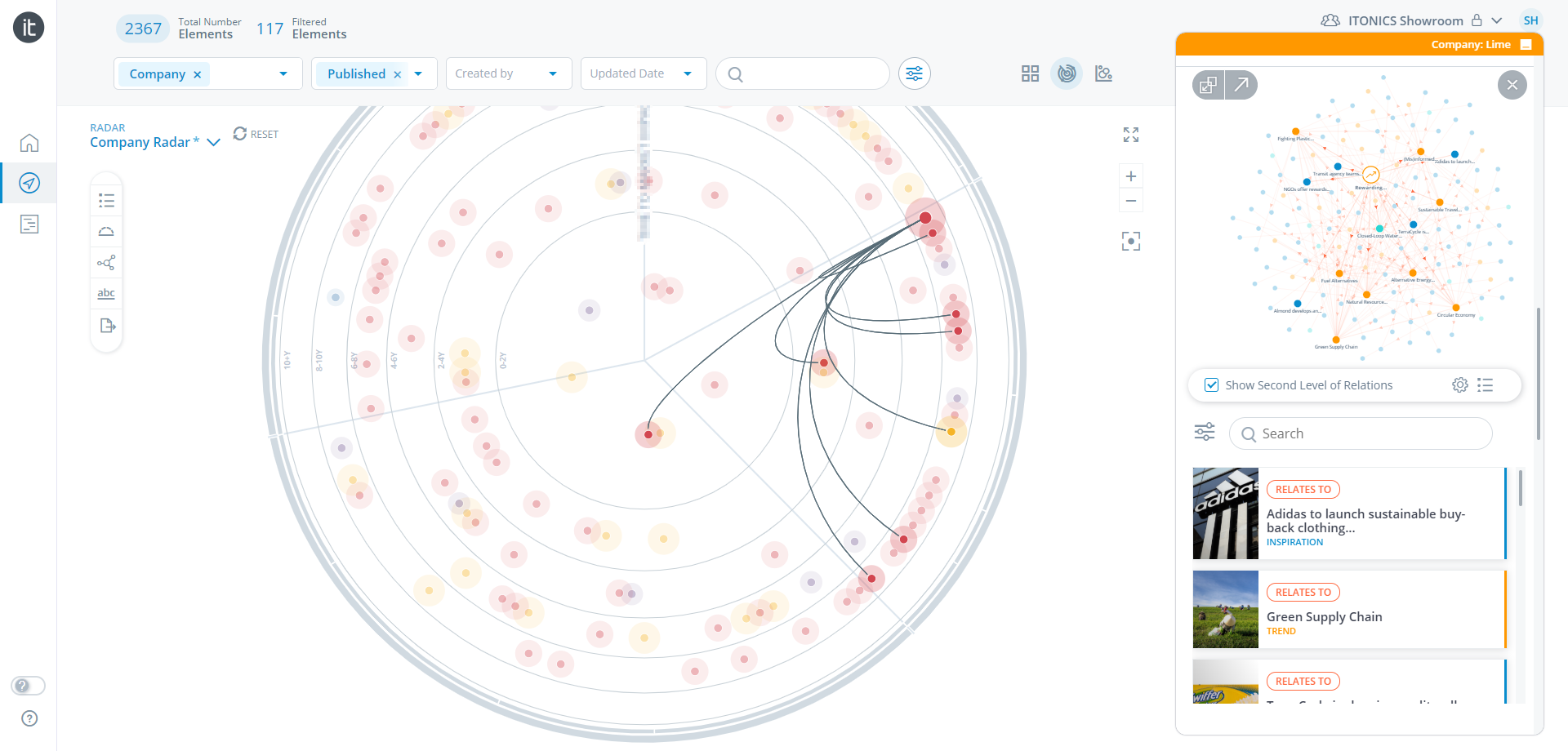
Exhibit 5: Trend radars can structure and monitor emerging companies
That connection produces the reporting executives keep asking for. Dashboards show which startup engagements are live, what business impact they produced, and how they map to strategic priorities. Innovation leaders at Bosch, Siemens, and E.ON already run scouting and portfolio work this way. Venture clienting works best when it is governed infrastructure, not a side project.