The roadmap exists. The executive team approved it. The kickoff happened. And yet, eighteen months in, the initiatives are behind, the business outcomes are missing, and no one can explain exactly what went wrong.
This article is a diagnostic. It names the five most common breakpoints in a digital transformation roadmap: the structural failures that look like execution problems but are actually strategy problems. Think of it as a guide to diagnosing and fixing issues in your digital transformation journey. For each breakpoint, there is a direct fix.
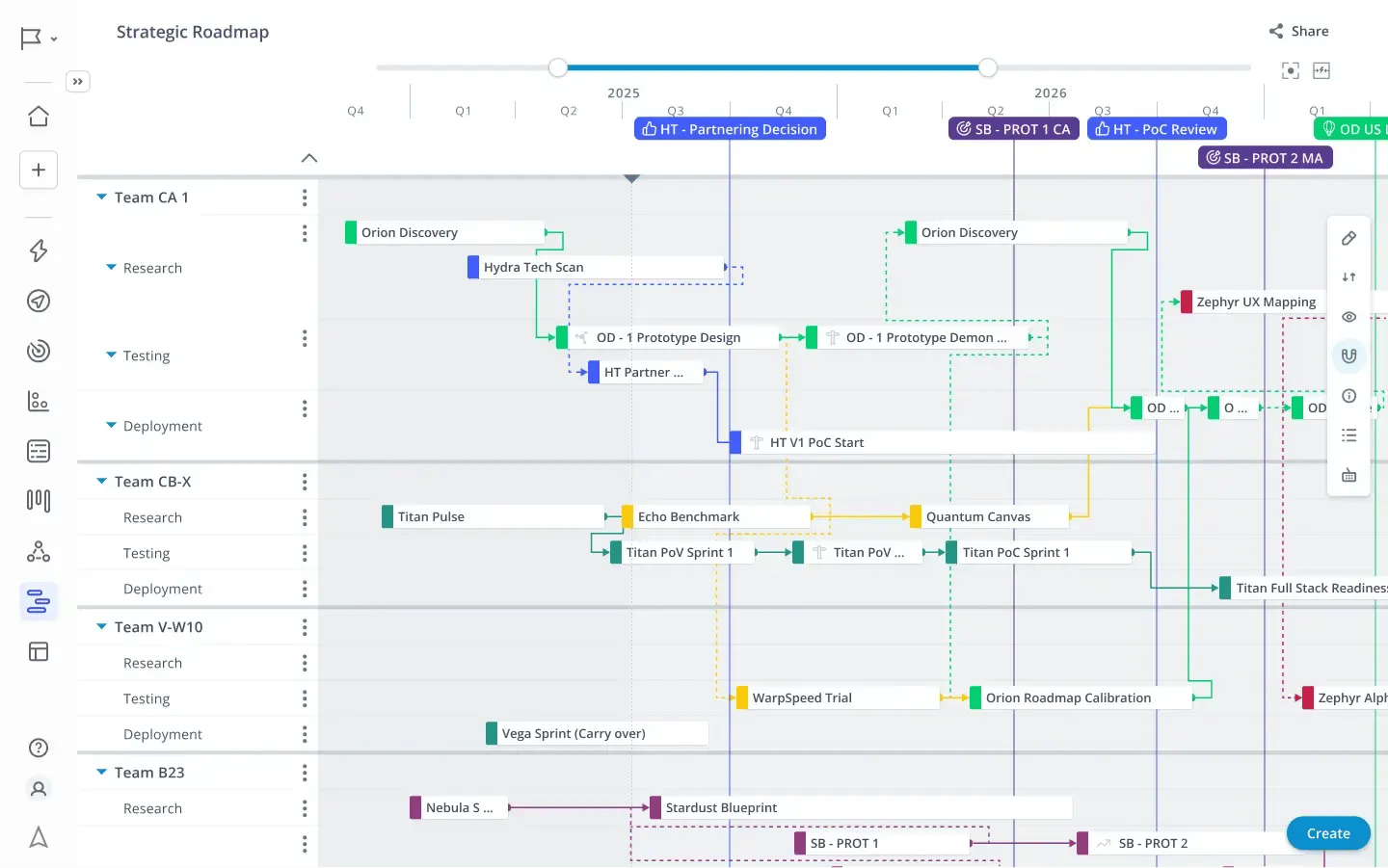
Exhibit 1: Plan, map, and track all growth activities and ensure all teams move in the right direction
By the end, you will know whether your roadmap has any of these breakpoints, and what to do about each of them.
Your digital transformation roadmap has a structural problem - not a technology one
The most common response to a stalled transformation is to change the technology: New platform, new vendor, and new system integrator.
It rarely works, because the technology was not the problem.
McKinsey research consistently shows that 70% of large-scale transformation programs fail to meet their digital transformation objectives. The reasons are structural:
-
unclear ownership,
-
missing dependencies, poor prioritization, and
-
change management treated as a communication task rather than a strategic one.
Technological transformation involves more than just implementing new software solutions; it requires integrating KPIs and strategic planning into the process to ensure lasting impact.
A roadmap is not a timeline - it is a theory of change
Most transformation roadmaps are timelines with logos on them: Vendor A goes live in Q2. System B migrates in Q4. Initiative C starts after that.
This is a project schedule, but not a transformation roadmap.
- A transformation roadmap is a structured argument for how digital capabilities, business processes, and organizational change will combine to deliver specific business outcomes.
- A digital transformation roadmap is a comprehensive plan that outlines the steps and strategies a business needs to implement to achieve its digital transformation goals, integrating new digital technologies, processes, and business models.
To be effective, it requires a structured approach that ensures alignment across technologies, processes, and business models, resulting in a coherent roadmap. This coherent roadmap
-
integrates technical deployment with essential change management activities such as communication, training, and sponsorship, ensuring a coordinated and smoothly executed rollout process, and
-
explains why the sequence matters, what depends on what, and what the organization must stop doing to make space for what it needs to become.
The fastest way to diagnose your own roadmap
Before reading further, answer these four questions about your current transformation roadmap:
- Can any member of your executive team recall the top three digital transformation objectives without looking at the document?
- Does every initiative on the roadmap trace directly to a named business goal with a measurable outcome?
- Does your roadmap show which initiatives block others - and what happens to the overall timeline if one slips?
- Does your roadmap include a change management workstream with the same level of resourcing as the technology workstreams?
Ensuring all stakeholders are on the same page regarding the roadmap's objectives and priorities is critical for successful alignment and execution.
If the answer to any of these is no, your roadmap has at least one of the five breakpoints below.
The 5 most common digital transformation roadmap breakpoints
The breakpoints appear in the majority of transformation roadmaps across industries. Each one is diagnosable. Each one has a direct fix.
These five breakpoints are common pitfalls encountered during the transformation process and throughout the transformation journey - highlighting the importance of a structured, strategic approach to ensure organizations successfully navigate change.
Breakpoint #1: Your digital roadmap is a vision without resources
The most expensive sentence in any transformation roadmap is "subject to budget approval."
It signals that the roadmap was built backwards: The strategy was defined first, and the resource model was supposed to follow, but it usually does not match.
The result
Initiatives are prioritized based on what sounds strategically important, not what the organization can actually fund, staff, and deliver at the same time.
Digital transformation initiatives compete for the same human resources, the same budget, and the same leadership attention. Nothing gets the concentration it needs. Nothing delivers on time.
The fix
Build resource allocation into the roadmap before finalizing initiative scope. Every initiative needs a staffing estimate, a cost estimate, and a decision on which existing work it displaces. If an initiative cannot be resourced, it does not belong on the roadmap - it belongs on a backlog.
Capacity planning is not a project management task. It is a strategic decision, and the executive team must make it explicitly.
Breakpoint #2: Your digital strategy is owned by IT - so no one in the business owns it
Ask any strategy team who owns the digital transformation roadmap. The answer is almost always: “IT leads it, but the business is involved.”
That sentence contains the breakpoint.
When IT leads transformation, technology choices drive the roadmap instead of business goals. Initiatives get scoped around what is technically feasible rather than what is strategically necessary. Business unit leaders treat transformation as something happening to their teams, not something their teams are accountable for delivering.
This creates a structural accountability gap. No one in the business is measured on whether digital transformation delivers business value. They are measured on their own P&L, their own headcount, their own targets. Transformation becomes a side project.
The fix
Every transformation initiative needs a business owner - a named executive with accountability for the business outcome, not just the technology deployment. Involve cross-functional teams early.
When business leaders help shape the initiative scope, they are far more likely to accept ownership of the result.
The Chief Strategy Officer or CEO owns the roadmap governance. The CTO owns technology delivery. These are different roles with different accountability structures. They must be separated explicitly in the roadmap - not merged under the assumption that IT speaks for the business.
Breakpoint #3: Your digital roadmap cannot be recalled by anyone
Ask five senior leaders to describe the transformation roadmap without looking at the document. Count how many give the same answer.
In most organizations, the answers differ significantly with different priorities, different timelines, and different definitions of success. The roadmap exists as a shared document, not as a shared understanding.
This is not a communication failure but a design failure. A roadmap that requires a 40-slide deck to explain has not been simplified enough to drive decisions. Strategic clarity means that the roadmap's core logic - what we are building, in what order, and why - can be stated in three sentences.
If it cannot, the executive team will default to their own interpretation every time a decision point arises. Alignment is assumed. It does not exist.
The fix
Test your roadmap for recall. Present the one-page summary to five executives. Ask them to explain the top three digital transformation priorities and how they connect to business goals.
Where the answers diverge, the roadmap needs to be simplified, not expanded. A transformation roadmap that requires explanation every time is a roadmap that will not hold under execution pressure.
Breakpoint #4: Your dependency map does not exist - so one delay cascades everywhere
Most digital transformation roadmaps show what will be built and when. Very few show what depends on what. But this is the dependency map: It is the most skipped structural element in transformation planning, and the one whose absence causes the most damage in execution.
Dependencies are the connective tissue of a roadmap. A cloud migration blocks the data infrastructure workstream. The data infrastructure workstream blocks the analytics capability build. The analytics capability is required before the new operating model can function. Remove the dependency map, and each of these workstreams appears independent. Miss the cloud migration deadline, and the entire chain collapses.
Identifying key milestones within the dependency map is crucial, as these important markers help track progress and monitor progress to ensure the transformation stays on schedule and adjustments can be made as needed.
Without a dependency map, there is no way to answer the question every executive needs answered: “What actually breaks if this initiative slips by 60 days?”
The fix
Map every inter-workstream dependency before setting timelines. Identify the critical path - the sequence of initiatives where any delay directly extends the overall transformation timeline.
Run a scenario: if the three most resource-intensive initiatives each slip by 90 days, what is the downstream impact? A transformation roadmap that cannot answer this question in under five minutes is not ready for execution.
Breakpoint #5: Your change management is a slide deck, not a workstream
Every transformation roadmap mentions change management. Whereas almost none resource it.
It appears as a bullet point in the governance section, or as a communications plan attached to each workstream. A stakeholder engagement calendar. A training schedule. A set of town halls.
This is change communications and not change management.
Change management in a digital transformation roadmap is the systematic work of redesigning how the organization operates - its decision rights, its incentive structures, its ways of working - so that new digital capabilities are actually used. Technology deploys on schedule. Business processes get redesigned. But the organization operates the same way it always did, because no one changed how it was structured to work.
The fix
Treat change management as a first-class workstream with its own budget, its own senior owner, and its own deliverables on the critical path.
The deliverables are not slides. They are redesigned operating procedures, updated role definitions, new governance structures, and measurable adoption metrics. If change management has no line on your resource plan, your transformation roadmap has a structural hole in it.
What a working digital transformation roadmap actually looks like
A functional roadmap is no longer more detailed than a broken one. It is more structured and incorporates the essential features needed in roadmapping software to support a successful digital transformation strategy and strategy roadmap.
Outcome-linked. Every initiative maps to a named business objective with a measurable business outcome. No initiative exists without this link, ensuring alignment with the organization's business strategy and overall business strategy.
Resource-confirmed. Every initiative has confirmed staffing, budget, and a decision on what it displaces in the organization’s existing work.
Dependency-mapped. The critical path is visible. Every leader can see what blocks what and what the downstream impact of a delay looks like.
Ownership-clear. Every initiative has a business owner, not just a technology owner. The executive team governs outcomes, not just delivery milestones.
Change-integrated. Change management runs as a parallel workstream from day one - not as a retrospective communications exercise.
A digital transformation roadmap should be closely aligned with the organization's overall business strategy, business models, and digital transformation strategy to ensure every initiative contributes to long-term organizational goals and that resources are allocated to the most critical areas.
If your current roadmap has fewer than three of these five properties, it will not survive contact with execution.
How to fix your digital transformation roadmap: a 7-step framework
This framework is designed for strategy teams working on an existing roadmap (Exhibit 2). The process emphasizes the importance of prioritising initiatives based on their impact and strategic importance to ensure resources are allocated effectively.
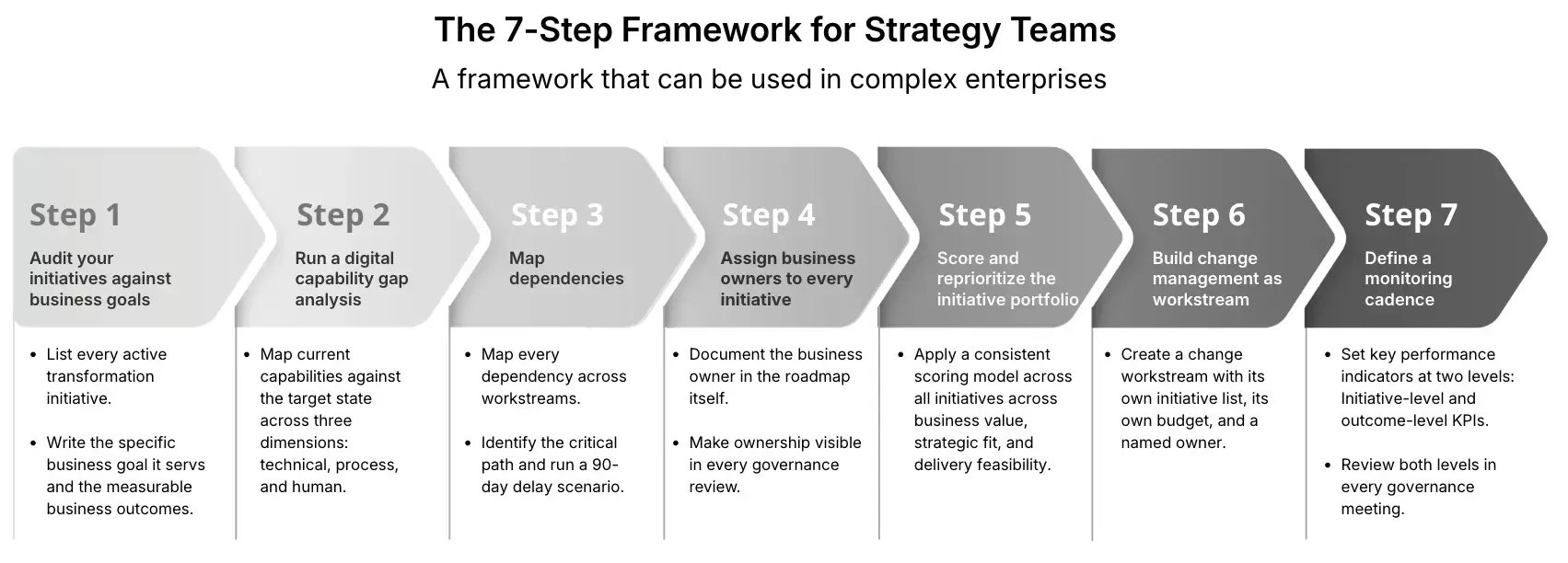
Exhibit 2: The 7-step framework for strategy teams in complex enterprises
It helps you identify which breakpoints apply and fix them in sequence, applying the same principles used in other strategic frameworks consistently throughout the digital transformation process.
Step #1: Audit your initiatives against business goals
List every active transformation initiative. For each one, write the specific business goal it serves and the measurable business outcome it will produce. For each initiative, define clear objectives and digital transformation goals that align with your overall business decisions and address evolving customer demands. If you cannot write this for an initiative, pause it. Do not cancel it - pause it until the business case is explicit.
This single step typically surfaces 20 to 30% of initiatives that cannot be justified against current business priorities.
Step #2: Run a digital capability gap analysis
Before fixing sequence or resourcing, you need a clear picture of where your organization stands in terms of digital capabilities. Map current capabilities against the target state across three dimensions:
- technical (data infrastructure, cloud computing, integration architecture),
- process (automated workflows, digital business operations, integrated business systems), and
- human (digital literacy, data analysis skills, agile ways of working).
The gaps define the building blocks of your roadmap. Human capability gaps are almost always larger than organizations expect. They take longer to close than technical ones. They must be sequenced into the roadmap accordingly.
Step #3: Map dependencies before confirming timelines
Before locking any initiative timeline, map every dependency across workstreams. Identify the critical path and define key milestones that mark the completion of significant phases or initiatives.
Tracking these key milestones within your dependency map is essential to ensure timely progress and keep the transformation roadmap on schedule. Run a 90-day delay scenario on your three most constrained initiatives. Adjust timelines to reflect actual sequencing requirements, not aspirational ones.
Timelines set before dependency mapping are assumptions. Timelines set after are plans.
Step #4: Assign business owners to every initiative
Every initiative on the roadmap gets a business owner - a senior leader outside IT whose performance is partly measured on the business outcome the initiative is supposed to deliver. If no business leader will accept ownership, the initiative has a strategic clarity problem that no amount of technical delivery will solve.
Document the business owner in the roadmap itself. Make ownership visible in every governance review.
Step #5: Score and reprioritize the initiative portfolio
Apply a consistent scoring model across all initiatives. Weight three factors:
- business value (revenue impact, cost reduction, or risk mitigation),
- strategic fit (alignment with business goals and digital transformation objectives), and
- delivery feasibility (resource availability, technical complexity, dependency exposure).
Reprioritize based on the scores. The initiatives at the top of the list receive concentrated resourcing. The initiatives at the bottom go to a structured backlog with a defined review cadence.
Step #6: Build change management as a workstream
Create a change management workstream with its own initiative list, its own budget, and a named owner. Minimum deliverables: operating model redesign for each affected business unit, updated role definitions aligned to new digital capabilities, a stakeholder engagement plan with defined milestones, and adoption metrics that run alongside technology deployment metrics.
The change management workstream starts at the same time as the first technology workstream. Not after.
Step #7: Define a monitoring cadence that measures outcomes, not just activity
Set key performance indicators at two levels:
- Initiative-level KPIs track whether delivery is on schedule and on budget.
- Outcome-level KPIs track whether the initiative is producing the business value it promised.
Most transformation monitoring focuses entirely on initiative-level KPIs. This creates the illusion of progress. An initiative can be delivered on time and on budget while producing no measurable business value.
Review both levels in every governance meeting. When outcome KPIs lag initiative KPIs, it is a signal that the business outcome assumption needs to be revisited - not a reason to celebrate on-time delivery.
How ITONICS turns your transformation roadmap from a document into a system
A transformation roadmap that lives in a presentation or a spreadsheet has a built-in failure mode: it goes stale. The moment the first initiative slips, the timelines are wrong. The moment a business priority shifts, the initiative list is out of date. The moment a new leader joins the executive team, the shared understanding resets.
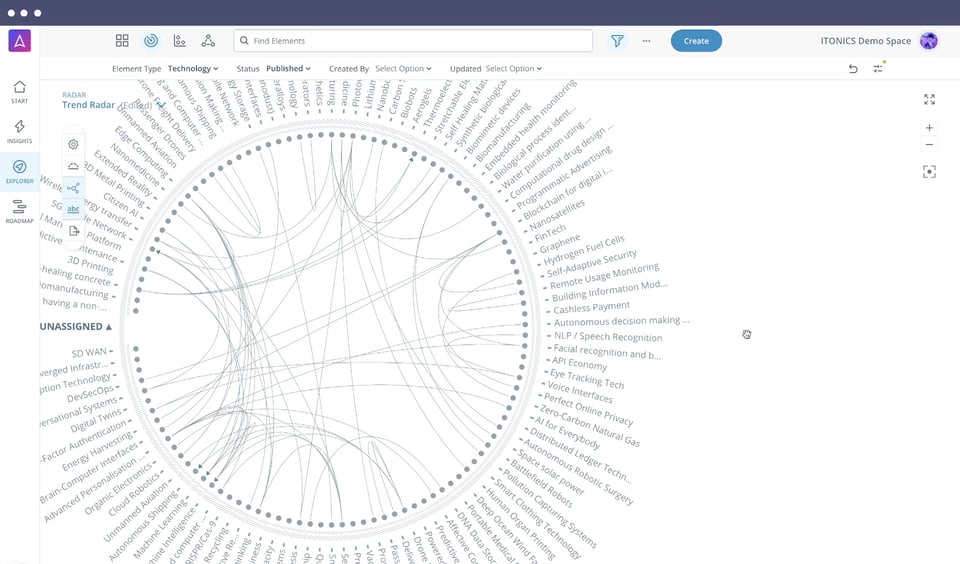
ITONICS supports your digital transformation journey and digital transformation strategy by providing digital solutions and software solutions with essential features for effective roadmap management (Exhibit 3). Managing a transformation roadmap at scale requires a dedicated system - not to add bureaucracy, but to make the roadmap live and usable rather than static and ceremonial.
Capability mapping radar. A visual, continuously updated view of where your organization's digital capabilities stand against the target state - across technical, process, and human dimensions. No more rebuilding the gap analysis from scratch every planning cycle.
![]()
Exhibit 3: Map the landscape in one interactive view to inform your teams about what matters to your business now and in the future
Critical path analysis. When an initiative timeline shifts, ITONICS shows downstream impact immediately. Strategy teams model the effect of a delay before it cascades - not three months after. Decisions are based on modeled impact, not assumptions.
Role-based roadmap sharing. Every stakeholder sees the roadmap at the right level of detail - business outcome tracking for the executive team, dependency maps for workstream leads, initiative KPIs for business owners. One live version. No version control. No synchronization meetings.
Ready to fix your transformation roadmap? ITONICS gives strategy teams the tools to spot exactly where their roadmap is breaking - and fix it before the cascade hits.
FAQs on transformation roadmap
What is the most common reason digital transformation roadmaps fail?
The most common cause is the absence of a dependency map. Organizations plan what they will build without mapping what depends on what.
When one initiative slips - and one always does - the cascade is invisible until the damage is already done. Mapping dependencies before confirming timelines is the single highest-impact fix most roadmaps can make.
Who should own the digital transformation roadmap?
The executive team owns it collectively, with the Chief Strategy Officer or equivalent leading governance. Every initiative needs a named business owner outside IT. The CTO owns technology delivery. These are different accountabilities. Conflating them is how digital strategy ends up owned by no one in the business.
How do you prioritize digital transformation initiatives when resources are limited?
Score each initiative on three factors: business value (quantified as a specific outcome), strategic fit (direct link to a named business goal), and delivery feasibility (resource availability and dependency exposure). Concentrate resources on the highest-scoring initiatives. Move everything else to a backlog with a formal review cadence. Distributed resources produce distributed results.
How long should a digital transformation roadmap cover?
Three horizons work in practice:
-
0 to 12 months for active execution (specific initiatives, confirmed resources, mapped dependencies),
-
12 to 36 months for investment planning (business goals, capability targets, operating model design), and
-
36 to 60 months for strategic direction (market positioning, competitive capability building).
Beyond five years, the environment changes faster than plans can adapt.
How do you measure whether a transformation roadmap is working?
Track two levels of KPIs. Initiative-level KPIs measure delivery (on schedule, on budget, dependency status). Outcome-level KPIs measure business value (revenue impact, efficiency gains, customer satisfaction improvements). Most organizations only track the first level. The second level is the only one that tells you whether transformation is actually working.
How do you handle change management in a transformation roadmap without slowing down delivery?
Parallel execution. Change management runs as its own workstream from day one - it does not follow technology deployment. The deliverables are operating model redesigns, updated role definitions, stakeholder engagement milestones, and adoption metrics.
These run alongside technical workstreams, not after them. Organizations that sequence change management after delivery consistently underperform those that run it in parallel.