Product roadmap alignment: A strategic guide for 2026

Your product roadmap looks impressive in the board meeting. Six months later, engineering is building features nobody asked for, marketing can’t explain the value proposition, and your biggest customer just churned because you shipped the wrong thing at the wrong time.
Product roadmap alignment is the discipline of ensuring every feature, sprint, and release directly advances your strategic objectives. It’s the connective tissue between boardroom strategy and shipping code. Roadmap alignment helps teams and stakeholders align around a shared product vision and the company's goals, ensuring everyone is working toward common objectives and priorities. Without it, you’re trying to keep yourself busy instead of executing a vision.
The stakes are higher than ever: R&D budgets are under scrutiny, time-to-market pressures intensify, and the cost of building the wrong thing has never been more expensive. Companies that master roadmap alignment ship faster, waste less, and win markets. However, organizations often face challenges in achieving true alignment, such as siloed communication or shifting priorities, making it crucial to recognize and address these hurdles to keep the roadmap focused on the company's goals.
This guide is for product leaders, innovation managers, and R&D directors who know their roadmap should be a strategic weapon, not a wishlist. We’ll cover the frameworks that create alignment, the organizational dynamics that destroy it, and the systems that sustain it over time.
Let’s start with what alignment actually means in practice.
Product roadmap alignment is the operational proof that your product strategy serves your business objectives. And it is achieved by translating strategic goals into measurable objectives and key results, ensuring everyone is working toward the same outcomes.
It means your engineering team can explain how their current sprint connects to Q4 revenue targets. It means your product managers prioritize features based on strategic value, not whoever yelled loudest. It means when leadership asks, “Why are we building this?” there’s a clear, documented answer that traces back to a business goal.
But most organizations confuse coordination with alignment. They have syncs, standups, and status updates, everyone knows what everyone else is doing, but knowing what’s happening isn’t the same as ensuring it matters.
Strategic roadmaps fail when they’re built like contracts. They itemize deliverables, assign dates, and create the illusion of control. Then reality intervenes, and the roadmap becomes either a lie everyone ignores or a cage that prevents adaptation.
Resilient roadmaps are built on themes. Therefore, they organize work around strategic objectives that remain stable even when tactics shift. If your objective is “enable enterprise customers to deploy in regulated environments,” the specific features might change, but the direction holds.
This requires a different planning architecture. Instead of a Gantt chart of features, you need a hierarchy:
Milestones (Exhibit 1) are critical indicators of progress in a product roadmap and should be integrated at appropriate levels of this hierarchy. Therefore, they should be chosen based on their impact on product or project success, and having fewer milestones can help teams focus on the most important indicators of success. Examples include achievements, approvals, deadlines, events, and key meetings.
/Still%20images/Roadmap%20Mockups%202025/portfolio-link-projects-teams-and-milestones-2025.webp?width=2160&height=1350&name=portfolio-link-projects-teams-and-milestones-2025.webp)
Exhibit 1: Plan projects along milestones
The roadmap must also encode decision-making criteria. When something unexpected happens - and it most probably will - teams need shared principles for re-prioritization: What’s non-negotiable? What can flex? What trade-offs are we willing to make?
Thus, documentation matters more than you think - especially for continuity. When that key executive leaves, their strategic context shouldn’t leave with them. When new team members join, they should be able to understand not just what you’re building, but why.
The ultimate goal is a roadmap that maintains strategic coherence while adapting to reality.
Here is an example of how leading companies treat their product roadmap alignment, providing insights that alignment won’t be granted by PowerPoint decks and quarterly all-hands meetings:
What these companies share is their intentional structure that makes strategic context visible, forces explicit prioritization, and creates accountability for outcomes. This alignment happens through truly better systems.
Out of experience, we can say that this pattern repeats across most successful organizations: decentralized execution, centralized strategy, and relentless communication of the why behind every priority. The specific mechanism matters less than the commitment to making alignment structural rather than aspirational.
Most roadmaps are still lists pretending to be a strategy with three columns: initiative, owner, and date. This communicates what you’re building but not why it matters. A strategic roadmap that actually guides decisions has three distinct layers (Exhibit 2), but most companies only build one.
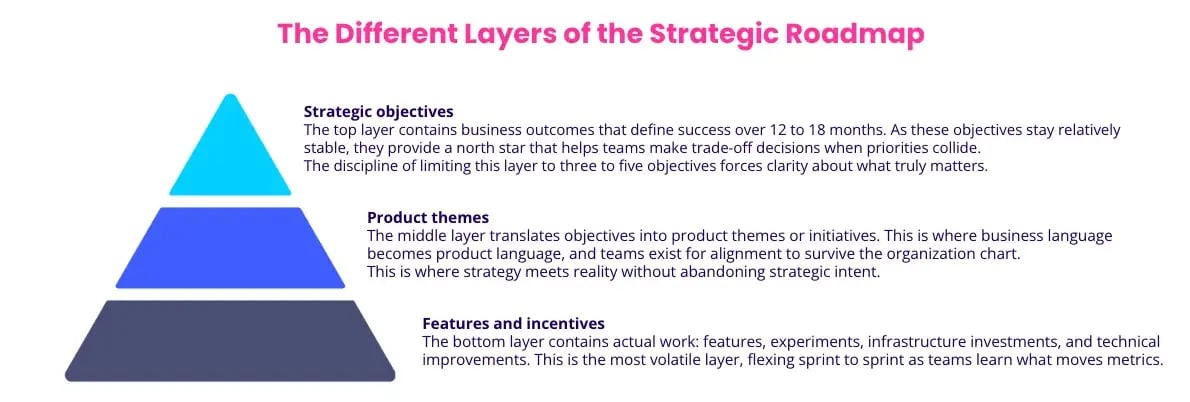
Exhibit 2: The different layers of the strategic roadmap
The format matters less than the logic behind it. Whether you use Now-Next-Later frameworks, themed roadmaps, or OKR-based planning, the structure must make strategic reasoning transparent and testable.
Standardizing and rationalizing components across products is essential for portfolio rationalization and supply chain management, as it improves efficiency, reduces costs, and helps address supply shortages. Product roadmap tools help teams visualize their product strategy and execution plans, making it easier to communicate priorities and progress. Roadmaps also serve as a single source of truth for teams, aligning their work with company goals.
But creating results goes beyond having a good structure. The real work happens in translation - turning business aspirations into product decisions that teams can execute.
“Increase annual recurring revenue by 40%” and “build a mobile app” live in different universes. Most roadmaps try to bridge this gap with hope, but smart organizations use frameworks.
Business objectives speak in outcomes: revenue, retention, market share, and margin expansion. Product initiatives speak in outputs: features, releases, improvements, and infrastructure. The translation between them is where strategic thinking either happens or gets skipped.
The ultimate goal is to create a living system that maintains strategic alignment through constant change and not a static plan that pretends the future is predictable.
Strategic objectives are constraints that define what’s possible and what’s prohibited. So, when your business objective is “become the dominant player in regulated healthcare markets,” your product strategy can’t be “move fast and break things.” The objective demands enterprise-grade security, compliance certifications, audit trails, and flexible deployment.
Most product teams inherit objectives from leadership but design strategies that contradict them. An objective targeting enterprise customers meets a product optimized for self-service. An objective focused on premium positioning meets a strategy built for volume and virality. The misalignment is structural.
Strategic coherence requires objectives to cascade into product requirements. Strategic goals and product goals play a critical role in guiding planning, aligning teams, and measuring success throughout the product development process. The strongest product strategies make this explicit from the start.
“Given our objective to expand into regulated industries, our product strategy prioritizes security, compliance, and enterprise deployment capabilities.”
This forces alignment into the foundation. Focusing on the most valuable ensures that prioritized initiatives and features deliver the greatest benefit to customers or the organization. Strategic focus ensures that every initiative on the roadmap contributes to broader organizational goals like market expansion or revenue growth.
Objectives also determine your innovation horizon. Defending market share in a mature category suggests incremental innovation - better performance, tighter integrations, improved experience. Creating a new category suggests exploratory innovation - novel use cases, different personas, unconventional business models.
Sometimes the relationship flows backward. Product teams discover insights that should reshape business objectives. An underserved segment with higher margins, a use case that creates exponentially more value, a technical breakthrough that enables new business models. This is intelligence that should inform it.
Most roadmaps try to bridge the gap between “Increase customer lifetime value by 25%” and “build a usage analytics dashboard”. That works until priorities conflict and nobody can explain why one feature matters more than another.
Product roadmaps (Exhibit 3) are essential tools for development teams and agile teams to collaborate, plan, and deliver features that align with business goals. Agile teams, in particular, rely on visual planning tools to manage workflows, prioritize work, and adapt to changing requirements, ensuring that features are delivered in small, manageable increments within each sprint.
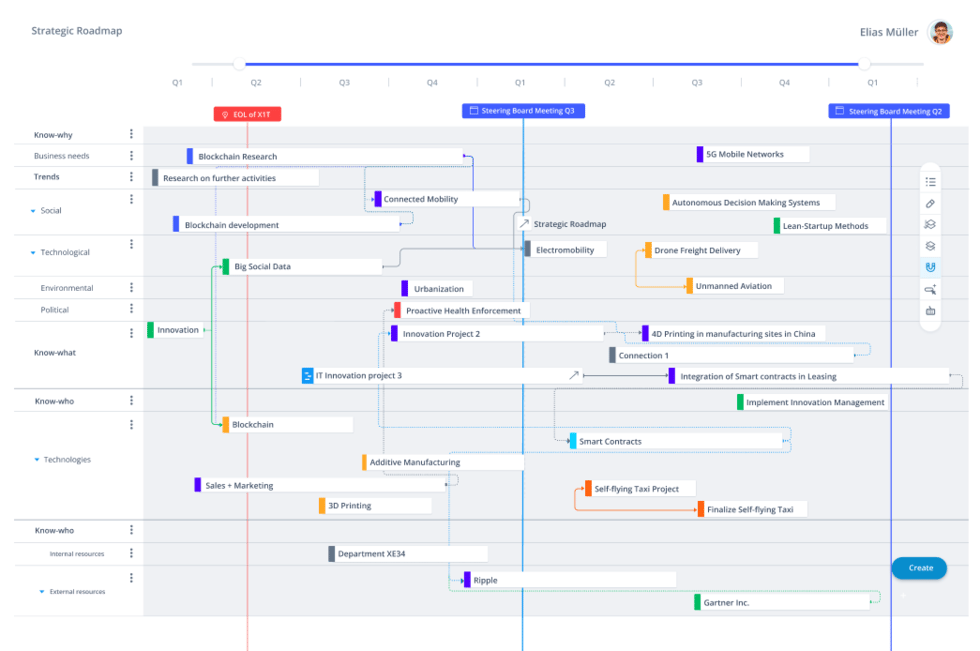
Exhibit 3: Roadmap software integrates all aspects into one platform
Many product roadmap tools integrate with agile methodologies to support iterative development and enhance team flexibility.
The framework has four steps that convert business goals into defensible roadmap decisions:
Convert goals into measurable outcomes.
Identify the levers influencing those outcomes.
Generate product hypotheses for each lever.
Prioritize based on impact, confidence, and cost.
The framework accommodates emergent opportunities. When customers request features, run them through the same filter: Which business goal does this advance? Sometimes the answer reveals a goal you missed. Sometimes it reveals a request you should decline.
Translating strategic objectives into actionable features
Strategic objectives are destination coordinates, features are steps, and translation quality determines whether you arrive efficiently or wander burning resources.
Start with constraint mapping.
Regulated industries impose non-negotiable requirements: data residency, audit logging, role-based access, and compliance certifications. But these are market entry prerequisites. So, if your roadmap doesn’t address them, your objective is fiction.
Interview humans in the problem space.
Each stakeholder surfaces different feature implications.
Product management is essential for governance, lifecycle management, and strategic planning, ensuring that the roadmap is executed effectively and investment decisions are data-driven.
Map features to the buyer’s decision journey.
What’s table stakes versus differentiating? What enables the first deal versus what enables scale? The roadmap emerges from this analysis:
Continuous improvement is a fundamental principle of agile methodologies, supporting iterative development and adaptive planning throughout this process.
The product development process should be flexible and iterative, integrated with roadmapping tools to maximize customer value and adapt to changing needs. Agile product roadmaps are designed to be flexible and adapt to changing customer needs, ensuring ongoing relevance.
Each feature connects to the objective through documented logic that can be challenged and improved. New features are communicated in product roadmaps to sales staff and customers, highlighting future releases and enhancing stakeholder understanding.
Customer satisfaction is a meaningful theme or category for organizing and prioritizing tasks related to improving customer experience. Effective product roadmap tools enhance team collaboration and communication, supporting alignment and successful execution.
Most organizations treat alignment as communication: Get everyone in a room, share the roadmap, and answer questions. Three weeks later, engineering builds what sales can’t sell, marketing messages features that don’t exist, and customer success promises capabilities not on the roadmap.
Create shared ownership of the problem before discussing solutions.
Bring cross-functional leaders into strategic objective setting. When sales, marketing, engineering, customer success, and product collaborate on defining “expand into the enterprise segment,” everyone understands trade-offs and constraints from the start.
This creates uncomfortable friction, and it’s the point: surface conflicts during planning and not during execution. Helping teams understand their objectives and workflows ensures that everyone is clear on their roles and how their work contributes to the broader strategy. Connecting strategic objectives to daily tasks ensures alignment and effective strategy execution, so that teams are always working toward shared goals.
Establish clear role boundaries.
Clear boundaries enable teams to challenge each other without territorial battles: Product owns what and why, engineering owns how and when, sales owns who and where, marketing owns message and channel, whereas customer success owns adoption and value realization. Alignment helps prevent teams from working in silos on low-impact tasks, enhancing overall organizational effectiveness.
Document decision rights explicitly.
Build a RACI matrix (Exhibit 2) that specifies who is responsible, accountable, consulted, and informed for each decision type. When decisions need to be made mid-execution, teams check the RACI rather than scheduling another meeting.
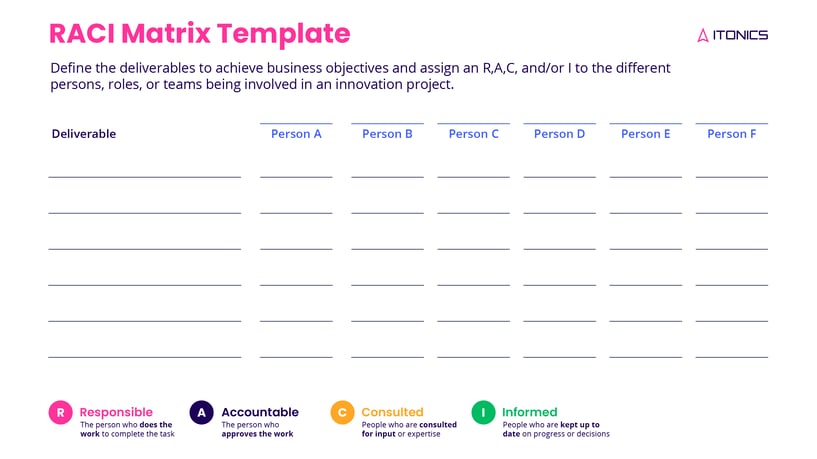
Exhibit 2: The RACI matrix template
Create regular rhythm over heroic planning sessions.
Weekly cross-functional standups focused on dependencies and blockers prevent small misalignments from cascading. Monthly roadmap reviews with all stakeholders surface drift before it compounds. Quarterly strategic reviews ensure everyone is solving the same problem.
Establishing, validating, and adhering to processes is essential for performance measurement and continuous improvement, helping teams stay aligned and focused on strategic objectives.
Maintain transparent decision logs.
When priorities shift or scope changes, document what changed, why, who decided, and what trade-offs were accepted. This creates organizational memory and prevents the same debates from recurring endlessly.
To stay aligned, prioritize clear communication and coordinated efforts among all stakeholders. Effective strategies for alignment focus on early collaboration, transparent prioritization, and audience-tailored visualization to ensure everyone remains focused on the strategic vision.
Traditional roadmaps are treated as commitments. They lock features to timelines and create delivery accountability. That works until new information invalidates the plan, and teams must choose between shipping the wrong thing or breaking trust.
This tension comes from treating roadmaps as contracts instead of hypotheses. A living document roadmap assumes strategic objectives are stable, but paths to achieve them evolve. It reflects current best thinking and is designed to change as teams learn.
To manage uncertainty, leading teams signal confidence levels. Near-term work carries high confidence, exploratory bets remain flexible. Strong roadmap governance then connects progress, KPIs, and course correction without sacrificing strategic integrity.
Most product teams treat customer experience (short: CX) as something design handles or customer success owns. This creates a blind spot: experience gaps are roadmap failures. When customers struggle with onboarding, churn due to friction, or can’t accomplish goals efficiently, your roadmap is prioritized wrong.
Connect experience improvements to business outcomes explicitly. “Reduce onboarding friction” sounds optional. “Reduce onboarding time by 60%, increasing trial-to-paid conversion by 25%, adding $2M ARR annually” sounds strategic.
Your roadmap must simultaneously build the future and survive the quarter. This tension is real, unavoidable, and kills more product strategies than any other dynamic: Stakeholders demand predictable near-term delivery, markets reward long-term vision, engineering needs clarity for sprint planning, and strategy requires flexibility for adaptation.
The answer is architecture, not compromise. Your roadmap needs different time horizons with different planning fidelity.
The immediate horizon (0-3 months) is high fidelity. Specific features, committed timelines, and detailed scope. This is where execution discipline matters.
The mid-term horizon (3-12 months) is medium fidelity. Product themes and major initiatives with approximate sequencing, but specific solutions remain flexible. This is where strategy happens: translating objectives into themes without locking in implementations.
The long-term horizon (12-24 months) is low fidelity. Strategic objectives and major bets with directional clarity, but no pretense of knowing the exact route. This is where vision lives: ambitious enough to inspire, specific enough to guide, flexible enough to adapt.
For further planning it’s also relevant that resources are allocated and communication is adjusted:
Match resource allocation** horizon.** If 100% of capacity goes to near-term execution, long-term vision dies. If too much goes to long-term bets, you lose stakeholder confidence. A common pattern: 70% immediate horizon, 20% mid-term, 10% long-term exploratory work. It is essential to align resources with strategic priorities to ensure product roadmap alignment across teams and stakeholders. Resource optimization means allocating engineering, design, and budget to the most impactful projects based on these priorities. Product managers should address their available resources and assess whether these are sufficient to achieve their strategic goals.
Communicate differently for each horizon. When discussing near-term work, commit confidently. When discussing mid-term, emphasize themes and objectives over specific features. When discussing long-term, focus on strategic intent and market opportunity.
The mistake most teams make is planning everything at high fidelity. This creates the illusion of control while eliminating the ability to learn. But the true balancing act is about structuring your roadmap so both -long-term and short-term - coexist without destroying each other.
Software development realities - like architecture constraints, technical debt, scalability limits, integration complexity - are strategic constraints that reshape what’s possible and when. But ignoring them doesn’t make them disappear: it makes your roadmap fiction.
Technical debt is a roadmap tax.
Every quarter you defer platform improvements, you slow future feature development. The “quick win” that bypasses proper architecture multiplies future costs. Smart roadmaps explicitly budget for technical health - typically 20-30% of engineering capacity. Features should be delivered in small, manageable increments within sprints to ensure steady progress and reduce risk.
Dependencies are everywhere.
That customer-facing feature needs API changes. API changes need database optimization. Database optimization needs infrastructure upgrades. What looked simple is actually a dependency graph touching five systems. Roadmap sequencing must account for this.
Estimates are probability distributions, not commitments.
A two-week feature is actually “two weeks if everything goes perfectly, four weeks if we hit normal complications, eight weeks if we discover architectural issues.” Roadmaps that ignore uncertainty systematically overpromise.
Context switching destroys productivity.
A team jumping between four priorities finishes nothing. A team focused on one priority for a month ships more than that same team spreading the month across four things. Your roadmap’s shape - how work is chunked and sequenced - matters as much as what’s in it.
Continuous improvement is a fundamental principle of agile methodologies, supporting iterative development and adaptive planning to enhance project workflows and deliver ongoing value. Tracking progress toward strategic goals and milestones through KPIs and visual roadmaps ensures teams stay aligned and can make necessary course corrections.
But integrating these realities requires engineering partnership in roadmap planning. Thus, the best product leaders develop technical literacy - enough to understand when engineers say “this looks simple but touches our most fragile system” or “this requires rebuilding the data pipeline first.” These statements are roadmap intelligence.
Strategic alignment fails because organizations lack systems that maintain it as they scale, strategies evolve, and teams change. ITONICS treats alignment as a continuous process embedded in how work gets planned and executed, helping teams align and stay aligned around a shared product vision and company goals as organizations evolve.
ITONICS creates a single source of truth for teams, ensuring clear communication and coordinated efforts across all stakeholders. Strategic roadmaps serve as a bridge between vision and execution, ensuring leaders and teams understand the end goals and the reasoning behind them.
Connect strategy to execution with enforced traceability. Leadership defines strategic objective in ITONICS - specific, measurable outcomes guiding resource allocation.
Visualize alignment at portfolio level. Portfolio views show all initiatives mapped to objectives, revealing gaps and overlaps invisible in team roadmaps. For organizations managing multiple product lines, ITONICS enables portfolio-level coordination while preserving team autonomy.
Enable weighted prioritization. ITONICS supports frameworks that evaluate initiatives against consistent criteria aligned to objectives. The platform provides weighted scores that surface the highest-value work objectively, replacing prioritization by politics.
Maintain organizational execution. When roadmap updates happen, stakeholders get notified automatically. Changes are tracked with a rationale. Previous versions remain accessible. This prevents strategic context from leaving when people leave.
Bridge strategy and execution. Execution data flows back into the strategic context. Strategic changes flow down to execution tools. The systems stay synchronized.
ITONICS enforces the discipline that maintains alignment as organizations evolve while preserving flexibility to adapt as markets shift. Therefore, the question is whether you’re ready to transform how your organization maintains strategic alignment?