Strategy execution platforms need market contact, not outcome tracking


Most organizations have a strategy problem they misdiagnose. They assume execution fails because teams lack discipline, tools, or alignment. So they invest in strategy execution software, roll out performance management frameworks, and build dashboards to monitor progress.
The gap persists anyway.
The real problem is not discipline. It is timing. Strategic plans are built on assumptions that expire the moment markets move. Classic strategy execution platforms track whether teams completed their tasks. They do not track whether the original plan still reflects market reality.
This article explains why the strategy execution gap is a market connection problem — and what modern strategy execution software does differently.
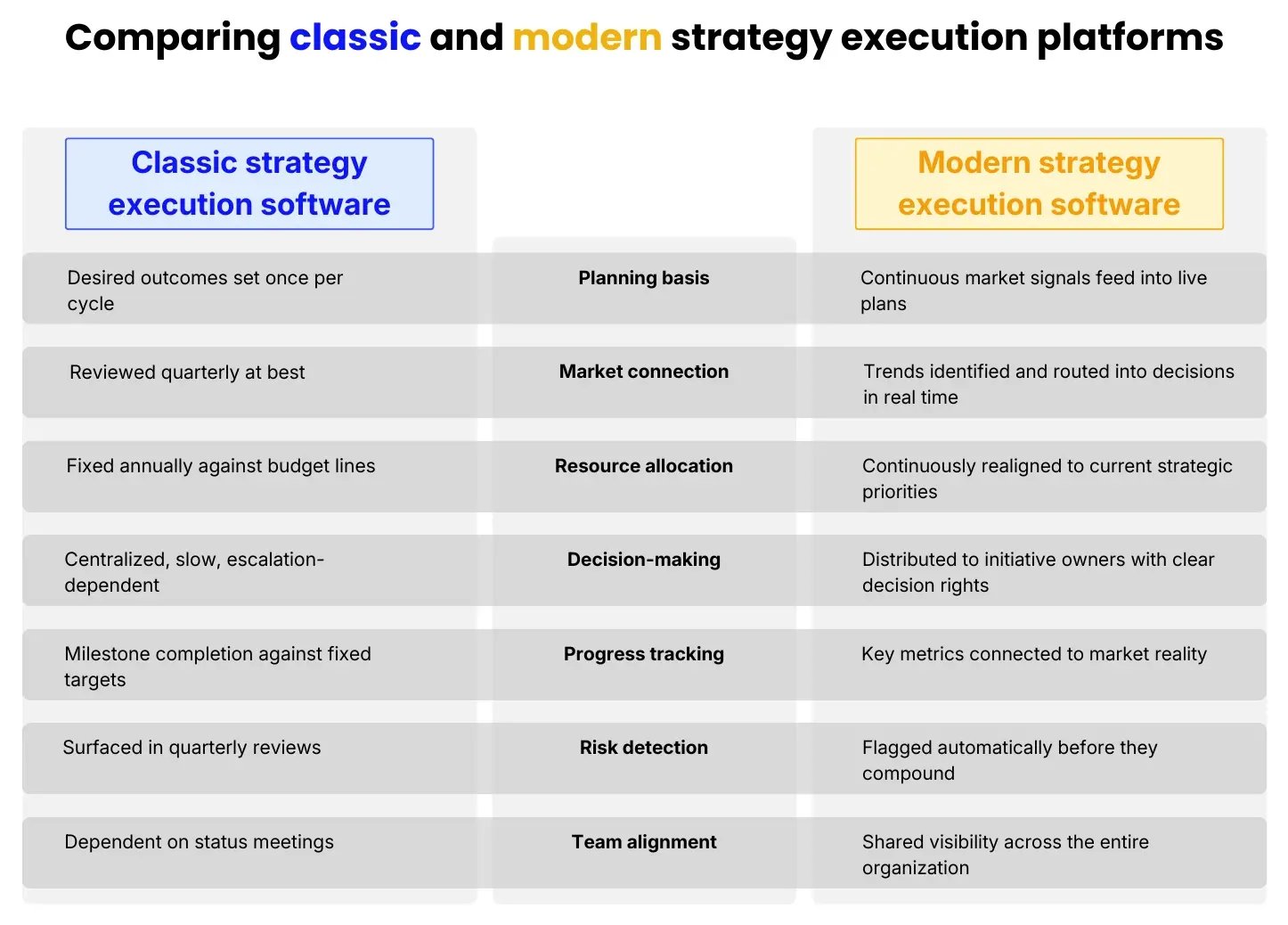
Exhibit 1: Comparing classic and modern strategy execution platforms
The executive team aligned. Strategic priorities were set. The data told a different story — and nobody was watching it. The strategy execution gap exists before the first strategic initiative pays off.
Most strategic planning processes produce well-written documents. Ambitions are clear. Strategic objectives are defined. Leadership aligns around shared goals and a vision for organizational growth.
Then execution begins — and nobody knows what to do on Monday.
Strategic goals stay abstract because the strategy management process never translates them into specific initiatives with assigned owners. Team members understand the strategy. They do not know their role in getting there.
Strategic planning that stops at goal-setting guarantees an execution gap. Achieving strategic goals requires breaking strategy into concrete initiatives, assigning teams, defining decision rights, and giving every team member a clear connection to the plan.
Organizations that skip this step do not fail because of poor performance. They fail because of poor architecture. High ambitions without assigned tasks is not a strategy. It is a wish list.
Most strategy execution processes pretend to be data-driven. In reality, strategy sessions are often roundtable discussions. Leadership defines where the organization needs to go based on different opinions. It's then on the teams to align resources with the strategic goals and define the right strategic initiatives.
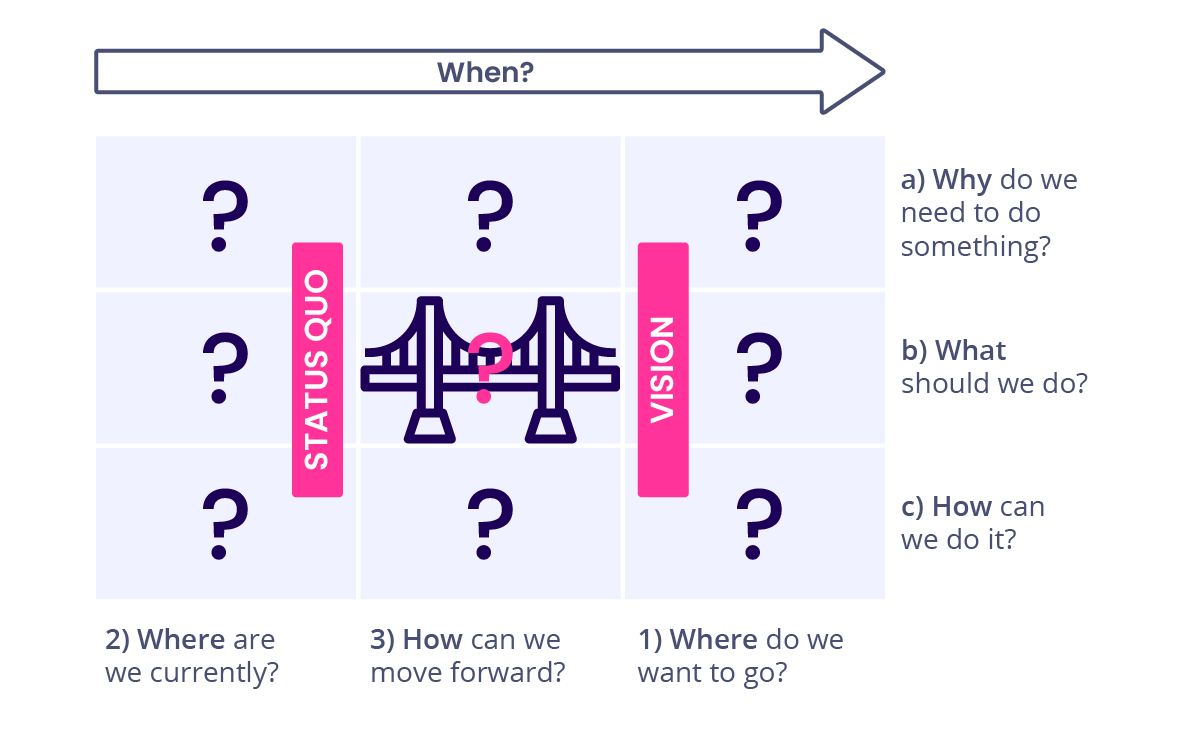
Exhibit 2: The six key questions to answer in strategic planning
The problem: those targets are aspirations, not forecasts. They are rarely grounded in data about market conditions, competitor moves, or emerging technology shifts. Strategic planning gets done in a room, not in the market.
When strategic goals are built this way, resources get directed to initiatives that made sense six months ago. Performance metrics track performance against targets that the market has already made irrelevant. The entire organization optimizes for the wrong thing.
Nokia's strategic planning in 2007 was built around hardware dominance. The data was already signaling a software shift. The plan did not reflect it. By the time management adjusted, the success window had closed.
Evidence-based strategy is not about perfect forecasting. It is about continuously checking whether the assumptions behind your plan still hold. Organizations that skip this check are not executing strategy. They are executing a hypothesis.
In most large enterprises, strategic decisions travel up. Program owners surface a strategy execution problem. It escalates through management layers. A decision arrives weeks later.
By then, the market has moved again.
Centralized decision-making creates structural lag. The people closest to execution — the teams running programs, interacting with customers, watching competitor moves — hold the most relevant data. But they lack the authority to act on it.
The result: informed decisions happen too slowly, and uninformed decisions happen too quickly. Customer satisfaction drops. Employee morale suffers. Organizational performance lags behind what the strategy promised.
Strategy execution does not fail because organizations lack ambition. It fails because decision-making is disconnected from where the business actually operates.
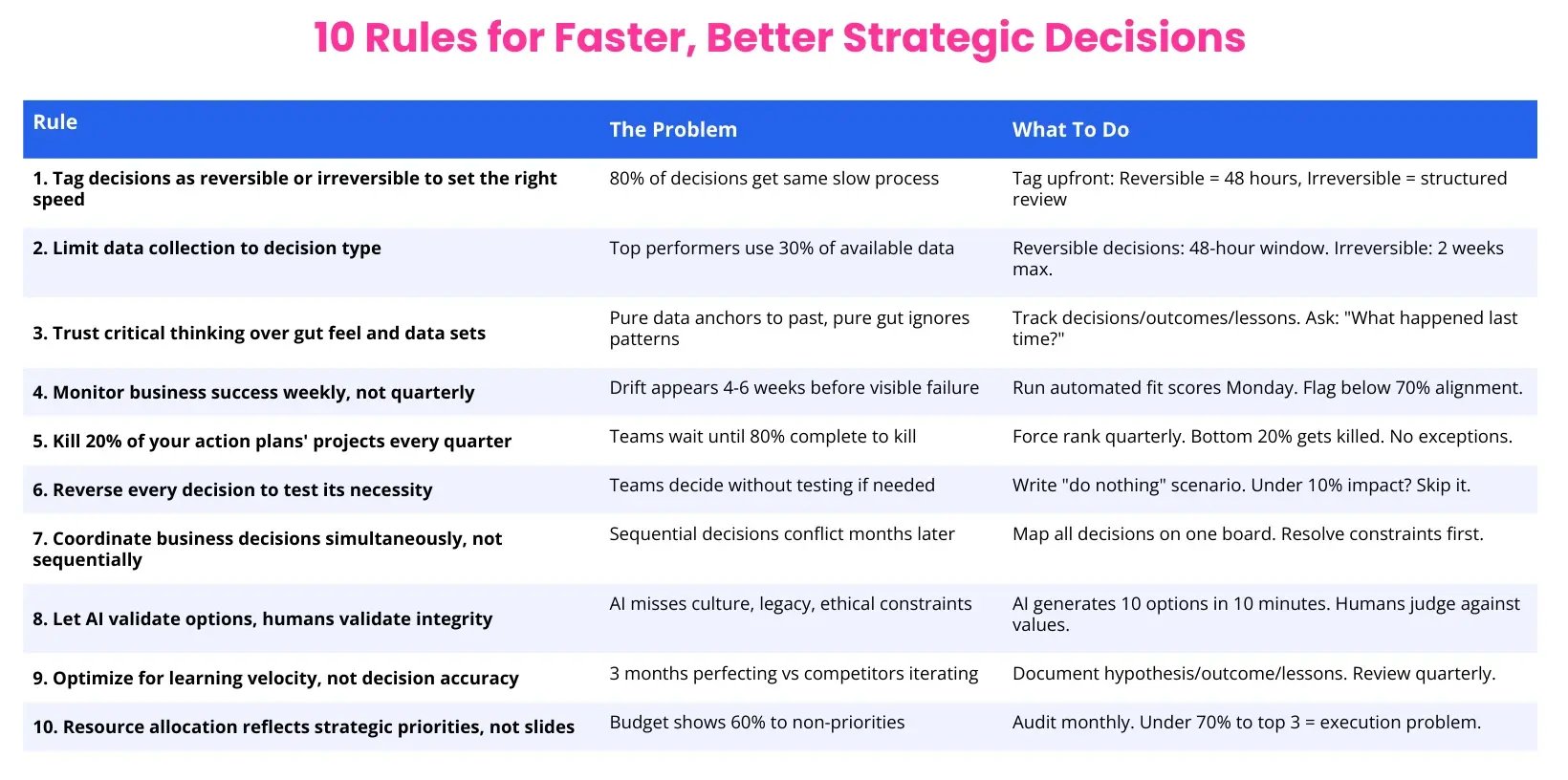
Exhibit 3: 10 rules for faster, better strategic decisions
Strategy execution software promised to fix the gap. One platform to assign work, track performance, and keep everyone aligned. The gap got more organized — it did not get smaller.
Classic strategy execution software solved a real problem: visibility. Before centralized platforms, progress was scattered across spreadsheets, emails, and status meetings. Strategy execution software gave teams one place to assign tasks, track performance, and measure success.
But tracking daily tasks is not the same as tracking strategy. A team can complete every assigned task on time and still deliver zero strategic value. Task completion and strategic alignment are entirely different success metrics.
Performance tracking that stops at activity metrics gives leadership a false sense of control. The strategy looks healthy. The business is drifting. By the time the gap becomes visible in the data, it is already expensive to close.
OKRs gave organizations a structured approach to connect key results to strategic objectives. Quarterly reporting cycles gave leadership regular checkpoints to manage performance and track progress against business goals. Both tools made strategy execution feel more rigorous.
Neither made it more adaptive.
Reporting cycles are backward-looking by design. They measure what happened last quarter. They cannot flag that a strategic assumption expired three weeks ago. By the time management reviews the performance data, the window to act has already closed.
OKRs suffer the same limitation. Key results measure progress against a fixed target. They do not ask whether the target still matters. An organization can hit every OKR while strategic fit quietly erodes. Continuously improving execution against the wrong objectives is still the wrong strategy. This is why performance management built on static targets consistently underdelivers.

Exhibit 4: Live R&D performance dashboard with KPIs
The balanced scorecard gave strategy management a four-perspective strategy framework: financial, customer, internal process, and learning. It was designed to ensure consistency and organizational alignment across the entire organization.
It was not designed for speed.
Balanced scorecards optimize for conformance to a fixed strategy. They assume the plan is correct and measure how closely execution matches it. When market conditions shift, the scorecard continues measuring performance against a plan that no longer reflects reality.
A centralized platform built on scorecard logic treats change as a deviation to correct. A modern strategy execution platform treats change as a signal to act on. That is a fundamental architectural difference — not a feature gap.
Classic strategy execution software tracked what happened. Modern platforms identify trends before they shift the market, giving every organization a chance to achieve strategic goals while they still matter.
Modern strategy execution software does not wait for the quarterly review to surface new information. They continuously monitor markets, track competitor strategy, and flag regulatory shifts. More importantly, they route those signals directly into the execution process.
When a market shift is detected, it triggers a reassessment of relevant initiatives — not a new slide in the next strategy deck. Real-time data becomes the primary input to decisions, not just the output of reporting. Leadership and project management teams stay on the same page about initiative progress and what to do next.
This is the core difference between a tracking platform and a strategy operating system. Tracking platforms record what happened. An operating system connects live market data to what the organization does next. That connection is what closes the strategy execution gap.
In most organizations, resource planning happens once a year. Budgets are set in Q4. For the next twelve months, funding follows the plan — regardless of whether the plan still reflects current business goals.
This is not a financial discipline problem. It is a structural one. Annual cycles create inertia. Programs that have lost strategic fit continue receiving funding because the reallocation process is too slow and too political.
Modern strategy execution software makes resource planning a continuous activity. It shows funding and headcount across all initiatives on a single platform. Misalignment becomes visible the moment it appears. Leadership can redirect investment to current business goals — not last year's assumptions. Initiatives that still drive progress get protected. Those that no longer do get redirected.
When real-time insights flow directly to program owners, the decision-making process changes. Teams no longer need to escalate routine decisions through management layers. They have the data, the context, and — in a well-designed strategy execution platform — the authority to act.
This does not eliminate governance. It relocates the workflows. Senior leaders shift from approving routine decisions to setting decision rights upfront and reviewing outcomes.
The execution process accelerates. Employee engagement increases. Teams spend less time preparing management updates and more time acting on actionable insights.
Support staff spend less time chasing status updates. Leadership spends less time in review meetings. The entire organization benefits from decisions made closer to where the business actually operates.
A strategy execution platform that closes the gap between plans and markets requires six specific capabilities. Together, they form the operating model for adaptive strategy management.
The platform must track market signals and technology shifts automatically — not as a separate intelligence function, but as a live data input to the execution process. This keeps strategic planning grounded in current reality rather than internal assumptions.
/Still%20images/Element%20Mockups%202025/portfolio-receive-risk-alerts-2025.webp?width=2160&height=1350&name=portfolio-receive-risk-alerts-2025.webp)
Exhibit 5: ITONICS alert showing an increase in interest increase in trend rise of autonomous networks
Strategic programs must be evaluated against real-time market data. The platform must surface current evidence to inform which opportunities fit present conditions and which have lost relevance. Informed decisions require fresh data, not last cycle's analysis.
This is where performance management shifts from compliance to competitive advantage.
Every initiative needs a defined owner, clear milestones, and explicit decision authority. Unclear ownership is the fastest way to stall execution.
The platform must make accountability visible and enforceable across the entire organization. Project management discipline without a strategic context is just task management.
Leadership needs to monitor progress and measure success without extracting updates manually. Automated dashboards replace status meetings. Teams save time. Senior leaders get real-time data insights when they need them — not at the next scheduled review.
/Still%20images/Roadmap%20Mockups%202025/portfolio-visualize-critical-paths-2025.webp?width=2160&height=1350&name=portfolio-visualize-critical-paths-2025.webp)
Exhibit 6: Roadmap with projects and milestones showing schedule conflicts
Success metrics stay current. Performance data stays actionable. Progress becomes a continuous data stream, not a quarterly snapshot.
Resource planning must be aligned with business goals. Strategy execution software that maps funding and headcount across programs makes misalignment visible and realignment faster to execute.
When strategy and budget share the same view, continuous improvement becomes a structural outcome rather than a leadership aspiration.
When a program drifts or a market signal conflicts with a current plan, the platform must surface it automatically. Waiting for a human to notice creates latency. Automatic updates give leadership the chance to intervene before small misalignments compound into strategic failures.
Organizations that act on early data signals consistently outperform those that wait for quarterly reviews to confirm what the market already told them.
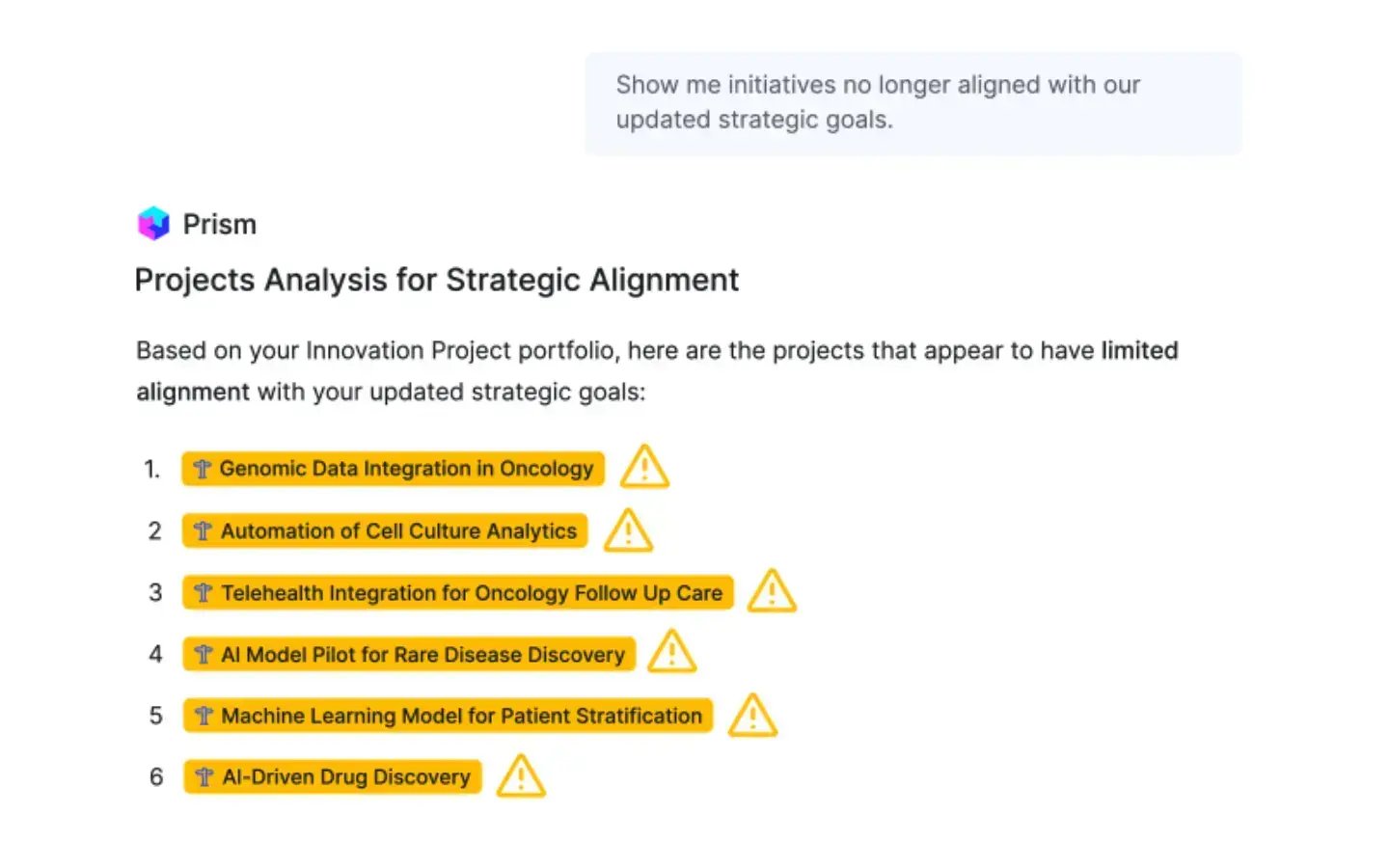
Exhibit 7: ITONICS AI assistant flags off-strategy projects
The ITONICS Strategy OS connects four things that classic strategy execution software keeps separate: market intelligence, initiative management, resource planning, and execution tracking. When market data feeds directly into prioritization, funding decisions, and progress tracking, the entire organization works from the same real-time picture.
/Still%20images/List%20Mockups%202025/portfolio-oversee-tasks-and-assignments-2025.webp?width=2160&height=1350&name=portfolio-oversee-tasks-and-assignments-2025.webp)
Exhibit 8: A table with conditional formatting rules showing strategic portfolio risks
ITONICS Prism, the platform's AI layer, continuously monitors market moves and surfaces recommendations for program owners. Initiatives are structured with defined ownership, clear milestones, and explicit decision rights. Automatic updates flag risks before they become failures.
Organizations including Siemens Energy, DB Schenker, and Dolby use ITONICS to keep strategy connected to market reality. The execution gap does not close by tracking outcomes more carefully. It closes when strategy and markets share one operating system.