12 tips to track strategy execution without micromanagement

Ninety percent of organizations fail to execute their strategies successfully. That statistic, from Harvard Business School Professor Robert Kaplan, has barely moved in decades.
The standard response is to add more oversight. More status meetings. More check-ins. More reporting. Many organizations mistake this activity for progress. The result is a team that spends its energy documenting work instead of doing it.
But there is a better explanation. Most strategic plans fail not because the strategy formulation was wrong, but because execution has no visibility built in.
Without a structured approach to tracking progress, senior leaders default to asking for it manually. That asking becomes micromanagement. Successful strategy execution requires something different: a system where progress is legible without anyone having to report it.
Treating strategy execution as wishful thinking - assuming teams will self-organize around business goals - is how strategic vision dies between planning cycles.
These 12 tips give strategy leaders a concrete way to achieve effective strategy implementation without defaulting to daily check-ins. Each tip adds a measurable layer of visibility to your execution framework, so progress speaks for itself.
Most organizations treat strategy execution as a communication challenge. If people just understood the strategy better, execution would improve. So senior leaders run alignment workshops, cascade goals through town halls, and publish strategy decks on the intranet. But then nothing changes.
The real problem is structural. Communication alone does not produce execution visibility. When strategic initiatives generate no automatic progress signals, leaders fill the gap manually.
Poor communication is a system failure, not a people problem
Poor communication in strategy execution rarely starts with personalities. It starts with a framework that produces no shared language for progress. When teams report at different cadences using different metrics, the data becomes noise. Problems stay hidden until they become crises.
Effective resource allocation requires real-time data on where resources are flowing and what they are producing. Without it, wasted resources accumulate silently. Teams work hard on the wrong priorities. Business performance suffers not because people aren't trying, but because the system gives leaders nothing to act on until the damage is visible.
Most organizations collect data without a clear framework for what it should tell them. The result is dashboards full of metrics nobody acts on. Before building execution tracking into your strategy, get four non-negotiables right.
Every strategic objective maps to a measurable outcome. Not "improve customer satisfaction" but "increase NPS by 12 points in two quarters". Vague goals produce vague execution.
Progress monitoring runs on a defined cadence and not on manual requests. If a leader has to ask for an update, the system has already failed.
Every strategic initiative has a named owner. Accountability assumed is accountability lost.
Deviations trigger a defined course-correction protocol. When performance data signals a problem, the next step should be automatic - not a meeting to decide what the next step is.
Organizations that consistently outperform competitors rarely have better strategies on paper. They have better execution clarity. Every initiative is tied to measurable goals. Every resource allocation decision connects to overall objectives. The gap between strategy formulation and implementation is almost always a visibility problem, not an intelligence problem.
The following 12 tips are organized into three clusters (Exhibit 1).
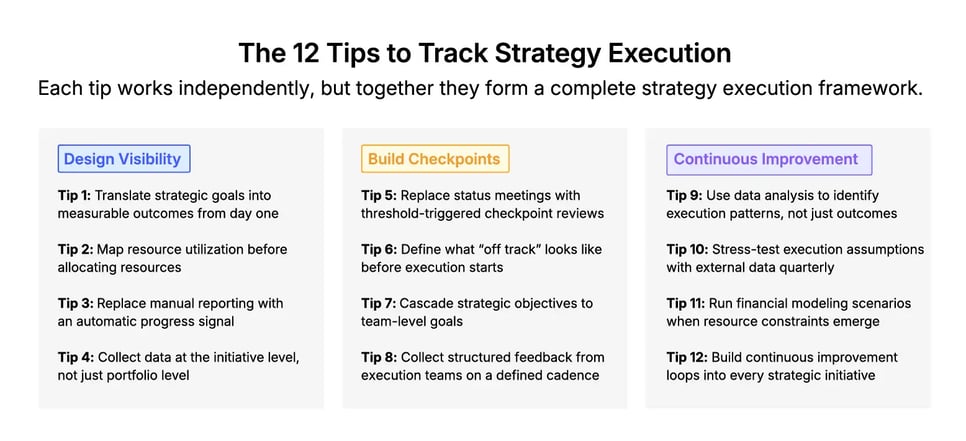
Exhibit 1: The strategy execution framework for any organization
Each tip works independently, but together they form a complete strategy execution framework.
Most execution problems are baked in before a single initiative launches. Poor goal definition, unclear resource allocation, and absent data collection processes guarantee that leaders will eventually chase progress manually.
Vague strategic goals produce vague execution. Before any initiative launches, define exactly what successful execution looks like in measurable terms.
Not "improve customer satisfaction." Instead: "Increase NPS by 12 points within two quarters by reducing first-response time below four hours."
Measurable goals remove the need for subjective progress conversations. Progress either meets the threshold or it does not. If your current strategic goals cannot be expressed as a number and a deadline, rewrite them before allocating a single resource.
Most resource constraints become visible only after they have already damaged execution. Build a resource utilization map at the start of each planning cycle.
A resource utilization map is a simple table with four columns: initiative name, owning team, current capacity (in hours or FTEs), and cross-team dependencies. Fill it in for every active strategic initiative before committing resources.
The map reveals three things immediately:
which teams are overloaded,
where a single dependency could block multiple initiatives, and
where slack capacity exists that could absorb new priorities.
Allocate resources against this map instead of assumptions.
Manual reporting is the enemy of execution visibility. Therefore, connect analytics tools directly to execution data - project management platforms, financial systems, CRM data - so progress signals surface automatically.
The test is simple: can your senior leaders see initiative status right now without sending a single message? If the answer is no, you have a reporting architecture problem, not a reporting behavior problem.
Real-time data replaces the status meeting. ITONICS connects strategic initiatives to live execution data in a single platform, so leaders see what is happening without asking.
Many organizations collect data at the aggregate level and miss execution problems hiding inside individual initiatives. A portfolio that looks healthy overall can contain two or three initiatives quietly failing.
Define key metrics for each initiative separately. At minimum: milestone completion rate, budget utilization versus plan, and a leading indicator specific to the initiative's strategic objective. This granularity is what allows leaders to intervene early, before one underperforming initiative damages overall business performance.
Designing visibility into your strategic plan is necessary but not sufficient. Execution drifts, priorities shift, and teams run into resource constraints that were not visible at the planning stage.
Status meetings consume time and produce opinions. Replace them with structured checkpoint reviews triggered by performance data, not by the calendar.
A checkpoint review happens when a key metric crosses a defined threshold - say, milestone completion rate drops below 70 % or budget burn exceeds 110 % of plan. At that point, a review is triggered automatically. Before that point, no meeting is needed.
This keeps execution time protected while ensuring monitoring remains systematic.
Most organizations only recognize execution problems after they have compounded. Therfore, define off-track thresholds for every strategic initiative before it launches.
For each initiative, document three numbers:
the target metric,
the early-warning threshold (typically 10 - 15 % off target), and
the escalation threshold (typically 20 – 25 % off target).
When performance data crosses the early-warning threshold, the initiative owner takes corrective action. When it crosses the escalation threshold, leadership is automatically notified.
This turns continuous monitoring from a management behavior into a system behavior.
Strategic success at the organizational level requires alignment at the team level. Cascade strategic objectives into specific, measurable goals for each team.
Each team should be able to draw a direct line from their daily work to the organization's overall objectives. This alignment is what makes employee engagement durable. People work harder when they understand exactly why their work matters, and when they can see their progress toward a goal that is visibly connected to the organization's strategic plan.
Execution teams see problems before leadership does. Collect feedback from them systematically, not informally.
Run a monthly structured feedback loop tied to specific strategic initiatives. Use a three-question format: What is blocking progress? What has changed since last month that affects the initiative's assumptions? What decision from leadership would accelerate execution?
This feedback should feed directly into decision-making processes. It should not disappear into a shared folder. Route it to the initiative owner and the relevant senior leader with a defined response deadline.
The first eight tips create a system that tracks execution in real time. These final four tips turn that tracking data into strategic intelligence.
Most organizations use data analysis to measure outcomes after the fact. Apply it earlier to identify patterns in how execution is progressing.
Are certain initiative types consistently running over budget? Are specific teams repeatedly missing milestones at the same phase? Statistical analysis of execution data across multiple initiatives reveals systemic problems that individual reviews miss.
If three consecutive initiatives have stalled during the resource allocation phase, the problem is not the initiatives. It is the allocation process. That is where continuous improvement starts.
Execution does not happen in isolation: Market trends shift, and customer behavior changes. Also the competitive landscape evolves.
Build a quarterly external data review into your execution framework. Pull three inputs:
market trend signals relevant to your strategic priorities,
competitive moves from the past 90 days, and
any regulatory or macroeconomic developments that affect your assumptions.
When external data diverges from the assumptions your strategic plan was built on, flag it explicitly. Execution needs to adapt before the gap widens and not after annual planning surfaces it.
When execution tracking reveals resource constraints, do not default to cutting the initiative or adding headcount. Run financial modeling scenarios first.
Three scenarios cover most situations:
Scenario A: delay the initiative by one quarter and hold current resources. Scenario B: descope the initiative by 20 to 30% to fit current capacity. Scenario C: reallocate resources from a lower-priority initiative to maintain the original scope.
For each scenario, model two outputs: the projected impact on the initiative's target metric, and the downstream effect on other initiatives sharing the same resource pool. This turns resource constraint decisions into data-driven choices rather than reactive ones.
Successful strategy execution is a continuous loop of execution, measurement, and adjustment. Every strategic initiative should have a defined retrospective built into its timeline - not at the end, but at quarterly intervals during execution.
Use a four-question format: What is working and should be protected? What is not working and should change? What has changed in our assumptions that requires a plan adjustment? What would we do differently if we were starting this initiative today?
Use the outputs from performance data, team feedback, and external data reviews to improve the initiative while it is still running. Treat execution as a learning system, not a delivery pipeline.
ITONICS builds this retrospective loop into its platform logic. Every execution cycle produces structured insights that feed the next planning cycle automatically - without requiring a separate process or additional tooling.
Building execution visibility into a business strategy requires more than good intentions. It requires tools that connect strategic objectives to execution in real time, surface performance data automatically, and support continuous monitoring without adding management overhead.
ITONICS provides strategy teams with a platform built specifically for this challenge: Strategic initiatives are tracked against measurable outcomes in a single system. Real-time data flows from execution teams to strategy leaders without manual reporting. Analytics surface insights on resource utilization, initiative performance, and strategic alignment across the portfolio.
When external factors shift, ITONICS supports rapid course corrections. When execution data signals a deviation from the strategic plan, leaders have the performance data they need to make informed decisions immediately.
ITONICS does not replace strategic thinking. It removes the operational noise that prevents it.