Strategic planning software: 8 tools scored for 2027


ITONICS scores highest among strategic planning software at 4.6 out of 5 because market and technology signals reach the funding decision within the same system. Planview follows at 4.2 with the deepest scenario and capacity planning. Planisware scores 3.9 for financial planning on long programs. WorkBoard, ClearPoint, Cascade and AchieveIt track execution well and reallocate less.
Most strategic planning software makes your strategy more rigid. It turns the plan into a scoreboard. Every initiative gets a status light, every owner defends green, and stopping work earns nobody credit. The better the tracking, the harder it gets to change course.
The data points to the real gap. McKinsey surveyed 617 managers and executives at companies with $500 million or more in revenue for a study published in 2024. Only 53 percent say their organizations fully fund the priorities they identify. The plan and the budget drift apart, and most tools in this category track the plan and leave the budget alone.
So judge strategic planning software by a harder test. How fast does it let you drop part of the plan and move the money? Our guide to strategic planning explains the planning model behind this review. Below, we score eight options against it, including a do-it-yourself baseline. For the funding side of the same decision, see our review of strategic portfolio management software.
| Tool | Score | Best for | Key capabilities |
|---|---|---|---|
| ITONICS | 4.6 | Strategy, R&D and innovation leaders who fund initiatives from market evidence | Linked objectives, initiatives and signals; Prism AI portfolio review; Roadmap; unlimited viewers |
| Planview | 4.2 | Large PMOs managing funding and capacity across many teams | OKR cascade, cost to actuals, Anvi scenarios, MCP server |
| Planisware | 3.9 | Engineering-heavy enterprises with long programs | Funding models, capacity in what-if scenarios, ERP integration |
| WorkBoard | 3.3 | OKR-driven enterprises using AI agents | OKRs, Portfolio Analyst agent, MCP server |
| ClearPoint Strategy | 2.9 | Scorecard and board reporting | AI scorecard builder, updates by email and Teams, MCP |
| Cascade Strategy | 2.8 | Fast plan rollout with broad read access | Tapestry AI, 500+ integrations, free start |
| AchieveIt | 2.6 | Consultant-guided plan execution | Unlimited plans, public dashboards, FedRAMP Low |
| Spreadsheets and AI assistants | 2.6 | One unit, one plan, few initiatives | Full flexibility, zero new license |
Exhibit 1: Strategic planning software ranked by weighted score, October 2026
Most vendors say strategic planning software helps you track key performance indicators against the organization's strategic goals in a centralized platform. That describes a strategy execution platform. It covers only half the job. A strategic planning tool earns its license when the plan changes funding, capacity or scope between annual cycles.
Annual strategic plans assume the world holds still for twelve months. It never does. Assumptions approved in January expire by summer, and teams keep executing them because the plan says so.
Use a strategic planning rhythm with two speeds instead. Set long range strategy and strategic goals for five to ten years. Fund strategic initiatives every quarter against current evidence. Our strategic management article shows why funding follow-through matters more than the plan itself.
Good strategic planning software does three jobs.
Most tools cover the third job well. Fewer cover the second. Very few cover the first.
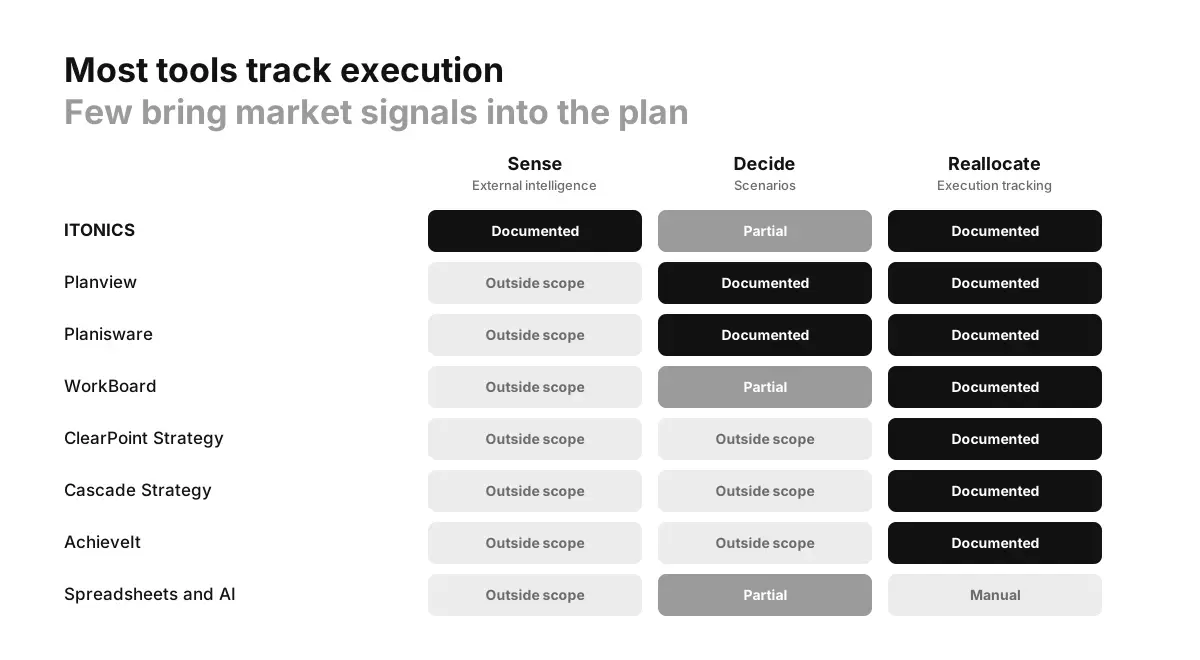
Exhibit 2: Which strategic planning tools cover sense, decide and reallocate
Many strategic planning tools start with a strategy map. A strategy map links strategic goals across the four perspectives of the balanced scorecard: financial, customer, internal process, and learning and growth. Robert Kaplan and David Norton introduced the balanced scorecard in 1992 and the strategy map in 2000. Both still work as a planning framework.
The map is only the start. A good planning tool turns each strategic goal into strategic initiatives, KPIs and owners. A strong one also shows which strategic priorities hold budget this quarter and which lost it. Leadership teams need exactly that view in the board meeting.
Your strategic planning software should carry the whole planning cycle.
Spreadsheets cover steps one and two. Most strategic planning platforms cover steps two to four. The best strategic planning software covers all five.
We scored every tool on six weighted requirements from public vendor pages, pricing pages and trust centers, checked in October 2026. The FAQ at the end explains the method. The eight entries fall into three groups. ITONICS, Planview and Planisware link plans to funding decisions. WorkBoard, ClearPoint, Cascade and AchieveIt work as strategy execution software and focus on tracking and reporting. Spreadsheets with AI assistants form the do-it-yourself baseline.
Two market changes shaped this list. Microsoft retired Viva Goals on 31 December 2025. WorkBoard acquired Quantive in May 2025 and moved Quantive customers to its own platform.
Score: 4.6 / 5 (funding link 5, scenarios 3, intelligence 5, execution 5, access 5, openness 5)
Best for: Strategy, R&D and innovation leaders who fund initiatives from market and technology evidence.
ITONICS stores strategic objectives, initiatives, trends, technologies and projects as linked elements in one system. The roadmap places objectives, initiatives and milestones on one timeline and shows who works on what, when. Prism, the ITONICS AI, scouts signals from the web and a curated signal pool. It evaluates elements and reviews the portfolio for what to stop, scale or start. Configurable workflows move initiatives through phases and gates.
Pricing: Three editions (core, professional, enterprise) by number of writing users, with unlimited viewing users. Prism and Roadmap are add-ons.
Security: Pass. SOC 2, ISO 27001, SSO, full audit trail, AES-256 encryption.
Score: 4.2 / 5 (funding link 5, scenarios 5, intelligence 1, execution 5, access 3, openness 5)
Best for: Large PMOs and strategy offices that manage funding and capacity across many delivery teams.
Planview Portfolios cascades objectives and key results from portfolio to program to team. It tracks cost and value from business case through budget, forecast and actuals. Planview Anvi, the AI layer, compares scenarios, drafts status reports and flags variance. Planview added Scenario Planning and an Anvi MCP server in the first half of 2026. Gartner named Planview a Leader in the 2026 Magic Quadrant for Strategic Portfolio Management. Forrester named it a Leader in its Strategic Portfolio Management Tools Wave, Q2 2026.
Pricing: Contact sales. Planview publishes no platform pricing.
Security: Pass. ISO/IEC 27001, ISO/IEC 27701, SOC 2 and CSA STAR listed on the Trust Center.
Score: 3.9 / 5 (funding link 5, scenarios 5, intelligence 1, execution 5, access 3, openness 3)
Best for: Engineering and R&D-heavy enterprises that need financial and capacity planning across long programs.
Planisware Enterprise defines strategic objectives alongside key investments. Teams compare what-if scenarios that include capacity forecasts and resource allocation. Funding models and financial reports adapt as plans change and integrate with ERP and financial systems. In June 2026 Planisware announced Prisma, a hybrid AI agent that analyzes portfolio situations, recommends actions and updates data under the user's control. Gartner named Planisware a Leader in the 2026 Magic Quadrant for Adaptive Project Management and Reporting, its fifth consecutive year.
Pricing: Through Planisware's sales team.
Security: Pass. ISO 27001, ISO 27701, ISO 27017, ISO 27018, SOC 1, SOC 2, TISAX.
Score: 3.3 / 5 (funding link 3, scenarios 3, intelligence 1, execution 5, access 3, openness 5)
Best for: Enterprises that run strategy through OKRs and want AI agents in the executive rhythm.
WorkBoard combines strategy execution and OKR management with AI agents such as Chief of Staff and Leadership Coach. Its Strategic Portfolio Management module adds the Portfolio Analyst agent. The agent compares budget scenarios, ingests budgets and actuals from Excel, plans capacity by skill and location, and builds initiative roadmaps from Jira backlog items. It exports approval decks to PowerPoint. A WorkBoard MCP server serves Claude, ChatGPT, Copilot and Gemini.
Pricing: Through sales. The SPM module carries additional cost.
Security: Pass. SOC 2 Type II, ISO 27001 requirements met, SSO, hosted on Microsoft Azure.
Score: 2.9 / 5 (funding link 3, scenarios 1, intelligence 1, execution 5, access 3, openness 5)
Best for: Public sector and corporate teams whose main planning job is performance management and board reporting.
ClearPoint builds scorecards for Balanced Scorecard, OKRs, Hoshin Kanri, EOS and V2MOM from plain-English requests. Its AI explains measure variances, flags initiatives likely to miss deadlines and generates PowerPoint board decks from live data. Plan owners update by replying to a report email or through Microsoft Teams. An MCP server connects Claude, ChatGPT and Copilot with per-user permissions and a read-only option.
Pricing: Custom quote after a pricing call, from 10 users.
Security: Pass. SOC 2 Type II, SAML 2.0 SSO as an option.
Score: 2.8 / 5 (funding link 3, scenarios 1, intelligence 1, execution 5, access 5, openness 3)
Best for: Mid market strategy teams that want a fast plan rollout with broad read access.
Cascade structures goals, projects and KPIs into a strategy model. Tapestry AI converts existing decks, spreadsheets and PDFs into structured plans and captures context from meetings, emails and files. It scans the portfolio for risks and dependencies and sends weekly executive briefings. Cascade cites more than 500 integrations.
Pricing: Free plan for two users. Essentials (up to 25 users) and Enterprise (up to 100 users) by quote, both with unlimited viewers.
Security: Fail, noted. SSO, role-based access and audit logs are documented. SOC 2 and ISO 27001 are stated as held "via trusted partners", so Cascade's own certification is undocumented.
Score: 2.6 / 5 (funding link 3, scenarios 1, intelligence 1, execution 5, access 3, openness 3)
Best for: Public sector and other large organizations that want strategy consultants to guide plan execution.
AchieveIt structures strategic plans around your own planning model with pillars, objectives, initiatives, KPIs and milestones. Multi-plan reports drill from portfolio to pillar to initiative, and dashboards embed on intranets or public websites. A Data Integration API imports metrics from CRM, ERP and HR systems. Every plan includes a Customer Success Manager and a Strategy Consultant.
Pricing: Core, Plus and Pro by quote, with a 20-user minimum.
Security: Pass. SOC 2 Type II, FedRAMP Low, SSO on Plus and Pro.
Score: 2.6 / 5 (funding link 3, scenarios 3, intelligence 1, execution 1, access 5, openness 3)
Best for: One business unit with one annual strategic plan and fewer than 20 initiatives.
Excel holds objectives, initiatives and budgets. PowerPoint carries the quarterly strategic planning review. Project management and collaboration tools such as Teams carry the follow-up. Copilot or ChatGPT drafts analyses and scenario narratives on request.
Pricing: Existing Microsoft 365 and AI licenses. The cost sits in staff hours.
Security: Pass. Inherits the company's Microsoft 365 controls.
The right strategic planning software depends on size, sector and how often your priorities change.
Large organizations run many business units and many plans, and their strategic initiatives compete for one budget. They need enterprise scale: role-based access, SSO, audit trails and integrations with finance and work management tools. ITONICS, Planview and Planisware fit here. Choose ITONICS when market and technology signals drive your strategic decisions.
Mid market companies need a strategic planning tool that a small team can roll out in weeks. Fast setup, clear dashboards and little manual effort for progress updates matter more than deep financial modeling. Cascade offers a free start and AI that turns existing decks into a live plan. ClearPoint builds scorecards from plain-English requests.
Government agencies, healthcare organizations and education organizations plan against public mandates and report to boards and citizens. They need public dashboards, a balanced scorecard or similar planning framework, and strict security. AchieveIt holds FedRAMP authority at the Low impact level and embeds dashboards on public websites. ClearPoint supports the balanced scorecard and builds board decks from live data.
Start with the job your strategic plan fails at today. Map where signals enter, who decides funding and how status reaches leadership. That map picks the category and narrows the shortlist to two tools.
Compare strategic planning features against the job instead of counting features. A business chasing growth strategies in a fast market needs signals and scenarios. A stable, regulated operation needs scorecards and reporting.
| Choose | If |
|---|---|
| ITONICS | Your plan must react to market and technology signals, and strategy, R&D and innovation share one portfolio |
| Planview | You run a large PMO with capacity and financial planning across many delivery teams |
| Planisware | Long engineering programs need detailed financial and resource planning |
| WorkBoard | OKRs drive your operating rhythm and you will fund the SPM module for scenarios |
| ClearPoint Strategy | Board reporting against scorecards is the main job |
| Cascade Strategy | You need a fast rollout with many readers and a free start |
| AchieveIt | You want consultants to run the planning process alongside your team |
| Spreadsheets and AI assistants | One unit runs one plan with fewer than 20 initiatives |
Exhibit 3: Strategic planning software matched to the main planning job
Strategy offices close to R&D often pair a planning layer with a portfolio layer. If that is you, read our ranking of R&D portfolio management software before the demo round.
Your CFO will ask what the license returns. Build the answer from three value levers, each measured with your own numbers.
| Value lever | What to measure | How to estimate it |
|---|---|---|
| Reallocated budget | Budget moved from stalled initiatives to current strategic priorities each year | Share of initiatives your last review would stop or shrink, times their annual budget |
| Faster decisions | Weeks between a market shift and a funding decision | Last three market shifts, from first signal to approved budget change |
| Reporting time | Hours spent assembling the quarterly strategic planning review | Hours per review, times the people involved, times four reviews a year |
Exhibit 4: Three value levers for a strategic planning software business case
Reallocated budget usually carries the case. If your organization funds 50 initiatives and the first review stops three, compare their annual budget with the license fee. Reporting time is the easiest lever to prove and the smallest in value. Faster decisions matter most in fast markets and are the hardest to price, so describe them with a recent example.
Then test the case before you buy. Load your real plan into two shortlisted tools, run one budget scenario and one quarterly review in each, and compare the effort. Our article on R&D scenario modeling gives a template for the scenario exercise.
ITONICS leads with 4.6. It is the only tool in this review that documents the sensing job, and it links signals to funding decisions and execution in one system. Planview and Planisware model financial scenarios in more depth. ITONICS wins where the plan has to react to markets and technologies.
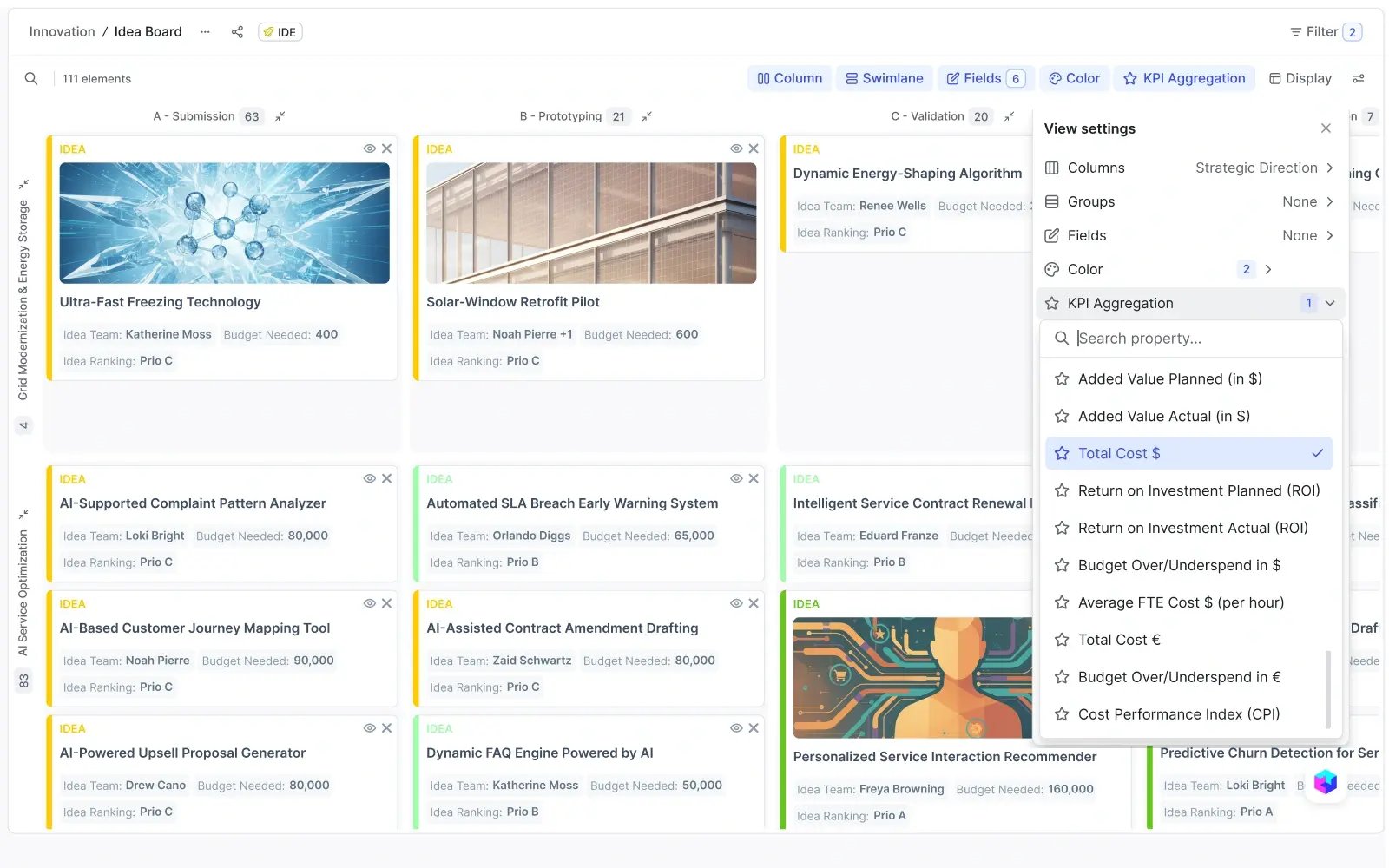
Exhibit 5: Initiatives by phase and strategic objective in ITONICS
Dolby uses ITONICS as the central platform for its Futures Council, a group of stakeholders from different parts and levels of the company. Members input, rate and discuss foresight data in one place to anchor foresight across the organization. Strategy teams that want the same link between foresight and planning can start with the strategic planning use case.