Designing a strategy offsite that leads to action

Most leadership teams leave a strategy offsite energized. Then the week after, daily operations take over. The action plans sit in a shared folder. The strategic priorities nobody owns start to drift. Then six weeks later, the next offsite is just another meeting on the calendar.
The cause is not a motivation problem, but a design problem. Many organizations confuse running a strategy offsite with doing strategic planning. The two are not the same.
A well-designed strategy offsite is a powerful tool. It forces a leadership team out of daily operations, into big picture thinking, and toward decisions that create long-term success. A poorly designed one produces slides, shared vision theatre, and next steps that never become action plans.
This guide explains what separates a successful offsite from just another meeting, and how to design yours to produce real decisions, clear owners, and a follow-up process that holds.
Many organizations spend weeks on offsite content: decks, briefings, facilitator briefs. Then they fill two days with interactive sessions covering every business challenge on the list. The offsite agenda is too broad. Nothing gets resolved. Team members leave aligned on the problems and unclear on the solutions.
Covering topics is not the same as making decisions.
Three failure patterns explain most unsuccessful offsites:
1. No pre-work means cold decisions. When the executive team first encounters data at the offsite, they spend half the time building shared context. They never reach the hard trade-offs. Pre-distributing materials 10 days before the session cuts decision time by 30 to 40% and dramatically improves the quality of strategic thinking in the room.
2. Too many priorities. Companies that exit offsites with more than five strategic priorities execute fewer than two within 12 months, according to a study by Bridges Business Consultancy. Successful strategic planning requires saying no. Most offsite agendas are designed to avoid that conversation.
3. No accountability structure. When every next step reads "team to align further," nothing moves. The collaborative process that started at the offsite needs a structured approach to carry it into execution. Decisions need owners, deadlines, and review dates before the room empties.
Before any competitive analysis begins, one question must be answered:
What specific business strategy decision does this analysis need to enable?
This is not the same as "What do we want to know about competitors?": That question produces a competitor analysis. The first question produces a decision.
Answering it requires naming the decision explicitly. Examples:
Once the decision is named, every element of the competitor analysis framework - what internal and external factors to examine, what market data to collect, which direct and indirect competitors to prioritize - becomes scoped and purposeful.
Strategy teams that skip this step produce competitive analysis that helps no one make a decision. Teams that do it produce competitive analysis that forces one.
A successful offsite does one thing: it forces the leadership team to confront the business challenges they have been postponing and make binding decisions. That requires three conditions (Exhibit 1).
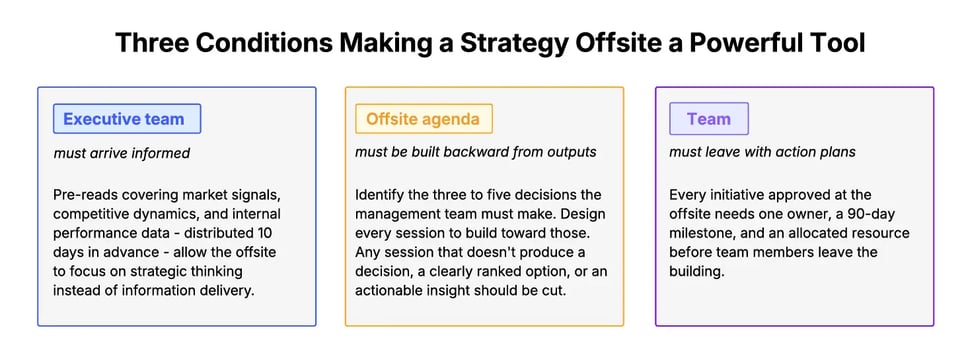
Exhibit 1: Three conditions making a strategy offsite a powerful tool
When these three conditions are met, the strategy offsite becomes more than a team-building exercise. It becomes the engine of strategy development.
The offsite agenda makes or breaks successful strategic planning. Most agendas fail because they are built to include everything, not to decide anything (Exhibit 2).
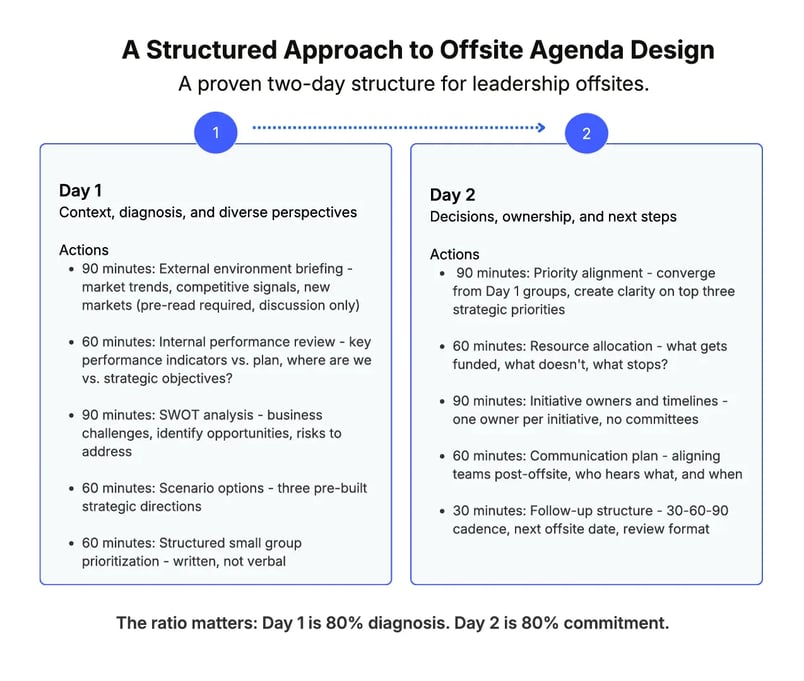
Exhibit 2: A structured approach to designing an offsite agenda
Teams that flip this ratio - rushing to solutions before they understand the problem - consistently produce weaker actionable strategies. Diagnosis reveals the real problem. Solutions without diagnosis are just guesses.
Knowing what a good offsite looks like is not enough. The design choices you make - what goes on the agenda, how participation is structured, when ownership gets assigned - determine whether the leadership team leaves with binding commitments or just a shared sense of direction.
Six principles separate strategy offsites that produce decisions from those that produce decks.
Before booking the venue or planning interactive exercises, write down the three decisions this offsite must produce.
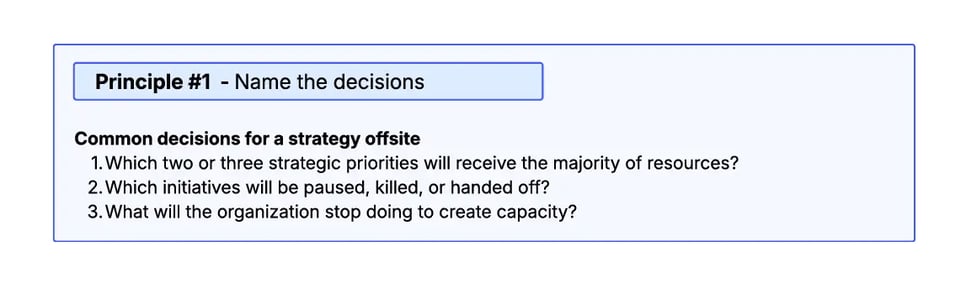
Exhibit 3: The three decisions for designing the offsite agenda
Every session in the offsite agenda should trace back to one of those decisions. If it doesn't contribute to a decision, cut it.
Most leadership offsites mix these. A presenter delivers market data. The group immediately discusses implications. Team dynamics take over. The loudest voice shapes the conclusion.
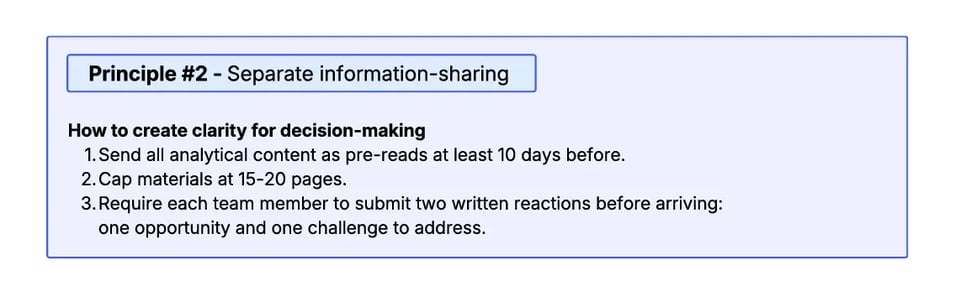
Exhibit 4: How to create clarity for decision-making
This creates clarity before the room fills with competing interpretations. It forces individual strategic thinking before group pressure shapes the output.
The most confident voices in a room are rarely the most strategic. Many organizations run offsites where the same three leaders dominate every session. The result is not diverse perspectives - it's a performance of consensus.
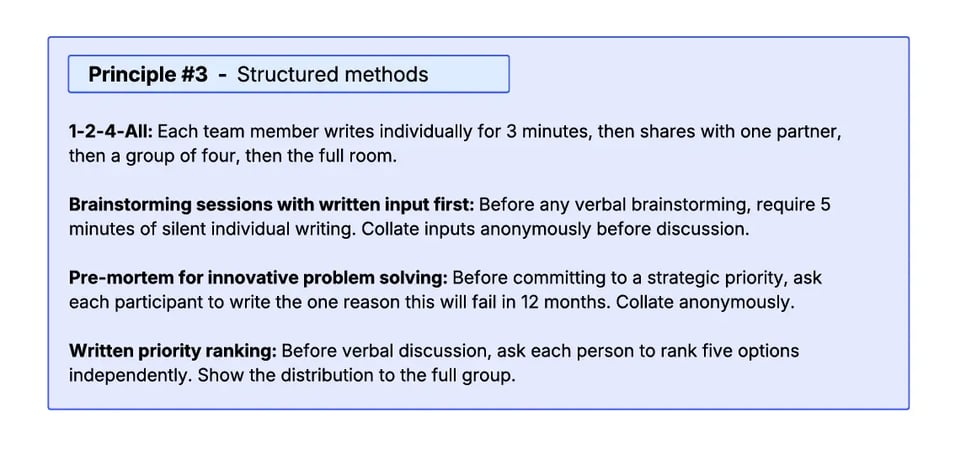
Exhibit 5: Structured methods to encourage participation
Encouraging participation isn't about making everyone feel heard. It's about collecting better information for decisions.
Many leadership offsites fill time with team-building activities and interactive exercises designed to foster creativity and build relationship dynamics. These have their place. But they cannot substitute for structured decision-making work.
Effective interactive sessions at a strategy offsite produce tangible outputs: a ranked list of strategic priorities, a completed SWOT analysis, and a set of well-defined criteria for evaluating strategic options.
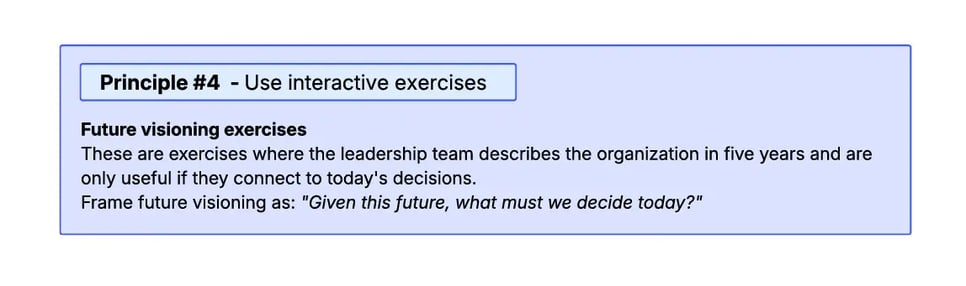
Exhibit 6: Future visioning exercises to better produce output
A SWOT analysis is a standard part of most strategy workshops. Most are done badly.
The typical SWOT analysis lists the obvious: strong brand, skilled team, market growth. It avoids what would make the leadership team uncomfortable:
that the organization is slow to act,
that customer needs are shifting faster than the product roadmap,
that a competitor is already in the new markets you're considering.
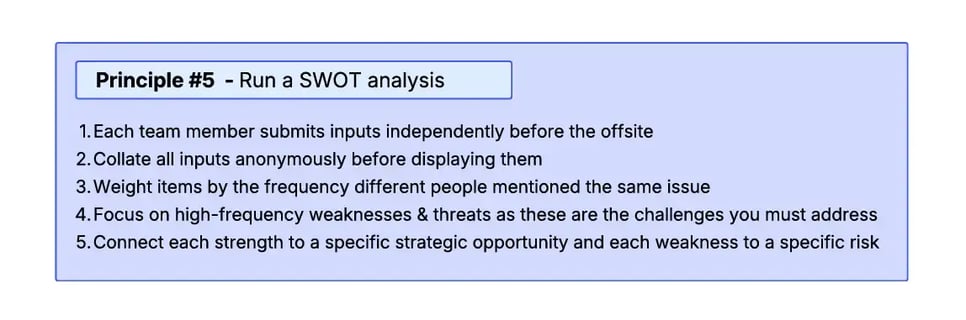
Exhibit 7: Rules for running a SWOT analysis
A SWOT analysis done this way creates clarity faster than most two-hour facilitated sessions.
The most important 90 minutes of any strategy offsite is initiative ownership. Do not leave this to follow-up.
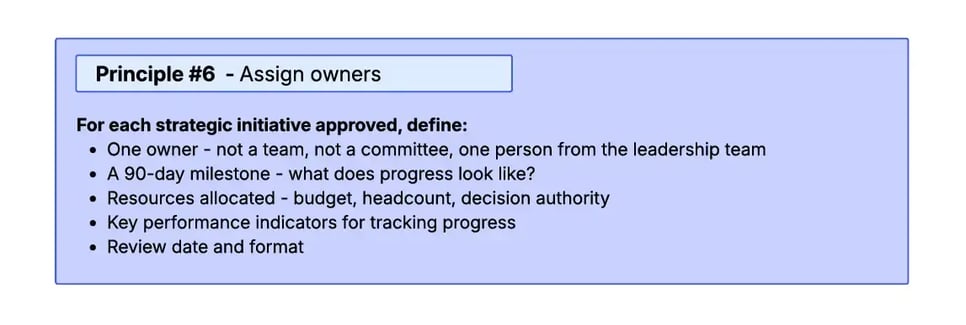
Exhibit 8: Assigning ownership to strategic initiatives
If a leader won't accept ownership in the room, that initiative is not ready for funding. This is useful information. Many organizations commit to innovative strategies that they cannot execute because no one tested ownership before leaving the offsite.
Successful leadership teams bring intellectual honesty to the room:
But most teams don't operate this way by default. Relationship building before the offsite - informal dinner the night before, a structured 30-minute session at the start of Day 1 on "what we believe about the business and why" - reduces defensiveness and increases the quality of collaborative problem solving.
Diverse perspectives also matter. Many organizations run leadership offsites where every voice comes from inside the organization.
Diversity of perspective, not diversity of seniority, drives better strategic thinking.
Aligning teams post-offsite requires a structured follow-up process. As many organizations skip this step, the next review happens at the next offsite - six or twelve months later. By then, the decisions are outdated, and the momentum is gone.
A 30-60-90 day cadence prevents this:
30 days post-offsite: Initiative owners deliver a written one-page update: what was committed, what has been done, what is blocked. The management team reviews in a 60-minute session. Resource blocks are identified and resolved early.
60 days post-offsite: Cross-team dependencies are surfaced. Mid-point metrics are reviewed against key performance indicators. Any initiative that is failing gets restructured or killed before it wastes more resources.
90 days post-offsite: Full strategic review against the commitments made at the offsite. Decisions confirmed, revised, or replaced. Input gathered for the next offsite. This 90-day review is also the place to assess continuous improvement in the planning process itself - what worked, what didn't, what to change.
This cadence goes beyond creating clarity: It trains leadership teams that strategic objectives are binding commitments, not optional priorities.
Many organizations treat strategy workshops as isolated events. One offsite per year. A refresh if something major changes. Otherwise, strategy lives in a document that daily operations rarely touch.
Successful strategic planning is a continuous process instead of an annual event. The strategy offsite is a focused point of decision-making within that process. Strategy workshops throughout the year - shorter, more focused, connected to the same strategic priorities - keep the organization on the same page as the external environment changes.
Quarterly strategy workshops of three to four hours can address a single business challenge: how to enter new markets, how to respond to a competitive threat, or how to reallocate resources given a missed key performance indicator. These are not full offsites. They are check-ins against the strategic objectives set at the annual offsite.
Organizations that build this rhythm - annual strategy offsite, quarterly strategy workshops, monthly initiative reviews - execute their strategic priorities at significantly higher rates than those relying on a single annual planning process.
Strategy offsites fail most often after the room empties. Decisions were made. Nobody can find the decision log. Aligning teams requires reconstructing what was agreed upon from meeting notes and memory. Therefore, ITONICS provides the infrastructure to connect offsite decisions to ongoing execution.
Before the strategy offsite, teams use ITONICS to build the strategic picture: market trends, competitive signals, portfolio health, and key performance indicators in one place. Pre-reads are built from live data. The SWOT analysis inputs are gathered in ITONICS before the offsite - anonymously, efficiently, and already collated when the leadership team walks in the room.
During the offsite, strategic priorities, scenario options, and priority matrices are visible to all team members in real time. Leaders make decisions against a shared information base, not competing slide decks and different interpretations of the external environment.
After the offsite, ITONICS holds the decision log. Each initiative has an owner, a timeline, allocated resources, and a progress view tied to key performance indicators. The management team reviews against a single source of truth at every 30-day check-in. Nothing falls through the cracks. Strategic priorities don't disappear into daily operations.
The result: the strategic thinking from the offsite doesn't evaporate. It becomes a visible, trackable commitment that the leadership team and the broader organization can act on.
For teams planning their next offsite, ITONICS makes the full cycle - preparation, decision, execution, continuous improvement - visible and accountable.