10 strategic decision making rules redefining planning and execution


A competitor launches a new feature. Your team spots it Monday morning. By Tuesday, your inbox fills with "Should we respond?" messages. Wednesday's strategic planning meeting turns into a debate: Do we need to decide now? What exactly are we deciding? Should we gather more data? Can this wait until next quarter?
Three weeks later, you're still collecting information. The competitor has reiterated key elements twice.
This happens because most organizations use the same decision-making process for everything. A small pricing adjustment gets the same six-month approval cycle as a new market entry. Business leaders demand complete information for decisions that could be tested and adjusted in weeks.
The result: you're always reacting, never leading.
The core problem is using a one-size-fits-all decision-making process that ignores two critical external and internal factors: how reversible the decision is and how fast the market is moving.
This article gives you a strategic decision-making framework to fix that. You'll learn how to classify decisions, set the right speed for each type, and gain enough confidence without months of data crunching. The 10 rules below show you how strategic leaders accelerate strategic decision-making by focusing on what matters and maintaining quality in irreversible choices.
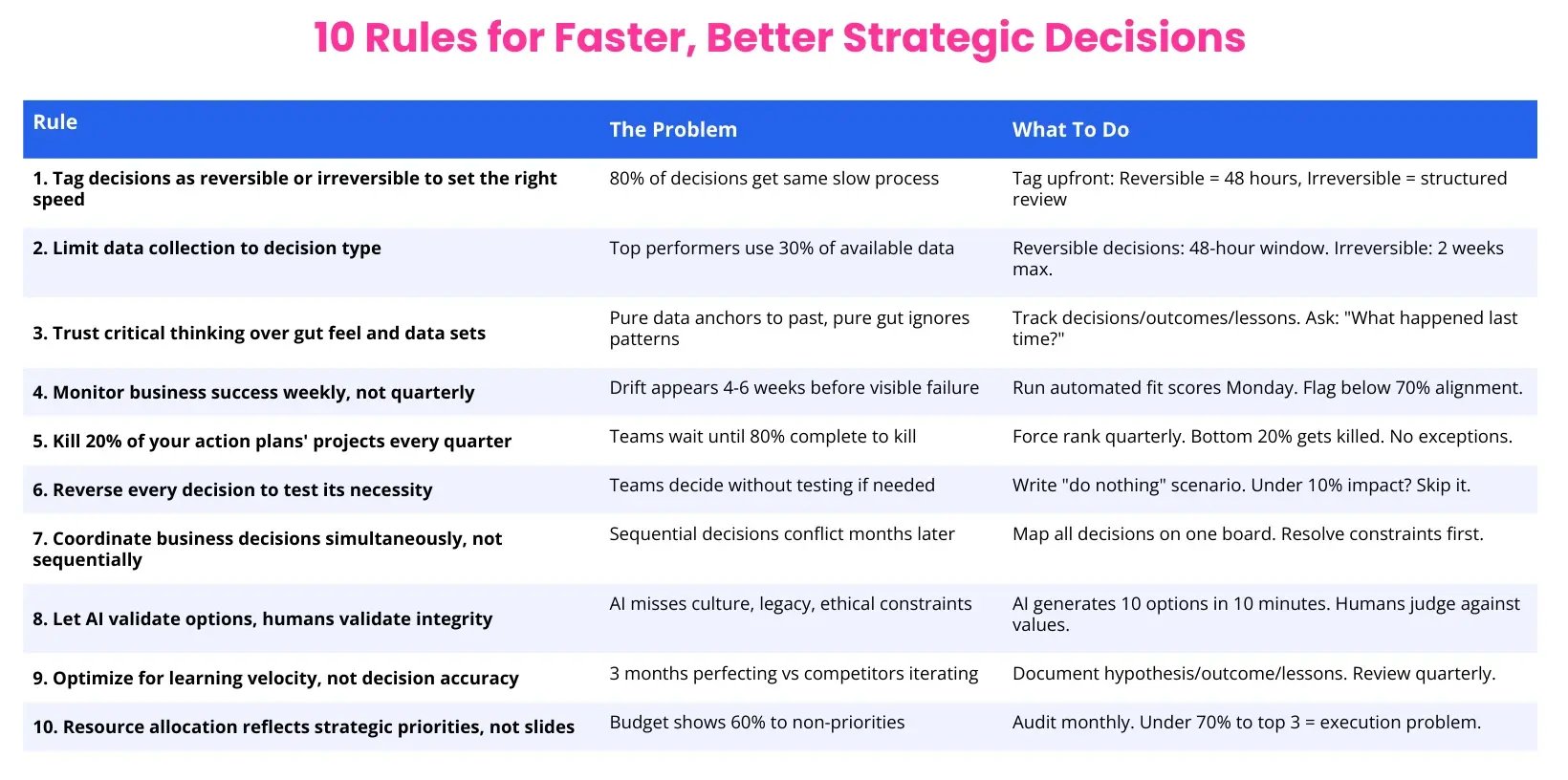
Exhibit 1: 10 rules for faster, strategic decisions
Organizations waste up to 20 percent of their investment due to poor decision making. That's most often not strategy execution failure. That's poor decisions made without considering internal and external factors, potential risks, or strategic priorities.
The costs compound fast. Misallocated capital sits in low-priority projects while high-impact business opportunities go unfunded. Leadership bandwidth drains on projects that should have been killed quarters ago. By the time you discover the misalignment, competitors have already moved.
McKinsey research shows companies that dynamically reallocate resources outperform static allocators by 30% in total shareholder returns. These organizations decide faster on strategic priorities and maintaining competitive edge through disciplined strategic planning and management.
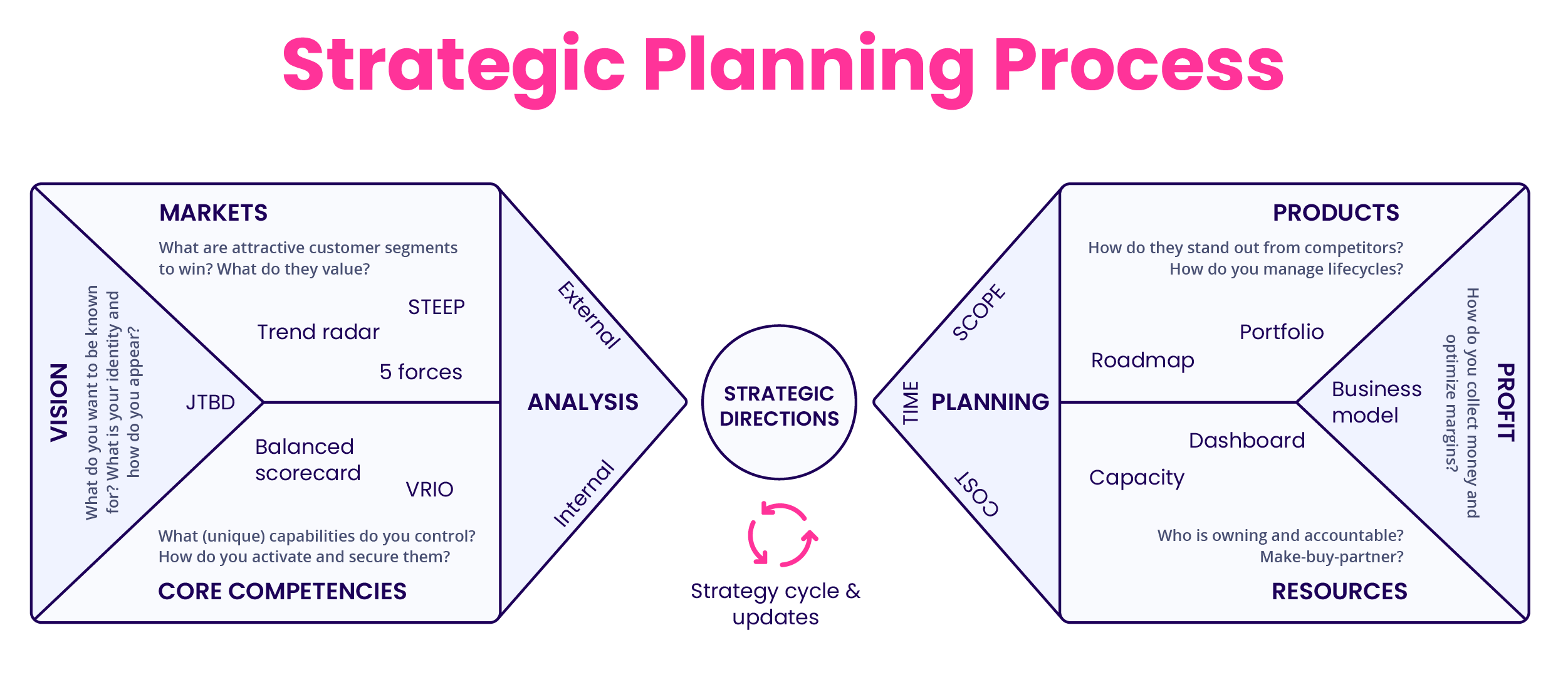
Exhibit 2: The components of the strategic planning process
Five patterns signal broken decision-making processes.
Good decisions have four attributes.
They move at the right speed for their reversibility.
They're grounded in critical thinking, not isolated data analysis or gut feelings.
They include explicit criteria for what success looks like.
They determine the crucial step to take next.
Effective decision-making comes from building processes that enable learning velocity, not getting decisions right once. Jeff Bezos's decision-making framework distinguishes between one-way doors - irreversible decisions requiring deep analysis - and two-way doors - reversible decisions requiring speed.
Organizations that apply different strategic planning processes to decision types move 5x faster on 80% of their decisions.
Three obstacles block effective strategic decision-making.
Data paralysis in data driven decision making extends analysis cycles from weeks to months. Teams collect information that doesn't change the decision.
Strategic drift appears 4-6 weeks before visible failure. Quarterly reviews reveal it months later after you've burned millions. Projects consume resources long after they've drifted from strategic priorities and organizational goals.
Reversibility confusion kills agility in strategic management. A feature test that could be rolled back in two weeks gets the same six-month approval process as irreversible platform architecture. This bottlenecks 80% of strategic decisions that should move fast.
Overcoming common challenges and effective strategic decision making operate through four connected components: what goes in, what you decide about, what comes out, and when you decide.
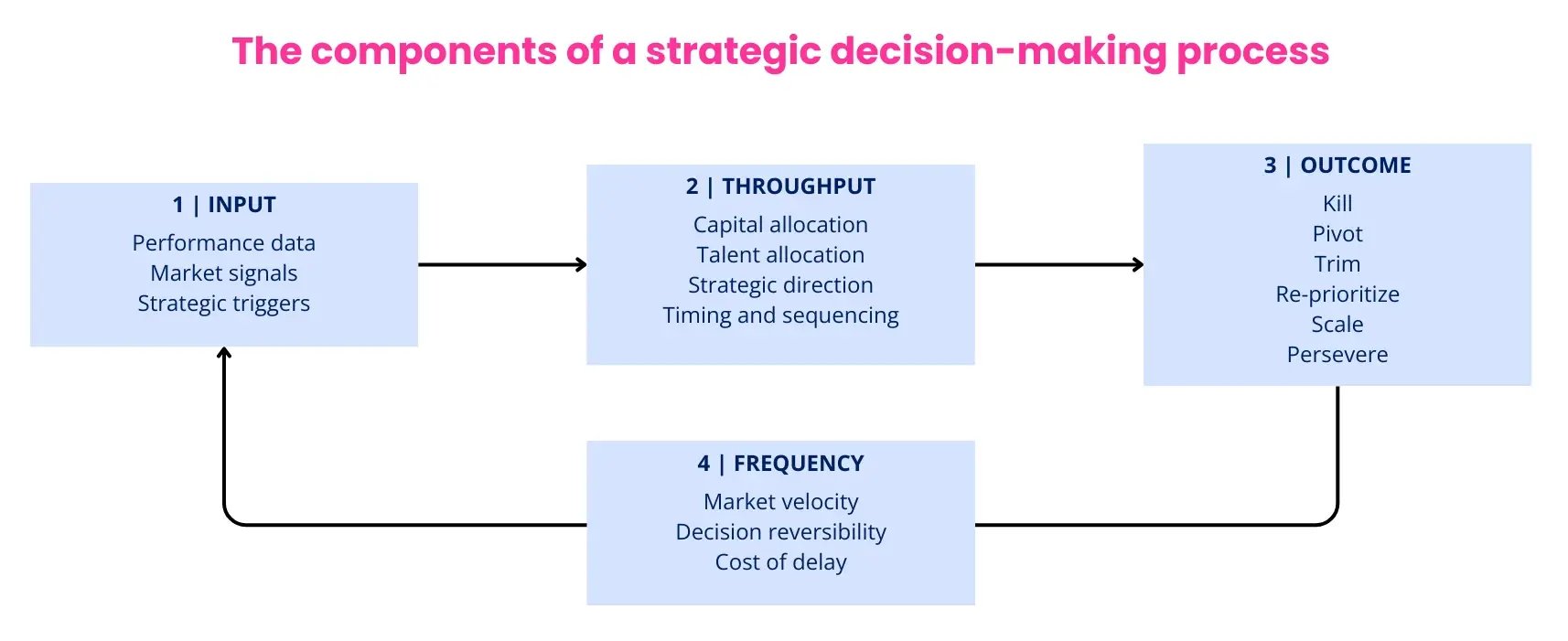
Exhibit 3: The components of a strategic decision-making process
Strategic decisions require three inputs.
Performance data shows portfolio health and resource utilization.
Market signals include customer intelligence, competitive moves, regulatory changes, technology disruptions, and industry trends.
Strategic triggers encompass ambitions, financial motives, opportunities, and the company's DNA.
Most organizations collect all three but fail to synthesize them for informed decisions. Data sits in separate systems. Market intelligence lives in slide decks. By the time business leaders connect the dots, the window has closed.
Every strategic decision can own access and disposal rights over 4 artifacts.
Capital allocation determines where money flows.
Resource allocation determines where talent goes.
Strategic direction determines go-to-market, priorities, and strategic goals.
Timing and sequencing determine when things happen.
Clear ownership of each decision right accelerates strategy execution. When multiple executives control different rights without coordination, strategic business decisions stall.
Strategic decisions produce six outcomes: Kill (terminate entirely), Pivot (change direction), Trim (reduce scope), Re-prioritize (change timing), Scale (expand investment), and Persevere (do nothing).
Most portfolios lack explicit criteria for moving between these outcomes. Teams continue projects by default rather than making active strategic decisions based on performance signals and potential outcomes.
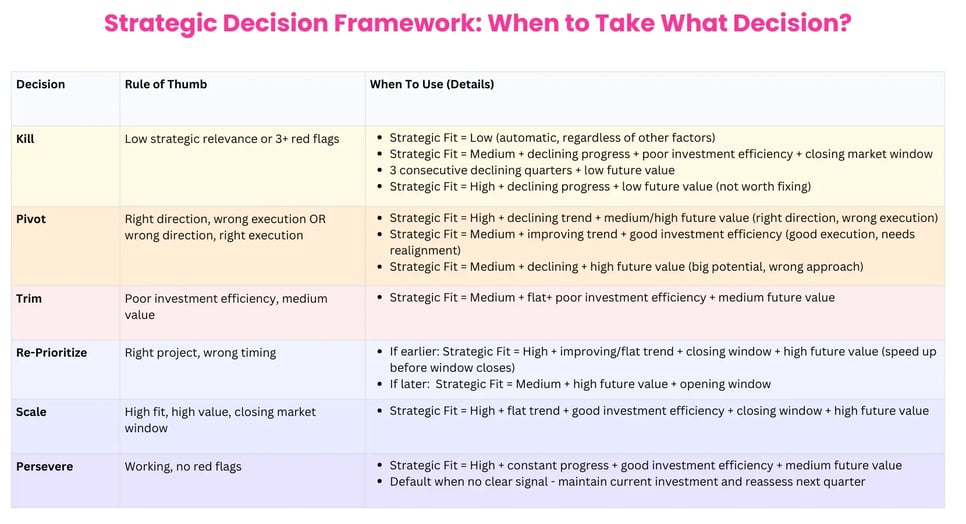
Exhibit 4: Strategic decision framework - when to take what decision?
Decision timing determines competitive advantage. Traditional organizations decide quarterly. Market conditions and market demand change weekly. A quarterly rhythm means you're always 8-12 weeks behind market reality and external factors.
Leading organizations set frequency based on market velocity, decision reversibility, and cost of delay. In fast-moving markets, reversible strategic decisions happen weekly. When strategic drift costs $1 million per month, waiting for quarterly review means burning $3 million before acting.
Business leaders who remain flexible to market changes outperform those stuck in rigid planning cycles.
These ten rules challenge conventional wisdom about strategic decision making. Each rule addresses a specific failure mode that slows organizations and misallocates resources. Together, they create a decision-making framework that enables speed on what matters for long-term success.
Jeff Bezos's decision-making framework: Type 1 decisions (one-way doors) are irreversible strategic decisions. Type 2 decisions (two-way doors) are reversible decisions. Most organizations use the Type 1 strategic planning process for Type 2 decisions, killing speed on 80% of strategic decisions.
Tag each strategic decision upfront. Reversible gets good-enough approvals. Irreversible gets a structured review. Knowing which is which before you start changes everything for strategy execution.
Research shows top performers use 30% of available data in their strategic decision making process. More information creates analysis paralysis.
Teams collect data they'll never use. Analysis extends from weeks to months. By the time you have "complete" information, market conditions have shifted.
Tie your data collection to decision reversibility, not decision importance. Reversible decisions get 48 hours of analysis. Irreversible ones get two weeks maximum. If new information doesn't change your top three options, stop gathering.
Warren Buffett: "I don't look to jump over seven-foot bars; I look around for one-foot bars that I can step over."
The data-versus-intuition debate is a false choice. Pure data driven approaches anchor to the past. Pure gut feeling ignores what you've learned.
The solution: decision memory. Track what you decided, what happened, and why. After 10 decisions, patterns emerge. Acquisitions in adjacent markets succeed 70% of the time, while distant ones fail 80%. Q4 launches underperform Q2 launches.
When facing new choices, ask: "What happened last time we made a similar bet?" This critical skill - recognizing cross-portfolio patterns - separates good strategy from poor decision making.
Portfolio misalignment appears 4-6 weeks before visible failure. Quarterly reviews reveal it months too late. By week 16, you've burned 12 weeks of budget on misaligned work that doesn't serve business objectives.
Run automated strategic fit scores every Monday to track progress. Flag projects below 70% alignment with strategic goals. This gives 6-8 weeks to pivot before significant capital waste and provides up-to-date feedback to business leaders.
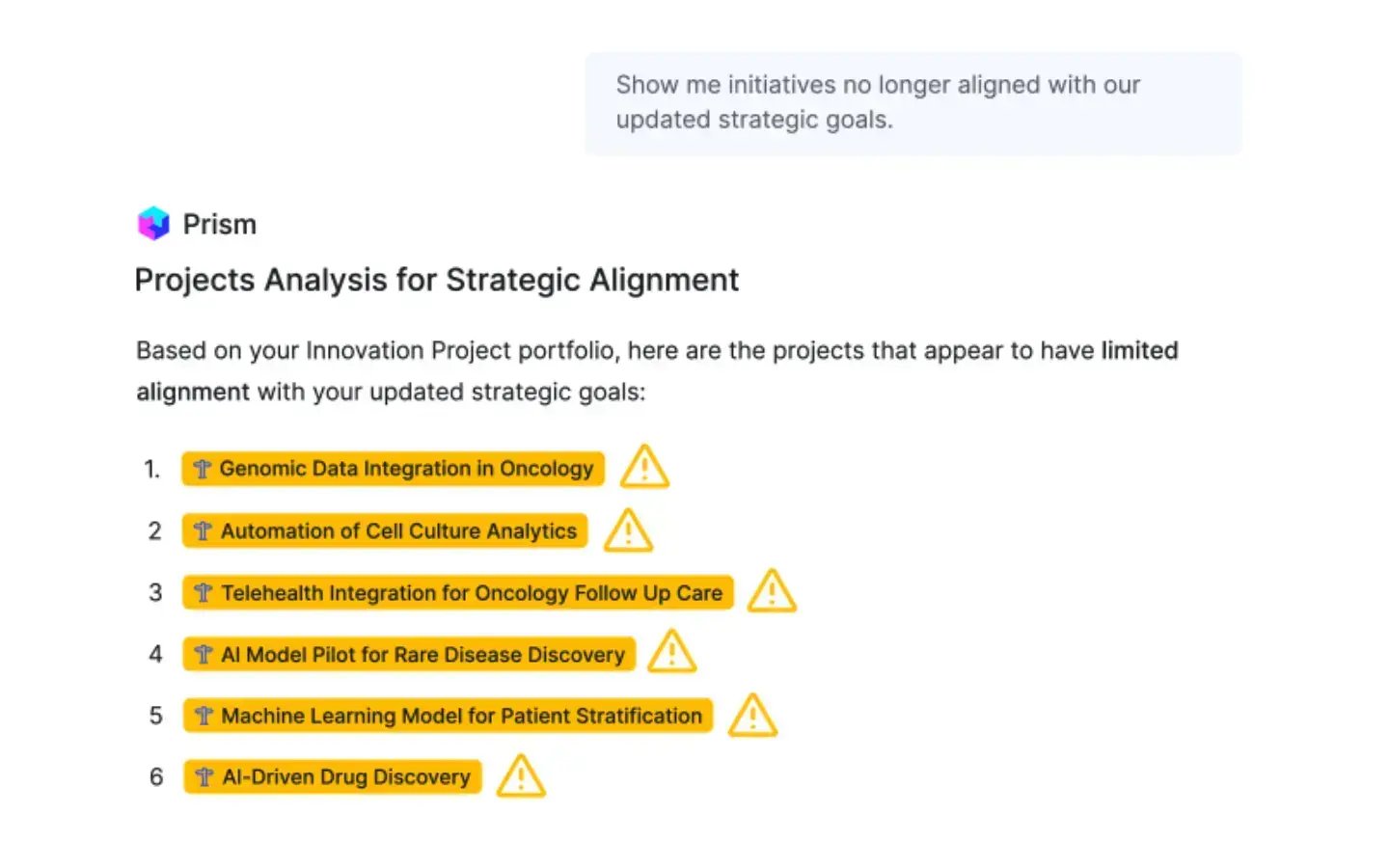
Exhibit 5: ITONICS Prism flags off-strategy projects
Kill/pivot signals appear at 30% project completion. Organizations wait until 80%, burning budget, before making obvious calls on projects.
Force rank portfolios quarterly against strategic priorities. Bottom 20% gets killed or radically pivoted. No exceptions. This creates space for new ideas and prevents resources from being trapped in zombie projects disconnected from company goals.
Amazon's Jeff Wilke implemented "question mark" reviews, where projects proved they deserved continued funding or got killed, regardless of sunk cost. This disciplined approach to strategic business decisions enabled effective leadership and organizational success.
Inversion thinking reveals hidden assumptions in strategic decision-making. "What happens if we don't decide?" often shows that the strategic decision isn't needed.
Before major strategic decisions, make the "do nothing" scenario planning with quantified impact on business goals and financial performance. If the impact is under 10% difference, skip the decision.
Charlie Munger: "Invert, always invert." This step-by-step process prevents leadership from wasting time on low-impact choices.
Polychronicity research shows that leaders juggling multiple strategic decisions outperform serial decision makers in collaborative decision-making. Dependencies go unnoticed in sequential strategic planning.
You make strategic decisions in January, March, and June. By August, the June decision conflicts with January. Now you're unwinding instead of progressing toward organizational goals.
Map all active strategic decisions on one board with clear direction. Identify which constrain others. Resolve constraining strategic decisions first, then make dependent ones in parallel. This approach to strategy management accelerates the entire organization and connects strategy to execution.
LLMs generate strategic alternatives at expert quality and also know the firm-specific context. But they miss the company's culture, legacy, and ethical constraints in strategic decision-making.
AI proposes 10 options in 10 minutes for business strategy. But it doesn't know your risk management behavior, brand values, or competitive edge in your market. Use AI for speed and market analysis, business leaders for judgment, and the company operates best practices.
Organizations combining AI and organizational learning manage uncertainty 40% better than those optimizing for accuracy in strategic decision-making.
You spend three months ensuring perfection in strategic planning. Competitors decide in three weeks through effective decision making, learn it's wrong, and pivot in three more. They're two iterations ahead when you launch. They've measured progress while you've debated.
Document every major strategic decision's hypothesis, outcome, and lessons for the entire business. Review quarterly to identify blind spots in strategic thinking. Speed of learning beats accuracy of decision for long term success and future success.
/Still%20images/Workflow%20Builder%20Mockups%202025/capabilities-workflows-create-working-processes.webp?width=2160&height=1350&name=capabilities-workflows-create-working-processes.webp)
Exhibit 6: Document learnings along different project stages and gates
Strategy execution fails when capital flows to projects that look good on slides rather than achieve key results in the business world.
Your deck says "customer experience is priority one." Your budget shows 60% in cost reduction. This disconnect between stated strategic goals and actual resource allocation kills strategy execution before it starts.
Audit resource allocation monthly against strategic priorities and company goals. If under 70% flows to your top three strategic objectives, you have a strategy execution problem.
McKinsey data: Tight alignment between resources and good strategy drives 40% better shareholder returns. Strategic leaders who monitor progress and connect strategy to capital allocation create a path forward that others can't match.
Start with your highest-pain decision type. Most organizations struggle with kill decisions - projects consuming resources without returns to strategic goals.
Implement Rule 5 first: force rank and kill the bottom 20% this quarter. This creates immediate space for new high-value initiatives.
Within 90 days, add Rule 4: weekly strategic alignment monitoring. This catches drift before it's expensive and provides business leaders with real-time feedback to track progress.
By month four, implement Rule 3: reversibility tagging in your strategic decision-making process. This accelerates 80% of strategic decisions and frees effective leadership for the 20% requiring deep analysis and scenario planning.
The remaining rules layer in over six months. But these three - kill 20%, monitor weekly, tag reversibility - deliver 70% of the value. Each addresses one of the common challenges business leaders face: overcoming resource constraints, making informed decisions quickly, and aligning the organization's direction with market trends.
These rules require infrastructure: real-time monitoring, cross-functional pattern recognition, dependency mapping, and institutional decision memory for effective strategic management.
ITONICS provides this operating system for strategic portfolio management and strategic decision making.
/Still%20images/Portfolio%20Mockups%202025/portfolio-hero-2025.webp?width=2102&height=1190&name=portfolio-hero-2025.webp)
Exhibit 7: Strategic portfolio management with ITONICS
Real-time strategic alignment runs automatically. Dashboards show projects drifting below 70% strategic fit within weeks. Business leaders see misalignment 4-6 weeks before visible failure and can make strategic decisions with immediate needs in mind.
Automate opportunity discovery: Manually tracking and evaluating new opportunities takes time and resources. ITONICS automates opportunity discovery using artificial intelligence, keeping you up to date with the latest political, economic, social, technological, environmental, and legal factors. This ensures you stay ahead of industry trends, regulatory changes, and emerging risks, providing valuable insights for your innovation strategies and strategic planning process.
Decision memory captures hypotheses, outcomes, and lessons from every major strategic decision. Your twentieth portfolio decision is better than your first because the system remembers what worked for success and what created risk management problems.
Traditional portfolio management tells you what happened last quarter. ITONICS tells you what's about to go wrong next month - while you can still act on strategic initiatives and market opportunities.