R&D governance framework: Implementing control objectives for R&D

Your R&D portfolio is bleeding cash into projects that will never launch. Your governance board just approved another "strategic" initiative that contradicts last quarter's priorities. Your best project managers are updating Excel sheets instead of developing products.
Most organizations treat R&D governance as a necessary evil, as a bureaucratic overhead that slows down the "real work" of invention. They're half right: bad governance absolutely suffocates the development of new solutions. But here's what they miss: the absence of governance creates inefficiencies disguised as autonomy.
The uncomfortable truth? Without clear governance structures, your resource allocation becomes a political battleground where resources flow to whoever argues loudest, strategic alignment becomes accidental, and portfolio risks accumulate invisibly until they explode.
More governance also leads to more clarity. Clarity about what is a strategic priority. Clarity about who decides what. Clarity about when to reallocate resources. Organizations that master governance structures create a competitive advantage. Systematic and rule-based decision-making is faster, smarter, and more strategically aligned than anything committees can produce.
This article breaks down what effective R&D governance looks like: structural approaches grounded in control objectives for R&D (CORD). You'll learn how to design governance that accelerates decision-making rather than bureaucratizes it and how to implement it without triggering organizational adoption barriers.
Strong governance ensures reporting is credible and provides insights on projects, company priorities, and investment success when needed. It also includes metrics about data quality, risk status, and patent applications where applicable. Clearly state the total cost per initiative and whether investments are aligned with strategic or regulatory expectations.
Transparency is crucial and builds trust, especially in regulated industries or when reporting on monetary value generated is company-critical.
Effective R&D governance rests on three foundational pillars that must function as an integrated system. When these pillars operate in isolation or receive unbalanced attention, governance frameworks collapse under their own weight. Understanding these pillars reveals why so many governance initiatives fail despite good intentions and substantial investment.
Most governance failures trace to pillar imbalance rather than conceptual misunderstanding. Organizations invest heavily in structures but neglect the mechanisms needed for those structures to function effectively. Others implement elaborate mechanisms like stage gate processes and key performance indicators without clarifying decision-making authority or building the relationships required for cross-functional collaboration.
Understanding the three pillars reveals what governance is made of, but architectural components alone don't guarantee effective implementation. The difference between governance that accelerates decisions and governance that paralyzes organizations lies in how those components operate.
Three principles guide effective governance design, transforming structures, mechanisms, and relationships from administrative overhead into competitive advantage.
These three principles operate interdependently: Strategic alignment demands clarity about priorities and integration across all three pillars, clarity enables alignment by making authority explicit, and integration is impossible without clarity and strategic purpose.
Organizations possess governance boards, stage gates, and metrics - yet governance fails because strategic alignment gets sacrificed to politics, clarity gets abandoned for flexibility that becomes ambiguity, or integration gets replaced by selective implementation. Therefore, the pillars define what to build, and the principles define whether what you build actually governs.
Authority without accountability breeds negligence, as well as accountability without authority breeds frustration. R&D governance fails when these fundamental elements misalign, creating organizational friction that drains resources and delays critical decisions. Three organizational elements determine whether governance structures enable or impede portfolio decisions:
The portfolio management office (PMO) serves as the operational center of portfolio governance, coordinating across business units, tracking portfolio performance, and ensuring relevant stakeholders possess the information needed for informed decisions. The portfolio manager's role sits within the PMO as a strategic orchestrator who identifies patterns invisible to individual project managers: patterns in portfolio risks, resource conflicts, strategic misalignment, and emerging opportunities that become visible only at the portfolio level.
Composition shapes governance focus. PMO composition determines what the office sees, values, and prioritizes. The most effective portfolio management offices blend strategic thinking, financial literacy, and operational experience.
This combination enables the PMO to translate organizational strategy into clear objectives for program managers, convert technical progress reports into strategic insights for decision makers, and identify market trends that require portfolio adjustments before competitors respond:
Mandate defines authority boundaries. The mandate question determines whether the portfolio management office advises or decides, and ambiguity here creates constant friction.
Clear mandates specify precisely what the PMO controls directly and what it escalates to governance boards or senior decision makers. Direct control typically includes portfolio performance reporting to relevant stakeholders, tracking key performance indicators against intended benefits, maintaining the portfolio governance management plan, facilitating knowledge sharing across teams, and coordinating governance activities like stage gate reviews.
These functions enable the PMO to maintain continuous strategic alignment through systematic monitoring and coordination.
The Control Objectives for R&D (CORD) framework applies proven governance principles to research and development, defining the structures, mechanisms, and relationships that transform fragmented R&D efforts into strategically aligned portfolios.
CORD addresses a fundamental problem: most governance failures stem not from lack of frameworks but from imbalanced implementation. Organizations build elaborate organizational structures - job profiles, decision matrices, governance boards - but skip the mechanisms that make decisions stick, such as prioritization rules or escalation protocols. Others create detailed processes without clarifying who holds decision-making authority.
Thus, CORD forces holistic thinking by organizing governance around interdependent components that must work together to deliver portfolio performance.
Level 1: Setting the governance structure
This domain (Exhibit 1) operates at the highest strategic level, where key stakeholders define the organization's strategic objectives, establish governance structures, and maintain governance effectiveness. The governance board ensures that R&D efforts serve organizational goals rather than becoming ends unto themselves.

Exhibit 1: Setting governance structure to evaluate, direct, and monitor R&D objectives
At this level, three strategic tasks need to be executed:
When projects stall, it's often due to unclear responsibilities. The RACI chart enables strict role definition across complex projects, helping organizations assign ownership and avoid confusion.
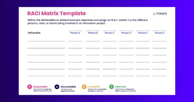
When everyone knows who's Responsible, Accountable, Consulted, and Informed, work flows smoother, and results come faster as stakeholders are aligned and responsibilities are assigned.
Download the RACI Matrix Template to define roles, eliminate confusion, and keep your projects on track.
2. To ensure the delivery of the R&D governance framework, the executive leadership needs to verify that developments deliver intended benefits to stakeholders.
3. To ensure that risk is optimized, the risk committee balances the opportunities of each new development against portfolio risks.Therefore, governance bodies like the governance board, executive leadership, and the risk committee are required.
This domain (Exhibit 2) translates organizational strategy into R&D objectives and portfolio themes, defines portfolio composition through project selection, allocates resources according to strategic priorities, and manages portfolio-level risks continuously. The portfolio manager operates primarily in this domain, maintaining strategic alignment while enabling execution. Key governance processes like portfolio balancing, resource allocation, and risk management planning occur here.

Exhibit 2: Constituting the core of portfolio management office activities to align, plan, and organize R&D objectives
For the second level, four strategic tasks are required:
Thus, for the successful execution of the level, several governance bodies are involved: PMO in collaboration with strategy managers, the portfolio manager, PMO together with Finance, and the risk manager.
Level 3: Ensuring project execution
This domain (Exhibit 3) ensures individual projects are managed systematically with appropriate oversight. Program managers and project managers operate in this domain, executing research activities within the guardrails established by higher-level governance. While execution receives less direct governance attention than strategy or portfolio management, this domain ensures that new products are actually developed, capabilities are acquired, and solutions are implemented according to plan.

Exhibit 3: Ensuring project execution governance to build, acquire, and implement R&D objectives
For the last level, two main tasks are necessary:
Therefore, only two governance bodies are required: the program and project manager.
CORD translates the three foundational levels into operational tasks (Exhibit 4) that structure portfolio governance from strategy to execution. These components map directly to R&D challenges, providing specific guidance on how to implement governance structures, establish governance mechanisms, and build the relationships that enable strategic alignment.
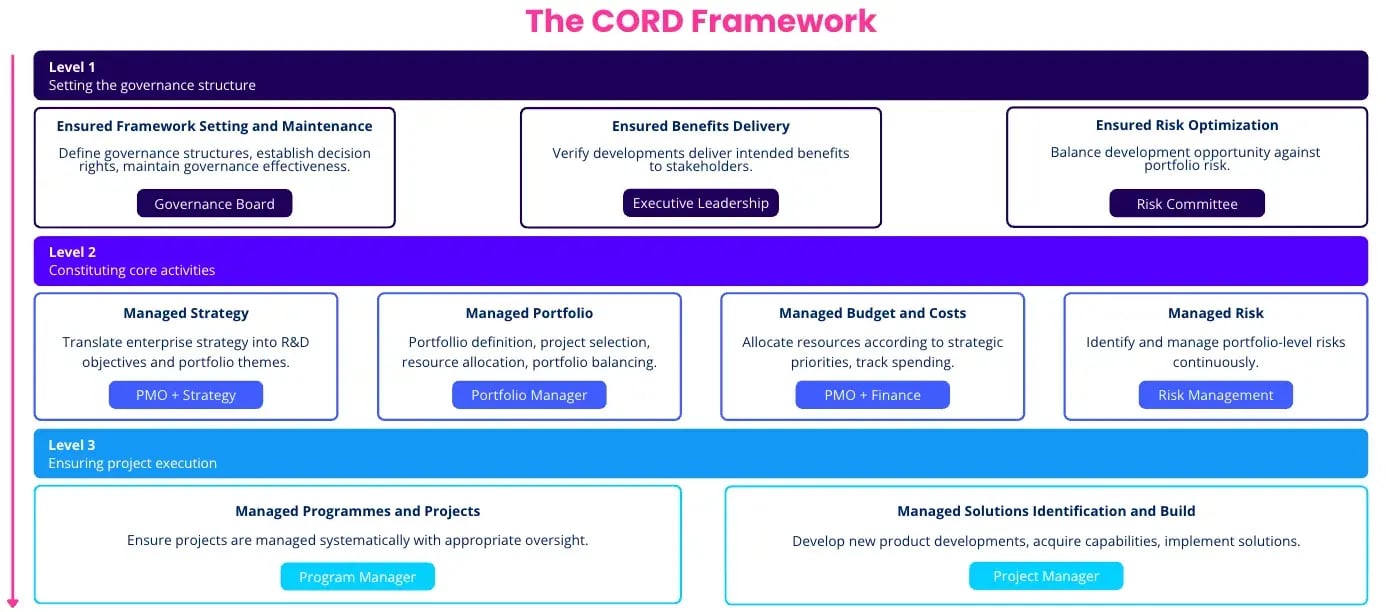
Exhibit 4: The three levels of the CORD framework
In addition to the three levels, organizations need to consider two further steps to complete R&D governance successfully (Exhibit 5).

Exhibit 5: Two additional capabilities of the R&D framework
Are you funding the right projects? If not, connect strategy, market data, and team insights to stop guessing and start knowing.
/Still%20images/Roadmap%20Mockups%202025/portfolio-link-projects-teams-and-milestones-2025.webp?width=267&height=167&name=portfolio-link-projects-teams-and-milestones-2025.webp)
Separate value drivers from the 30 to 40 % draining resources while scoring each initiative against an organization's strategic priorities: new revenue, customer retention, and cost savings.
Find what's really driving value to reallocate capacity to higher-return opportunities.
2. Closing the governance loop. This domain enables continuous improvement by capturing lessons from completed initiatives and feeding insights back into governance processes, making the organization progressively better at portfolio governance over time.
Together, they create a comprehensive governance framework that balances control with agility while ensuring continuous strategic alignment across the entire portfolio.
Contextual variables shape the CORD framework (Exhibit 6). Thus, generic best practices don’t exist in these scenarios as effective governance reflects the specific reality.
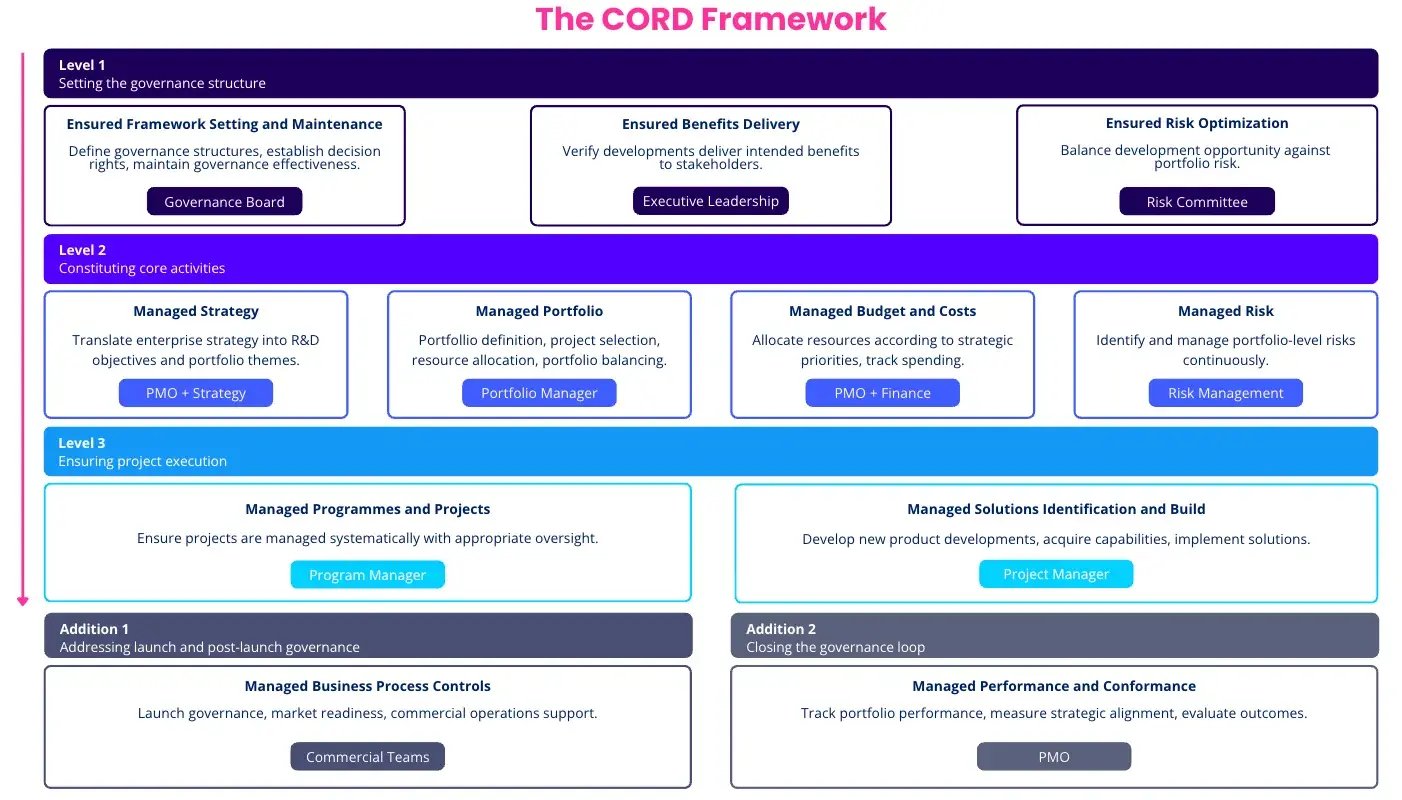
Exhibit 6: The CORD framework for R&D governance
Company strategy is the primary design factor.
Company goals cascade into portfolio governance management plans.
Risk profile determines how tightly you govern.
IT implementation methods matter more than R&D leaders admit.
Innovation strategy influences how you evaluate progress.
Company size and organizational complexity determine governance scale.
Sourcing models shape governance when R&D involves external partners.
The mistake many organizations make: copying governance frameworks from industry leaders without adapting for design factors. What works for a global pharmaceutical company governing regulated drug development won't work for a mid-size software firm pursuing platform plays.
Effective R&D governance requires both solid frameworks and enabling technology. The CORD framework provides the structural foundation: defining governance components, establishing accountability through the goals cascade, and ensuring strategic alignment through systematic processes.
/Still%20images/Portfolio%20Mockups%202025/portfolio-hero-2025.webp?width=2102&height=1190&name=portfolio-hero-2025.webp)
Exhibit 7: Driving R&D leadership with portfolios and roadmaps
But implementing CORD at scale demands digital infrastructure that makes governance mechanisms work without drowning in administrative overhead. ITONICS (Exhibit 7) bridges this gap by providing integrated portfolio management capabilities that operationalize CORD principles:
unified portfolio visibility across business units,
structured workflows that enforce decision-making processes,
transparent resource allocation aligned with strategic priorities, and
real-time portfolio performance reporting that enables continuous strategic alignment.
ITONICS creates the transparency and traceability essential for effective governance while enabling the cross-functional collaboration that makes governance frameworks deliver actual value.
When CORD provides the blueprint, and ITONICS provides the enabling infrastructure, organizations can build governance structures that accelerate innovation rather than bureaucratize it - to transform governance from organizational overhead into competitive advantage.