7 technology development strategies for smarter innovation investment


Only one in four firms converts innovation investments into real performance gains. Most technology projects fail for predictable reasons: unclear goals, weak decision criteria, fragmented execution, and inconsistent ownership. High-performing organizations avoid these outcomes by choosing the right strategy and managing their innovation portfolio with discipline.
This article gives innovation, R&D, and product leaders a practical decision framework for investment in technology, helping them make better bets that convert into measurable outcomes. We present seven proven strategies that strengthen execution discipline and improve innovation performance.
While organizational strategy expresses ambition, innovation strategy defines the direction for growth. It clarifies where to play, how to win, and what to execute. This includes identifying the opportunity spaces, business models, and capabilities an organization must pursue to stay competitive and relevant.
Technology strategy is a critical subset. It determines which technologies to invest in, what capabilities to build or acquire, and how to allocate resources across the build, buy, and partner spectrum. It ensures technology choices support broader goals of innovation and long-term competitiveness.
Technology development turns these strategic decisions into working solutions. It involves the engineering, design, and deployment of systems, products, and platforms. In parallel, research and development (R&D) plays a foundational role by reducing uncertainty, testing feasibility, and generating knowledge needed to assess risks and unlock new opportunities.
When innovation strategy, technology strategy, technological innovation, and R&D are aligned, organizations move with clarity and speed. They invest in what matters, deliver faster, and achieve stronger impact from their innovation portfolio.
Technology development delivers demonstrable value when teams follow a clear chain of reasoning. They define why the technology matters, how it supports the business, and what rules guide choices. When these anchors are missing, projects drift, consume resources, and rarely reach adoption.
Four elements determine whether a company moves toward strategic impact or toward expensive experimentation: direction, structure, coordination, and discipline.
Direction
Strategic development begins with direction. Teams link every technology development project to a business goal, a target user, and measurable success criteria. By contrast, experiments drain resources when teams explore without purpose, evaluation rules, or accountability. Clear direction ensures development supports the broader innovation strategy rather than unstructured curiosity.
Structure
Direction only works when supported by structure. High-performing organizations define the value a technology must create and the criteria used to evaluate it. This governance creates clarity. That clarity allows leaders to manage complexity, prioritize scarce resources, and invest in work that can scale.
Coordination
Structure becomes meaningful when teams coordinate around it. Technology choices are shaped by collaboration and shared judgment across technical and business groups. Treating development as a social process helps teams align on priorities, reduce friction, and maintain momentum. Coordination grounds decisions in collective understanding rather than personal preference.
Discipline
Direction, structure, and coordination create the conditions for discipline. Strategic development uses clear problem statements, evidence-based evaluation, milestone gates with stop rules, and cross-functional ownership. These practices prevent drift into costly experimentation and keep projects moving toward adoption and impact.
Together, these elements shift organizations away from resource-burning experiments and toward structured development that delivers strategic value.
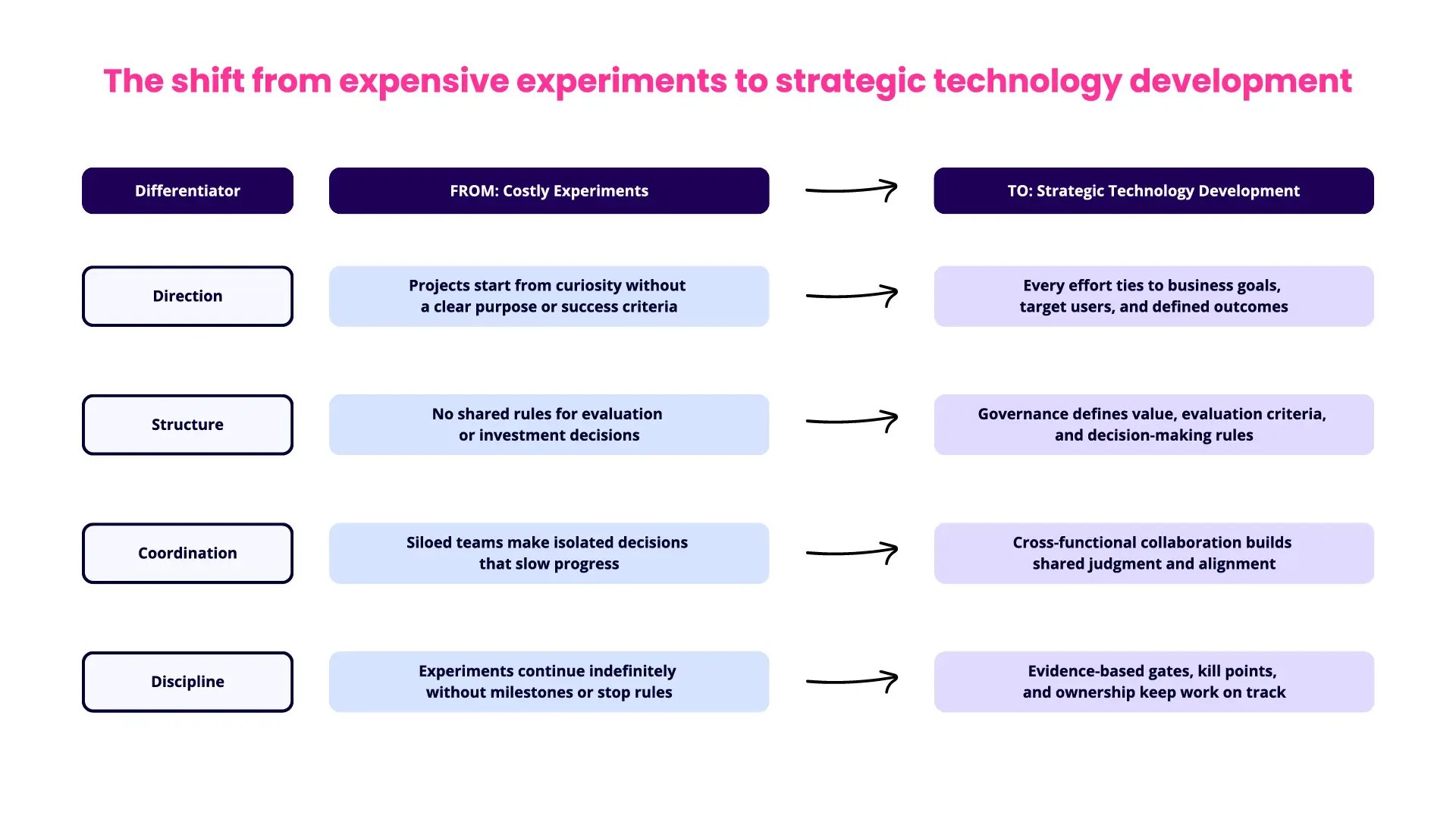
Exhibit 1: The shift from expensive experiments to strategic technology development
Poorly planned innovation work fails for predictable reasons:
This creates the illusion of progress while quietly draining time, budget, and attention.
Many organizations underestimate how expensive unfocused R&D can be. Only 25 percent of firms use a systematic approach, which means many teams fund scattered innovation initiatives with no clear path to value. The result is duplicated efforts, stalled proofs of concept, and plans that do not influence decisions. When this becomes a pattern, trust erodes across finance, business units, and technical teams.
The larger cost remains hidden. Hours are lost on exploration that never connects to strategic objectives. High-value talent is pulled into low-value experiments. Early prototypes evolve into improvised production systems that create technical debt. Integration issues surface late because security, compliance, and data requirements were ignored. As noise increases, leaders struggle to prioritize, slowing decisions across the entire innovation portfolio.
These costs accumulate because teams lack a shared framework for deciding when to start, stop, or redirect a technology effort. Without consistent decision logic, organizations react to trends, pressure, or individual opinion instead of strategic need.
A disciplined decision framework solves this. It gives teams a structure to evaluate work and make consistent investment choices, shifting organizations from reactive exploration to strategic, evidence-based decision-making.
To avoid poorly planned innovation projects, high-performing organizations rely on a clear, shared decision framework to guide how technologies should be advanced. This ensures every choice reflects a common vision, applies consistent evaluation rules, and aligns investment decisions with strategic priorities.
The core question is simple: What is the most effective way to create or access this technology?
The Technology Investment Decision Framework evaluates two dimensions: the strategic importance of the technology and the organization's internal capability to deliver it. These dimensions form a two-axis view that yields four investment paths: build, buy, partner, or optimize. These paths translate into seven actionable strategies.
To use this model effectively, teams follow three steps:
Strategic importance describes how essential a technology is to future value creation. Teams assess four criteria:
Together, these scores create a clear strategic importance rating.
Internal capability describes how well the organization can develop and scale the technology. Teams assess:
Together, these scores create a capability rating that clarifies internal strength or gaps.

Exhibit 2: The Technology Investment Decision Framework Step 1
Teams then place the technology on a 2×2 matrix with strategic importance on one axis and internal capability on the other. The position indicates the correct investment path:
This mapping creates a shared view across business, product, and technical teams by making trade-offs explicit and grounding decisions in evidence. The matrix position becomes the basis for selecting one of the seven technology development strategies.
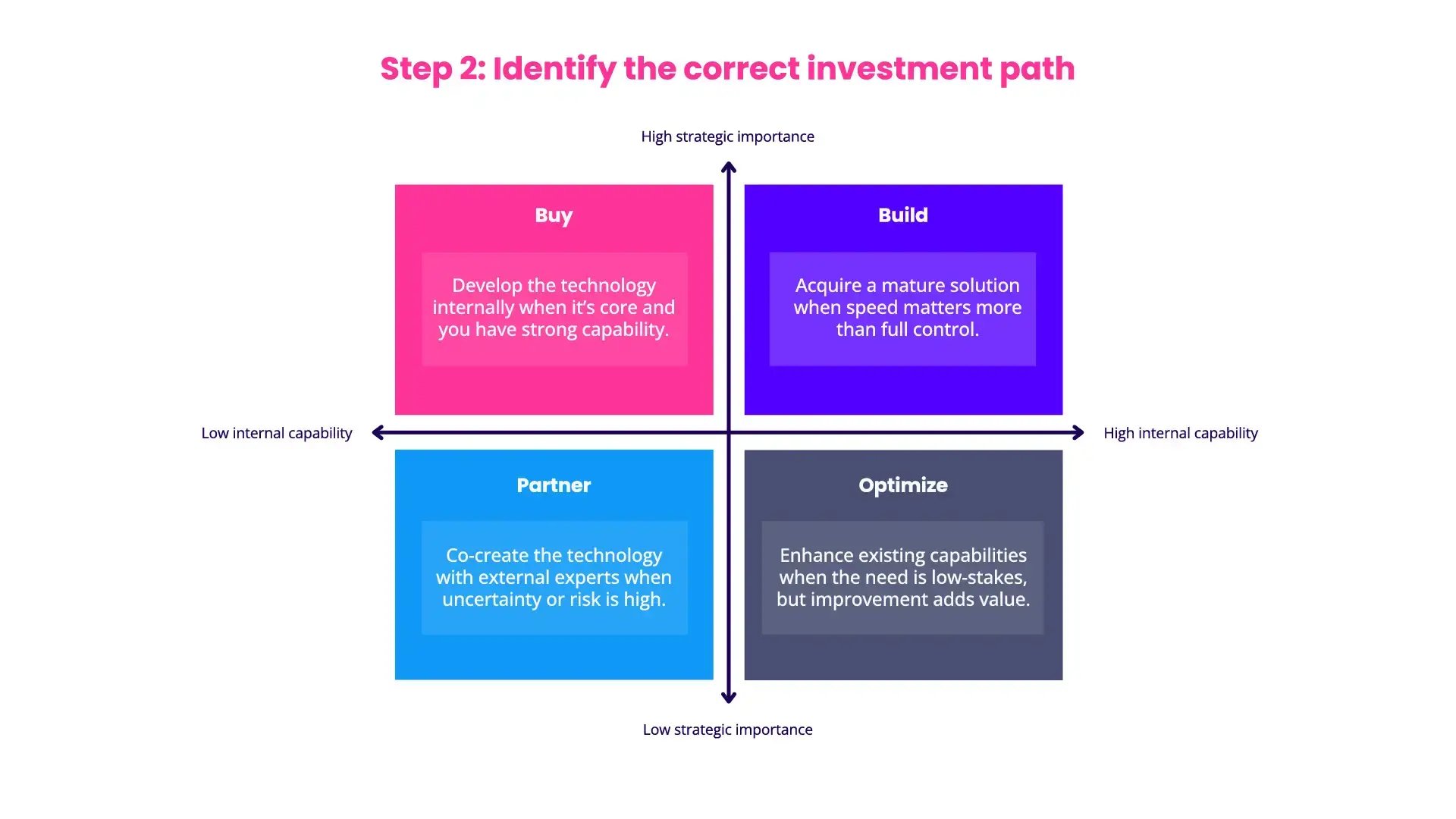
Exhibit 2: The Technology Investment Decision Framework Step 2
Once the investment path is clear, teams choose the strategy that fits their goals, readiness, and execution needs. Each path aligns with specific strategies. To select the right one, teams consider:
By matching intent, readiness, and control to the selected investment path, teams identify the strategy that will unlock the highest value and move from evaluation to confident execution.
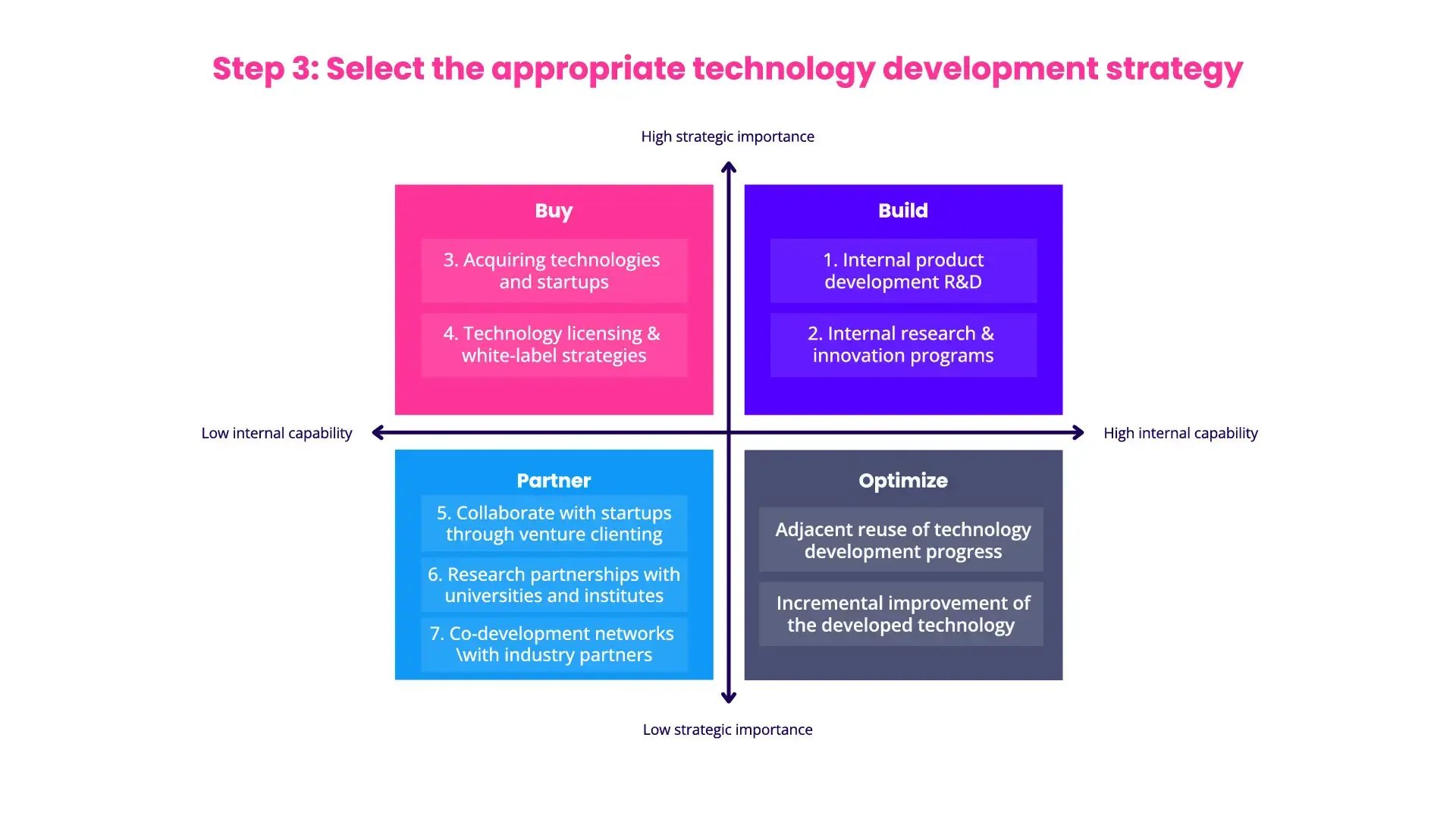
Exhibit 3: The Technology Investment Decision Framework Step 3
The seven strategies below show how the Technology Investment Decision Framework translates into practical execution choices that strengthen the innovation portfolio and improve outcomes. Each offers a distinct route for advancing, accessing, or scaling technologies in line with strategic priorities.
Internal work is a cornerstone of resilient technology strategy. It is the preferred route when a technology is mission-critical, requires tight architectural control, or contains IP that defines long-term differentiation. Choosing this path allows organizations to own the core mechanics of future products and platforms, making it a strategic business decision, not a technical one.
McKinsey reports that companies with integrated R&D and product functions achieve up to 30 percent higher new-product success rates because they align architecture, customer needs, regulatory requirements, and operational constraints.
High performers treat internal efforts as a disciplined system built on clear governance. Cross-functional teams resolve trade-offs early, readiness metrics guide progress, and test automation, simulation, and interface stability reduce rework. These practices ensure technologies mature on predictable timelines.
This strategy is the right choice when a capability underpins competitive advantage, when internal expertise is strong, and when differentiation depends on owning the technology rather than assembling external components.
Advanced research programs operate before markets fully exist, where scientific uncertainty remains high. Their role is to build knowledge foundations future products rely on, giving companies a structural advantage long before competitors recognize the opportunity.
BCG research shows that organizations with sustained exploratory pipelines outperform peers in long-term value because they generate early IP, methods, and scientific insight that shape emerging fields.
Successful programs avoid wandering exploration by defining inquiry boundaries, setting learning milestones, and running experiments that reduce uncertainty in meaningful steps. They maintain active exchange with product, regulatory, and manufacturing teams to ensure discoveries do not remain isolated.
This strategy is ideal when a technology is strategically important but scientifically unsettled, when frontier knowledge is essential, and when internal understanding is required to build a durable advantage in technological innovation.
Acquisition becomes the preferred route when time is the true competitor. Buying gives immediate access to mature IP, proven architectures, and experienced technical teams. When speed outweighs control, acquisition can outperform years of internal effort.
PwC research shows that capability-driven acquisitions outperform financial-only deals because they strengthen core competencies and accelerate execution. Strong acquirers interrogate engineering logic: architectural choices, technical debt, system behavior under stress, and the team's ability to evolve the technology under new constraints. This scrutiny matters because many acquisitions fail when untested assumptions meet operational reality.
High performers prepare for integration before signing. They map how the technology fits the stack, define migration paths, and establish decision rights to avoid isolating or slowing the startup.
Acquisition is the right choice when the capability gap is large, timelines are tight, and early scale shapes market leadership.
Licensing and white-label strategies give companies rapid access to proven technologies without absorbing the cost, risk, or delay of full build efforts. It is a deliberate choice to rent capability rather than own it, which works best when differentiation sits above the licensed technical layer.
Companies that license to close non-core gaps often cut time-to-market by up to 40 percent, avoiding foundational R&D so they can focus on customer value. Sectors such as fintech, consumer electronics, and digital health rely heavily on white-label components to deliver speed and compliance.
Organizations that excel in licensing design around modularity and interface discipline. They set strict boundaries, negotiate upgrade guarantees, and establish standards that allow components to evolve without destabilizing downstream systems. The goal is speed without lock-in.
This strategy is ideal when a technology is essential to use but not essential to own, when regulatory or technical complexity is high, or when internal capability or timelines make building impractical.

Venture clienting validates emerging solutions early by treating the enterprise as a customer, not an investor. Startups get direct exposure to real system interfaces, data structures, and compliance requirements. This replaces assumptions with evidence and reveals quickly whether a solution can operate under real-world constraints.
Programs at companies like BMW, Siemens, and Bosch show that validation cycles shrink from years to months when startups work inside actual environments. Effective initiatives use structured sprints, accelerated procurement, clear technical criteria, and cross-functional co-creation, ensuring outcomes are shaped by integration learning rather than polished demos.
For R&D and innovation leaders, venture clienting reduces financial risk, integration risk, and time to evidence. It is the right choice when a technology is strategically relevant but early, internal bandwidth is limited, and the organization needs verified performance before committing to build, buy, license, or scale.
Research partnerships give companies access to scientific expertise, specialized facilities, and long-range exploratory thinking that internal teams cannot maintain alone. These collaborations help organizations shape early technology positions, understand constraints, and explore emerging fields well before commercial signals appear.
Funded academic research strengthens this further. Industry-sponsored labs, endowed chairs, and multi-year programs create dedicated capacity for topics of strategic importance. Professors and senior researchers act as critical advisors who validate assumptions, challenge technical approaches, and expand understanding of scientific limits.
Evidence shows that joint academic–industry research produces more influential patents and higher-value IP than corporate labs working alone. Effective partnerships embed engineers in research teams, co-shape research questions, and maintain lightweight governance that supports alignment without bureaucratic friction. Clear translation processes ensure research transitions smoothly into engineering and product pipelines.
This strategy is strongest when technologies are scientifically complex, strategically important, and require multi-year investigation. It reduces blind spots, deepens expertise, and lowers long-term innovation risk.
Some technologies only succeed when entire industries move together. Electrified drivetrains, hydrogen ecosystems, digital freight networks, vehicle-to-everything communication, and next-generation materials all depend on shared standards, shared infrastructure, and shared innovation risk. Co-creation networks enable companies to build technologies collectively that would be technically or commercially impossible to deliver alone.
These networks work because each participant contributes a non-replicable strength: manufacturing capability, design authority, distribution reach, regulatory insight, or data advantage. Initiatives such as CATENA-X, the Mobility-as-a-Service Alliance, and the 5G Automotive Association show how coordinated work accelerates interoperability and adoption far faster than isolated R&D.
Successful networks rely on strong operating models. They define the problem jointly, commit real engineering resources, run a shared backlog, and set IP rules and neutral governance early. This transforms collaboration into a functioning innovation engine.
This strategy is most effective when technologies are strategically important but commercially risky, or when success depends on compatibility across devices, platforms, and supply chains. When the central question shifts from "Can we build it?" to "Can we build it alone?", co-creation often becomes the fastest and lowest-risk path to scale.

Exhibit 4: A summary of the seven technology development strategies and their application
The seven strategies define how organizations can build, buy, or partner, but their value realization depends on how well those choices are executed. High performers turn strategy into outcomes by using evidence, disciplined decisions, and accountable delivery to move technologies from idea to impact. This section shows how they close execution gaps and operationalize the seven approaches.
Most technology roadmaps look convincing but deliver little because the process behind them is weak. Teams often treat technology roadmaps as communication artifacts rather than operational commitments, filling timelines with tasks that have no link to readiness, capacity, or business value. This disconnect prevents the seven strategies from producing real impact, because build, buy, and partner choices cannot succeed within unrealistic plans.
Effective technology roadmaps are built on constraints, not aspirations. Gartner reports that fewer than one in three technology roadmaps influence budget decisions because they act as static presentations instead of decision tools. High performers anchor every technology roadmap item to three non-negotiables: a readiness threshold, a real capacity rule, and a measurable business outcome. These guardrails ensure that build, buy, license, and partnership decisions reflect engineering limits, integration needs, and validated learning.
They also replace activity-based planning with decision-based triggers. "Prototype in Q2" becomes "Move to pilot after readiness level, integration fit, and cost envelope validated." This turns the technology roadmap into a living system that adapts based on evidence and supports predictable execution across all seven strategies.
Evidence-based innovation portfolio management is the antidote to the technology roadmap trap. Many portfolio reviews become status-reporting rituals where innovation projects continue simply because they exist. High performers use innovation portfolio management to allocate resources intentionally across the seven strategies, ensuring the right mix of internal work, acquisitions, licensing, research partnerships, and co-creation networks.
Strong governance reinforces this discipline through portfolio management. It keeps trade-offs visible and ensures decisions reflect strategic priorities rather than internal politics. Research from Accenture and BCG shows that top innovators reallocate more than 20 percent of innovation budgets each year through portfolio management, while laggards move less than 5 percent even when innovation projects stall.
High-performing organizations follow three rules: zero debate evaluation criteria, governance that requires teams to justify continuation, and 90-day reallocation cycles driven by evidence instead of sunk costs. Evidence scorecards make learning visible and clarify remaining uncertainty. This shifts innovation portfolio management from storytelling to decision-making and ensures the seven strategies are applied where they create the most value rather than where inertia is strongest.
Evidence-based innovation portfolio management also protects the innovation pipeline during leadership transitions. Many technology strategies collapse when new leaders arrive. Priorities shift, innovation projects restart, and multi-year bets stall because decisions rely on individuals rather than systems. Research from IMD and MIT shows that turnover can cost organizations 12 to 24 months of momentum when decision logic is not codified.
High performers prevent this by embedding decision mechanisms into their operating models. They codify build, buy, partner, and optimize rules, along with evaluation criteria and architectural standards, so they persist across leadership cycles. Reference architectures and reusable patterns make technical choices repeatable and reduce rework across internal work and partnership models. Shared visibility through digital platforms ensures that technology roadmaps, innovation portfolios, and decision histories remain accessible and traceable.
Consistent rules, clear traceability, and predictable review cadences ensure pipelines advance based on evidence rather than personal preference. This shift from leader-dependent direction to system-based governance preserves momentum and allows long-term capability to compound. With this discipline in place, each of the seven strategies becomes scalable, repeatable, and economically grounded, turning technology investment into measurable innovation outcomes.
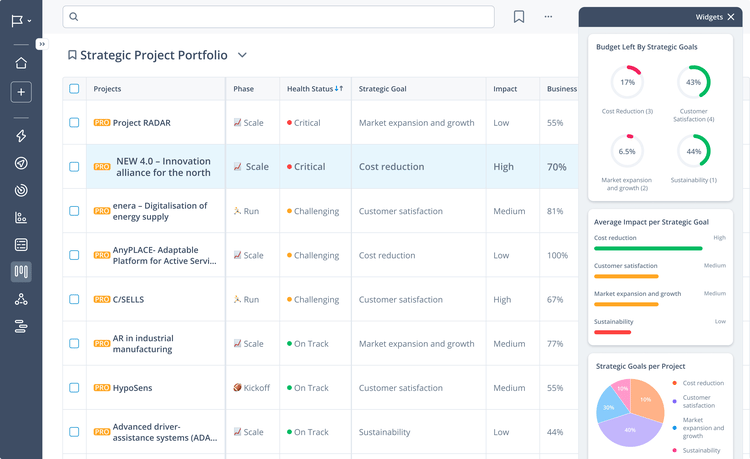
Exhibit 5: A strategic innovation portfolio and pipeline of projects
Choosing the right strategy only creates value when teams have the tools, processes, and collaborative structures to execute it consistently. High performers build systems that combine human judgment, operating discipline, and digital platforms to keep technology work aligned, evidence-based, and resilient. The tools below show how organizations turn strategic intent into repeatable, high-quality delivery across all seven strategies.
Progress in technology work often stalls because decision-making breaks down. Teams move forward without confronting constraints, weak assumptions go unchallenged, and no shared forum exists to question direction early. This undermines every build, buy, and partner strategy, because the wrong innovation initiatives stay alive and the right ones lack support.
A clearly defined social process avoids these failures by creating structured interaction where engineering, product, finance, and leadership test assumptions, surface trade-offs, and decide whether a technology should advance, change direction, or stop.
High performers depend on this social process because technology decisions span functions, budgets, and incentives. Without it, decisions drift toward hierarchy or inertia. Strong social mechanisms ensure that each of the seven strategies is chosen for evidence-based reasons, not personal preference.
To make this work, organizations establish predictable decision forums supported by standard evaluation criteria and evidence requirements. Two prerequisites are essential: open visibility into assumptions and clear traceability of decisions. These foundations prepare the ground for the next capability: operating systems that translate choices into coordinated action.
A strong social process improves decision quality, but predictable delivery requires a system that ensures those decisions become coordinated execution. This is the role of a digital operating system. It creates the workflows, shared artifacts, and timing mechanisms that move technologies from discovery to validation to scale.
When implemented well, these systems centralize technology cases, portfolio decisions, readiness signals, and architectural standards. This removes version conflicts, reduces dependence on gatekeepers, and gives leaders a unified view of constraints across internal work, acquisitions, licensing, venture clienting, research partnerships, and industry co-creation networks.
Digital operating systems standardize four key elements: how progress is measured, how risks surface, how handovers occur, and how funding adjusts as evidence evolves. These mechanisms reduce rework, shorten cycles, and keep work responsive as priorities shift. Effective implementations start small with a single domain, validate the workflow, clarify ownership, and scale only when governance holds.
Digital platforms amplify this system when they operate as execution layers, not reporting dashboards. They should reduce meetings, accelerate decision cycles, and surface conflicts automatically.
Digital platforms strengthen alignment when they reinforce the social process and operating system behind technology work. They do this by making evidence visible, synchronizing decisions, and giving teams a shared view of constraints.
Platforms strengthen alignment when they:
Centralize technology cases and decisions
Provide shared visibility into risks and assumptions
Support decision cadences
Reduce meetings by surfacing conflicts automatically
Platforms weaken alignment when they:
Require manual reporting
Duplicate workflows
Obscure trade-offs behind dashboards
Act as storage tools instead of operating systems
Three factors make platforms productive: structured information, embedded ownership and decision rights, and simple workflows that enforce discipline without slowing work. When these conditions are met, platforms accelerate alignment and execution across all seven strategies.
/Videos/HiFi-Animation-Portfolio-Monitor-Portfolio-Health.webp?width=1190&height=714&name=HiFi-Animation-Portfolio-Monitor-Portfolio-Health.webp)
Exhibit 6: A portfolio dashboard used to accelerate alignment and drive decision-making
Technology work succeeds when strategy, planning, and execution operate as one system. ITONICS provides the environment that enables this at scale. The platform embeds evidence discipline, constraint-driven planning, and institutional memory by centralizing technology cases, capability assessments, technology roadmaps, and innovation portfolio management decisions.
Teams evaluate opportunities using consistent criteria and apply the technology investment logic with clarity. Assumptions remain visible and traceable, strengthening decision quality through informed decision making.
ITONICS also reinforces the operating rhythms that drive predictable delivery. Decision cadences, readiness levels, and workflow triggers guide work from discovery to scale. Evidence and constraints surface automatically, reducing meetings and improving governance.
Because decision rules and learning histories are preserved over time, organizations maintain alignment even as leaders or priorities change. ITONICS enables a repeatable, resilient, and strategically aligned system for technology advancement that delivers meaningful innovation outcomes.


.webp?width=900&height=450&name=Top-10-project-portfolio-software-tech-and-development-teams-use-for-managing-innovation-projects-fullwidth%20(1).webp)