Strategies to reduce friction in your innovation operations


Organizational innovation slack - the surplus of resources above what a project actually requires - is one of the most costly inefficiencies in innovation operations. Too much slack, and teams drift, ownership blurs, and budgets inflate without output. Too little, and resources are overstretched, timelines are compressed, and innovation stalls before it starts.
Most organizations sit at one extreme or the other across different stages.
Idea generation produces more ideas than the organization can evaluate.
Idea evaluation takes months because the criteria are undefined.
Resource allocation assigns the same engineers to five concurrent concepts.
By the time decisions are made, the most promising ideas have aged out of the market conditions that made them relevant.
Finding the right innovation weight requires a structured approach across each stage - from idea generation through concept development to successful implementation. This article breaks down the key components of the innovation management process where slack most commonly accumulates and explains how to reduce it without cutting creative capacity.
The conventional wisdom is that innovation needs slack. Giving employees extra time and resources fuels creativity. 3M's 15% rule and Google's 20% rule are the standard reference points. Both programs produced real innovations: Post-it Notes, Gmail, AdSense, and Google Earth.
But the evidence is more complicated. Atlassian tested a comparable policy and found that only 1.1% of designated innovation time was actually used for innovation. The rest went to catching up on regular job duties. Even so, one-third of the projects that did start made it into products - evidence that even a small amount of structured focus produces results.
The issue is what happens between the stages of the innovation management process. Four dimensions generate most of the waste in innovation operations:
These are process design problems. Fixing them requires tightening the key components of the innovation management process and ensuring each stage connects to the organization's innovation strategy.
Innovation slack accumulates at four stages in the innovation management process: idea generation, idea evaluation, concept development, and resource allocation. Each stage can run too tight or too fat. Identifying which extreme applies - and where - is the first step toward reducing waste without cutting capacity or creative output.
Most organizations treat idea generation as a discrete event: a brainstorming session, an annual innovation challenge, or a suggestion box. This approach produces large volumes of ideas with no connection to the organization's strategic goals. The result is too-fat slack: high volume, low strategic relevance, and significant downstream review cost.
/Still%20images/Element%20Mockups%202025/portfolio-receive-risk-alerts-2025.webp?width=2160&height=1350&name=portfolio-receive-risk-alerts-2025.webp)
Exhibit 1: Generating ideas that are already filtered by strategic relevance before entering the evaluation stage
Effective idea generation is an ongoing process. It combines employee engagement with outside-in intelligence: tracking market trends, monitoring emerging technologies, and mapping customer needs against current product and service offerings.
The most actionable new ideas come from three parallel input streams:
The goal is to generate ideas that are already filtered by strategic relevance before entering the evaluation stage. This saves significant time downstream and connects innovation initiatives to the organization's strategic goals from the start.
The failure mode here creates the most visible form of pipeline slack: hundreds of ideas are collected and then evaluated inconsistently, or not at all. Ideas generated in brainstorming sessions sit in backlogs for months. Decision makers cannot prioritize ideas without clear criteria. The most promising ideas do not reach resources.
A structured idea evaluation process applies consistent criteria to every submission (Exhibit 2).
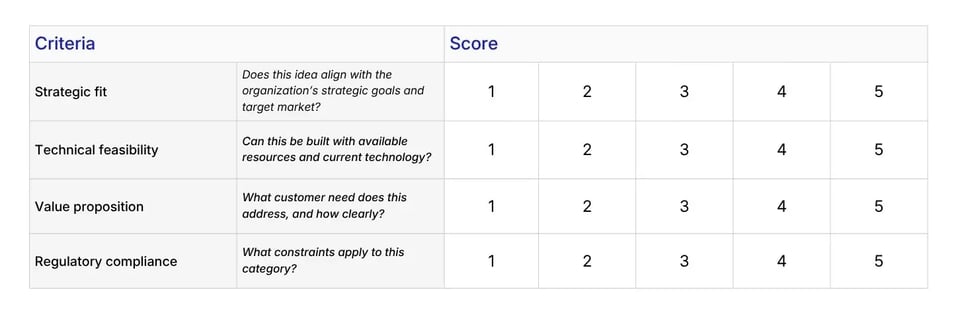
Score each idea 1 to 5 across all four criteria.
Ideas scoring 16 or above move to concept development.
Ideas scoring 8–15 enter a watchlist for re-evaluation when market conditions shift.
Ideas scoring below 8 are archived - not deleted, since market trends change.
This turns idea evaluation from a subjective debate into a repeatable, problem-solving framework (Exhibit 3).
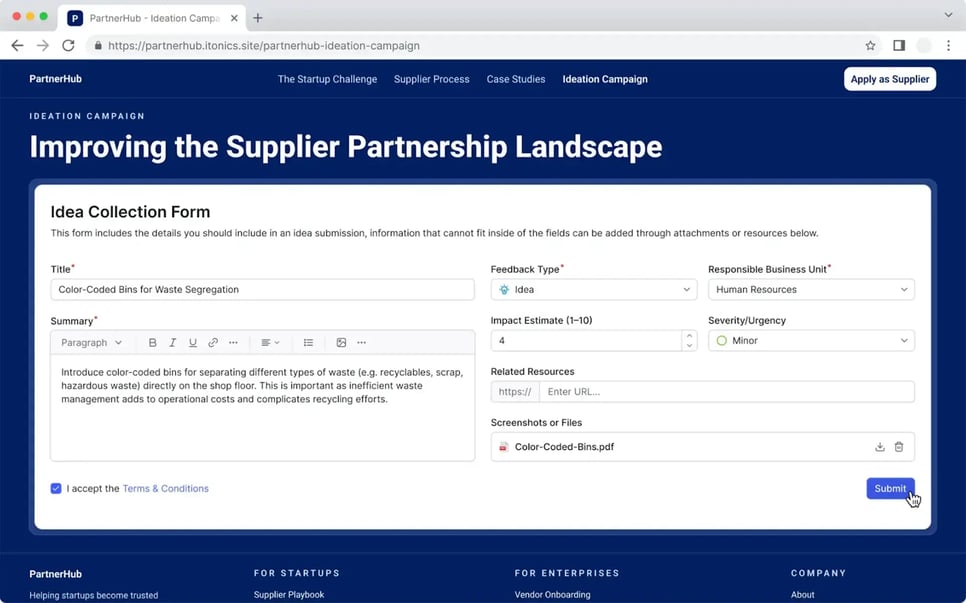
Exhibit 3: Collect ideas from internal and external partners
Decision-makers can explain why ideas generated in one cycle were selected over others. Cross-functional collaboration at this stage - bringing in R&D, product, and commercial perspectives - reduces the risk of strategic misreads.
Concept development is where timeline slack compounds. Most promising ideas fail here because the link between idea evaluation and resource commitment is undefined.
When an idea passes evaluation, it must enter concept development within a defined timeframe. The concept phase answers three questions:
What necessary resources are required to test and build this?
What is the value proposition for the target market?
What does a minimum viable test look like?
Resource availability is the critical constraint. Organizations that do not track resource availability across their portfolio assign the same engineers or budget to multiple selected ideas simultaneously. The result is concepts that take 12 to 18 months to reach a go/no-go decision - a timeline that no longer reflects the market conditions under which the idea was originally evaluated.
Feasibility studies at the concept stage should take four to six weeks. Longer timelines are a signal that the idea entered concept development before the resources required for it were actually available, or that concept scope was not bounded at the evaluation stage.
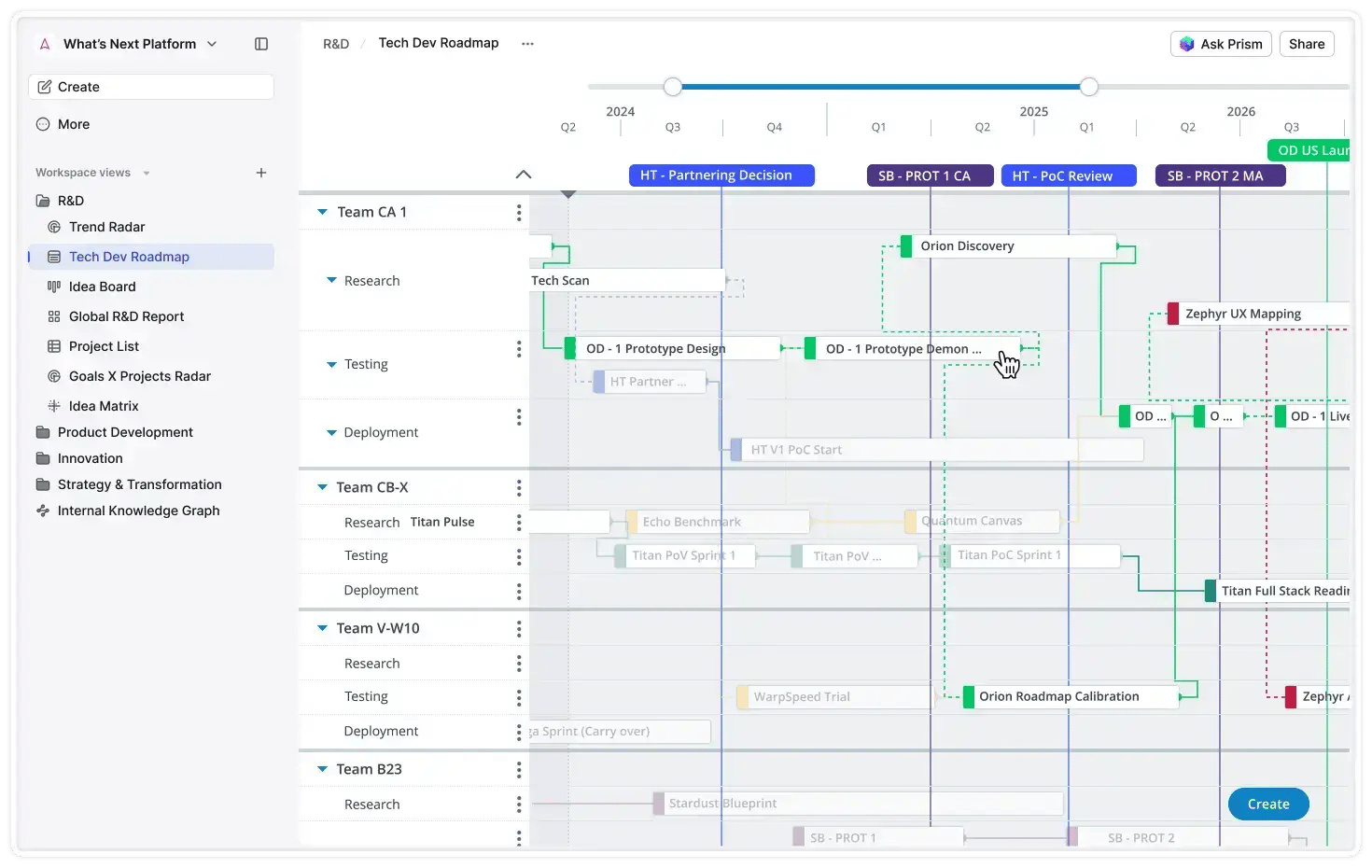
Exhibit 4: Track the feasibility and status from initial concept through to investment decisions with status decisions across multiple projects
Customer satisfaction data from existing products can also sharpen concept development. When the problem the concept aims to solve maps to documented customer needs, the value proposition becomes easier to test and faster to validate.
Resource allocation is where innovation strategy becomes operational. Both extremes generate slack:
over-allocated portfolios spread resources too thin across too many projects, and
under-committed ones leave capacity idle.
Without a clear link between strategic objectives and project priorities, allocating resources defaults to whoever argues most persuasively in a meeting.
The most reliable framework for connecting innovation strategy to resource allocation is horizon-based budgeting. Organizations divide their innovation portfolio into three strategic buckets to drive growth (Exhibit 5).
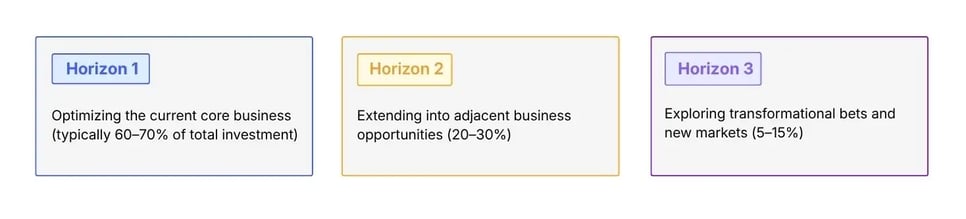
Exhibit 5: The three horizons to divide your innovation portfolio
These ratios reflect strategic intent, not annual project popularity. Allocating resources across horizons before individual projects compete for funding forces a clear understanding of what the organization aims to achieve.
Within each horizon, the principles for allocating resources are the same:
Assign ownership to a single project manager before committing budget,
define kill criteria upfront, and
verify resource availability before committing to timelines.
Never assign a single project to multiple owners. Never allocate available resources to more projects than the team can actively progress.
Organizations that align resource allocation explicitly to strategic goals move from portfolio management by committee to portfolio management by design. The result: fewer projects competing for the same resources, faster decisions at each gate, and clearer visibility into where innovation investment is going.
Innovation operations cannot succeed through process design alone. The organizational culture surrounding those processes either accelerates or undermines them.
Disengaged employees represent a specific form of slack: available capacity that generates no innovation output.
A supportive culture is not built through workshops. It is built through process transparency and consistent follow-through on promising ideas.
Employee engagement in innovation goes beyond idea submission. It operates at three levels:
Agile methodologies support this model. Sprint-based work with clearly defined objectives reduces the ownership ambiguity that creates both micromanagement and disengagement. Teams know what they are responsible for and when decisions are expected.
When the innovation management process is visible, well-governed, and tied to a clear innovation strategy, employees invest because they can see that promising ideas lead to real decisions.
Innovation operations require continuous improvement - a structured review of what is working and what is not across the full innovation management process. Organizations that treat their innovation strategy and operations as an ongoing process consistently outperform those that configure them once and move on.
The key performance indicators that matter most for effective innovation management are slack indicators - process health metrics that reveal where the system is running too tight or too fat:
Effective innovation management sets target ranges for each process metric and reviews them quarterly. When a metric falls outside its range, the review identifies which stage broke down and what change the innovation management process needs.
For long-term success and to stay relevant through market changes, organizations feed outcomes back into the idea generation stage. When a concept fails market validation, the root cause - wrong target market assumption, technical feasibility gap, or timing problem - informs future evaluation criteria. This closes the loop between execution and ideation and makes the entire system more accurate over time.
ITONICS structures the full innovation management process in a single platform. It connects idea generation, idea evaluation, concept development, and resource allocation in one configurable workflow - so innovation initiatives do not get lost between stages.
For idea generation, ITONICS aggregates signals from internal employees and external sources — market trends, emerging technologies, competitor activity - in a unified view. ITONICS Prism, the platform's AI layer, surfaces the most relevant signals against the organization's strategic goals automatically, reducing the manual scouting burden on innovation teams and connecting outside-in intelligence to business objectives.
For idea evaluation, ITONICS configures scoring criteria directly into the submission workflow. Ideas are rated against strategic fit, technical feasibility, and business impact using custom rating forms. Decision-makers see a ranked list of the most promising ideas rather than an unstructured backlog, and can track evaluation decisions against defined strategic objectives.
For concept development, ITONICS tracks selected ideas through configurable workflow stages - from initial concept through feasibility studies to investment decision. Portfolio managers see resource availability and project priorities in real time, enabling faster go/no-go decisions and reducing the concept development timelines that create operational slack.
For reporting and continuous improvement, ITONICS generates portfolio dashboards tracking key performance indicators across the full process. The platform covers the four key features of effective innovation operations: structured intake, transparent evaluation, governed development, and real-time performance reporting.
/Still%20images/Reports%20Mockups%202025/ideation-track-kpis-2025.webp?width=2160&height=1350&name=ideation-track-kpis-2025.webp)
Exhibit 6: Leaders can see where ideas are stalling, which stages are creating delay, and whether resource allocation matches the organization's innovation strategy and goals
Organizations including Toyota, Cisco, and Bosch use ITONICS to reduce slack in their innovation operations - replacing disconnected activities with a managed, measurable system where every stage runs at the right weight.