Proving product-market fit with 7 hard metrics, not opinions

Most teams don't actually measure product-market fit. They measure sentiment, satisfaction, and short-term traction. Proxies that feel good but predict nothing about problem-solution fit: the basis of real product-market fit.
Real product-market fit stems from a solution that solves a problem. The bigger the problem, the more important it is, and the better the solution, the higher the product-market fit.
This article breaks down seven hard metrics that separate genuine product-market fit from expensive illusions. By the end, you'll know whether your product has achieved fit and whether it's maintaining it - or quietly losing it.
Before you can measure product-market fit properly, you need to know what problem the market has that your product is designed to solve. What is the job that the product does better than anything else?
Here's the confusion that derails most product conversations: market fit and product-market fit are not the same thing.
Market fit is about identifying a viable opportunity. It asks:
Is there a market worth serving?
Are customers willing to pay?
Can we reach them economically?
It's the work of market research, segmentation analysis, and addressable market sizing. You can have a strong market fit with a terrible product.
Product-market fit is about solution alignment. It asks:
Does this specific product solve a problem so effectively that customers adopt it, keep using it, and tell others about it?
It's the difference between proving a market exists and proving your product belongs in it.
Teams blur this distinction constantly: They validate market demand through surveys and customer interviews, then assume their product has achieved fit. But confirmation that people want a solution doesn't mean your solution is the one they'll choose, pay for, or stick with.
The product-market conversation should start only after market fit is established. Otherwise, you're conflating two different uncertainties: "Is this a real problem?" and "Did we build the right answer?". Mixing them muddies your metrics and wastes strategic bandwidth.
Measuring product-market fit feels straightforward until you try to make it repeatable. But nevertheless, every team and organization faces some challenges:
But the deepest problem is that most teams measure the wrong things entirely. They rely on customer surveys, interviews, and perceived customer experience as proxies for fit. These tools help you understand customer needs, but they're terrible for measuring product-market fit.
The shift from opinion to behavior changes how you prioritize: Features customers request loudly may go unused in production, pain points mentioned casually may drive churn when left unresolved, and behavioral data exposes the gap between what customers say they need and what actually moves customer retention, revenue, and word of mouth referrals.
Mature organizations stack multiple quantitative metrics across their target market. One metric can lie. Seven metrics, measured consistently over time, reveal the truth.
What follows are seven hard metrics (Exhibit 1) that separate products with real market pull from those coasting on momentum, marketing spend, or wishful thinking. These are behavioral and economic signals that predict sustainability. Each one isolates a different dimension of fit: retention, monetization, virality, engagement depth, capital efficiency, and speed to value.
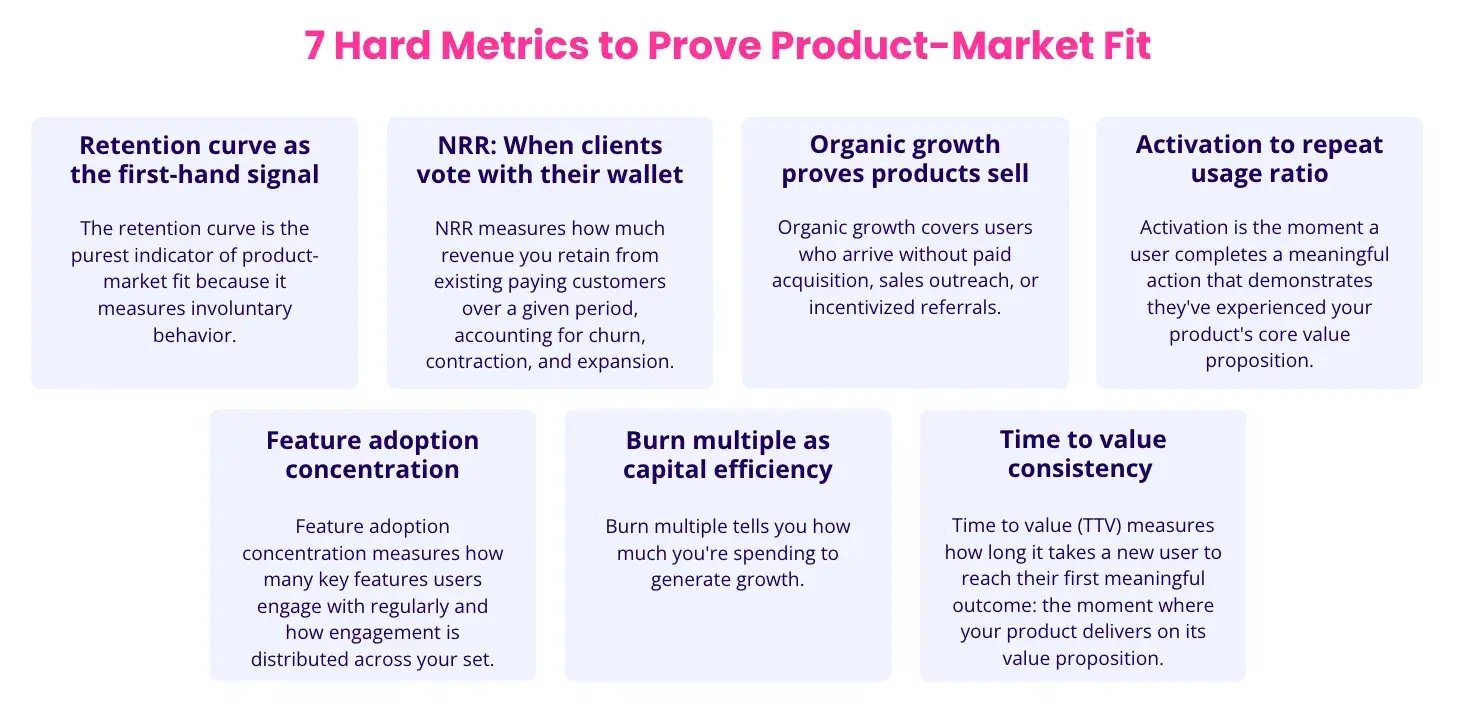
Exhibit 1: The 7 hard metrics to prove product-market fit
Achieving product-market fit signals investment opportunities, as investors are more likely to fund companies with proven product-market fit. Product-market fit also serves as a strong indicator to investors that a business model is viable, making fundraising easier for businesses that can demonstrate it.
The retention curve is the purest indicator of product-market fit because it measures involuntary behavior.
Customer feedback can be positive while users quietly churn.
Customer surveys can show satisfaction while your customer base erodes.
But the retention curve shows you, cohort by cohort, whether your product has become essential or forgettable.
Strong retention curves are the foundation. Without them, every other metric - like, for example, organic growth, word of mouth, customer lifetime value - becomes irrelevant. The retention curve is how you measure product-market fit at its most fundamental level: do customers come back?
NRR measures how much revenue you retain from existing paying customers over a given period, accounting for churn, contraction, and expansion (Exhibit 2). It answers a simple question: if you stopped acquiring new customers today, would your revenue grow, shrink, or flatline?
Here's the formula: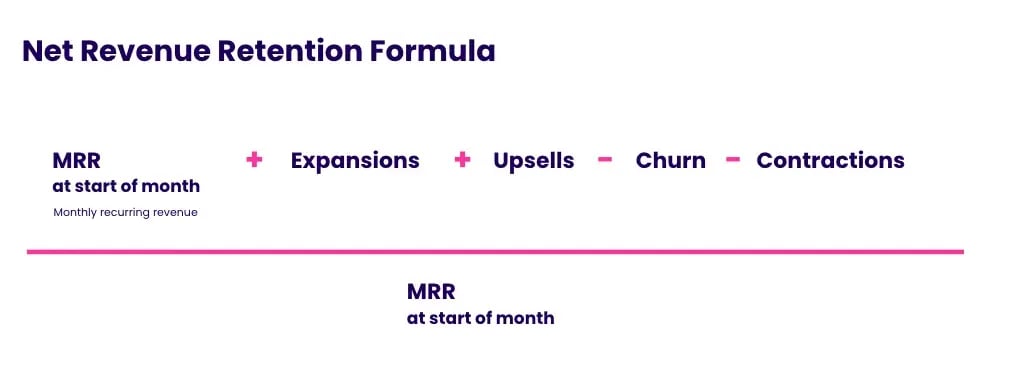
Exhibit 2: Follow and watch signals to make informed decisions
If the result is above 100%, your existing customers are generating more revenue over time. Below 100%, you're leaking value.
NRR also exposes pricing and business model problems. If customers churn because they hit usage limits or pricing tiers misaligned with your value proposition, NRR will signal it before your sales team does. If expansion revenue is weak, it means customers aren't finding new use cases or your product isn't scaling with evolving customer needs.
The best product organizations track NRR by customer segment, product line, and cohort vintage. Enterprise customers might have 130% NRR while SMBs sit at 85%. That tells you where product-market fit is strong and where it's fragile.
Organic growth - users who arrive without paid acquisition, sales outreach, or incentivized referrals - is the cleanest signal that your product solves a problem people actively search for and recommend. It's demand creation in reverse: the market pulls your product toward itself, a phenomenon often referred to as pulling product.
There are three sources worth tracking: direct traffic (users who type your URL), word of mouth referrals (users arriving because someone told them), and organic search traffic (users finding you via unpaid results).
Here's how to measure it: segment your new user acquisition by channel. Calculate what percentage arrives organically versus through paid ads. Track the growth rate of organic channels month over month. If organic growth is flat while paid acquisition grows, you're buying users instead of earning them. That's a clear sign you haven't yet achieved product-market fit.
The k-factor quantifies viral growth. It measures how many new users each existing customer brings in:
A k-factor above 1.0 means exponential growth: every user brings more than one new user.
A k-factor below 1.0 means you’re dependent on external acquisition.
Products with strong market fit often see k-factors between 0.15 and 0.5 for B2B.
Organic growth is also capital-efficient because high organic growth means lower customer acquisition cost and higher customer lifetime value. When customers perceive your product as essential, they don't need convincing: they come looking for you.
Activation is the moment a user completes a meaningful action that demonstrates they've experienced your product's core value proposition: doing the thing your product was designed to enable. It's distinct from free trials or demo access as it's the first real interaction with key features.
Repeat usage is what happens next: Does the user come back tomorrow? Next week? Next month? Do they perform the core action again, or was activation a one-time event?
The activation to repeat usage ratio measures how many activated users return to perform the core action at least one more time within a defined window - typically seven or thirty days. If 1,000 users activate and 400 return for a second session, your ratio is 40%.
This metric isolates a critical failure mode:
To improve this ratio, focus on the time to the second action and trigger design: How quickly can users derive value a second time? What prompts remind them to return? Products with strong market fit compress the time to second action and build natural usage triggers into the workflow. The product becomes the path of least resistance for solving a recurring problem.
Track this ratio by cohort, acquisition channel, and user segment. If enterprise users have a 70% repeat usage ratio and SMBs have 25%, you know where fit is strong. This tells you which segment represents your true target market and where your minimum viable product resonates most.
Feature adoption concentration measures how many key features users engage with regularly and how user engagement is distributed across your feature set. It answers two questions:
Are customers shallow (touching many features lightly) or deep (relying heavily on a few core features)?
And is feature usage concentrated among power users or distributed across your customer base?
Here's why it matters. Products with strong product-market fit typically show high concentration around a core feature set.
Active users don't dabble: they go deep on the features that solve their most urgent customer needs.
Notion users who achieve fit don't use every block type: they build entire business operations around databases and templates.
Salesforce users don't touch every module: they live in the features that align with their sales process.
To measure feature adoption concentration, the following steps are necessary:
First, track what percentage of your active users engage with each feature in a given period. Then segment by usage intensity: Do your top 10% of users account for 90% of feature engagement? That's extreme concentration and especially common in prosumer tools with high perceived value once mastered.
Next, track feature co-adoption patterns. Which features are used together? If customers who adopt Feature A are 5x more likely to adopt Feature B, those features form a usage cluster that defines a core workflow. Products with a strong fit have clear paths through the feature set that align with how customers perceive their jobs-to-be-done. Products without fit have scattered, random usage patterns.
The inverse metric matters too: feature abandonment rate: How many customers try a feature once and never return? High abandonment suggests the feature doesn't deliver value, isn't discoverable, or doesn't integrate with core workflows. It's also a signal that you might be building for the wrong buyer personas or haven't validated feature requests against actual customer needs.
Products with strong market fit show clear feature adoption patterns: deep usage of core features, low abandonment, and usage clusters that align with customer needs. Products without fit show shallow engagement and high feature abandonment. Ultimately, suggesting you haven't yet built something your target customer truly needs.
Burn multiple (Exhibit 3) tells you how much you're spending to generate growth. It's the most unforgiving metric on this list because it combines product-market fit with business model efficiency.
The formula is simple:
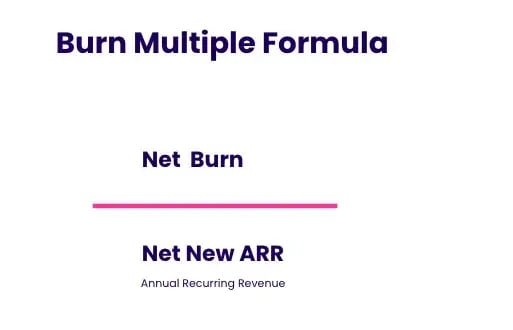
Exhibit 3: The net burn multiple formula
A burn multiple
Below 1.5 is excellent. You're generating consistent growth capital-efficiently, which suggests strong product-market fit and a scalable go-to-market motion.
Between 1.5 and 3.0 is acceptable for high-growth companies still optimizing unit economics and finding their target market.
Above 3.0 is a warning sign: you're either in a hyper-competitive market, your customer acquisition costs are too high, or your product isn't sticky enough to justify the acquisition cost.
Why burn multiple matters for finding product-market fit: it integrates demand and retention. You can have strong inbound demand but terrible customer retention, leading to high net burn and low net new ARR. Overall, products with true market fit grow efficiently because they benefit from organic growth, low churn rate, and expansion revenue. New customers come cheaper, stay longer, and expand faster.
Burn multiple integratinos to product-market fit with the business model fit. It's the metric that asks: even if happy customers love your product, can you afford to serve them? And more importantly, are they voting with their wallets by renewing, expanding, and referring, or are you paying for the illusion of traction?
Time to value (TTV) measures how long it takes a new user to reach their first meaningful outcome - the moment where your product delivers on its value proposition. Products with strong product-market fit deliver value fast and deliver it consistently across users. Fast means users reach their "Aha" moment in minutes or hours.
To measure product-market fit through TTV, define your value event clearly. Use the action that delivers the core benefit: the first campaign sent, the first report generated, the first transaction processed. This should align with the essential element of your value proposition as the reason customers came to you in the first place.
Then track two few things: median TTV (the time it takes 50% of activated users to reach the value event) and TTV variance (the spread in the distribution). A tight distribution with low variance means your product's path to value is clear, repeatable, and not dependent on user sophistication or luck. It means you've removed the barriers between signup and value realization.
To improve TTV consistency, reduce both variance and median time.
Identify where users get stuck.
Instrument the path to value and find the drop-off points.
Remove friction, clarify next steps, or redesign the workflow to make value inevitable. This is often where customer feedback becomes valuable for understanding where customers encounter confusion or abandonment.
Even products that once dominated their market can lose relevance - not through catastrophic failure, but through gradual erosion. Customer needs shift. Competitors innovate. New technologies reset expectations. The fit you worked so hard to achieve becomes misalignment, often before you notice.
Product-market fit decay announces itself in whispers. But it shows strong signals that make you think of erosion:
These signals rarely arrive alone. When three or more trends go negative simultaneously, you're watching fit erode in real time.
Customer needs evolve. What early adopters valued two years ago isn't what mainstream customers value now. As your target audience shifts from innovators to pragmatists, the definition of "fit" changes. Products built for early adopters often struggle with the broader target market because the jobs-to-be-done are different.
This is why minimum viable product thinking, so effective at finding product-market fit, becomes a liability at scale. The MVP that validated your core value proposition can't sustain fit indefinitely, and it's unavoidable to come up with challenges (Exhibit 4).
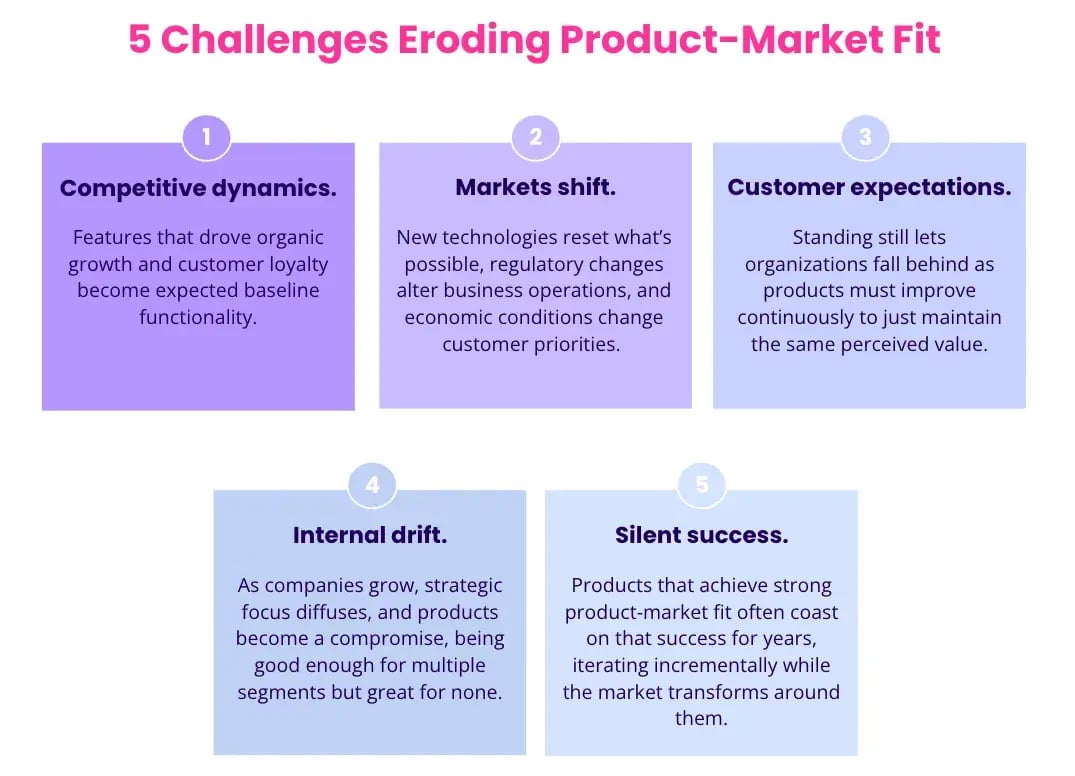
Exhibit 4: Reasons for eroding product-market fit
This is why companies understand that measuring product-market fit is an ongoing discipline: The right metrics, like retention curves, NRR, organic growth, or burn multiple must be monitored continuously, with sensitivity to trend lines rather than absolute numbers.
Measuring product-market fit across one product is hard, but measuring it across a portfolio is nearly impossible without the right infrastructure. Most organizations struggle because metrics live in silos: Product teams track retention in Mixpanel, finance tracks NRR in spreadsheets, growth monitors organic acquisition in Google Analytics. No one can answer: "Which products have genuine market fit, and where should we invest?"
ITONICS centralizes product-market fit evidence across your entire portfolio. View retention curves, NRR trends, organic growth rates, activation ratios, feature adoption patterns, burn multiples, and time to value in a unified system. Each product measured against the same seven hard metrics makes fit comparable and investment decisions defensible.
The platform connects metrics to action. Products showing strong retention and organic growth get flagged for scale investment. Products with eroding NRR or rising burn multiples trigger intervention. Early decay signals - like, cohort degradation, flattening growth, pricing pressure - alert you before problems become crises.
Ready to operationalize product-market fit measurement? ITONICS helps innovation teams centralize performance data, spot decay early, and make investment decisions backed by evidence.