How to build a scalable startup scouting process that works


The bottleneck is not access to innovative startups. It is the missing structure between discovery and decision. Scouting without a pipeline turns into a graveyard of promising contacts.
Most established companies treat startup scouting as a discovery activity. They subscribe to startup databases. They attend industry events. They run open innovation challenges. Then they wonder why fewer than 10% of scouted startups ever move past the first conversation.
An effective startup scouting process is not a search engine. It is a decision system anchored in your innovation strategy. It starts where your business needs external input and ends with funded partnerships that produce measurable outcomes.
This article walks through 7 steps to build one. Each step closes a gap where most corporate scouting programs leak value. The goal is not to have more startups in your pipeline. It is more of the right startups reaching execution.
A 2023 MassChallenge and BCG study found that 67% of corporate-startup pilots never reach commercial scale. The reasons are structural, not creative. Most startup scouting efforts run as a parallel activity to the core innovation strategy, with no shared criteria for what success looks like.
Three patterns repeat across large corporations.
These patterns share a root cause. Startup scouting is treated as a discovery problem when it is actually a decision problem.
A structured startup scouting process changes the question. It does not ask "Which innovative companies are out there?" It asks, "Which startup partnerships move our innovation goals forward in the next 12 months?" That reframing is the foundation of every step that follows.
Effective startup scouting has three characteristics that distinguish it from ad-hoc scouting efforts.
It is strategy-led, not opportunity-led.
The starting point is not a startup. It is a defined innovation goal or capability gap. Relevant startups are surfaced because they match a specific need, not because they appeared in a startup database.
It uses multiple channels deliberately.
Startup scouting platforms, open innovation challenges, networking events, venture capital co-investment networks, and university spin-off programs each surface different kinds of startups. Established companies that scout startups through only one channel see only one slice of the startup ecosystem.
It treats the evaluation phase as a decision pipeline.
Each startup moves through defined gates: strategic fit, technology validation, financial health, integration feasibility, and funding. Each gate has owners, criteria, and a maximum cycle time. Decisions are made, or the startup is closed out.
The companies doing this well are not finding more startups than their competitors. They convert a higher share of scouted startups into successful partnerships. That is the only metric that matters in corporate innovation. Everything else is activity.
When promising startups fall out of your pipeline, it is rarely because the startup was wrong. It is because the scouting process failed at one of three predictable points.
Each of these gaps can be closed by process design, not by hiring more scouts or buying more startup databases. The seven-step process below addresses all three. It assumes the bottleneck is internal coordination, not external availability of high-potential startups.
A structured startup scouting process replaces "scout everything, evaluate later" with a deliberate sequence. Each step has owners, inputs, and a clear decision point. The seven steps below scale across industries and stages of program maturity.
Begin with the innovation strategy, not the startup ecosystem. Identify three to five capability gaps where external innovation can move faster than internal R&D. Examples: AI-driven quality control, embedded insurance, biodegradable packaging, or supply chain visibility.
For each gap, write a one-page scouting brief. Include the business problem, the strategic owner, the success metric, the timeline, and the criteria that define the right startups. A scouting brief without an internal sponsor is not approved.
This step alone eliminates 60-70% of wasted scouting efforts. Innovation managers stop scouting for problems no business unit owns. The pipeline becomes shorter and more relevant. Strategic fit is enforced before the first search, not after the tenth meeting.
Networking events surface visible startups, not the most promising startups. Build a sourcing map with multiple channels per capability gap. Combine startup databases (Crunchbase, Dealroom, PitchBook) with industry events, university tech transfer offices, accelerators, venture capitalists, and trend monitoring on patents and scientific publications.
Assign each channel a coverage role. Databases cover breadth. Networking events surface entrepreneurial talent and signal momentum. Patent monitoring catches deep tech before commercial visibility. Venture capital networks reveal funding signals on emerging companies.
A balanced sourcing map reduces dependence on referrals and surfaces new startups that competitors using only networking events will miss for 12-18 months.
Innovation challenges work when they are tightly scoped. A challenge titled "AI for retail" attracts noise. A challenge titled "Reduce shrinkage in convenience stores under 200 square meters using computer vision" attracts the right early-stage startups.
For each capability gap, run one focused innovation challenge per year. Define the deliverable, the prize structure (a paid pilot contract beats cash for early-stage companies), and the evaluation timeline. Limit the challenge to 8 weeks from launch to shortlist.
Open innovation challenges produce a side benefit that pure outbound scouting cannot match. Startup founders self-select based on relevance. The companies that submit believe they fit. That signal is more valuable than any cold outreach.
/Still%20images/External%20Webpage%20Mockups%202025/ideation-collect-external-ideas-2025.webp?width=2220&height=1410&name=ideation-collect-external-ideas-2025.webp)
Exhibit 1: Create effective channels for startups to contribute to competitive solutions
The evaluation phase is where most startup scouting activities break. Replace ad-hoc reviews with a four-gate model.
Total cycle: 30 working days from first contact to pilot decision. Each gate has a single decision owner. Startups that cannot be moved through the gates in 30 days are closed and revisited later, not parked indefinitely. This discipline is what separates effective evaluation of startups from collecting startup profiles.
The early-stage pilot is the only honest test of a startup partnership. Reference calls and pitch decks reveal less than 90 days of joint work.
Design pilots with three constraints:
a paid contract (skin in the game on both sides),
a defined success metric agreed before kickoff, and
a maximum duration of 12 weeks.
Avoid free pilots. They signal low commitment from both sides and rarely produce decisions.
For early-stage companies, the pilot also validates integration feasibility, joint working style, and team capacity to scale. Many startup collaborations get killed in this phase, and that is the point. Better to learn in 12 weeks than in 12 months of procurement.
A successful pilot is not yet a successful partnership. Scaling requires real corporate resources: budget, integration capacity, legal infrastructure, and executive air cover.
Before the pilot closes, decide the next stage. Three paths typically exist:
a commercial rollout (the startup becomes a vendor),
a deeper joint development (the partnership creates new IP), or
a venture capital investment (corporate venture takes equity).
Each path has different governance, different timelines, and different risks for the startup.
Established companies that win at startup partnerships commit corporate resources before the pilot ends. Startups that wait six months for a renewal decision typically do not survive. Speed of follow-through is the second-most-important variable after strategic fit.
Every startup you scout, evaluate, or partner with produces a signal. Each signal is data about market trends, business models, technological advancement, and gaps in your own portfolio. Most companies waste this data.
Capture every scouted startup in a shared system with structured tags: technology area, business model, geography, stage, evaluation outcome, and reason for closure. Review the dataset quarterly. Look for clusters of emerging startups in the same space. Look for repeated reasons startups are screened out.
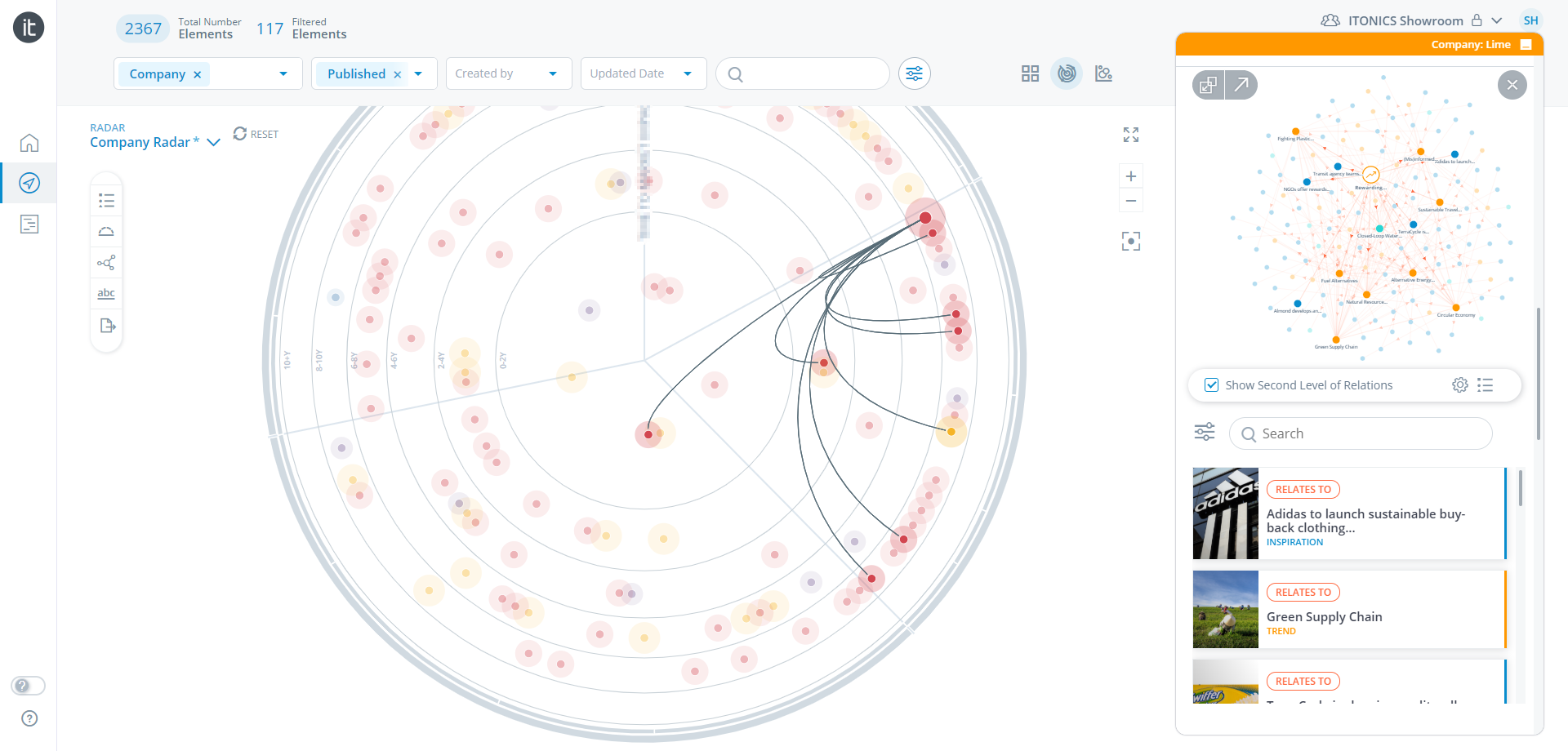
Exhibit 2: Use the trend radar to structure and monitor emerging companies
This feedback loop turns scouting into actionable insights for innovation strategy. The pattern of what you reject often reveals more about your innovation goals than the partnerships you sign.
Three corporations have built startup scouting programs worth studying. Each addresses a different gap in the seven-step framework.
Cisco runs one of the largest corporate startup scouting programs in technology. Its Innovate Everywhere Challenge combines internal employee ideation with external startup engagement. Cisco Investments has deployed more than $2 billion in startup investments across cybersecurity, AI, and networking infrastructure.
Bosch operates a structured open innovation program that channels external startups through defined business co-creation paths (Exhibit 3). The Open Bosch program publishes specific fields of interest covering AI, mobility, IoT, and energy systems. Startups submit against published needs, not against general interest.
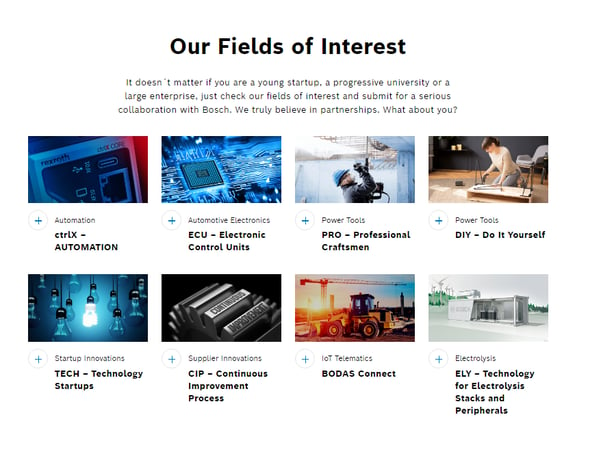
Exhibit 3: Driving ideas to implementation at Bosch using ITONICS as an open innovation platform
BNP Paribas accesses early-stage fintech startups through Plug and Play, one of the largest startup scouting platforms globally. The bank reviews 200 to 300 fintech startups annually through this channel and converts roughly 5-7% into proof-of-concept engagements.
These three programs share one trait. None treats scouting as a search problem. Each treats it as a decision pipeline with clear owners, gates, and timelines. The startup ecosystem provides the input. The internal process determines the output.
The seven-step startup scouting process requires shared workflows, data, and decision logic across innovation teams, business units, R&D, and legal. Spreadsheets and email cannot support this at scale.
ITONICS provides the infrastructure to run startup scouting as a structured pipeline rather than a search activity. Each scouting brief lives as a working document linked to your innovation strategy, the named business sponsor, and the success metric. Every scouted startup is tagged to a brief, so the team always knows which strategic gap the discovery serves. Step 1 stops being a good intention and becomes a system rule.
Startups flow in from multiple channels into one pipeline. Submission portals capture entries from open innovation challenges. Automated monitoring pulls signals from startup databases, networking events, and industry events. Intake is consolidated, not scattered across inboxes and personal spreadsheets.
Evaluation runs through configurable workflows with custom gates, decision owners, and service-level agreements. The 30-day evaluation phase is enforced by the system, not by reminders. Radar visualizations cluster startups by technology, business model, or strategic fit, so decision-makers see the full pipeline instead of isolated profiles.
Portfolio integration closes the loop. Scouted startups connect directly to roadmaps, trend fields, and active innovation initiatives, making them visible to scouting, R&D, and corporate venture capital teams in one view. ITONICS PRISM adds AI-powered signal detection on top, surfacing emerging companies and breakthrough technologies before they reach standard radars.
The result is a repeatable startup scouting process. Not a campaign. Not a one-off project. A capability that compounds over time and produces a steady flow of successful partnerships with the right startups.