Time-to-market strategy for every industry: Coordination sets the pace

Most industrial companies treat time-to-market as an engineering problem. They hire more engineers. They run agile workshops. They restructure phase gates. The development cycle still takes 36 months.
A typical product development process spans strategy, R&D, regulatory, supply chain, and commercial functions. Each function moves at a reasonable pace inside its own walls. The months disappear between them. They sit in approval queues, waiting for market research, in supplier qualification cycles, in portfolio reviews tied to the fiscal calendar instead of the development phases.
If your development team finishes its work in 18 months but the product reaches the market in 36, you have a coordination problem.
This article makes the case that the highest-leverage time-to-market improvement in industrial companies is a shorter wait time between phases. A 6-step framework shows how, illustrated with real cases from Boeing, Toyota, and Tesla.
Time-to-market refers to the elapsed time from product concept approval to first customer shipment. In industrial sectors, this number ranges from 18 months to over 8 years. There is considerable variation across different industries and even between competitors in the same segment.
The variation rarely tracks with engineering capacity.
Companies with larger development teams do not consistently launch faster.
Companies running agile practices do not consistently launch faster either.
In most industrial development cycles, engineering work absorbs roughly 40-55% of the entire process. The remaining 45-60% is coordination overhead: Gate approvals, regulatory reviews, supplier qualifications, portfolio decisions, stakeholder sign-offs, and market research handoffs.
The math is unforgiving.
Cutting engineering work by 30% reduces total time-to-market by 12-16%.
Cutting coordination wait time by 30% reduces it by 15-20%.
The same effort applied to coordination yields a larger return.
This explains why "we need more agile" rarely fixes time-to-market in industrial settings. Agile-inspired methods speed up the development team, but they do not shorten the approval process, the regulatory review queue, or the supplier capacity lock.
Most companies measure time poorly: They count from project kickoff to launch. This hides where the time actually goes.
Three measurements give an honest picture:
Industry benchmarks help frame the gap. In consumer cell phones, total cycle time is typically 12-24 months. In automotive, 36-60 months for a new platform. In medical devices, 36-84 months. In commercial aerospace, 60-120 months.
Knowing the benchmark for your category is the starting point. Knowing the wait-time split is what makes the number actionable.
Three failure patterns explain most coordination loss in industrial development.
The framework below is a 6-step product development strategy that fronts coordination work (Exhibit 1). Use it to redesign the entire process or to retrofit an existing product portfolio.
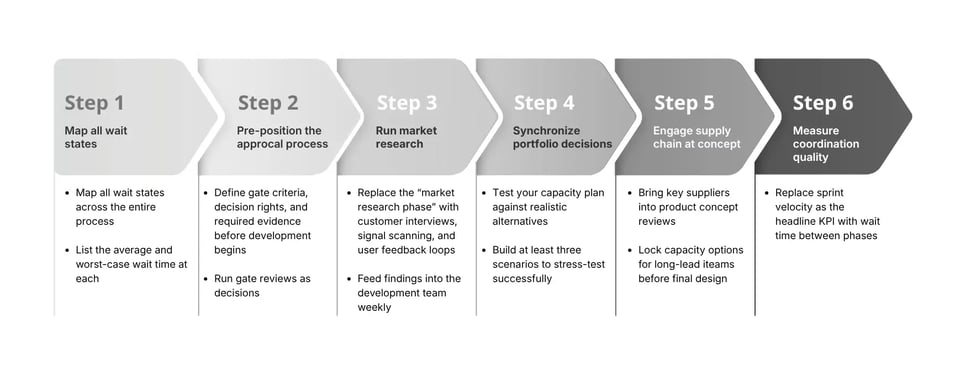
Exhibit 1: The coordination-first product development strategy framework
The framework attacks the 45-60% of cycle time that engineering practices cannot touch.
The pattern shows up across industries. Three cases make it concrete: one of true coordination failure and two demonstrations of how coordination compresses time-to-market.
Boeing outsourced about 70% of 787 production to more than 50 suppliers across multiple countries. The strategy was meant to cut costs, share risk, and accelerate development.
The first delivery was scheduled for May 2008. The actual first delivery happened in September 2011, more than three years later. Cost overruns ran into the billions.
The cause was a coordination breakdown: Fuselage barrels arrived in final assembly without wiring, brackets, or hydraulics installed. A shortage of fasteners forced Boeing to use temporary bolts bought from Home Depot to hold early aircraft together. Boeing eventually bought back struggling suppliers like Vought Aircraft Industries and Global Aeronautica to regain control.
Toyota launched its New Global Architecture (TNGA) in 2015 with the fourth-generation Prius. The strategy standardised vehicle platforms and powertrain components across model lines and, critically, integrated suppliers "at a very early stage" of development.
Toyota reports a 20% reduction in development resources compared to its previous approach. Half of Toyota's global sales were on TNGA platforms by 2020.
TNGA is the most documented case of a coordination-first product development strategy at scale in automotive.
Tesla manufactures roughly 80% of components in-house, against an industry average of 20-30%. The choice is unusual, expensive, and operationally heavy. It is also a coordination strategy.
When the global semiconductor supply collapsed in 2021-2022, Tesla rewrote its vehicle software to support alternative chips in 2-3 weeks. Volkswagen CEO Herbert Diess publicly called this "impressive." Traditional automakers had to wait for first-tier suppliers, who waited for chipmakers. Tesla called the chipmakers directly because it designs its own circuit boards.
Most product development teams track output. Engineering hours logged, milestones hit, drawings released, design change requests resolved. These measure activity inside the development phases.
A coordination-first product development strategy uses different key performance indicators (Exhibit 2). Five matter most:
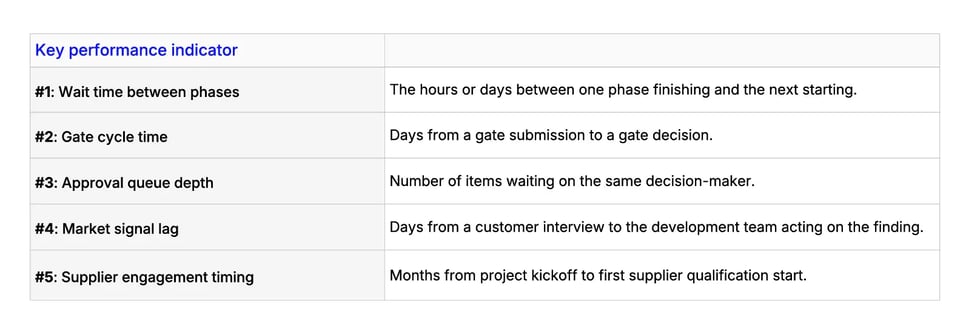
Exhibit 2: The five most important KPIs signaling coordination
Pair these with traditional KPIs on product quality, customer satisfaction at first customer shipment, and revenue goals against business goals. Coordination metrics catch the wait time. Output metrics catch the work. Both are needed.
A coordination-first product development strategy needs infrastructure that connects strategy, market signals, portfolio decisions, and execution in one place. Most companies run these in separate tools. Excel for portfolio. SharePoint for documents. Project management software for execution. Separate inboxes for market research. Meetings for approvals.
This patchwork is exactly what the Airbus A380 case demonstrates at scale. Different sites, different tools, no shared system of record. The development teams were not the problem. The coordination layer connecting them was.
ITONICS is designed for federated industrial organizations. It connects four flows that usually live in different systems:

Exhibit 3: Trends, signals, and customer interviews in one source of truth
/Still%20images/Reports%20Mockups%202025/portfolio-optimize-portfolio-returns-2025.webp?width=2160&height=1350&name=portfolio-optimize-portfolio-returns-2025.webp)
Exhibit 4: Time-to-market, wait states, and pipeline health generated from live data
For industrial companies running 18-30 coordination points across the entire process, ITONICS replaces the patchwork with a single platform. Approval queues become workflows. Market research feeds the development phases directly. Portfolio decisions and development cycles synchronize.
ITONICS does not replace the development team's engineering tools. It replaces the coordination layer that sits between them. That is where the months of wait time live, and that is where the time-to-market gains come from.


.webp?width=900&height=450&name=Top-10-project-portfolio-software-tech-and-development-teams-use-for-managing-innovation-projects-fullwidth%20(1).webp)