Cross-functional product development: The org chart is the bottleneck

Most industrial product launches slip: R&D blames Marketing, but Marketing blames Sales, and Engineering blames everyone. Every team is doing cross-functional product development, but few products ship on time.
The standard diagnosis points to weak product development frameworks, missing tools, or poor agile methodology. None of those is the real problem, but the org chart actually is.
Cross-functional teams in industrial companies operate inside structures built for the opposite goal. Functions exist to optimize vertically. Every cross-functional collaboration cuts against the incentive system that pays each team member's salary.
You can fix it by designing cross-functional product development that survives the org chart. In industrial companies, you cannot change the org chart fast enough to matter. Therefore, the article gives you a seven-rule framework to do exactly that.
The Product Development and Management Association tracks new product development outcomes across industries. Roughly 40% of new product ideas fail in the market. The figure is worse in industrial sectors with long product development timelines.
Three patterns drive the failure rate (Exhibit 1).
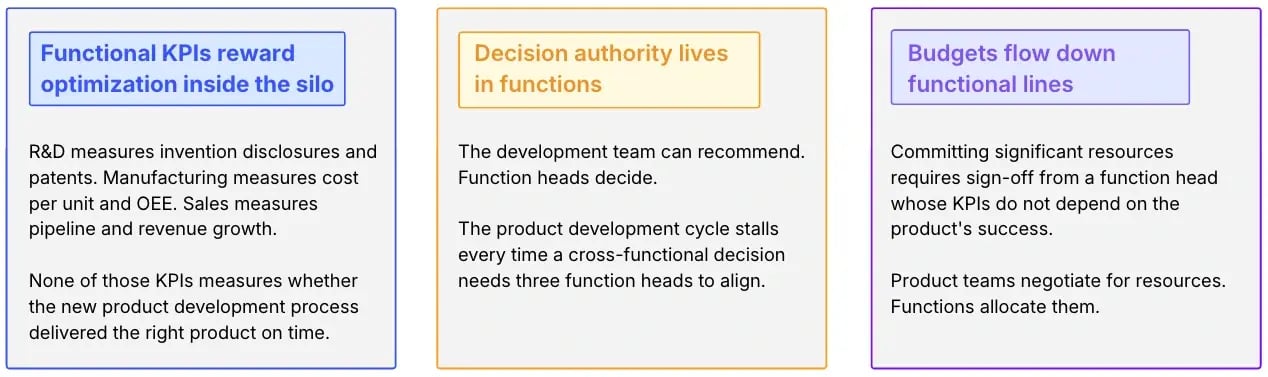
Exhibit 1: The three patterns driving the failure rate
This is structural. Successful product development requires the opposite. Pooled accountability. Fast decisions. Budgets owned by the product, not the function.
Before you can design around the org chart, you have to name the conflicts. Each one explains a different failure pattern in industrial product development.
In most industrial firms, R&D, marketing, supply chain, and quality control systems each own a slice of the product development budget. The cross-functional team does not own a unified budget. It negotiates draws against four or five functional budgets.
A marketing team member is measured on lead generation and brand health, not whether the product launches with the right positioning. A sales team member is measured on quarterly bookings, not whether their input shaped the right initial concept. Engineers are measured on quality and uptime, not customer experience.
The development team can run market research, do business analysis, build prototypes, and gather feedback. None of that creates authority. The final product decisions sit with function heads who often have not done the user research or talked to the target audience.
These seven rules form a structured approach for cross-functional product development inside an industrial company (Exhibit 2). You do not need to redraw the org chart. You need to design the product development team to neutralize the conflicts above.
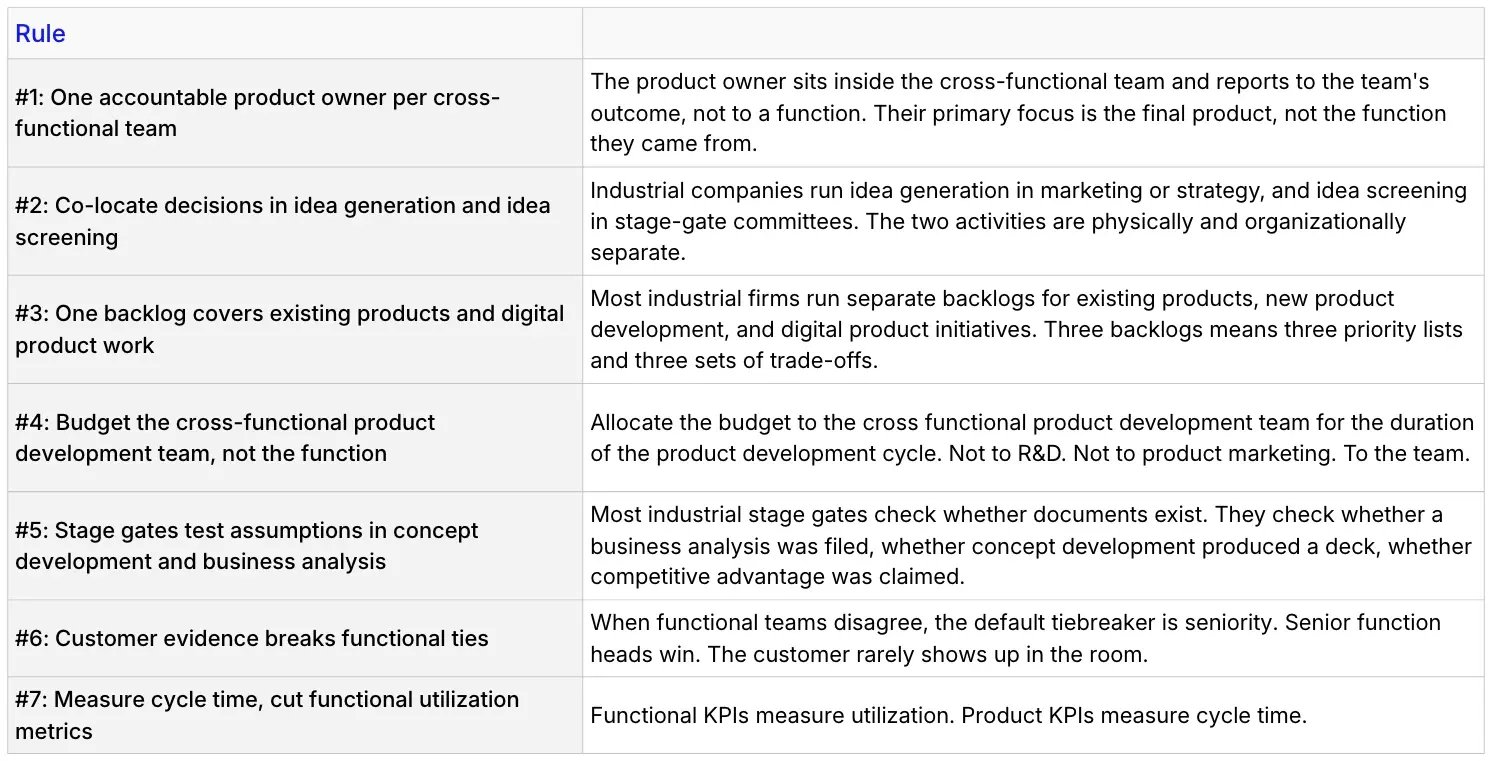
Exhibit 2: The seven rules for cross-functional product development
The product owner sits inside the cross-functional team and reports to the team's outcome, not to a function. Their primary focus is the final product, not the function they came from.
If three people from three functions each call themselves the product owner, you have zero accountability. Successful product development requires one named owner who carries the product vision through every key stage of the product development cycle.
Industrial companies run idea generation in marketing or strategy, and idea screening in stage gate committees. The two activities are physically and organizationally separate. Most product ideas die in the gap between them.
Pull idea generation and idea screening into the same room with the same people. The same cross-functional team that surfaces the idea decides whether it advances. This compresses the product development cycle and prevents lost product ideas.
Most industrial firms run separate backlogs for existing products, new product development, and digital product initiatives. Three backlogs mean three priority lists and three sets of trade-offs. Functional teams argue across the boundaries. Other teams duplicate work without knowing it.
Merge them. One backlog, one prioritization. The cross-functional team makes a single trade-off call between adding a feature to an existing product, launching a digital product, or starting a full development of something new.
Allocate the budget to the cross-functional product development team for the duration of the product development cycle. Not to R&D. Not to product marketing. To the team.
The team decides how to spend it across business analysis, concept development, prototyping, test marketing, and thorough testing. This is the single biggest lever for cost effectiveness. It removes the negotiation tax that eats months off every industrial product development timeline.
Most industrial stage gates check whether documents exist. They check whether a business analysis was filed, whether concept development produced a deck, and whether competitive advantage was claimed.
Replace document checks with assumption tests. At every gate, the cross-functional team names the three assumptions most likely to kill the product. The gate passes only if rapid experimentation and user research validate those assumptions.
This turns the distinct stages of the product development process into real product discovery checkpoints. It minimizes waste from significant resources committed to invalid assumptions.
When functional teams disagree, the default tiebreaker is seniority. Senior function heads win. The customer rarely shows up in the room.
Replace seniority with customer evidence. Every disputed decision pauses until the team can name a specific data point from market research, user research, test marketing, or direct interviews that breaks the tie. If no evidence exists about customer needs or customer expectations, go gather it before deciding.
This sounds slow. It is faster than rebuilding the wrong product.
Functional KPIs measure utilization. Product KPIs measure cycle time.
Track the time from initial concept to launch. Track the cycle time of each loop inside the iterative cycles called sprints. Make this visible to every team member, every function head, and every executive.
Stop reporting functional utilization at the product level. Utilization metrics protect functional managers. They do not measure the success of the product.
Do not announce a transformation: Pick one product and then run the framework (Exhibit 3).
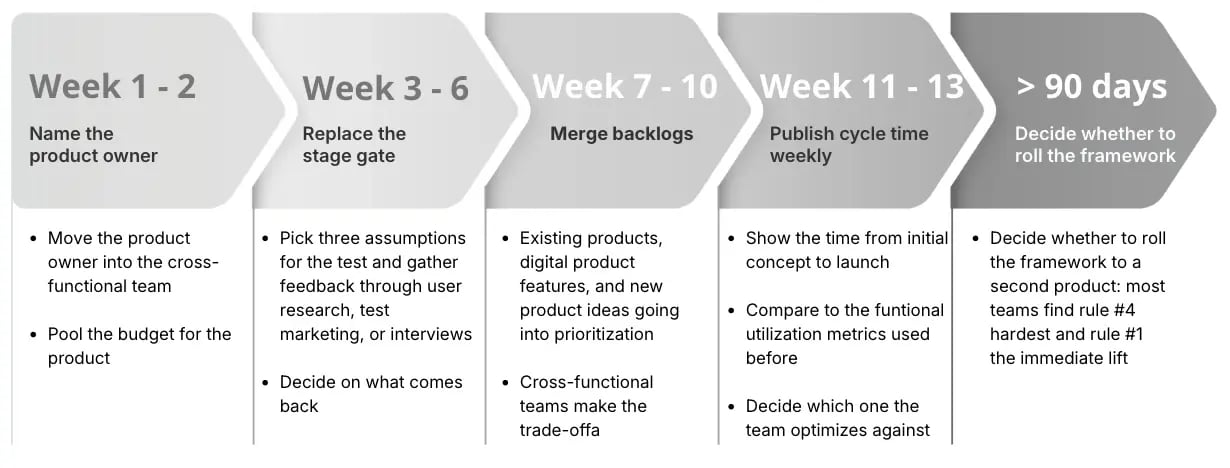
Exhibit 3: The 90-day framework for implementation
After 90 days, decide whether to roll the framework to a second product. Most teams find Rule 4 (pooled budget) hardest. Most find Rule 1 (single owner) gives the biggest immediate lift. Both are key benefits of running the framework on one product before scaling.
Real-world examples make the framework concrete. Two industrial companies prove it works without redrawing the org chart.
Toyota: one accountable Chief Engineer per vehicle since 1953.
Toyota's Shusa, now called Chief Engineer, carries full profit-and-loss responsibility for a vehicle from initial concept to years after launch. The Chief Engineer has almost no direct reports. Engineers stay in their functional homes, such as the body, chassis, and powertrain. The Chief Engineer pulls them together for the program.
Former Toyota EVP Akihiro Wada described the authority simply: if the Chief Engineer did not sign the drawing, the drawing did not live. The system survived seven decades and every reorganization at Toyota. It is the live template for Rule 1, applied to both existing products and new platforms.
Bosch Power Tools: cycle time over functional utilization.
Bosch started restructuring its Home and Garden business unit in April 2015 with the Ixo cordless screwdriver team. Over the following years, six legacy business units became more than 50 cross-functional business teams, each with its own budget and decision rights. The agricultural sensor unit shows Rule 7 most clearly.
Under the old functional setup, the team shipped roughly one innovation every six to eight months. Using Scrum@Scale inside a cross-functional team, the same unit delivered ten new systems in four weeks ahead of one growing season. Functional utilization metrics never produced that gain. Cycle time tracking did.
A second pattern shows up in industrial firms that already had agile teams in software development. They had the practices. They lacked Rule 4. Engineering used agile methodology inside a function, while marketing and supply chain ran on quarterly plans. Aligning teams around a single backlog, single budget, and single product strategy unlocked the rest.
The seven rules require a single source of truth that crosses functional teams. Functions cannot keep their own systems and call it cross-functional collaboration. Knowledge sharing has to happen in one place.
ITONICS gives modern organizations a shared system of record for the full product development cycle (Exhibit 4). Idea generation, idea screening, concept development, business analysis, and development roadmap planning sit on the same platform.
/Still%20images/Kanban%20Board%20Mockups%202025/capabilities-views-configure-cards-and-views.webp?width=2160&height=1350&name=capabilities-views-configure-cards-and-views.webp)
Exhibit 4: Structure incoming features with clear intake forms, triage workflows, and transparent status
The cross-functional team sees the same backlog as the function heads. Product managers and product management leadership work from one prioritized view, not three.
For idea generation and idea screening, ITONICS standardizes how product ideas surface and how the team scores them (Exhibit 5). Every product concept goes through the same screening criteria. Teams work from one funnel, not parallel ones.
/Still%20images/Kanban%20Board%20Mockups%202025/ideation-organize-idea-flows-2025.webp?width=2160&height=1350&name=ideation-organize-idea-flows-2025.webp)
Exhibit 5: Run organized idea campaigns where interactive campaign dashboards inform about progress, and ideas match with strategic objectives
For cycle time and key performance indicators, ITONICS tracks where work sits across the product development cycle. Product managers see bottlenecks. Function heads see contribution to business goals. Executives get board-grade reporting on the development roadmap without asking three teams for three different spreadsheets.
The platform does not replace the seven rules. It removes the friction that kills them.

.webp?width=900&height=450&name=Top-10-project-portfolio-software-tech-and-development-teams-use-for-managing-innovation-projects-fullwidth%20(1).webp)