Fast product development: Lessons from BYD, SpaceX, and Anduril

BYD, SpaceX, and Anduril don't just develop faster. Each one identified a specific category of delay that their industry considered non-negotiable - and removed it. Not optimized it. Removed it.
Most industrial companies try to accelerate their existing development process. They add more resources, pressure project managers, and shorten approval cycles. The process survives. The development time doesn't improve.
Three different industries. Three different delays removed. The same underlying principle: the most effective strategies for new product development don't speed up the process but cut out the parts that were never necessary.
Here's what each company did, and what your product development teams can apply directly.
Most manufacturers treat slow development as a necessary tradeoff for quality but the data disagrees.
According to McKinsey, traditional automotive OEMs take 40 to 50 months to bring a new vehicle to market. Chinese EV companies now do it in roughly 24 months. That gap doesn't just affect time to market. It hits revenue, market share, and customer satisfaction simultaneously.
The problem runs deeper than speed. Most companies plan for fast product development but build systems that reward delay. Development costs accumulate in processes designed for risk avoidance, not learning. Approval cycles slow product teams. Handoffs between departments lose context.
Every extra month in development is a month a competitor could launch first. Companies that move fast don't just work harder. They redesign their entire product development plan to eliminate delays before they start.
Traditional automotive product development depends on an external supply chain for core components. That dependency adds cycle time to every project and every phase. Most manufacturers treat it as essential.
BYD made a choice and chose differently.
BYD invested in owning its own technical expertise across batteries, electric motors, and electronic control systems. With roughly 120,000 engineers dedicated to R&D, its product development teams make data-driven decisions across the full product lifecycle without waiting on suppliers for materials, input, or approval.
The result is a product development process that compresses EV creation to as little as 18 months. Traditional Western automakers operate on 40 to 50-month cycles. Some models in BYD's Ocean Network receive a major upgrade within two years and a facelift within six months. Toyota, after a joint development project with BYD, was reportedly "flabbergasted" by the speed. (InsideEVs, 2025)
BYD Chairman Wang Chuanfu put it directly in 2023: "It's not the big fish eating the small fish, but the fast fish eating the slow fish."
The business success that follows is significant. BYD's total shareholder return grew by more than 550 percentage points over the past decade, compared to an average of 153 percentage points for other large OEMs. (McKinsey, 2025)
Most companies can't vertically integrate at BYD's scale. But they can audit where external suppliers are adding development time without adding value. That audit - run in the early stages of any product development plan - is where development time is most easily recovered.
The right question isn't "how do we work faster with our suppliers?" It's "which of these dependencies do we actually need?" Every external touchpoint that exists for convenience rather than capability is a delay that can be developed into an internal solution or removed entirely.
Traditional aerospace development operates on a clear assumption: understand the problem fully before building anything: Design first, build once, and test late. These are processes designed to avoid visible failure - at the cost of enormous development time.
SpaceX rejected that assumption entirely.
SpaceX didn't start with Starship. It started with the Falcon 1 - a smaller rocket built as a minimum viable product. The first version failed on launch. So did the second and third. But each failure generated engineering data that no simulation or market research could replicate. Each first version became development work that made the next version better and brought the final product closer to what users actually needed.
That build-fly-learn loop compressed a projected 15-year development cycle into roughly five years. Launch costs dropped by approximately 66% by 2025. (dartai.com, 2025)
Shipping an imperfect first version beats spending years designing a perfect final product.
SpaceX invested in end-to-end 3D modeling and simulation tools so engineers move from design to test without waiting for physical materials. Software development cycles compress the hardware timeline. Real-world telemetry from each test feeds directly back into the next iteration.
That closed loop turns customer feedback and test data into continuous improvements as a built-in part of the development process. Innovation at SpaceX is not an event but a true system.
Traditional aerospace programs compartmentalize by department. At SpaceX, cross functional teams - engineers, designers, and scientists - run in parallel rather than handing off sequentially. That structure removes weeks from every development phase and eliminates the context loss that slows most manufacturers down.
SpaceX also uses a formal five-step engineering method:
The first step - questioning whether the requirement is valid at all - eliminates potential problems before they consume resources. But most product managers skip that step entirely: It costs nothing but it saves the most time.
Traditional defense contractors operate on cost-plus contracts: the government funds the development process, and contractors are reimbursed for costs plus a margin. The longer the development process, the more revenue generated. Delay is built into the business model.
Anduril built the opposite model from day one.
Founded in 2017, Anduril only sells to the military when an actual product is ready - not a concept under government funding. The company invests its own capital in R&D, so the product team generates revenue only when solutions ship. That single structural choice forces faster delivery across every project.
By 2026, private-market investors valued Anduril at roughly $60 billion. Its Fury autonomous aircraft completed its first flight in October 2025. AI software updates deploy in hours rather than months. (micromunch.com, 2026) The success of this approach has attracted $8 billion in new funding and reshaped how the Pentagon evaluates defense contractors.
Anduril's strategy is software-first. Rather than designing hardware and adding software later, product development teams build the AI platform first. Hardware becomes modular. The same Lattice platform runs across drones, sensors, submarines, and ground systems - reducing development costs and compressing the product lifecycle for every new system that gets developed on it.
New technologies are adopted at the platform level instead of the product level. That creates improvements across all systems simultaneously rather than requiring separate development work for each one.
As Anduril's SVP of Manufacturing Keith Flynn stated: "The biggest factor in making production more efficient is the design itself. It's critical for engineering and production teams to work together from day one." (NAM, 2025)
Each barrier above produces the same symptom: a product lifecycle management process built from sequential gates rather than parallel loops.
Most manufacturers manage development through phases - concept, design, prototype, test, launch - where each gate requires sign-off before the next phase starts. These are processes designed for control, not speed.
BYD, SpaceX, and Anduril collapsed these phases: Development work runs in parallel. Teams test early rather than perfecting in the early stages. Customer feedback from existing solutions enters the development process before launch, not after. Progress is tracked continuously, not at quarterly gates.
The result is a shorter cycle time from idea to market time. More importantly, the final product reflects real customer needs - not assumptions made before development began.
These patterns appear consistently across all three companies. Each addresses a specific source of development time that most manufacturers protect without questioning:
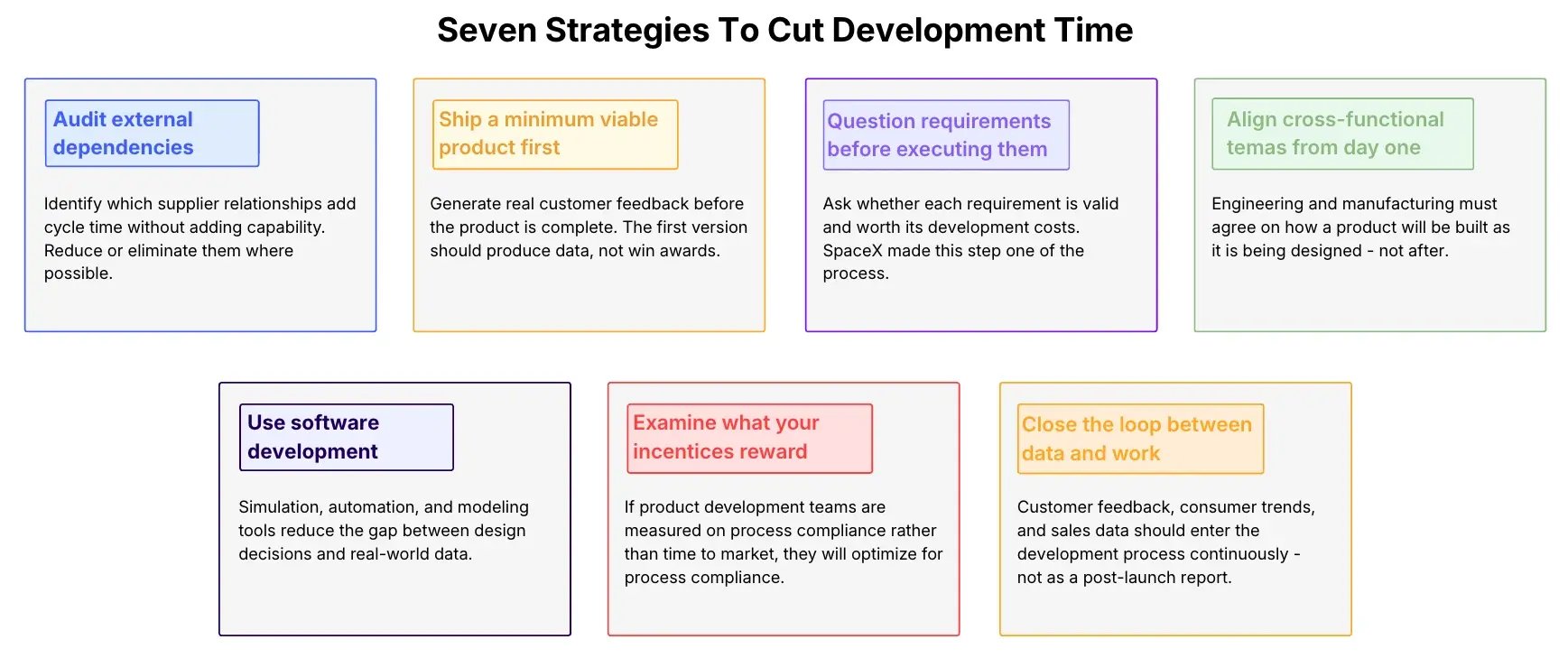
Exhibit 1: The seven strategies to cut development time and reduce time-to-market
Each barrier described above produces the same operational problem: product development teams working without shared, real-time visibility across the full development process.
ITONICS connects product portfolio management, technology scouting, and roadmapping in one platform - and gives every team member the same information simultaneously.
Repetitive tasks like manual updates and status reporting are handled through automation - returning time to the development work that creates actual value for users.
Industrial companies don't need 120,000 engineers to move faster. They need the same principle BYD, SpaceX, and Anduril each applied: make the delays visible, then question whether they were ever necessary. ITONICS gives product teams the shared context to do exactly that - and the tools to support faster delivery across the full product lifecycle.

.webp?width=900&height=450&name=Top-10-project-portfolio-software-tech-and-development-teams-use-for-managing-innovation-projects-fullwidth%20(1).webp)