Most large enterprises run 50 to 300 concurrent initiatives. Decisions about which to fund, reprioritize, or stop rely on outdated PowerPoint reports and fragmented data from 5 to 10 disparate tools.
The result is expensive guesswork. According to a 2025 Gartner survey, 62% of CIOs lack access to consolidated portfolio views. Poor visibility adds hidden costs ranging from 10 to 30% to major initiatives - through redundancy, rework, and delays.
This article is for CIOs, CTOs, and enterprise architects managing complex technology portfolios across multiple business units or regions. It presents a practical five-step framework to achieve actionable technology portfolio visibility within 12 months.
Your portfolio is costing you more than you think
The 2024–2026 period is exposing gaps that were easy to ignore before.
AI adoption is projected to add $15.7 trillion to global GDP by 2030, yet 30–50% of AI projects fail due to poor integration with existing systems. By 2025, 80% of enterprises operate multicloud environments, incurring 20–35% redundancy costs.
The EU CSRD mandates tech-enabled sustainability reporting by 2026, exposing 40% of firms to compliance gaps. GDPR fines averaged €4.45 million per violation in 2024.
Each of these pressures shares the same root cause: organizations funding technology investments they cannot clearly see.
And the problem is not only waste. Portfolio visibility also unlocks growth: Teams with a clear picture of their technology landscape can identify strategic gaps where no enabling technology supports a priority domain.
-
They can map emerging technologies - generative AI, green hydrogen, advanced materials - to capabilities, revealing white spaces for new ventures.
-
They can allocate 5 to 10% of the portfolio to high-uncertainty bets with defined stage gates, and quickly decommission experiments that do not hit their KPIs.
Without visibility, pilots multiply without scale. Promising bets die from lack of strategic context. Innovation becomes theater.
Board-level questions go unanswered:
-
Which technologies create business value?
-
Which destroys it?
-
Where should the budget move this quarter?
Without a connected portfolio view, leadership cannot answer these questions with confidence.
Stop calling it a visibility problem - it is a decision infrastructure problem
Technology portfolio visibility is a dynamic, interconnected model that links technologies, products, capabilities, and risks to strategic outcomes.
Three common tools that organizations already own fall short of true visibility:
-
Configuration management databases (CMDBs) focus on technical configuration. They do not provide strategic context, cost profiles, or risk ratings.
-
One-off audits capture snapshots. Mature visibility requires near real-time updates - weekly or monthly - traceable from project level to corporate strategy.
-
Static inventories list IT assets. Visibility maps each asset to business objectives and strategic priorities.
The distinction matters for decision-making:
-
A CMDB tells you what exists.
-
Portfolio visibility tells you what to keep, retire, or invest in - and why.
Most organizations already have the raw data. What they lack is the connective layer that turns asset lists into decisions.
How a fragmented portfolio fails in practice
Without connected portfolio views, large enterprises repeat predictable failures (Exhibit 1).
Duplicated AI pilots drain R&D budgets without producing scale. Overlapping SaaS tools accumulate across business units. Conflicting roadmaps slow product launches. Legacy systems continue drawing maintenance budgets while blocking modernization. Risk concentrations - vendor lock-in, end-of-support platforms, regulatory exposure - stay invisible until they become crises.
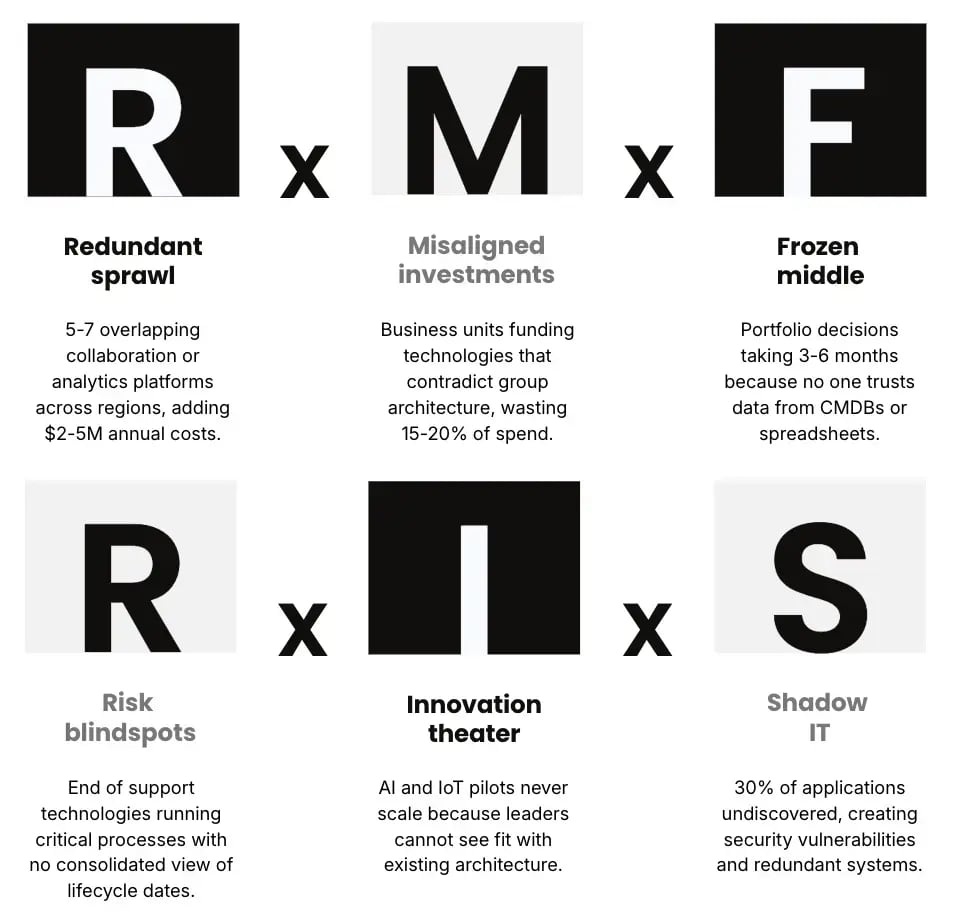
Exhibit 1: Typical failure patterns without portfolio visibility
These failures share a pattern: fragmented data, no single owner, and no common view of what matters to the business.
From inventory to insight: a 5-step technology portfolio visibility framework
This framework is designed for organizations that want actionable results in 6 to 12 months (Exhibit 2). Each step builds on the previous one.
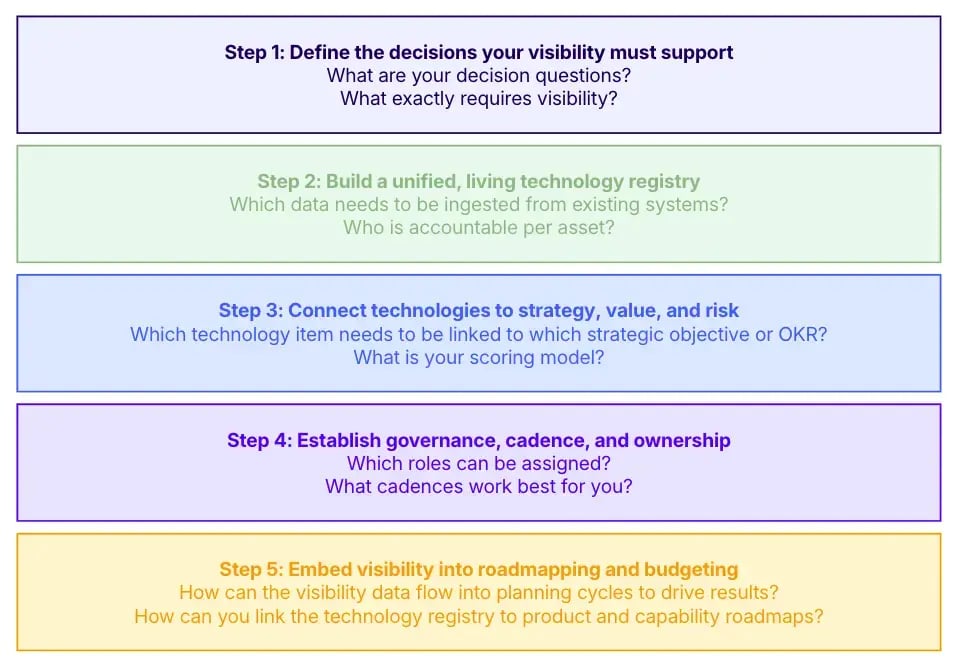
Exhibit 2: The 5-step framework for technology portfolio visibility
#1: Define the decisions your visibility must support
Start with decision questions, not data collection.
Common decisions requiring visibility: where to cut 10–15% of run cost this year, which 5 of 30 AI pilots to scale, which technologies support strategic goals versus drain resources.
Link those decisions to leadership forums:
- 3 months: tactical steering committees
- 12 months: annual investment boards
- 3 years: strategic foresight planning
Decision questions determine which data attributes matter. A manufacturing organization asking vague questions ends up tracking 10,000 technology assets. One with clear questions focuses on the 500 items that actually drive investment decisions - specifically cost, risk, lifecycle, and strategic fit.
#2: Build a unified, living technology registry
Move from scattered spreadsheets to a continuously updated registry. Ingest data from existing systems: CMDB, ITSM, ERP, and project tools like ServiceNow or SAP.
Four requirements make a registry usable:
- Resolve duplicates using ML matching, targeting 85% accuracy
- Mandatory fields for each asset: owner, business capability, lifecycle phase, cost, risk level
- Include non-production elements: pilots, lab environments, shadow IT
- Set update cadences: monthly for core applications, quarterly for IT infrastructure, continuous for pilots
A registry without ownership and lifecycle data becomes another blind list. Accountability per asset is non-negotiable.
#3: Connect technologies to strategy, value, and risk
Link each technology item to a strategic objective or OKR. Map every platform supporting a goal like "grow D2C revenue by 15% in 2026" to ensure it appears in the portfolio view.
Apply a simple scoring model: rate each item 1–5 on strategic fit, business value, technical health, and risk. Set a threshold --- any item scoring above 3 on risk triggers escalation.
This approach transforms raw data into portfolio decisions. An obsolete ERP platform with low strategic fit and high risk gets a retirement recommendation, not another maintenance cycle.
#4: Establish governance, cadence, and ownership
Clear ownership prevents data decay and decision paralysis.
Assign three roles: a portfolio owner (typically the CIO or enterprise architect) who sets standards, domain owners who maintain accuracy in their area, and a cross-functional steering group including strategy, finance, and innovation.
Three cadences that work in practice:
- Monthly portfolio health reviews (60 minutes, decision-focused)
- Quarterly strategy-to-portfolio alignment sessions
- Automatic escalation for any item above the risk threshold or with a cost overrun
Focus governance meetings on trade-offs, not status updates. Status updates belong in dashboards.
#5: Embed visibility into roadmapping and budgeting
Visibility data must flow into planning cycles to drive results.
Link the technology registry to product and capability roadmaps. Include timelines for replacements, upgrades, and decommissions. Use the data to inform 3-year investment roadmaps by phasing out legacy systems and freeing budget for strategic platforms. Only fund initiatives that improve defined KPIs or reduce specific risks.
This connects strategy to execution. Resource allocation becomes evidence-based. Portfolio decisions gain credibility because they rest on data the organization maintains and trusts.
Real-world patterns: technology portfolio visibility in action
Volkswagen Group: standardizing across 43 factories
Volkswagen faced a common enterprise problem: each factory ran isolated, site-specific IT systems. Standardization was nearly impossible, and scaling new technology required repeated effort at every plant.
The company built its Digital Production Platform (DPP) with AWS, connecting 43 factories across Europe and the Americas.
The platform allowed Volkswagen to deploy IT systems and AI applications as standardized solutions across all connected sites. One AI application at the Poznań plant alone cut energy costs by 12%. Across the broader network, the standardization approach generated cost savings in the double-digit millions. Volkswagen now runs over 1,200 AI applications across its manufacturing network.
The key enabler was replacing isolated systems with a single connected platform - exactly what technology portfolio visibility makes possible at scale.
Unilever: aligning commerce technology to global strategy
Unilever's digital commerce operations grew rapidly across markets, but the underlying technology landscape grew with it - fragmented and region-specific. Legacy tools accumulated faster than they were retired.
The company is now re-architecting its technology blueprint to consolidate existing tools and automate core business processes. The stated goal: save and reinvest. Priority digital commerce channels have grown 23% and now account for 15% of total revenue. The consolidation was driven by a clear need - align regional technology decisions to a unified global brand and commerce strategy.
Merck and AstraZeneca: confronting fragmented clinical data
In pharma, the stakes of poor technology visibility are regulatory as much as financial.
Merck identified that fragmented clinical systems and siloed data were creating complex architectures that impeded both innovation and regulatory compliance. The response was a unified, AWS-based clinical data platform built to consolidate R&D data across the enterprise.
AstraZeneca took a similar path, building a unified data platform and deploying an AI-powered Development Assistant on top of it - going from concept to production MVP in six months. The platform scaled to over 1,000 users in 2025.
Both companies moved from fragmented tool sets to connected portfolio views before deploying AI at scale. That sequence was not incidental.
How ITONICS enables technology portfolio visibility
ITONICS provides an Innovation OS that centralizes technology inventories, innovation portfolios, and external signals in one SaaS platform.
Key capabilities supporting the five steps above:
- Centralized technology registry: Ingests data from CMDB, ITAM, and project tools. Replaces spreadsheet-based reporting with a maintained, living registry.
- Visual portfolio tools: Technology radars, portfolio views, and roadmaps make complex landscapes readable for leadership teams in minutes.
- AI-assisted analysis: Clusters signals, flags portfolio risks, and surfaces related technologies based on weak signals from external sources.
- Integrated foresight: Maps external trends, startups, and patents to internal portfolio gaps, connecting the innovation horizon to the current portfolio.
- Roadmap integration: Links the technology registry directly to product and capability roadmaps, embedding visibility into planning cycles rather than sitting beside them.
ITONICS is the strategic layer that CMDBs lack - connecting what exists to what matters for the business.
To explore how ITONICS addresses your 2025 to 2026 portfolio questions, schedule a demo focused on your specific IT estate and current initiatives.
FAQs on technology portfolio visibility
How is technology portfolio visibility different from a CMDB or IT asset inventory?
CMDBs track technical configuration at the infrastructure level. Technology portfolio visibility adds strategic context - linking technology assets to business goals, value streams, and risk categories.
ITONICS complements existing CMDB tools by providing the strategic and foresight layer that CMDBs are not designed for.
Who should own technology portfolio visibility in a large organization?
Ownership spans the CIO, CTO, and enterprise architecture function. A central function sets standards and governance. Domain owners maintain data accuracy in their area.
A cross-functional portfolio office, including strategy, finance, and innovation, stewards the process. Shared accountability across IT and business leaders is what ensures data quality over time.
How detailed does the technology portfolio visibility in a large organization?
Start with 60–70% coverage of critical technologies rather than chasing 100% completeness. Value appears once leaders can compare major platforms, critical applications, and key pilots on common metrics. Iterative enrichment over 6–12 months fills gaps as decision questions become clearer.
How often should technology portfolio data be updated?
Monthly updates work for key applications and platforms. Quarterly reviews suit a stable IT infrastructure. Pilot and innovation portfolios need updates every 2–4 weeks due to faster change. A SaaS platform like ITONICS reduces manual effort by automating data collection and flagging stale records.
How do we measure the impact of better technology portfolio visibility?
Track concrete metrics: reduced number of redundant tools, faster decision lead times, higher share of spend on strategic initiatives. Measure cost savings from decommissioned systems. Monitor reduced risk exposure from end-of-support technologies. Before-and-after comparisons over 12–18 months produce the ROI case for continued investment.
What if our CMDB is already mature? Do we still need portfolio visibility?
Yes. A mature CMDB answers "what do we have and how is it configured?" Portfolio visibility answers "what should we keep, retire, or invest in — and why?"
The two tools serve different audiences and different decisions. Most organizations with mature CMDBs still lack the strategic layer that connects their technology inventory to business outcomes.