9 product strategy alignment tools for industrial product development


Misalignment in product development doesn't appear as a crisis. It looks like a meeting. Then another meeting. Then, a revised roadmap and missed business goals.
Industrial product development teams operate across multiple sites, regions, and product lines. Engineering teams in Stuttgart build features that marketing in Chicago never requested. R&D in Tokyo develops technologies that product developers in Rome don't know exist. Platform teams invest in capabilities that individual product lines won't adopt for three years.
The disconnect is systemic. Teams work in isolation from the company's business goals that should shape their choices. Customer needs from market research don't flow into product idea prioritization. Prospect feedback from sales doesn't reach decision-makers until after specifications are locked.
The result is a misaligned product strategy that wastes resources, misses market windows, and creates products that fail to address customer pain points. This article shows how successful companies embody 9 capabilities to avoid those failures.
| # | Capability | What it solves |
| 1 | Strategic context setting and visibility | Teams make decisions without knowing why — strategy never reaches the people who need it |
| 2 | Connecting trends, regulations, and technologies to product decisions | External signals arrive too late to act on — regulatory changes and market shifts surprise rather than inform |
| 3 | Single, shared source of truth for product decisions | Teams work from different data — conflicts surface after commitments, not before |
| 4 | Dynamic product portfolio prioritization | Annual reviews go stale immediately — portfolios reflect last year's assumptions, not current market reality |
| 5 | Continued governance across products, technologies, and regions | Unclear decision rights create bottlenecks or unchecked platform changes that break shared infrastructure |
| 6 | Time-phased, multi-layer roadmapping | Single-layer roadmaps hide dependencies — teams discover conflicts after resources are already committed |
| 7 | Decision history and automated workflows | Decisions made in meetings disappear — context is lost, choices get repeated, rationale can't be reconstructed |
| 8 | Cross-functional and cross-site collaboration and transparency | Status meetings consume hours — coordination becomes the work instead of a byproduct of good information flow |
| 9 | AI-augmented decision-making across the product lifecycle | Signal volume exceeds human processing capacity — synthesis delays slow decisions in fast-moving markets |
Exhibit 1: The 9 product strategy alignment tools for industrial product development
Product strategy misalignment carries a specific price.
McKinsey estimates large companies waste 20-25% of productive capacity on misalignment. For organizations spending $500M annually on product development, that's $100-125M in direct waste before accounting for opportunity costs.
This understates the total cost. It excludes
A winning product strategy creates products that deliver a unique value proposition while remaining aligned to business objectives. Misaligned organizations can't sustain this.
They drift from their company's goals as product decisions compound over time. Business success requires that strategy guides decisions - not that it fills documents.
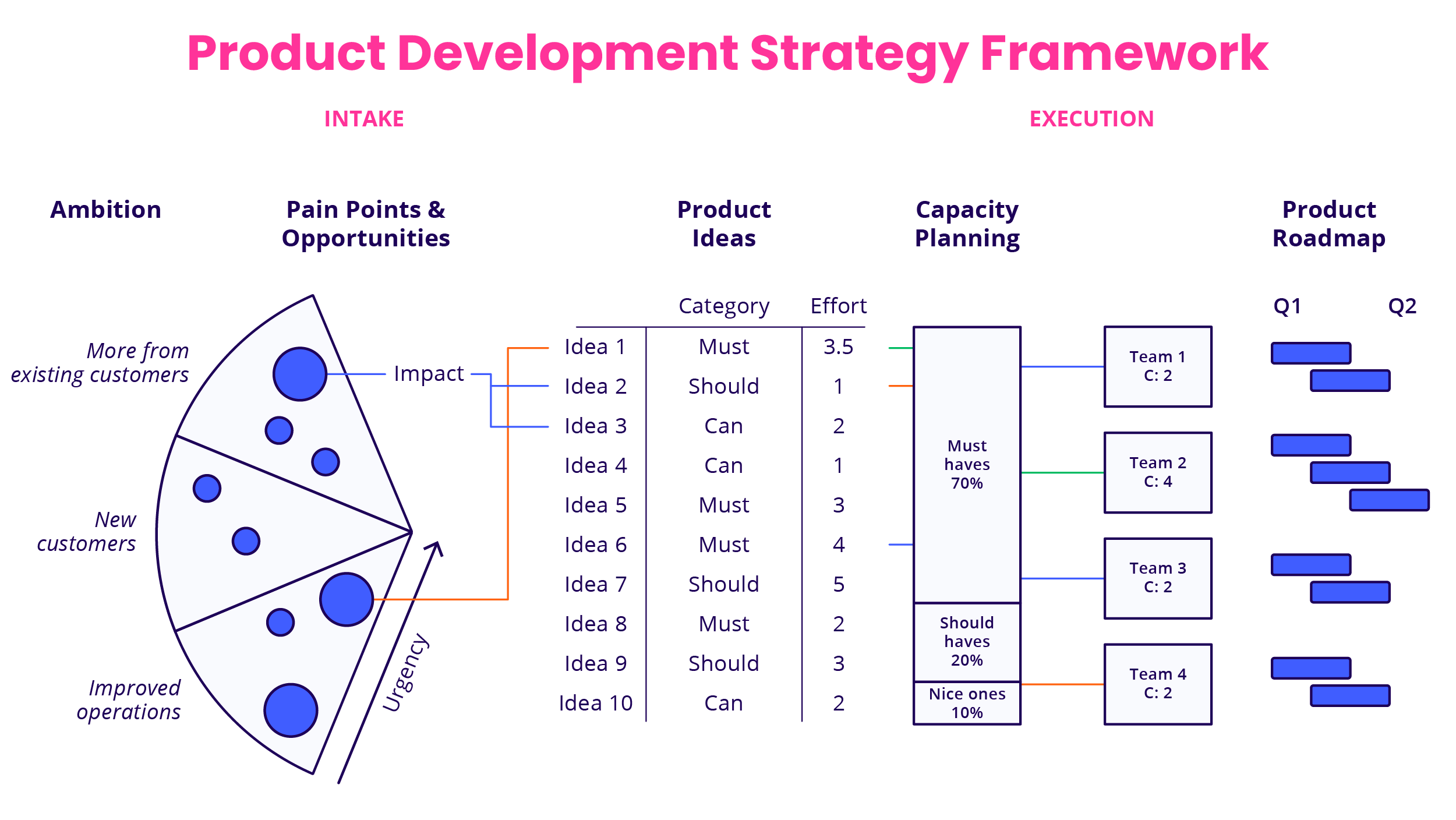
Exhibit 2: The product development strategy process
Four cost categories account for most product strategy misalignment losses.
Rework costs. Teams build the wrong thing. In hardware, a single design change after tooling commitment costs $250,000 to $2M, depending on key component complexity. In software, rework consumes 30-50% of total development time in misaligned organizations.
Market timing losses. Teams disconnected from market vision miss launch windows. In automotive, a six-month delay can represent $150-300M in lost revenue growth for a major platform launch. In industrial equipment, first-mover advantage in connected product categories determines whether you capture your target customers or cede market share permanently.
Resource duplication. Multiple product lines independently developing similar technologies is standard in misaligned organizations. Bosch identified €200M in duplicate R&D spend across divisions after implementing a technology platform visibility initiative. Allocating resources effectively requires visibility that most organizations lack.
Strategic drift. Products drift from overarching business goals over three-to five-year development cycles. By launch, the product was optimized for a market vision that no longer exists. Customer satisfaction suffers because the product addresses yesterday's customer pain points, not today's.
Three misalignment patterns each carry different costs and require different solutions.
Vertical misalignment happens when teams build without connecting to overarching business goals. Roadmaps exist. Business objectives exist. The strategic link between them and the product development process doesn't.
Horizontal misalignment happens across cross-functional teams. Product management optimizes for feature count. Engineering optimizes for manufacturing efficiency. Marketing needs a clear unique value proposition six months before launch. Each function pursues its own version of the product vision without coordinating on shared business outcomes.
Temporal misalignment happens across time horizons. Short-term decisions sacrifice long-term success. Teams optimize for the next planning cycle while neglecting the design process and key components that enable the next five years of product development.
A European manufacturer building IoT-enabled industrial equipment faces all three types simultaneously. Managing roadmaps across hardware, software, and multiple product lines multiplies alignment risk at every layer.
Industrial product teams operating across regions and geographic markets face this compounded challenge daily. Market expansion into new regions makes it worse: every new territory adds another layer of product vision interpretation.
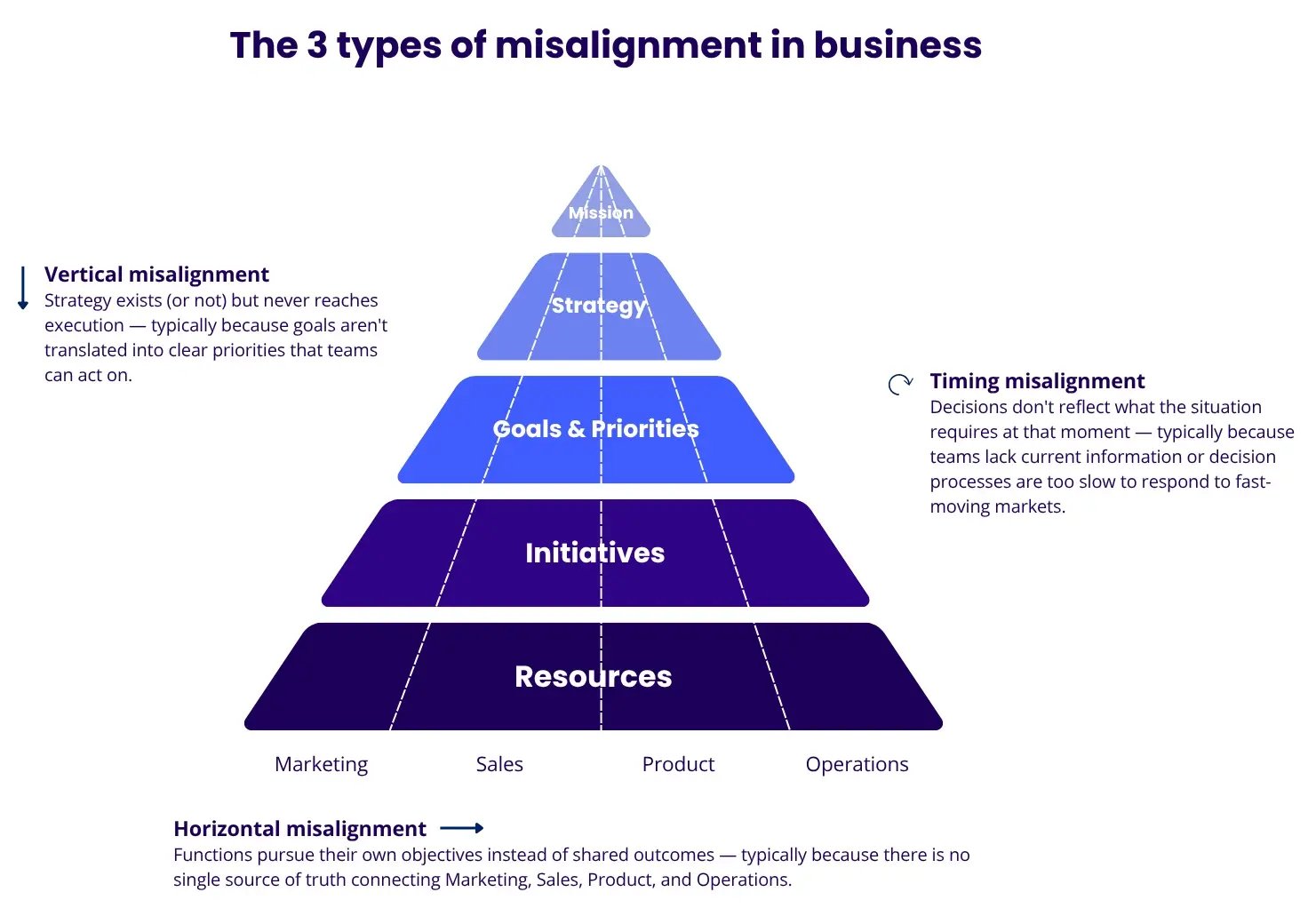
Exhibit 3: The 3 types of misalignment in business
Teams invest heavily in product management frameworks: strategy maps, OKRs, phase-gate processes. These tools generate the illusion of an aligned product strategy without creating the substance. They record decisions after the fact and don't surface conflicts before commitments are made.
While strategy maps aim to visualize the connection between business goals and product initiatives, they often become static documents that fail to create real alignment.
These maps typically capture strategy at a single point in time but lack mechanisms to keep pace with rapidly changing market conditions, regulatory shifts, and evolving customer needs.
In industrial product development, where timelines span years and complexity multiplies across sites and product lines, focusing solely on strategy maps perpetuates fragmented decision-making instead of fostering the continuous, system-wide alignment needed to deliver measurable outcomes.
OKRs align teams to their own objectives. They don't surface conflicts between product line priorities and platform investment needs. Two teams can achieve 100% of their OKRs while creating architectural debt that costs $40M to resolve two years later.
OKRs also create misaligned key performance indicators. Individual teams use their own measurable goals, not necessarily aligned with the business goals. Managers optimize for team numbers rather than for strategic initiatives that advance the company's overall strategy.
This creates the illusion of team alignment while product strategy drifts.
Phase-gate processes evaluate whether a strategic initiative meets predefined criteria to advance. They don't evaluate whether the initiative should still be pursued given shifts in the competitive landscape or customer jobs-to-be-done.
A product can pass every gate and still represent the wrong significant investment. The process asks, "Are we building this right?" not "Are we building the right thing?" In industrial product development with 3-5 year cycles, the strategic question is more important than the execution question.
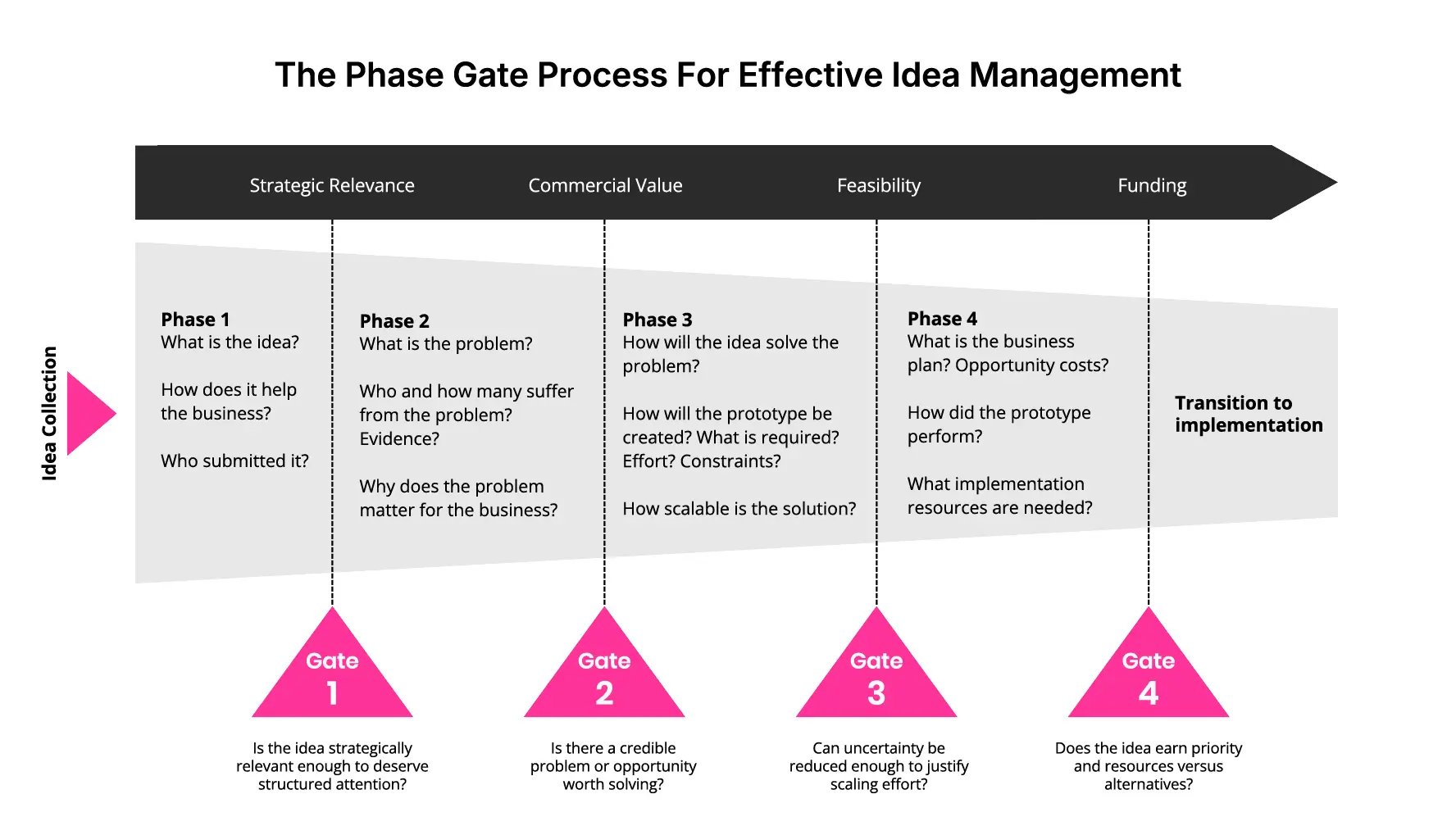
Exhibit 4: The phase gate process for effective idea management
Nine capabilities separate organizations that sustain product strategy alignment from those that just document it.
The strategic context is supposed to be the guardrails for every business activity and decision.
The strategic context should provide:
As a modern capability, the strategic context does not live in a slide and is supposed to be remembered; it is directly embedded in working tools.
The best strategic portfolio and project management tools know the strategic context and can thus provide concrete recommendations and warnings to every organization member.
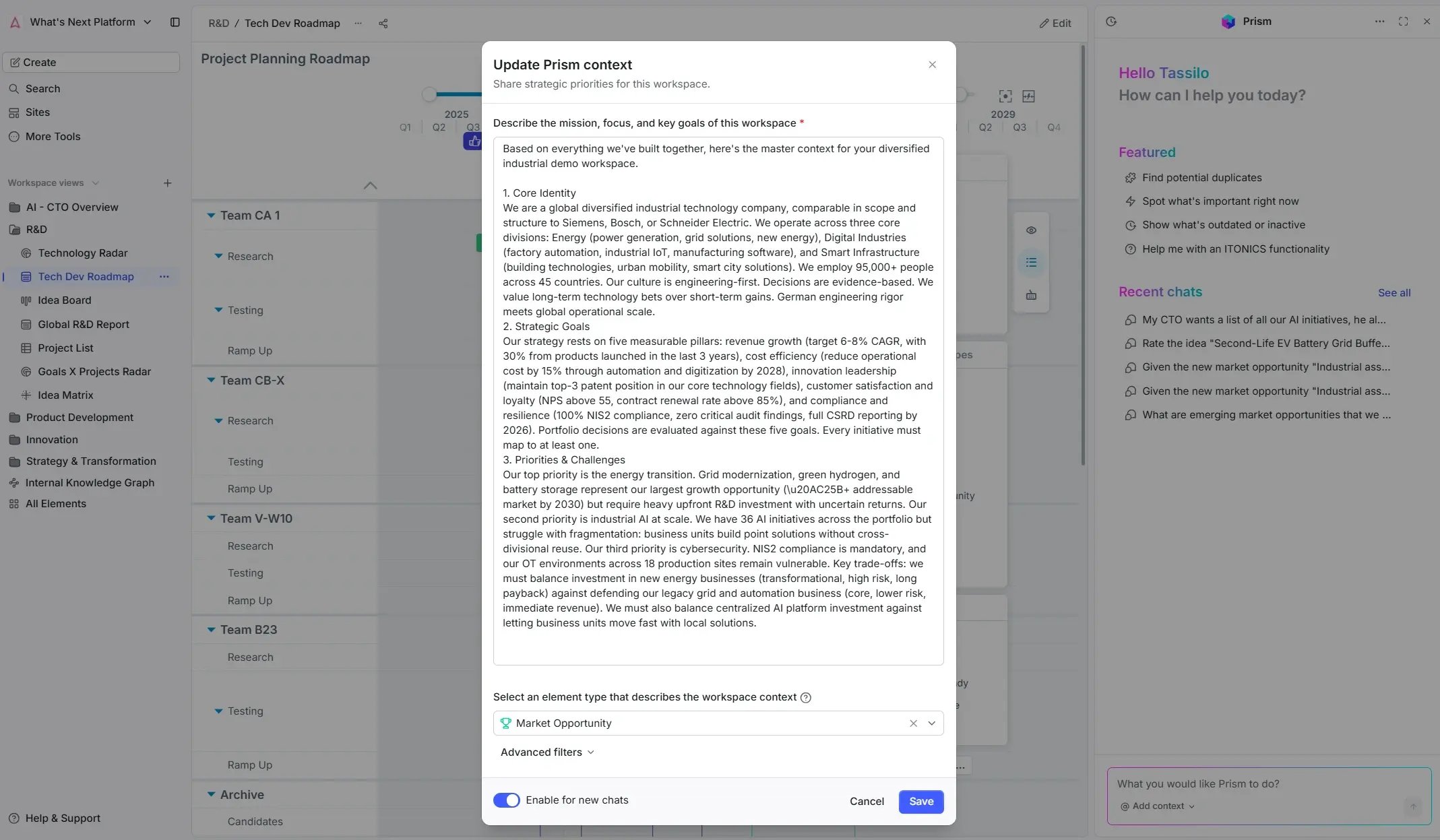
Exhibit 5: Strategic context setting in ITONICS
External signals that change requirements rarely reach teams in time. A regulatory change announced 18 months before implementation passes through management layers before reaching a roadmap. Teams then have six months to respond to a change they could have anticipated.
Build structured signal pipelines. Regulatory tracking by product line and market. Technology horizon scanning tied to specific capabilities. Competitive analysis and market trends monitoring feed directly into decisions rather than sitting in disconnected market research reports.
When a new EU machinery directive is published, teams should see within days which roadmap items are affected. Organizations tracking regulatory signals early adapt their development process and identify gaps before they create project timeline crises.
Teams use an average of 6-8 tools to manage product information. Spreadsheets for product roadmaps. Presentations for product strategy. PLM for specifications. Project tools for development tasks. These product management tools don't communicate with each other.
Decisions made in one system are invisible in another. Managers work from different versions of reality. Conflicts surface after commitments are made, when the cost of change is highest.
A single source of truth consolidates decisions, context, history, and status. Every team sees the same information. Every stakeholder accesses the same roadmaps. This shared foundation is the essential element that all other product strategy alignment capabilities depend on.
Annual strategic portfolio reviews are obsolete before they're complete. Markets shift, technologies mature, and constraints change faster than annual cycles allow.
Static prioritization means teams continue investing in product initiatives that made sense twelve months ago but no longer align with current business goals.
Teams with dynamic processes reallocate 15-20% of resources annually, compared to 5-8% for teams using annual review cycles. Over five years, this difference determines whether a portfolio reflects current market needs or outdated assumptions. You cannot track progress against business goals if the portfolio view doesn't reflect the current strategy.
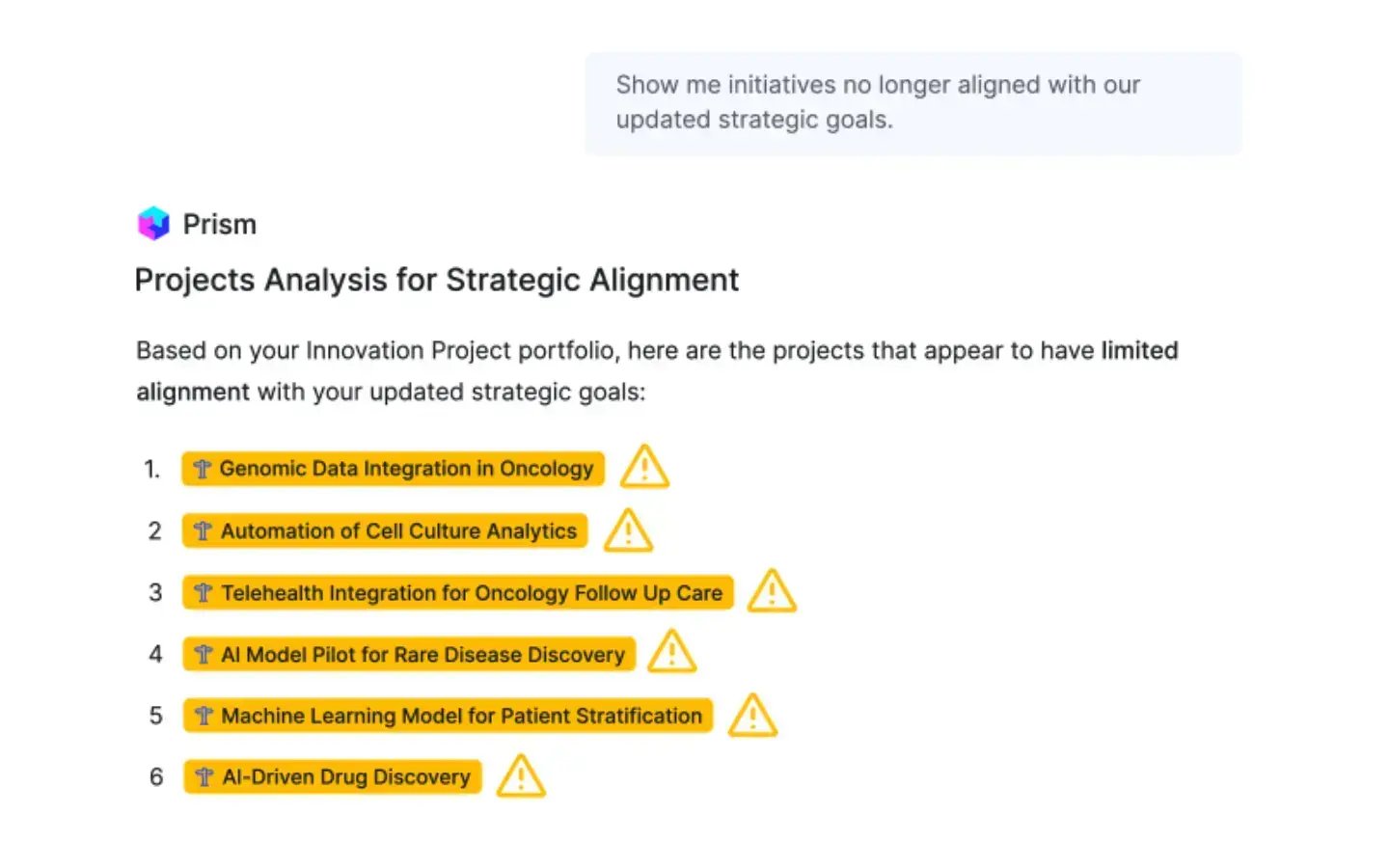
Exhibit 6: ITONICS AI assistant flags off-strategy projects
Industrial organizations build platforms that multiple products share. Governance failures occur when product lines make decisions that break platform integrity. A software interface is implemented differently by two product lines. A component that three products share, but one team modifies without coordination.
Governance requires explicit decision rights across three levels: team-level decisions made autonomously, platform-level decisions made with cross-functional team coordination, and strategic-level decisions made with leadership involvement.
Ambiguous governance costs more than over-governed governance. When decision authority is unclear, product teams either wait for approvals that don't come or proceed without visibility. Both undermine product strategy alignment across sites and regions. Core components of shared platforms need the clearest governance rules.
Single-layer product roadmaps fail industrial product development. They can't represent the relationships between technology development, platform investments, and product launches across multiple timelines.
A multi-layer approach shows four interconnected views. The technology layer shows when capabilities become available. The platform layer shows when shared infrastructure investments are complete. The product layer shows when products launch. The market layer shows when customer needs and competitive landscape conditions align.
Dependencies become visible before they become crises. A manager sees that a Q3 launch depends on a platform capability not funded until Q4. This conflict surfaces during planning when adjustments are inexpensive. Without multi-layer product roadmaps, it surfaces after commitments are made at ten times the cost.
Most product strategy decisions are made in meetings and documented nowhere. Six months later, nobody can explain why a product feature was cut, who approved a scope change, or what information was available when a key decision was made.
Decision history means capturing the rationale, context, and stakeholders behind every significant decision. Not as documentation overhead, but as a structured record that travels with the decision.
When product managers create products in different geographies with different constraints, shared decision history promotes team alignment and prevents contradictory choices that erode the product's value proposition in the market.
/Still%20images/Element%20Mockups%202025/capabilities-integrations-cross-team-collaboration.webp?width=2160&height=1350&name=capabilities-integrations-cross-team-collaboration.webp)
Exhibit 7: Cross-team collaboration on an idea in a digital environment | ITONICS
Industrial product teams run projects across three or more sites in different countries, time zones, and business units. Coordination becomes the primary work for product managers in misaligned organizations. Customer success suffers because teams focus on internal coordination instead of delivering a strong value proposition to the market.
Effective collaboration requires transparency, not more meetings. Transparency means cross-functional teams see what they need without being included in every decision. Current development status. Open decisions. Resolved conflicts. Changed priorities.
Teams shifting from weekly status meetings to asynchronous transparency recover 3-4 hours per week per person. Across a 200-person organization, that's 600-800 hours weekly recovered for actual work. Use an effort matrix to prioritize which information flows need immediate improvement.
The volume of signals teams need to process exceeds human decision capacity. Market signals. Technology developments. Regulatory changes. Competitive landscape shifts. Customer feedback. Internal performance data. Synthesizing this into aligned product strategy decisions requires more than manual effort.
AI augments decision-making by identifying patterns humans miss:
which product features drive the most customer satisfaction,
which technology investments carry the highest strategic leverage,
which portfolio compositions are most resilient across scenarios.
AI helps teams gain insights across the product lifecycle that would otherwise require weeks of analysis.
Teams using AI-augmented tools report 20-30% faster decision cycles on complex portfolio questions. Decision speed directly affects revenue growth and market share.
The nine capabilities above form a product development operating system: an integrated approach to connecting product strategy, market vision, decisions, and execution.
Setting this up requires three sequential phases. Each phase builds the foundation that the next depends on. Unlike the consumer electronics industry, where teams can release minimum viable products and iterate rapidly, industrial product development requires a more deliberate sequencing of alignment investments.
Consolidate product portfolio data. Identify every system where decisions currently live: spreadsheets, PLM systems, project tools, email threads. Map which information drives strategic decisions. Select a product management tool that consolidates this into a single view accessible to every team. Select a tool that allows you to define your strategic context.
During this phase, don't attempt to fix product strategy alignment. Establish visibility first. You cannot align product strategy if product teams are working from different data.
The key benefit: every manager works from the same roadmaps, the same product portfolio view, and the same strategic context. This is the foundation for measurable goals to be set in phase 2.
/Still%20images/List%20Mockups%202025/portfolio-oversee-tasks-and-assignments-2025.webp?width=2160&height=1350&name=portfolio-oversee-tasks-and-assignments-2025.webp)
Exhibit 8: A project portfolio table with conditional formatting rules showing portfolio risks
Use the strategy context setting tool to analyze which product initiatives explicitly relate to corporate strategic objectives. Identify your current level of resource waste. It is typically 20-30 % because projects don't fit changing target audience preferences anymore, or strategic goals have changed.
Create links between market requirements, business goals, and roadmap items. Make sure that roadmap items have direct connections - otherwise, they are candidates for consolidation.
At the end of phase 2, every manager should articulate which strategic goal their current work serves. Every team should identify the core components of their product vision and the assumptions underlying it. When those assumptions change, the team immediately knows to reassess product strategy alignment.
This is also when to define measurable outcomes for alignment itself: the percentage of initiatives connected to a stated strategic objective, and the time lag between market signals reaching decision-makers.
This high-level plan for alignment gives leadership a clear way to track progress month over month.
Define decision rights explicitly across teams, platform functions, and leadership. Build portfolio review processes that operate on continuous signals rather than annual strategic planning cycles. Implement automated workflows to ensure decisions trigger correct downstream actions.
This phase is where product strategy alignment becomes a system rather than a discipline. Teams no longer rely on individual effort to maintain alignment. The system maintains it continuously.
Track progress on portfolio health monthly against the high-level plan and targets established in phase 2. Most industrial organizations see measurable improvement in product strategy alignment within 12-18 months of implementing this systematically.
ITONICS is a strategic product development platform that integrates all nine product strategy alignment capabilities described in this article. It connects product strategy, market intelligence, portfolio management, multi-layer product roadmaps, and governance in a single environment.
Teams don't navigate between 6-8 tools to understand priorities. The strategic context travels with every decision.
Strategic context in every view. ITONICS connects corporate strategy directly to individual initiatives. Teams see the strategic objectives their work serves. Leadership sees the entire portfolio mapped against business goals in one view. When product strategy changes at the corporate level, teams see the implications immediately. There is no lag between strategic decisions and team awareness.
Intelligence connected to decisions. ITONICS integrates trend monitoring, regulatory tracking, and technology scouting directly into the planning workflow. When a market signal changes the context for a decision, the relevant team sees it immediately. Managers work with the current market context, not six-month-old market research assumptions.
Dynamic portfolio prioritization that reflects market demands. ITONICS enables portfolio scoring across multiple criteria: strategic fit, market attractiveness, technical feasibility, and resource availability. When competitive landscape conditions shift, the portfolio view updates. Teams reprioritize based on current conditions rather than last year's business goals. Strategic alignment becomes a live state, not an annual event.
/Still%20images/Roadmap%20Mockups%202025/portfolio-visualize-critical-paths-2025.webp?width=2160&height=1350&name=portfolio-visualize-critical-paths-2025.webp)
Exhibit 9: Roadmap with projects and milestones showing schedule conflicts
Multi-layer product roadmaps. ITONICS product roadmaps represent technology, platform, product, and market layers simultaneously. Dependencies are visible before they become conflicts. Teams see issues during planning, not after commitments are made.
Governance with complete decision history. Every ITONICS decision carries full context: who made it, why, what information was available, and what assumptions it depends on. When a priority changes, teams understand the original rationale and make informed updates.
AI that surfaces what matters for product strategy. ITONICS Prism analyzes portfolio compositions, market signals, and performance data to surface the decisions that matter most. Leaders spend time on judgment, not data synthesis. Organizations using ITONICS reduce time-to-alignment on portfolio decisions from weeks to days.

.webp?width=900&height=450&name=Top-10-project-portfolio-software-tech-and-development-teams-use-for-managing-innovation-projects-fullwidth%20(1).webp)