How to make product roadmap management less extra work

Most product managers maintain three versions of the same roadmap: One for engineering teams, one for key stakeholders, and one that actually reflects what's happening. That isn't supporting product development. That's extra work pretending to be organized.
The problem isn't the roadmap itself but how they're treated: product roadmaps are often perceived as a contract instead of an alignment tool. Sales, customer, and support teams expect the roadmap to be like a calendar. When product managers need to change plans, it triggers a cascade of updates, realignment sessions, and explanatory emails.
A product roadmap should reduce communication overhead. If yours creates it, the structure is wrong.
This article gives you 7 principles to simplify product roadmap management without sacrificing stakeholder alignment or strategic direction.
/Still%20images/External%20Webpage%20Mockups%202025/portfolio-share-roadmaps-2025.webp?width=2160&height=1350&name=portfolio-share-roadmaps-2025.webp)
Exhibit 1: Embedding a roadmap on an Intranet page
Product roadmap management fails for a predictable reason: the roadmap tries to do too many things at once.
It commits to specific dates. It promises specific features. It maps out the entire project lifecycle. It satisfies both internal teams and external stakeholders. One static view doing all of that is always wrong about something.
When the roadmap reflects commitments rather than direction, every change breaks trust. Product teams spend more time defending updates than making progress.

Exhibit 2: The three failure patterns most organizations struggle with
Three failure patterns appear in almost every struggling product organization.
Product managers include implementation details, daily tasks, and test cycles. Engineering teams treat it as a schedule.
When schedules slip, the roadmap becomes an outdated roadmap within weeks. The product manager then faces a choice: update the roadmap and re-explain every change to key stakeholders, or quietly let it drift. Neither option scales.
The roadmap is not a project plan:
The product roadmap shows direction
The project plan shows tasks
The moment it starts tracking specific dates and tasks, it requires the same maintenance overhead as a project plan without the precision of one.
Different roadmap visitors have different interests. Internal teams look for dependencies, development team capacity, and key milestones. External stakeholders look for customer benefits, major initiatives, and strategic direction.
A single static view cannot serve both audiences well. Product teams end up either oversharing internal constraints with external stakeholders or hiding strategic context from engineering teams.
Teams that try to solve this with one compromise view often end up maintaining a third private copy anyway. That's the one that reflects reality.
Teams prioritize features based on customer feedback or internal debates. No one defines the desired outcomes that those features should achieve.
The roadmap grows without strategic direction. Prioritizing features becomes a political exercise where whoever argues loudest wins. Product managers spend planning cycles adjudicating feature requests instead of setting product strategy.
Each pattern multiplies maintenance work. Together, they make product roadmap management a full-time job that should take hours per month.
An outdated roadmap isn't just an inconvenience. It erodes trust with key stakeholders and creates alignment failures across cross-functional teams that compound over time.
Product and development teams work from different assumptions when the roadmap doesn't match reality.
Engineering teams build based on what they remember from the last update.
Product managers communicate based on what they told stakeholders last quarter.
Neither reflects the current strategic plan.
Cross-functional teams that rely on the roadmap for coordination, including product marketing, customer success, and the implementation team, get misaligned in parallel.
A product marketing team preparing launch materials based on an outdated roadmap wastes weeks.
A customer success team making promises based on old feature timelines damages customer relationships.
Alignment gaps between the product roadmap and company strategy create the most serious downstream problems.
When the product development roadmap stops reflecting business objectives, teams prioritize features that don't advance strategic goals. Development cycles extend. Customer satisfaction drops when external stakeholders receive features that solve yesterday's problems rather than current customer needs.
Executives lose confidence in product management's ability to connect product vision to business outcomes. That gap often triggers more oversight, more status meetings, and more reporting requirements. Each new oversight mechanism adds maintenance work, not removes it.
The fix is not faster updates. It's a product development roadmap that doesn't require constant correction because it was structured correctly from the start.
These principles apply to any product development roadmap, whether you manage one product or multiple products (Exhibit 3).

Exhibit 3: The 7 principles of product roadmap management, cutting the overload
Overall, they reduce maintenance time without sacrificing the strategic overview key stakeholders need.
The 7 principles above describe how to think about product roadmap management (Exhibit 3). A digital roadmap is what makes them operational.
A digital roadmap is not a slide deck or a shared spreadsheet that someone exports once a quarter. It is a live data platform where roadmap items, strategic goals, status flags, and audience views are connected in real time. When one item changes, every view that references it updates automatically.
In agile development, this distinction matters especially. The product development roadmap is not a fixed plan. It is a prioritized backlog of desired outcomes that adapts as customer insights and market trends shift. A digital roadmap supports that adaptability. A static file fights it.
The key shift is treating every roadmap item as live data, not a written commitment. When product managers update a status flag or move an item between time horizons, that change propagates instantly to every stakeholder view. The roadmap always reflects the current reality without requiring anyone to manually sync copies.
Organizations managing multiple products face a compounded version of the standard roadmap problem. Each product has its own product development roadmap, its own development team, and its own release cycle. Without a shared digital platform, product managers spend more time coordinating across views than building anything.
Three structural adjustments enable coordinated product roadmap management across multiple products.
1. Create one shared set of strategic goals that all product teams map against.
This gives product managers a common filter for prioritization and lets leadership compare roadmap views across products without translating between different priority frameworks.
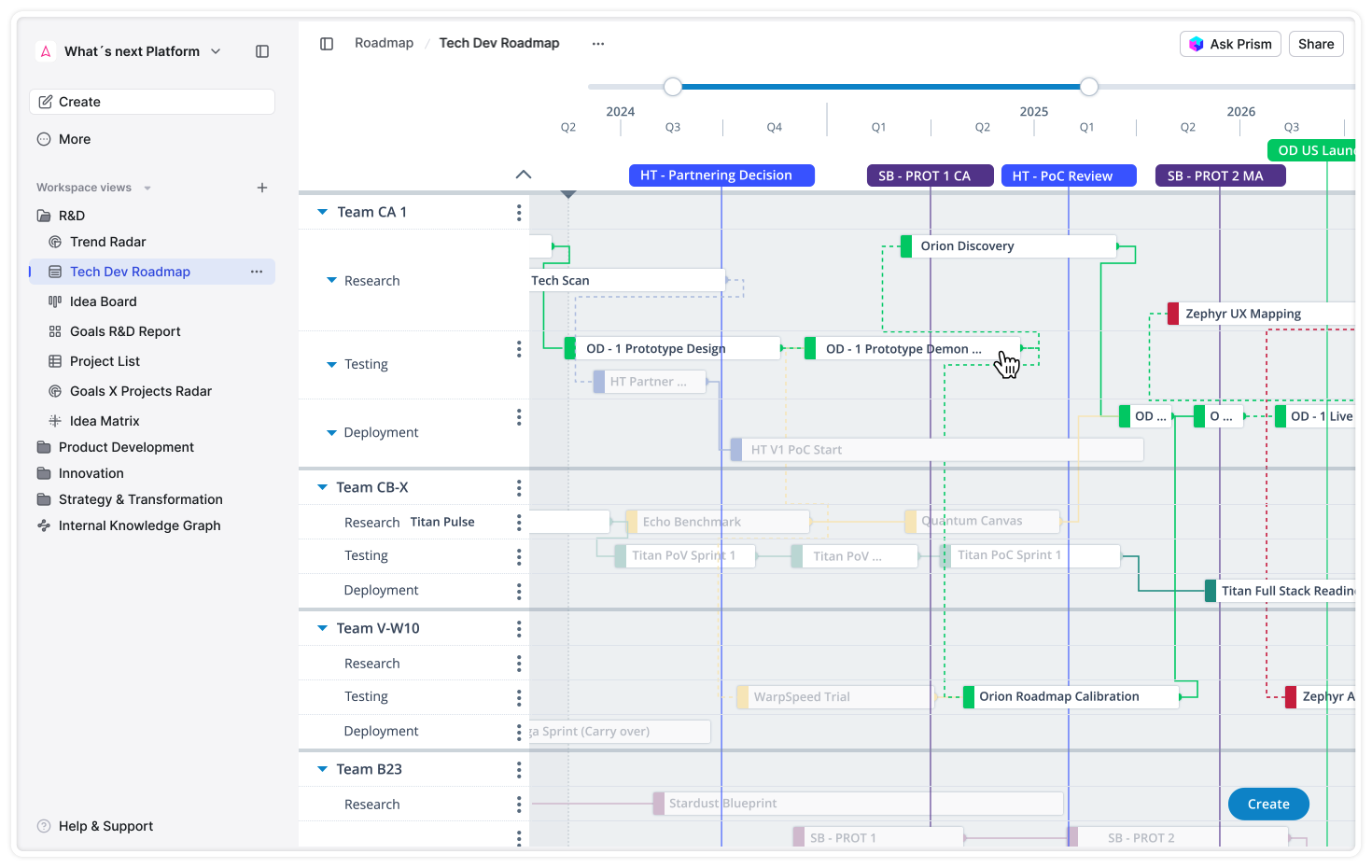
Exhibit 4: Plan, map, and track all growth activities and ensure all teams move in the right direction
2. Use consistent data fields across all product roadmaps.
When every product roadmap uses the same structure for business objectives, key deliverables, and desired outcomes, leadership can read any roadmap view without needing a product manager to explain it.
3. Review all product roadmaps in the same monthly session rather than separate meetings.
Reviewing roadmaps in isolation hides trade-offs. Reviewing them together surfaces conflicts and shared priorities early, before they become expensive to resolve.
Agile development teams that implement these three adjustments typically cut roadmap-related coordination by 30 to 50% within two quarters.
A digital roadmap eliminates decision fatigue by standardizing what each item captures. Product managers shouldn't spend time figuring out how to structure entries. The data model should be decided once and applied consistently.
Every roadmap item needs six fields:
Most outdated roadmap problems come from including too much, not too little. Thus,
Leave out sprint assignments: Those belong in project management tools like Jira or Linear.
Leave out detailed technical specifications: Engineering teams maintain their own documentation.
Leave out cost estimates unless finance explicitly uses the roadmap for budget planning.
Leave out feature-level descriptions that only make sense to the implementation team.
A roadmap with six fields per item is easier to maintain than one with twelve. Every field you remove is one less thing to update when priorities shift. In a digital roadmap, fewer fields also mean faster loading, cleaner views, and less noise for stakeholders scanning for what matters.
Product roadmap software only reduces work if it matches how the team actually operates. The wrong tool adds overhead rather than removing it. Most teams need four capabilities from roadmap tools.
Audience-based views from a single live data source. The tool should generate an internal view and an external view from the same data automatically. If teams are exporting to separate files, the tool isn't doing its job.
Strategic goal linking. Each roadmap item should connect directly to a business objective. Product roadmap software that doesn't support this forces product managers to maintain that connection separately.
Agile roadmap formats. The tool should support now-next-later roadmap structures and quarter-based views without requiring Gantt-style timelines for every item.
Collaborative editing with role-based permissions. Engineering teams flag technical risks directly. Product marketing adds external stakeholder context. Customer success attaches to customer feedback. Product managers approve changes rather than manually transcribing every input.
Teams that evaluate roadmap tools against these four criteria cut tool selection from weeks to days. Avoid tools that prioritize visual design over structural clarity. A beautiful roadmap that requires four hours per week to maintain is worse than a plain one that takes thirty minutes.
ITONICS roadmap gives product teams a single live platform to manage product development roadmaps across multiple products without version control problems.
/Still%20images/Roadmap%20Mockups%202025/portfolio-simulate-roadmap-scenarios-2025.webp?width=2160&height=1350&name=portfolio-simulate-roadmap-scenarios-2025.webp)
Exhibit 5: Model scenarios to see what shifts, what slips, and what pays off to commit with conviction
The platform centralizes all roadmap data so product managers can generate audience-specific views from one source.
Internal teams see implementation details and key milestones.
External stakeholders see customer benefits and strategic direction.
Both views stay synchronized automatically whenever data changes.
ITONICS supports agile roadmap structures, including the now-next-later roadmap and outcome-based formats. Product managers tie roadmap items directly to strategic goals, customer feedback, and market trends, making it straightforward to track progress and report progress to leadership without building separate status documentation.
They compare desired outcomes across products and prioritize features based on shared strategic goals rather than individual team requests. Consistent data fields make cross-product reviews faster because every roadmap uses the same structure.

.webp?width=900&height=450&name=Top-10-project-portfolio-software-tech-and-development-teams-use-for-managing-innovation-projects-fullwidth%20(1).webp)