4 steps of successful innovation management


McKinsey research is consistent and brutal: 84% of executives say innovation is essential to their growth strategy. Only 6% are satisfied with their innovation performance. That gap has not closed in nearly a decade.
The reason is rarely talent or budget. It is a sequence.
Most companies start their innovation management process by licensing innovation management software or running an open ideation campaign. Both create activity. Neither creates outcomes that show up in revenue, EBIT, or competitive advantage. The result is companies that talk about innovation constantly without learning how to manage innovation as a real process.
PwC found that 54% of companies struggle to bridge the gap between innovation strategy and business strategy. That is the diagnosis problem expressed in a single number.
The four steps below come from ITONICS's long-standing work with international innovation leaders. Each step exists because companies that skip it produce decks instead of products. The sequence is the strategy. Skip a step, lose the outcome.
→ Free Download: 4 Steps of Systematic Innovation Management
Why is innovation management important?
Companies that master it generate substantially higher economic profit. McKinsey found that companies harnessing the essentials of innovation produce economic profit roughly 2.4 times higher than their peers. The ability to innovate effectively now correlates more tightly with shareholder returns than most operational levers.
Most companies never reach that level. The reason is structural, not creative. Innovation activities happen across the organization, but nothing connects them.
The typical pattern: senior leaders declare innovation a strategic priority. A budget gets approved. An innovation manager is hired. A platform is licensed. A campaign launches. Twelve months later, ideas have been generated, workshops have happened, and the entire organization is busier. Revenue from new innovations is flat.
The work was active, but the system was missing.
A structured innovation management process replaces three common substitutes: ad-hoc workshops, untargeted ideation, and tool-first thinking. Each substitute produces output. None produces outcomes connected to business objectives.
If your innovation projects look busy but ship little, the problem is upstream of execution.
The innovation management process is the structured set of activities that converts business strategy into shipped innovations and measurable returns. The full innovation process runs end to end, from sensing the market to evaluating launched products. Mature innovation systems treat it as a single operating model, not a sequence of disconnected projects.
A complete innovation management system covers four jobs in this order:
Three failure patterns explain most stalled programs. Each one is a symptom of starting at the wrong step.
The common cause is skipping Step 1. Without an honest maturity diagnosis, every later step compounds the wrong assumption.
Before changing anything, measure what is already in place. The first step is an Innovation Maturity Assessment. It scores the organization across five dimensions:
Each dimension gets a score from 1 (ad-hoc) to 5 (systematic). The output is a benchmark, a personalized roadmap, and a clear view of where to invest first.
Three findings appear in nearly every assessment.
Most organizations have an innovation focus but no clear innovation strategy. Senior leaders describe innovation as important without naming the markets, technologies, or new business models they want to win in.
Innovation metrics rarely connect to the organization's strategic goals. Companies track ideas generated, not innovations launched. Activity metrics dominate. Outcome metrics are missing.
Internal processes for evaluating ideas are inconsistent across business units. The same idea gets approved in one team and rejected in another, with no shared criteria.
The assessment typically takes 4 to 6 weeks for a mid-sized company. It is the cheapest step in the entire innovation management process and the one with the highest return when followed honestly.
A diagnosis without a framework produces a report no one reads. Step 2 translates the assessment into a structural framework. The framework defines three things:
The framework typically splits into three sub-frameworks:
an innovation management framework for ideas and projects,
a trend and technology framework for market intelligence, and
a roadmapping framework for portfolio decisions.
Each sub-framework names its inputs, its decision gates, and its owners. Vague ownership is the single biggest predictor of failure at this step.
Innovation initiatives that drift from business strategy waste resources and erode trust with senior leaders.
To anchor initiatives, define innovation focus areas first. Each focus area links to a business objective. Each business objective links to a specific competitive advantage the company is building.
A consumer goods company building an advantage in sustainability runs scouting for circular business models.
A semiconductor firm building an advantage in edge computing scouts new technologies for low-power chips.
A logistics company chasing new markets in Southeast Asia runs an innovation program targeted at last-mile delivery models.
Without this alignment, idea generation runs unbounded. With it, every innovation project answers a strategic question.
Step 3 fills the framework with content and methodology. ITONICS structures it around three questions used by international innovation leaders: Where to play? How to win? How to execute?
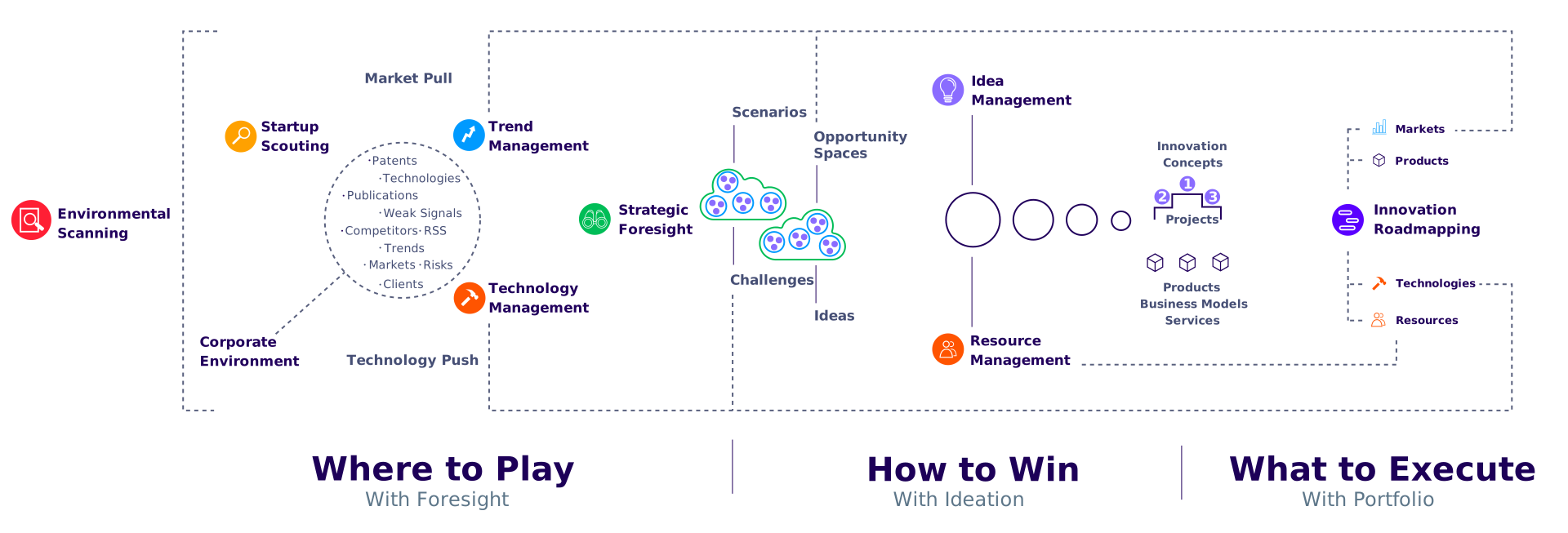
Exhibit 1: Where to play, how to win, and how to execute
Where to play focuses on identifying the trends, emerging technologies, and startups that influence the business model (Exhibit 2). The questions it answers:
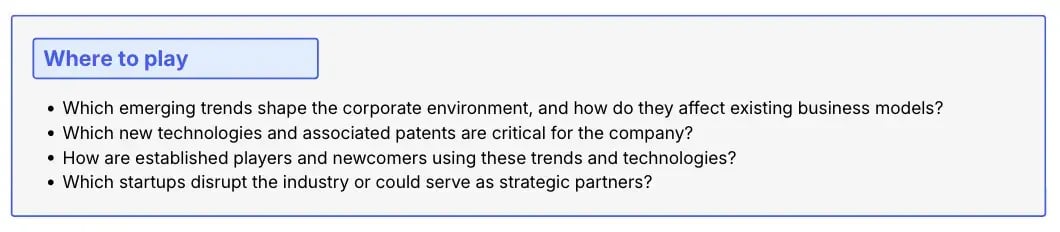
Exhibit 2: The questions to answer "Where to play"
By connecting these signals, threats and opportunities surface as opportunity spaces, the defined fields where the company will compete in new markets.
How to win translates opportunity spaces into targeted idea generation (Exhibit 3). The questions it answers:
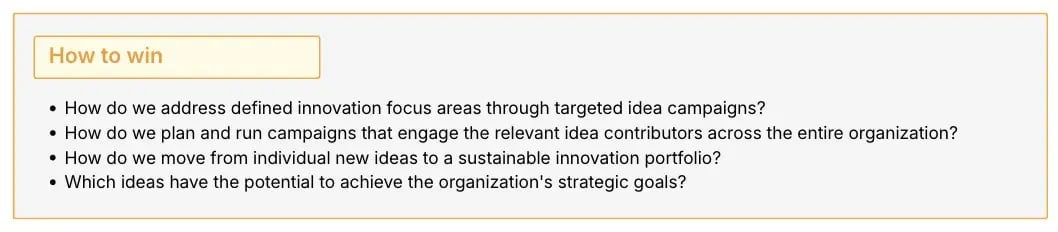
Exhibit 3: The questions to answer "How to win"
The idea management approach starts with targeted campaigns linked to defined innovation fields, not with an open collection of ideas. Innovation managers and business teams evaluate ideas using consistent criteria across business units, so the same idea gets a comparable score wherever it is submitted. This is where senior leaders gain valuable insights into where the best ideas are emerging.
How to execute develops the most promising ideas into concept development and clear business models (Exhibit 4). The questions it answers:
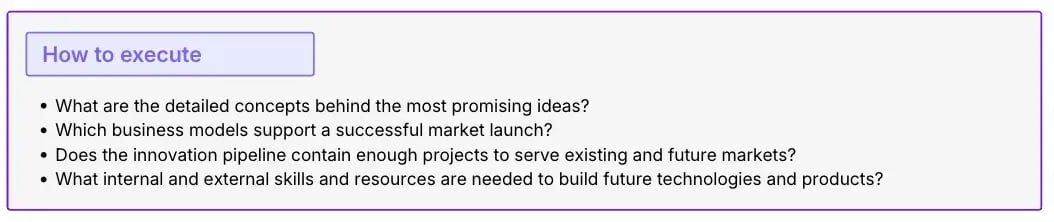
Exhibit 4: The questions to answer "How to execute"
The output is a portfolio of evaluated concepts mapped onto an integrated roadmap across business units, ready for funding decisions on medium and long-term product and technology planning.
Software is Step 4, not Step 1. The order matters.
Innovation management software accelerates a process that already works. It cannot create one that does not exist.
A capable innovation management system covers four jobs:
Software-supported scouting tracks patents, scientific publications, weak signals, and competitor moves. It cuts the time innovation managers spend on manual research from days to hours and surfaces signals before they hit the mainstream. Used well, it can accelerate innovation cycles by months across the portfolio.
Ideation tools let innovation teams run targeted campaigns across the entire organization. Submissions, evaluations, and progress get tracked in one place. Innovation managers see status in a dashboard instead of chasing spreadsheets and emails. The output is a steady flow of innovative solutions that have been evaluated against strategic priorities, not a backlog of ideas waiting for review.
Innovation portfolio management dashboards give business leaders a current view of the pipeline. They show which ideas are progressing, which are stuck, and which are funded. This transparency is what turns ideation tools from idea junkyards into decision systems.
Roadmaps connect product innovation, technological innovation, and business model innovation in one view. They make trade-offs visible and force conversations about resource allocation between incremental innovation and disruptive innovation.
/Still%20images/Roadmap%20Mockups%202025/portfolio-link-projects-teams-and-milestones-2025.webp?width=966&height=604&name=portfolio-link-projects-teams-and-milestones-2025.webp)
Exhibit 5: Translate strategy into business deliverables for growth
Most innovation portfolios are unbalanced toward incremental innovation by default. Incremental innovation is easier to fund, easier to measure, and easier to defend in a budget review.
That bias kills long-term competitive advantage. A common split for established companies is 70/20/10:
The exact ratio depends on industry dynamics:
A healthcare company facing slow regulatory cycles may run 80/15/5.
A consumer electronics company facing fast disruption may run 50/30/20.
What matters is that the split is deliberate, not accidental. Each percentage point reflects a business strategy decision.
Sustaining innovation maintains current revenue. Process innovation improves margins. Business model innovation creates new revenue streams. A portfolio that funds only one of these eventually loses to a competitor that funds all three.
ITONICS provides the innovation management software that supports each step described above. The platform connects market intelligence, idea management, concept development, and portfolio management in one system used across the entire organization.
For Step 1, ITONICS supports the maturity diagnosis with the Innovation Performance Assessment, benchmarking the company against industry peers across the five dimensions.
For Step 2, ITONICS frameworks for trend, technology, startup, and roadmap management give innovation teams structured templates aligned with the overall innovation strategy. The templates encode best practices from companies running successful innovation strategies at scale.
For Step 3, the platform runs targeted idea campaigns, scouts emerging technologies and startups, and tracks the conversion from idea generation to concept development. Innovation managers evaluate ideas using consistent criteria across business teams.
For Step 4, ITONICS digitizes the full innovation management process: scouting, ideation, portfolio management, and roadmapping. Innovation managers, business leaders, and senior leaders see the same data and make decisions from the same view.
Companies such as Cisco, DB Schenker, Dolby, and Toyota run structured innovation management at scale on ITONICS. The shared pattern across these innovative organizations is not the software. It is the four-step sequence the software enables.
If your innovation program is stuck somewhere between Step 1 and Step 4, the fastest fix is to identify which step is missing and rebuild from there.