Technology management 2027: A guide from signal to funding


Technology management is the discipline of deciding which technologies an organization funds, stops, partners on, or builds, and when. In 2027, it works as capital allocation, and monitoring is only its input. Every tracked technology needs an owner, a decision date, and a budget line. Teams that run this loop continuously move money before competitors finish their annual review and turn speed into competitive advantage.
Many organizations track more emerging technologies than they can fund. Scouts, technology radars and AI agents now surface hundreds of candidates per quarter. The bottleneck is portfolio review, where someone must turn a signal into money, people, and a deadline.
The stakes keep rising. Global business R&D reached about €1,446 billion in 2024 (European Commission JRC, 2025). The top 2,000 R&D investors account for over 90% of it.
| Fact | Detail |
|---|---|
| Core job | Decide which technologies to fund, stop, partner on or build, and when |
| Main owner | CTO and a technology board, supported by technology managers and scouts |
| Typical cadence | Event-driven technology reviews, quarterly funding decisions |
| Global business R&D, 2024 | About €1,446 billion, up 6.3% year on year (European Commission JRC, 2025) |
| AI risk to manage | Gartner expects over 40% of agentic AI projects to be canceled by end of 2027 (Gartner, 2025) |
| Core tools | Technology radar, readiness levels, technology roadmap, portfolio dashboard |
Exhibit 1: Technology management key facts
The fix sits in the operating model. Treat every tracked technology like an investment position with an owner, a thesis, and a review date. The radar then becomes a decision queue, and the portfolio review becomes the place where money moves.
This complete guide for CTOs, heads of R&D, and technology managers provides a framework for managing technology investments as decisions. It covers the definition, the roles, a five-stage technology management process, the frameworks worth keeping, and four best practices for 2027. It closes with an implementation plan for the first 90 days and the tools that hold it together.
Technology management is the set of decisions, roles, and processes that steer an organization's technology investments from first signal to retirement. It turns technology strategy into funded initiatives that serve business goals. It answers four questions. Which technologies matter to our business objectives? How mature are they? What do we do about each one? When do we decide again?
Three neighboring disciplines claim parts of it, and the overlaps cause most of the confusion in job descriptions and software selection. Clear technology management principles settle who decides what.
Technology scouting finds and screens external technologies. Technology management decides what happens next. Scouting fills the funnel. Management owns the gate. An organization can run excellent scouting and still waste its R&D budget when findings stop at a report.
Innovation management steers ideas, business models, and ventures across the whole organization. Technology management focuses on the technical capabilities underneath products and business processes. The two share a portfolio view. Technology management adds readiness, make-or-buy and lifecycle decisions that innovation programs rarely cover. Both disciplines serve the same goal of lasting competitive advantage.
IT management runs the information technology an organization uses today to run business processes, from ERP systems to cloud contracts. The IT department owns technology infrastructure, software licenses, service delivery and cybersecurity. Technology management decides which new technologies the business builds into future products and operations.
The two meet at the budget. Gartner forecasts worldwide IT spending of $6.31 trillion in 2026, up 13.5% on 2025, driven largely by AI infrastructure (Gartner, 2026). IT professionals govern IT spending with frameworks such as ITIL, COBIT and Technology Business Management. Technology managers in R&D work with readiness levels and roadmaps instead.
Both groups serve the same business goals. Align IT management and technology management on three points. Agree who evaluates new tools. Agree who owns risk management and data security for scouting platforms. Agree whether R&D or the IT department pays for shared systems. Effective IT management and technology management share data, budgets and tools. Digital transformation programs stall when these points stay open.
The CTO owns technology management, and a small technology board holds the decision rights. Technology managers and other technology leaders prepare decisions. Scouts and engineers feed evidence. Clear decision rights matter more than headcount, because technology decisions stall until one person can say yes.
The CTO sets the technology strategy and chairs the board. The board includes the heads of R&D, product and the largest business units. It meets whenever a trigger fires and at least once a quarter. It decides on funding tranches and stops, and owns the technology roadmap.
Technology managers own a field, such as power electronics or bio-based materials. They assess readiness, map fit to products, and bring a recommendation to the board. Scouts and AI agents feed them signals. In 2027 the scout role shifts toward curation and judgment, because agents handle the first pass.
Give each technology manager a written mandate. It names the field, the products it serves, and the decision rights up to a budget threshold, with larger calls going to the board.
Strong technology leaders hire for three essential skills: technical skills in the field, commercial judgment, and the confidence to argue a stop decision. The career path often runs from engineer to technology manager to CTO, and each step adds budget responsibility.
Engineering teams run the experiments, pilots and integrations a funding decision buys. The portfolio office tracks budget, status and dependencies. When engineers update status inside the shared system, the portfolio office stops chasing slides.
The technology management process runs in five stages: sense, assess, decide, roadmap and review. The stages run in sequence, and the loop back is event-driven. A new patent, a competitor move, or a missed milestone sends a technology back to sense or assess at once.
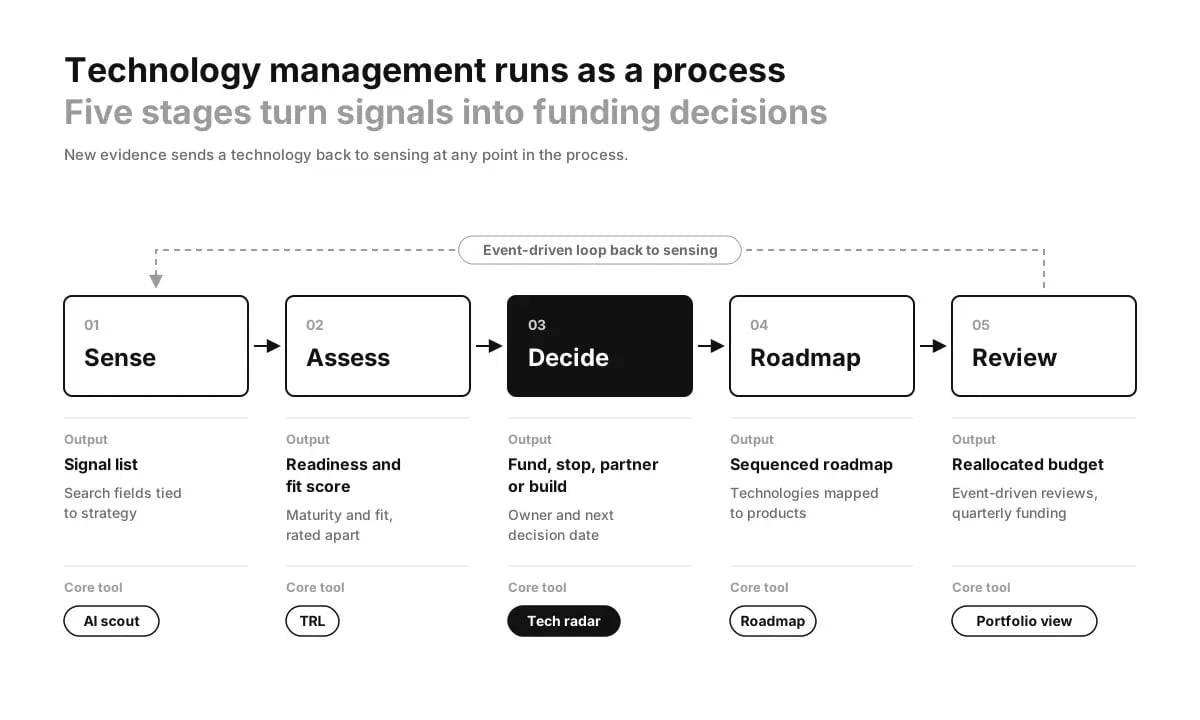
Exhibit 2: The technology management process
Sensing collects data and insights from patents, papers, startups, standards, industry publications and competitors. Scope it with search fields tied to strategic themes, such as solid-state batteries or recycled polymers. AI agents and machine learning models now run this stage continuously. Humans define the fields, judge new technologies and discard noise.
Assessment helps teams evaluate each technology on maturity and fit. Use technology readiness levels for maturity. Rate fit against business goals, named products, cost targets or regulatory deadlines. Keep the two ratings separate.
A single blended score hides the reason behind a decision. A technology with high readiness and weak fit gets watched, while one with strong fit and low readiness gets a research budget.
The decision stage turns an assessment into one of four moves. A technology radar puts maturity and fit side by side for the call. Fund an internal project. Stop and archive with a reason. Partner with a startup, supplier or university. Buy or license. Record the decision, the owner and the next decision date on the technology record. A complete record supports informed decision-making at the next review.
A partner decision deserves the same rigor as a funding decision. Name the partner, the pilot scope, the budget and the exit criterion.
Give every stop decision a reason code, such as low fit, slow readiness or a better external option. Reason codes turn archived technologies into a reusable record. When a technology resurfaces two years later, the team reads why it stopped and what would change the call.
A technology roadmap places funded technologies on a timeline next to the products that need them. It exposes dependencies, resource gaps and complexity. The roadmap also shows when a technology must reach a readiness level to hit a launch date. Our technology roadmap guide covers the build in detail.
Review compares progress against the roadmap and the market. Set triggers on portfolio data that flag slipping readiness, new competitor moves and stalled projects as they happen. Review each flag within days. Release new funding tranches quarterly. This cadence keeps money moving between budget cycles, even under tight budget constraints. A live portfolio dashboard lets the board review current data instead of last month's slides.
Track three numbers at each review. Count the technologies with an overdue decision date. Count the decisions made since the last review. Sum the budget moved between technologies. These three figures show the board whether the system works.
Most classic technology management frameworks still work for one stage of the process. Few work across all five. Choose frameworks by stage and retire the ones that freeze decisions into annual documents.
| Framework | Verdict | Best when | Reason |
|---|---|---|---|
| Technology readiness levels (TRL) | Still works | Assessing maturity | A shared nine-level scale that engineers and finance both read |
| Technology roadmapping | Still works | Sequencing technologies against products | Links technical milestones to launch dates |
| S-curve analysis | Still works | Timing stop and switch decisions | Shows when extra funding buys less performance |
| Technology radar | Still works | Communicating the technology portfolio | One view of maturity, relevance and ownership |
| Hype Cycle | Needs adapting | Calibrating expectations | Use it as an outside view, then rate fit against your own products |
| Stage-gate | Needs adapting | Governing larger projects | Shorten gates and fund in tranches for early technologies |
| RICE and single-score rankings | Needs adapting | Fast triage of many candidates | Add readiness and fit as separate dimensions |
| Annual technology plan | Retire | Ages within one quarter and delays reallocation | |
| Static spreadsheet scoring | Retire | Correct only on the day someone last edited it |
Exhibit 3: Technology management frameworks by verdict
Frameworks that still work. TRL, roadmapping, S-curves and radars survive because each answers one question cleanly. TRL tells you how mature a technology is. The S-curve tells you when to switch. The roadmap tells you when you need it. The technology radar tells everyone what the company tracks and why.
Frameworks to adapt or retire. The Hype Cycle describes the market's mood, so pair it with your own fit rating before you act. Stage-gate works for scale-up projects and slows early technology work, so give early gates smaller tranches. Retire the annual technology plan and fold technology into continuous strategic planning. A plan written in January misses every signal from February onward.
S-curves deserve extra attention in 2027. Many incumbent technologies sit on mature curves where each funding round buys smaller gains. A team that reads the curve early shifts budget to the successor technology while the incumbent still pays the bills.
Four technology management best practices separate decision systems from monitoring programs in 2027. Each practice moves a technology one step closer to a funding decision and lifts business performance.
Every technology on the radar carries an owner and a next decision date. When the date passes, the board decides or the technology drops to watch status. This single field converts a radar from a gallery into a queue.
Release money in small tranches that open when a technology reaches the next readiness level. A research tranche buys proof of concept. A second tranche buys a prototype in a relevant environment. Tranches cap losses on technologies that stall and speed money to the ones that move.
AI agents now read patents, papers and news faster than any scouting team. Gartner placed AI agents at the Peak of Inflated Expectations in its 2025 Hype Cycle for Artificial Intelligence (CO/AI, 2025). It also expects over 40% of agentic AI projects to be canceled by the end of 2027 (Gartner, 2025). The reasons are rising costs, unclear value and weak risk controls.
Give agents the first pass. Keep fit ratings and funding calls with people who own the outcome.
In many organizations, business units and departments track the same technology in separate files. One shared map exposes duplicates, frees resources, and opens partnership options between units. McKinsey counted 13 frontier technology trends in 2025, with equity investment rising in ten of them (McKinsey & Company, 2025). That breadth needs every unit's experts in one view and one technology strategy.
A working implementation starts with one field and one board. Expand only after the first funding decisions run through it.
Days 1 to 30: scope and baseline. Pick one strategic field tied to clear business goals and an active budget. Load the 20 to 40 technologies the team already tracks. Give each an owner, a readiness level and a next decision date. Count how many tracked technologies appeared in the last portfolio decision.
Days 31 to 60: run the first decisions. Run the first two board reviews. Decide fund, stop, partner or build on every technology with a due date. Record each decision and its reason on the technology record. Connect funded technologies to the roadmap.
Days 61 to 90: automate and expand. Switch sensing to continuous AI scanning on the field's search terms. Build the board dashboard. Add a second field once the first one shows decisions moving faster.
Compare decision counts and preparation hours against the baseline from month one. Present the comparison to the executive team at the next strategic planning cycle. Visible efficiency benefits, such as fewer preparation hours, win budget for the second field.
ITONICS is the Strategic Portfolio Intelligence for enterprise R&D and Innovation. It keeps technologies, trends, startups, projects and roadmaps as linked elements in one system. Managing technology from first signal to funding decision happens in one place.
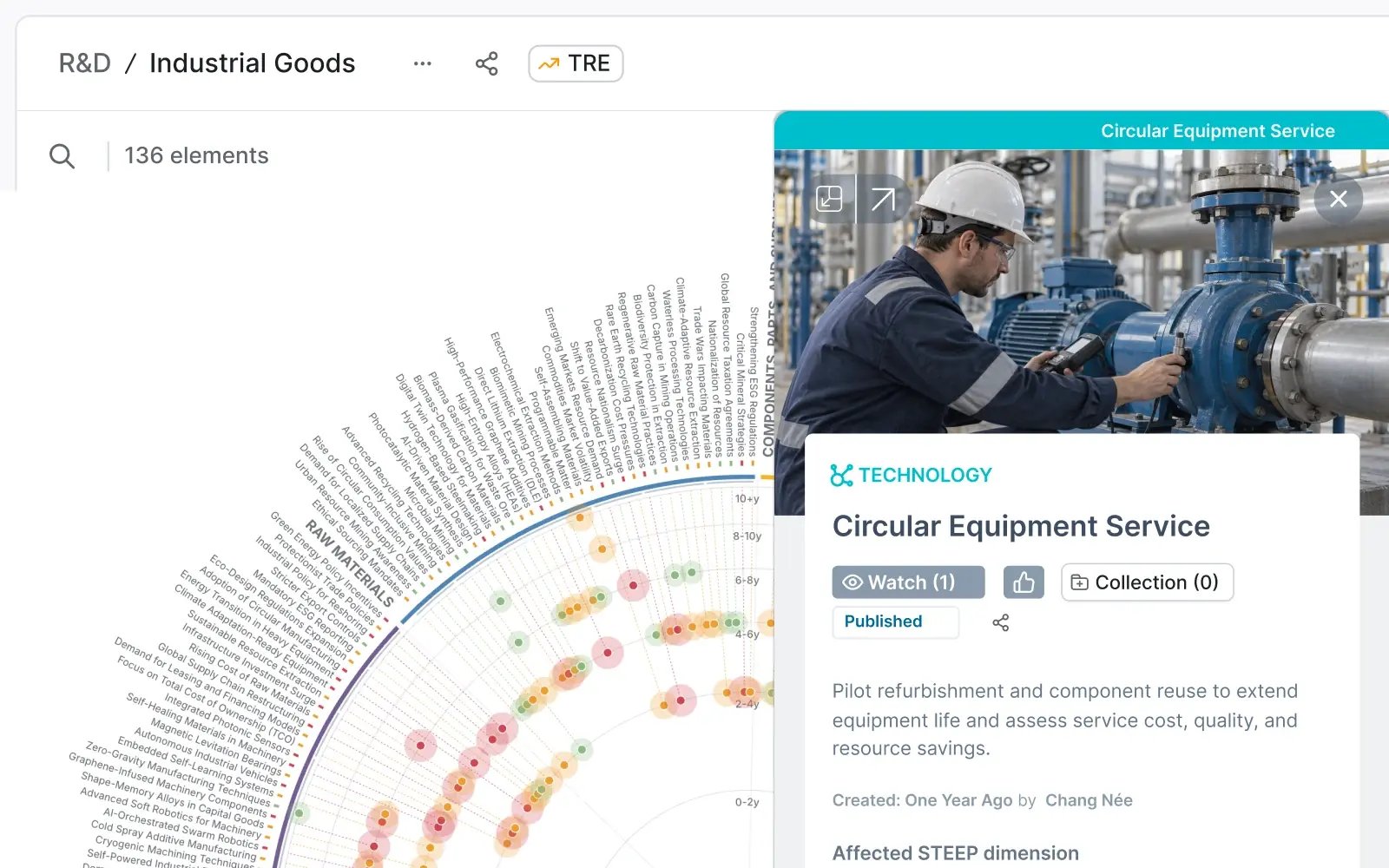 Exhibit 4: A technology radar inside ITONICS
Sartorius runs its Corporate Research program on ITONICS. Its 60-member team connects trends, technologies and innovation projects in a single system and has discovered 450 collaboration opportunities.