Effective IP portfolio management: Turn your IP assets into a revenue driver


Most companies treat intellectual property (short: IP) management as an admin task, but it's a true revenue function.
More than 9 out of 10 patents fail to generate a return on investment. That is not a patent problem but an IP management problem. Companies file patents without a strategy, lose track of competitors' filings, and let valuable assets sit idle. The cost is not just unrealized revenue. It's competitive exposure.
Effective IP management changes this. It turns a scattered portfolio into a structured, revenue-generating asset. This article explains what that process looks like, why most companies get it wrong, and what separates organizations that extract full value from their IP portfolio from those that don't.
Effective IP portfolio management means treating intellectual property as a strategic business asset instead of a filing obligation. It covers the full lifecycle:
deciding what to protect,
how to protect it,
what it costs,
what it generates, and
when to license, sell, or abandon it.
In practice, this requires centralizing all IP assets - patents, trademarks, trade secrets, copyrights, and domain names - into a single system with consistent data. Without that foundation, IP management processes break down. Deadlines get missed. Competitors' filings go undetected. Protection strategies get applied inconsistently.
Done well, effective IP management does three things: it tracks your IP assets, it surfaces risks before they become costly, and it identifies monetization opportunities before they expire.
The data is stark, as most patents never recoup their filing and maintenance costs. Many companies pay annual fees on patents that generate zero revenue and provide no competitive edge.
On the other side, under-protected IP becomes an easy target. In an environment where competitive intelligence is more accessible than ever, relying on informal protection alone is a liability.
The problem is the lack of a structured approach to managing what gets filed, why, and what happens after.
Thus, three failure patterns account for most of the damage.
No decision criteria for protection strategy. Teams default to patents for everything. But patents are not always the right tool. Trade secrets, speed-to-market, and complexity can be stronger protections - with lower cost and no public disclosure requirement. Without a structured decision framework, companies over-patent low-value technologies and under-protect high-value ones.
No competitor monitoring. Most companies discover a competitor's patent after the damage is done. Proactive monitoring through AI-powered tools would catch it at the filing stage. Reactive IP management is a gap waiting to be exploited.
No portfolio health metrics. Without tracking return on investment by patent, companies cannot identify which assets to license, sell, or abandon. Costs accumulate. Revenue potential is left on the table. The portfolio grows in size but not in value.
Effective IP management is more than filing patents. It requires a structured process across the full lifecycle of every IP asset. The following 6-step framework covers what that process looks like in practice (Exhibit 1).
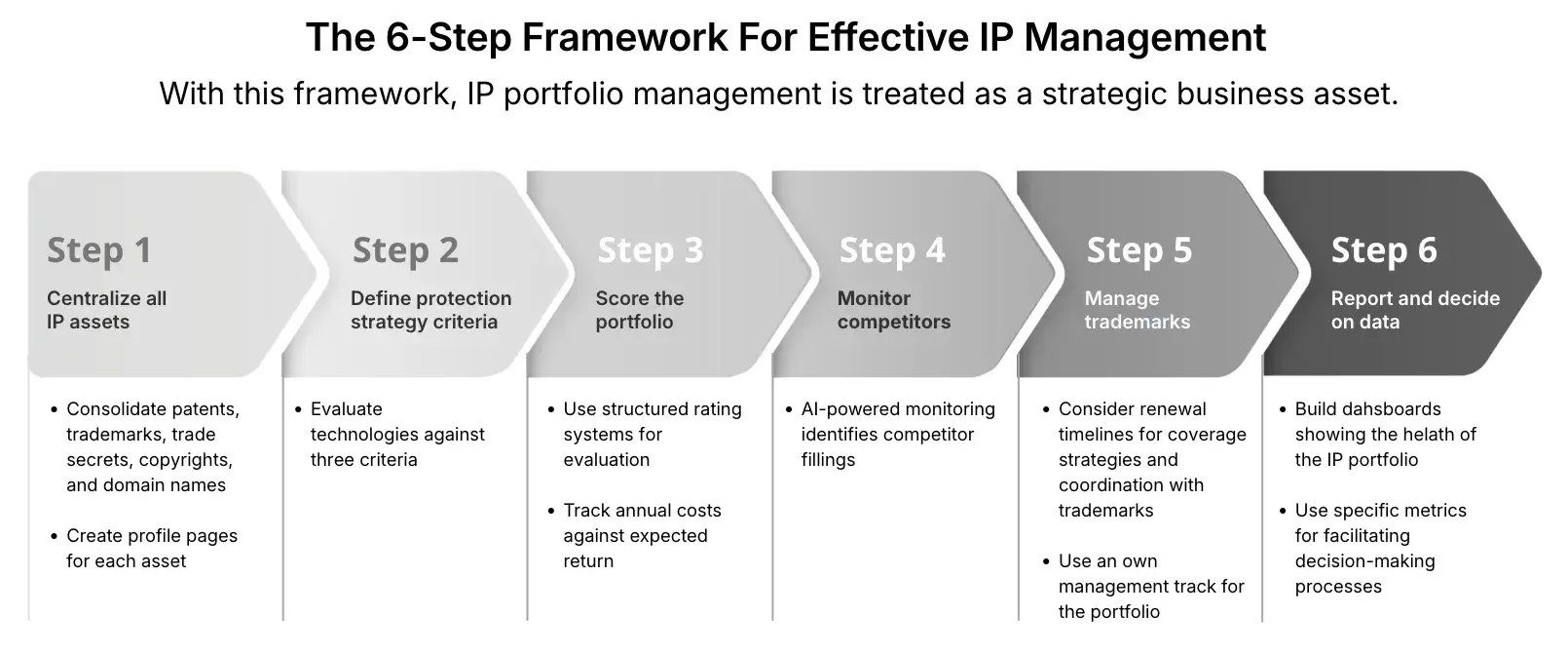
Exhibit 1: The 6-step framework for effective IP management
Consolidate patents, trademarks, trade secrets, copyrights, and domain names into one platform. Every asset needs a complete profile: status, filing dates, costs, relevant inventors, geographic coverage, and assigned protection strategy.
A single source of truth eliminates version conflicts and ensures every stakeholder works from the same data.
Step 2: Define your IP protection strategy criteria
Not every technology should be patented. Evaluate each one against three criteria:
diffusion potential (how easy is it to copy?),
complexity (how hard is it to reverse-engineer?), and
urgency (how fast must you act?).
These criteria determine whether to patent, protect as a trade secret, move quickly to market, or bundle technologies together. Coupling these with your company's legal and financial resources gives you a clear, defensible decision.
Use a structured rating system to evaluate each IP asset against your criteria. Track annual costs against expected return on investment per patent. Assets with a low ROI-to-cost ratio are candidates for licensing, sale, or abandonment. This turns a static portfolio into an active management tool.
Manual patent searches are not enough. AI-powered monitoring identifies competitor filings in real time and flags peaks in activity around key technology areas. This gives your team early warning before a competitor's filing affects your market position or blocks a planned product direction.
Trademarks protect brand identity and require renewal in each jurisdiction. Lapse a trademark in a key market, and a competitor can register it. Domain names need monitoring to prevent misuse. Trade secrets require documented access controls to maintain their legal status. Each of these IP asset types follows different rules and timelines. They need dedicated tracking instead ofa generic row in a spreadsheet.
Build dashboards that show portfolio health at a glance. Track metrics like revenue generated per patent, cost per active patent, coverage gaps by geography, and licensing revenue. Decision-making based on these metrics drives operational efficiency and removes guesswork from portfolio reviews, licensing negotiations, and board presentations.
Modern IP management platforms use machine learning algorithms to scan global patent databases and surface relevant filings in real time. They identify patterns across competitor portfolios, track emerging technology areas, and flag anomalies before they become threats.
For teams monitoring dozens of technology categories simultaneously, this replaces weeks of manual research with continuous, automated monitoring.
AI-powered monitoring tracks competitor filings as they are published. When a competitor files in a technology area of interest, the team gets an alert. The system compares existing technology profiles against new filings and recommends related applications automatically.
This gives IP teams early warning before a competitor's filing affects market position or blocks a planned product direction.
Global patent search tools allow teams to submit a keyword and receive a complete picture: top patent-holding companies, top inventors, geographic origin of filings, and the evolution of filing activity over time. The timeline visualization shows how interest in a topic has developed, making it easy to spot emerging trends before they become obvious to competitors.
Both capabilities support competitive intelligence, technology scouting, and business strategy in a single workflow.
The 6-step framework above requires a foundation: centralized data, structured workflows, and real-time visibility across the full IP portfolio. Without it, IP management remains reactive and manual.
Consolidating patents, trademarks, and trade secrets into a single platform gives IP teams a complete picture. Each asset gets its own profile - status, filing dates, costs, inventors, and assigned protection strategy. A radar visualization maps the full portfolio by protection strategy, ROI, and technology category (Exhibit 2). Weak spots become immediately visible. High-value clusters stand out.
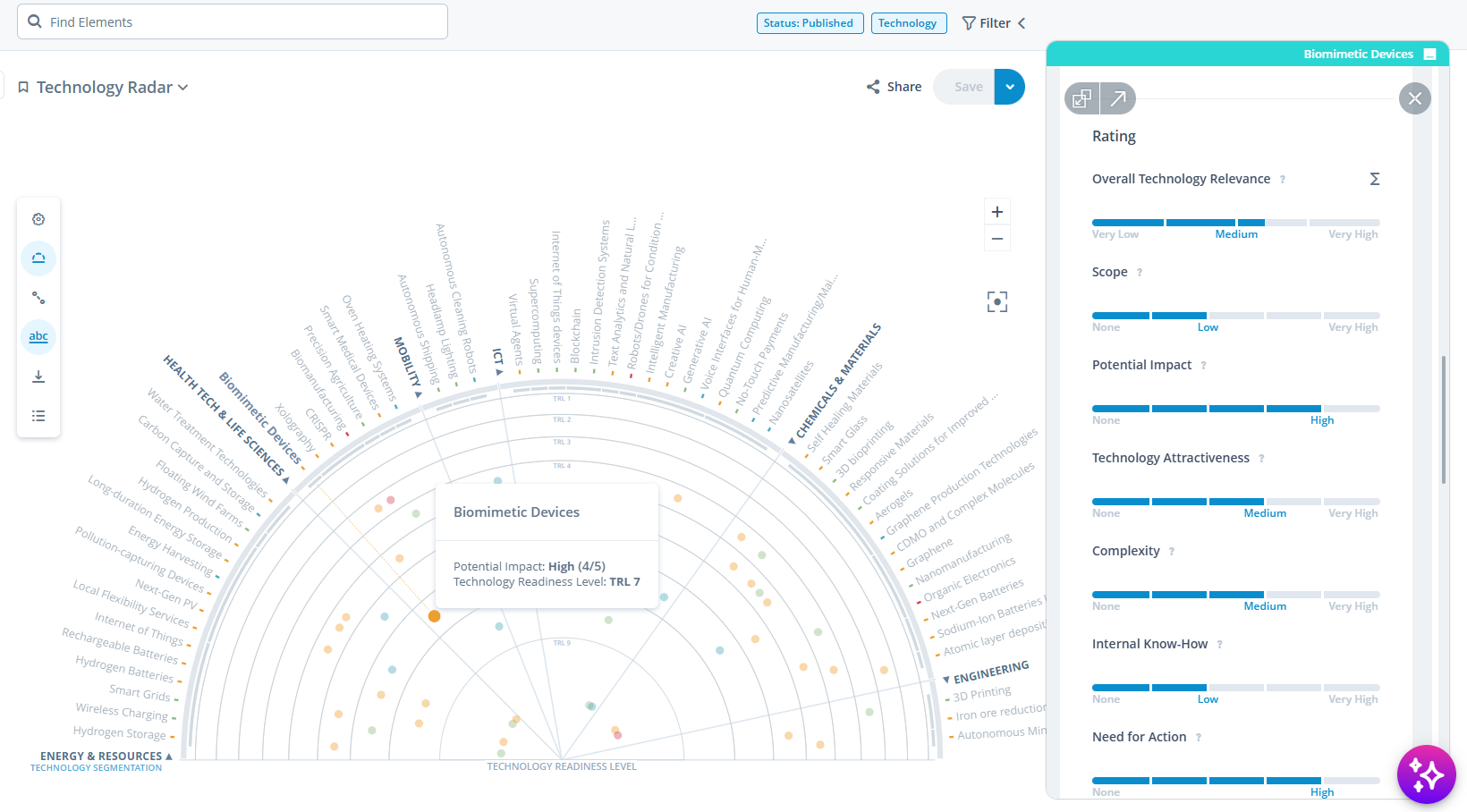
Exhibit 2: Evaluate technologies based on relevance, impact, and strategic importance with technology radars
Process automation handles the operational side: deadline tracking, renewal alerts, and rating workflows. Inventors submit disclosures directly into the system. Experts rate technologies against predefined criteria without manual coordination.
IP management involves multiple stakeholders.
Inventors file disclosures.
Legal teams assess patentability.
External law firms draft applications.
Finance tracks costs.
Most organizations manage this through email and disconnected systems, creating delays and version control issues.
A shared workspace for corporate clients and their law firms closes this gap. Both access the same asset profiles, track deadlines, and coordinate on protection strategy with appropriate access controls. Document management centralizes technical drawings, prosecution histories, license agreements, and correspondence with trademark offices alongside each asset profile.
Marketing materials, brand guidelines, and product documentation can be linked to the relevant IP asset, giving the sales team and product teams access to IP context when they need it.
ITONICS is built to support this end-to-end IP management process: from initial technology rating through portfolio reporting and competitor monitoring.
Nokia is one of the clearest examples of what structured IP portfolio management delivers at scale: After losing its dominant position in mobile devices, Nokia rebuilt its business model around its IP portfolio. Rather than letting patents sit idle, the company pursued an active licensing strategy for its cellular technology standards.
With new licensing deals in place, Nokia's IP division reached an annual revenue run rate of approximately €1.3 billion, up from less than €1 billion prior to those agreements. The company has since locked in more than €800 million of contracted recurring licensing revenue annually through 2030.
Nokia did achieve this by managing its existing portfolio strategically: identifying which assets had licensing value, pursuing agreements systematically, and expanding into new verticals, including automotive and streaming technology. Nokia's CEO has described IP as "a foundation of durable profit and cash flow - not just for one business segment, but for Nokia as a whole."
IP strategy decisions are often made on instinct: Should we patent this? Should we let this one lapse? Should we license this portfolio?
Without data, these are guesses. With structured IP portfolio management in place, they become informed decisions backed by portfolio analytics and real-time market signals.
A well-structured IP management system maps your portfolio against strategy, investment level, and technology domain. The analytics layer tracks ROI, cost exposure, and coverage gaps. Reporting tools generate the views needed for portfolio reviews, licensing negotiations, and board presentations.
This data also surfaces monetization opportunities that would otherwise stay hidden.
Patents with low internal relevance may have significant licensing value to others.
Portfolios built around a common technology can be bundled for sale or a strategic partnership.
Effective IP management turns a patent and trademark portfolio from a cost center into a revenue source - and ensures every IP asset contributes its full value to the business.


.webp?width=900&height=450&name=Top-10-project-portfolio-software-tech-and-development-teams-use-for-managing-innovation-projects-fullwidth%20(1).webp)