Operationalizing partner ecosystems: Metrics, governance, and scale

Most companies treat strategic partnerships like collecting trade cards. But reality hits different once customer satisfaction erodes as multiple partners pitch conflicting solutions to the same buyer.
A partner ecosystem goes beyond traditional business collaborations and requires a mindset of shared success, trust, and openness to new ideas and possibilities. Rather than simply forming alliances, a strong partner ecosystem is built on collaboration among two or more companies, each committed to achieving shared goals and delivering greater value to customers.
The companies building thriving partner ecosystems are managing relationships and engineering systems. They know exactly which partners drive revenue growth versus which consume resources. They've built infrastructure that scales partner engagement without scaling coordination overhead.
The difference comes down to three disciplines: measurement systems that connect partners to business outcomes, governance frameworks that prevent coordination chaos, and infrastructure that enables value creation without bottlenecks. Most partner programs fail because they optimize for partner count instead of partner performance.
Here's how successful companies operationalize partner ecosystems differently.
Why partner programs fail at scale
Most companies treat partner ecosystem management like sales pipeline management: they add more partners, generate more leads, and close more deals. But this thinking breaks at scale as the reality is something completely different.
Ultimately, companies struggle because they confuse partner count with ecosystem success. They onboard different partners without clarifying in advance how these relationships accelerate growth. The result is a fragile network where partners compete for resources, duplicate efforts, and create customer experience friction.
Your ecosystem strategy defines what you want: market expansion, driving innovation, and new revenue streams. Partner ecosystem management determines whether you actually get there.
The gap emerges when strategy stays conceptual while operations remain tactical. Leadership wants a thriving partner ecosystem that creates a competitive advantage. Meanwhile, partner managers drown in email threads coordinating co-marketing opportunities and resolving channel conflicts.
Technology partners build integrations that don’t align with your product roadmap.
Distribution partners chase the wrong customer segments.
ISV partners duplicate functionality instead of delivering complementary services.
Without governance connecting strategy to execution, your robust partner ecosystem becomes a coordination tax.
This misalignment manifests in concrete ways. Your executive team announces strategic alliances at conferences while,
Sales teams have no playbook for engaging those same partners on customer deals,
Marketing invests in joint campaigns with partners whose customer base barely overlaps with yours, and
Product teams discover that partner integrations they’ve spent quarters building address use cases that generate minimal revenue growth.
The companies that build successful partner ecosystems close this gap through operational discipline. They translate strategic intent into partner engagement models, decision rights, and performance metrics that actually change daily behavior.
A compelling value proposition is essential for attracting and engaging the right partners, ensuring both sides clearly understand the mutual benefits and business value of the partnership. Strategy without management infrastructure is wishful thinking.
Imagine the following scenario, which might be familiar to you:
At 10 partners, spreadsheets work: You track partner performance in Excel, manage relationships through email, and coordinate manually. It’s inefficient but survivable.
At 30 partners, the system collapses: Sales teams don’t know which partners serve which customers. Marketing resources get fragmented across redundant campaigns. Partner-sourced revenue becomes impossible to track because attribution data lives in five different systems.
What we can see in the second scenario is pure coordination chaos that emerges when partner engagement outpaces your operational infrastructure. The consequence?
High-performing partners can’t access the marketing resources they need.
Certain partners monopolize your sales cycle while others get ignored.
And in the end, you’re basically managing relationships reactively instead of orchestrating an ecosystem strategically.
Out of experience, we can say that spreadsheets fail because they can’t represent the relationship topology that makes partner ecosystems valuable. You need to know which partners exist, which partners work well together, which customer segments each partner serves best, and which complementary services create the most comprehensive solution.
The results can only be displayed in graph data and not tabular data. When you try to manage it in rows and columns, you lose the connections that generate true customer value.
Thus, the solution goes beyond adding partnership management software. It’s rethinking how you structure information flows: Which systems need real-time access to partner data? How do you surface the right partner at the moment a customer need emerges? How do you aggregate partner feedback to identify opportunities your product team should pursue?
Leveraging cloud infrastructure enables scalable, secure, and efficient management of partner data and collaboration across the ecosystem.
This ceiling is about information architecture: below 20 partners, human memory bridges information gaps as partner managers remember who's working on what, which customers each partner serves, and where conflicts might emerge. Above 30, this breaks down.
Financial services companies hit this ceiling when they can't track which technology integrations actually improve customer satisfaction.
Cloud computing providers hit it when systems integrators compete for the same implementation services contracts.
The symptom: partners grow frustrated while your team works harder for diminishing returns.
The ceiling exists because partner relationship management requires structured data and no kind of institutional knowledge. Without systems that capture partner performance, measure partner influenced revenue, and surface identify opportunities for collaboration, you're scaling linearly in a domain that demands exponential leverage.
The companies that break through this ceiling make three shifts:
They instrument their partner ecosystem with the same rigor they apply to their product analytics. They track engagement patterns, collaboration frequency, and value creation in structured systems.
Then, they build feedback loops that capture partner insights systematically rather than episodically. When partners interact with customers, that intelligence flows back to product and strategy teams.
In the end, they create a self-service infrastructure that lets partners access resources, register deals, and coordinate without human bottlenecks.
Breaking the ceiling is about building systems where partners can create value without proportional increases in overhead coordination, instead of managing a higher number of partners. Thus, the goal is network effects and not network administration.
Most partner programs measure activity and not their impact. They track how many new partners signed up, how many training sessions were completed, and how many leads were submitted. These are lagging indicators of effort, not leading indicators of value.
Effective partner ecosystem management requires a focus on partner performance measurement, establishing clear metrics and key performance indicators (KPIs) to assess and optimize ecosystem performance. KPIs can provide actionable insights that empower better decision-making in optimizing partnerships.
If you can’t connect your partner ecosystem to business growth, increased sales, or innovation velocity, you’re running a program on faith. And faith doesn’t justify the budget when executives ask whether the investment is working.
Revenue vs. noise: Metrics that reveal real partner performance
Revenue attribution is the first test. Can you definitively say which partners generate revenue and how much? Here, it is not about “influence” or “touched” but about “actually generated”.
Most partnership programs fail this test because attribution models are fuzzy. If your customer relationship management system doesn’t cleanly track partner-sourced pipeline from first touch to closed-won, you’re guessing.
Leveraging data-driven insights is essential to improve partner performance tracking and inform strategic decisions, ensuring that your partner ecosystem management is based on structured, real-time data rather than assumptions.
And when you’re guessing, it’s impossible to know whether providing partners with more resources will yield more revenue or just more noise.
Therefore, fix attribution first. Implement deal registration systems that give partners ownership of opportunities they source. Tag every partner-influenced deal in your CRM so you can segment performance by partner type, geography, or engagement level.
Track margin as some partners drive volume but demand discounts or support that erode profitability.
The goal is a clear view: which partners deliver profitable growth, and which ones consume resources without commensurate return.
Then measure beyond revenue. Partner ecosystems contribute to business growth in ways that don’t always show up in quarterly sales numbers.
A technology partner’s integration might increase customer satisfaction and reduce churn.
A co-innovation partner might accelerate time-to-market on a new product, creating a competitive advantage that compounds over time.
A channel partnership might build brand awareness in a new market, generating long-term value even if immediate sales are modest.
When deciding what to measure, remember that revenue and pipeline creation metrics are critical for assessing partner performance and potential growth.
Design metrics that capture this. Track customer retention rates for accounts that use partner integrations. Measure time-to-revenue for products developed with partners versus those built internally. Monitor customer experience scores segmented by whether customers engage with your ecosystem or use standalone products.
These metrics reveal whether your partner program creates durable value or just shifts revenue around.
Finally, measure cost-to-acquire and cost-to-serve by partner type. The best partners pay for themselves. They generate more revenue than they cost to support, they improve customer outcomes, and they create strategic options your business wouldn’t have without them.
Leading indicators, lagging indicators and ecosystem strategy outcomes
Lagging indicators tell you what has already happened. Leading indicators predict future performance before it shows up in revenue.
For partner ecosystems, leading indicators include:
partner engagement frequency,
completion rates for training programs,
pipeline quality from partner-sourced leads,
joint opportunities in development, and
lead generation activities and outcomes.
Whereas lagging indicators include:
partner-sourced revenue,
channel deal win rates,
average partner deal size, and
the share of total revenue generated through partners.
Track partner engagement as a proxy for commitment. Partners who actively use the partner portal and participate in industry events are more likely to drive business growth than those operationally disengaged (Exhibit 1).

Exhibit 1: The process of identifying indicators and outcomes
Partner ecosystems scale non-linearly. This means that every additional partner adds operational load: onboarding, training, relationship management, and performance tracking. If that partner doesn’t generate sufficient revenue to justify the investment, you’re scaling costs faster than returns.
The data backs this up. Most partner programs follow a power law: the top 20% of partners generate 80% of the value. The remaining 80% create noise. They submit low-quality leads, require disproportionate support from your sales team, and drag down performance metrics.
To fix the issue, an organization should not just add more partners to its program. Instead, it is important to ruthlessly focus on the right partners and exit the wrong ones.
Segment your ecosystem by performance. Which partners consistently generate revenue, increase customer satisfaction, and require minimal support? Which consume resources without output? Rank them. Then allocate investment accordingly: double down on top performers with deeper enablement and co-sell support. For underperformers, either fix the misalignment or exit. Ecosystem leaders adopt a forward-looking approach, focusing on long-term relationship-building and strategic planning, understanding that ecosystem development and revenue generation require time and sustained effort. Identifying top-performing partners through data analysis can inform resource allocation and support strategies.
Exit partnerships. If a partner company hasn’t generated meaningful value in 12 months despite reasonable investment, continuing is irrational. End it professionally, learn from what didn’t work, and reallocate resources to potential partners better aligned with your business strategy.
Resist pressure to report partner count as a success metric. Better to have 40 highly engaged, productive partners than 200 mediocre ones. Quality compounds. The best partners refer other high-quality partners, co-market effectively, build brand awareness, and provide feedback that improves your products.
Right partners reveal themselves through behavior instead of pitch decks.
Track engagement intensity. Partners who actively use your APIs, participate in joint customer calls, and invest their own marketing efforts signal commitment. They're building capabilities that create customer value and don't hedge bets across multiple partnerships. Partners who engage weekly generate significantly more revenue than those who check in quarterly.
Monitor service delivery quality. The best technology partners integrate, but also reduce your sales cycle by making implementation seamless. Whereas strong channel partners extend your reach into new markets while maintaining brand integrity. Partners whose customers show higher retention deserve deeper investment.
Measure specialization fit. Partners with specialized expertise in adjacent domains create more comprehensive solutions than generalists chasing volume. A managed service provider focused on financial services companies brings deeper industry knowledge than one serving every vertical. Specialization creates defensible differentiation that compounds customer lifetime value.
Assess strategic alignment. Do partners identify opportunities aligned with your business goals? Do they provide market intelligence that shapes your roadmap? The right partners execute transactions and accelerate growth by expanding your strategic options.
Continuous performance signals prevent the sunk cost fallacy. If a partner relationship hasn't generated meaningful customers acquired or revenue growth within 12 months despite reasonable investment, exit cleanly. Don't let initial enthusiasm override performance data. The opportunity cost of supporting underperforming partnerships is the investment you could redirect to partners who actually drive innovation and market expansion.
Governance at partner lifecycle management is about decision rights and accountability structures that prevent partner ecosystems from devolving into political negotiations. Thus, lifecycle management means treating partnerships as investments with defined return expectations. Track partner performance against benchmarks.
Therefore, it's necessary to define clear stages: prospect, onboard, enable, scale, and exit. Further, each stage needs specific criteria, responsibilities, and success metrics: Who approves new partnerships? What training must partners complete before customer introductions? When do underperforming partners enter remediation versus termination?
Setting clear expectations with the Partnership Canvas framework
The Partnerships Canvas (Exhibit 2) translates strategy into operational agreement. It forces clarity on six dimensions that prevent 90% of partnership failures.
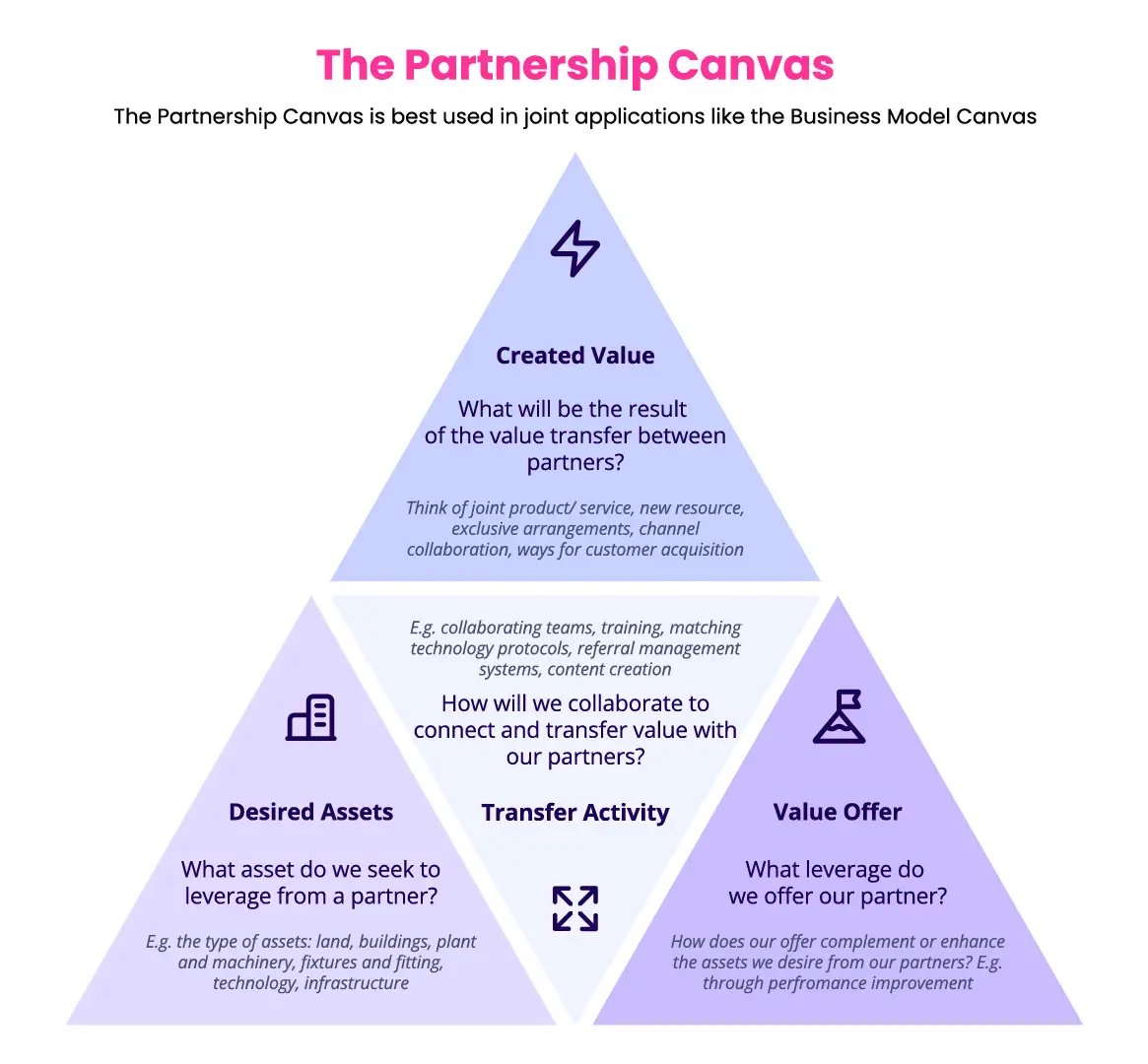
Exhibit 2: The Partnership Canvas
Value exchange. What does each party contribute and receive? Be specific about technical resources, marketing support, sales enablement, and revenue sharing. Vague “collaboration” creates disappointment when one party expected dedicated engineering support and the other expected occasional API access. Effective collaboration in a partner ecosystem can result in a more comprehensive solution for customers, combining complementary capabilities to deliver greater value.
Customer ownership. Who owns the customer relationship at each stage? Define precisely: Does the partner own pre-sale conversations? Do you take over post-sale? Can both parties engage the customer simultaneously? Ambiguity here destroys customer loyalty when customers receive conflicting messages from your team and your partners.
Revenue model. How does money flow? Revenue sharing percentages, referral fees, and co-sell incentive programs - document it with accounting precision. Does the partner receive 20% of first-year revenue or 20% of lifetime value? Are margins different for partner-sourced revenue versus partner-influenced revenue? Do volume commitments unlock better terms? Financial ambiguity poisons partnerships faster than strategic misalignment.
Success criteria. What does winning look like in 12 months? Successful partnerships define this numerically: X customers acquired, Y% customer satisfaction score, Z revenue from joint opportunities. When success stays conceptual, partners can’t prioritize effectively, and you can’t assess whether partnerships contribute real value.
Governance. How do you make decisions when interests diverge? Who hasthe authority to approve joint marketing efforts? How do you escalate when partner service delivery creates customer experience issues? What’s the process for modifying agreements when market conditions change? The best partner ecosystems define lightweight governance that enables fast decisions without constant executive involvement. Joint business plans and shared pipelines are crucial for effective co-selling and co-innovation, ensuring both parties are aligned and can act quickly on new opportunities.
Exit conditions. When does either party have the right to terminate? Specify circumstances: sustained underperformance, strategic pivot, acquisition by competitor. Include transition obligations: customer handoff, data return, and intellectual property rights. Companies that define exits clearly paradoxically build stronger partnerships because both parties invest, knowing the relationship is performance-based and not political.
But not all partners deserve equal investment. Tier them explicitly based on strategic value, revenue contribution, and growth potential (Exhibit 3).
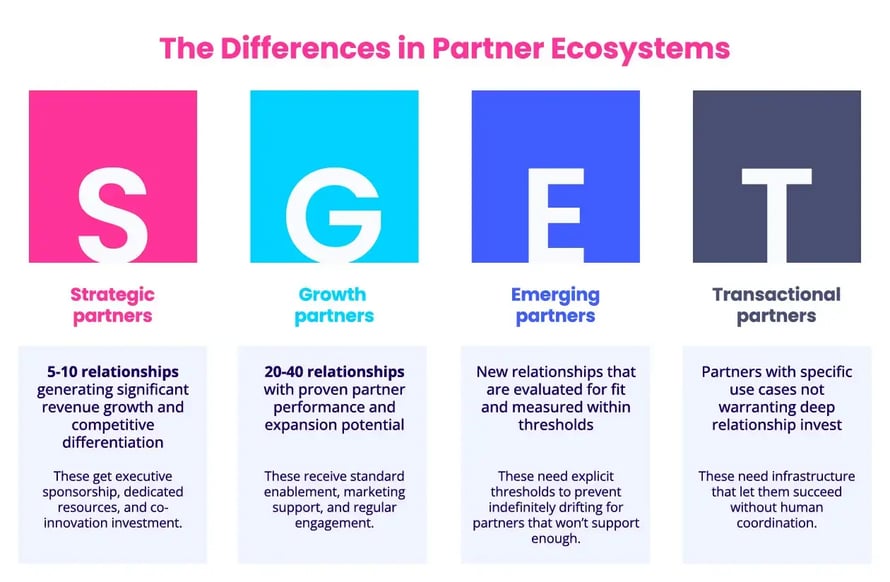
Exhibit 3: The differences in partners
Differentiated engagement prevents two failure modes. First, you avoid under-investing in partners who could become strategic multipliers, and second, you avoid over-investing in transactional relationships that will never justify dedicated resources. The middle-performing partners receive proportional support that matches their contribution to business goals and potential for accelerated growth.
Segmentation also enables better resource allocation across your partner management team:
The most experienced partner managers focus on strategic relationships where judgment and relationship depth matter.
Junior team members handle emerging partner evaluation using clear frameworks.
Marketing resources flow to partners who’ve demonstrated the ability to execute campaigns effectively, not equally across all partners regardless of track record.
Offering managed services as part of your partner ecosystem can be a key differentiator, enhancing value, increasing margins, and strengthening customer relationships.
Providing comprehensive onboarding for partners is essential to ensure they can effectively integrate your solution and engage fully within your ecosystem.
Partner ecosystems create conflict by design. Multiple partners pursue similar customers with overlapping value propositions. The question isn't whether conflicts emerge but how you resolve them without destroying customer experience or partner trust.
When two partners pitch competing solutions to the same prospect, does your sales team have protocols? When a partner's service delivery creates customer dissatisfaction, can you intervene without torpedoing the partner relationship? When an independent software vendor builds features that compete with your roadmap, how do you navigate that conversation?
Channel friction manifests in three ways (Exhibit 4): deal collision (multiple partners claiming the same opportunity), margin compression (partners competing on price), and message confusion (customers hearing inconsistent positioning). Each requires different resolution mechanisms.
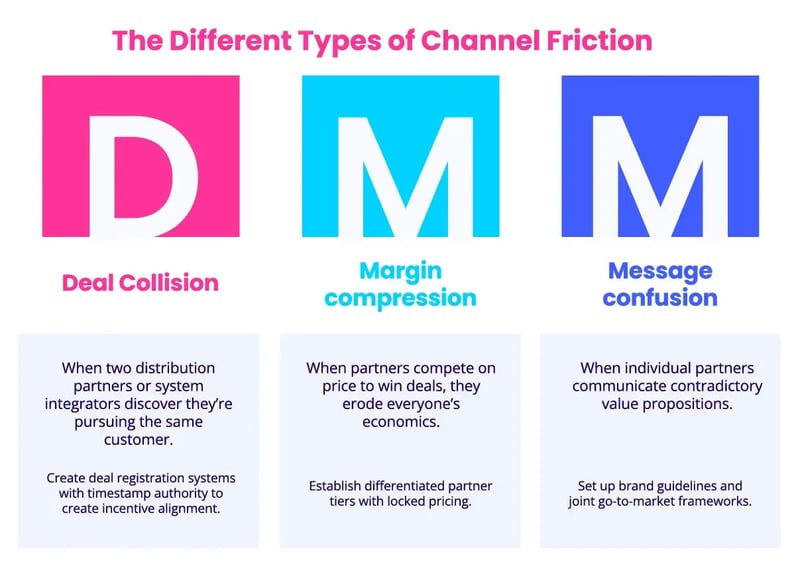
Exhibit 4: The different types of channel friction
The sophisticated move is building conflict resolution into partner governance from day one. Therefore, establish escalation paths where partners know how to raise concerns, resolution timelines so issues don't fester, and clear decision-makers who can adjudicate disputes without executive involvement.
When partners trust that conflicts will be resolved fairly and quickly, they invest more confidently in the ecosystem. When they believe resolution is political or arbitrary, they hedge their bets and never fully commit.
The companies that scale successfully build systems that make ecosystems measurable, governable, and scalable without proportional overhead increases. Partner ecosystem management (PEM) strategically nurtures a network of diverse businesses to create unified solutions.
Measurable means knowing which partners generate revenue and drive collaborative innovation versus which consume resources without delivering value.
Governable means clear expectations, transparent conflict resolution, and discipline to exit partnerships that aren’t working.
Scalable means infrastructure that removes coordination friction like partner portals for self-service training programs, automated deal registration, and integrated performance tracking.
PEM enhances customer value through bundled offerings, shared resources, and collaborative selling, leading to successful ecosystems that contribute to business growth objectives.
This is where platforms like ITONICS become strategic enablers. ITONICS connects your partner ecosystem directly to your innovation workflow (Exhibit 5). This integration captures partner feedback about market gaps, routes co-innovation opportunities to R&D teams, and tracks how partner contributions accelerate your product roadmap. It turns partner relationships into structured innovation inputs that feed strategic decisions.
/Still%20images/External%20Webpage%20Mockups%202025/ideation-share-your-product-plans-2025.webp?width=2220&height=1410&name=ideation-share-your-product-plans-2025.webp)
Exhibit 5: Shared partner roadmaps for a better partner alignment
For companies building innovation ecosystems, this integration matters. Your best partners aren’t just selling: they’re identifying where collaborative innovation creates competitive advantage and providing market intelligence that shapes business strategy. ITONICS makes that intelligence actionable by connecting partner insights to your innovation portfolio and strategic planning.
Ready to turn your partner ecosystem into a measurable innovation system? Explore ITONICS to see how leading companies operationalize partner-driven innovation at scale.