How to build a strategic roadmap in 5 steps that drives real execution

Most strategies die in the gap between boardroom ambition and team execution. Leadership announces bold visions. Teams ship features on schedule. Yet quarters later, the company's position barely shifts.
The culprit isn't the strategy itself: It's the missing translation layer between strategic intent and operational reality. Organizations jump from high-level business objectives straight to tactical product plans, leaving teams to guess how their work connects to company strategy. Resource allocation becomes a political negotiation. Nobody can answer whether current initiatives actually advance the strategic direction.
A strategy roadmap closes that gap. It's the visual framework that maps strategic priorities to executable initiatives, sequences major efforts based on capability requirements, and creates accountability for outcomes. It's also the control tool to track execution status or adjust priorities.
This guide shows you the five-step process for building roadmaps that survive contact with reality and actually drive execution.
A strategy roadmap (Exhibit 1) is a visual tool that maps your organization's strategic priorities to specific initiatives and timelines. Unlike a product roadmap or project plan, a strategic roadmap focuses on the "why" and "what" before the "how." It answers: What business goals are we pursuing? Which capabilities must we build? How do we sequence major efforts to maximize impact?
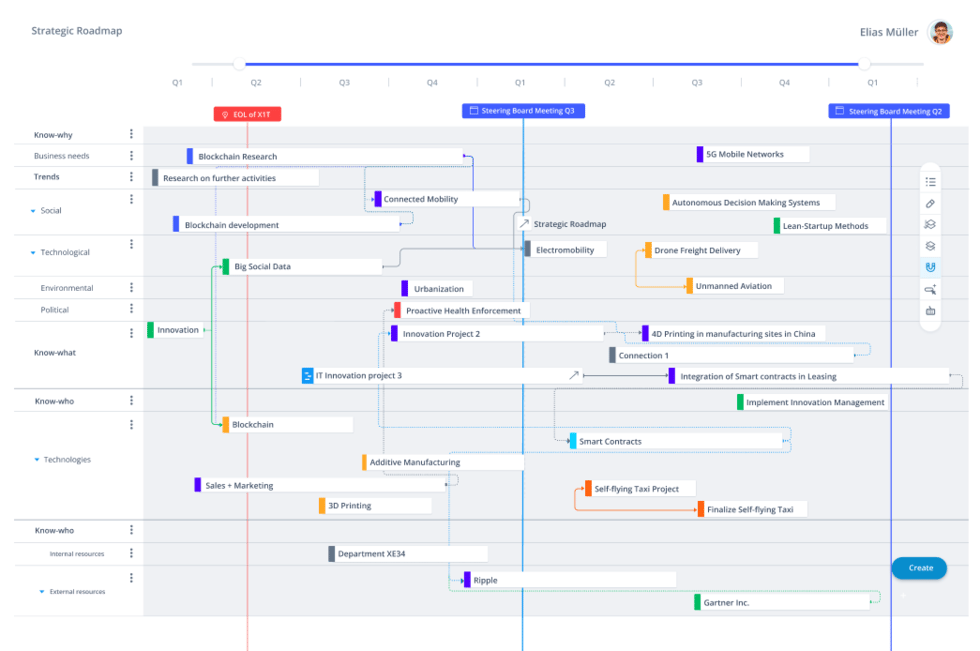
Exhibit 1: Translate strategy into business deliverables for growth in roadmaps
Strategic roadmaps serve as a communication tool between company leaders and product teams. They foster transparency around resource allocation, helping stakeholders understand why certain initiatives get funded while others don't. They manage expectations and track progress so everyone stays on the same page.
How strategy roadmaps differ from product roadmaps and business plans
Strategic roadmaps occupy distinct territory between high-level strategy and tactical execution. Understanding where they sit in your planning ecosystem prevents confusion and helps you use each tool for its intended purpose.
Here's how these three planning artifacts differ (Exhibit 2):
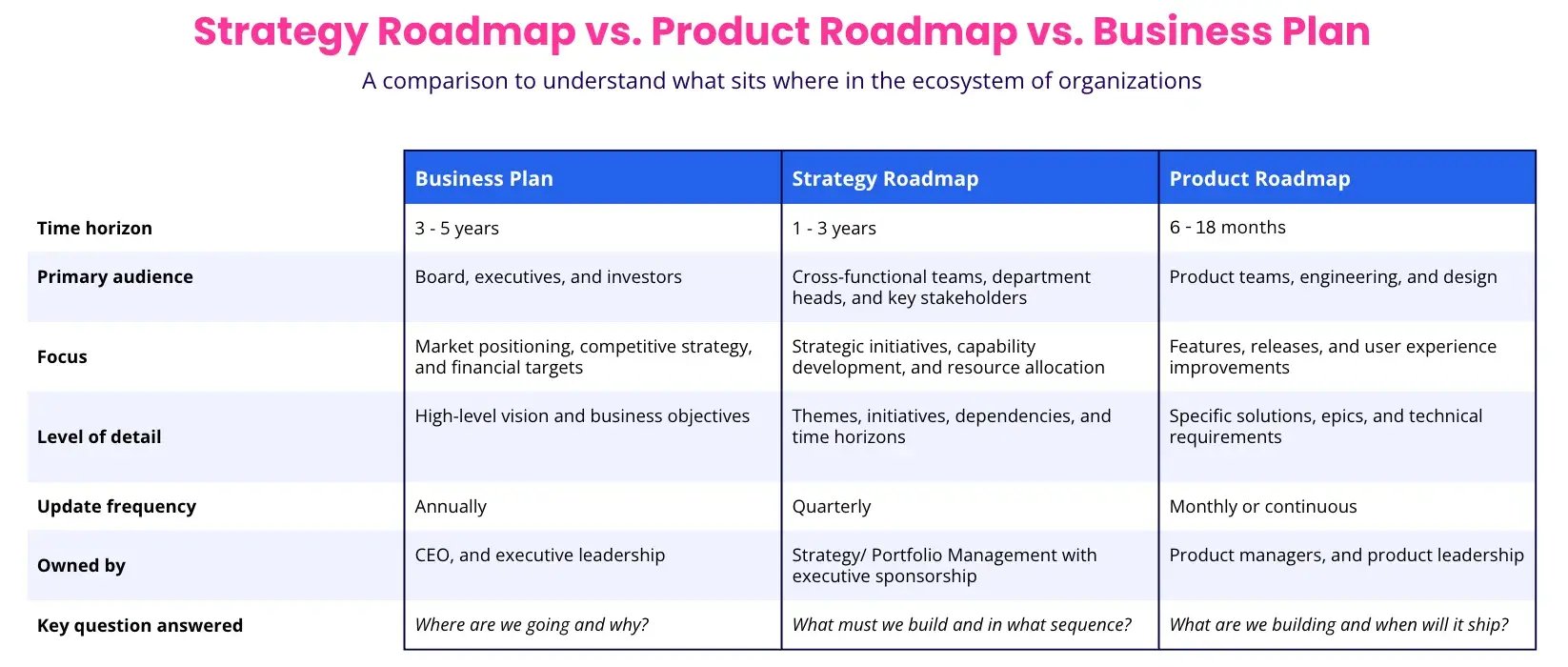
Exhibit 2: A comparison of strategy roadmaps, product roadmaps, and business plans
The strategic roadmap is the translation layer. It takes a business strategy and converts it into initiative streams that product teams can execute. Without it, product roadmaps become reactive collections of features disconnected from company strategy. With it, every product decision traces back to a clear strategic rationale.
Here's the pattern: Leadership sets ambitious strategic goals. Product managers build detailed product plans. Engineering ships features on schedule. Yet the company's current state barely moves toward its strategic vision.
The missing piece is strategic roadmapping. Most companies jump from high-level strategy to tactical execution without the connective tissue in between. They lack a structured way to translate business strategy into actionable initiatives that cross-functional teams can rally around.
This gap shows up in three ways:
Teams build what's familiar rather than what's strategically necessary.
Resource allocation follows political clout instead of strategic priorities.
Nobody knows whether the work being done actually advances the organization's strategic direction.
An effective strategic roadmap requires systematic thinking about vision, market reality, capabilities, and execution.
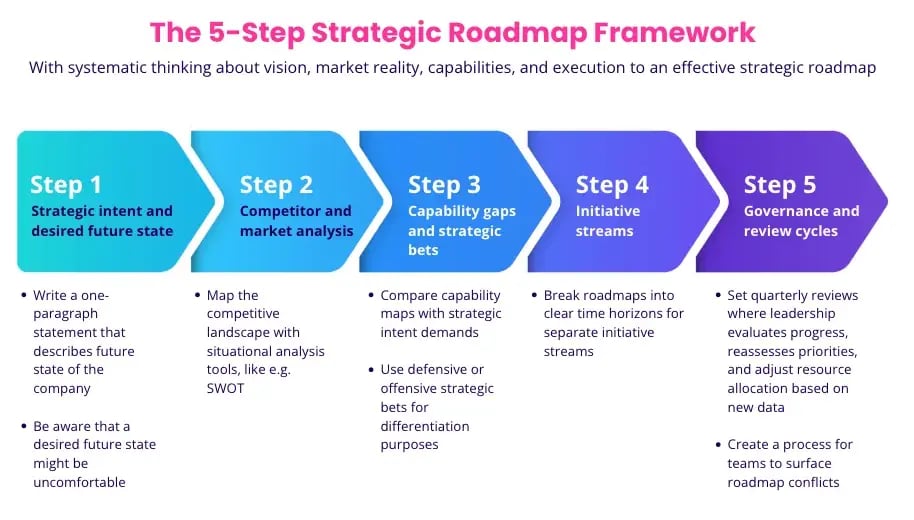
Exhibit 3: The 5-step strategic roadmap framework
These five steps (Exhibit 3) provide the structure strategy teams need to build roadmaps that translate ambition into results.
Start with strategic intent: the specific competitive position or market outcome you're pursuing. This grounds the roadmap in business reality rather than internal preferences. Therefore, write a one-paragraph statement that describes where the company will be in three years and why that position matters.
Your strategic vision describes the future state you're building toward. It's aspirational but specific enough to guide decisions.
"Be the market leader" is vague.
"Own the enterprise workflow automation category by 2027 through best-in-class integrations and AI-assisted configuration" works.
Keep in mind that your desired future state might be uncomfortable: If it feels easily achievable with current resources and capabilities, you're not thinking strategically. But always test it with key stakeholders before proceeding. Misalignment here cascades into every downstream decision.
A common pitfall
Strategy teams create vision statements that sound inspiring but provide no decision-making guidance. "Transform the customer experience" doesn't tell product teams what to build or what capabilities to prioritize. Make your vision specific enough to exclude certain choices.
Map the competitive landscape with brutal honesty: What capabilities do competitors have that you lack? Which customer preferences are shifting faster than your current product strategy accommodates? Where are adjacencies opening up?
Use situational analysis to validate priorities: A quick SWOT analysis (Exhibit 4) or competitor analysis reveals whether your priorities are defensible or just aspirational. Therefore, strategic thinking means killing good ideas that don't serve the company's vision.
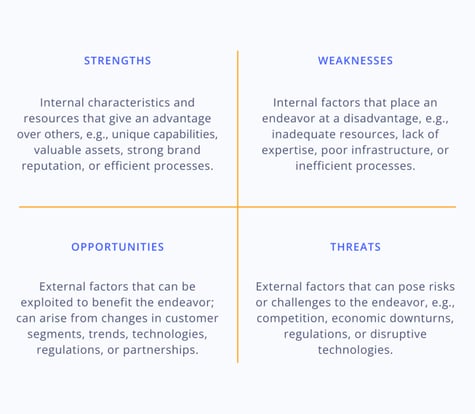
Exhibit 4: A SWOT analysis to evaluate an analysis based on both internal strengths and weaknesses, as well as external opportunities and threats
Competitor analysis is about understanding which strategic bets others are making and whether those bets threaten your position. If three competitors are investing heavily in platform plays while you're optimizing standalone products, that's a strategic signal.
Combine external analysis with internal data on customer experience and satisfaction trends. The goal is pattern recognition, not exhaustive research.
A common pitfall
Strategy teams spend weeks on market analysis but never connect insights to capability requirements or resource decisions: An analysis without action is planning theater. Your competitor analysis should directly inform which capabilities you need to build and which initiatives deserve funding.
Compare your capability map to what your strategic intent demands. Capability mapping audits what your organization can do today versus what the strategy requires. If your vision demands real-time personalization but your data infrastructure can't support it, that capability gap becomes a strategic initiative.
The gaps are your strategic initiatives. Some gaps need immediate attention because they block everything else, whereas others can wait. Thus, map each strategic objective to the capabilities it requires.
Strategic bets are different from gap-filling: Bets are proactive moves into uncertain territory where you're building capability before the market demands it. They're necessary for differentiation but risky. But your roadmap should balance gap-closing initiatives with strategic bets.
Be explicit about which initiatives are defensive (maintaining position) versus offensive (capturing new ground). Both are valid but require different risk tolerances.
Most organizations overestimate current capabilities and underestimate the effort required to close gaps. Pressure-test your assessments with teams who do the actual work.
A common pitfall
Strategy teams identify capability gaps but treat them all as equally urgent. Not all gaps deserve immediate investment. Prioritize based on two factors: strategic value and urgency. High-value, high-urgency gaps become top initiatives. High-value, low-urgency gaps go in the "next" horizon. Low-value gaps get documented and ignored.
Group related initiatives into strategic themes or streams. A "customer experience transformation" stream might include initiatives around support automation, onboarding redesign, and feedback loop tightening. Themes create coherence and help teams understand how their work fits together.
Therefore, break your roadmap into clear time horizons: now, next, later.
"Now" covers the current quarter and locks in committed work.
"Next" spans six to twelve months and includes initiatives in active planning.
"Later" holds strategic bets that need capability building first.
Sequencing matters more than you think.
Map what organizational capabilities each initiative requires, then sequence based on dependencies. If three initiatives need the same scarce engineering talent, you're setting up failure.
Make resource constraints visible: Show where teams overlap, where bottlenecks exist, and which key stakeholders own each initiative. Dependency mapping exposes fragility. So, if your digital transformation initiative depends on a legacy system migration that's perpetually delayed, the roadmap should scream that dependency. Cross-functional teams need to see how their work enables or blocks strategic initiatives.
Assign ownership to specific leaders: Each initiative needs someone accountable for outcomes, empowered to allocate resources, and responsible for stakeholder engagement. Shared ownership is no ownership.
Define success criteria for each initiative upfront: Key results matter more than activity metrics.
A common pitfall
Strategy teams build beautiful roadmaps with dozens of parallel initiatives, ignoring that the same people must execute all of them. Siemens learned this in their digital factory transformation.
Initially, they wanted to launch digital twins, predictive maintenance, computer vision quality control, and supply chain optimization simultaneously. All required IoT sensors, edge computing, and ML infrastructure. Instead of fragmenting resources, they sequenced: Phase 1 built the IoT foundation (2016-2017), Phase 2 launched predictive maintenance using that infrastructure (2018), Phase 3 expanded to digital twins (2019), and Phase 4 integrated supply chain optimization (2020+). By 2020, predictive maintenance alone reduced unplanned downtime 30-50%. Dependencies were explicit, not discovered mid-execution.
Strategic roadmaps die without regular review. Therefore, set quarterly reviews where leadership evaluates progress, reassesses priorities, and adjusts resource allocation based on new data. These are strategic decision forums, not status meetings.
Create a lightweight process for teams to surface roadmap conflicts or resource constraints between reviews. Governance shouldn't be bureaucratic, but it must exist. Someone needs authority to make trade-off decisions when initiatives compete.
Track progress against strategic objectives, not just initiative completion. Shipping everything on time but missing your market share goal means the roadmap failed.
A common pitfall
Strategy teams treat roadmaps as annual planning exercises. They build the roadmap in January, lock it in a drawer, and ignore it until next year's planning cycle. Markets move faster than annual reviews. Customer preferences shift. Competitors make unexpected moves. Your roadmap must evolve with these changes or become a historical artifact. Quarterly reviews are non-negotiable.
Building a solid strategic roadmap solves half the problem. Whereas getting everyone to actually use it solves the other half.
Cross-functional alignment is where most roadmaps fail in practice: Marketing interprets strategic priorities one way, R&D another, and product teams a third. The roadmap becomes a source of confusion rather than clarity, and teams revert to working in silos with competing agendas.
Different functions speak different languages. Executives talk market positioning. Product managers talk about features and user needs. R&D talks about technical feasibility and architecture. Therefore, strategic roadmaps must bridge these dialects without dumbing down the content.
Use clear definitions for terms like "initiative," "capability," and "strategic priority." When everyone means something different by "platform," confusion is guaranteed. A shared glossary seems trivial until its absence derails a planning meeting.
Translate strategic priorities into implications for each function. Show product teams how a priority around "enterprise scalability" changes their product strategy. Show R&D how it shifts architectural investments.
Cascading strategy means translating company-level roadmaps into functional roadmaps without losing coherence. Thus, the company's strategic roadmap defines organization-wide priorities. Functional roadmaps show how each team contributes to those priorities through their specific initiatives.
The mistake is letting each function append its pet projects to the strategic roadmap. That's not cascading, that's bloat. Always remember: A true cascade means each level reinforces the level above it.
Product teams should be able to trace their product plans directly to strategic initiatives. If they can't, either the product work isn't strategic or the roadmap lacks clarity.
When marketing wants one thing, and the product wants another, the strategic roadmap provides the tiebreaker: Which initiative serves the organization's strategic priorities more directly? Which aligns better with resource allocation decisions already made?
Roadmaps make opportunity costs visible. Saying yes to one initiative means saying no to another. When teams see the full picture, zero-sum arguments transform into collaborative prioritization.
This only works if company leaders actually use the roadmap to make decisions. If politics still trumps the roadmap, teams learn to ignore it.
High-performing organizations approach strategic roadmapping differently:
They treat roadmaps as living strategic tools rather than annual planning exercises.
They build tight feedback loops between strategy and execution.
And they maintain discipline around what makes the roadmap versus what gets handled elsewhere.
These best practices are the accumulated wisdom of teams who've learned through trial, failure, and iteration what actually works when translating strategy into results.
The best strategic roadmaps maintain relentless focus on customer experience. Every initiative should connect to customer outcomes, competitive differentiation, or enabling better service delivery. If you can't explain how an initiative improves customer satisfaction or removes friction, question whether it belongs on a strategic roadmap.
This doesn't mean only customer-facing initiatives make the cut. Infrastructure investments and capability building are strategic, but they should enable better customer experiences eventually. Therefore, make that connection explicit:
One possibility: Use customer data and feedback to validate roadmap priorities. Organizations that integrate voice-of-customer insights into strategic planning build roadmaps that survive market contact.
High-performing organizations balance strategic vision with operational reality: The roadmap connects ambitious long-term objectives to concrete quarterly deliverables (Exhibit 5). Thus, teams see both the destination and the next step.
/Still%20images/portfolio-visualize-critical-paths-2025.webp)
Exhibit 5: Oversee critical paths to focus on what matters most, before delays pile up
This balance prevents two failure modes:
Purely aspirational roadmaps disconnected from execution, and
purely tactical roadmaps that optimize locally but miss strategic opportunities. You need both time horizons working together.
Practically, this means your roadmap shows the three-year vision at the top, breaks into annual themes, and details quarterly initiatives. Whereas each level reinforces the others.
The organizations that execute strategy well treat roadmapping as a learning system (Exhibit 6). They capture insights from initiative delivery and feed them back into strategic planning. What worked? What failed? Which assumptions proved wrong? This organizational learning makes each roadmap iteration smarter.
/Still%20images/portfolio-share-roadmaps-2025.webp)
Exhibit 6: Embed roadmaps anywhere to share progress, timelines, and priorities, and direct with clarity
Create structured retrospectives after major initiatives complete: Did we build the right thing? Did it achieve the strategic objective? What would we do differently? These insights should directly influence the next roadmap review.
Employee engagement improves when teams see their execution learnings shape future strategy. It transforms roadmapping from a top-down decree into a collaborative strategic dialogue.
Strategy teams struggle with roadmapping, not because they lack strategic thinking but because coordination overwhelms manual processes:
Data lives in scattered spreadsheets.
Assumptions go undocumented.
Decisions never get tracked.
Three months later, nobody remembers what was decided or why.
ITONICS solves the coordination problem by unifying strategic roadmapping, innovation management, and portfolio execution in a single platform built specifically for strategy teams.
Consolidate strategic inputs in one workspace. The platform brings together horizon scanning, competitor analysis, technology monitoring, and portfolio data. Market trends, emerging technologies, competitive moves, and internal project performance become accessible without jumping between systems. Thus, strategy teams spend less time compiling data and more time making decisions.
Connect roadmap decisions to portfolio execution. When you commit to a strategic initiative in your roadmap, that decision flows directly into resource allocation and program governance. When you stop an initiative, those resources become available for reallocation in the same system. Strategy and execution stay linked instead of drifting apart.
Make assumptions and decisions traceable over time. Strategic choices get documented with their rationale and supporting evidence. Six months later, you can reconstruct exactly what you decided and why. When market signals contradict your thesis, you see it immediately rather than discovering it quarters later when resources are already committed.
For strategy teams managing complex portfolios across R&D, product development, and innovation, ITONICS provides the infrastructure that transforms roadmapping from quarterly theater into continuous strategic execution.
Ready to build strategic roadmaps that actually drive execution?


.webp?width=900&height=450&name=Top-10-project-portfolio-software-tech-and-development-teams-use-for-managing-innovation-projects-fullwidth%20(1).webp)