5 essential steps to unlock employee ideas (and costly missteps to avoid)


What do Gmail, PlayStation, and Starbucks Frappuccinos have in common? They all originated from employee ideas. Now household names, these innovations began as concepts from employees who recognized opportunities others overlooked. Yet, for every idea that turns into a game-changing success, countless others are dismissed—not because they lack potential, but because the workplace culture fails to nurture them.
Employees are often a company’s greatest source of innovation, offering valuable insights from their daily experiences. Research shows that companies that actively encourage and implement employee ideas outperform competitors in revenue growth and profitability. Yet, despite recognizing the value of employee-driven innovation, many organizations struggle to harness it effectively—either due to rigid hierarchies, lack of clear processes, or fear of failure.
This gap between potential and execution highlights the need for a structured approach to fostering and acting on employee ideas. In this blog, we’ll explore five essential steps to cultivate a workplace where ideas thrive—and the costly missteps that could be holding your company back.

✅ Encourage open communication, risk-taking, and idea-sharing without fear of criticism.
❌ Misstep to avoid: A fear-based culture where employees hesitate to speak up due to potential backlash.
In 2012, Google launched Project Aristotle, a multi-year study to uncover what makes teams most effective. The findings surprised even Google’s researchers: the highest-performing teams weren’t the ones with the most talented individuals, but the ones where members felt safe to speak up, take risks, and contribute ideas without fear of embarrassment or punishment. This concept, known as psychological safety, became the single most important factor in team success. When psychological safety was high, teams were more innovative, engaged, and willing to experiment. When it was low, employees held back, fearing criticism or repercussions.
However, many companies—often unknowingly—create environments where employees hesitate to speak up. Hierarchical barriers, punitive responses to mistakes, and a lack of inclusivity can stifle idea-sharing. Employees may avoid suggesting bold ideas if they fear rejection or ridicule, leading to missed opportunities for innovation.
✅ Create a clear system for collecting, evaluating, and acting on employee ideas.
❌ Misstep to avoid: Having an informal or unclear process that leads to ideas getting lost or ignored.
Many companies assume that encouraging employees to submit ideas is enough—but without a structured system to track, evaluate, and act on those ideas, they end up lost in a sea of emails, spreadsheets, and forgotten suggestion boxes.
DISH Network learned this the hard way. Initially, employees submitted ideas through Google Forms, emails, and slide decks, but without a unified system, tracking and implementing these ideas became chaotic. Employees lacked transparency on how their ideas were evaluated, leading to frustration and disengagement.
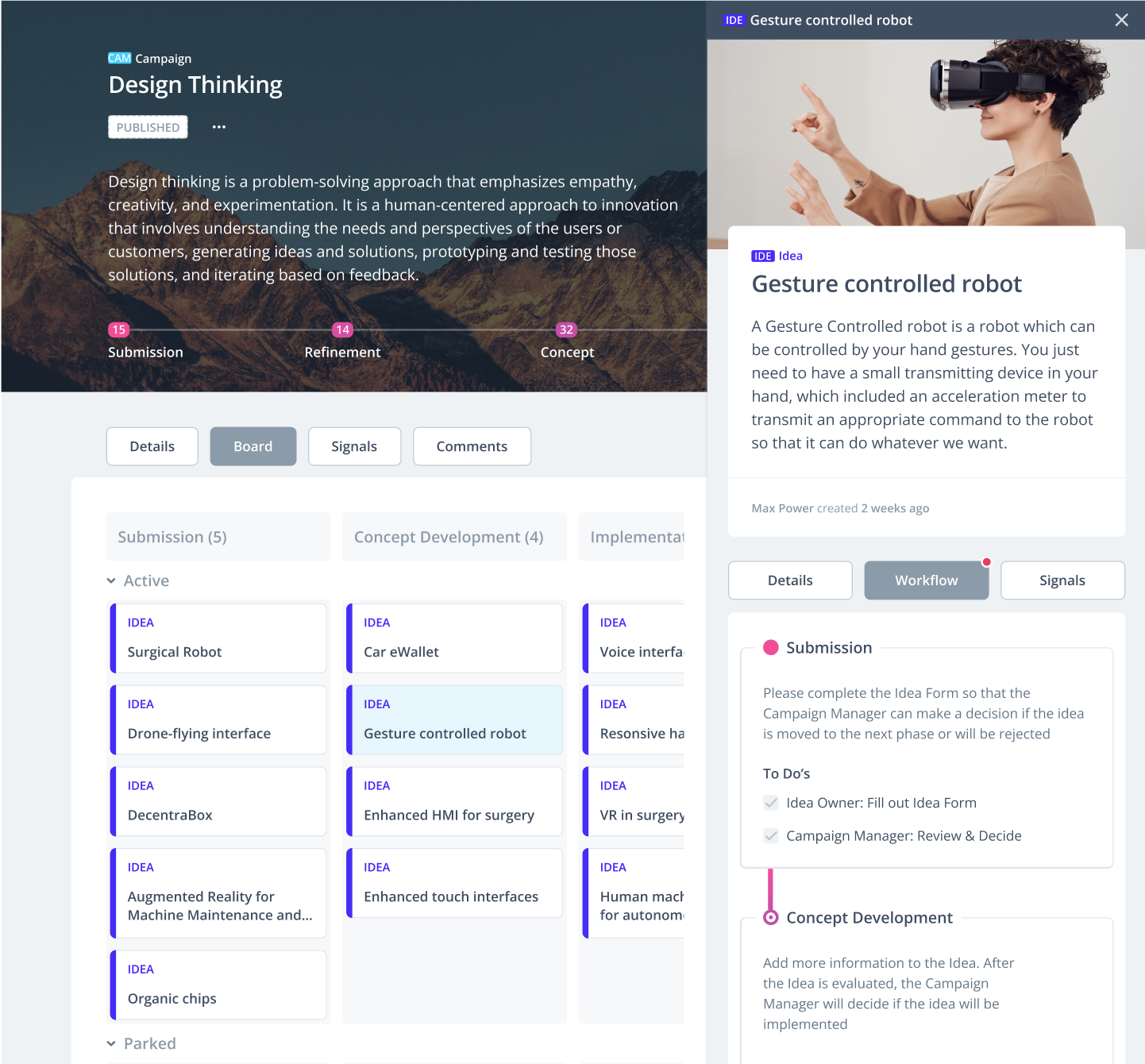
To solve this, DISH adopted the ITONICS Innovation OS, allowing employees to submit, refine, and track ideas in an organized way. One of their first major initiatives, the DISH Technologies Innovation Tournament, encouraged employees to submit projects through structured phases—sign-up, project planning, prototyping, and final evaluation.

The results were striking. Nearly 100 teams of employees participated, submitting 80 project ideas. Most importantly, 25% of these ideas successfully advanced through DISH’s innovation pipeline for potential integration into internal processes or product development. By streamlining idea management, DISH unlocked high-impact innovations, increased engagement, and improved transparency—turning employee creativity into tangible business results.
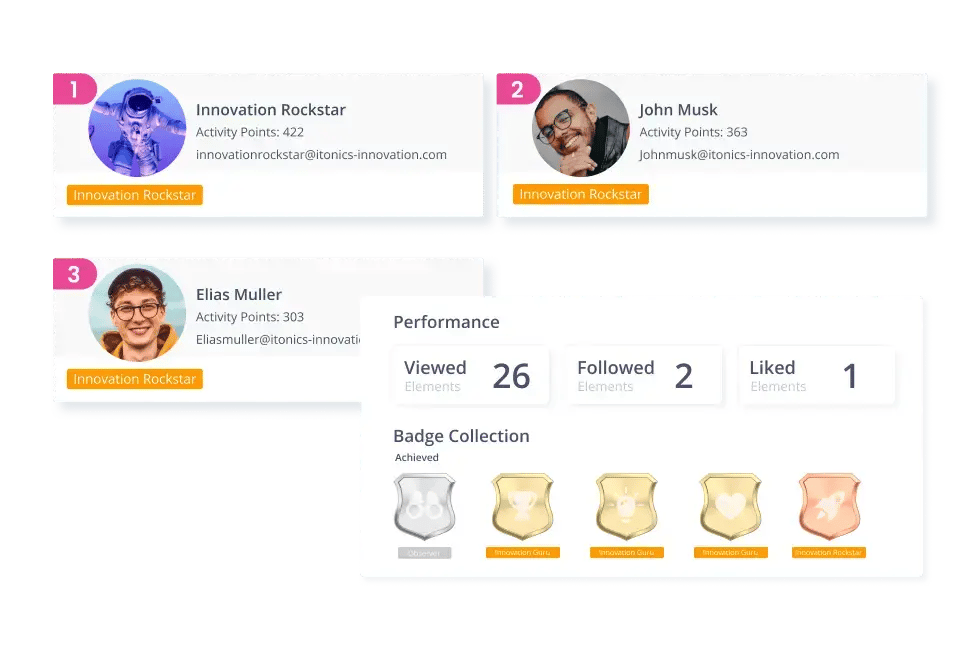
✅ Motivate employees by acknowledging and incentivizing idea-sharing.
❌ Misstep to avoid: Overlooking contributions, leading to disengagement and a lack of participation.
Recognition and rewards play a crucial role in fostering an innovation culture, but organizations often struggle to design systems that truly enhance creativity. Research shows that when incentives align with intrinsic motivation, employees are far more likely to engage in creative problem-solving and innovation. However, many companies fail by implementing extrinsic-only reward systems—such as financial bonuses—that provide only short-term motivation without fostering long-term creative engagement.
One approach that has gained traction is intrapreneurship, where companies empower employees to think and act like entrepreneurs within the organization. Companies that actively support intrapreneurial behavior provide rewards beyond monetary compensation, including leadership opportunities, ownership of projects, and access to funding for idea development. For example, Adobe’s Kickbox program provides employees with $1,000 in seed funding, a structured innovation framework, and the autonomy to develop their ideas without managerial approval. This method leverages both intrinsic and extrinsic motivation, allowing employees to engage in innovation because they find it meaningful, rather than just for financial incentives.
✅ Use innovation management software to capture, organize, evaluate, and track ideas.
❌ Misstep to avoid: Relying on outdated or fragmented communication channels that hinder collaboration.
Having a process for collecting employee ideas is crucial—but without the right tools to support and scale innovation, even the best processes can become bottlenecks. Many organizations struggle with fragmented systems, where ideas are collected in one place, tracked in another, and evaluated manually through emails or spreadsheets. This disconnected approach slows decision-making, reduces visibility, and causes valuable ideas to slip through the cracks.
To build a workplace where employee ideas don’t just get submitted but are actually developed, refined, and implemented, companies need a centralized digital platform that supports the entire idea lifecycle—from capturing raw suggestions to evaluating, iterating, and bringing innovations to market.
/Still%20images/Ideation-Sliders-Video-1-poster.webp?width=978&height=648&name=Ideation-Sliders-Video-1-poster.webp)
✅ Train managers to actively listen, nurture, and advocate for ideas within teams.
❌ Misstep to avoid: Leadership resistance or skepticism that discourages employees from contributing.
Even with the right culture, processes, and tools in place, employee ideas won’t gain traction without leadership buy-in. Managers and executives are not just gatekeepers—they are the catalysts that turn employee ideas into actionable innovation. When leaders fail to actively support idea-sharing, employees lose confidence in the system, engagement declines, and promising innovations never leave the brainstorming stage.
To prevent this, organizations need to go beyond simply encouraging innovation—they must mandate it. This means embedding innovation into leadership responsibilities, making it a core performance metric, and holding managers accountable for fostering a workplace where employee ideas can thrive. Some of the most innovative companies recognize that leaders play a pivotal role in nurturing employee-driven innovation. At 3M, for example, employees are encouraged to dedicate 15% of their time to passion projects—but what makes this successful is management’s role in supporting and funding these initiatives. Leaders are expected to provide guidance, resources, and advocacy for promising ideas, ensuring they are developed rather than dismissed.
Employee-driven innovation isn’t just a competitive advantage—it’s essential for long-term success. But fostering a culture where ideas thrive requires more than just encouragement. Companies must build psychological safety, establish structured idea management, recognize contributions, provide the right tools, and ensure leadership is actively involved.
The ITONICS Innovation OS offers a single solution to streamline the entire process, from idea capture to execution. By providing a structured, transparent, and collaborative platform, ITONICS helps organizations not only manage ideas effectively but also foster a culture where employees feel empowered to contribute. With the right tools and mindset, businesses can unlock the full potential of their workforce and drive sustainable innovation.