The growth mindset behind Microsoft's innovation journey


In the mid-2010s, Microsoft found itself at a crossroads. While large and stable enough to continue coasting as a fast follower, the company instead chose a path of aggressive, startup-like offense.
Under CEO Satya Nadella, who took over in February 2014, the company changed course. It stopped protecting cash cows like Windows and redirected innovation efforts toward new technologies and Horizon 3 bets. Partnerships and acquisitions followed in gaming, social, and generative AI.
The numbers tell the story. Microsoft was worth about $300 billion when Nadella started. It crossed $3 trillion in early 2024 and sits near $2.9 trillion in mid-2026, still roughly 10 times its 2014 value. Most coverage credits one thing above the technology: a growth mindset.
We sat down with Nicholas McQuire, Director of Strategic Missions and Technologies at Microsoft, to discuss the company's innovation philosophy and the practices behind its success. McQuire stresses embracing challenges and learning from failures. Both are core to the growth mindset that lets Microsoft pivot fast as markets shift.
Here is the part most companies miss. A growth mindset does not drive innovation through attitude. It drives innovation when it is wired into how you evaluate ideas, reward people, and fund the portfolio. Microsoft's turnaround was not a culture campaign. It was a process change.What a growth mindset actually changes in corporate innovation
A growth mindset is the belief that ability can develop through effort. Psychologist Carol Dweck named the concept. She also named its opposite: a fixed mindset, the belief that talent is static and obstacles expose your limits.
The distinction matters for corporate innovation because it changes behavior under pressure (Exhibit 1).
People with a growth mindset treat obstacles as information.
People with a fixed mindset treat obstacles as verdicts.
Most leaders accept this idea on a slide. Few change anything because of it. That is the trap. Belief without a clear process produces innovation theater, not new innovations.
But the true difference shows up in concrete decisions, not value posters.
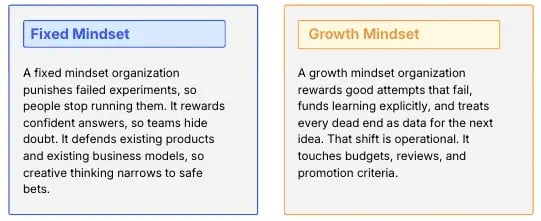
Exhibit 1: The difference between a fixed and a growth mindset
A fixed mindset rarely announces itself. It hides inside normal-looking processes. Three patterns show up most often.
#1. Idea evaluation rewards certainty. Reviewers favor proposals with guaranteed returns. New ideas with unknown payoffs get killed in the first gate. The portfolio fills with low-risk increments, and the company slowly stops generating ideas that matter.
#2 Failure carries career cost. When a failed project hurts a manager's rating, smart managers stop sponsoring risk. They protect strategic priorities that they can defend. Innovation efforts shrink to whatever is already proven.
#3 Knowledge stays trapped. Teams that learn something hard keep it to themselves, because sharing a failure feels like admitting weakness. The same mistakes repeat across the organization. There is no continuous improvement, only repeated waste.
Each pattern looks rational to the person inside it. Together, they make a company defensive, slow, and easy to disrupt. The fix is not motivation. It is changing the incentives that produce the behavior.
Microsoft did not just talk about a growth mindset. It rebuilt its innovation culture around one. Large companies struggle here because global scale dilutes initiatives and disconnects teams. Microsoft's answer was to embed the mindset into daily work.
The culture rewards learning over knowing. Employees are encouraged to explore, experiment, and fail, as long as the failure produces a lesson and a next step. As McQuire puts it, "The key to an innovation mindset is in the culture we call a growth mindset."
This is not a slogan. It is an evaluation principle. Knowing answers is cheap. The ability to learn faster than competitors is the actual competitive advantage.
Microsoft institutionalizes its innovation culture through structure. The Microsoft Garage is an open innovation hub built on one motto: "doers, not talkers." It runs hacking spaces in Redmond, New York, Dublin, and Beijing, and invites anyone, regardless of role, to turn ideas into real projects.
Its Global Hackathon is the largest in the world. More than 70,000 employees take part. Winning teams pitch senior leaders, and many projects keep developing through the year. The point is not the event. It is the signal that the company will fund creative thinking from anyone.
The most important change is the quietest. Microsoft aligned its reward systems with growth mindset principles. Employees are evaluated on willingness to learn and experiment, not only on whether a project shipped.
That reframes failure. A smart experiment that fails still earns credit, because it produced knowledge. This is how a company sustains continuous improvement instead of punishing the people who attempt hard things. It is also the single hardest practice to copy, because it requires leaders to defend useful failures in front of stakeholders.
Wiring a growth mindset into your innovation strategy
Culture is the outcome, not the input. To make a growth mindset real, build it into your innovation strategy and your innovation process. Use these six moves.
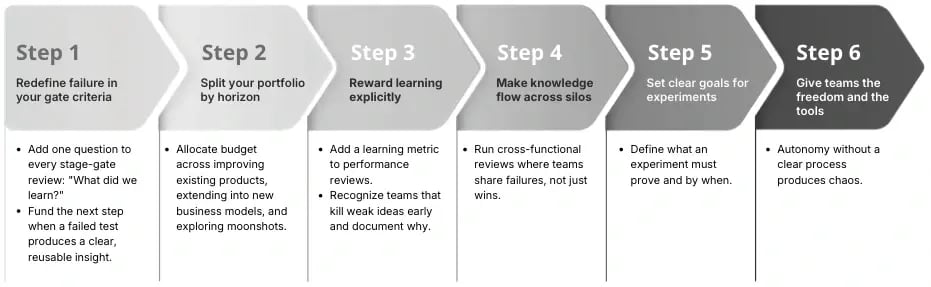
Exhibit 2: The 6 steps to wire a growth mindset into your innovation strategy
Run these moves for two to three quarters before expecting culture to shift. Behavior changes first. Belief follows behavior, not the reverse.
Idea evaluation is where most growth mindset programs fail. Teams talk about learning, then score every idea on projected revenue. That single bias rebuilds a fixed mindset inside a growth mindset program.
Better idea evaluation scores two things separately: expected value and expected learning. A risky idea with a low success rate can still rank high if it teaches you something you cannot learn any other way (Exhibit 3).
/Still%20images/List%20Mockups%202025/ideation-evaluate-collaboratively-2025.webp?width=2160&height=1350&name=ideation-evaluate-collaboratively-2025.webp)
Exhibit 3: Scoring ideas across multiple criteria with learning value weighted separately from expected return
Score each idea 1 to 5 on five dimensions: strategic fit, market demand, feasibility, learning value, and resource cost. Weight learning value deliberately for early-stage ideas, where knowledge matters more than immediate return.
Then add one rule. Any idea that scores high on learning value gets a small, time-boxed experiment, even if its revenue case is weak. You are buying knowledge, not betting on the outcome. This is the practical mechanism that lets a growth mindset survive contact with a budget.
Review scores as a group, not as individuals. Group review surfaces the hidden assumptions behind a number and keeps one confident voice from killing a useful but uncertain idea.
A growth mindset also prepares a company for technological convergence (Exhibit 4). As new technologies mature, they merge, creating new opportunities and new complexity. Microsoft operates at the edge of AI, quantum, and cloud, and has to combine them into viable new products. That demands sustained R&D and strategic foresight.
/Still%20images/Kanban%20Board%20Mockups%202025/portfolio-govern-project-boards-2025.webp?width=2160&height=1350&name=portfolio-govern-project-boards-2025.webp)
Exhibit 4: Portfolio views show initiatives balanced across horizons, from core improvements to long-term bets
Microsoft manages this through its Full Spectrum Innovation approach, a close cousin to the Three Horizons Model. It improves existing products, extends them into new business models, and explores moonshots that could create new markets.
The lesson is not the ratio. It is the deliberate choice to fund uncertainty on purpose, so the company can remain competitive when the next convergence arrives.
Microsoft's journey shows what a growth mindset can do when it is built into the operating model rather than the values deck. The hard part is making the same mindset repeatable across a large organization. That is a process problem, and it is where ITONICS helps.
ITONICS gives teams one system to generate ideas, run structured idea evaluation, and track them from concept to implementation (Exhibit 5). Configurable workflows let you encode growth mindset principles directly into your innovation process: learning questions in every gate, scoring that rewards insight, experiments that are time-boxed and visible.
/Still%20images/Kanban%20Board%20Mockups%202025/ideation-organize-idea-flows-2025.webp?width=2160&height=1350&name=ideation-organize-idea-flows-2025.webp)
Exhibit 5: Configurable workflows let teams build a gate directly into the innovation process
It also breaks down the silos that trap knowledge. By making signals, ideas, and results visible across the organization, ITONICS turns scattered effort into shared learning. Leaders see the whole portfolio across horizons and can fund long-term growth without losing the core.
A growth mindset is a belief. ITONICS makes it a process. That is the difference between a culture statement and a durable competitive advantage.