Turn competitive intelligence into decisions: A 7-step framework

Competitive analysis always feels incomplete. Too much information, or not enough. Too early to act, or already too late. Too broad to be actionable, or too narrow to capture the real threat.
The problem is not the quality of the analysis. It is that no one defined the decision that analysis needs to trigger.
Strategy teams suffer from a structural disconnect. Reports land. Slide decks circulate. A competitor analysis is presented in a quarterly review. The competitive landscape shifts. But the business strategy doesn't move with it.
This happens because competitive analysis is built to describe the market environment - not to force a choice. The data collection is rigorous. The competitor analysis framework is thorough. But if the decision is unclear, even perfect intelligence produces no action.
Most teams realize this too late. They commission a competitive intelligence study, receive comprehensive findings, and then ask: "What do we do with this?" That question should have been answered before the analysis began.
This article gives strategy teams a 7-step competitive analysis framework designed to end in a decision, not a document. It covers how to conduct a focused market analysis, when to use SWOT analysis, and how continuous competitive monitoring with AI-powered tools turns intelligence into strategic action.
Conventional wisdom says more data leads to better decisions. But competitive analysis proves the opposite.
Most teams conduct market research the wrong way. They start with the competitive landscape and work backwards. The result is comprehensive coverage of what direct competitors and indirect competitors are doing - with no connection to what the business should do next.
Three structural failures explain why competitive intelligence never reaches a decision.
Teams treat competitive intelligence as a deliverable rather than a decision input. A thorough analysis becomes the goal. But insight without a predetermined decision gate is just information.
McKinsey research consistently finds that the highest-performing strategy teams define the decision first and then design the analysis to answer it. But most teams do the reverse.
Teams conduct a thorough analysis of the market environment, document competitor strengths and weaknesses, and identify market opportunities. Then they ask: "What should we do with this?" That question should have come first.
When you map every direct competitor and indirect competitor, the output is too broad to act on. A competitive analysis of the full market environment is useful for orientation. It is useless for resource allocation.
Direct competitors fight for the same target audience with the same product or service. Indirect competitors solve the same customer problem through a different means. Conflating direct and indirect competitors leads to misdirected marketing strategies, pricing strategies, and product investment.
Amazon did not identify Netflix as a direct competitor. It identified the shift in how people consume content. That distinction enabled AWS to build infrastructure for a new competitive position before traditional competitors responded.
Competitive insights without ownership expire. After a competitor analysis is presented, who is responsible for the strategic response? If no one person holds accountability, no action follows.
Primary research - focus groups, customer feedback, sales process data - generates powerful competitive insights. But without a narrow brief defining what decision this research informs, it produces data without direction. The goal of market research is not to describe what is. It is to reveal what to do.
Before any competitive analysis begins, one question must be answered:
What specific business strategy decision does this analysis need to enable?
This is not the same as "What do we want to know about competitors?" That question produces a competitor analysis. The first question produces a decision.
Answering it requires naming the decision explicitly. Examples:
Once the decision is named, every element of the competitor analysis framework - what internal and external factors to examine, what market data to collect, which direct and indirect competitors to prioritize - becomes scoped and purposeful.
Strategy teams that skip this step produce competitive analysis that helps no one make a decision. Teams that do it produce competitive analysis that forces one.
This framework is designed for strategy teams running competitive analysis as an input to a specific decision. It is not a general market intelligence program.
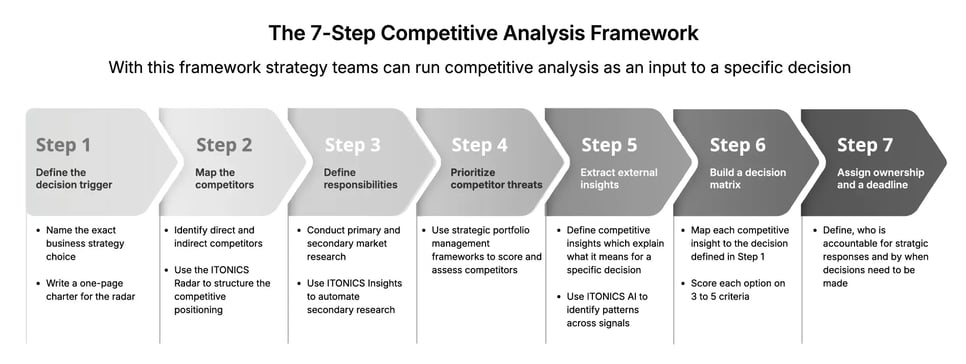
Exhibit 1: The 7-step competitive analysis framework
Name the exact business strategy choice this analysis will inform. Write it down. Share it with every person involved in data collection.
If it cannot be stated in one sentence, it is not scoped enough.
Write a one-page charter for the radar. State the primary purpose, the decisions it informs, and what good output looks like. Get stakeholder sign-off. This prevents scope creep and keeps the system focused on business growth.
Identify direct competitors - those targeting the same target market with comparable products or services. Then identify indirect competitors - those solving the same customer problem differently.
Limit both lists. A strategic group analysis should cover the 3–7 most relevant competitors, not every player in the industry.
Use ITONICS Radar to structure your competitive positioning. The Radar provides a visual framework to map competitors across strategic dimensions - market positioning, technology capabilities, customer segments, and business models.
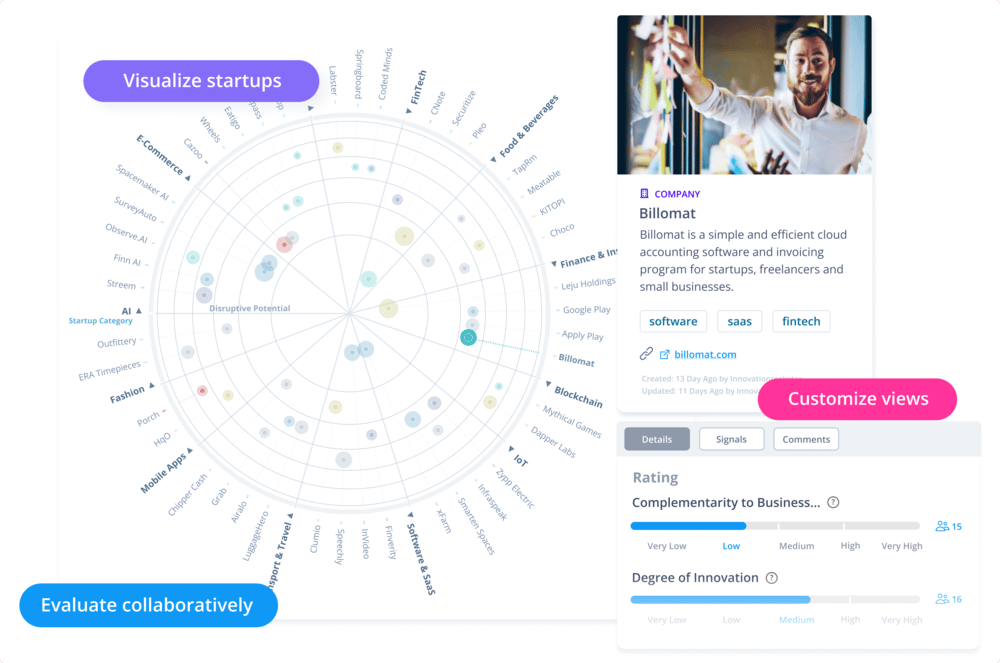
Exhibit 2: The ITONICS startup radar gives you one shared view to scout, filter, and evaluate startups - faster and smarter
This makes strategic group mapping actionable: you see which competitive positions are crowded and which are open in real time.
ITONICS Radar continuously monitors competitor moves through automated signal collection. When a direct competitor shifts pricing, launches in a new segment, or changes their value proposition, the platform surfaces these signals immediately - not in the next quarterly review.
Primary research - like customer interviews, focus groups, sales team input - should be scoped to answer one or two targeted questions, not to characterise the full market environment.
Secondary market research - analyst reports, industry analysis, market analysis reports, market share data, Google Search trends - should be filtered to the competitive positions most relevant to the decision defined in Step 1.
The question is not "What do customers think?". It is "What do target customers think about this specific choice between competitive options?"
ITONICS Insights automates secondary research by scanning millions of verified sources - news, patents, scientific publications - and surfaces competitive signals relevant to your defined decision. Instead of manually tracking competitor activity, AI-powered filtering delivers only the market intelligence that informs your specific strategic choice.
Traditional frameworks like the growth share matrix place business units or competitive threats on a 2×2 grid of relative market share versus market growth rate. This forces the question: Are competitors in this segment growing fast or defending static ground?
ITONICS extends this with dynamic portfolio management frameworks. You can score competitors on custom criteria - technology readiness, market momentum, strategic fit to your own capabilities - and the platform updates these assessments as new competitive intelligence arrives.
Apply it to your own company's position as well as to your direct competitors. Understanding your relative market share in each segment tells you where you have a competitive edge and where you are losing ground.
Market data describes what actually is. Competitive insights explain what it means for a specific decision. The difference is then the interpretation tied to action.
A competitive insight sounds like: "Competitor X has raised prices 12% in the mid-market segment over 18 months while losing 3 points of market share - suggesting price sensitivity in that segment is higher than their leadership believes."
That is a true signal that a pricing strategy adjustment in the mid-market could capture share directly. That is actionable.
ITONICS uses AI to identify patterns across competitive signals. When three independent sources indicate a competitor is struggling in a specific segment, the platform flags this as a validated insight - not just isolated data points.
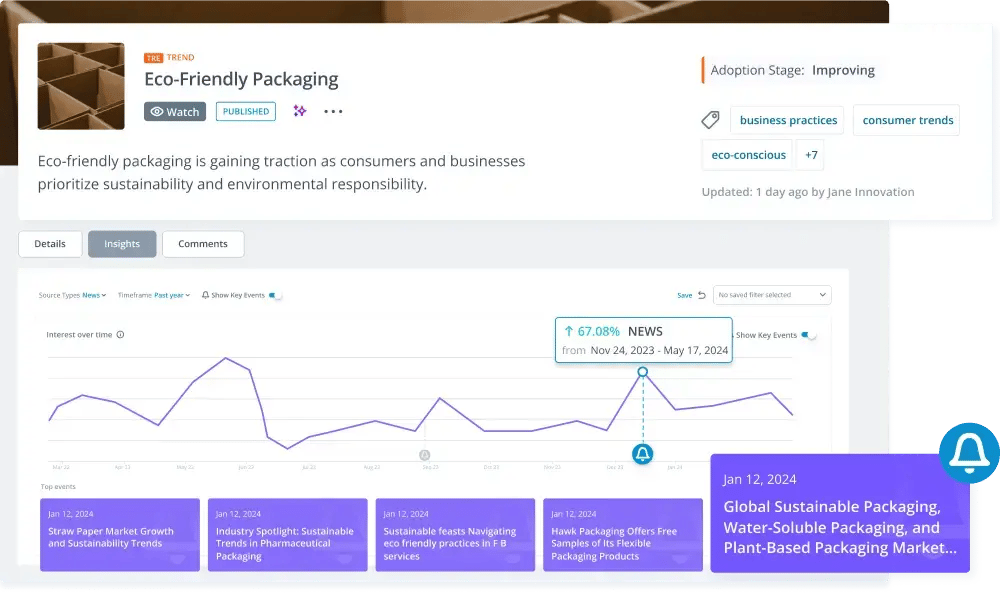
Exhibit 3: Use Prism AI to identify opportunities that match your strategic goals
Map each competitive insight to the decision defined in Step 1. Score each option on 3–5 criteria:
strategic fit,
resource requirements,
competitive response risk,
timing, and
market opportunity size.
This is where internal and external factors get integrated into a single view.
Do not use the SWOT analysis as a standalone output but rather as input to the decision matrix. Strengths and weaknesses are only meaningful relative to competitive positions and market trends. A SWOT analysis that sits in a deck without feeding into a structured decision is sunk cost, not strategy.
Every competitive analysis must end with a name and a date: Who is accountable for the strategic response? By when must the decision be made?
Without this, competitive intelligence becomes institutional knowledge that no one acts on.
Two companies. Two competitive landscapes. Two very different outcomes.
Amazon saw an indirect competitor opportunity before the market validated it. Blockbuster saw direct competitive threats and failed to act. The difference was not in intelligence quality but the willingness to convert competitive insights into decisions before certainty arrived.
In the early 2000s, Amazon was an e-commerce company building internal infrastructure to handle massive traffic spikes. The competitive analysis Amazon conducted was not about existing cloud competitors. There were none.
The insight came from observing an emerging pattern: software companies were building their own infrastructure because no scalable alternative existed. Amazon recognized this as an indirect competitor dynamic - if these companies succeeded in building their own cloud infrastructure, Amazon would face competitors with lower operating costs and faster deployment cycles.
Amazon launched AWS in 2006 after conducting an internal analysis of its own infrastructure needs. The competitive insight was not about existing cloud competitors. It was about an emerging category of indirect competitors - software companies that would increasingly need scalable infrastructure and would build it themselves if Amazon did not provide it.
Amazon identified a potential customer segment before those customers identified themselves. By 2025, AWS reached 32% global cloud infrastructure market share, according to Synergy Research Group - ahead of Microsoft Azure at 20% and Google Cloud at 13%.
The competitive analysis that enabled AWS was not a report on existing competitors. It was a forward-looking read on indirect competitors and market opportunities that had not yet materialized.
Blockbuster operated over 9,000 stores at its peak in 2004 and employed more than 84,000 people. It had abundant competitive intelligence. The company tracked Netflix's growth, monitored declining store traffic, and measured customer dissatisfaction with late fees.
Late fees generated nearly $800 million annually - roughly 16% of total revenues. Customer satisfaction with late fees was measurably poor. Broadband adoption was rising. Netflix launched its subscription model in 1999. DVD kiosks from Redbox were spreading. Walmart was selling DVDs at low prices.
Every signal was available. Every competitive threat was documented. The competitive landscape was clear.
Blockbuster's failure was not a lack of market intelligence. It was the absence of a decision framework that converted signals into action.
In 2000, Netflix offered to sell to Blockbuster for $50 million. The offer was declined. The decision trigger was never defined: "At what point do we shift from physical retail to digital distribution?" Without that trigger, competitive intelligence sat in reports while the market moved.
In 2010, Blockbuster filed for bankruptcy with nearly $1 billion in debt. Netflix is now valued at approximately $300 billion.
A one-time competitive analysis is a sunk cost but a continuous competitive analysis process is a competitive advantage.
Traditional approaches run competitive analysis on a fixed schedule: quarterly reviews, annual strategic planning sessions. This creates gaps. Competitive positions shift between review cycles. By the time analysis reaches strategy teams, the market environment has moved.
ITONICS enables a continuous competitive monitoring process modelled on the same principles that drive effective environmental scanning. Instead of periodic snapshots, the platform runs competitive analysis as an always-on system.
1. Automated signal collection
ITONICS Insights continuously scans millions of verified sources - news, patents, scientific publications, market reports, social media. When competitors announce pricing changes, launch new products, or shift their value proposition to target customers, the platform captures these signals in real time.
Sales teams and marketing teams can feed field intelligence directly into the system. When a competitor changes messaging or a customer references a competitor's offering, that signal enters the same stream as automated data collection.
This is primary research that costs nothing beyond structure - the platform aggregates it alongside secondary market intelligence automatically.
2. AI-powered assessment and filtering
Raw signals are noise without interpretation. ITONICS uses Prism to filter competitive intelligence by relevance to your defined strategic decisions.
/Still%20images/Portfolio%20Mockups%202025/portfolio-find-new-hot-projects-2025.webp)
Exhibit 3: Prism identifies opportunities and projects before competitors even react
You define what matters: specific competitors, market segments, technology areas, customer segments. The platform scores incoming signals against these criteria and surfaces only what crosses your relevance threshold.
This prevents information overload. Instead of reviewing hundreds of competitor moves, strategy teams see the 5-10 signals that matter for active decisions.
3. Structured evaluation in ITONICS Radar
Validated competitive signals feed into ITONICS Radar, where strategy teams assess their implications.
The Radar visualizes your competitive landscape continuously. When a direct competitor moves into a strategic group you were targeting, you see the shift immediately - not in the next planning cycle.
Strategic group mapping becomes dynamic. You track competitive positions in real time and update your own positioning as the competitive landscape evolves.
4. Decision workflows - not reports
Competitive insights in ITONICS connect directly to decision workflows. When competitive intelligence indicates a strategic threat or opportunity, the platform routes it to the accountable owner with context: what decision this informs, what evidence supports it, what the deadline is.
This eliminates the gap between analysis and action. Competitive intelligence does not sit in a slide deck waiting for the next review. It triggers the decision workflow the moment the evidence threshold is met.
5. Portfolio integration and strategic response
ITONICS integrates competitive analysis with portfolio management. When competitive intelligence suggests a strategic shift - entering a new segment, exiting a declining one, accelerating investment in a growth area - that recommendation feeds directly into portfolio reviews.
Strategy teams see competitive positioning alongside their own initiatives. Resource allocation decisions become evidence-based: market data, competitive intelligence, and internal capabilities in a single view.
Search engine optimization changes, new social media platforms, and shifts in online advertising all create competitive openings that traditional annual reviews miss entirely. The continuous process captures these in real time.
The output is not a report. It is a decision log: what was decided, what competitive intelligence supported it, what action was assigned, and who owns the strategic response.
Most competitive intelligence sits in disconnected tools. Market data in one system. Customer feedback in another. Competitor tracking in a spreadsheet.
Strategy teams cannot convert competitive insights into decisions when the inputs are scattered.
ITONICS provides a single platform for strategy teams to collect, structure, and act on market intelligence. Signals from the competitive landscape - new competitor moves, market trends, emerging indirect competitors - are captured and connected to strategic initiatives.
With ITONICS, strategy teams can:
The 7-step competitive analysis framework in this article works on paper. But it works faster and more consistently with a platform built to support it - and continuously, not just quarterly.