Innovation roadmap: What should be on it? How to use it?


Most innovation teams misuse their innovation roadmap. Some organizations have none at all. Others invest in creating one but use it only for executive presentations.
In both cases, the result is the same. The roadmap does not provide direction. It does not drive decisions. And it does not build trust with the leadership teams and stakeholders who need to believe in the innovation portfolio.
This article defines what belongs on a real roadmap and makes it a management tool.
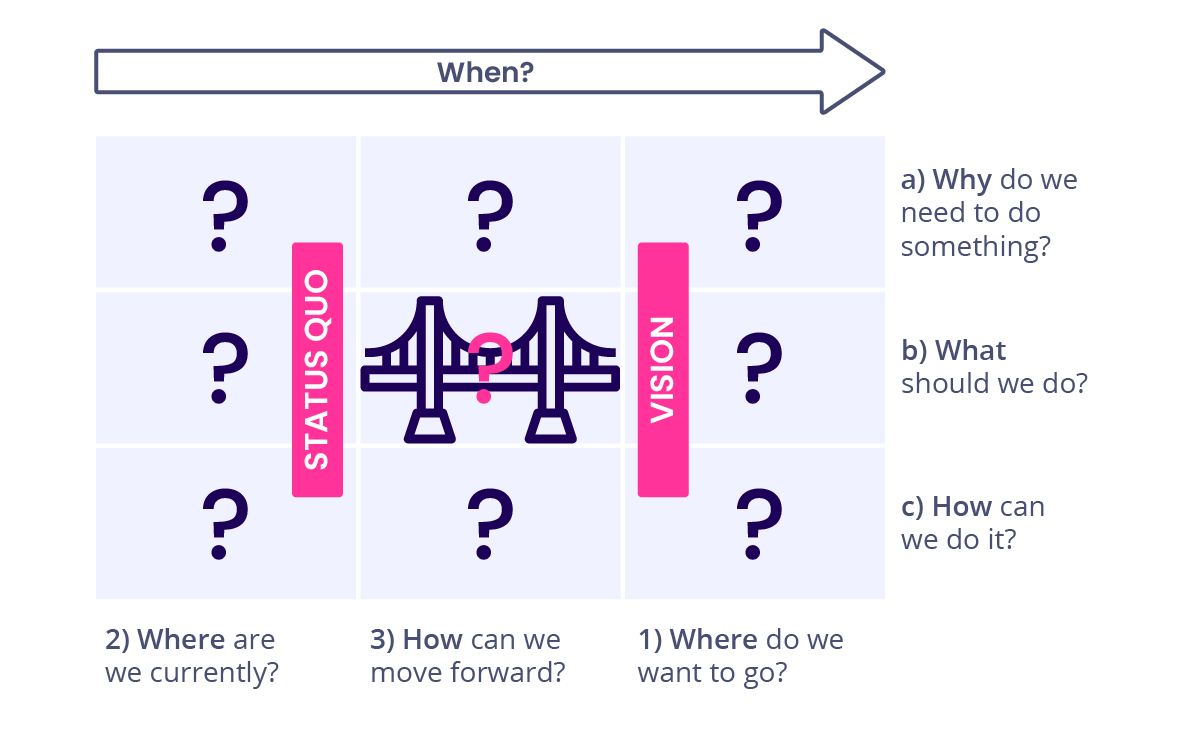
Exhibit 1: The six key questions to answer in innovation roadmapping
Companies fail at innovation roadmapping in two distinct ways.
First, there is no roadmap at all. An innovation framework is missing. Direction is invisible, resource decisions are ad hoc, and nobody can tell you why a given project made the cut.
Second, a roadmap exists, but it only comes out for executive presentations — it looks like steering the organization's strategy, but it only does so on paper.
Both failures carry the same key planning and execution mistakes:
The organization has no shared view of its innovation strategy, no clear plan for where it is going, and no way to course-correct developments.
A roadmap built around timelines and milestones — or assembled purely for a quarterly presentation — tracks what work has happened or is supposed to happen. It tells you an idea started in March and is due in September.
It does not tell you why that idea exists, what customer needs it addresses, or whether the business assumptions behind it still hold. It does not show you the relevance and urgency.
That is an activity tracker, or worse, a slide deck. Most teams build one and call it a roadmap. When market conditions shift — a competitor moves into your industry, a technology disrupts product innovation, a regulation removes a core assumption — an activity tracker stays unchanged. A working roadmap forces a decision.
A roadmap disconnected from live market trends is a historical document. Your organization is making decisions to innovate using data from the past.
Research on innovation portfolios consistently shows that 30 to 40% of development resources go to initiatives that are stuck, will not deliver business value, or reach customers. The reason is the absence of essential kill criteria and a continuous process for making stop decisions.
When the roadmap does not include kill criteria, underperformers survive by default. Human resources will be locked in the wrong topics. Costs will explode. The roadmap becomes a mechanism for protecting high-risk bets and not for managing the innovation portfolio.
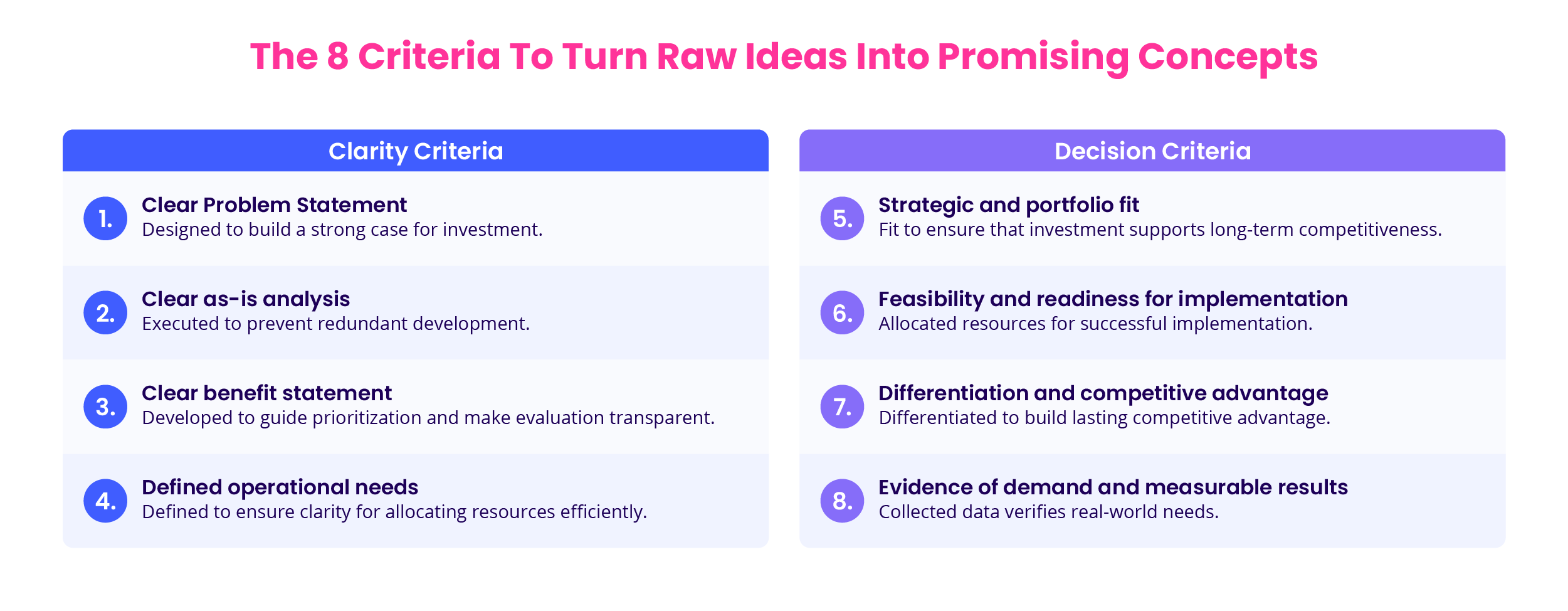
Exhibit 2: 8 criteria to turn raw ideas into promising concepts
Vision, timelines, and KPIs are a starting point. They are not yet a roadmap. Creating a working innovation roadmap requires eight components, organized into three clusters: strategic direction, portfolio structure, and decision discipline.
1. Strategic opportunity spaces
These are the competitive arenas where your organization has chosen to innovate — specific territories where customers have unmet needs, and your business can create value.
Opportunity spaces give the entire organization a shared lens for evaluating new ideas — and a critical tool for keeping teams in focus. Without them, the roadmap is a list of ideas with no shared business logic. Without them, there is no framework for making informed decisions about which ideas deserve investment.
The key value every opportunity space explores is whether there is economic sense behind a project. For example, a company in the industrial goods industry might define three spaces: energy efficiency in existing products, predictive services for target customers, and new business models enabled by connected technology.
The best roadmap tools can visualize this by layers, colors, or labels.
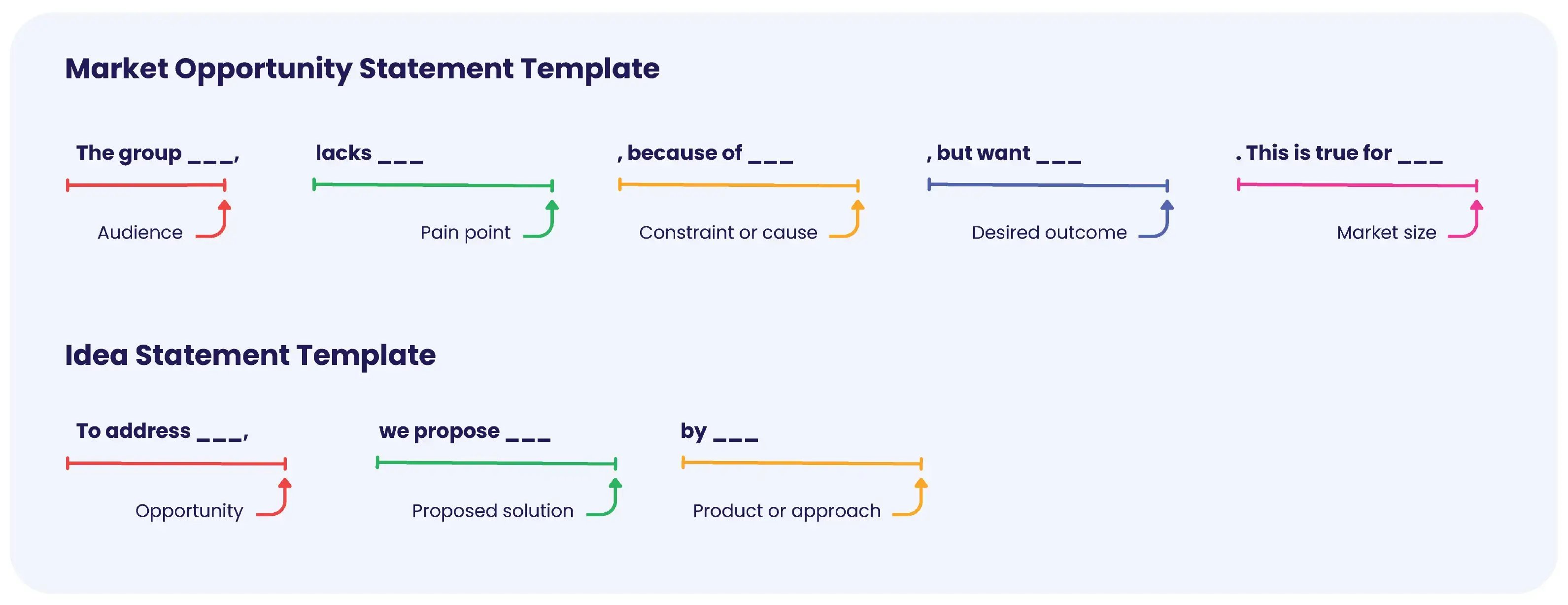
Exhibit 3: Template for formulating an opportunity statement and an idea statement
2. Innovation type classification
Every project should carry a label reflecting one of the types of innovation: incremental innovations (refining current offerings), adjacent innovation (new products for adjacent markets), or radical innovation that creates new categories.
This is a core concept in portfolio management and the most misapplied one. It determines how you define success, how much risk you accept, and how long you wait for returns.
Many organizations apply the same phase-gate process and KPIs to incremental innovations and radical innovation bets. That kills high-potential projects before they can demonstrate value.
Treating all types of innovation identically destroys portfolio balance, increases the risk of killing the wrong projects, and makes it impossible to define what success looks like for each type.
3. Horizon allocation
Horizon planning divides innovation activities across three time frames:
Most companies put 70 to 80% of innovation activities in Horizon 1 without deliberate intent. The 70-20-10 split is a reasonable starting point for most industry contexts, but a company's ambitions highly affect the optimal innovation strategy.
For example, many organizations discover for the first time that they have zero Horizon 3 budget. That is a strategy gap disguised as a budget decision.
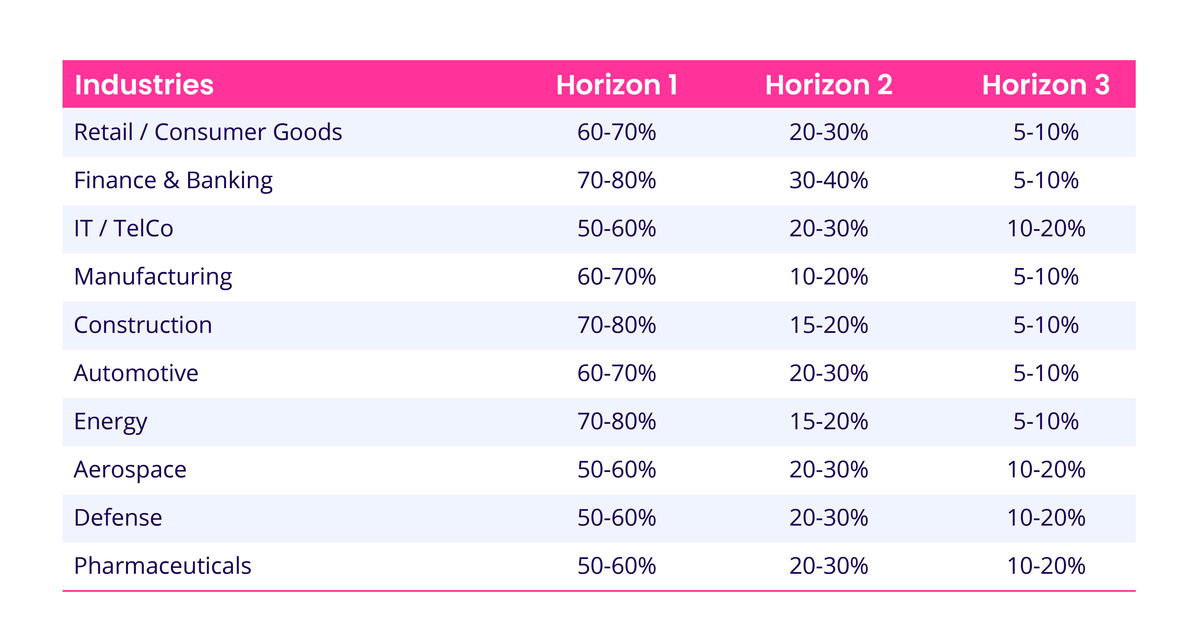
Exhibit 4: Innovation budget distribution across different industries
4. Resource commitment rationale
The roadmap should document not just how much budget each project receives, but why: which opportunity space it serves, which horizon, what return the business expects, and what the risk profile looks like.
When budget rationale is not recorded, the first pressure test wipes out the riskiest bets — which are often the most strategically important ones. The concept is simple: document the risk rationale alongside the budget, and those decisions become defensible. The benefits of transparency here include faster change management alignment and a clearer view of where the organization is taking high risk versus where it is playing safe.
5. Dependencies and sequencing logic
Some projects only succeed if others do first. Mapping these dependencies prevents teams from creating parallel work streams on projects with critical sequencing requirements. It also surfaces the innovation capabilities your organization must develop before it can pursue certain market opportunities.
Most companies find at least one project that assumes a capability that does not yet exist — a knowledge gap that is far better to find in the planning stage than during execution, when internal processes and budgets are already committed.
6. Kill criteria
Every project should carry an explicit stop condition — not a vague performance review, but a specific trigger. "If this pilot does not achieve 15% adoption among target customers by month six, we stop and reallocate resources to other ideas."
Kill criteria are a powerful tool for protecting your innovation portfolio from stranded investments. Creating an innovation culture that accepts stopping is harder than writing the criteria. But companies that do it consistently find that resources flow to the projects with real potential rather than being locked in past their useful life.
7. Assumptions log
Every project on the roadmap rests on assumptions about market size, customer behavior, technology readiness, or competitive dynamics. Recording them creates a shared knowledge base that is visible and challengeable across teams — a core part of any serious innovation management process.
When an assumption breaks, the log tells you which projects are directly affected. Without this process, organizations discover broken assumptions only when project failures surface.
For example, a company betting on a new digital services platform might log the assumption that enterprise customers will pay a 20% premium for integration services. When a competitor enters the market and commoditizes those services, the log surfaces which projects are exposed — before the next budget cycle locks in another year of investment.
8. Strategic signal feeds
The roadmap is a point-in-time document unless it connects to live intelligence. Signal feeds link it to the trends, competitive moves, patent filings, generative AI developments, and regulatory shifts that could change your priorities across every industry.
For example, organizations that update the roadmap only during annual planning cycles are always responding to last year's conditions. Teams that integrate signal feeds can explore new opportunities earlier, catch broken assumptions before they compound, and make an informed decision about adjusting course while there is still room to do so.
This is essential for any organization that wants to build a competitive advantage rather than react to it. The benefits are asymmetric: catching one major market shift early pays for years of signal monitoring.
/Still%20images/Element%20Mockups%202025/portfolio-receive-risk-alerts-2025.webp?width=2160&height=1350&name=portfolio-receive-risk-alerts-2025.webp)
Exhibit 5: ITONICS alert showing an increase in interest in the trend rise of autonomous networks
The plan below gives you a step-by-step guide on how to build a roadmap.
Gather innovation leadership and business stakeholders. This is a conversation about your organization's strategy. Identify three to five competitive arenas your organization will pursue over the next three to seven years.
Each space should be specific enough to rule out projects that do not fit. "Sustainability" is too broad. "Reducing costs in last-mile logistics for target customers through electric vehicle integration" rules things in and out, connects to what customers need, and clarifies which new products and services fall within scope. Cap the first plan at five spaces.
These opportunity spaces define your swimlanes or layers. Each layer presents an innovation program that can be managed individually and forms a comprehensive activity map in sum.
Take your current project list. Assign each project its type (incremental, adjacent, radical) and horizon (H1, H2, H3). Most companies find 80 to 90% of innovation activities concentrated in Horizon 1.
The types of innovation distribution matter as much as the horizon split — if 90% of your portfolio is incremental innovations, you are managing operations, not innovation.
Show leadership the distribution. Most have never seen it laid out this clearly. That conversation shapes the plan for future investment more directly than any strategy document or future-state vision exercise.
For each active project, define one measurable stop condition: "If [metric] does not reach [threshold] by [date], we stop and reallocate resources to higher potential opportunities." Run this as a two-hour working session with your portfolio management team.
Creating accountability where none previously existed is uncomfortable. The goal is not to protect projects — it is to clear the path for the ones aligned to your innovation strategy.
Identify three to five external sources: competitor patent filings, startup funding activity, regulatory pipeline updates, technology readiness assessments, and trends from adjacent industries. Assign one owner per source. Each owner flags changes that affect active innovation activities weekly.
Treat this as a standing process, not a quarterly task. A roadmap without live signal inputs is always behind the market by the time it reaches leadership.
/Still%20images/Roadmap%20Mockups%202025/portfolio-link-projects-teams-and-milestones-2025.webp?width=2160&height=1350&name=portfolio-link-projects-teams-and-milestones-2025.webp)
Exhibit 6: Projects, owners and dependencies shown on one roadmap
At best, a roadmap communicates the innovation strategy. It shows what business model innovation, process innovation, or new product ideas the company focuses on with the expectation of reaching strategic benefits and driving growth.
Yet, when no one owns the roadmap and the update process, the components of the innovation strategy and execution plan will fall apart. Clear roadmap governance is as important for innovation success as a deep understanding of the company's playing field and strategy.
Every roadmap needs a single owner. Not a committee. The owner maintains the assumptions log, triggers reviews when signals demand it, escalates kill decisions to leadership, tracks progress against assumptions, surfaces insights to relevant teams, and communicates updates to business stakeholders.
The owner should sit in the innovation management team, not in project management. Project managers optimize execution. A strategic roadmap needs someone accountable to business goals and innovation strategy — not to delivery milestones or sales targets.
Sales data can inform opportunity spaces, but the roadmap owner must prioritize long-term strategic advantage over short-term revenue pressure. Give the owner authority to call a triggered review without waiting for a scheduled slot. Without that authority, the role is decorative.
Set two types of reviews: scheduled and triggered.
Scheduled reviews happen quarterly. Three questions:
Which assumptions have changed?
Has the horizon allocation shifted?
Are any projects approaching their kill criteria threshold?
Keep it to three hours. Companies that run this process consistently identify misallocated budgets before they compound. When ownership is clear, organizations align faster on kill decisions, resource reallocation, and retiring underperforming initiatives — and progress on the remaining ones accelerates. Innovation initiatives move faster when governance is explicit.
Triggered reviews happen when a signal crosses a threshold — a competitor moves into your opportunity space, new technologies reach commercial readiness in your industry, or a regulation removes a core assumption. These happen within two weeks.
A roadmap that updates only on schedule is always 3 to 6 months behind. Companies that build triggered reviews into their innovation process achieve sustained success. They treat the innovation strategy as a live document, not a static plan — and that is what allows them to out-innovate competitors who only revisit priorities once a year.
Creating an innovation management system that does all eight well is where most teams struggle. ITONICS gives innovation teams the infrastructure to build and maintain all eight components in one connected system.
/Still%20images/Roadmap%20Mockups%202025/portfolio-visualize-critical-paths-2025.webp?width=2160&height=1350&name=portfolio-visualize-critical-paths-2025.webp)
Exhibit 7: Roadmap with projects and milestones showing schedule conflicts
ITONICS lets companies map projects across time horizons, link them to strategic opportunity spaces, and document resource rationale in a real-time visual roadmap interface. Kill criteria and assumptions attach directly to each project, making decision gates visible across teams — not just portfolio management.
ITONICS connects the roadmap to live trends and technology signals. When a technology signal crosses a threshold or a competitive move surfaces in the market, ITONICS surfaces the connection to affected projects immediately. The platform also integrates generative AI capabilities that help innovation teams process large volumes of market signals and surface the insights most relevant to active projects.
For organizations managing large innovation portfolios, ITONICS provides horizon allocation dashboards showing the distribution of innovation activities across Horizon 1, 2, and 3 in real time. You spot imbalances early and adjust before they become liabilities.
Companies that innovate this way achieve success that is visible to the entire organization — and that builds the trust innovation initiatives need to survive leadership scrutiny.