Most companies have ideas. Few have a system to turn them into results. The problem is a lack of structure around the innovation process. Without a repeatable innovation management framework, promising ideas die in committee, budgets get misallocated, and innovation teams pull in different directions.
A structured innovation framework (Exhibit 1) fixes this. It gives teams a common language, a defined process, and clear accountability. It turns scattered innovation efforts into coordinated innovation initiatives that drive measurable business impact.
This article breaks down the five key components of a proven innovation framework, explains how to implement it step by step, and shows why innovation management is no longer optional for businesses competing in fast-moving markets.
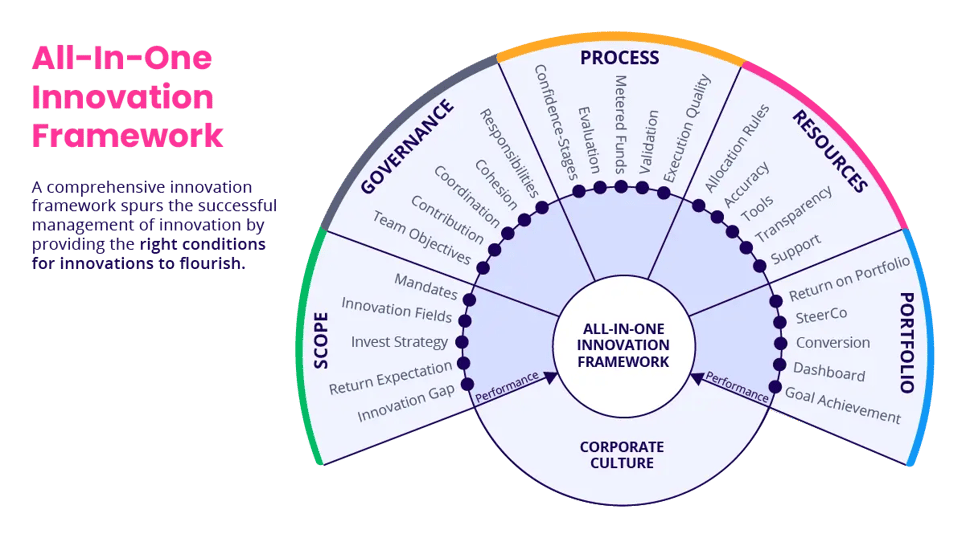
Exhibit 1: The all-in-one innovation framework
What is an innovation framework?
An innovation framework is a structured concept that guides how a business manages and scales new ideas, processes, and solutions. An innovation framework acts as a blueprint for aligning innovation activities with business objectives, ensuring consistency and strategic focus. Without them, companies often struggle with fragmented efforts and missed opportunities.
A comprehensive framework covers all phases of innovation, from idea generation to market launch. This approach helps streamline processes, minimize risks, and maximize value creation. By setting clear guidelines and pathways, teams know exactly how to move innovative projects forward efficiently. Aligning innovation activities with strategic objectives ensures that each project contributes to broader business goals, enhancing resource allocation and supporting long-term growth.
The right framework integrates essential elements like innovation strategy, resources, and execution engines. It encourages collaboration across departments, enabling faster decision-making and smoother project execution. This unified approach supports seamless transitions from concept to completion, boosting the overall innovation capacity.
Adopting an all-in-one innovation framework equips businesses with the tools needed to adapt to a fast-paced market. It sets the foundation for scalable growth and sustainable success, positioning companies as industry leaders ready to meet evolving customer demands.
→ Free Download: The Innovation Playbook
The benefits of a systematic innovation framework
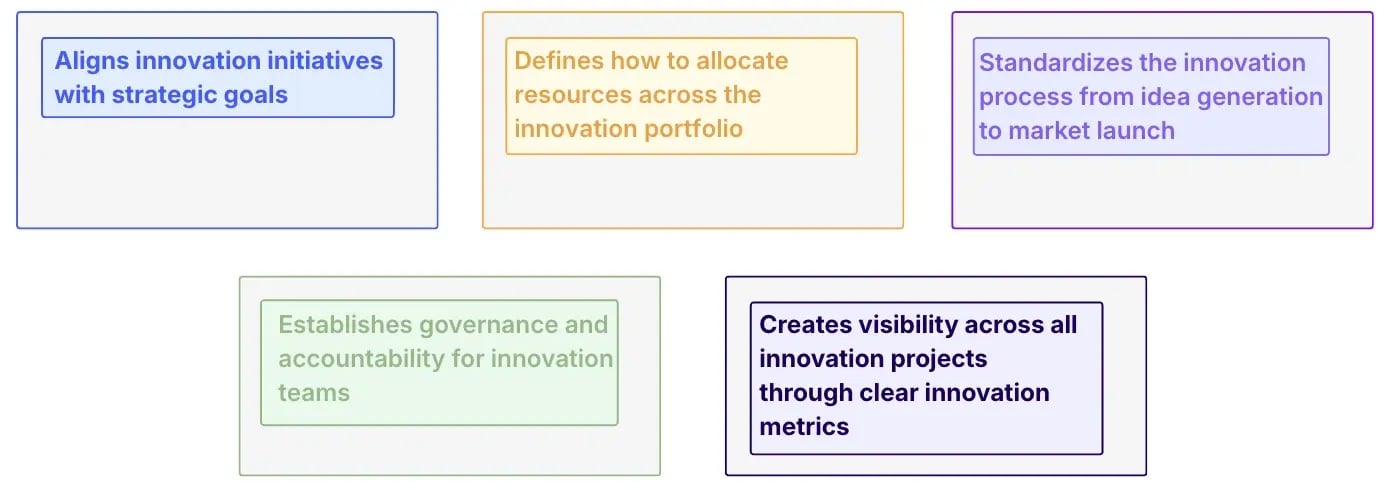
A systematic and comprehensive innovation framework delivers clear benefits (Exhibit 2) that enhance a company’s ability to innovate effectively.
First, it promotes alignment across teams and departments. With a unified framework, everyone works toward the same goals, eliminating duplication of efforts and improving collaboration. This coherence boosts productivity and ensures that resources are used wisely.

Exhibit 2: The benefits of systematic innovation management
Second, it accelerates the time-to-market for new products or services. By having structured phases, teams can move from ideation to execution more quickly. This organized flow minimizes bottlenecks and supports swift decision-making, giving businesses a competitive edge in fast-moving industries.
Third, it enhances risk management. An innovation framework provides checkpoints and evaluation stages that help identify potential issues early. This proactive approach reduces the chances of costly mistakes and helps refine ideas to be more market-ready and impactful.
A systematic innovation framework can also lead to the development of innovative solutions that meet market needs. By facilitating open innovation processes, organizations can collaborate effectively, capture valuable insights, and co-create novel ideas.
Finally, it fosters a culture of continuous improvement and learning. With a framework in place, insights from past projects are systematically gathered and applied to future initiatives. This feedback loop encourages ongoing innovation and supports a mindset that embraces change and adaptation, ensuring long-term resilience and growth.
The challenges of implementing a systematic innovation framework
While a systematic innovation framework offers numerous advantages, implementing it within an organization is not without its challenges. Companies often face hurdles such as a lack of urgency, scattered teams, inconsistent messaging, and insufficient support systems.
Addressing these obstacles is crucial to ensure that innovation efforts align with the company's strategic objectives and lead to sustainable growth. Understanding these challenges helps organizations anticipate potential roadblocks and develop strategies to overcome them, paving the way for successful innovation initiatives that drive competitive advantage and foster a culture of continuous improvement.
Lack of urgency
One major issue is the lack of urgency for innovation within the constraints of the existing business model. Many firms, especially those with established products or services, fail to prioritize innovation because they are comfortable with their current success. This complacency prevents the proactive adoption of an innovation policy, making it difficult for new ideas to gain traction.
Scattered teams and low coordination
Another common challenge is the presence of scattered teams and low coordination. In large or global organizations, teams often operate in silos, focusing on their specific tasks without collaboration. Integrating diverse perspectives from external collaborators, such as customers and academic institutions, is crucial to enhance creativity and ensure innovations meet customer needs.
This disjointed structure leads to duplicated efforts, misaligned goals, and missed opportunities for collective problem-solving. Without an overarching policy that mandates cross-functional coordination, innovation efforts become fragmented and less effective.
Inconsistent messaging
Low internal communication and inconsistent messaging from leadership further hinder the implementation of an innovation policy. When management fails to clearly communicate the importance and benefits of a structured innovation framework, employees are left without a unified understanding of its relevance. This lack of cohesion results in minimal engagement and weak execution.
Insufficient support systems
Finally, insufficient infrastructure and support systems are significant barriers. Companies that do not establish the right conditions—such as dedicated innovation teams, streamlined communication channels, and accessible resources—struggle to sustain any policy for innovation.
Without these foundational elements, even the most well-intentioned frameworks fall flat and fail to embed innovation as a strategic priority.
The 5 dimensions of the best innovation framework
A framework that only defines a process has no governance. One that builds governance but ignores resources will stall immediately. Thus, sustainable growth requires all key components working together simultaneously:
-
Innovation scope - where to compete and what to prioritize,
-
Innovation governance - who decides, and who is accountable,
-
Innovation process - how ideas move from generation to implementation,
-
Resources - the people, capital, and tools needed to execute, and
-
Innovation portfolio - the managed collection of bets across time horizons.
These dimensions are the foundation for a structured approach that empowers organizations to move from ideation to execution seamlessly. Together, these enable a structured, holistic approach to innovation (Exhibit 3) that sets the right conditions to drive long-term success and a thriving innovation culture.
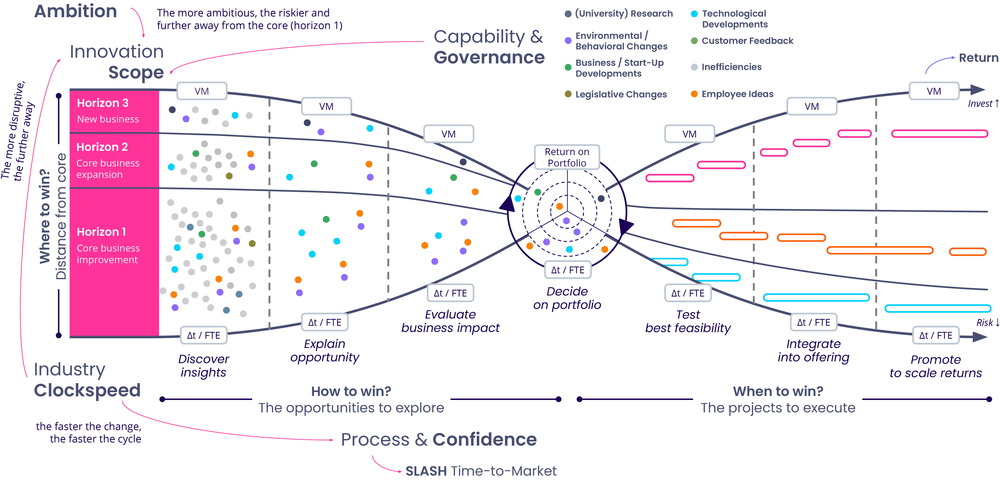
Exhibit 3: A holistic approach of innovation
Innovation scope
Innovation scope defines the strategic boundaries within which innovation initiatives are pursued, ensuring that efforts align with the company’s vision and market positioning. It clarifies which areas—whether product development, service enhancements, or operational efficiencies—will be prioritized for innovation.
This dimension helps focus resources and creativity on high-impact opportunities that drive competitive advantage, avoiding scattered attempts that dilute impact and stretch teams too thin.
By setting a clear innovation scope, organizations can prevent misaligned projects and prioritize investments that align with strategic goals. It enables leaders to decide whether to concentrate on core business improvements, adjacent market opportunities, or transformative breakthroughs.
This targeted approach fosters a shared understanding among teams, streamlining efforts and supporting a culture where innovation aligns with measurable business outcomes.

Innovation parameter 1: Innovation Gap
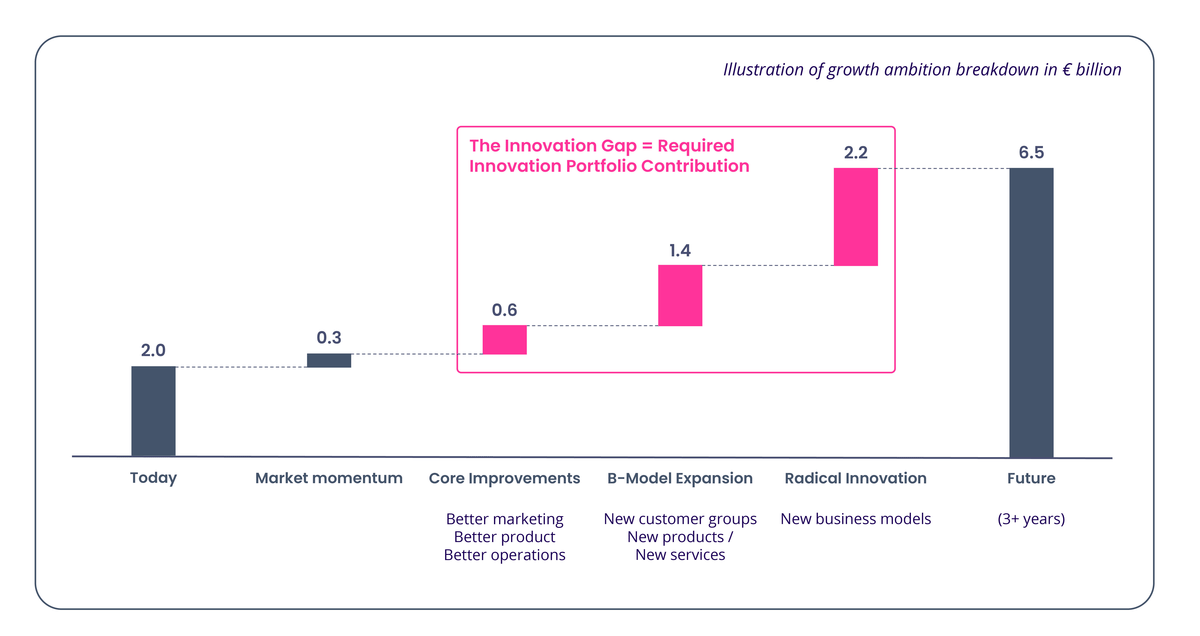
Leadership's clear expressions of their (financial) expectations about the contribution needed from innovation.
Innovation parameter 2: Return Expectation
Clear translation of leadership expectation into how much is needed as returns from Horizon 1 (improving the core), Horizon 2 (expanding the core), and Horizon 3 (new business models).
Innovation parameter 3: Invest Strategy
Clear translation of leadership expectation into how much is needed as investment into Innovation Horizon 1 (improving the core), Horizon 2 (expanding the core), and Horizon 3 (new business models).
Innovation parameter 4: Innovation Fields
Clarity of the innovation fields focused (=growth areas) along Horizon 1 (improving the core), Horizon 2 (expanding the core), and Horizon 3 (new innovative business models).
Innovation parameter 5: Mandates
Clear codified team mandates (=innovation scope) that are aligned with the corporate ambition.
Innovation governance
Innovation governance provides the framework for decision-making, accountability, and leadership within the innovation process. It establishes the roles, responsibilities, and oversight mechanisms needed to guide innovation activities effectively.
By defining who is responsible for approving projects, managing resources, and monitoring progress, innovation governance ensures that initiatives are strategically aligned and efficiently managed.
Strong governance supports a balance between creative freedom and strategic control. It helps companies avoid the pitfalls of uncoordinated innovation efforts by setting clear procedures for evaluating ideas, allocating resources, and mitigating risks.
Additionally, innovation governance promotes transparency and cross-functional collaboration by involving key stakeholders across departments. This organized approach not only accelerates decision-making but also builds trust and consistency throughout the organization, fostering a stable environment where innovation can thrive.

Innovation parameter 1: Team Objectives
Each team/innovation engine has a clear objective that directly contributes to the company’s KPIs.
Innovation parameter 2: Contribution
(Each of) our innovation engines has a positive profit contribution on average (over three years).
Innovation parameter 3: Coordination
There is a platform that allows transparent exchange, coordination, and communication between the teams.
Innovation parameter 4: Cohesion
We have (access to) resources to complete the entire innovation process (from discovery to scaling).
Innovation parameter 5: Responsibilities
The team’s objective is split into mutually exclusive, collectively exhaustive responsibilities.
Innovation process
The optimal innovation process is a structured sequence of activities that transform ideas into market-ready solutions. It encompasses stages such as ideation, evaluation, prototyping, testing, and final implementation.
Collaboration in the innovation process is crucial to develop innovative solutions, as it allows organizations to co-create with external partners and integrate external ideas effectively.
A well-defined innovation process provides a clear roadmap for teams, ensuring that each step is strategically aligned and efficiently executed. By standardizing these stages, organizations can minimize uncertainties, reduce development times, and foster consistent quality.
This process-oriented approach encourages collaboration, feedback loops, and iterative improvements, enabling companies to adapt swiftly to changing market conditions and customer needs.
.webp?width=854&height=546&name=PostFinance_Innovation%20Process%20(1).webp)
Innovation parameter 1: Confidence Stages
At every stage of the innovation process, we increase the confidence level of our opportunities.
Innovation parameter 2: Evaluation
Decisions are made on the evidence collected. If not enough/new evidence is collected, we kill opportunities or projects.
Innovation parameter 3: Metered Funding
We provide resources (and additional funding) for a new development phase based on the confidence gained in the prior stage (metered funding).
Innovation parameter 4: Validation
We derive confidence in our opportunities from multiple concrete data, complete coverage, and unbiased collection.
Innovation parameter 5: Execution Quality
We always finish tasks in scope/quality and at the cost level expected.
Resources
Resources are the foundation that supports every aspect of the innovation framework, encompassing both human and financial capital. Without the right resources, even the most well-structured innovation processes and governance systems can falter.
Human resources involve having the right talent, skills, and expertise to drive creative thinking and execution, while financial resources ensure that projects have the funding necessary to progress from idea to realization. Investing in training, development programs, and recruitment of diverse talent further strengthens a company’s capacity to innovate effectively.
Beyond people and funding, resources also include access to technology, data, and external partnerships that can enhance innovation capabilities.
Advanced tools, software, and collaborative platforms empower teams to streamline their workflow, accelerate testing, and gather insights efficiently. A robust resource allocation strategy ensures that these assets are deployed strategically, supporting high-priority initiatives and fostering an environment where innovation can thrive. Ensuring adequate resources allows organizations to not only launch new projects but sustain and scale them for long-term impact.
Innovation parameter 1: Allocation Rules
We have rules for allocating resources to each project.
Innovation parameter 2: Accuracy
We always finish project tasks on time and at the cost level expected.
Innovation parameter 3: Tools
If we need to accelerate, it is not compensated by reducing the scope in important aspects.
Innovation parameter 4: Transparency
Changes in project plans are communicated as delays appear.
Innovation parameter 5: Leadership Support
Leadership supports failing fast and provides other support as needed.
Innovation portfolio
An innovation portfolio is a curated collection of projects and initiatives that collectively drive a company’s growth and transformation. It serves as a strategic tool for balancing risk and reward by categorizing projects based on their potential impact and time horizon.
Aligning projects within the innovation portfolio with the business model is crucial for ensuring that initiatives not only drive growth but also fit within the strategic framework of the organization.
By diversifying the types of innovation—ranging from incremental improvements to disruptive breakthroughs—companies can maintain stability while exploring new opportunities. Managing an innovation portfolio helps ensure resources are allocated efficiently and that projects align with broader business objectives.
Effective portfolio management requires continuous assessment and adaptation. Regularly reviewing the portfolio allows companies to pivot or reprioritize based on market trends, technological advancements, and changing customer needs.
This dynamic approach helps organizations avoid investing too heavily in low-impact ideas or missing out on high-potential opportunities. A well-maintained innovation portfolio provides clear visibility into the pipeline of initiatives, enabling informed decision-making and fostering a culture of innovation that is both ambitious and strategically sound.

Innovation parameter 1: Return on Portfolio
The volume/expected return of our potential opportunities and committed projects exceeds our aspired volume/return (=leadership expectation).
Innovation parameter 2: Steering Board
We have a steering board that meets regularly and makes portfolio adjustments based on the evidence collected.
Innovation parameter 3: Conversion Rates
We know the conversion rates along the complete innovation funnel to not let opportunities/projects slip.
Innovation parameter 4: Dashboard
We have an easy-to-access, up-to-date innovation opportunity and project board, consisting of all relevant information.
Innovation parameter 5: Goal Achievement
The actual returns we realize match the returns we expected.
Disruptive innovation vs. incremental innovation: where to focus
Most organizations default to incremental innovation. It is safer, easier to justify internally, and faster to execute. But incremental innovation protects the existing business model instead of creating new markets.
Disruptive innovation creates new customer segments, new value propositions, and entirely new business models. Clayton Christensen defined disruptive innovation as innovation that enters markets incumbents ignore, then moves upmarket to challenge established players.
The ten types of innovation framework (developed by Doblin) offer a more complete view of where innovation can happen. It identifies innovation opportunities across three dimensions:
-
configuration - how you operate,
-
offering - what you deliver, and
-
experience - how customers engage.
The best innovation strategies balance sustaining innovation with disruptive innovation. Allocate investment intentionally across all three horizons. Most leading companies target roughly 70% of innovation investment in Horizon 1, 20% in Horizon 2, and 10% in Horizon 3 - though the right ratio depends on your strategic goals and competitive position.
Innovation teams: structure, roles, and accountability
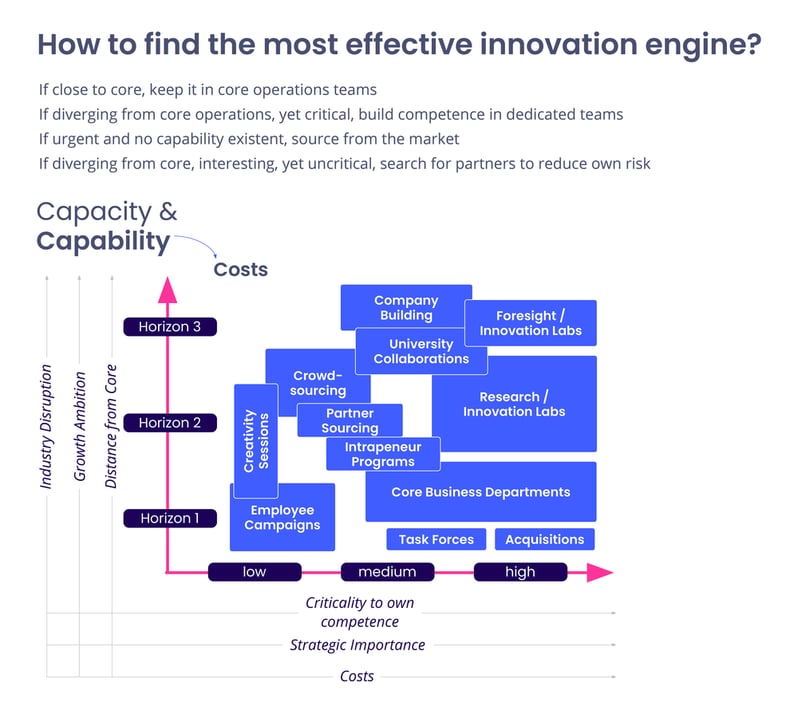
Innovation teams fail when they have unclear mandates, no governance support, and insufficient resources to complete the entire innovation process. The right structure depends on your innovation scope. Organizations running multiple innovation horizons typically need separate teams with distinct objectives, budgets, and success metrics.
Core innovation team roles:
- Innovation manager: Owns the end-to-end innovation management process and connects it to business strategy
- Trend scout: Monitors emerging technologies, industry trends, and market dynamics
- Ideation lead: Facilitates idea generation and structures creative problem-solving sessions
- Portfolio manager: Tracks and prioritizes innovation initiatives across the portfolio
Diverse perspectives improve innovation outcomes. Teams with mixed backgrounds (technical, commercial, design, customer-facing) generate more innovative ideas than homogeneous groups solving the same problem with the same assumptions.
An open innovation framework expands this further. It involves external partners, customers, startups, and academic institutions in the innovation process. This accelerates idea generation and brings in expertise that internal teams lack.
Measure innovation team performance with clear key performance indicators. Track funnel conversion rates, not just output volume: How many ideas enter? How many reach validation? How many reach the market?
Implementing a comprehensive innovation framework step-by-step
Implementing a comprehensive innovation framework step-by-step involves a structured approach that guides organizations through the process efficiently (Exhibit 1).
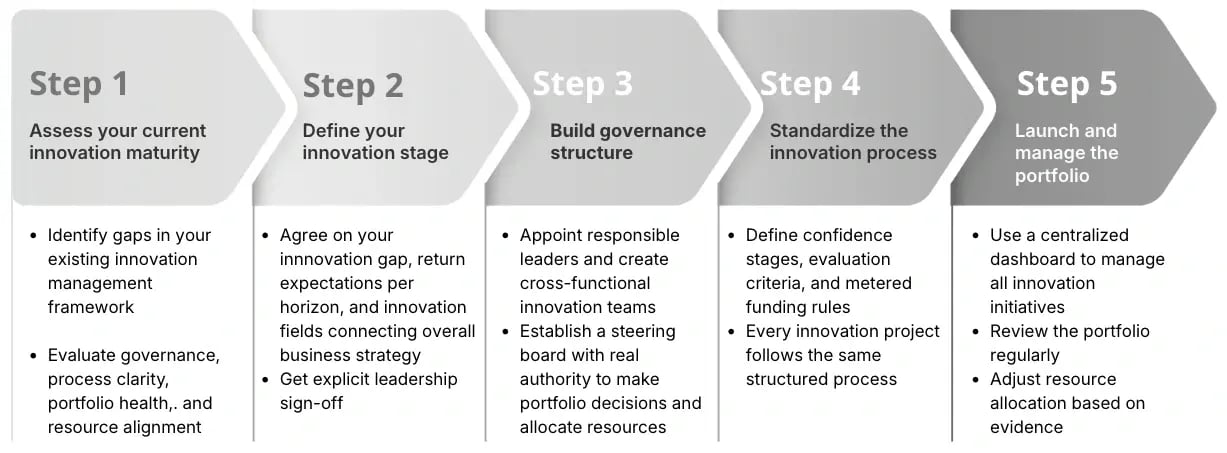
Exhibit 4: The 5 steps to implement your innovation framework
Periodic reassessment is not optional. Market dynamics shift. Strategic goals evolve. Your innovation framework must evolve with them or become a bureaucratic obstacle to the innovation culture you are trying to build.
Note: This infographic is clickable
Improving innovation processes and your innovation framework
Improving an existing innovation framework starts with a clear understanding of current capabilities and areas for growth.
Step 1: Complete the innovation maturity model assessment
Completing the ITONICS Innovation Maturity Assessment provides a comprehensive evaluation of an organization’s innovation readiness, highlighting strengths and pinpointing areas that need enhancement. This assessment offers valuable insights into how well your current framework supports innovation and where adjustments are necessary.
Step 2: Identify the gaps based on the innovation maturity assessment
Using the results of the maturity assessment, companies should begin by addressing key gaps. For example, if the assessment shows weaknesses in innovation governance, organizations can strengthen leadership roles and decision-making structures to ensure smoother project oversight.
If the results reveal a lack of integration in cross-functional teams, efforts should be made to boost collaboration and streamline communication channels to enhance idea flow and implementation efficiency.
Step 3: Plan actions to close the gaps
With these targeted improvements, businesses can start refining their innovation framework. At this stage, companies should formulate a list of ideas that will close the gaps and strengthen the innovation capability. Introducing advanced tools, training programs, rethinking the innovation process, its clarity, or strategic partnerships are candidates for such an idea list for innovation framework improvement.
Step 4: Take action
Prioritize the ideas to improve the innovation framework and start with the implementation. Control the effectiveness of each action and iterate as necessary.
Step 5: Periodic re-evaluation of innovation maturity
Periodic review and realignment based on the assessment findings promote continuous improvement, empowering the framework to evolve with changing market dynamics and organizational goals.
Innovation management software: execute your framework at scale
Innovation management software gives teams the infrastructure to manage innovation at scale. It replaces fragmented spreadsheets, email chains, and siloed documents with one centralized system of record.
ITONICS is built around the five dimensions of the all-in-one innovation framework. It enables organizations to:
- Eliminate information silos: Centralize all innovation projects, innovative ideas, and market insights in one platform - across all business units
- Streamline idea management: Capture, evaluate, and prioritize ideas from across the organization, including customers and external partners
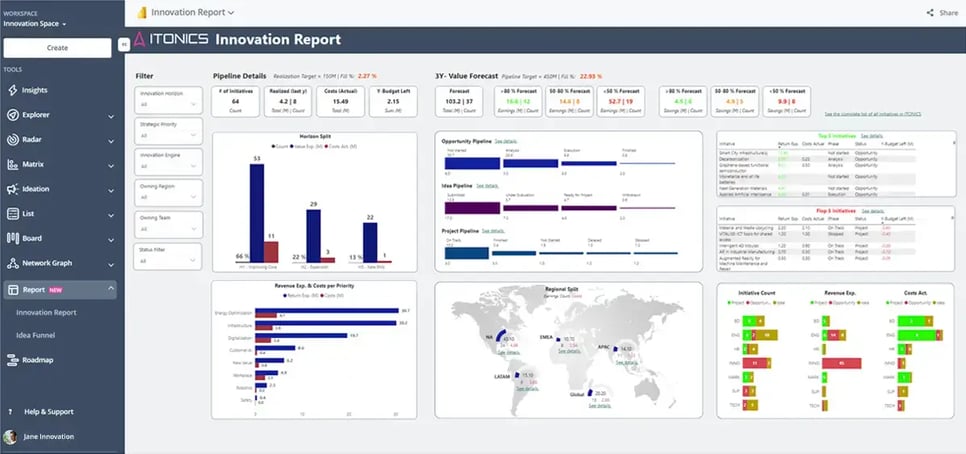
- Track innovation progress: Real-time dashboards and automated reporting give leadership full visibility into the innovation portfolio without manual effort
- Manage the entire innovation process: From trend scanning and idea generation through validation, portfolio management, and scaling
- Accelerate innovation: AI-powered recommendations surface the most promising ideas and flag emerging technologies before competitors act on them
- Foster innovation culture: Collaboration tools connect distributed innovation teams in real time, regardless of location
ITONICS supports the complete innovation management process. From identifying signals in the external environment to managing breakthrough innovation projects at scale, it gives innovation managers, portfolio managers, and chief innovation officers the tools they need to turn strategy into outcomes.
FAQs on all-in-one innvations frameworks
Which platforms provide innovation maturity assessments?
Platforms like ITONICS offer built-in or guided innovation maturity assessments to help organizations evaluate their innovation readiness, identify gaps, and plan improvement paths aligned with a structured innovation framework.
What are the core components of a scalable innovation framework?
A scalable innovation framework includes clearly defined processes, governance structures, digital infrastructure, innovation metrics, and cultural enablers - ensuring innovation efforts are aligned, repeatable, and measurable across the organization.
How can digital platforms support structured innovation execution?
Digital platforms like ITONICS support structured execution by combining workflows, centralized dashboards, AI-powered insights, and collaboration tools - enabling teams to translate innovation strategies into actionable, trackable outcomes.
Which platforms provide customizable modules for innovation management?
ITONICS offers fully customizable modules that adapt to each organization’s innovation framework. Its Innovation OS allows companies to configure processes, governance models, and portfolio views to match strategic needs to ensure flexibility across every phase of innovation.