Best 6 R&D management software to govern R&D operations


R&D management software is the digital tool to govern the entire lifecycle of research projects, from discovery to commercialization. These platforms enable different research & development groups to collaborate efficiently, ensuring seamless communication across departments and external partners.
R&D management software also facilitates partnerships with academic institutions, enabling collaborative research projects and access to cutting-edge knowledge and early research insights.
By allowing real-time collaboration, making more informed decisions, and providing accessibility to business indicators, they streamline workflows and reduce costs. Advanced capabilities like AI-driven insights and roadmapping provide actionable insights that inform project selection and accelerate innovation, supporting data-driven and informed decision making through integration of internal and external data sources. Leveraging these insights and external intelligence provides a competitive advantage by enabling organizations to outpace rivals (Exhibit 1).
/Still%20images/AI%20Mockups%202025/portfolio-find-new-hot-projects-2025.webp?width=2160&height=1350&name=portfolio-find-new-hot-projects-2025.webp)
Exhibit 1: Real-time AI-driven insights and roadmapping in reports and dashboards
Whether managing new product development or technology scouting, R&D software enhances efficiency, transparency, and innovation, ensuring projects match strategic business objectives while optimizing resources throughout the entire project portfolio.
The right software streamlines product development by ensuring departments have all the knowledge on customer requirements, project progress, and new product ideas. It centralizes knowledge, enabling cross-functional communication to share insights, reduce silos, and accelerate decision-making. Using the right tools ensures that product development teams can efficiently gather and respond to feedback from customers, leading to better product iterations and alignment with market needs.
A well-implemented solution supports digital transformation as it allows organizations to enhance collaboration, automate workflows, and improve access to critical data. Product development software supports Agile methodologies and iterative development, enabling teams to adapt quickly and better align with customer needs. This increases visibility, creates synergies, and helps develop the best ideas into market-ready solutions while adapting to market shifts.
As a best practice, selecting the right digital research & development tool starts for companies by creating a list of their key requirements and strategic objectives. The ideal platform should perfectly match the requirements, ease your operations, and provide an easy-to-use interface.
A robust tool enables organizations to optimize research efforts, allocate resources efficiently, and maintain a competitive edge by accelerating production cycles. When evaluating platform features, it is crucial to consider robust data management capabilities that centralize, organize, and analyze research data from multiple sources, including patents, scientific literature, and market intelligence. Businesses should evaluate scalability, integration capabilities, and automation potential to ensure long-term value.
By adopting a solution that enhances transparency and efficiency, companies can improve R&D outcomes, strengthen market positioning, and drive sustainable growth in an increasingly competitive environment. Generating reports from integrated data sources enables teams to synthesize research findings and market intelligence, supporting strategic decisions and timely project pivots.
Digital R&D tools provide companies with the necessary capabilities to streamline tasks, improve productivity, and develop synergies across departments. Integrated task management and tracking tasks are essential for organizing and monitoring research and development activities within R&D projects, ensuring alignment with strategic goals and timelines. Ultimately, these tools contribute to better decision-making, helping companies stay agile while maintaining cost efficiency.
By adopting solutions with these capabilities, developers and managers gain a benefit in staying ahead of competitors, close to customer needs, and delivering groundbreaking products to market.
One essential aspect is workflow configuration, allowing businesses to digitalize processes while maintaining control over project execution. Stage gate workflows provide structured decision points to assess project progress and resource allocation, ensuring that each phase of R&D is evaluated before moving forward. This ensures that developers, managers, and stakeholders stay on top of their efforts efficiently.
The best software allows for a flexible configuration that adapts the software to what project managers and process managers need (Exhibit 2).
/Still%20images/Workflow%20Builder%20Mockups%202025/portfolio-use-approval-workflows-2025.webp?width=2160&height=1350&name=portfolio-use-approval-workflows-2025.webp)
Exhibit 2: Flexible configuration of workflows
Interactive dashboards are another critical component that portfolio managers and leadership need to oversee the entire portfolio and costs, manage resources, and monitor project movement. Audit trails within these dashboards ensure comprehensive and secure records of project activities, supporting regulatory compliance and knowledge retention throughout the R&D process. With a clear view of priorities and performance, services can optimize investments while reducing unnecessary costs.
The best software allows you to slice and dice the dashboard view to what insight matters and can be easily shared with other relevant stakeholders.
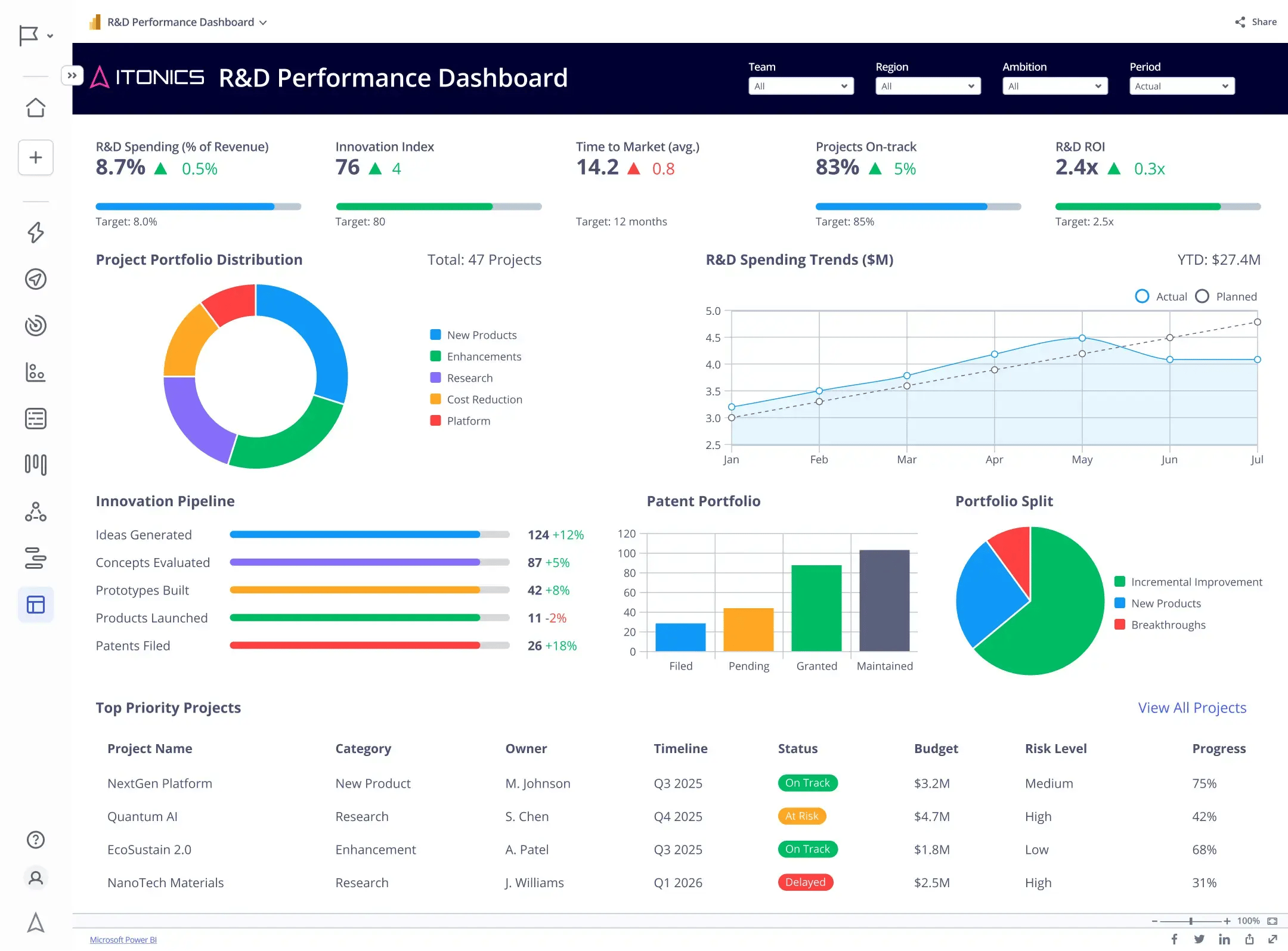
Exhibit 3: R&D Dashboard
To optimize resource allocation, interactive roadmaps help communicate long-term vision and connect new product development projects with market demands (Exhibit 3). These tools enhance transparency, allowing contributors to manage milestones and adjust strategies based on evolving customer needs. Effective data capture through integrated tools, such as electronic lab notebooks and laboratory information management systems, supports accurate planning and knowledge retention in R&D projects.
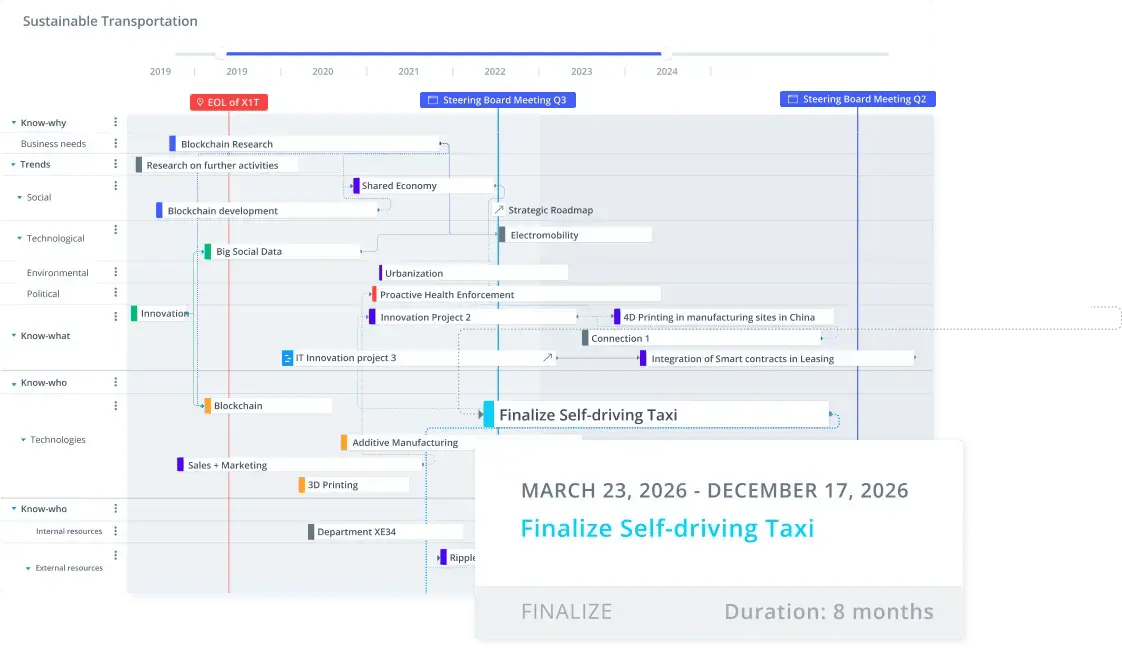
Exhibit 3: Interactive roadmaps to share new product development process plans
Phase-gate boards enable projects to evolve from concepts to fully developed solutions. By breaking down initiatives into phases involved, organizations can control progress, manage bottlenecks, and ensure that only the best ideas with the best benefit-cost ratios move forward.
/Still%20images/Kanban%20Board%20Mockups%202025/capabilities-views-kpi-aggregation.webp?width=2160&height=1350&name=capabilities-views-kpi-aggregation.webp)
Exhibit 4: Phase gate kanban boards to grow from idea to implementation
Effective R&D software enables research teams to track projects, allocate resources efficiently, and optimize portfolio management. The following six tools are among the best for streamlining R&D operations, creating unique benefits for different needs.
ITONICS is an AI-powered research & development and innovation management software designed to support technology research, strategic foresight, and portfolio management. It integrates trend research, risk analysis, and scenario planning into a single system, making it ideal for enterprises managing complex R&D pipelines and driving innovation.
Accolade by Sopheon is a strategic portfolio and governance platform for large research & development organizations. It helps align research & development investments with business objectives through structured stage gate processes, scenario planning, and regulatory compliance tracking.
Planisware offers enterprise-grade project and portfolio management, catering to multi-phase, multi-stakeholder R&D projects. It provides predictive analytics, financial tracking, and automated resource allocation.
Built on Atlassian’s Jira ecosystem, Jira Align helps R&D teams using agile methodologies like Scrum, SAFe, and Kanban. It syncs real-time project tracking, team collaboration, and development planning.
Brightidea focuses on creating, evaluating, and developing R&D ideas through crowdsourcing, AI-driven scoring, and customizable workflows.
MasterControl provides automated document management, quality control, and compliance.
Implementing a digital R&D management platform starts with assessing your team’s needs—whether it’s project management, new product development, or collaboration.
Choose a platform that aligns with your research & development structure and scalability goals. Begin with a pilot phase, integrating the tool into existing workflows and ensuring training for smooth adoption. Make use of official training resources and user manuals to fully understand features, troubleshoot issues, and maximize the benefits of your R&D management software.
Leverage automation, data-driven insights, and real-time analytics to streamline operations. Integrated platforms also support the management and monitoring of intellectual property and patent filings, helping secure innovation, maintain compliance, and inform strategic decisions. Regularly review performance metrics to refine processes and maximize efficiency. A well-integrated R&D tool enhances innovation cycles, decision-making, and strategic foresight, helping teams stay competitive in fast-evolving industries.
When you need an enterprise-grade platform, reduce manual data handling, and streamline workflows, ITONICS is just the right software for your success.