




Innovation management software implementation runs into one obstacle more than any other: it asks department heads to expose work and budget they have controlled solely for years.
Most organizations run innovation through a dozen scattered, undocumented processes spread across business units. Or, they prioritized short-term success over groundbreaking ideas. A system with the ability to surface all of it is treated as busy work, not an upgrade.
Implementation succeeds when the trade gets made: visibility in exchange for funding bigger ideas or solutions to business problems than any single unit could develop alone.
This guide covers the four phases that decide whether that trade happens, the common pitfalls at each one, and the pain points that the implementation of an innovation management platform is meant to solve.
|
Phase |
Biggest pitfall |
What to do |
|---|---|---|
|
1. Innovation visibility plan |
Skipped in favor of jumping straight to vendor demos |
Map where innovation work happens, identify who controls the budget, set an incremental-to-breakthrough baseline |
|
2. Evaluate and select |
Software built for one organizational model that does not match how the company actually works |
Test real scattered scenarios live, evaluate centralized and decentralized features, confirm how the tool handles budget conflicts |
|
3. Rollout and go-live |
Department heads quietly protect their old systems after agreeing to the tool |
Start with one business unit, restate the visibility-for-funding trade explicitly, address authority fears directly in training |
|
4. Post-implementation |
Tracking usage instead of whether the portfolio mix actually shifted |
Re-run the incremental-to-breakthrough split quarterly, show department heads concrete value, treat backsliding as a broken trade |
Exhibit 1: 4 phases of innovation management software implementation
Why innovation software rollouts stall
For many organizations, a dedicated innovation management tool is uncharted territory. A few stakeholders want it to combine strategy, idea management, and progress tracking. They want teams to work better together and innovate new technologies, new features, or automate business processes.
Yet the expected users aren't enthusiastic, and the efforts don't scale. The tool never delivers on its business promises.
A process that never existed before
Trend scouting lives in one person's bookmarks. A constant stream of valuable ideas lives in three different Slack channels. Customer feedback lives in the product manager's head. A startup conversation lives in someone's inbox.
None of it is shared. No one outside the business unit running it has ever asked for those insights. As a collaborative unified process never existed, no one raised the challenges and thought about a solution.
A tool that asks every business unit to log this work in one place first challenges the status quo. The innovation management software implementation is not about digitalizing research activities, idea collection, or idea management; it creates a process and transparency that never existed before.
This increases the complexity and effort significantly. Different processes need to be streamlined. Structured innovation workflows need to be developed. You also need to connect the product team here and a venture team there.
What department heads are actually protecting
Tell a department head their team will get an innovation management platform, and they nod. Six weeks later, the platform asks them to log every project, every budget line, every early-stage technology bet they have run on their own authority, and the nodding stops.
Local innovation budget, even a small one, buys the freedom to fund what a department head believes in without asking permission. Centralized visibility removes that freedom, whether anyone is willing to acknowledge it or not.
The resistance shows up as missing data, late updates, and initiatives logged only after they are safely finished. An important part is the funding of new ideas. Without business unit buy-in, even the best ideas will stay unfunded.

The incremental trap that closes off open innovation
Most innovation portfolios run heavy on safe, incremental projects, because incremental work is easy to justify on a local budget and hard for anyone above to challenge.
Company-wide portfolio visibility changes that math. Once leadership can discuss the whole portfolio at once, funding fewer incremental projects and a handful of bigger, riskier ideas becomes an easy case to make. Department heads see that redirection coming, which is exactly why some of them slow-walk the development.
The software makes the incremental-versus-breakthrough trade-off visible enough to act on, and turns open innovation, employee engagement, and outside partnerships into things leadership can evaluate side by side instead of taking on faith.
What gets lost without one platform as the single source of truth
Without one platform acting as the single source of truth, every division faces the same challenges in isolation.
- Insights one team already worked through get rediscovered by another team months later, with no record anywhere central to prevent it.
- Employees across every division explore the same concepts and run into the same gaps, with no shared place to compare notes.
That duplication is invisible from inside any one unit. It only becomes visible once the organization creates a shared space, consisting of market insights, customer wishes, and internal priorities.
The 4 phases of innovation management software implementation
Implementing Innovation management software runs in four phases: build the innovation visibility plan, evaluate and select software, roll out and go live, and ritualize after launch. Skipping the first phase moves the turf fight to week six, after the contract is signed, and harder to walk back.
Why visibility has to be planned before it is built
The visibility plan maps where innovation work actually happens, who controls the budget behind it, and the innovation processes of every team.
Without that map, the configuration defaults to whatever the vendor assumes innovation management looks like. Without the exact processes implemented, your organization will fight adoption immediately.
Why the rollout does not stop at go-live
Go-live proves the system works, not that business units have stopped running their old, informal processes alongside it.
The number that matters: how much real budget and how many real initiatives moved into the platform by month three, not how many people logged in once during training.
How the phases build on each other
The visibility plan sets the baseline and what features to look for in solution providers.
Evaluation picks software that can represent how innovation flows across divisions.
Rollout proves the trade is worth it to at least one defined user group before asking for the rest.
Post-implementation tracks whether the portfolio mix is actually shifting, not just whether the tool is being used.
Phase 1: building the innovation visibility plan
This phase decides whether the rest of the rollout is a negotiation or a fight.
Most organizations skip it and go straight to solution demos.
Map idea collection and innovation work across the company
List every division running anything that could be called innovation work: market insights, research, idea pipelines, startup deals, internal incubation. For each one, find out where that work currently lives and who decides what gets funded.
This map will be incomplete on the first pass. Most of what you are looking for has never been written down anywhere, and that is itself useful data about how much structure the organization actually has.
Surface who controls what budget
Innovation budget is rarely one line. It sits in pieces inside division budgets, sometimes labeled clearly, often not. Before any platform gets selected, find out how much of that budget exists, who currently approves it, and how much that approval authority is worth to the person holding it.
Skip this step, and you find out the hard way, during rollout, exactly how much that authority was worth.
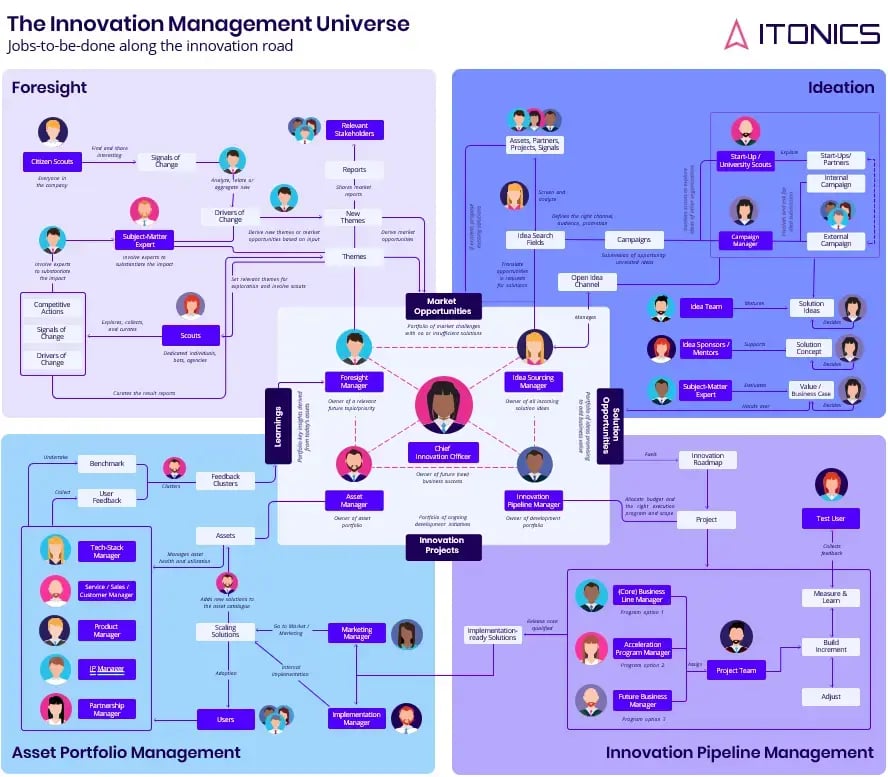
Exhibit 2: The innovation management universe (Download)
Align division heads on one innovation strategy before vendor selection
Every department head whose budget showed up in your map needs to hear the trade directly, not secondhand: portfolio visibility in exchange for a real shot at funding bigger ideas, including ones they might sponsor.
Framed as a loss of control, this conversation fails. Framed as access to a bigger pool of funding than their unit alone can justify, it has a chance. Framed as an option to develop future-ready solutions and finding startups solving a unit's problem, it can create commitment.
Try to find partners and supporters early.
Phase 2: evaluating and selecting an innovation management platform
The advantage any vendor needs to prove is easing processes and delivering value to the organization. Any vendor needs to have the ability to represent different workflows, ease insight sharing, and consolidate innovation efforts in clear views.
Match idea management to how innovation actually flows in your organization
Some companies run innovation almost entirely top-down, with one central team sourcing and funding everything.
Others run it bottom-up, with every division sourcing its own ideas and a central team only aggregating.
Most run a messy mix of both. Pick software built around configurability, not custom software development. If any change is another costly feature development, you lose speed and user acceptance.
What to test in vendor demos
Bring the actual scattered activity from your visibility plan into the demo:
- a real trend scouting workflow,
- a real idea that moved from submission to funding,
- a real budget conflict between two product managers.
Ask the vendor to show how their software scales and handles all three without three separate features that do not talk to each other.
Scenarios to test across innovation domains
A single demo rarely covers every domain an innovation management platform needs to support. Walk through specific scenarios across market scouting, idea management, portfolio visibility, and cross-unit reporting before signing anything.
|
Technology & Trend Scouting |
Idea Management & Pipeline |
Portfolio & Budget Visibility |
Cross-Division Collaboration & Reporting |
|---|---|---|---|
|
Search for a specific emerging technology and show how it gets logged into a shared, company-wide watchlist |
Submit an idea from one division and route it through both local and central review |
Pull a single view of the whole innovation portfolio across two or more divisions |
Show how a department head sees only their own division's data while leadership sees the full portfolio |
|
Show how a scouted technology can be assigned to one division without losing visibility for the rest of the organization |
Show how an idea that started as incremental gets reclassified and re-funded as a bigger bet |
Show how budget tied to one division appears alongside centrally funded initiatives in the same report |
Pull a report comparing incremental versus breakthrough project mix across the company |
|
Simulate a resource conflict between two divisions competing for the same funding pool and show how the platform surfaces it |
Connect to one existing tool live, such as a spreadsheet export or CRM, and import real scouting or idea data |
Exhibit 3: Scenarios to test in vendor demonstrations
Red flags during evaluation
Three signs the evaluation is heading the wrong way:
- the vendor's demo only shows a centralized version of innovation work with no path for division-level activity to feed in;
- the vendor cannot show how the platform handles budget or ownership conflicts between divisions;
- or the only metrics it reports are activity counts, ideas submitted, scouting reports filed, with nothing that ties back to actual funding decisions.
Ask vendors directly how much of the handoff between market scouting, idea capture, and portfolio review they automate end-to-end.
A platform that requires manual export between its own features creates the same fragmentation it was bought to solve.
Phase 3: rollout and go-live
This is where the trade negotiated in phase 1 either holds or collapses. Divisions that agreed to the idea in a meeting can still quietly protect their old systems once the platform is live.
Start with one division, not a mandate
Pick the division most likely to benefit from visibility, usually one with more good ideas than budget to fund them locally.
Run the full visibility-for-funding trade with that division first. One real example of a division getting access to bigger funding because of the platform is worth more than any company-wide announcement.
Make the trade explicit, every time
Every communication about the platform should restate the trade: log your work here, and you become eligible for funding pools and attention you could not access before. Drop that framing, and the platform reads as surveillance.
Address the turf fear, then build employee engagement
Skip the new feature tour. Spend the session on the one question every department head actually has: how does it make my life easier? Answer it directly, with the specific new capabilities now open to them.
Invite employees who already discuss ideas informally, the people other employees go to first, into early training sessions. Their words will leverage and scale the platform adoption.
Their feedback shapes how the rest of the team experiences the platform.
Phase 4: post-implementation
The platform's real test is whether the incremental-to-breakthrough ratio measured in phase 1 moves at all.
Track innovation projects, not just usage
User login counts and submission counts only prove the software is being used.
Re-run the incremental-versus-breakthrough split every quarter and compare it to your phase 1 baseline. If it has not moved after two quarters, the visibility is implemented, but nobody is acting on it yet.
Show department heads what they gained
Every division that traded visibility for funding access needs to see, concretely, what it got.
A bigger bet that got funded because leadership could finally see it next to the rest of the portfolio is the proof that changes minds for the next division still holding out. A great idea moved to production before industry peers acted creates another proof point.
Real value shows up as a shift in scale: investment moving toward fewer, bigger ideas, not as a steady stream of small efficiency gains.
|
Technology & Trend Scouting |
Idea Management & Pipeline |
Portfolio & Budget Visibility |
Cross-Division Collaboration & Reporting |
|---|---|---|---|
|
Scouting stays siloed inside one division: relevant technologies never reach the teams that could use them |
No path to reclassify a promising idea as a bigger bet: good ideas stay capped at incremental scope and funding |
No single view of the full portfolio: the incremental-versus-breakthrough mix stays invisible and unmanaged |
No visibility into what other divisions are funding: duplicate efforts run for months before anyone notices |
|
No shared watchlist across the organization: the same technology gets rediscovered independently by multiple teams, wasting scouting effort |
Local idea pipelines never reach central review: strong bets never compete for company-wide funding |
Local innovation budget never appears in a central report: money that could fund bigger ideas stays locked at the division level |
Comparing incremental versus breakthrough work requires manually compiling data from a dozen sources: the comparison rarely gets done |
|
Two divisions compete for the same funding pool without knowing it: the conflict surfaces only after both have already committed resources |
Reporting local innovation work exposes budget with no guaranteed access to anything bigger in return: department heads have every incentive to under-report |
Exhibit 4: Losses without a shared innovation platform
How ITONICS supports innovation management software implementation
ITONICS is built for innovation, strategy, and R&D teams running innovation activities scattered across divisions, with no shared view of the whole portfolio.
/Still%20images/Kanban%20Board%20Mockups%202025/ideation-organize-idea-flows-2025.webp?width=2160&height=1350&name=ideation-organize-idea-flows-2025.webp)
Exhibit 5: An idea with high priority moves into a new phase on a Kanban board
The platform represents both centralized and division-led innovation work in the same system, so scouting, idea management, and portfolio decisions do not have to live in three disconnected tools before they reach a central view.
Our customer success team helps map existing innovation activity and ownership during onboarding, the same work phase 1 in this guide describes.
ITONICS treats implementation as a negotiation over usefulness, budget, and what kind of innovation the organization is willing to fund next, not a technical rollout.