7 rules to ground build-buy-partner decisions in evidence


Organizations that anchor build-buy-partner decisions in evidence reduce implementation failures by 30 to 40 percent. Yet most still rely on intuition, influence, and incomplete analysis when the stakes are highest. Global analysis of 50,000 technology projects shows only 31 percent meet time, budget, and scope commitments. Poor decisions compound faster than poor execution.
Engineering argues for building in-house. Technology leaders push for acquisition. Finance asks for numbers no one can defend. With days to determine a multimillion-dollar capability that will shape competitive position for years, teams fall back on persuasion rather than proof.
Under pressure, investigation becomes advocacy. Evidence is gathered to justify conclusions already formed. Cognitive bias narrows options before executives ever see them. Anchoring, confirmation bias, and sunk funds distort judgment while decisions appear rational on the surface.
Companies that reverse this sequence gain a structural advantage. By collecting evidence before preferences are declared, they move faster without rework, make repeatable decisions, and build portfolios that competitors struggle to replicate. Speed improves because debate disappears, not because rigor is reduced.
This article identifies six cognitive biases that undermine build-buy-partner decisions. It introduces seven evidence-based decision rules that overcome these biases by anchoring choices in strategic fit, execution capacity, economic reality, and ecosystem intelligence. These rules create structural barriers between preference and evaluation, removing bias by construction rather than intention.

Evidence-based frameworks eliminate the negotiation cycles that turn strategic decisions into political campaigns. When organizations anchor choices in structured methodology, they compress timelines, reduce rework, and free leaders to focus on strategy execution. Decision-making accelerates while political friction disappears.
Organizations implementing structured build-buy-partner framework processes report 30 to 40 percent fewer implementation failures. Strategic alignment between technology solutions and business objectives improves materially.
The improvement comes from eliminating recursive debate. Groups evaluate options against predefined criteria established before any vendor meetings or internal proposals. Stakeholders align on thresholds before advocacy begins. Decision makers compare proposals using identical metrics rather than competing narratives.
When strategic fit, execution capacity, economic reality, and ecosystem intelligence are quantified upfront, leaders stop relitigating assumptions. Decisions that previously consumed months compress into weeks. Evidence collection operates independently of political pressure, enabling companies to respond to market conditions and adopt new technologies with confidence.
How many times has the group restarted investigation because decision criteria shifted between executive reviews? When thresholds are locked before evaluation begins, this pattern disappears. Best practice organizations embed evidence requirements into governance processes before proposals reach executive review.
Companies making evidence-based buy-or-partner decisions build technology portfolios with architectural logic that competitors struggle to reverse-engineer. Each capability choice reinforces strategic direction rather than creating orphaned assets.
Coherence begins with consistent evaluation criteria. When organizations assess every build-buy-partner decision against the same decision rules, they avoid contradictory logic across business units. One unit acquires a customer data platform. Another develops internal capabilities in-house. A third evaluates potential partners for marketing cloud services. The enterprise ends up with three incompatible solutions serving overlapping needs.
Market leaders use decision memory to accelerate future choices. They document why each capability was built, bought, or partnered. The tenth decision becomes faster and sharper than the first because the organization has codified what differentiates core capabilities from commodities and which partnership models deliver sustainable competitive edge.
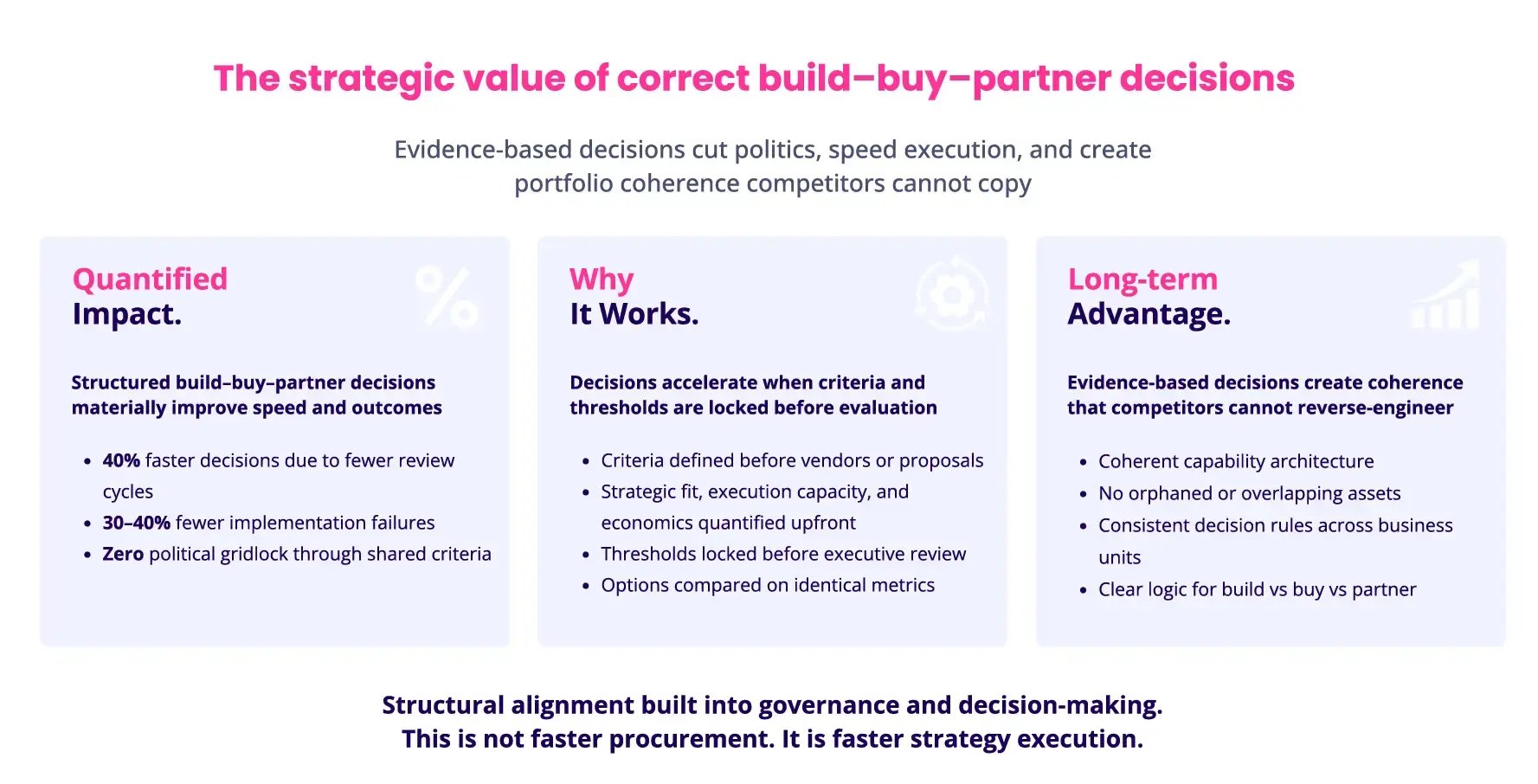
Exhibit 1: The impact of evidence-based build–buy–partner decisions on speed, alignment, and long-term portfolio coherence.
Cognitive bias does not announce itself in decision processes. It masquerades as experience, intuition, and strategic judgment. The biases below appear in nearly every build-buy-partner discussion, distorting evaluation before groups recognize the pattern.
Confirmation bias arises when groups seek information that validates predetermined conclusions rather than testing competing hypotheses. Leaders signal preferences early, shifting inquiry from evaluation to justification. Data supporting the favored option is emphasized, while contradictory evidence gets dismissed as outdated, irrelevant, or exceptional. Meaningful choice disappears before evaluation truly begins.
A clear understanding emerges through warning signs: business cases that present one recommended path, with alternatives included only to signal due diligence. Groups cannot articulate what evidence would change their recommendation. Builds proceed despite limited execution capacity because the decision was effectively made before investigation started.
Anchoring bias occurs when the first number mentioned in a discussion disproportionately shapes all subsequent estimates. Groups adjust incrementally from the anchor instead of evaluating expenditures from first principles. A vendor casually quotes $400,000 early, and internal build estimates cluster suspiciously close, despite fundamentally different assumptions around scope, risk, and resourcing.
This bias typically shows up when expenditure estimates converge around an early figure even as scope evolves. Organizations underfund complex builds because early estimates were optimistic, or dismiss viable buy-or-partner options because initial conversations set unrealistic expectations.
Availability bias emerges when vivid or recent events dominate decision-making despite being statistical outliers. Leaders cite last quarter's failed vendor engagement in every buy-or-partner discussion. One successful internal build becomes proof the organization should always develop in-house. Broader benchmarks and peer data fade behind emotionally charged anecdotes.
You will often see this when the same recent failure is repeatedly referenced across unrelated decisions. Groups cannot cite base rates or probability metrics, only memorable exceptions. A single delayed partnership becomes evidence against all potential partners, ignoring multiple implementations that delivered on time and expanded market access.
Are you funding the right projects? If not, connect strategy, market data, and team insights to stop guessing and start knowing.
/Still%20images/Roadmap%20Mockups%202025/portfolio-simulate-roadmap-scenarios-2025.webp?width=297&height=186&name=portfolio-simulate-roadmap-scenarios-2025.webp) Separate value drivers from the 30 to 40 % draining resources while scoring each initiative against an organization's strategic priorities: new revenue, customer retention, and cost savings.
Separate value drivers from the 30 to 40 % draining resources while scoring each initiative against an organization's strategic priorities: new revenue, customer retention, and cost savings.
Find what's really driving value to reallocate capacity to higher-return opportunities.
Sunk cost fallacy appears when prior investment becomes the primary justification for continued spending, regardless of future returns. "We have come this far" replaces evidence-based evaluation. Funding flows toward projects based on historical commitment rather than strategic value, starving stronger alternatives of resources.
This pattern is present when business cases emphasize money already spent instead of business outcomes still achievable. Groups argue for another year of funding to avoid "wasting" three years of development, even when acquiring a mature solution would deliver superior functionality at lower total expenditure. The benefit of switching is clear, but sunk investments cloud judgment.
The HiPPO effect takes hold when the highest-paid person's opinion overrides data and expert review. Executive preferences shape recommendations before evidence is examined. Risk assessments and expenditure estimates subtly shift depending on who is in the room. Evaluation follows power rather than informing it.
Red flags appear when recommendations change after senior leaders join discussions. Groups preface findings with "as you suggested" or "aligned with your direction." Organizations commit to builds they cannot execute, or outsource differentiation they should control, based on executive instinct rather than data.
Groupthink occurs when groups converge on consensus too quickly, prioritizing harmony over rigorous evaluation. Participants self-censor concerns to avoid appearing obstructive. Questions that could reopen debate are dismissed as already settled, even when core risks remain unresolved.
A common signal is unanimous agreement reached suspiciously fast for complex decisions. Dissenting views are waved off without examination. Members voice concerns privately but stay silent in group forums. Flawed options move forward because no one wanted to slow the process, with issues surfacing only after commitment makes reversal difficult.
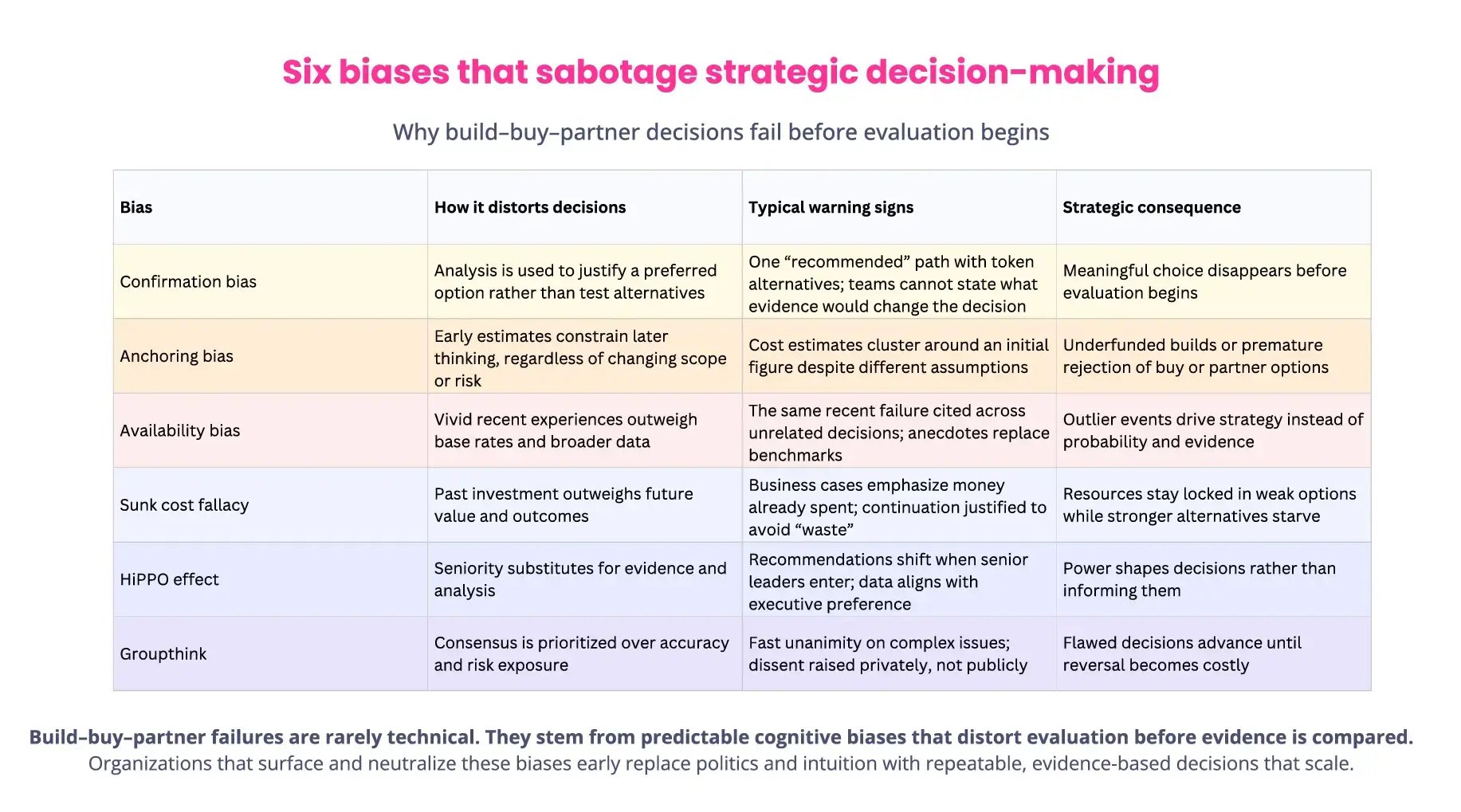
Exhibit 2: Common cognitive biases that derail strategic build–buy–partner decisions.
Recognizing bias is not enough. Organizations need decision rules that prevent cognitive distortions from influencing choices. The seven rules below create a build-buy-partner framework with structural barriers between preference and evaluation, anchoring decisions in evidence across strategic fit, execution capacity, economic reality, and ecosystem intelligence. These essential guidelines help technology companies across industries make informed decisions at every stage of capability development.
Overcomes: Confirmation bias, HiPPO effect, groupthink
Separate those gathering evidence from stakeholders involved in advocating for specific options. Evidence collection should operate independently, with evaluation criteria established before any proposals are presented to decision makers.
Define quantitative thresholds for each evidence dimension before investigation starts. Strategic fit requires documented customer value and competitive differentiation. Execution capacity demands proven track records on comparable projects showing consistent on-time, on-budget delivery.
Economic reality needs lifecycle expenditure models spanning five to seven years with sensitivity review. Ecosystem intelligence requires surveying at least five market alternatives.
Assign evaluation groups with no stake in business outcomes and no reporting relationship to business units requesting the capability. Present evidence before preferences. Decision makers review the information before advocates present recommendations. This sequence ensures leaders make informed decisions based on data rather than filtering evidence through political lenses.
Evidence to collect:
Interview 15 to 20 customers to understand which capabilities influence purchase decisions
Survey the sales group on win-loss factors where specific capabilities played decisive roles
Document the last five projects of similar technical complexity
Build a five-year expenditure model for each option
Survey at least five vendors serving the relevant market segment
How it removes bias: When evidence is collected before stakeholders involved declare preferences, confirmation bias cannot filter what gets surfaced. The HiPPO effect loses influence because data precedes opinion. Groupthink weakens as independent groups challenge assumptions without social pressure to conform.
Overcomes: Anchoring bias
Build expenditure models independently before any numbers are shared publicly. Use sealed bids so vendors submit proposals without knowledge of competing offers. Calculate total ownership expenditure from first principles for each option rather than adjusting from an initial anchor.
For builds, estimate development expenditures, ongoing maintenance, infrastructure, staffing for support, technical debt remediation, and feature evolution. For the buy-or-partner option, model license fees, implementation services, integration work, training, vendor management overhead, and switching expenditures. Calculate the opportunity expenditure of staff time applied to custom development versus alternative strategic projects.
Evidence to collect:
Development expenditures broken down by phase and resource type
Infrastructure and hosting expenditures for five-year horizon
Full-time equivalent staff required for ongoing support and maintenance
Integration expenditures with existing systems
Training and change management expenses
Switching expenditures if the solution needs to be replaced
How it removes bias: When expenditure estimates are built from first principles rather than adjusted from early anchors, groups avoid systematically under-estimating complex builds or dismissing viable alternatives. Independent modeling prevents a casually mentioned vendor price from constraining internal estimates.
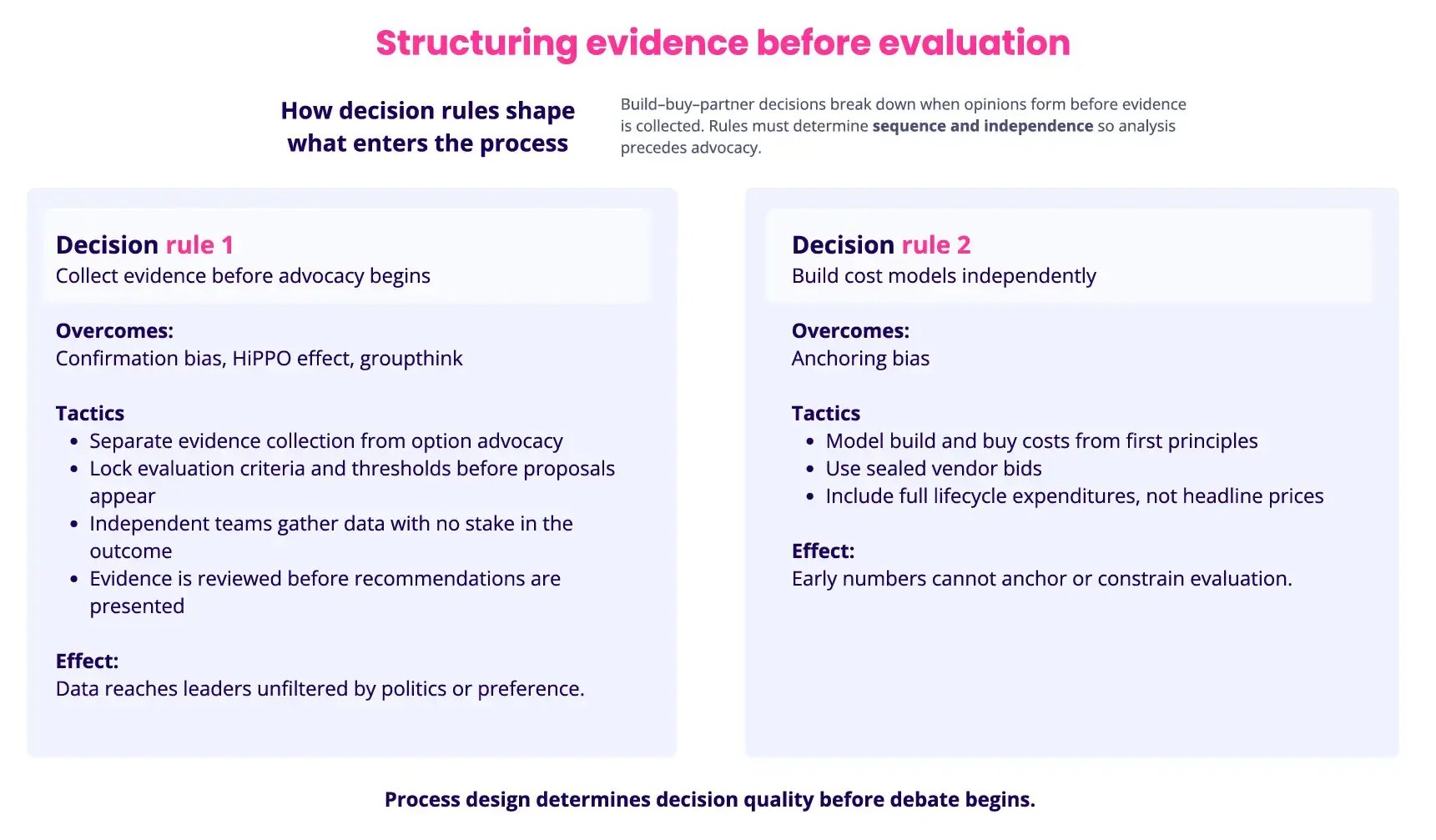
Exhibit 3: Decision rules that structure evidence and cost analysis before build–buy–partner evaluation begins.
Overcomes: Availability bias, confirmation bias
Require quantitative review across all comparable projects, not just the most recent ones. Calculate delivery rates for builds, buys, and partnerships over time. Separate base rates from anecdotes. Require groups to explain why this decision should diverge from historical patterns before allowing exceptions to override aggregate evidence.
Document delivery rates: What percentage of builds in the past three years delivered on time and on budget? How many vendor implementations met scope commitments? Which partnership models produced sustainable competitive advantage? Use this historical data as the baseline expectation rather than relying on vivid recent failures or wins.
Evidence to collect:
Historical delivery metrics for builds: on-time delivery rate, budget variance, post-launch defect rates
Vendor implementation outcomes: scope delivered, timeline adherence, support quality
Partnership performance: value delivered, relationship health, strategic alignment
Base rates for similar projects across the industry
How it removes bias: When groups must justify deviations from base rates with concrete evidence, availability bias loses its grip. A single memorable failure cannot override three years of partnerships delivering results. Confirmation bias weakens because all options receive equally rigorous examination.
Overcomes: Sunk cost fallacy
Evaluate continuation decisions exactly like new investments. Require justification based solely on future returns. Ask whether the organization would decide on this path today if no money had been spent yet. If the answer is no, the project fails the threshold regardless of sunk expenditure.
For ongoing builds that are behind schedule or over budget, compare the remaining expenditure to complete against acquiring a mature solution. Calculate whether the remaining investment produces business outcomes superior to alternatives. Past spending is irrelevant to this calculation. For example, a three-year development effort that still needs two years to complete should compete against a six-month vendor implementation, not benefit from protection due to prior investment.
Evidence to collect:
Remaining investment required to complete the build
Expected outcomes and timeline for completion
Expenditure and timeline for the buy-or-partner option
Strategic value of completing versus switching
Switching expenditures and integration requirements
How it removes bias: When continuation decisions are evaluated as if no money has been spent, sunk cost fallacy loses its influence. Groups can objectively assess whether completing a troubled build delivers more value than switching to a proven alternative.
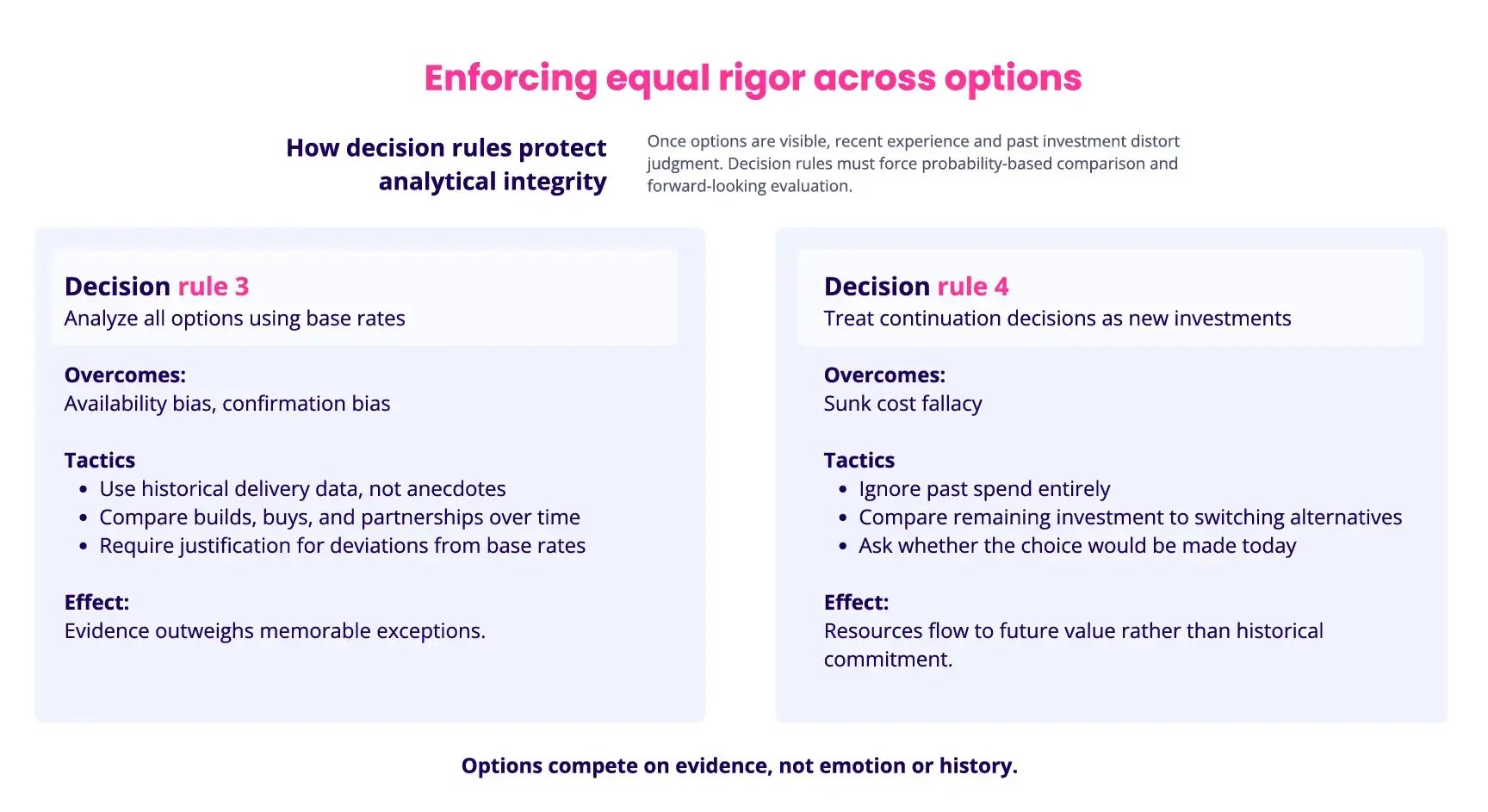
Exhibit 4: Decision rules that enforce equal rigor and forward-looking evaluation across build–buy–partner options.
Overcomes: HiPPO effect, confirmation bias
Establish decision criteria that apply consistently regardless of who champions an option. Thresholds codify what constitutes sufficient evidence for each dimension and support strategic objectives across the portfolio.
For strategic fit, require documented proof that the capability changes customer buying behavior or creates barriers to competition. Execution capacity thresholds demand demonstrated ability through project delivery, not aspirational capability. Economic reality requires full lifecycle expenditure models with sensitivity review. Base case, optimistic, and pessimistic scenarios must all support the same decision.
Lock thresholds before proposals reach executive review. When decision criteria shift between meetings to accommodate preferred options, bias reenters through the back door. Consistent thresholds force honest comparison and lead to business outcomes that align with corporate strategy and business goals.
Decision thresholds:
Strategic fit: Build if evidence shows the capability influences customer buying decisions and competitors cannot replicate it within 18 months. Select the buy-or-partner option if the capability enables table-stakes functionality every player needs, but no one wins deals with.
Execution capacity: Build if the group has delivered three similar projects on time and on budget in the past two years. Select buy-or-partner options if execution track record shows patterns of delays, expenditure overruns, or quality issues requiring extensive rework.
Economic reality: Choose the option where total five-year expenditures are lowest when base case, optimistic, and pessimistic scenarios all support the same decision. If scenarios conflict, the option fails the economic threshold.
Ecosystem intelligence: Select the buy-or-partner option when at least three mature vendors offer solutions meeting 80 percent of requirements with proven deployments at comparable scale. Build when market alternatives are immature with limited production deployments, no vendor serves the specific use case with adequate feature coverage, or the capability is too strategic to outsource.
How it removes bias: When thresholds are locked before leaders express preferences, the HiPPO effect cannot shift criteria to accommodate favored options. Groups compare options using identical metrics rather than adjusting standards based on who is in the room.
Overcomes: Groupthink, confirmation bias
Assign rotating devil's advocates with explicit mandate to challenge assumptions across all options. Document concrete risks for each alternative instead of relying on vague consensus. Create confidential channels for raising concerns. Require groups to explain why options were rejected, not just why one was chosen.
The devil's advocate role rotates to prevent it from becoming a token position. This person has explicit authority to delay decisions if critical risks remain unexamined. They must document specific concerns rather than general skepticism.
Evidence to collect:
Specific risks for each option with probability and impact assessments
Assumptions underlying recommendations and what would invalidate them
Dissenting views and the evidence supporting them
Reasons for rejecting other options, not just selecting one
How it removes bias: When someone has formal authority to challenge consensus, groupthink loses its power. Groups cannot wave off dissenting views without examination. Confirmation bias weakens as rotating advocates ensure options receive critical scrutiny.
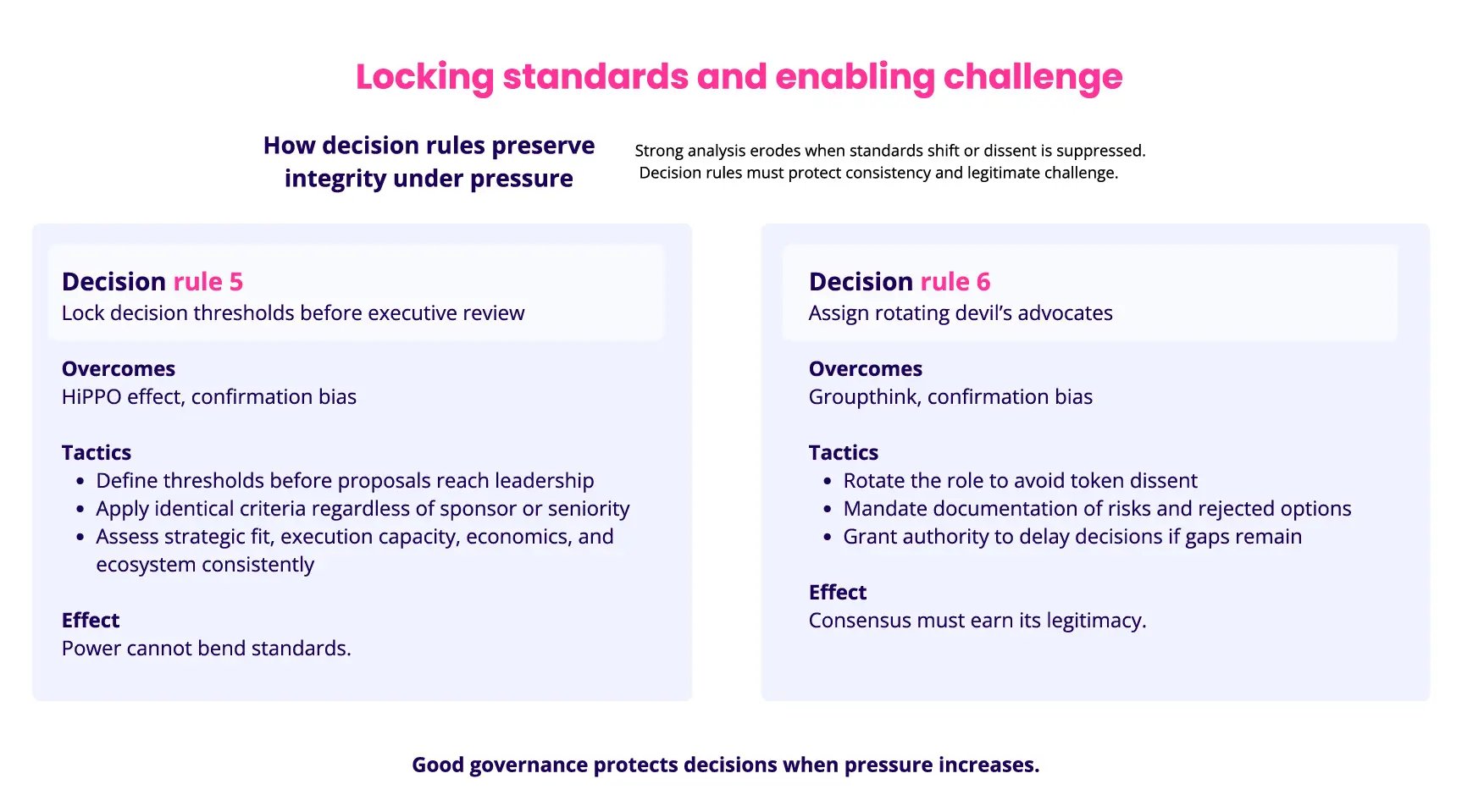
Exhibit 5: Decision rules that lock standards and enable structured challenge during build–buy–partner evaluation.
Overcomes: All six biases over time
Document every build-buy-partner decision with the evidence supporting it, thresholds that were met, risks that were accepted, alternatives that were considered, and expected outcomes that justified the choice. This creates an auditable trail, preventing revisionist history when results diverge from projections.
Track business outcomes against original projections using key performance indicators that measure decision accuracy and value delivered. When a build runs over budget, or a partnership underdelivers on promised capabilities, compare actual results to the business case. This feedback loop exposes which assumptions consistently prove wrong and which evaluation methods produce accurate predictions. These insights help organizations identify patterns that lead to positive results or failure.
Reference past decisions when evaluating similar choices. Decision memory transforms individual choices into a portfolio strategy as patterns emerge. Certain capability types consistently deliver results as partnerships, while others require internal development to achieve differentiation. For example, automation capabilities often benefit from vendor partnerships that provide ongoing innovation, while core differentiating features demand in-house development to maintain competitive edge.
Evidence to document:
Decision criteria and thresholds applied
Evidence collected and how it was weighted
Alternatives considered and why they were rejected
Expected outcomes and metrics for tracking results
Actual outcomes measured against predictions
Lessons learned and implications for future decisions
How it removes bias: Decision memory creates a feedback loop that exposes when biases lead to poor business outcomes. Over time, organizations learn which evaluation methods predict results and which allow bias to distort judgment. Anchoring bias loses influence when groups see that initial estimates consistently proved wrong. Availability bias weakens when aggregate data contradicts memorable exceptions.
Software platforms enable this institutional memory at scale. The ITONICS Innovation OS centralizes build-buy-partner framework evaluation across technology portfolios, tracking decisions against business outcomes, and surfacing insights that improve future choices. When evidence collection, threshold enforcement, and decision memory operate within a single system, bias loses the gaps where it typically hides.
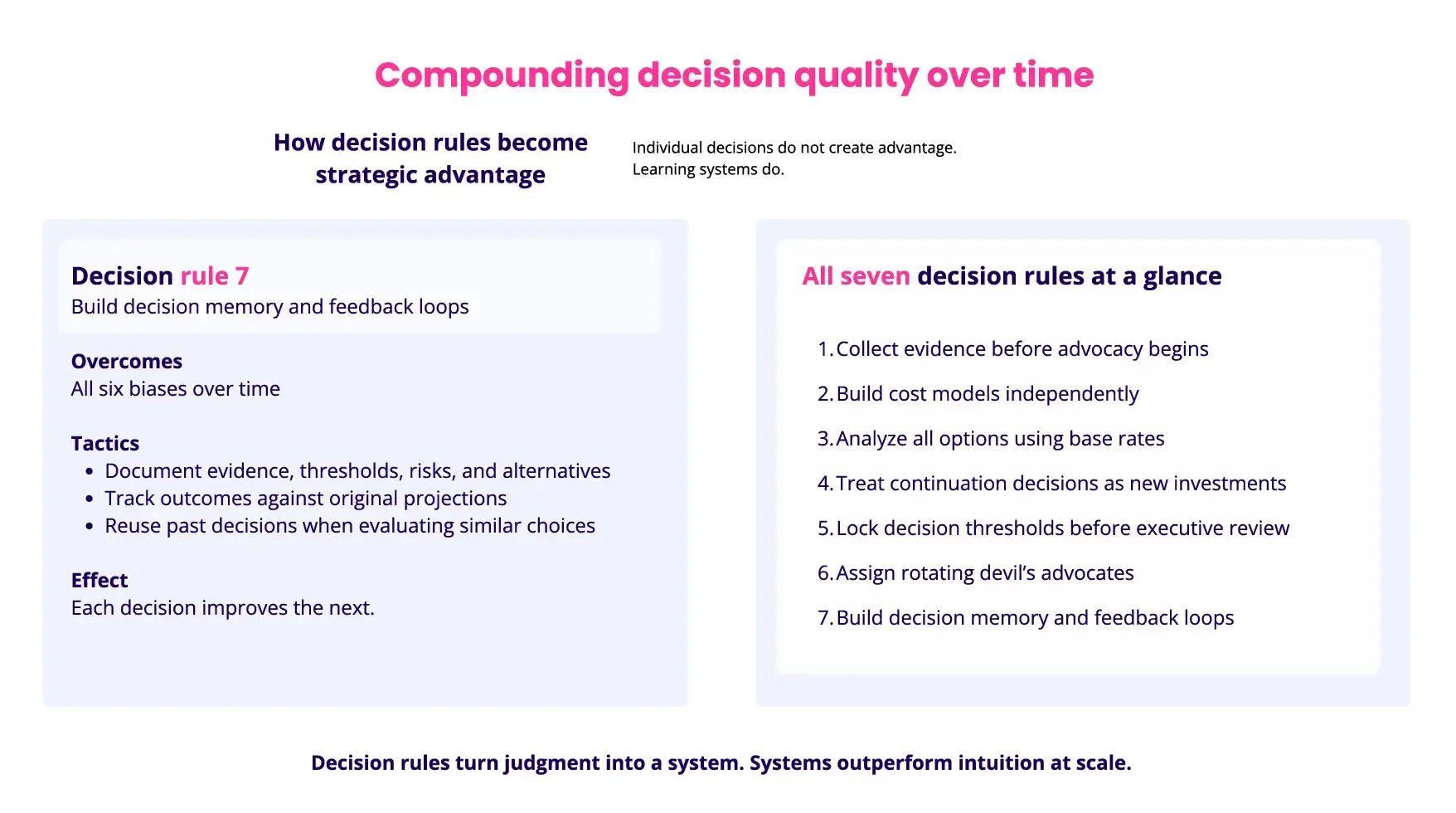
Exhibit 6: Decision rules that create decision memory and compound build–buy–partner decision quality over time.
When organizations anchor build-buy-partner decisions in evidence, urgency stops distorting judgment. A 72-hour deadline becomes an execution checkpoint rather than a political crisis. What once triggered weeks of debate resolves through disciplined comparison against clear thresholds.
The seven decision rules create structural barriers between bias and choice. Collecting evidence before advocacy neutralizes confirmation bias and the HiPPO effect. Independent expenditure modeling prevents anchoring. Base rate review overcomes availability bias. Evaluating continuations as new investments defeats sunk expenditures. Locked thresholds remove political pressure. Rotating devil's advocates eliminates groupthink. Decision memory creates feedback loops that improve judgment over time.
Organizations applying these disciplines report 30 to 40 percent fewer failures and faster decisions without sacrificing quality. Over time, portfolios gain coherence as groups codify what should be built, bought, or partnered.
Every capability decision either compounds competitive advantage or creates friction that the organization must later unwind. Evidence-based frameworks ensure decisions reinforce strategy, not intuition, and that competitive edge grows through repeatable, defensible choices. Organizations that master this structured way expand their advantage as execution speed accelerates across all stages of technology development.

.webp?width=900&height=450&name=Top-10-project-portfolio-software-tech-and-development-teams-use-for-managing-innovation-projects-fullwidth%20(1).webp)