Corporate-startup partnerships refined: The guide to build less alone


Startup scouting has been a corporate priority for over a decade. The conversion rate is low.
Not because the startups aren't there. For almost any capability gap, from battery management to grid forecasting, startups are already working on it. Some are two to three years ahead of an internal build.
The problem is timing. Build decisions get made before anyone runs a scan. By the time a startup enters, internal development has momentum, headcount is committed, and partnership feels like a disruption, not a live decision.
R&D and innovation teams know the cycle. A gap surfaces. A scoping document gets written. Six months later, someone finds a startup that has solved exactly this since 2022. The scan came too late. It almost always does, because a proper search used to take weeks, not minutes.
| Category | Old model | New model |
| Process | Defined, communicated, compliance hoped for | Built into agent workflows, enforced by default |
| Discovery time | 2 to 4 weeks of analyst time per domain | Minutes, across hundreds of thousands of startups |
| Validation | Manual, ~3 analyst days per company | Profiles pre-filled; whole list qualified in minutes |
| Sourcing | Outbound only, often ad hoc and serendipitous | Outbound scan plus inbound open innovation |
| Tracking | No shared memory; units duplicate each other | One tool, enterprise-wide, a CRM for external innovation |
| Typical outcome | Low conversion, redundant internal builds | Build less alone, faster, less duplicated work |
Exhibit 1: Comparison of the old vs. the new corporate-startup partnership process
This guide covers how technology changes the sequence. Any new idea gets stress-tested against available companies. Startup discovery collapses to minutes. Validation is done for you. Open innovation brings the rest to your door. The goal: build less alone, and protect your growth without building everything in-house.
Corporate-startup collaboration looks different in every industry.
Automotive businesses run venture clienting and accelerator programs as part of the R&D and innovation pipeline. BMW, Toyota, and Bosch test startup technologies against live manufacturing problems and treat corporate venturing as a growth engine.
Energy companies face a different pressure. Grid operators like Elia Group run annual open innovation challenges, while oil majors like Aramco run a $7.5 billion corporate venture capital portfolio.
In healthcare and pharma, corporate venture capital dominates: these businesses use equity stakes to reach clinical-stage technologies faster than internal development allows.
In the software industry, the scale is different again. Alphabet alone runs two corporate venturing programs worth roughly $20 billion in venture capital.
Across the industry map, the pattern holds. Corporations chase startup innovation through corporate venturing to drive growth they cannot build fast enough alone.
The intent is real. Corporate venture capital took part in over $70 billion of startup deals in 2024, about one in four venture deals globally. In one EY survey, 93% of CEOs planned to increase or maintain corporate venturing investment that year. Businesses treat corporate venturing as core to growth, not a hobby.
The intent is not the problem. The process is. Each corporate venturing model below solves one version of the sourcing problem. Each has limits. And most share one failure: they engage startups after the internal agenda is already set.
Corporate venture capital is still the dominant corporate-startup partnership model for large corporations.
Most big businesses run some flavour of it: CVC arms, minority equity stakes, portfolio visibility to watch emerging trends, new technologies, and new business models. Joint ventures and acquisitions sit at the committed end of the line. Angel investors and traditional venture capital play the same game one stage earlier. The corporations that win treat venture capital as a window on innovation, not just returns.
It works for returns, not capability.
A corporate accelerator program offers a time-bound cohort, usually 3 to 6 months, where startups get resources, mentorship, and access to the corporate network. Incubators work with earlier-stage companies and run longer. Both are a step toward structured corporate venturing. Plenty of businesses run an accelerator program for the brand value alone.
Many corporations run periodic open innovation challenges: competitions where startups and small businesses submit solutions to predefined problems.
Elia Group's annual Open Innovation Challenge is a clean example. The winning startup gets up to €50,000 to test a concept, then enters The Nest, Elia's internal incubator, for co-creation with the team.
Challenges help. The format still has limits.
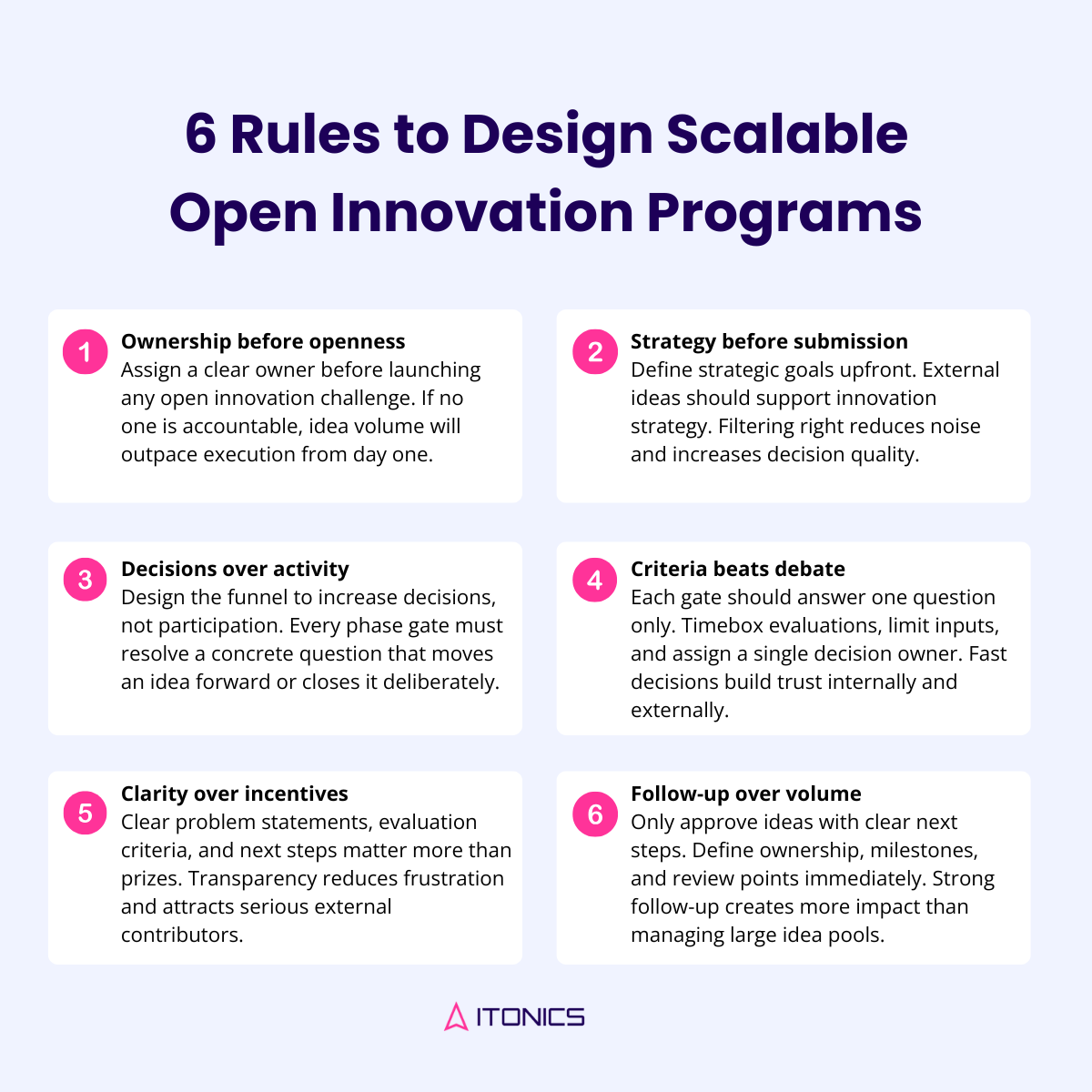
Exhibit 2: 6 rules to design open innovation programs | ITONICS
Venture clienting is different.
The corporation becomes an early paying customer instead of an investor. It fixes the incentive problem head-on. Open Bosch, started in 2018, is the most documented example: Bosch acts as a client, buys startup solutions in paid pilots, and builds partnerships from commercial relationships rather than equity. The model produced over 18 partnerships in 2023 across more than 2,000 supported teams. For many businesses, it is the cleanest entry into corporate venturing.
The startup gets a paying customer. Still, the model carries dependencies.
In almost every industry, R&D and innovation calls still default to internal development. A gap is named, a document written, and resources committed. The old belief is that successful innovation requires control over the whole stack. Build it yourself, own the intellectual property, keep the competitive advantage in-house.
Closed innovation made sense when large corporations held real advantages over startups in talent and capital. Across entire industries, that edge has narrowed. Closed innovation is comfortable, and that is exactly the trap.
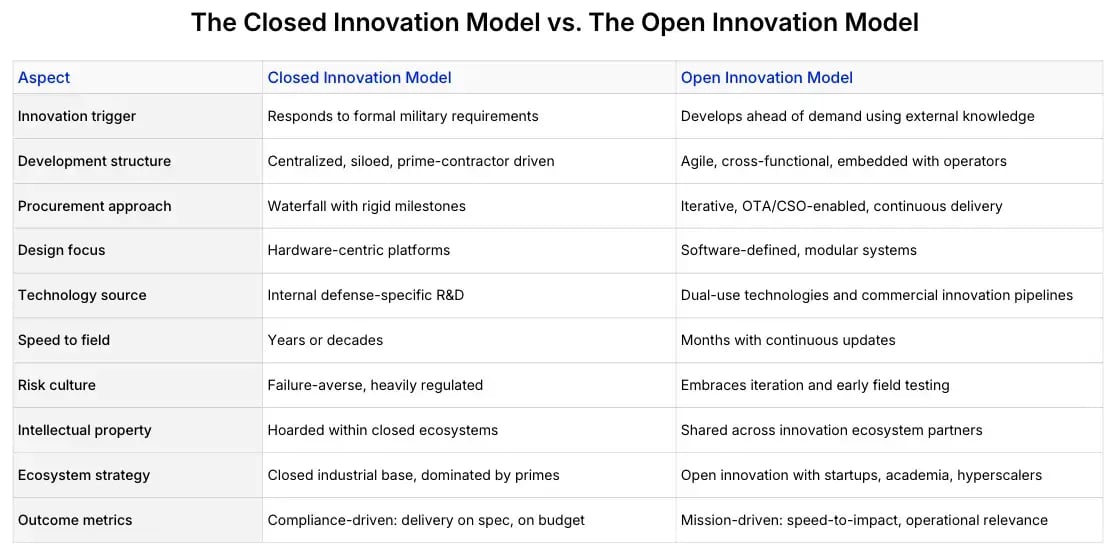
Exhibit 3: The closed innovation model vs. the open innovation model
Between the structured programs, most corporate venturing happens by accident. A startup turns up at a conference. A consulting firm makes a recommendation. Someone meets a founder at one of the year's networking events.
Across all six models, the same sequence repeats. Internal decisions get made first. External scouting confirms them or arrives too late to change them. The problem is not the model. It is when corporate venturing starts in the decision-making process. The businesses that fix the timing fix the conversion.
There aren't suddenly more startups. There have always been plenty. The fundamental shift is that finding the relevant ones stopped being a research project.
Discovery used to eat up analyst time. You sorted Crunchbase, read funding announcements, dug through patents, and matched vague emerging trends against what your business units needed. A scan of one domain ran 2 to 4 weeks. So nobody did it often. Most build decisions got made without one, and the scan showed up later as a footnote, if at all.
Run that same scan in five minutes, and the whole innovation strategy shifts. A modern innovation strategy makes this routine. Corporate venturing stops being a quarterly project and becomes part of how companies in every industry decide what to build.
Good platforms scan hundreds of thousands of startup companies across funding databases, patent registries, news feeds, and academic sources. Then they surface the relevant companies, emerging trends, and new technologies for a defined search field in seconds.
That takes discovery off the project plan. An R&D team checks the landscape before a Tuesday meeting. An innovation strategy session can open with a live view of which promising startups are already on the problem. The innovation strategy writes itself once the data is live.
For large corporations spread across several industries, this kills a real bottleneck. Corporate venturing no longer needs a dedicated scouting unit to gain access to relevant startup partners. Companies run their own scans. Coverage grows without adding headcount, whatever the industry. Businesses get more innovation reach from the same resources.
Finding startups is half the job. Checking them out was the slower half: the founding team, funding history, how mature the technology is, and whether it fits the business need.
Now the profiles arrive pre-filled. Funding rounds, investors, founder backgrounds, products and services, patents, and early signals. The three analyst days you spent qualifying one company collapsed to minutes. It frees your innovation strategy from grunt work.
A scan comes back with 40 to 50 candidates. Pre-filled data trims that to 8 to 10, worth a call inside an hour. Your corporate venturing resources move where they belong: off information-gathering, onto the calls that need judgment.
Strategic fit, who sponsors it, and which innovation model makes sense for the industry. Internal teams and external innovation partners work from the same qualified shortlist instead of a raw database dump.
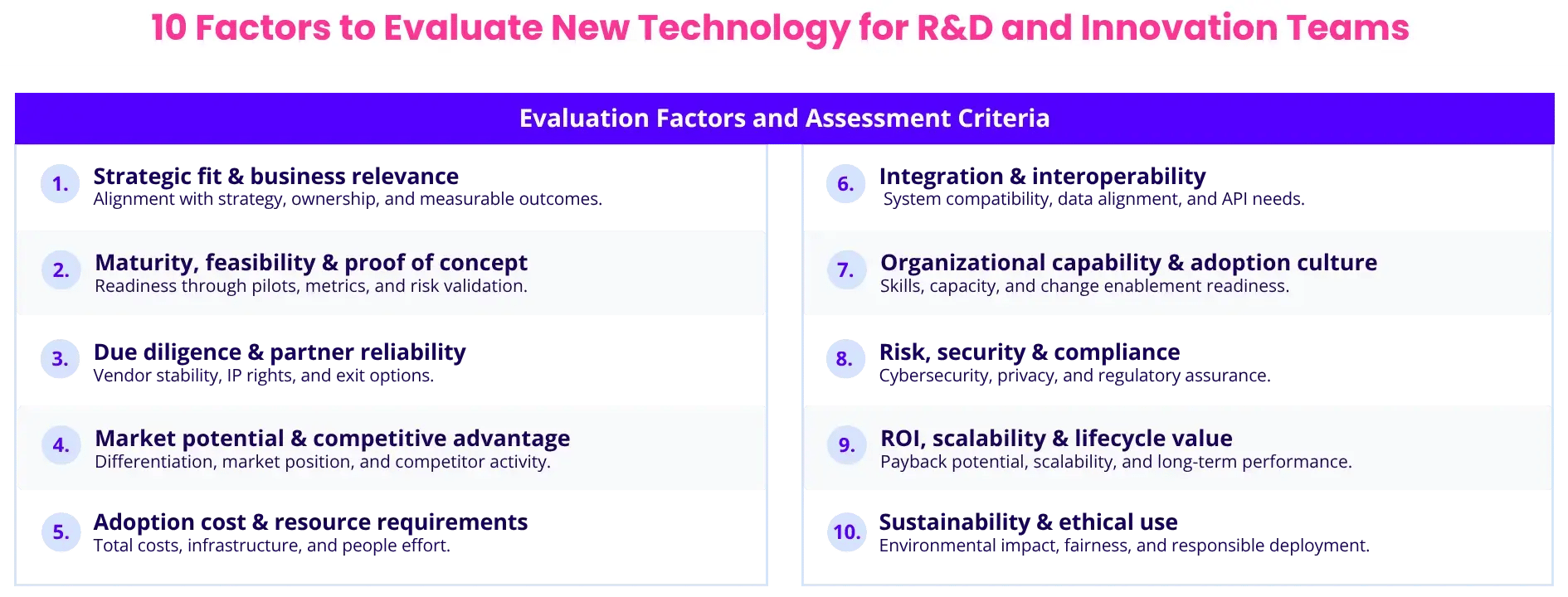
Exhibit 4: 10 Factors to Evaluate New Technology for R&D and Innovation Teams
Put faster discovery and validation together, and you change how new ideas move through the pipeline.
In most companies, an idea runs the usual gates: concept, scoping, business case, and build. The question that should come first, does this already exist, gets skipped, because it used to take weeks.
At five minutes, it becomes a standard gate. New ideas get checked against the market before the brief is written. Internal ideas and outside ideas compete on equal footing. If disruptive technologies already cover the problem, or new startups are six months from production-ready, the case for building it yourself looks a lot weaker.
For R&D and innovation teams, that is a direct growth strategy. A scan-first growth strategy beats a build-first guess. A real innovation strategy checks before it builds. You make the build call, knowing which rival solutions and which business models are already out there.
Companies that run this check find the same thing. A chunk of what they planned to build internally has already been built by small businesses, large companies, and scale-ups across the industry. The businesses that stay ahead of that overlap stay ahead, waste less effort, and reach growth faster. Build what genuinely needs to be yours. For the rest, someone is almost certainly further along than you are.
Two companies run this well. One scouts and buys. The other publishes problems and waits for the market to answer. Both treat corporate venturing as core innovation infrastructure, not a side project. Both partner with startups, universities, and academic institutions to stay ahead in industries that move fast.
Bosch runs two channels in parallel.
Outbound is Open Bosch, the venture client arm started in 2018. Bosch finds startups, buys paid pilots, and converts the ones that work into partnerships. No equity required. The numbers: over 2,000 teams supported and more than 18 partnerships formed in 2023 alone.
Inbound runs through its open innovation partnerships portal. Bosch publishes the areas it wants to work on, and startups apply directly. Startups gain access to Bosch engineers, testing facilities, and a route to market. Bosch gets a steady flow of qualified leads without paying to scout every one.
Established companies that run corporate venturing on outbound scouting alone miss the startups they would never think to search for. Running both feeds steady growth into the innovation pipeline.
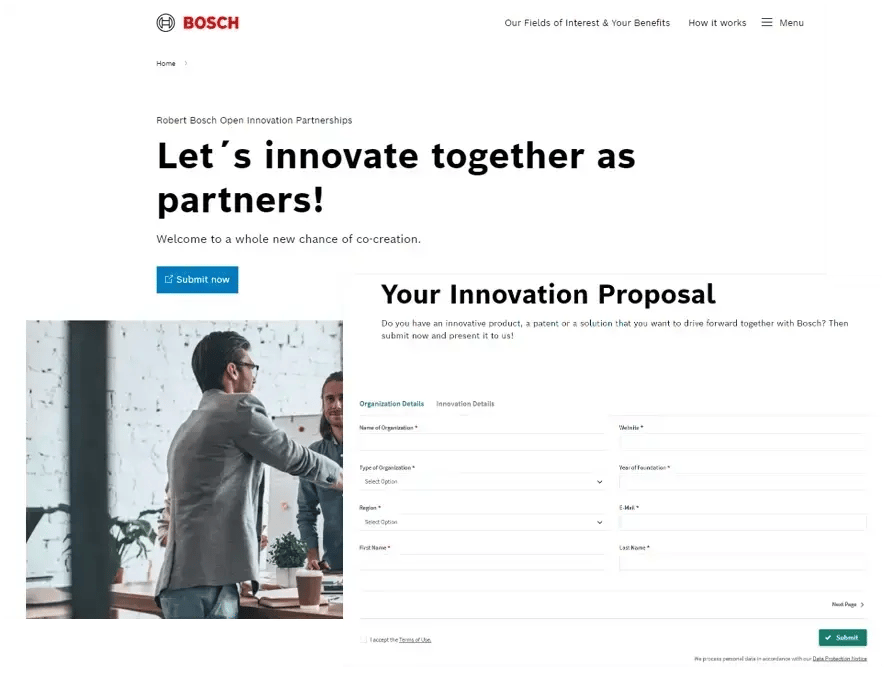
Exhibit 5: Bosch Open Innovation Platform by ITONICS
Elia Group is a transmission system operator serving 30 million users across Belgium and Germany. Grid operators cannot build every new technology in-house, so Elia runs its corporate venturing through open innovation to find partners fast.
Its annual Open Innovation Challenge has run since 2016, built around defined key areas: offshore wind, grid integration, and sustainability. The winning startup gets up to €50,000 to test a concept, then moves into The Nest, Elia's internal incubator, to work closely with the team.
This is corporate venturing done well, the inbound way. Elia does not chase every startup in the energy industry. It states the problems clearly and lets the most relevant solutions in the industry come to it. Open innovation is a rich source of partners a closed process would never reach.
/Still%20images/External%20Webpage%20Mockups%202025/foresight-embed-radars-2025.webp?width=2160&height=1350&name=foresight-embed-radars-2025.webp)
Exhibit 6: Elia group technology vision radar by ITONICS
Knowing the sequence has flipped is one thing. Running it as a repeatable process is another. The right startup scouting and validation tools are the difference.
Most corporate venturing programs fail here. They limit external sources to a few dedicated resources. One group scans once, gets excited, and never wins buy-in from internal business partners. The businesses that win build corporate venturing into the daily workflow.
Here's the setup that holds up.
This gap is the one nobody owns, and it is the most critical part of any corporate venturing setup. Get the infrastructure and innovation tools right first.
A common worst case: one business unit runs a successful pilot with a startup. A second business unit, two floors away, scouts the same company six months later.
Another pitfall in large companies: engineers fall in love with their own ideas. The evaluation committee scans dozens of ideas and picks winners, but never checks whether new technologies or small businesses have already delivered similar innovative ideas.
Manage your entire R&D pipeline in one tool, and you keep track of internal innovation, internal ideas, and innovative products. Internal innovation stops getting duplicated twice.
Treat it like a CRM for external innovation. It is where the most value leaks. Large companies with active corporate venturing run dozens of startup conversations at once. Without shared visibility, they duplicate work, miss cross-unit fits, and let relationships go cold. Innovation tools that keep discovery, evaluation, and tracking in one place stop that. The businesses that stay ahead in their industry treat partnership tracking as core infrastructure.
/Still%20images/Kanban%20Board%20Mockups%202025/capabilities-views-configure-cards-and-views.webp?width=2160&height=1350&name=capabilities-views-configure-cards-and-views.webp)
Exhibit 7: A project board across three innovation horizons and RAG categories | ITONICS
Buying is often cheaper than building. You just need to know that innovative solutions already exist when you develop a new idea or test new business models.
ITONICS offers a feature that takes the context of your company and the idea and runs it against existing products and services and real business needs in the market. You don't even need to scout. You get alerted about other firms' offerings. You stay informed when partnering is the better call, before anything is built.
That cuts innovation processing time and spending. It also protects your market share from a rival who simply bought the capability you decided to build. For most businesses, that single check changes the growth math.
The fastest way to waste a five-minute scan is to run it without a clear question. "Find me AI startups" returns ten thousand companies and zero decisions.
Start with the business unit problem. Not "AI" but "we lose 4% of yield to defects our vision system misses." That is a real search field. This is where corporate venturing efforts skip ahead and pay for it. No search field means no shortlist, just a pile of interesting companies nobody asked for. A deep understanding of the problem comes first.
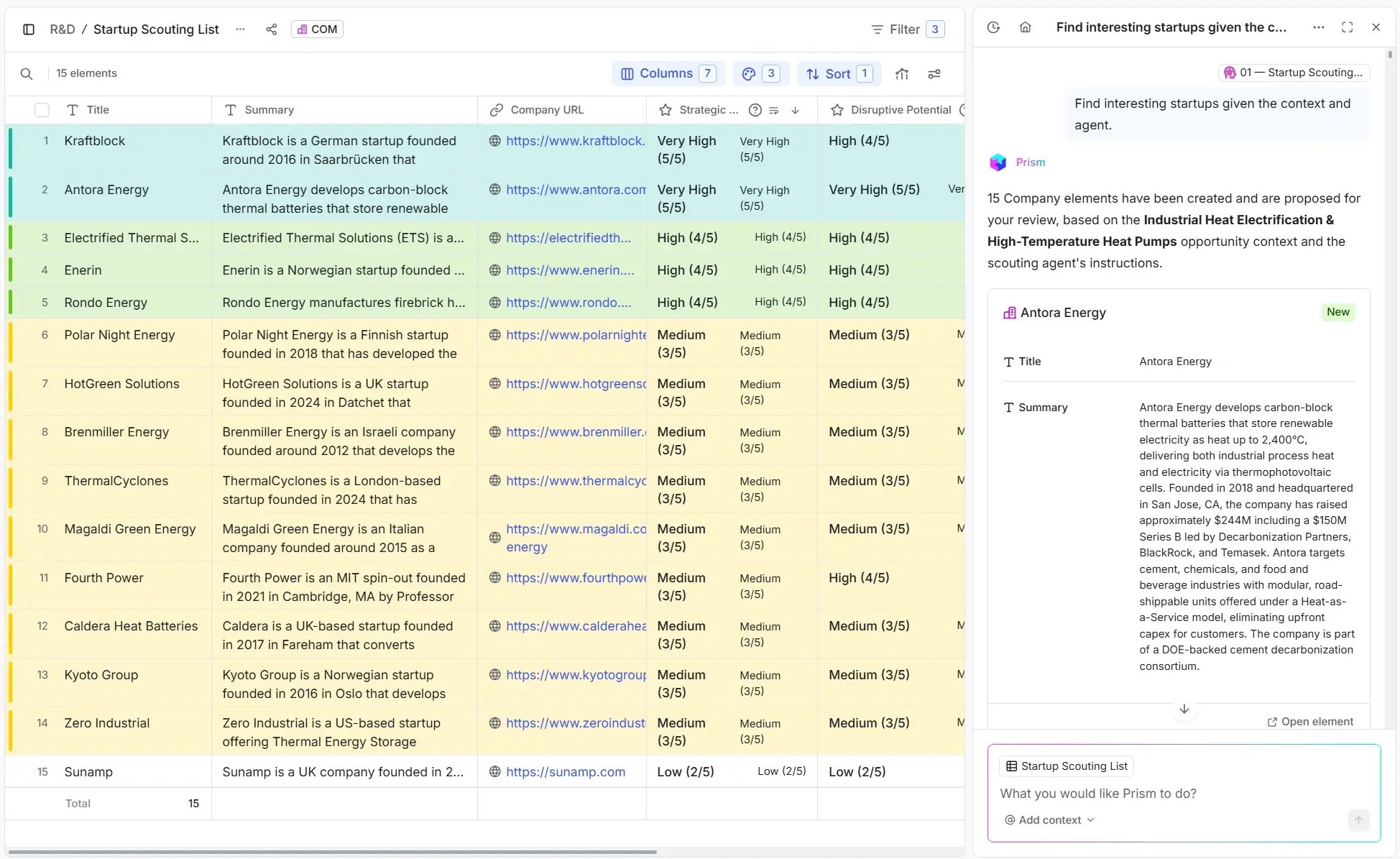
Exhibit 8: AI-driven start-up discovery
Second, define a precise process and guardrails. This helps the AI tailor its search, save resources, and return meaningful results. Inside ITONICS, you define multiple contexts and corporate venturing search processes.
Prism, the ITONICS AI, scans the web and trusted sources and returns a list of relevant startups, scoped the way you defined it: 100 companies if they exist, or a tight 15 serious players.
Once the scan returns 40 to 50 companies, you need a consistent way to cut it to a shortlist. In the old days, you sent invites for multiple stakeholders to evaluate startups.
Candidates got scored across a fixed set: technology maturity, funding trajectory, fit, and whether the startup's products and services map to the business need. Five-point scale, same criteria every time. None of these are significant challenges anymore, but they used to eat up weeks.
You can still do that, or pull faster external sources. Based on external reviews and your context, you get validation in minutes for the whole list. That moves the expert's most critical role in corporate venturing from collecting information to confirming it. It is a new imperative of corporate startup scouting.
In the old world, processes were communicated, and process heads hoped employees would comply. Today, compliance gets built into the workflow.
You set up agents and dictate the workflow instead of hoping it gets followed. Clear corporate venturing instructions are available across the entire company. The startups you find become a valuable source of external ideas for every team, not just the one that owns the corporate venture capital.
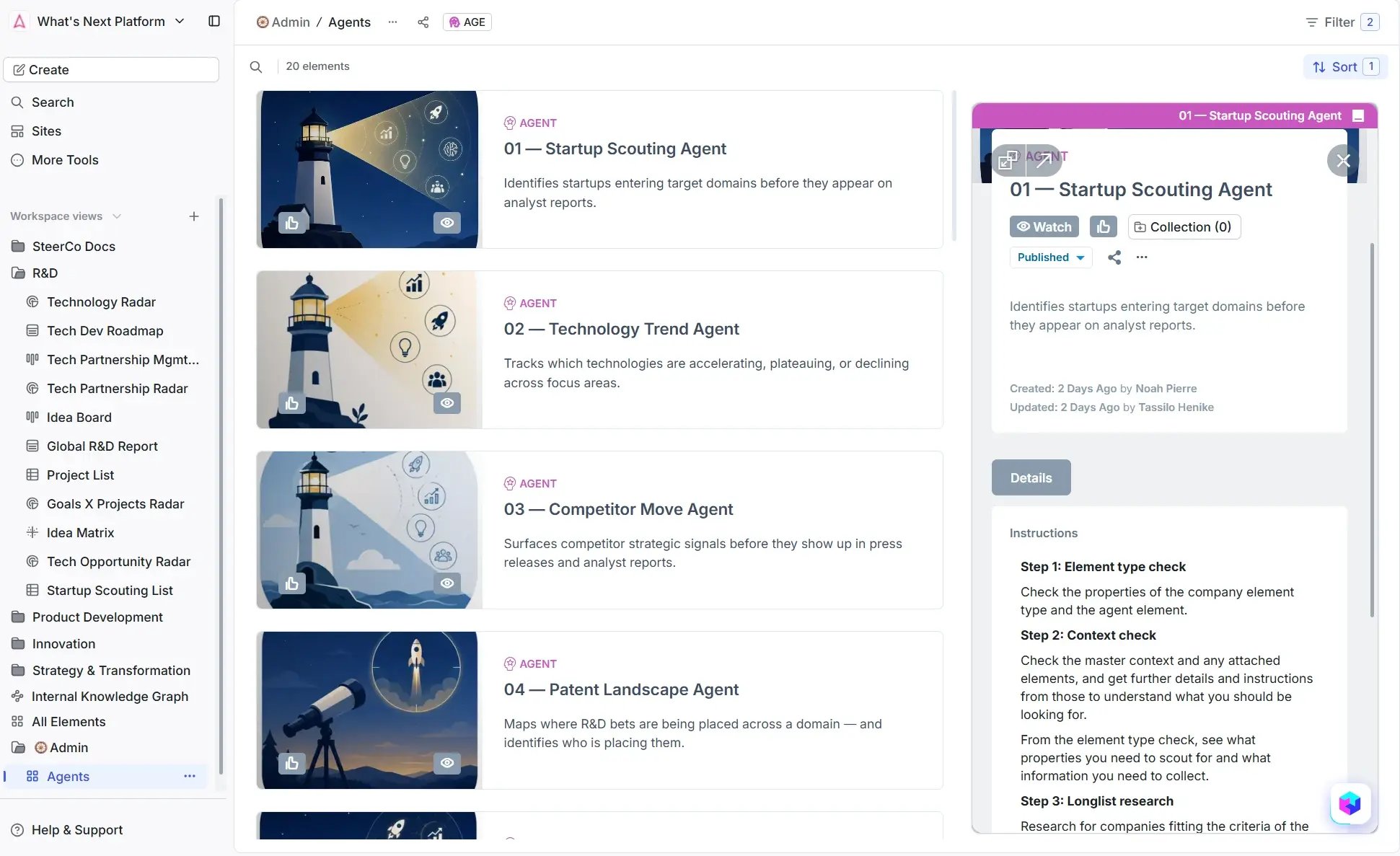
Exhibit 9: Defining AI agents inside ITONICS for R&D and innovation
Scanning is the outbound half. Open innovation is the inbound half, and most companies leave it switched off.
Publish your innovation search fields as public challenges. Tell the market the problems you'll pay to solve. Startups, universities, and small businesses you'd never surface in a database scan come to you, often with technologies tuned to exactly the problem you posted. Elia Group runs this as an annual challenge. Bosch runs it continuously through its open innovation portal.
The economics are good. Outbound scanning finds what exists. Open innovation and co-creation surface things that don't exist yet, built on spec for your needs. Run both and you cover more ground than either does alone, across more industries and more new markets than a single scouting team could reach. It is how businesses find new businesses before competitors do and open new markets they had not scoped.
/Still%20images/System%20Mockups%202025/capabilities-workflows-create-custom-pages.webp?width=2160&height=1350&name=capabilities-workflows-create-custom-pages.webp)
Exhibit 10: Creating a webpage to collect external ideas
Not every good startup needs an equity stake or a joint venture. Most don't.
Venture clienting, becoming an early paying customer rather than an investor, is the lightest model that still gets you the solution. You buy a paid pilot. The startup gets revenue and a reference customer. You get the technologies working in your environment without tying up venture capital or a corporate development team. Open Bosch was built on exactly this logic, and the success rate speaks for itself.
Reach for heavier models when the fit justifies it. Corporate venture capital makes sense when you want a financial position in a company shaping your industry. A joint venture fits when you and a partner build something neither could alone. But default to the lightest model that solves the problem. Most corporate partners overcommit early, then can't unwind it when the pilot underdelivers.
ITONICS is a strategic portfolio intelligence platform built for enterprise R&D and innovation. It helps companies capture, share, and bring valuable ideas to production fast, so internal builds and startup partnerships compete on equal footing.
Streamline idea management. Managing a high volume of one's own ideas and outside ideas gets overwhelming. ITONICS lets companies capture, evaluate, and prioritise ideas from across the organisation, including customers and partners, in one structured process. It scales from single teams to the largest companies and corporations.
Accelerate time-to-market. The ITONICS Innovation OS cuts time, reduces effort, and speeds up time-to-market. When time is money, removing administrative burden is what lets innovation leaders excel and helps businesses remain competitive.
Monitor progress in real time. Track execution with dashboards. See how the innovation strategy plays out across departments, projects, and teams. Spot roadblocks early, track milestones, and measure the success of every initiative. That visibility separates real corporate venturing from theatre, and it is the difference between businesses that compound innovation and businesses that stall.
Technology already changed the sequence. Discovery takes minutes. Validation is pre-filled. Open innovation brings partners to you. The corporations that build this into the process stop building alone, protect their growth, and stop paying to reinvent what someone else already finished. That is the whole innovation strategy in one line: build less, partner more, and stay ahead.