Innovation projects are like execution projects (except 5 factors)


Innovation teams face an impossible mandate. Organizations demand breakthrough thinking while applying execution thinking to manage it. They want projects that explore uncertainty while tracking them, like projects delivering certainty.
The collision is predictable. Innovation projects fail at rates between 40-90%. Most organizations blame the ideas, employees, or market timing. Few examine how they manage these projects.
The real problem: innovation projects share 80% of characteristics with execution projects. Both need project management, resource allocation, and stakeholder alignment. This overlap creates a dangerous assumption that the same management approach works for both.
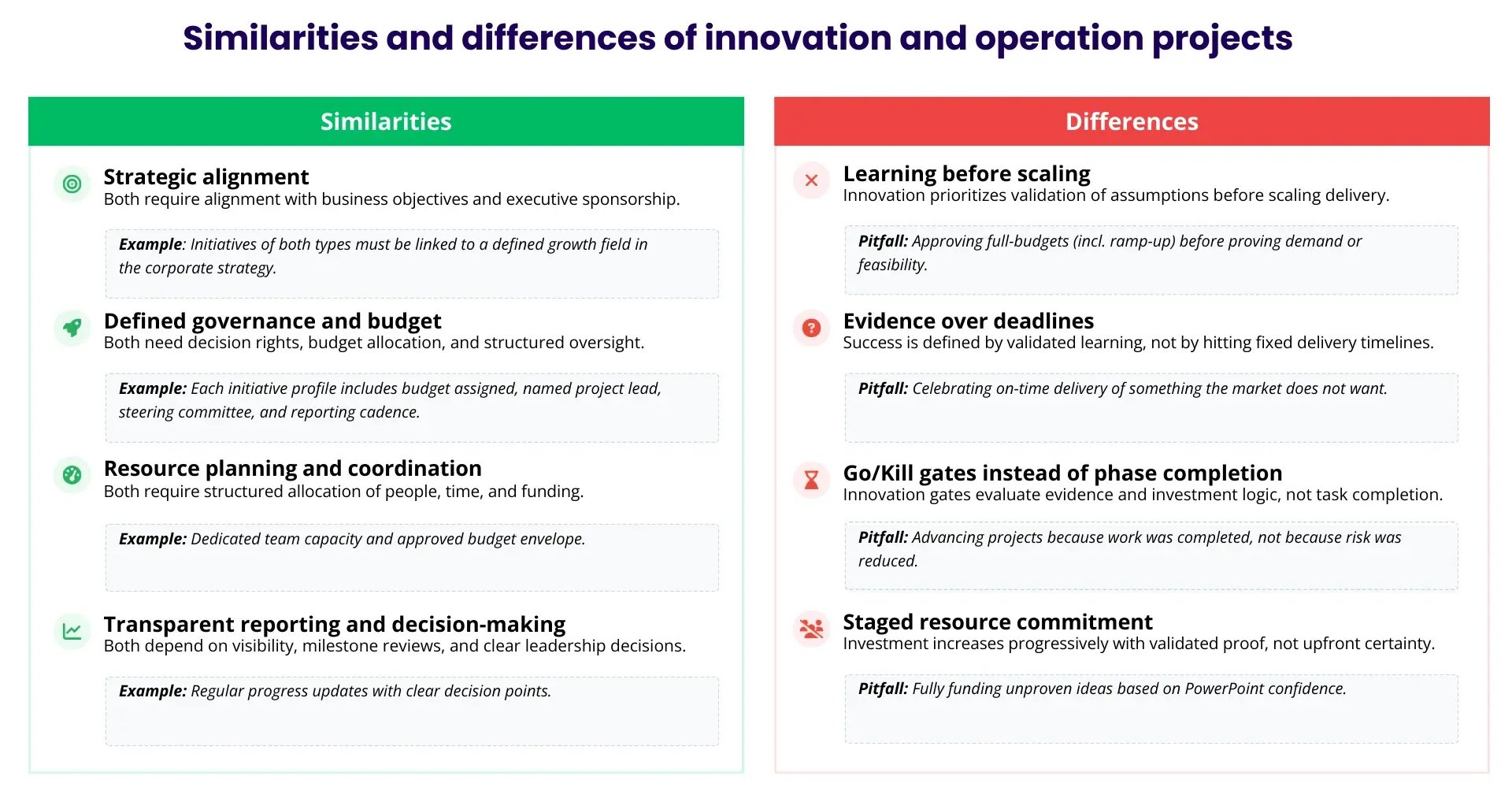
Exhibit 1: Similarities and differences of innovation and operation projects
This article unpacks the similarities and the five critical factors you need to do differently with the innovation pipeline.
Teams rarely get the conditions they need to succeed. Most operate without dedicated budgets. They hunt for corporate sponsors time after time. Each innovation effort requires convincing stakeholders who measure value in execution terms.
The resource problem compounds. Innovation teams often sit within other departments. They carry dual mandates. Run innovation projects while maintaining operational responsibilities. This split can dilute focus and prioritize short-term gains over the innovation pipeline.
Leadership compounds the challenge through skepticism. Innovation project management looks messy compared to execution. Timelines shift. Scope changes. Projects get killed after investment. Without visible results that match execution metrics, trust erodes.
The structural mismatch creates a cycle. Innovation teams can't show results because they lack resources. They can't get resources because they can't show results. Organizations claim to value innovation while systematically undermining the conditions that make it possible.
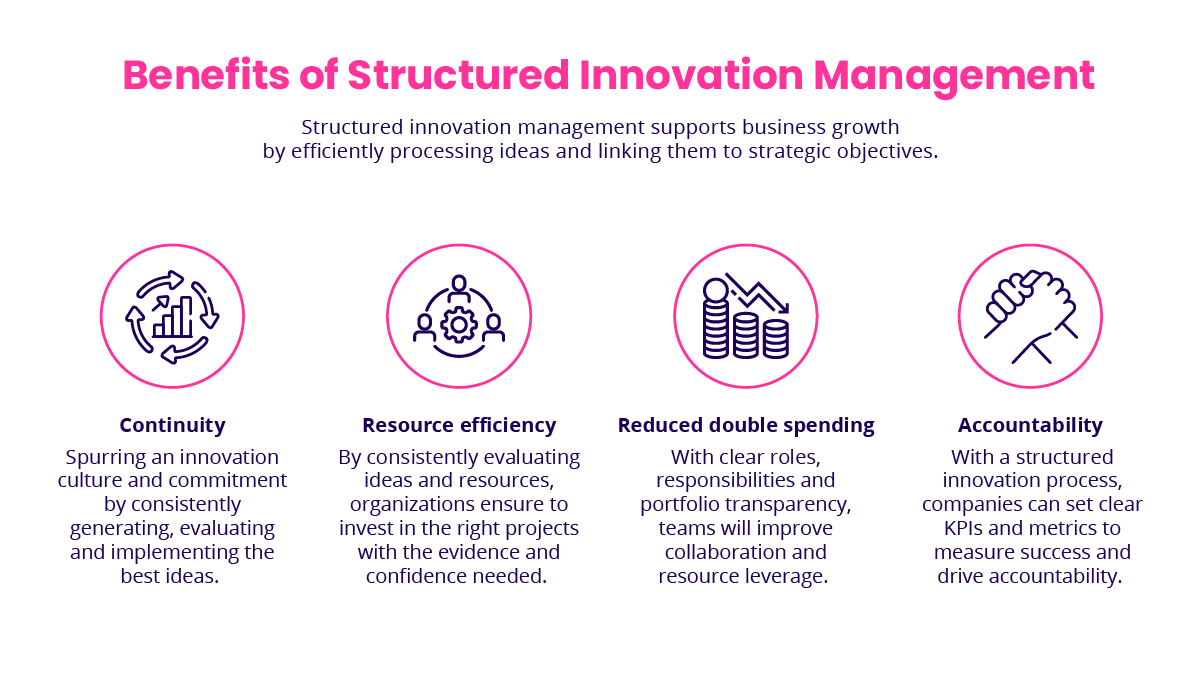
Exhibit 2: Four benefits of structured innovation management
The answer isn't more budget or better ideas. It's understanding which project management fundamentals apply to innovation and which ones actively harm it.
The 80% overlap between innovation and execution projects is real. Ignoring these similarities wastes effort and reinvents project management basics poorly.
Both types need people, money, and executive buy-in. Innovation projects require as strict budget and approval processes as execution efforts. Finance teams evaluate both against strategic priorities. Resource allocation follows similar governance structures.
Teams in both contexts need defined skills and clear roles. Whether delivering new products or optimizing existing systems, teams need project managers who can coordinate work. The culture around how teams operate matters equally. High-performing innovation processes depend on the same collaboration fundamentals that drive execution success.
/Still%20images/Element%20Mockups%202025/ideation-collaborative-communities-2025.webp?width=2160&height=1350&name=ideation-collaborative-communities-2025.webp)
Exhibit 3: Collaborative and structured evaluation of a new idea inside ITONICS
Strategic alignment prevents wasted investment. Innovation initiatives that don't connect to business objectives fail regardless of project management quality. Execution misaligned with strategy wastes money just as badly. Both require sponsors who understand how new products or services create value.
Progress needs visibility in both types. Leadership must understand what's happening, where bottlenecks exist, and when intervention helps. This requires consistent reporting cadence and clear communication channels.
Decision-making processes apply universally. Both design thinking and execution initiatives hit decision points. Continue or stop. Increase investment or hold steady. Pivot or persist. These decisions require data, stakeholder input, and clear authority structures.
Change management applies to both. New ideas entering organizations face resistance whether they come from innovation projects or execution improvements. Groups must navigate organizational inertia, communicate benefits clearly, and build support. The skills for managing stakeholder resistance don't change based on type.
/Still%20images/Kanban%20Board%20Mockups%202025/ideation-organize-idea-flows-2025.webp?width=2160&height=1350&name=ideation-organize-idea-flows-2025.webp)
Exhibit 4: An idea with high priority moves into a new phase on a Kanban board
Customers and internal stakeholders need managed expectations in both contexts. Promise too much and teams lose credibility. Under-communicate and stakeholders lose patience. Success in either type requires balancing transparency with confidence.
Risk communication follows similar patterns. High risk initiatives need sponsors who understand what they're funding. Execution initiatives with significant technical or market risk require the same stakeholder education. Hiding risk doesn't work in either planning scenario.
The fundamentals work across both types. Teams still need structure, communication, and governance. The temptation to throw out project management entirely for innovation creates chaos without improving outcomes.
The question isn't whether to apply project management to innovation. It's which specific factors require different approaches.
The differences between managing innovation and execution plans determine success. These five factors contradict standard project management practices and require dedicated innovation management approaches.
Execution efforts start with known solutions. Build this feature. Launch this service. The path from start to finish stays relatively stable.
Innovation projects explore unknown territory. Will customers pay for this? Does the technology work at scale? These questions don't have answers at kickoff.
Execution efforts front-load planning because requirements stay fixed. Innovation efforts need lighter initial planning and heavier discovery work. You're investing to learn, not to deliver. The environment around decision-making shifts completely. Innovation project managers expect scope to evolve as the team gains valuable insights.
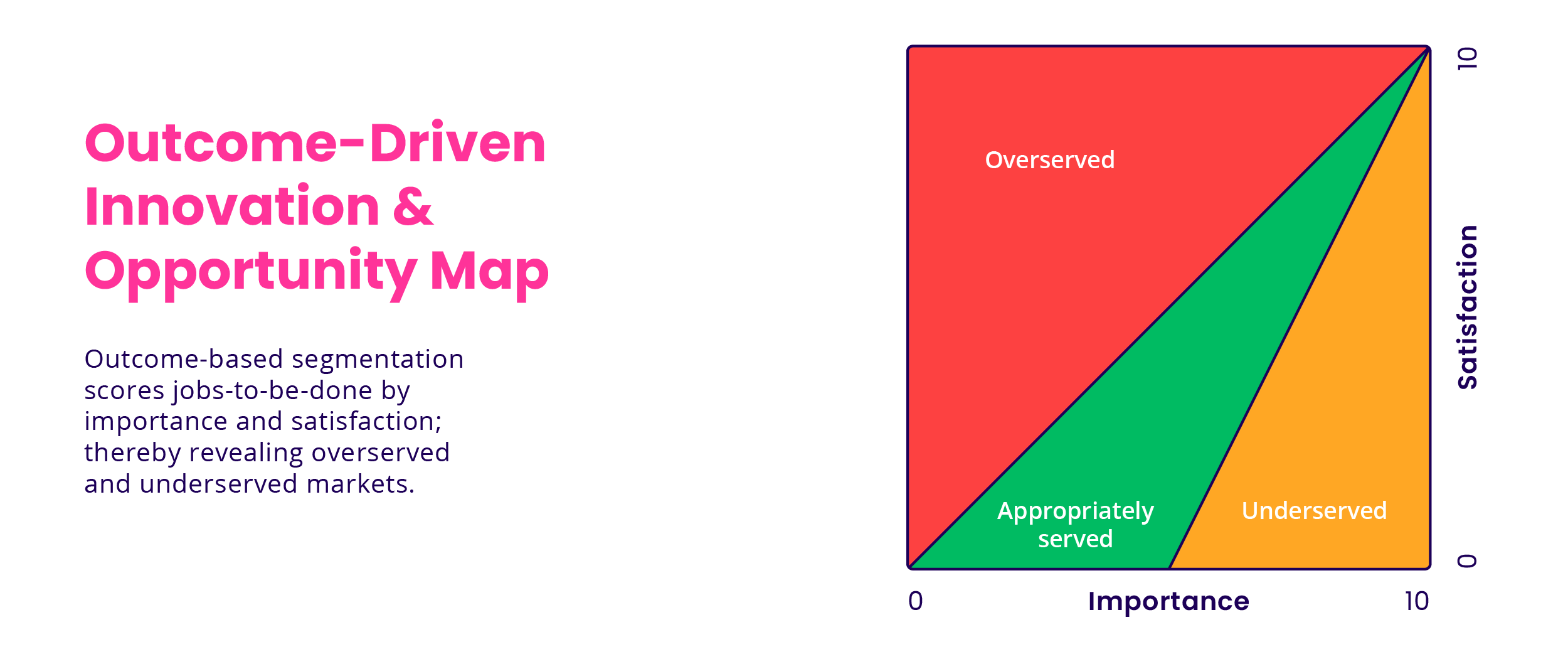
Exhibit 5: Outcome-driven innovation mapping matrix
Execution efforts succeed by hitting milestones on schedule. Innovation projects succeed by validating assumptions before scaling. Delivering fast without validation creates expensive failures. Google Glass launched quickly at $1,500 without validating that the market wanted wearable cameras.
"On-time" becomes meaningless for innovation work. The essential question isn't "did we hit the deadline?" It's "do we have evidence this creates value?" Resources allocated to validation generate different returns than resources allocated to delivery.
Execution uses gates to track completion. Innovation projects use gates to decide whether to continue. Does evidence support the next investment?
The systematic approach changes fundamentally. Stage and gate processes for execution ask "did you complete the phase?" Phase and gate for innovation asks "what did you learn and does it justify more investment?"
Roughly 40-60% of innovative ideas in healthy innovation portfolios get killed at early gates. That's not failure of project management. That's the system working.
/Still%20images/Workflow%20Builder%20Mockups%202025/portfolio-audit-trails-and-alerts-2025.webp?width=2160&height=1350&name=portfolio-audit-trails-and-alerts-2025.webp)
Exhibit 6: Notification for approaching validation deadline
Execution failure means something went wrong. Missed deadlines. Over budget. Technical problems. Innovation project failure often means the hypothesis was wrong. The market didn't want the solution. These failures generate valuable insights that improve the next innovation effort.
Managing failure differently requires culture change. Execution thinking treats failure as a performance problem. Innovation thinking treats most failures as necessary learning. The skills needed shift from failure prevention to fast failure recognition.
Teams need permission to kill their own prototypes when evidence contradicts the thesis. Teams that cling to failing innovation initiatives waste money that could fund better ideas.
Execution gets resources upfront. Teams need full budgets to deliver a defined scope.
Innovation projects stage budget across learning phases. Small investment validates the concept. Medium investment builds a prototype. Large investment scales proven solutions. Each stage gates the next level of resources allocated.
This staging protects the innovation portfolio from catastrophic losses. Commit $5M upfront to ten innovation projects, and you risk $50M on unvalidated assumptions. Commit $200K to validate ten ideas first, and you risk $2M to learn which three deserve the next $1M each.
The development trajectory looks completely different. Execution shows steady consumption of people, technologies, and other tools. Innovation projects show lumpy investment tied to validation milestones.
Organizations that apply execution process patterns to innovation management either underfund everything or overfund failures.
/Still%20images/Kanban%20Board%20Mockups%202025/capabilities-views-kpi-aggregation.webp?width=2160&height=1350&name=capabilities-views-kpi-aggregation.webp)
Exhibit 7: A project portfolio board with KPI aggregation
Companies with strong execution capabilities often destroy their innovation processes by applying the wrong management frameworks.
Google Glass ($1.5B investment, discontinued 2015)
Google treated Glass like a consumer product launch instead of an innovation project. They committed to manufacturing and celebrity marketing without validating market demand. Real-world feedback came too late.
Privacy concerns, battery life under one hour, and no clear use case emerged only after public launch at $1,500. Google later succeeded with Glass Enterprise for focused industrial customers because they validated market demand first.
New Coke (1985, $50M loss)
Coca-Cola ran this like strategic planning for product improvement. Taste tests showed high customer satisfaction. They validated the wrong final product. The tests measured taste, not emotional connection.
Customer feedback hit after the full program launch. The company lost $50M before reversing course. The failure was treating an innovation project like an execution process without staged commitment.
Tropicana Rebrand (2009, $50M loss)
PepsiCo invested $35M in packaging redesign and launched across all products simultaneously. Sales dropped 20% in two months. An innovation approach would have tested the redesign in limited markets first. Instead, cross-functional teams executed without validation gates. The environment proved them wrong after full commitment.
These companies didn't fail because they lacked knowledge. They failed because they applied execution project management to innovation. When you treat uncertainty like certainty, you scale failures. Companies can't innovate if creativity replaces customer testing, and potential impact assessment happens after major investment.
Organizations need both innovation and continuous improvement to run simultaneously. Strategic portfolio management means balancing both without letting one destroy the other.
The 70-20-10 model provides a starting framework. Allocate 70% of the budget to core operations and continuous improvement. Dedicate 20% to adjacent innovation that extends current business models. Reserve 10% for transformational innovation efforts that develop the future.
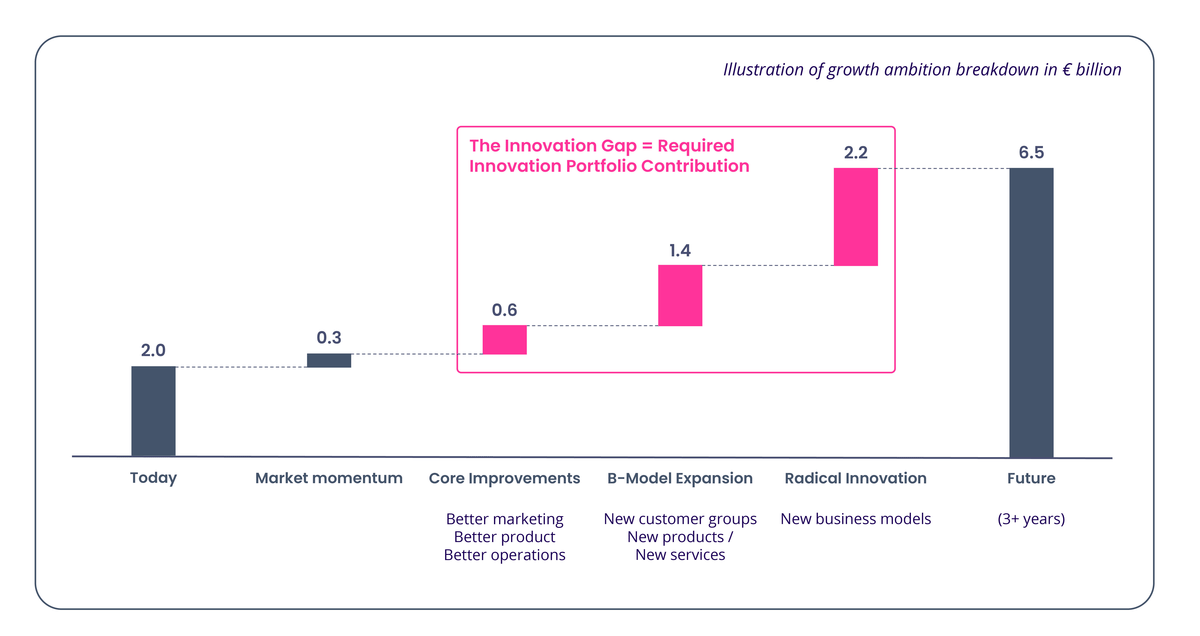
Exhibit 8: Translation of a growth ambition into a strategic portfolio mix
These percentages shift based on company maturity and market pressure. Startups might reverse the ratio. Established organizations in stable markets can maintain conservative splits. The essential point: explicitly separate innovation portfolio allocation from operations.
Project leaders need clear authority boundaries. Innovation projects follow different decision gates, validation processes, and success metrics. Operations focus on delivery, efficiency, and reliability. Mixing governance frameworks creates confusion and kills both.
Technology and tools should reflect this split. Innovation pipelines need creative solutions, agile methodologies, design thinking, and continuous learning systems. Operations need development optimization, progress control, and efficiency tracking. Some tools overlap. Most don't.
Conflicts emerge when resources get tight. Operations deliver revenue today. Innovation promises benefits in the future. Leadership defaults to operations because the return is certain.
This pattern destroys innovation capabilities over time. Organizations become optimization machines that can't develop new products or services when markets shift. The company loses adaptability.
Three mechanisms prevent this collapse. First, protect innovation budgets from operational raids. Ring-fence the allocation. Second, measure innovation differently. Don't judge idea exploration by execution metrics. Track validation speed, learning quality, and portfolio health. Third, rotate engineering decision-makers between innovation and operations. Cross-pollination builds understanding of why both need different approaches.
The organization must accept that innovation pipelines develop different outputs. Fewer ideas reach scale. More ideas fail early. The process looks messier. These aren't bugs. They're features of managing uncertainty while operations manage certainty.
Strategic portfolio management means running parallel systems. One optimizes what works today. The other explores what might work tomorrow. Companies that force both through the same process kill their ability to innovate while claiming they value creativity and innovative solutions.
ITONICS Innovation OS provides unified visibility over both your innovation pipeline and development portfolio, from early-stage validation to scaled delivery. The platform enables collaboration between both groups while maintaining the different governance structures each requires.
/Still%20images/List%20Mockups%202025/portfolio-oversee-tasks-and-assignments-2025.webp?width=2160&height=1350&name=portfolio-oversee-tasks-and-assignments-2025.webp)
Exhibit 9: A table with conditional formatting rules showing portfolio risks
Separate innovation and execution without tool sprawl. ITONICS runs validation-based innovation pipeline management alongside milestone-based execution tracking in one system. See which efforts need validation gates versus delivery checkpoints. Make necessary adjustments based on type.
Stage budget with evidence-based gates. ITONICS connects innovation portfolio validation results directly to funding decisions. Knowledge gained from testing moves immediately to investment choices. The most promising ideas advance with proof.
Manage both portfolios with strategic control. See resources across the innovation portfolio and execution pipeline. Identify when operational demands threaten innovation pipeline health. Innovation portfolio managers at Siemens Energy, Bosch, and Toyota use ITONICS to balance operational delivery with sustainable growth through systematic innovation portfolio management.