Strategic Portfolio Intelligence: The Complete Guide


Most companies do not lack information. They lack the right timing and interpretation to make decisions from it.
OpenAI released GPT-3 through a developer API in June 2020. That was the point at which generative AI became something an enterprise could actually build on. It took more than three years for Gartner to name AI trust, risk, and security management one of the ten strategic technology trends for 2024, an implicit admission that most business leaders still had no formal way to govern what they were funding.
That gap has a cost. Capital gets trapped in low-impact initiatives while new opportunities pass by. Strategic drift and double work go unnoticed. New ideas stall between ambition and funding. And leadership flies blind between quarterly reviews.
That gap also has a name: strategic portfolio intelligence. This guide defines it precisely, traces where the underlying idea actually comes from, breaks down its components, gives you a way to score your own organization against it, and lays out how to build it.
| Stage 1: Fragmented | Stage 2: Aware but disconnected | Stage 3: Connected | Stage 4: Continuous | |
| Signals | Exist in separate silos; market intelligence in one team's reports, capacity and budget in someone else's spreadsheet | Both external and internal signals are tracked deliberately, still in separate systems | At least one link runs automatically; capacity data feeds reviews or signals get scored against initiatives | External and internal signals are routed automatically to the initiative they affect |
| Decision ownership | Nobody owns the connection; it's in no one's job description | Signals reach a general audience, not a specific owner | Named owners exist for parts of the portfolio | Every initiative has a named owner who receives the flag directly |
| Timing | Annual reviews, if at all | On a review meeting schedule, not when the decision is needed | Earlier for the automated slices, late everywhere else | When the data recommends a decision |
| Audit trail | None; the same argument gets relitigated every review | None; business objectives get restated every quarter with the same misalignments | Partial; data-driven decisions show up in pockets | Every fund, stop, or scale call logs the signal that triggered it |
Exhibit 1: Strategic portfolio intelligence maturity stages
Strategic portfolio intelligence is external and internal information, assessed and connected into a fund, stop, or scale decision on a specific initiative. It reaches the person who owns that call at the moment they need to make it.
It is the intelligence layer that makes strategic portfolio management (SPM) work. It grounds portfolio decisions in evidence from multiple sources and portfolio priorities that move when the evidence does.
Three conditions have to hold at once:
Strung together across a full portfolio, this is what turns individual calls into strategic portfolio management. It is the discipline that accumulates correctly timed fund, stop, or scale decisions across different initiatives and business teams at once.
The comprehensive visibility leads to a compounding, long-term competitive advantage built from consistently funding the right five initiatives instead of the loudest ten. That is the difference between portfolio management as bookkeeping and strategic portfolio management as a decision discipline. Its job is to connect strategy with what the business environment requires, leading to better funding decisions.
.webp?width=1135&height=676&name=Definition%20of%20strategic%20portfolio%20intelligence%20(1).webp)
Exhibit 2: The difference between market intelligence, business intelligence and strategic portfolio intelligence
Annual strategic planning sets direction once a year. Strategic portfolio intelligence runs continuously because markets do not wait for the planning cycle to reopen. It is what lets teams maintain alignment between corporate strategy, business objectives, and the live portfolio in the months between planning cycles.
Most organizations already run strategic intelligence. Most already run business intelligence. Both systems collect real signals. Neither is built to connect to the other, reach the right person, or arrive on time. Strategic decision-making happens anyway, filled in by whatever is available in the room.
Three habits manifest that gap:
Strategic portfolio intelligence is a new term. What it describes is not. It is what happens when two much older fields, business intelligence and strategic or competitive intelligence, finally do what both originally set out to do and never fully delivered alone.
IBM researcher Hans Peter Luhn coined the term business intelligence in a 1958 paper, "A Business Intelligence System," published in the IBM Journal of Research and Development.
Luhn's system automatically matched documents to "action points," people in an organization defined by an interest profile, so relevant information reached the right person without anyone going looking for it. His stated goal centered on using facts to guide action toward a specific outcome.
That is a strikingly precise description of what strategic portfolio intelligence tries to do today. Luhn described routing intelligence to a specific decision-maker automatically, based on relevance. He did not have the computing power or the data volume to do it at an organizational scale.
The field went in a different direction instead. It spent the next six decades building data warehouses, ETL pipelines, and reporting tools, a mature and useful discipline, but a narrower one than Luhn originally proposed. Today's BI tools show data to whoever opens them. They do not decide who needs to see what, or when.
Strategic and competitive intelligence developed on a different track entirely, focused outward from the start. Michael Porter's 1980 book, "Competitive Strategy," gave the field its analytical foundation. The Society of Competitive Intelligence Professionals, founded in 1986, turned it into a formal discipline built to track markets, competitors, and technology shifts, then report findings to leadership.
Strategic intelligence never had to touch internal operating data. It was built to look outward. Capacity, budget, and project portfolio management sat in a completely different system, owned by a completely different team, with no requirement that the two ever meet.
Even the field's own professional body eventually admitted the gap. In 2010, the Society of Competitive Intelligence Professionals renamed itself Strategic and Competitive Intelligence Professionals, stating publicly that the change reflected the field's evolution toward supporting executive decision-making.
That is a professional association acknowledging, decades in, that watching the market was not the same job as feeding a strategic portfolio management decision. The rename did not close the gap. It just gave it a name in the field's own vocabulary.
For over sixty years, these fields ran in parallel without a structural reason to connect. Different owners. Different tools. Different KPIs. A market intelligence team's job ended at describing what was changing. A finance or PMO team's job ended at reporting the current capacity.
Project portfolio management stayed inward-looking by design. Nobody's job was to combine the two into a specific fund, stop, or scale decision. Business strategy sat above both, disconnected from each, and business goals stayed aspirational.
Two things changed that.
Strategic portfolio intelligence names that convergence. It is the layer that finally connects business intelligence and strategic intelligence, roughly sixty-five years after Luhn's paper described exactly this job, and the industry built something narrower instead.
.webp?width=1668&height=924&name=The%20Cost%20Breakdown%20of%20Delayed%20Visibility%20in%2050M%20Portfolios%20(and%20the%208%20SPM%20AI%20Use%20Cases).webp)
Exhibit 3: The cost breakdown of delayed visibility in 50M portfolios (and the 8 SPM AI use cases)
Three habits manifest the gap when the connection is missing: the calendar decides, crises decide, opinion decides. Close the gap, and each one reverses into measurable strategic outcomes. The thread through all of them: connect strategy to the live portfolio, and keep it connected.
When capacity and market signals route to a decision owner as they happen, the fund, stop, or scale call gets made before the next scheduled review forces it.
Toyota Motor Europe tracks status across its 200-plus active R&D projects with real-time visibility into the project portfolio rather than quarterly snapshots alone, so a project owner sees a shift against strategic priorities as it happens, not three months later.
In ITONICS's analysis of 2,310 conversations, steering committee and board escalation language appeared in 405 of them, most tied to problems that had already become visible externally before business leaders heard about them internally.
A connected signal helps decision makers identify risks early, before the problem reaches the board. The board still gets involved. It gets involved in a decision already flagged, not a surprise already public. Portfolio execution stays on course because corrections happen early.
Fund, stop, or scale calls made on connected signals are data-driven decisions with a paper trail: which internal data, which external signal, which threshold triggered the flag.
That trail is what makes a decision defensible in the next review, instead of being relitigated because nobody remembers why it got made.
DB Schenker increased speed-to-market by 25% in its startup collaboration work. The gain came from closing the gap between external scouting, which startups were worth engaging, and internal readiness, which teams had the capacity to run the pilot.
Scouting alone does not produce that gain. Connecting scouting to internal capacity does. That is a competitive edge measured in weeks, not adjectives.
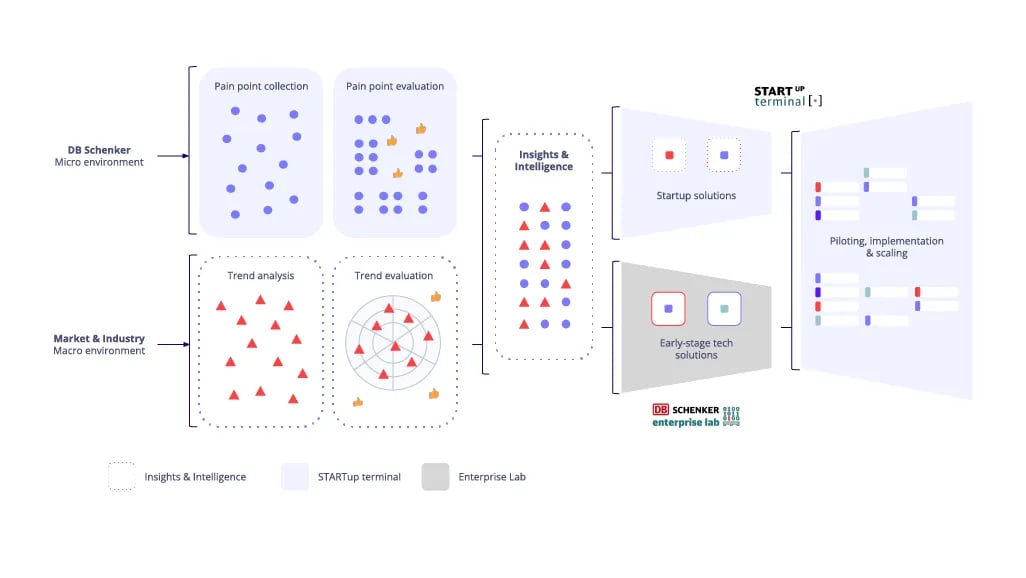
Exhibit 4: DB Schenker innovation process diagram
Most technology, product, and innovation teams manage their business-critical initiatives across spreadsheets, presentations, and disconnected tools. The result:
To maximize ROI at the portfolio level, prioritize investments toward business priorities as evidence changes, and keep the balance across strategic themes rather than chasing one winner.
Not a single smart bet, the discipline of consistently not funding the wrong ten initiatives while a competitor still is what long-term competitive advantage through strategic portfolio management actually looks like in practice. None of these show up from one good decision. They show up from compounding correct fund, stop, or scale calls across every review cycle, for years.
Six components have to work together.
Market movement, competitive activity, emerging technology, startup, and patent activity. This is the raw material that strategic intelligence already tracks well. The requirement here is continuous capture of real-time insights from the competitive environment, not a periodic scan. A signal that arrives quarterly is already too slow for business-critical decisions.
Most companies already do this part reasonably well. Scouting teams, trend radars, and analyst subscriptions exist in some form almost everywhere. The failure rarely happens at capture. It happens in what comes after: nobody checks the new signal against what is currently in the portfolio, so it gets documented rather than turned into actionable insights.
/Still%20images/Element%20Mockups%202025/portfolio-receive-risk-alerts-2025.webp?width=1440&height=900&name=portfolio-receive-risk-alerts-2025.webp)
Exhibit 5: ITONICS alert showing an increase in interest in the trend rise of autonomous networks
Capacity planning data, budget headroom, resource allocation, staffing, delivery status, bottlenecks. This is the raw material business intelligence already tracks well. Still, it usually lives in a separate system with separate access rules, owned by a PMO rather than whoever oversees the organization's strategic goals.
The access rules matter more than the data quality. A program management system holding perfectly accurate capacity numbers is useless to strategic portfolio intelligence if the person assessing an external signal cannot query it without filing a request.
Internal capture has to be readable by the assessment step in real time, not exported into a report once a month. Centralized data is the requirement: resource management, strategic goals, and project management systems feeding one place that the assessment layer can query.
/Still%20images/List%20Mockups%202025/portfolio-oversee-tasks-and-assignments-2025.webp?width=1440&height=900&name=portfolio-oversee-tasks-and-assignments-2025.webp)
Exhibit 6: A table with conditional formatting rules showing portfolio risks inside ITONICS
External and internal signals get evaluated against a specific initiative, not published as a general update. This is the step almost every company skips. A market shift gets summarized in a slide. It never gets checked against the initiatives it should actually change or the business objectives.
Real strategic portfolio management assessments answer one question per signal: does this change the fund, stop, or scale calculus for a named or new initiative, and by how much? A signal that does not clear that bar does not need to go anywhere.
Scenario planning belongs here too: testing how a signal plays out across strategic themes before committing capital. Most of what passes for strategic intelligence today is signals that never got asked that question.
Every initiative needs one named owner with the authority to make the fund, stop, or scale call. Without that name attached, an assessment has nowhere to go. Routing only works when decision-makers are explicit, and the decision-making process has a name on every gate.
Ownership has to be an individual, not a role description. Portfolio managers often hold the data but not the authority, and that mismatch is worth fixing first. "The innovation team" is not an owner.
A specific person who can make or organize a decision is an owner. If naming that person feels uncomfortable, that discomfort is diagnostic. It usually means the organization has been avoiding the accountability that strategic portfolio intelligence is designed to surface.
/Still%20images/Workflow%20Builder%20Mockups%202025/portfolio-audit-trails-and-alerts-2025.webp?width=1440&height=900&name=portfolio-audit-trails-and-alerts-2025.webp)
Exhibit 7: Notification for approaching validation deadline inside ITONICS
The assessment has to reach the owner while the decision is still open. A signal that arrives after the budget is already committed is a postmortem, not intelligence. This is the component most systems fail on, even when the first four work, because timing requires ongoing monitoring.
Cadence has to match the signal moment. A budget reallocation window that closes in three weeks needs signals delivered in days. A multi-year platform bet can tolerate a monthly check-in. Building one fixed reporting cadence for every initiative in the portfolio is how timing quietly breaks business capabilities even in organizations that got the first four components right.
Every fund, stop, or scale decision gets logged against the signal and threshold that triggered it. Six months later, when someone asks why an initiative got killed, the answer exists in the audit trail. Without this component, every review starts from zero, and the same argument gets relitigated whenever leadership changes or memory fades.
This component also closes the loop on the thresholds set in component 3. If a signal type keeps triggering flags that turn out not to matter, the audit trail shows it, and the threshold gets tightened.
If a real shift got missed, the trail shows what should have triggered a flag and did not. Without logging, thresholds never improve. They just accumulate as guesses nobody revisits. Treat thresholds as performance metrics for the system itself.
Score your organization's strategic portfolio management maturity against four stages. Most companies sit lower than they assume.
Signals exist, but nobody connects them. Market intelligence lives in one team's reports. Capacity and budget live in someone else's spreadsheet. Fund, stop, or scale decisions get made by whichever of the three habits, calendar, crisis, or opinion, is loudest that quarter.
Business priorities shift with the loudest voice. Business strategy exists on slides, business goals live in the annual report, and strategic goals never reach the portfolio. Nobody owns the connection, because nobody's job description includes it. Strategic planning happens once a year and ages immediately.
Leadership recognizes the gap and starts tracking both external and internal signals more deliberately. Reports improve. Data-driven insights pile up with nowhere to land. Decisions still don't move because tracking and connecting are separate activities.
Signals still reach a general audience instead of a specific owner, and still arrive on a schedule instead of when the decision is open. Business objectives get restated every quarter, and the same strategic initiatives stay misaligned after every restatement.
At least one link in the chain runs automatically. Internal capacity data might feed portfolio reviews without manual compilation. External signals might get scored against active initiatives before anyone reads them. Portfolio decisions start moving earlier because part of the routing no longer depends on a person.
Real-time visibility exists for slices of the portfolio, and data-driven decisions show up in pockets. Strategy execution still outruns the reporting. Full connection, external plus internal plus timing plus a named owner, is still inconsistent across the project portfolio.
External and internal signals are routed automatically to the named decision owner for the specific initiative they affect, before the next scheduled review forces the issue. Every fund, stop, or scale call has a logged trail back to the signal that triggered it.
The quarterly review confirms informed decisions already made instead of making them for the first time in the room. The strategy execution process and portfolio steering run as one continuous loop against strategic goals, and enterprise-wide visibility stops being a slide claim. The system exists to maintain alignment continuously, not to declare it annually.
Answer yes or no to each question.
Zero or one yes puts you at Stage 1, fragmented. Two or three at Stage 2, aware but disconnected. Four or five at Stage 3, connected. Six puts you at Stage 4, continuous.
|
Question |
Yes |
No |
| 1. Does every active initiative have one named person with authority to fund, stop, or scale it? | ||
| 2. Can that person see current capacity, budget, and resource allocation data for their initiative without asking someone else? | ||
| 3. Does an external market or technology shift reach that person within days, not at the next quarterly review? | ||
| 4. Are portfolio priorities re-checked against strategic objectives when either one changes? | ||
| 5. Is there a record of which signal triggered each fund, stop, or scale decision made in the last six months? | ||
| 6. Would your last three major portfolio surprises have shown up in internal data before they became external news? | ||
| 7. Does at least one part of this connection run without a person manually cross-referencing two systems? |
Exhibit 8: Strategic portfolio intelligence assessment
Four phases, roughly twelve weeks to a working pilot. The goal across all four: connect strategy, signals, and ownership before automating anything. Do not skip the ownership step to get to the technology faster. Everything else depends on it.
Before connecting any data, assign one person per active initiative with actual authority to fund, stop, or scale it. Not a committee. Not "the team." One name.
If an initiative has no clear owner today, that gap is the first problem to fix, before any signal has anywhere to go. Portfolio managers are the natural candidates, but the title matters less than the authority.
List every internal source that holds capacity planning, resource management, budget, and status data, and every external source already in use for market and technology intelligence. Include the strategic planning documents that state current priorities, because the thresholds in phase 3 need them.
Most companies find both exist. Almost none find them in a format that can be cross-referenced automatically. This phase maps what already exists. It does not require buying anything new yet.
Decide, per initiative type, what change in internal or external data should trigger a review before the next scheduled one. A budget variance past a set percentage. A competitor filing a patent in the same technology area. A capacity shortfall past a set threshold.
Tie each threshold to the strategic objectives and business priorities that strategic planning committed to, so every flag carries a why. Thresholds turn risk assessment from a quarterly exercise into a standing rule and help teams identify risks early. Without explicit thresholds, monitoring just becomes more noise nobody acts on.
Run the connected system on a limited slice of the portfolio first, roughly 10 to 20 strategic initiatives. Confirm that flagged decisions actually reach the named owner in time to matter, and that portfolio execution data flows back into the audit trail. Fix what breaks at this scale before rolling it out portfolio-wide. A system that fails quietly across 200 initiatives is far harder to diagnose than one that fails visibly across 15.
Two failure modes show up almost every time. Thresholds set too low flood owners with flags until they start ignoring the system entirely, which defeats the point faster than having no system at all. Thresholds set too high let a real shift slide through unflagged, which only surfaces at the next crisis, the exact failure mode the whole exercise was meant to remove. Expect to retune thresholds at least once before scaling past the pilot group.
A spreadsheet cannot do this. Neither can a standard BI dashboard, a standalone market intelligence feed, or generic project management suites and strategic portfolio management tools built for status tracking alone.
The system needs four capabilities working together:
In short: software built for intelligent decision-making, able to connect strategy, market signals, and execution data in one system.
|
Requirement |
ITONICS capability |
|---|---|
|
Internal and external data in one place |
Workspaces hold external signals and internal project data together, with configurable element types for each |
|
AI-based signal-to-initiative matching |
Prism, ITONICS's agentic AI, checks active initiatives against strategic priority, flags budget, staffing, and schedule risk, and surfaces opportunities worth a decision, drawing on a curated data lake of 50 million external signals |
|
Routing to the named owner with governance |
Configurable processes, phases, and gates route work through defined decision points, with role and permission configuration controlling who sees and acts on what |
|
Board-ready reporting |
Dashboards combine data into report-ready views, with PPT and XLS export and BI tool connections for teams that need Power BI or Tableau |
Exhibit 9: Strategic portfolio intelligence requirements
None of this replaces naming decision owners or defining thresholds. Those are organizational decisions software cannot make for you.
Strategic portfolio management software supports the operating model, it does not replace it. The business value comes from the decisions it accelerates, not from the feature list. What software removes is the manual cross-referencing that makes strategic portfolio intelligence impossible to sustain by hand once a portfolio passes roughly 20 active initiatives.
ITONICS connects what traditionally lives in silos: market and technology intelligence, strategic priorities, and the project portfolio. Instead of steering in hindsight, you get prioritized market and tech intelligence, continuous strategic and portfolio alignment, faster idea-to-implementation, and real-time visibility into pipeline and execution health.
/Still%20images/Roadmap%20Mockups%202025/portfolio-visualize-critical-paths-2025.webp?width=1440&height=900&name=portfolio-visualize-critical-paths-2025.webp)
Exhibit 10: Roadmap with projects and milestones showing schedule conflicts | ITONICS
Roadmaps connect strategic planning to operational tasks over time. Kanban boards track the health of each project. Dashboards give leadership board-ready reporting without the manual roll-up that eats analyst time.
Prism, the platform's AI, checks initiatives against strategy and recommends fund, re-scope, or stop based on strategic fit and business value. It draws on a curated data lake of 50 million signals and flags budget, staffing, and schedule risk early. Human-in-the-loop stays the rule. Prism proposes. Your owners decide.
Companies like Toyota, Roche, and Thales trust ITONICS. DB Schenker increased speed-to-market by 25%.