How to create idea management programs that are realization engines


Fewer than 30% of organizations successfully translate innovation activities into commercial impact. This is not for lack of ideas. The average enterprise runs dozens of innovation campaigns each year, yet most ideas never reach a funding decision, let alone the market.
The bottleneck sits between a good idea and a funded one. Most companies have never built a systematic program to move ideas forward. Remove that bottleneck, and the economics of innovation change entirely.
This article sets out what a high-performing idea management program looks like in practice. It covers the process and structural components that move new ideas forward, the governance systems that sustain them, and the idea management software that enables programs to deliver at scale.
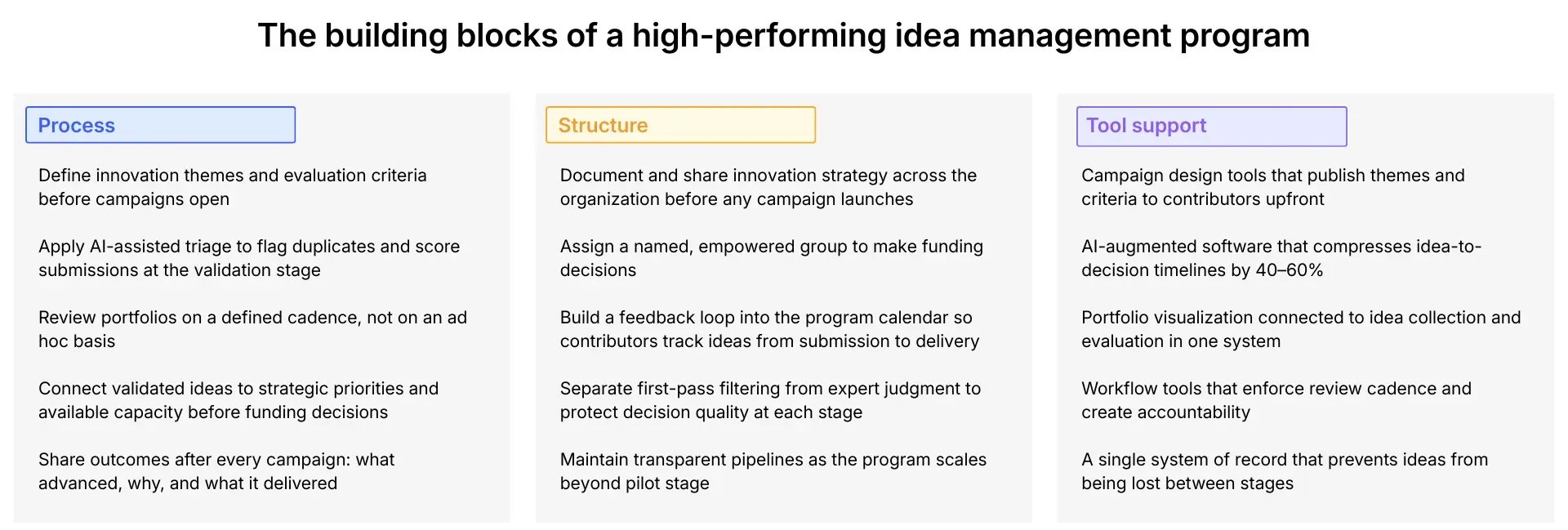
Exhibit 1: The building blocks of a high-performing idea management program
Idea management has existed in some form for decades. Many organizations have run suggestion schemes, innovation challenges, and employee idea portals for years. But collecting ideas and acting on them are two very different things, and the distance between them is where most innovation investment is lost.
For most of its history, idea management was measured by how many people showed up. Submission counts, campaign engagement rates, and employee participation scores became the default indicators of a healthy program.
Innovation functions reported these numbers upward, boards nodded approvingly, and the actual rate of implementation went unexamined.
The organizations rewriting that model have shifted their focus from collection to realization. They treat every stage of the innovation management process, from submission to funding to development, as a system to be optimized.
They measure what gets built, not what gets submitted. Their programs reflect that:
structured evaluation criteria,
clear funding gates,
and idea portfolio visibility that connects innovative ideas directly to business and market decisions.
/Still%20images/Kanban%20Board%20Mockups%202025/ideation-organize-idea-flows-2025.webp?width=2160&height=1350&name=ideation-organize-idea-flows-2025.webp)
Exhibit 2: An idea with high priority moves into a new phase on a Kanban board
The external environment has made the old approach untenable. McKinsey reports that enterprise AI adoption jumped from 55% to 78% in a single year, compressing the window between identifying an opportunity and acting on it.
CFOs are scrutinizing innovation budgets with unprecedented rigor. Boards want evidence that idea management programs contribute to revenue and competitive positioning, not just employee engagement scores.
Companies that connect idea management directly to strategic portfolio decisions now move 30-50% faster from opportunity identification to resource allocation. That speed advantage compounds over time.
Businesses that cannot evaluate, validate, and develop new ideas quickly are not just slower. They are structurally exposed to competitors who can.
The risk of an underperforming idea management program is not just missed opportunity. It is active erosion. Employees who submit ideas and receive no response disengage. Innovation budgets that produce activity without outcomes attract cuts.
PwC research shows that 54% of innovating organizations cannot align their innovation strategy with their broader business strategy. In a market moving at this pace, that misalignment compounds. Every year it goes unaddressed, the cost to business growth grows.
The companies that stay ahead treat great ideas as the starting point of a managed innovation journey, not the end goal. The question for program owners is no longer whether to build a program. It is whether the program they have is engineered to deliver, or simply designed to collect.
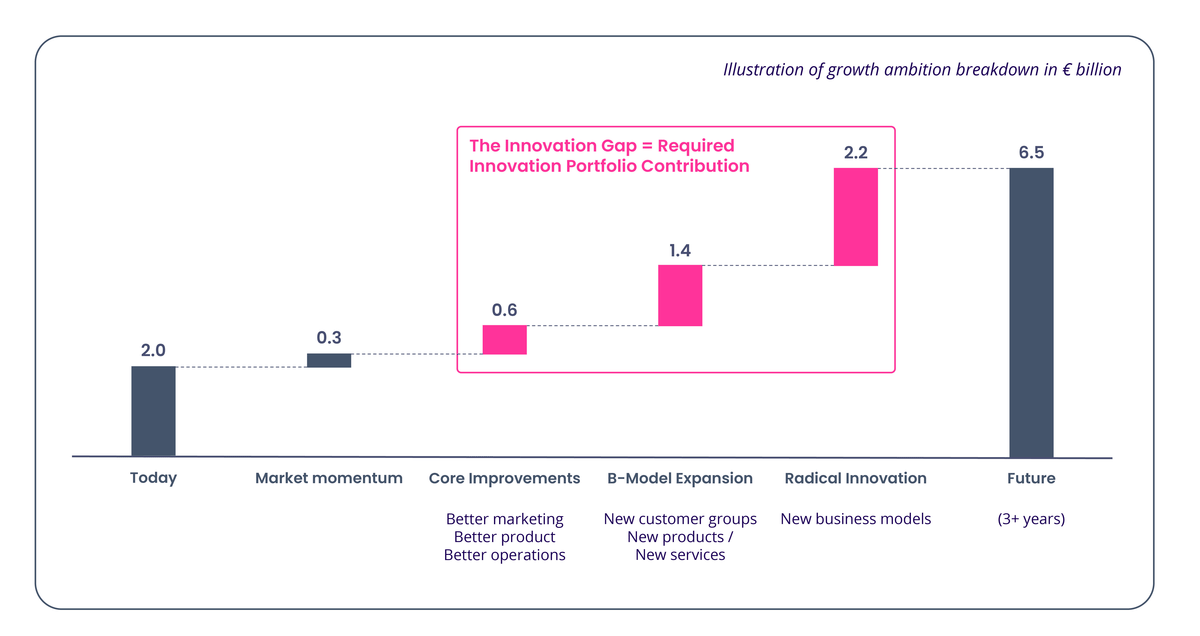
Exhibit 3: Translation of a growth ambition into a strategic portfolio mix
Fixing that starts with measuring the right thing. Most companies track participation. The organizations that outperform track realization: the proportion of ideas that move from submission all the way through to delivery.
That single metric reorients everything, from how innovation programs are designed to how governance bodies are held accountable.
Understanding why participation metrics mislead, and what realization metrics reveal, is the foundation on which high-performing idea management programs are built.
Participation has long been the default measure of a healthy idea management program. Submission counts, campaign engagement rates, the number of employees who submit ideas: all are easy to track and easy to report. But they measure input, not outcome.
Several forces have driven companies toward participation as a proxy for innovation health. Innovation functions historically needed to justify their existence through visible activity. Annual engagement surveys rewarded inclusive innovation cultures, and idea management software made it easy to create dashboards showing submission volumes in real time.
Measuring collection became a substitute for driving outcomes.
The consequences are well documented. Research from Deloitte found that only 26% of companies capture sufficient value from their innovation investments, despite high levels of reported activity.
A company receiving 500 ideas per quarter and executing on two is not innovating. It is administrating. The question boards are now asking is simpler and more demanding: what did we build, and what did it deliver?
Realization rate is the proportion of submitted ideas that complete the journey from submission to implementation. It is a more honest indicator of program health than any engagement metric. High-performing companies treat it as a primary KPI.
According to research on innovation management practices, top-quartile programs typically act on 15-20% of shortlisted ideas, compared to an industry average closer to 5%. That gap does not reflect a difference in the quality of incoming ideas. It reflects the rigor of the innovation management process that follows.
Organizations that embed structured evaluation workflows and clear funding gates consistently outperform peers. They move promising ideas faster, eliminate weak ones earlier, and allocate resources to initiatives with the highest strategic fit.
Speed and selectivity, not volume, drive realization.
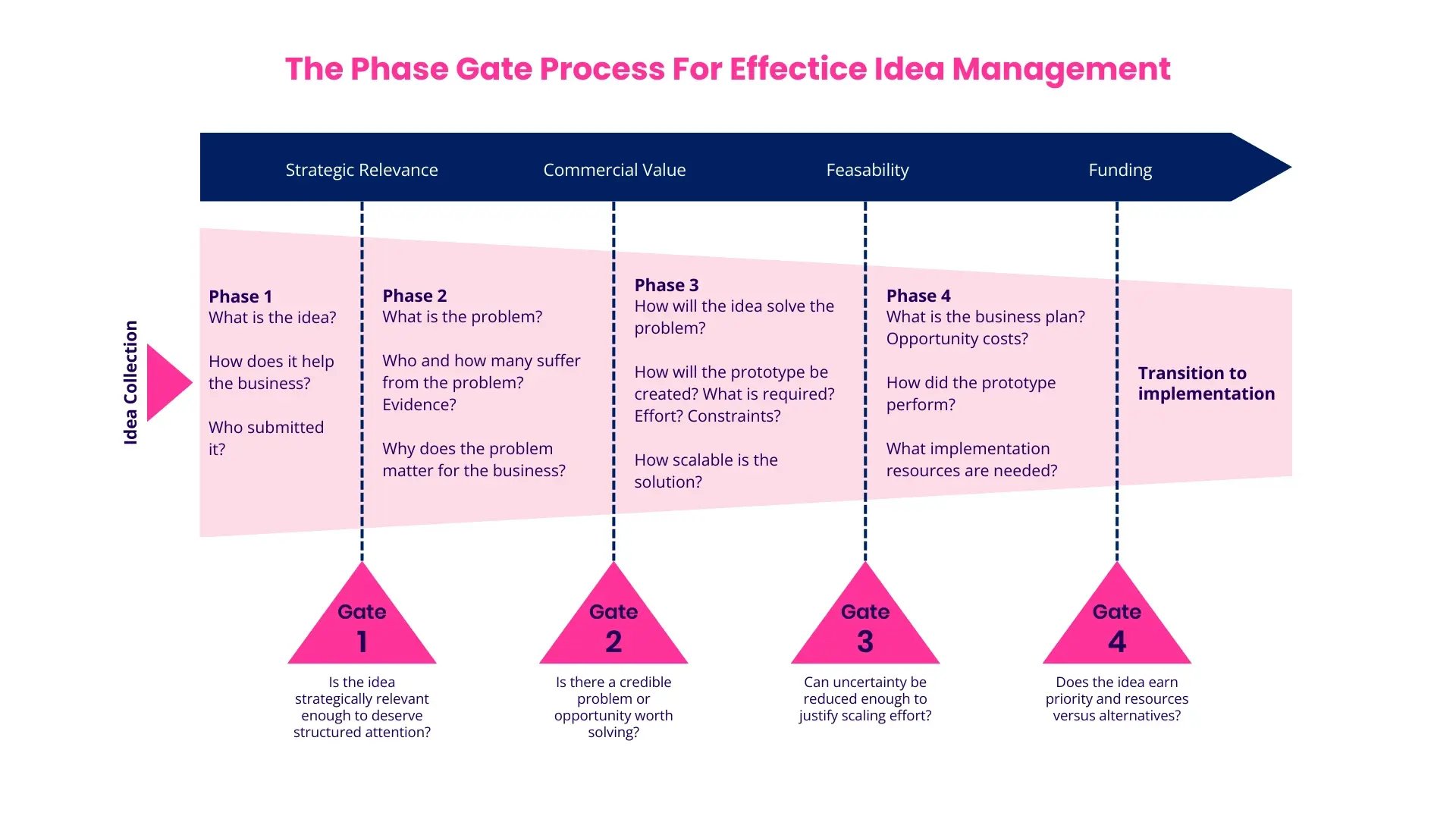
Exhibit 4: The Phase Gate Process For Effective Idea Management
Three factors consistently separate top-quartile programs from the rest.
1. Strategic focus before submissions open. When innovation themes are defined upfront, ideas arrive with higher relevance, and less filtering effort is wasted. Contributors know what the organization needs, and submissions reflect it.
2. A structured approach to evaluation. Scoring new ideas against defined dimensions, including feasibility, strategic fit, and potential value creation, turns judgment calls into repeatable decisions. This is what makes innovation management scalable across large companies.
3. Idea portfolio visibility. When contributors can see their ideas moving through a transparent pipeline, engagement quality improves. According to ITONICS research, companies with transparent decision frameworks are 2.1 times more likely to sustain employee engagement in innovation activities after the first year.
These factors compound. Strategic focus improves the quality of ideas entering the pipeline. Structured evaluation accelerates the ideas moving through it. Portfolio visibility reinforces the innovation culture that keeps high-quality ideas coming. Together, they form the operating logic of a realization engine.
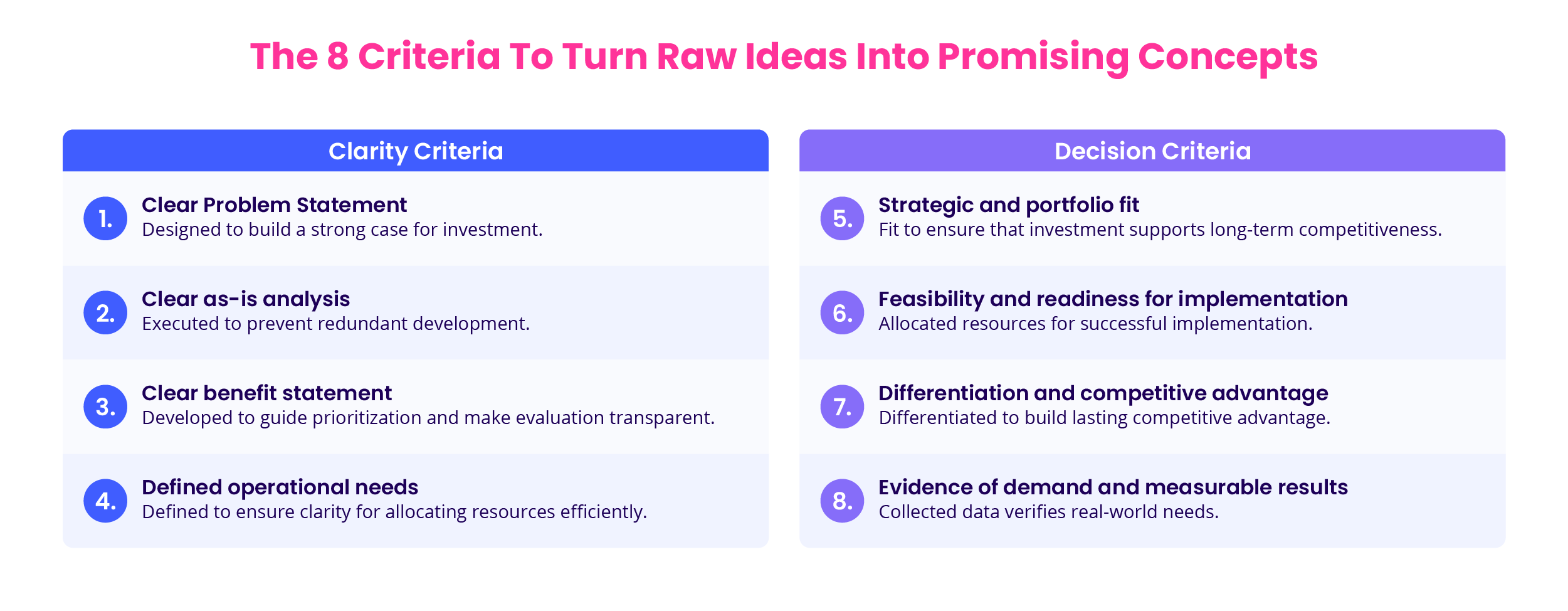
Exhibit 5: 8 criteria to turn raw ideas into promising concepts
Knowing what drives realization is one thing. Building the process that delivers it is another.
Three components determine whether an idea management program functions as a pipeline or a holding pen. Businesses that execute on all three consistently outperform those that address only one or two. The advantage compounds as each component reinforces the others.
Many companies launch idea campaigns before defining what they need. The result is high submission volume and low strategic relevance: a long backlog that consumes review capacity without generating proportionate value.
Programs that establish strategic focus first, publishing clear innovation themes and communicating evaluation criteria before the campaign opens, ensure that alignment happens at the point of submission rather than after it.
Contributors with a clear understanding of company priorities, customer needs, and development goals submit ideas that are better scoped, better evidenced, and easier to evaluate.
The first step in building a high-realization program is not a campaign launch. It is a strategy conversation, one that is documented, shared, and completed before a single idea is submitted.
The validation process is where most idea management programs lose speed. Manual screening of large idea volumes is slow, inconsistent, and resource-intensive. Human reviewers bring expertise but also bias and fatigue. Under the weight of a large backlog, both consistency and quality degrade.
Leading companies now use AI-assisted idea management software to triage incoming ideas. These tools flag duplicates, score ideas against predefined criteria, surface similar prior work, and identify the ideas most likely to pass expert review.
The result is a faster, more consistent first-pass filter that frees innovation teams to apply judgment where it matters most.
Organizations adopting AI-augmented systems report idea-to-decision timelines compressed by 40-60%, alongside improvements in the strategic quality of what reaches the funding stage. Speed is part of the benefit. Consistency is the more important one.
Evaluating ideas without strategic portfolio context is incomplete. An idea can be technically feasible, well-argued, and enthusiastically supported, and still be the wrong investment at the wrong time.
A fourth initiative in an already crowded space may dilute progress rather than accelerate it.
High-performing programs connect their innovation process to a live view of the strategic portfolio. When a new idea clears evaluation, decision-makers can immediately assess it against current strategic priorities, existing initiatives, available development capacity, and where the market is heading.
This connection transforms idea management from a collection function into a genuine engine for value creation. Ideas that reach delivery are not only strong in isolation. They are the solutions best positioned to generate maximum business impact within the organization's actual constraints and opportunities.
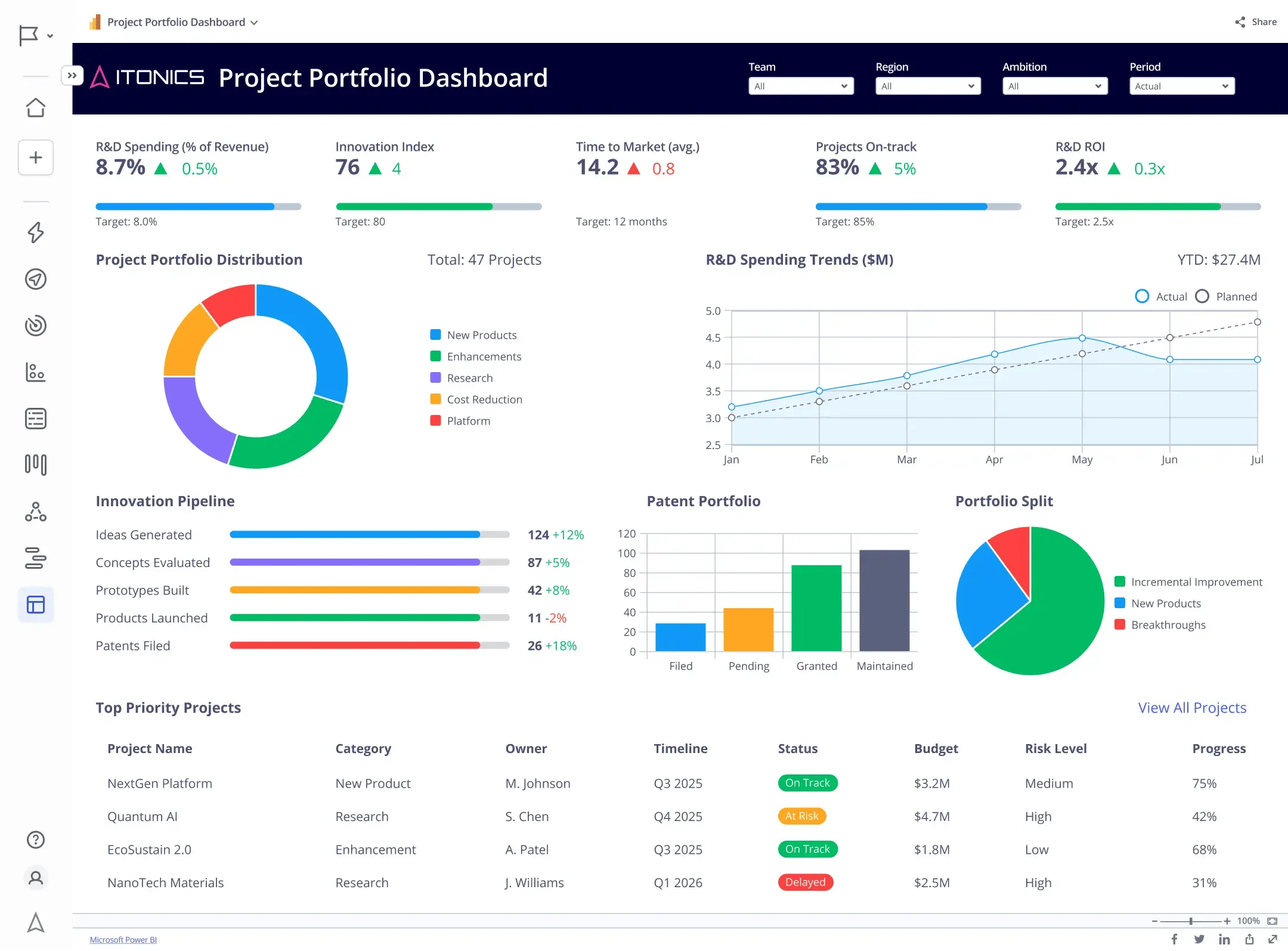
Exhibit 6: Project portfolio dashboard with live KPI data | ITONICS
Process design determines how ideas move. Structure determines whether the program keeps moving.
Many companies invest in a strong initial process and then discover, six or twelve months in, that momentum has stalled. The cause is rarely the process itself. More often, it is weak governance, unclear scope, and the absence of a communication discipline.
These structural elements convert a well-designed idea process into a durable innovation management capability.
Without governance, well-designed programs accumulate backlogs, lose stakeholder confidence, and stall.
A clear ownership model, defining:
who reviews ideas,
who makes funding decisions,
and at what cadence,
is the structural backbone of a sustainable innovation management system.
Governance does not need to be heavy. It needs to be consistent and accountable. A small, empowered innovation committee meeting on a defined schedule will outperform a large, loosely structured group that reviews ideas whenever capacity allows.The cadence creates a forcing function. Ideas get reviewed on a known timeline, contributors receive timely responses, and decision-makers cannot defer indefinitely.
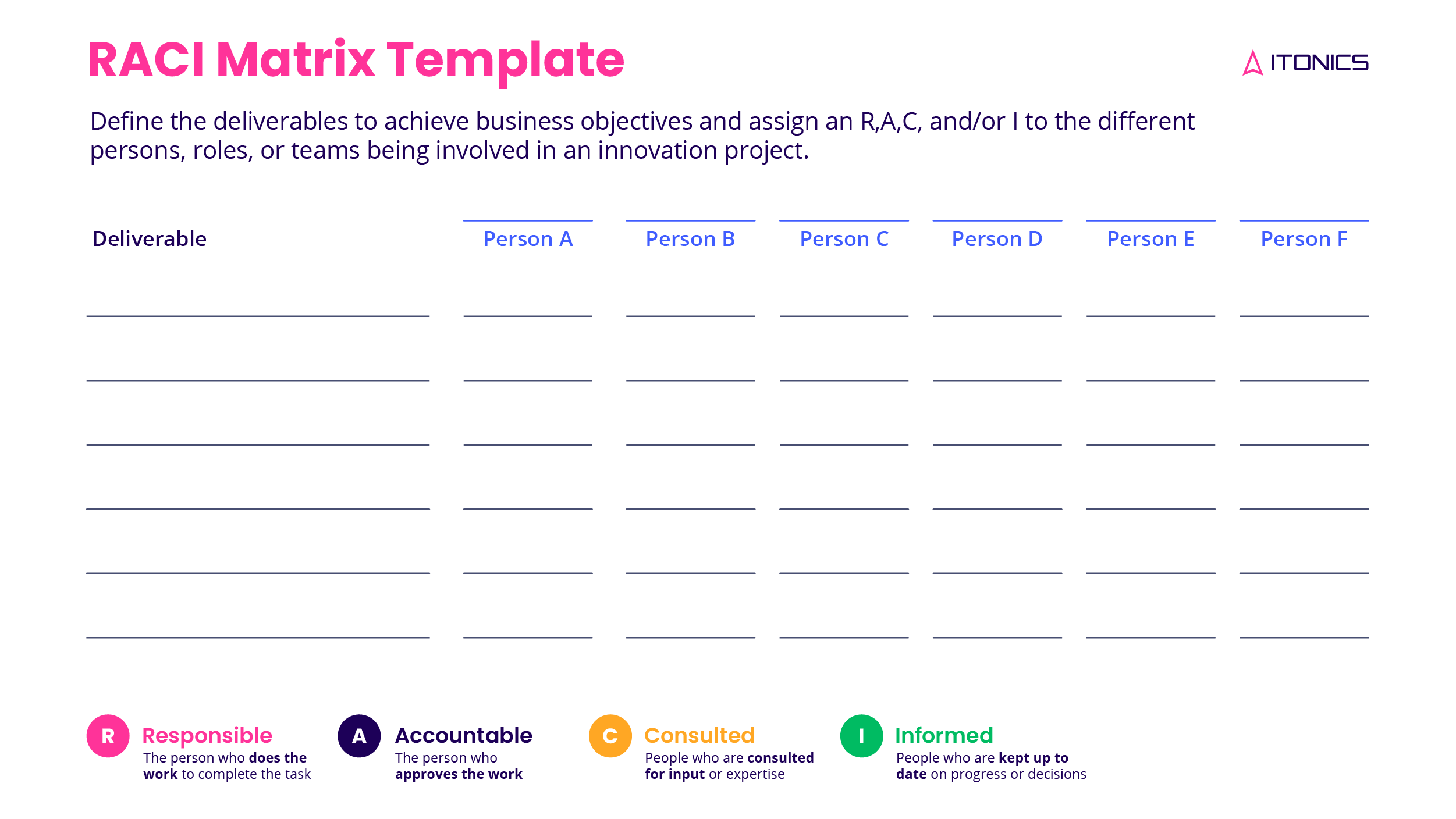
Exhibit 7: RACI matrix template to define governance
When a company reports on realization rates rather than submission volumes, the entire program reorients around the metric that matters. Research shows that innovation programs with defined governance structures are three times more likely to achieve their strategic objectives than those without.
One of the earliest structural decisions a program must make is scope. Should gathering ideas draw on employees only, extend to external partners and customers through open innovation, or blend both?
Many companies default to internal collection out of habit, and miss the diversity of perspective that external channels provide.
Internal programs surface ideas grounded in operational context: practical to action and often immediately relevant. Open innovation extends the organization's ability to access perspectives it does not hold internally, drawing in ideas from partners, suppliers, start-ups, and customers.
Leading businesses blend both models deliberately. They use internal campaigns to drive innovation on near-term challenges, and open innovation channels to crowdsource ideas on strategic questions where external perspective creates more value.
Research suggests that companies actively practising open innovation bring new concepts to market up to 30% faster than those relying on internal development alone.
/Still%20images/External%20Webpage%20Mockups%202025/ideation-collect-external-ideas-2025.webp?width=2220&height=1410&name=ideation-collect-external-ideas-2025.webp)
Exhibit 8: A portal to collect and integrate ideas from suppliers
The quality of a program's communication is a direct predictor of the quality of future ideas. Programs that close the feedback loop consistently build the trust that sustains high-quality participation over time.
They share which ideas advanced, why they were selected, and what business impact they delivered. Programs that go silent after a campaign closes lose that trust fast.
Format and frequency matter. A monthly innovation update that names a contributor, highlights a successful idea, and quantifies the business outcome does more for program culture than any campaign launch.
Studies indicate that organizations actively communicating innovation outcomes see up to 20% higher idea quality in subsequent campaigns. The feedback loop is not a courtesy. It is a realization driver.
A program that works at pilot scale will not automatically hold at enterprise scale. The process discipline, structural foundations, and communication habits built in earlier stages are what make expansion possible without losing coherence.
Technology extends reach. It does not create the underlying systems that make that reach generate value.
Innovation culture is often treated as a precondition for success, something that must exist before an idea management program can work. In practice, the relationship runs the other way. The systems a company builds shape the innovation culture that emerges from them.
Clear processes signal that ideas are taken seriously. Transparent governance signals that decisions are fair. Consistent communication signals that contribution is valued.
Together, these signals build a genuine innovation culture through operational credibility, not through culture initiatives. Innovative companies invest in the systems first, and let the culture follow.
Scaling that culture means making it easy for employees at every level to participate and see the impact of their participation. It means investing in the collaboration systems that create visibility: cross-functional review teams, shared evaluation criteria, and transparent pipelines that let employees track the ideas they care about.
Companies that genuinely engage employees in this way stay competitive because they are capturing ideas from the people closest to the problems worth solving. The program is the mechanism. The culture is what it creates.
Even a well-designed program will underperform if it relies on manual processes and disconnected tools. Spreadsheets lose ideas. Email threads obscure decisions. Without a central system of record, accountability dissolves, and realization rates reflect it.
At scale, managing idea management without dedicated software becomes a hard ceiling on program performance. It limits the volume the program can handle, the consistency it can maintain, and the visibility it provides to decision-makers and employees alike.
Without the right idea management tools, programs lose ideas between stages and decisions become inconsistent. The key benefit of a structured process, speed from idea to outcome, disappears.
For innovative companies serious about staying competitive, purpose-built idea management software is essential. It is the infrastructure that supports a healthy innovation culture, giving employees the collaboration tools and feedback systems they need to stay engaged and keep contributing ideas.
The best platforms create a single structured environment where ideas can be gathered, evaluated, developed, and tracked from submission to delivery. They give innovation teams the tools to create consistent, transparent evaluation processes and generate the data companies need to improve realization rates over time.
ITONICS is built for companies that have moved beyond collecting ideas and are building innovation programs designed to deliver. The platform supports the full idea management lifecycle, from structured campaign design and AI-assisted scoring to portfolio visualization, workflow management, and progress tracking, within a single connected environment.
Where many tools stop at gathering ideas, ITONICS connects the pipeline to the broader innovation management context. Trend scanning, technology monitoring, competitive intelligence, and strategic planning all sit within the same system.
/Still%20images/Element%20Mockups%202025/ideation-collaborative-communities-2025.webp?width=2160&height=1350&name=ideation-collaborative-communities-2025.webp)
Exhibit 9: Alert on a new evaluation of an idea with comments | ITONICS
When an innovation team is evaluating ideas, they can assess each submission not only on its own merits, but against where the market is moving, what technology is emerging, and how the idea positions the company relative to competitors.
The result is faster, better-informed decisions and a measurably higher return on the innovative ideas that reach delivery.
For innovation leaders serious about realization, ITONICS provides the process structure, portfolio visibility, and external intelligence that turns idea management into the strategic asset it was always supposed to be.