The open innovation process that scales external ideas: 6 design rules

/venture-clienting-for-dual-use-startups-guidelines-full.webp?width=1920&height=450&name=venture-clienting-for-dual-use-startups-guidelines-full.webp)
There is more external knowledge than internal brilliance. Being more open to partnering is the key to winning with innovative solutions. The promise is great, but the cost is overlooked. Every additional idea increases decision load and expectations, and your organization is likely not designed to absorb either.
Most companies still manage open innovation as campaigns layered on top of existing innovation processes. External ideas are evaluated separately, ownership is delayed, and follow-up is optional.
The result is predictable. Innovation teams drown in volume. External contributors disengage. Promising ideas stall between evaluation and funding. What looks like an execution problem is usually a process design failure.
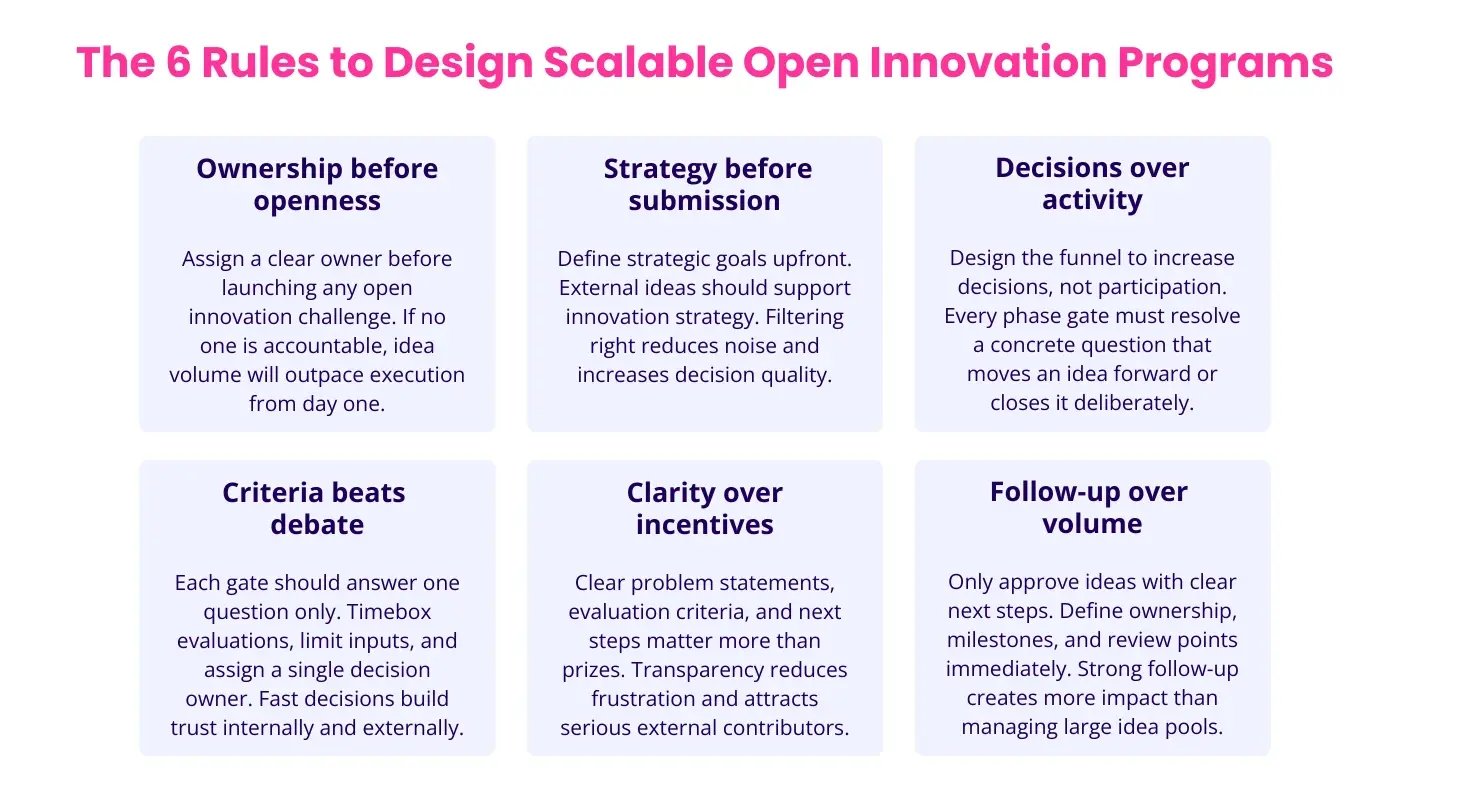
Exhibit 1: The design 6 rules for scalable open innovation programs
This article shows how a scalable open innovation process turns openness into outcomes. It explains why decisions must scale faster than submissions, how external ideas must enter existing innovation systems, and which design rules prevent funnels from breaking at scale.
The idea behind open innovation is sound. Be as open as possible. Collect as many external ideas as possible. Assume that one of them will be the right one.
The afterthought is rarely discussed. The more ideas you collect, the more ideas you must evaluate. The more ideas you invite, the more expectations, hopes, and emotional investment you create among external contributors.
Open innovation not only generates ideas. It generates obligations. Every submission triggers review work, feedback, and follow-up. Without a clear open innovation process, that burden grows faster than the value created.
In practice, open innovation means being open to external ideas that matter. Not all external input deserves equal attention. Exclusivity is not a contradiction of openness. It is a requirement for innovation management that works at scale.
At a small scale, open innovation feels energizing. A few external contributions are easy to handle. Internal teams stay engaged. Feedback is fast.
At scale, openness becomes a coordination problem. External ideas flow in continuously. Internal experts, innovation teams, and decision-makers must align repeatedly. The innovation process becomes fragmented.
Each external submission requires coordination across internal and external stakeholders. Someone must assess relevance, check strategic fit, and decide on next steps. When roles and criteria are unclear, decisions stall.
This is where many open innovation initiatives break down. They optimize idea generation but ignore coordination capacity. Innovation management becomes reactive instead of deliberate.
The so what is direct. If your open innovation process does not scale coordination, openness will slow you down instead of accelerating innovation.
Many organizations assume external ideas require a different level of attractiveness. They are expected to be more radical, more mature, or more “proven” than internal ideas. This raises the bar artificially and slows down open innovation before evaluation even begins.
At the same time, external innovation is often handled by different teams, tools, or governance structures. Internal innovation follows one innovation process. External solutions follow another. Decision-makers sit above both, with limited time and attention.
This creates an imbalance. Closed innovation benefits from familiarity, context, and ownership. External solutions arrive without sponsors, without history, and without clear next steps. When decisions are delayed, internal projects continue by default.
Separating internal and external innovation reinforces this effect. Parallel processes compete silently for resources. Trade-offs remain implicit. No one is accountable for choosing between internal ideas and external ideas.
For open innovation to influence outcomes, external ideas must enter the same innovation management system as internal ideas. They must be assessed with comparable criteria, owned by real decision-makers, and prioritized explicitly. Without this integration, open innovation remains peripheral, regardless of idea quality.
External collaboration is often treated as a shortcut. The assumption is simple. The solution already exists outside the organization, so implementation should be fast. That logic is partly correct and strategically dangerous.
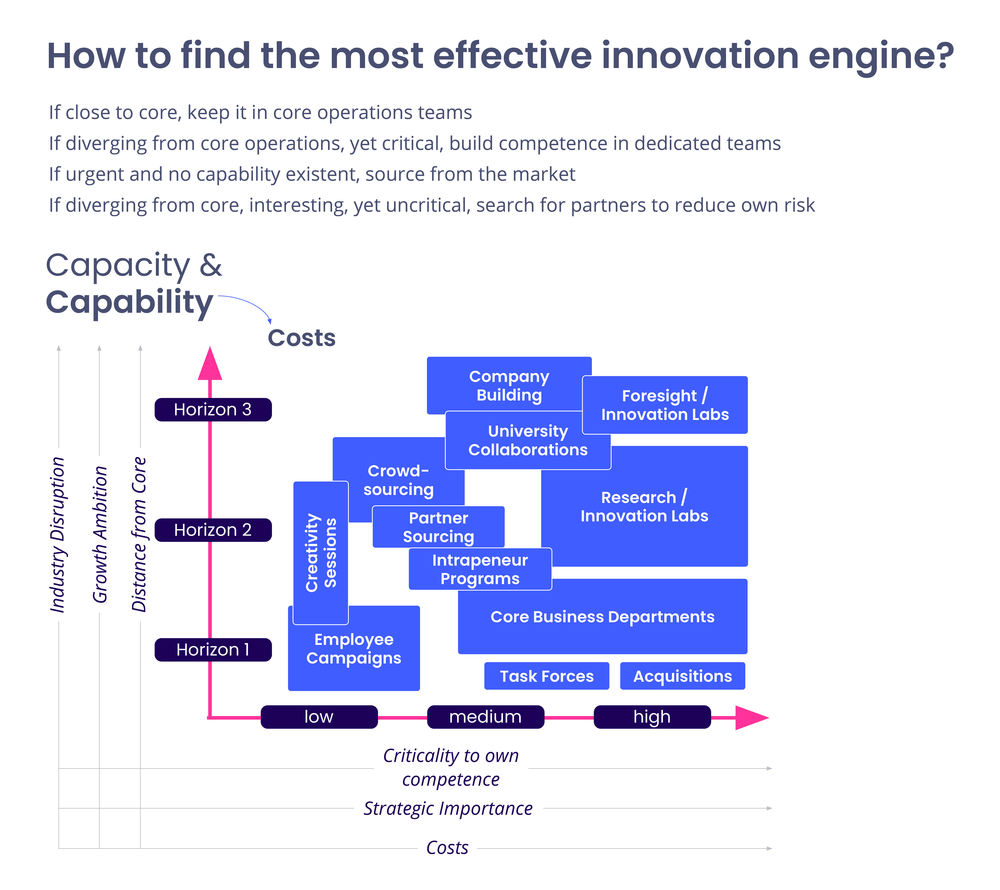 Exhibit 2: The innovation approach framework showing when to use which innovation approach
No company would outsource its most business-critical priorities to third parties. The same logic applies to innovation. External collaboration can accelerate learning, but it should not create dependencies around core capabilities.
Organizations that use open innovation successfully understand this importance of a deliberate innovation strategy. They protect strategically critical capabilities through internal innovation and, where necessary, closed innovation models. Competitive advantage depends on what the company controls, not what it borrows.
External expertise is most valuable when it supports strategic exploration. Entering new markets, testing emerging technologies, or addressing relevant but non-core challenges are ideal use cases. In these contexts, open innovation initiatives, crowdsourcing, and venture clienting expand the search space without undermining ownership.
The implication is clear. External collaboration pays off when it strengthens long-term strategic options. When applied to core execution or mission-critical capabilities, it introduces risk rather than advantage.
The advantage of accessing external expertise is widely understood. In many cases, sourcing external resources is faster and cheaper than building in-house capabilities.
This creates a competitive dynamic that is often ignored. External partners can choose where to engage. Startups, researchers, and experts compare open innovation programs based on clarity, credibility, and follow-through, not on brand reputation alone.
Many corporate open innovation challenges are still designed from an internal perspective. Problem statements are vague. Strategic intent is unclear. Benefits for external partners are implicit rather than explicit. Partner pages explain the company’s needs, not why collaboration is worth the effort.
From the outside, this signals low commitment. External contributors interpret cryptic descriptions and slow responses as a lack of decision readiness. Strong ideas move to other innovation ecosystems where evaluation and follow-up are faster.
Effective open innovation management treats external collaboration as a two-sided market. Companies compete for attention, trust, and long-term engagement. A scalable open innovation process must therefore communicate focus, seriousness, and clear next steps.
The implication is practical. Open innovation challenges are not invitations. They are competitive propositions. If the process does not demonstrate strategic intent and decision capability, external partners will invest their effort elsewhere.
Most open innovation initiatives work in early pilots. They break when volume increases and when external ideas must compete with internal priorities. The failure is rarely caused by idea quality. It is caused by how the innovation process is designed and governed.
At scale, open innovation involves internal and external stakeholders, multiple innovation initiatives, and competing decision paths. Without a coherent innovation management approach, complexity grows faster than outcomes. This is where many open innovation models collapse.
A common structural mistake sits at the strategy level. Innovation strategy often separates closed innovation from external knowledge by design. Internal innovation follows one set of priorities, budgets, and decision forums. External innovation follows another.
This separation feels logical. Closed innovation protects intellectual property and core capabilities. Open innovation explores emerging technologies and external insights. In practice, the split creates friction.
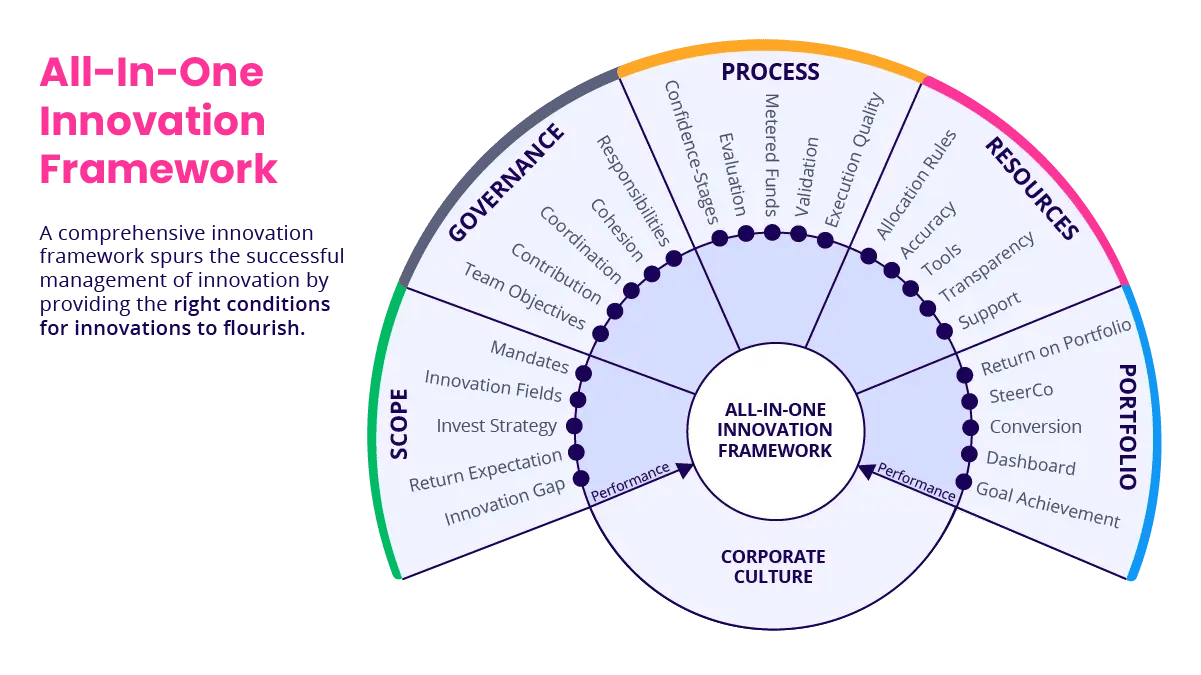
Exhibit 3: The all-in-one innovation framework showing the innovation management design dimensions
External knowledge is treated as optional input instead of strategic material. External ideas are reviewed later, by different internal teams, and against different criteria. As a result, open innovation initiatives struggle to influence real innovation efforts.
Successful open innovation requires a strategy that defines how closed innovation and external innovation reinforce each other. Without that link, adopting open innovation remains symbolic.
Many open innovation processes stop where business accountability should begin. Idea intake is well designed. Submission portals, open innovation platforms, and challenge pages work smoothly. Ownership does not.
After submission, responsibility becomes unclear. Innovation teams manage the process. Business units observe. Project management ownership is postponed until “something promising” appears.
This gap is fatal at scale. External ideas need internal sponsors early. Without business ownership, follow-up is delayed, feedback weakens, and innovation initiatives lose momentum.
Integrating external innovations into the core innovation process requires ownership before evaluation. Otherwise, open innovation produces ideas without execution.
At scale, the scarcest resource is not funding. It is attention. Subject-matter experts are limited, and their time is already consumed by internal projects and operational priorities.
Open innovation increases demand for this attention. External contributors submit innovative ideas, technologies, and proposals. Each requires context, evaluation, and discussion.
Without clear prioritization, experts disengage. External ideas wait longer than internal ideas. Valuable ideas lose relevance over time. This is one of the most common open innovation challenges.
A scalable innovation process must protect expert attention. That means fewer ideas, clearer filters, and explicit trade-offs between internal and external sources.
Even when evaluation works, governance often fails later. Many open innovation processes define how to assess ideas, but not how to fund, staff, or follow them up.
Decisions are fragmented. One group evaluates ideas. Another controls budgets. A third manages innovation initiatives. No one owns the transition between stages.
This is where promising collaborative innovation dies. Ideas pass evaluation but never receive resources. External contributors receive no feedback. Innovation efforts stall quietly.
Closing these governance gaps is a core task of innovation management. Transparent evaluation processes, clear funding decisions, and defined follow-ups are not administrative details. They determine whether open innovation produces results.
The conclusion is straightforward. Open innovation breaks at scale when strategy, ownership, attention, and governance are misaligned. Fixing these issues requires redesigning the innovation process, not launching more open innovation initiatives.
A scalable open innovation process does not try to generate more ideas. It tries to increase the number of decisions an organization can make with confidence. This is the core misunderstanding behind many open innovation initiatives.
Traditional closed innovation models are optimized for control and depth. They rely on internal resources, stable teams, and predictable pipelines. Open innovation introduces external ideas, external input, and external contributors. Without redesign, the existing innovation process cannot absorb that complexity.
Adopting open innovation, therefore, requires more than opening organizational boundaries. It requires rethinking how decisions are prepared, owned, and executed across internal and external sources.
Idea generation scales easily. Decision-making does not. This asymmetry explains why many open innovation challenges overload innovation teams without improving outcomes.
Every submission requires evaluation, prioritization, and follow-up. These steps depend on scarce internal attention, not on the number of ideas collected. When innovation efforts focus on submissions instead of decisions, backlogs grow.
Successful open innovation shifts focus from volume to flow. Innovation management must design processes that move ideas forward or close them quickly. Transparent evaluation processes, clear decision rights, and explicit stop criteria matter more than the number of ideas received.
The so what is direct. If decisions do not scale, open innovation becomes performative rather than productive.
Treating external innovation as a parallel stream weakens its impact from the start.
Many organizations run open innovation initiatives next to internal innovation, rather than inside it. Internal teams follow one innovation process. External ideas follow one another. Integration happens late, if at all.
This separation increases friction. External expertise lacks context. Internal teams lack ownership. Integrating external innovations early reduces this gap.
A scalable open innovation process ensures that internal and external ideas compete within the same system. The same innovation initiatives, the same governance, and the same prioritization logic apply. This is how collaborative innovation becomes operational rather than symbolic.
Organizations often assume that better ideas will overcome weak processes. In reality, weak processes neutralize even valuable ideas. This applies equally to internal innovation and external collaboration.
Strong process design defines how external expertise is used, how internal teams engage, and how innovation efforts translate into action. It clarifies when to rely on closed innovation and when to leverage external resources.
Open innovation enables companies to explore broader solution spaces. It does not remove the need for discipline. A scalable innovation process aligns open innovation strategy with business strategy, protects core capabilities, and accelerates learning without creating dependency.
The conclusion is simple. Open innovation succeeds when process design turns openness into decisions. Without that foundation, even the most promising ideas remain unused.
Most open innovation processes fail because they are designed as campaigns, not as decision systems. The following design rules address that gap directly. A working open innovation funnel does not optimize for idea generation. It optimizes for decision quality across internal and external sources.
Open innovation initiatives often launch without defined business ownership. Innovation teams manage the process, while internal teams wait for “validated” ideas to appear. This delay weakens follow-up from the start.
Ownership must be assigned before idea submission opens. Each open innovation challenge should have a named business owner with decision authority and access to internal resources. Legal agreements and liabilities must be established before scouting for new partnerships.
Explicit ownership changes behavior. External contributors receive clearer feedback. Internal teams engage earlier. Innovation management shifts from coordination to execution. Without ownership, even valuable ideas stall.
Many open innovation challenges are framed too broadly. They invite external ideas without anchoring them in innovation strategy or business strategy. This increases volume but reduces relevance.
External ideas should be filtered before submission, not after evaluation. Clear strategic boundaries signal where external expertise is wanted and where closed innovation models remain dominant. This protects core capabilities while enabling targeted external collaboration.
Successful open innovation enables companies to explore specific opportunity spaces, not generic idea pools. By aligning open innovation strategy with internal innovation priorities, organizations reduce noise and increase decision speed.
A well-structured open innovation process is built around decisions, not activity. Phase gates exist to resolve concrete questions and allocate resources, not to manage participation or idea volume.
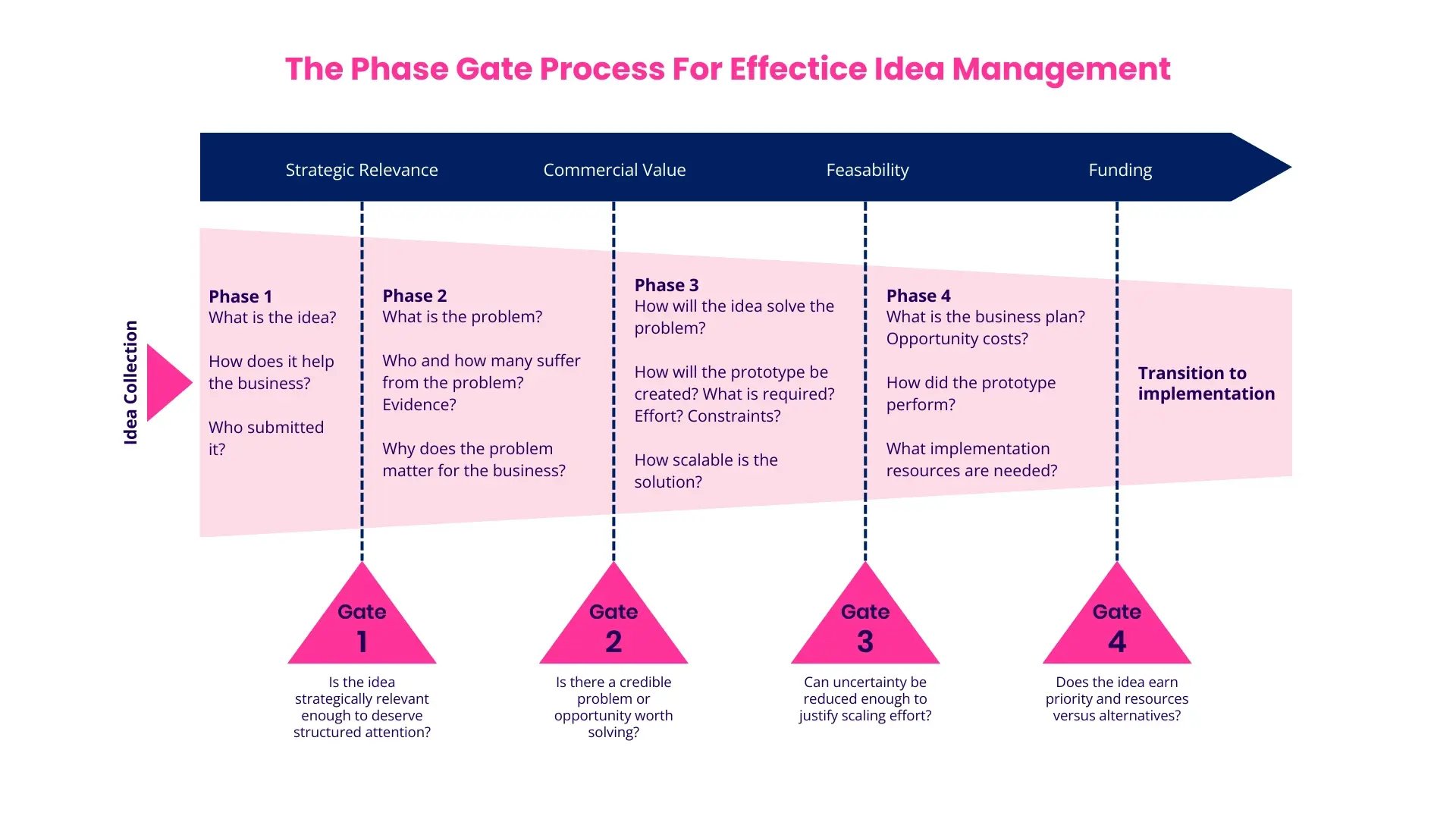
Exhibit 4: The Phase Gate Process For Effective Open Innovation Management
An effective open innovation phase-gate model focuses on four decision stages that mirror how organizations already make strategic and commercial choices:
Strategic relevance:
External ideas are assessed against the innovation strategy and business strategy. The decision is whether the idea supports defined priorities or future growth areas. Ideas that do not strengthen strategic intent are closed early, regardless of technical appeal.
Commercial value
: Ideas that pass strategic relevance are evaluated for potential value creation. This includes market relevance, differentiation, and impact on the business model. At this stage, external and internal ideas are compared using the same commercial logic.
Feasibility
: Feasibility focuses on execution reality. Internal teams assess integration effort, availability of internal resources, access to external expertise, intellectual property constraints, and dependencies on external partners. The goal is not certainty, but informed risk assessment.
Funding
: The final gate is a commitment decision. External innovation competes directly with internal innovation initiatives for funding, capacity, and priority. Approved ideas enter the core innovation management system with clear ownership, milestones, and follow-up.
Each phase gate resolves one question only. Progression depends on decision metrics, not discussion length. Typical metrics include strategic fit, expected value, execution complexity, and resource impact.
This model aligns open innovation initiatives with existing innovation efforts and avoids parallel evaluation tracks. It ensures that external input is treated as a strategic option, not as a separate experiment. When phase gates are designed this way, open innovation scales through better decisions, not through more ideas.
Most open innovation gates fail because they try to answer too many questions at once. Do not do that. Each gate should answer exactly one question and trigger exactly one action.
Design gates with a fixed input set. Limit evaluations to three to five criteria tied to the current gate, not the full business case. Require written input in advance. No live brainstorming during gate meetings.
Timebox decisions aggressively. A gate that cannot be decided within 30 to 60 minutes is not a gate. It is a workshop. Assign a single decision owner who is accountable for closing the gate, even if not all stakeholders agree.
Speed creates clarity. External contributors prefer fast rejection over slow ambiguity. Internal teams regain trust when gates move ideas forward or close them decisively.
Do not compensate weak process design with higher rewards. Prize money does not fix unclear challenges, vague evaluations, or missing follow-ups.
Start with the challenge description. State the business problem, decision criteria, and realistic next steps in plain language. Avoid marketing copy. External contributors need context, not slogans.
Publish evaluation logic upfront. Explain who evaluates, when decisions are made, and what happens after approval. If an idea is rejected, provide one concrete reason, not generic praise.
Use rewards to acknowledge effort, not to create false expectations. Clear communication reduces disappointment, internal resistance, and reputational risk far more effectively than higher incentives.
Never approve an idea without defining the next three steps. Name the internal owner, define the first milestone, and set a review date before the gate closes.
/Still%20images/Workflow%20Builder%20Mockups%202025/capabilities-workflow-define-clear-approval-rules.webp?width=2160&height=1350&name=capabilities-workflow-define-clear-approval-rules.webp)
Exhibit 5: A decision gate configuration for a project workflow
Limit approvals to what your teams can execute. If you can only fund five initiatives, approve five. Parking ideas “for later” is a silent failure mode in open innovation.
Track follow-up as a first-class metric. Measure time from approval to first action, not the number of ideas collected. Review stalled initiatives monthly and close them explicitly.
If follow-up cannot be guaranteed, do not approve the idea. Open innovation credibility is built through execution, not activity.
Many organizations understand the theory of embracing open innovation but struggle to translate it into daily innovation management practices.
Open innovation benefits emerge when external input accelerates learning, reduces uncertainty, or expands solution options. It fails when it is treated as a parallel activity without ownership or follow-up.
Open innovation is most effective when an organization actively seeks external input for well-defined needs. These include entering new markets, addressing complex challenges, or exploring emerging technologies that internal teams cannot assess alone.
External collaboration is also valuable when internal teams need to validate assumptions or compare alternative approaches. Leveraging external expertise helps teams pressure-test ideas before committing resources.
Open innovation is less effective for core execution or mission-critical capabilities. In those cases, internal innovation or closed innovation models protect intellectual property and long-term advantage. Open innovation models should therefore be applied selectively, not universally.
Start with ownership. If no business owner is accountable for outcomes, redesigning stages or tools will not help. Assign clear responsibility for each innovation initiative before collecting ideas.
Next, simplify the evaluation. Reduce the number of criteria and decision layers. Focus on whether external ideas help develop solutions aligned with the innovation strategy. Eliminate steps that exist only to inform, not to decide.
Finally, fix follow-up. Most open innovation processes fail after selection. Define project management responsibilities, milestones, and review points before approving ideas.
Campaigns optimize for visibility and idea sharing. Systems optimize for repeatability and outcomes. Moving from one to the other requires structural change.
Standardize how challenges are framed, evaluated, and closed. Reuse criteria and decision logic across initiatives. Limit the number of open innovation challenges running in parallel to what internal teams can execute.
Encourage external contributors to contribute ideas that fit strategic priorities, not everything they have. Consistency builds trust and improves participation quality over time.
Implementing open innovation at scale requires using the right software tools to support collaboration, insight gathering, and decision-making. Tooling should enforce discipline, not replace judgment. A strong open innovation platform supports structured idea intake, transparent evaluation, and clear handovers into execution.
Effective tools integrate idea sharing with project management, portfolio visibility, and follow-up tracking. They help teams manage external contributors, assess intellectual property implications, and monitor progress across innovation efforts.
/Still%20images/External%20Webpage%20Mockups%202025/ideation-collect-external-ideas-2025.webp?width=2220&height=1410&name=ideation-collect-external-ideas-2025.webp)
Exhibit 6: A partner portal to collect an external idea
Advanced programs also use tooling to manage joint ventures and long-term partnerships. This supports sustainable innovation by making external collaboration part of the core innovation system, not an exception.
The takeaway is simple. Scalable open innovation is built through focused application, disciplined process design, and tools that reinforce execution rather than activity.
The following examples illustrate how organizations use different open innovation models to address complex challenges, leverage external expertise, and develop innovative solutions without losing strategic control.
Bosch runs multiple open innovation programs that connect startups, universities, and industry experts to its innovation pipeline.
Its Open Bosch initiative extends this approach by enabling close co-creation between external partners and internal engineering teams. These collaborations are designed to accelerate the development of solutions that can be brought to market.

Exhibit 7: Bosch's fields of interest for external collaborations
A prominent outcome of this model is Bosch’s work on AI-based predictive maintenance. By collaborating with AI startups and research organizations, Bosch developed intelligent sensor solutions that improve efficiency and reliability in industrial automation.
Würth Elektronik uses open innovation as a structured extension of its innovation process, not as ad-hoc idea collection. Guided by its “Creating Together” approach, the company collaborates with startups and scaleups in clearly defined technology fields such as IoT, wireless connectivity, sensors, and data-driven services. External collaboration is intentionally scoped to areas that strengthen the core business and product portfolio.
A key success factor is how Würth integrates external input into its internal systems. Startup scouting, pitch data, and collaboration opportunities are captured centrally, enabling consistent evaluation and cross-team visibility. Open innovation is connected directly to development and commercial pathways, ensuring that promising external technologies move beyond exploration into execution and revenue-related processes.
%20(2).png?width=1281&height=706&name=image%20(1)%20(2).png)
Exhibit 8: The innovation world cup
By treating open innovation as a repeatable system rather than isolated initiatives, Würth has scaled its ability to identify, assess, and act on external expertise globally. The result is faster access to emerging technologies, stronger internal alignment, and open innovation that delivers measurable business impact instead of isolated experiments.
Elia Group applies open innovation to anticipate and integrate emerging energy technologies. Through its Tech Vision platform, the company builds partnerships with startups, universities, and research institutes working on smart grids, AI-enabled energy management, and decentralized power systems.
One of the most tangible outcomes of this strategy is the development of AI-driven grid optimization solutions. By working with data analytics and AI specialists, Elia Group has strengthened its ability to forecast energy demand, optimize grid loads, and reduce the risk of system disruptions.
/Still%20images/External%20Webpage%20Mockups%202025/External-L-Embed-and-share.webp?width=800&height=500&name=External-L-Embed-and-share.webp)
Exhibit 9: The Elia Group technology radar showing innovation trends and partnership opportunities
ITONICS enables companies to integrate open innovation initiatives directly with internal innovation projects, portfolios, and strategic priorities. External ideas enter the same system as internal initiatives, making trade-offs explicit and decisions comparable. This reduces friction between open and closed innovation models.
/Still%20images/Kanban%20Board%20Mockups%202025/ideation-organize-idea-flows-2025.webp?width=2160&height=1350&name=ideation-organize-idea-flows-2025.webp)
Exhibit 10: An idea board showing the management of ideas along phases and gates
The platform supports structured idea intake, collaborative evaluation, and clear ownership assignment across internal stakeholders. Decision criteria, phase gates, and follow-ups can be standardized, ensuring that open innovation funnels scale through better decisions rather than higher idea volume.
ITONICS also provides portfolio-level visibility across innovation initiatives. Teams can track progress, risks, budgets, and dependencies in one place, which strengthens governance and follow-up. This makes open innovation a repeatable management capability rather than an experimental add-on.
The result is practical. Open innovation becomes easier to prioritize, easier to govern, and easier to execute alongside internal innovation efforts.