Three innovation lab models and which fits your company (+ examples)


In 2024, Walmart shut down Store No. 8. The retailer's seven-year-old internal lab had built text-to-shop, in-home delivery, and metaverse experiences. Around 300 employees moved into other roles inside the parent company. Walmart called it a graduation. Most across the world called it a closure.
It is not an isolated case. A 2016 Capgemini report estimated that up to 90% of corporate innovation labs fail. New labs still open at speed across industries.
The pattern shows up in retail, banking, automotive, pharma, and technology industries. Organizations invest heavily before defining what the lab should actually do.
Companies' mistake is rarely the new ideas. It is the structure. Most companies pick a lab format before they decide what problem the team is meant to develop solutions for.
They hire creative talent, give them a budget, locate them in some new space, and wait for breakthrough ideas to arrive. The future of innovation labs depends entirely on getting this format decision right upfront.
| Model | Primary purpose | Funding pattern | Team profile | Time horizon |
| R&D lab | Deep technical breakthroughs | Central R&D budget | Engineers and scientists | 5 to 15 years |
| Business innovation lab | New services and adjacent customer models | Co-funded with units | Service designers, foresight, tech | 1 to 5 years |
| Venture client lab | External tech integration | Procurement budget | Scouts, technical buyers | 4 to 18 months |
Exhibit 1: The 3 innovation lab models and characteristics
Three innovation lab models do work. Each fits a different need. Choosing the wrong format is the most expensive mistake in corporate innovation, and it is the reason successful innovation labs remain rare among organizations of every size.
Innovation labs fail at the seam where new ideas meet budget requirements or the core business. The work inside the lab can be excellent. Underfunding and the handoff are where it dies.
Three structural failure patterns repeat across closures.
The lab is set up for the wrong type of innovation. Some companies need new business models. Others need ecosystem access or open innovation partnerships. Strategic misalignment is the consequence.
The format mismatches the problem. A parent company that needs deep technical research hires designers. A company that needs ecosystem reach builds a team isolated from the market.
Both end up funding the wrong work. Ideas that cannot reach the core business have no value.
A misaligned innovation hub is worse than no innovation hub. It generates internal credibility debt. Every demo that never ships makes the next budget conversation harder.
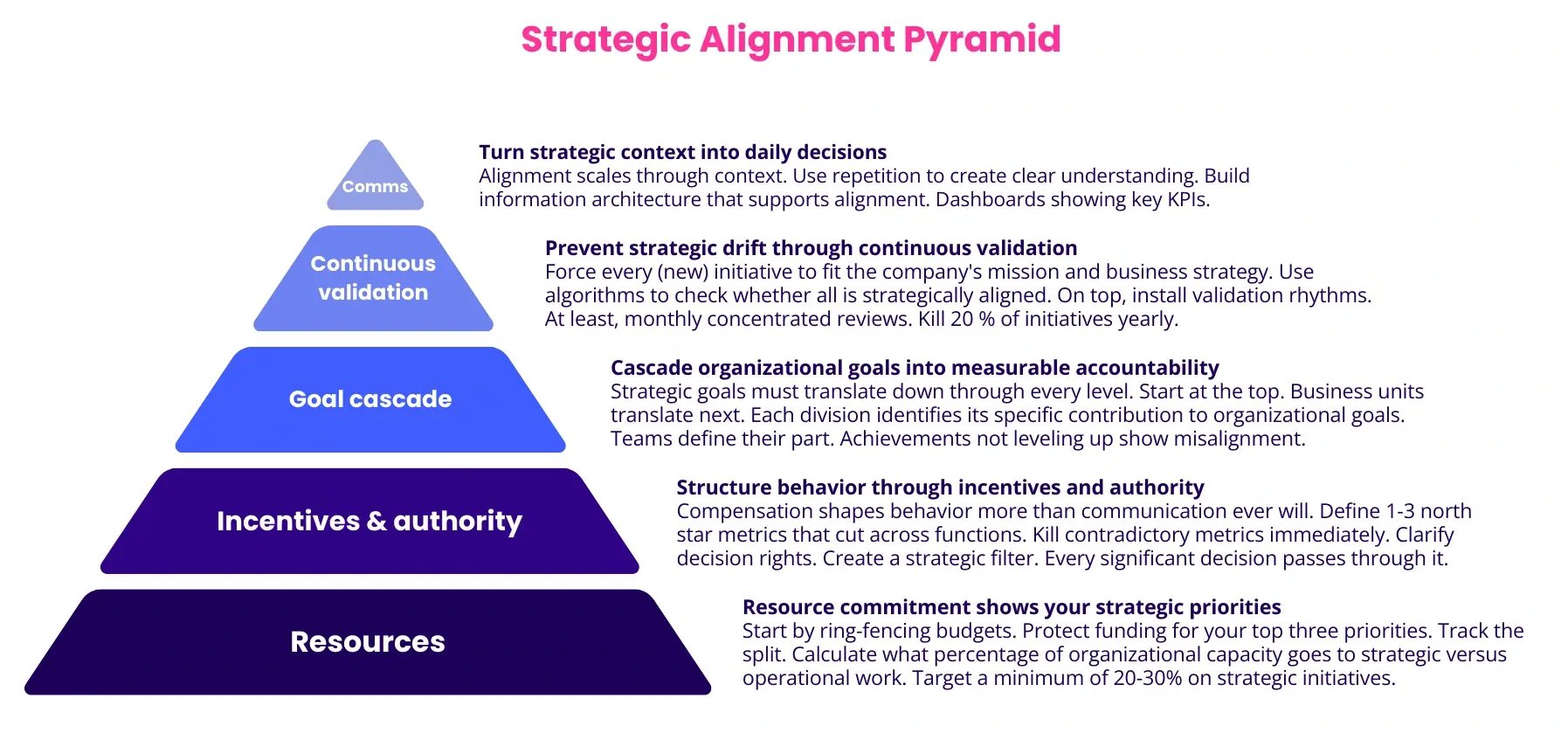
Exhibit 2: The framework and 5 components to create strategic alignment
The lab has no funded path back to the parent company. Prototypes get praised at internal demos. No unit takes them on.
The lab becomes a museum of mockups. Walmart's CFO told employees that responsibility for innovation now sits across the company — an implicit acknowledgement that a separate internal lab was not routing work back into core operations like store planning or merchandising.
Labs also fail when they lack shared tools to manage collaboration across industries and stakeholders. Without a connected system, handoffs break down in companies.
The lab is measured on activity, not outcomes. KPIs like new ideas generated, hackathons run, or start-ups screened look productive. None proves the lab created revenue or saved cost. After three or four budget cycles, even high-performing teams get cut.
These failures share a root cause. The format was selected before anyone defined what organizations actually needed.
The R&D lab solves one problem: deep technical breakthroughs the parent company cannot deliver inside its core business and current customers.
It works when organizations need to create something genuinely new in physics, chemistry, computer science, or engineering.
This model does not chase short-term signals or focus on iterative refinement. It advances foundational science on a multi-year horizon. Ideas that require deep research need the time and space to develop properly.
The reference case is Lockheed Skunk Works, founded in 1943. The team built the XP-80 jet fighter in 143 days. It went on to develop the U-2, the SR-71 Blackbird, and the F-117 Nighthawk.
Skunk Works has earned 8 Collier Trophies and operates today as Lockheed Martin's Advanced Development Programs. It is one of the first innovation labs in modern industry.
Microsoft Research is a comparable case. Microsoft engineers staffed the lab with scientists from top universities and gave them a centralized collaborative space, physically separated from product teams. The lab produced foundational work in machine learning, programming languages, and human-computer interaction. The culture there rewards depth over speed and values creativity over output volume.
Both cases share the same structural logic:
Founder Kelly Johnson codified 14 rules for Skunk Works. Three define the model.
The R&D lab fits when three conditions hold. The technical work cannot be done in the core without distortion. The parent company can fund a multi-year horizon. Senior leadership commits to ringfenced governance.
It does not fit for service innovation, model design, or open innovation partnerships. Organizations in regulated industries that misuse it end up with ideas that nobody buys.
The business innovation lab focuses on new services and models adjacent to the parent company's core. It is the most common format among large companies and the most likely to be miscopied.
The model works because it stays close to existing customers and operations. It monitors market trends. It improves customer experience through rapid prototyping with real users.
Financial institutions have used this model to good effect. Citi Innovation Labs runs discovery teams embedded close to operating units in New York, Dublin, Tel Aviv, and Singapore. The setup mirrors the co-location logic Volvo uses: proximity to the operating business is the source of relevant ideas to develop.
Volvo Group's Connected Solutions Innovation Lab is a working example. The lab has around 35 employees across teams in Gothenburg and Mountain View. People come from 12 nationalities.
The team mix is roughly two-thirds external hires and one-third internal transfers from Volvo. It includes service designers, foresight specialists, UX designers, and full-stack developers. Each role contributes different skills to the development process.
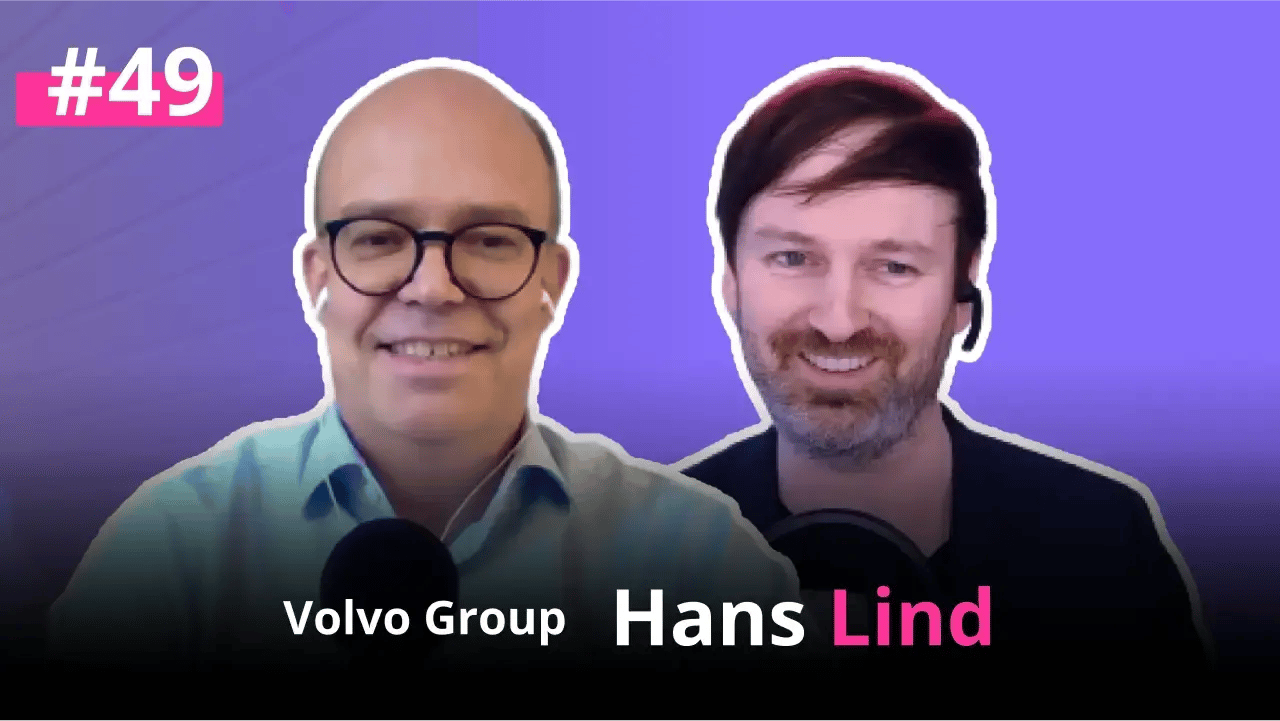
Listen to Hans Lind, Director Business Innovation & Foresight, Volvo Group
The Volkswagen Automotive Innovation Lab, formerly based at Stanford, followed a similar co-location model. It focused on adjacent mobility services rather than core powertrain engineering. The setup helped the parent company explore new ideas in connectivity and autonomy with Silicon Valley expertise.
The funding model is what makes Volvo's lab work. Projects are co-funded 50/50 with the relevant operating unit. The lab carries its own discovery budget. Once a project moves into incubation, the receiving unit matches the investment. Both sides have skin in the game.
Director Hans Lind describes three phases: Discover validates problem-solution fit; Incubate splits cost with a sponsoring unit; Accelerate moves the work into the unit or spins out a new venture.
About a third of the team comes from inside Volvo, from strategy, product planning, or sales. They bring the network needed to foster collaboration and co-create ideas across silos. Co-creation between the lab and the operating unit is the mechanism. Labs that skip it produce solutions that never get adopted.
The model fits when growth depends on services adjacent to the core, not on technical breakthroughs. It fits when units have budgets but lack early-stage exploration capacity. It fits when companies want new revenue within three to five years.
It does not fit when the parent company needs deep R&D or rapid integration of new technologies. For those problems, the other models are sharper.
The venture client lab buys early-stage technology from early-stage companies instead of building it internally. The model uses procurement as the lever.
Adopted by global organizations including Bosch, Holcim, Telefónica, and DB Schenker, it accelerates technology integration without burning equity. Companies across insurance, financial services, and logistics have adopted the venture client approach to drive innovation and accelerate digital transformation across industries. In recent years, it has become one of the fastest-growing innovation lab formats in the world.
DB Schenker launched its centralized startup management team in 2016 under VP Global Innovation Erik Wirsing. The team rebranded as the STARTup terminal in 2023. The unit has more than 4,000 startups in its database.
It uses a "pull" approach. Challenges from operating units come first. Scouting comes second.
The mechanic is different from a corporate accelerator. DB Schenker does not buy equity. The company runs structured pilots with startups against quantified pain points from logistics, contract logistics, and ocean freight units.
The STARTup terminal team includes innovation managers, scouts, and pilot leads with deep logistics expertise. Head of Global Startup Management Ronja Stoffregen describes the team as a "startup bouncer," pre-filtering on technology readiness and focus before any matchmaking begins. The methods are concrete: the buyer asks for specific technologies against quantified pain points, not general ideas.
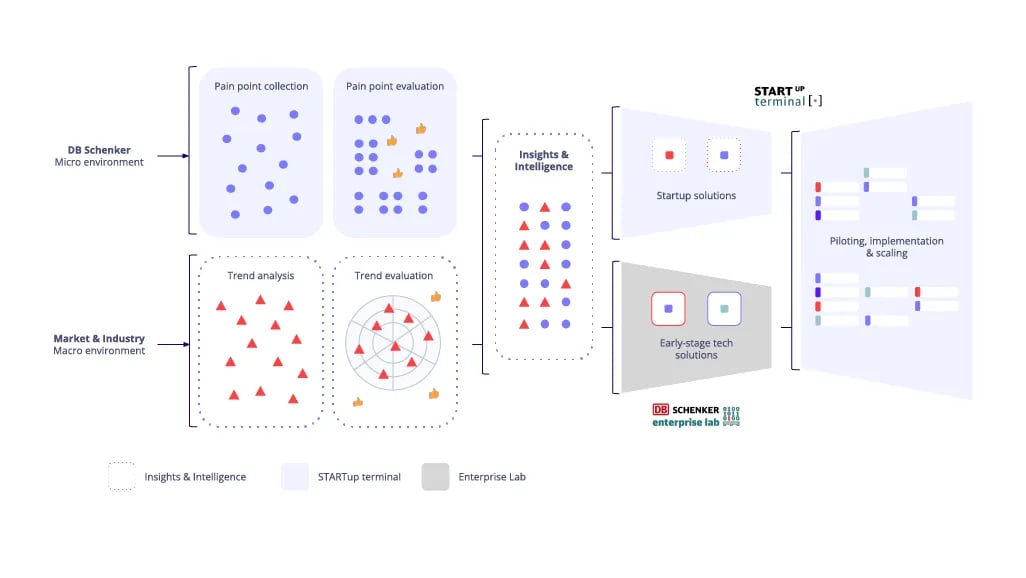
Exhibit 3: DB Schenker Innovation process diagram
DB Schenker uses ITONICS as its innovation platform. Pain points, scouting pipeline, and pilot status are tracked in one system. The unit has been awarded among the top 100 corporate innovation stars by the Chamber of commerce twice in a row. Organizations across logistics, retail, and other industries study this model to create faster paths from ideas to suppliers.
Successful pilots scale into long-term supplier contracts. The Innovation Board signs off before any pilot starts, ensuring resource commitment and clear goals upfront.
Capital One Labs in the US applies a similar venture client approach to emerging technologies in fintech. Capital One Labs has built a reputation for converting pilots into production supplier relationships faster than most financial institutions. The model treats technology adoption as a procurement decision, not an ideation exercise.
Liberty Mutual built comparable structures to scout insurtech companies. The company uses this approach to identify and test technologies across underwriting, claims, and customer experience. Liberty Mutual treats the lab as a digital tool for technology acquisition rather than an innovation hub for generating ideas. One approach produces measurable pilots. The other produces slide decks.
The contrast with failed projects is instructive. Google Glass was built inside Google X and aimed at mainstream consumer markets with no validated demand. It failed because the format did not match the problem. A procurement-led approach would have tested external technology against specific enterprise use cases first. Amazon Echo, developed at Lab126, succeeded because the team had a clear product hypothesis and iterated with real users. Format alignment mattered in both cases and determined whether thousands of employees were building the right thing.
Companies in South Korea, particularly in electronics and advanced manufacturing, have applied this model to integrate technologies across supply chain and product development pipelines. South Korea's large manufacturers are strong on deep engineering but slow to adopt external innovations. The procurement-led approach helps them scale faster and compete in world markets.
This model fits when strategy depends on integrating new technologies faster than competitors. It fits when units own real budgets and define real challenges. It fits when organizations accept that not all innovation comes from inside.
/Still%20images/System%20Mockups%202025/ideation-build-engaging-campaign-pages.webp?width=2160&height=1350&name=ideation-build-engaging-campaign-pages.webp)
Exhibit 4: Build custom webpages and partner with start-ups
It does not fit when organizations need to develop proprietary technology or create new models from scratch. This approach accelerates adoption, not invention.
Most labs are built around format choices. That is the wrong starting point. Five questions get you to the right model before you commit headcount or real estate.
Deep technical breakthrough points to the R&D lab. Adjacent ideas that extend existing offerings point to the business innovation lab. Faster integration of external technology points to the venture client lab.
Large organizations that skip this question build the lab that looks best in a press release, not the one that solves a real problem. The future of the lab is decided at this step, not at the ribbon-cutting.
Central R&D supports Model 1. Co-funding with operating units supports Model 2. Procurement supports Model 3.
Mismatched funding kills labs faster than any other structural error. An innovation hub that cannot get a unit to co-fund work has no adoption path.
Five to fifteen years is normal for Model 1. One to five years for Model 2. Four to eighteen months for Model 3.
Most lab closures happen when leadership expected Model 3 speed from a Model 1 setup. The concept of the innovation lab must match the time horizon of the mission.
Centralized R&D facilities for Model 1. Near operating units for Model 2. Distributed across new space in tech ecosystems for Model 3.
Location decisions reveal which model is actually being built. A team that claims to do procurement-led scouting but sits in a centralized collaborative space will struggle to source deals with early-stage companies. The space reflects the mission and the culture of the lab.
Patents and prototypes for Model 1. Revenue from new services for Model 2. Adopted supplier technology for Model 3.
Domains like climate change, supply chain resilience, and digital transformation raise the stakes. Lab leaders who cannot show measurable outcomes will face early budget reviews. If the success metric is unclear, the lab will be measured on activity. Activity does not survive a budget cut.
Answer these five questions before designing the lab. Most corporate innovation labs are built before any of them are answered.
Every innovation lab model needs operational infrastructure to convert exploration into outcomes. ITONICS provides the platform layer that connects scouting, ideation, portfolio management, and execution tracking in one system.
/Still%20images/Kanban%20Board%20Mockups%202025/ideation-organize-idea-flows-2025.webp?width=2160&height=1350&name=ideation-organize-idea-flows-2025.webp)
Exhibit 5: An idea with high priority moves into a new phase on a Kanban board
Trend and technology scouting at scale. The platform maps signals from patent databases, scientific publications, and market sources into the lab's research agenda. Foresight tools help lab leaders defend long-horizon investments to corporate boards.
Tracking new technologies, market trends, and competitive signals in one place replaces the fragmented workflows most labs rely on today. Teams across industries and geographies use it to scale their scouting methods.
A single connected pipeline. Innovation managers track each project's stage, funding split, and unit sponsor. Portfolio dashboards show which ideas are progressing and which are stalled. Teams develop expertise by learning from every stage of the pipeline and can focus resources on the most promising work.
For open innovation programs, the platform enables structured co creation with external partners. Every pilot, collaboration, and interaction is logged. This turns open innovation from a relationship exercise into a trackable process. It helps organizations create momentum across industries rather than cycling through one-off experiments.
Strategy and innovation alignment. ITONICS connects scouting with internal problem definition as a digital tool that closes the loop between lab activity and outcomes. Operating units submit quantified challenges. Scouts match external technologies against them.
The platform fosters a learning culture across every lab model. Teams capture what worked, what failed, and why. Employees across roles develop deeper expertise in the scouting, testing, and scaling cycle. Mission alignment becomes visible, not assumed. The future of each lab — its budget, scope, and headcount — depends on this visibility. It is what separates labs that create lasting impact from those that close within five years.
Pilot status, supplier conversion, and follow-up orders are tracked in one system. It gives CFOs and employees at every level the visibility they need to keep lab funding running across budget cycles. Organizations across industries — from automotive and pharma to financial services and logistics — use ITONICS to create that visibility and focus on what actually drives results.