Innovation manager job role explained: The guide to start and succeed


Being an innovation manager is like tending a greenhouse; you create the right conditions for new opportunities to take root, grow, and thrive.
In this article, you’ll learn what the role involves, how to build momentum, and which tools and practices help turn creativity into measurable firm success.
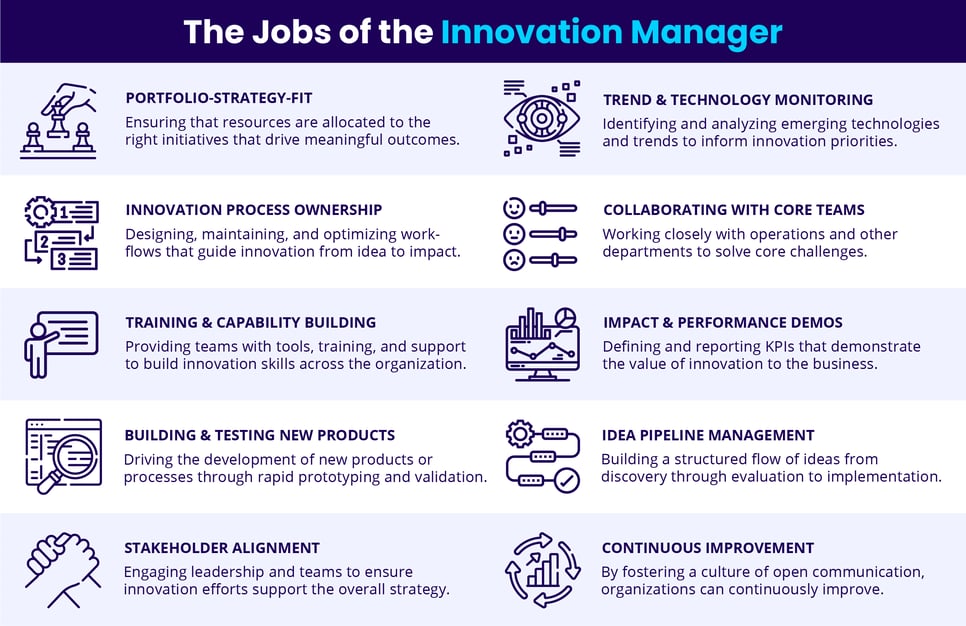
Companies expect innovation managers to drive new value generation by turning new ideas into strategic business outcomes. This means spotting innovation opportunities, managing innovation initiatives, and aligning projects with long-term goals.
Innovation managers are also expected to communicate effectively with internal stakeholders and demonstrate business acumen.
Innovation managers thrive in cultures that encourage experimentation, agility, and continuous improvement.
These environments typically value design thinking, cross-functional collaboration, and transparent communication. A supportive corporate culture provides space to fail, iterate, and grow ideas into successful innovation.
Core responsibilities include:
overseeing the innovation process to distinguish any idea from the most promising and feasible,
building innovation capabilities to give everyone the tools to create and implement ideas,
managing the innovation pipeline to ensure measurable returns from innovation initiatives, and
facilitating collaboration across teams to avoid double work and missed opportunities.
Innovation managers play a vital role in aligning strategic thinking with execution and in shaping the organization's innovation strategy to achieve strategic future business opportunities.
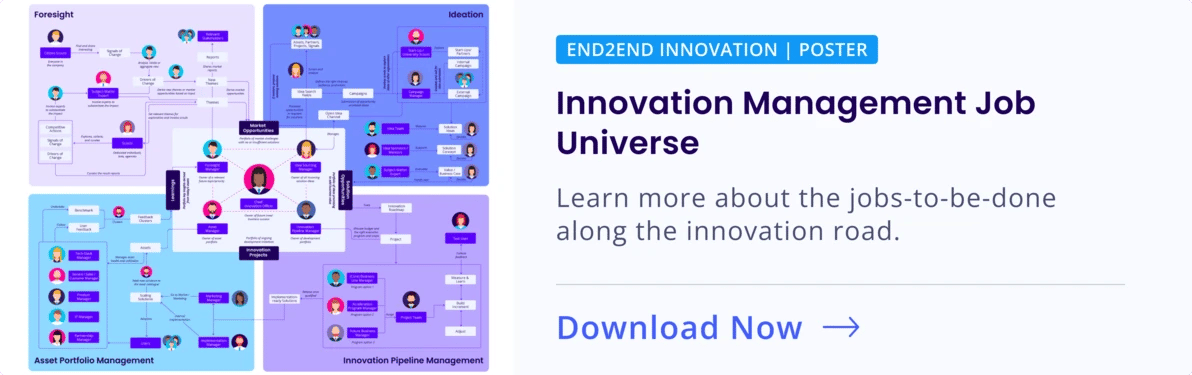
Start by understanding how innovation creates value in your company. Learn your organization’s strategy, customer needs, and existing innovation efforts.
Study successful innovation management models, like stage gate or innovation portfolio structures, and map them to your context.
Good innovation management depends on a few key principles:
align ideas with business goals,
validate assumptions early and clearly,
involve the right people, and
create clear decision points.
Build small, focused teams that can test ideas fast.
Train them in creative problem-solving, prototyping, and trend scouting. Use effective innovation tools, like idea boards and trend radars, to evaluate what’s worth developing.
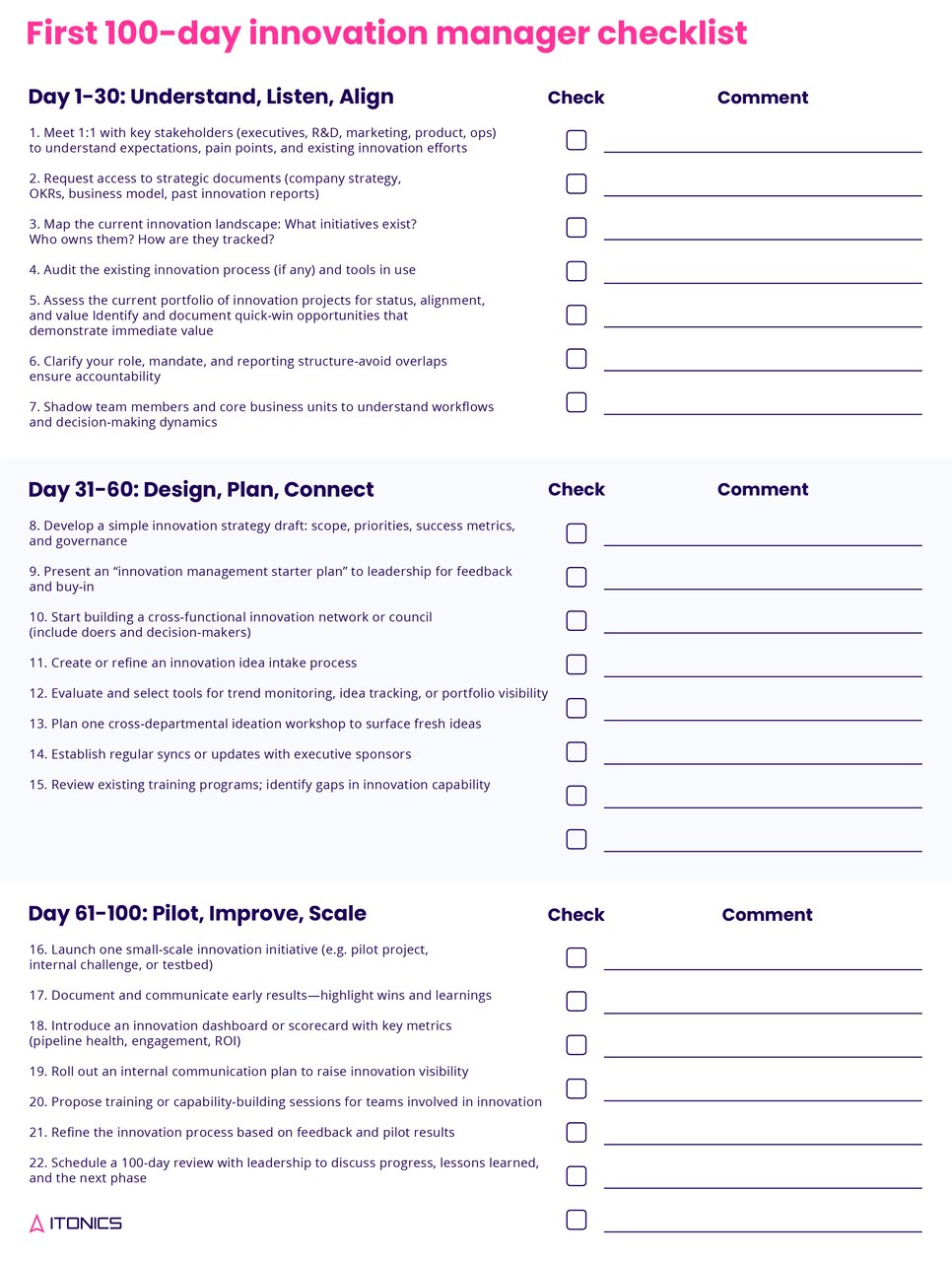
Use stages: idea collection, evaluation, testing, and scaling. Track each idea's progress. Kill ideas that stall; invest in those that show real potential.
Speak the language of business impact. Show how innovation supports company goals. Involve leadership early and regularly share outcomes, not just ideas.
Start small with a well-connected innovation team that combines creative thinking, know-how of the competitive landscape, and strategic objectives.
The team should have clear ownership of innovative projects that can solve common challenges of core corporate functions, and test and scale some promising innovative ideas fast, with a clear positive impact.
Keep the structure flat and flexible to maintain organizational agility.
Your team should include scouts, facilitators, project managers, and analysts.
Look for skills in design thinking, rapid prototyping, and trend analysis, but also strong interpersonal skills and the ability to translate ideas into practical solutions.
Training programs in innovation process and emerging technologies help fill skill gaps.

Embed innovation into functions like operations, HR, and marketing by aligning projects with real pain points. Give teams space to suggest and test process improvements. Use simple pilot projects to demonstrate impact quickly.
A chief innovation officer and strong leadership helps streamline all innovation strategies across different departments.
Start with practices that deliver quick wins: employee ideation for quick improvements, pilot programs to test new concepts on market changes, and new processes, helping to transform ideas quicker into solutions.
Strategy-wise, focus on solving known organizational challenges and gradually introduce more disruptive thinking as comprehensive understanding and support grow.
The best innovation manager balances ambition with realism. They avoid overloading teams by setting clear priorities and pacing innovation projects.
Many innovation managers fail by chasing too many projects at once. A focused approach, tied to the organization’s innovation efforts, prevents fatigue and improves results.
Sustainable innovation management means keeping a steady flow of new ideas while giving teams time to reflect, learn, and improve.
A good innovation manager ensures that projects move forward without constant urgency. They build in rest cycles and feedback loops.
Quick wins improve customer satisfaction and build trust. Long-term initiatives, such as process innovation or responding to market trends, create future growth.
Effective innovation management connects both through a clear roadmap, aligning team efforts with strategic goals and measurable impact of new solutions.
An effective innovation manager means more than running creative workshops. It’s about managing the innovation process to uncover strategic future business opportunities.
By guiding cross-functional teams and applying strong project management, innovation becomes a repeatable process that delivers real value.
Innovation must support company goals, not compete with them. That requires strategic thinking and clear priorities. Aligning innovative ideas with company objectives ensures resources are spent on what matters most—whether improving internal processes or exploring emerging technologies.
To show impact, track more than just the number of innovative ideas.
Measure how many concepts reach implementation, how much revenue they generate, or how they improve customer satisfaction.
Managing the innovation pipeline with clear KPIs helps leadership see innovation not as a cost center, but as a driver of the organization’s innovation success, creativity, and competitive edge.
The most successful innovation managers are focused on managing innovative projects that meet real customer needs and deliver measurable outcomes.
What sets them apart is how they approach the innovation manager role: with curiosity, consistency, and strong leadership skills. They’re not just idea people, they influence the company and shape a mindset of every day a bit better.
Strong innovation managers lead with consistency and intent.
They dedicate time daily to tracking customer needs, reviewing project progress, and removing blockers for their teams. They actively listen across departments to spot fresh feedback and challenges early.
Great leadership in the innovation manager role means fostering open dialogue, encouraging experimentation, and recognizing small wins. These leaders balance creativity with discipline—setting clear goals while staying flexible to adjust based on feedback.
By modeling curiosity, resilience, and collaboration, they create an environment where innovation can thrive in a constantly shifting competitive landscape.
Companies like Johnson and Johnson, 3M, Unilever, and Siemens show how to embed innovation into strategy, empower cross-functional teams, and balance core company functions with continuous improvement.

Innovation managers can learn from their structured innovation processes, customer-first approaches, and commitment to turning new concepts into scalable, valuable solutions.
ITONICS - The innovation software is innovation managers' best friend.
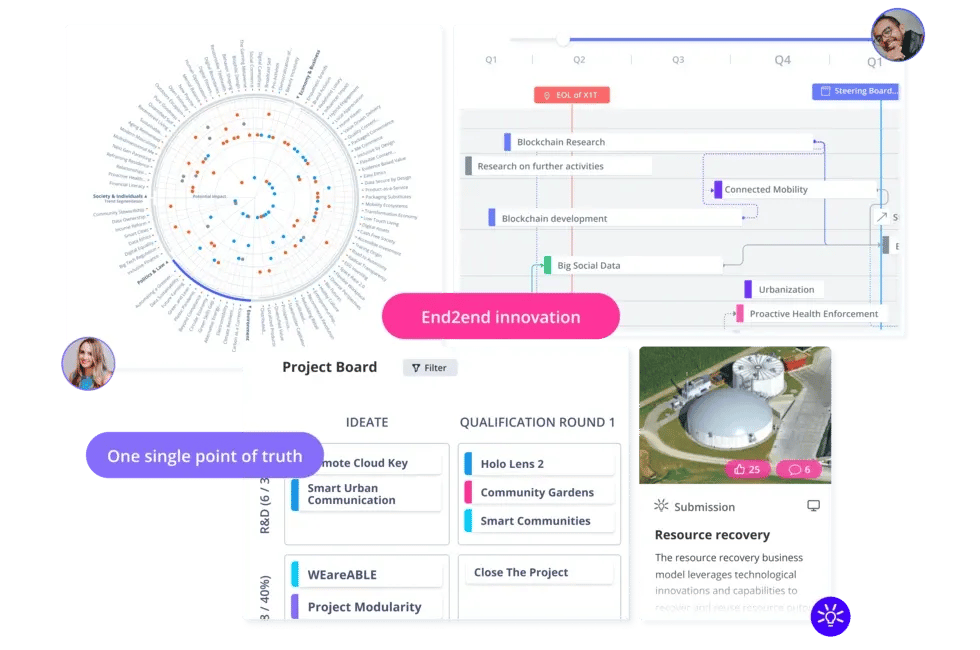
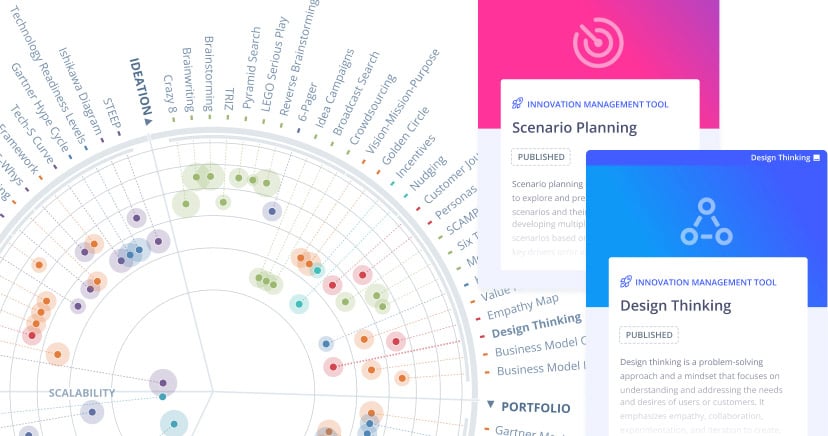
With trend and technology radars, they can track emerging technologies and market shifts.
Idea and innovation portfolio management enables structured evaluation and prioritization.
Customizable workflows guide cross-functional teams from ideation to execution.
ITONICS enables faster, more transparent decision-making, ensuring innovation projects are aligned with strategy and deliver measurable impact across the organization.