9 leader lessons that make strategic transformation a lasting change


Ask any senior leader about their change management process, and you'll get a confident answer. Ask them a year later whether it changed how the entire organization actually works, and the conversation gets complicated.
Declaring transformation does not equal its success. BCG research shows organizations with a formal change management program achieve 5.9 percentage points greater shareholder return over five years. Yet two-thirds still fall short.
Missing pressure, missing follow-ups, and missing funding are common challenges. To make strategic transformation work, it is best to learn the strategies from successful transformation leaders. I describe 9 leadership lessons and how to deliver the operational backbone for strategy execution.
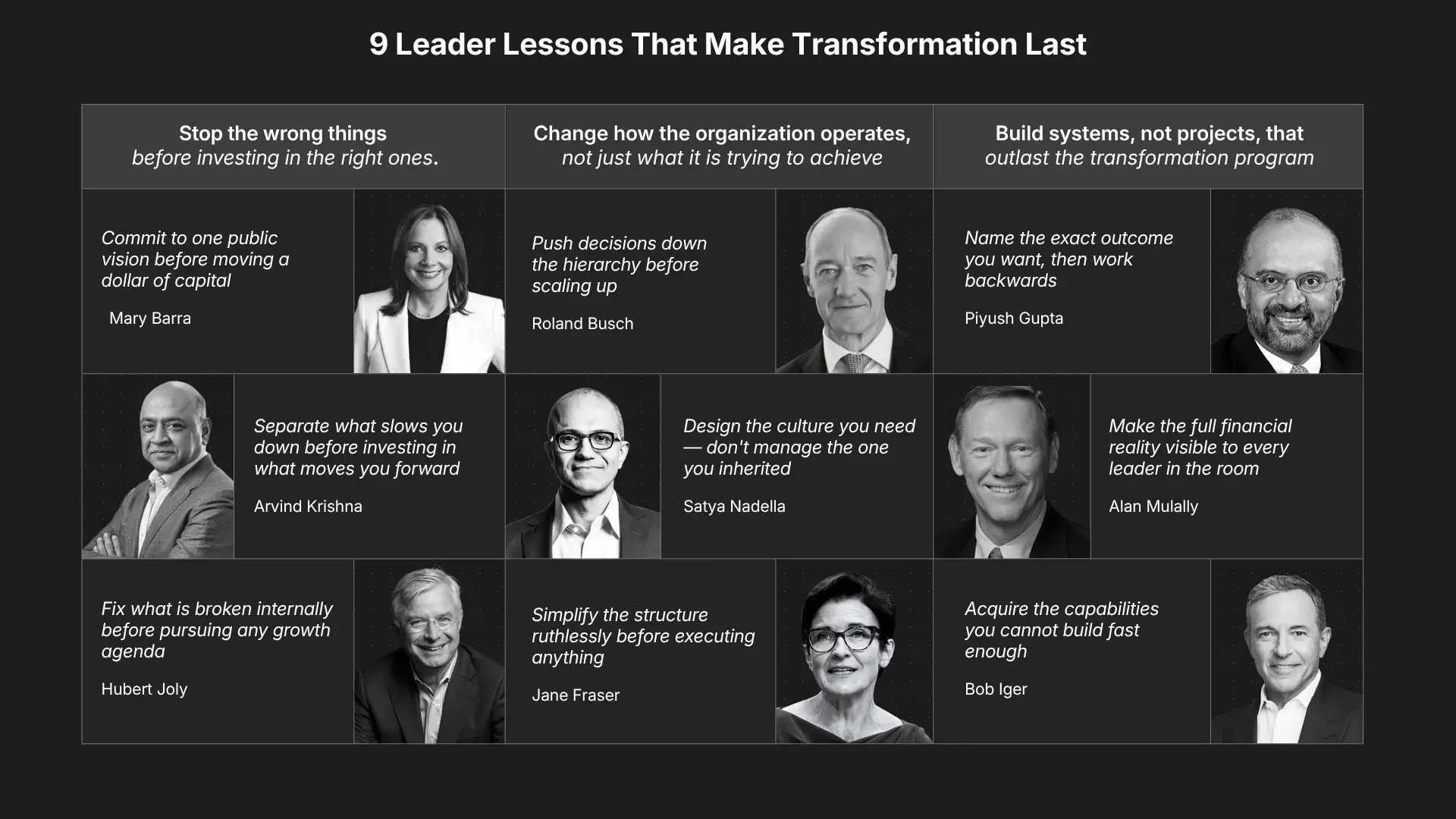
Exhibit 1: 9 Leader lessons that make transformation last
Here's what most strategy teams won't say out loud: organizations that avoid transformation die inevitably. Strategic transformation means your operating model must evolve continuously — either to respond to shifting market dynamics or to actively create the competitive environment on your terms.
The current state of most organizational transformation programs reveals a consistent pattern: compelling vision, absent execution infrastructure.
Competitive advantage doesn't come from a better strategy document. It comes from building an organization that is fast and resistant — at every business level, not just at the top.
Walk into most organizations two years into a transformation, and you'll find updated process maps, new values statements, and strategy decks.
What you won't find is meaningfully different behavior.
Management still decides through the same channels. Employees still work on the same priorities they always did.
This isn't cynicism. It's a change management problem. Real organizational transformation requires changing what gets funded, who has authority, and how people work day to day.
It has a cost:
Without those tough decisions, you're only running an expensive communications campaign.
The easiest part of any change management process is formulating a compelling vision. It often describes a wishful situation. It also often is not grounded in required technology investment decisions, changing leadership habits, or new communication practices.
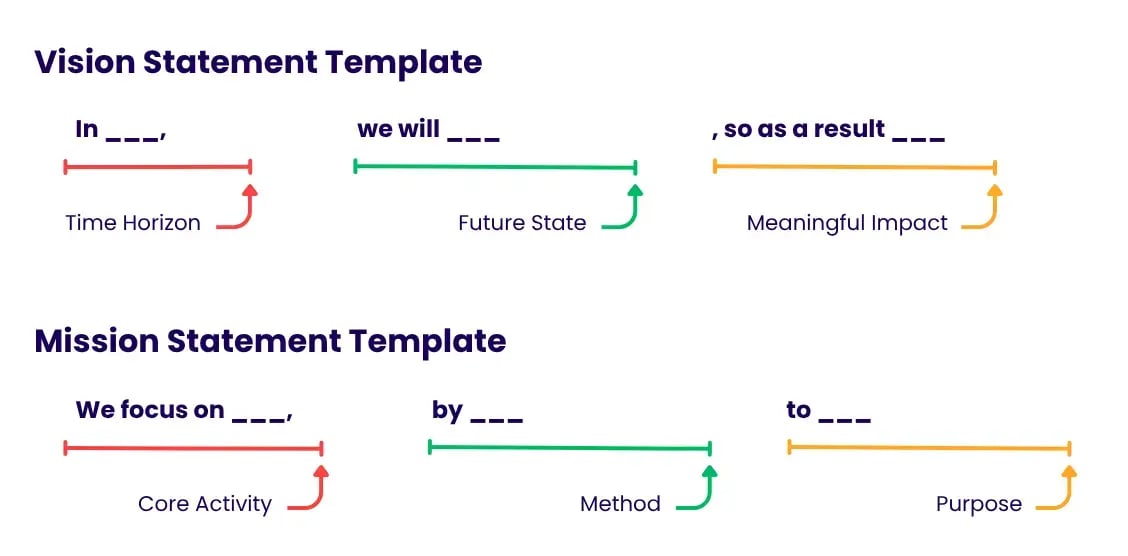
Exhibit 2: Vision statement template and mission statement template
The things differently that need to happen are often obvious to people three levels below the executive team. The gap isn't awareness. It's a consideration.
Effective change management consults the operational behavior first and only second connects new organization's goals to what managers fund, measure, and prioritize.
This structured approach to implementation is what separates companies that transform from companies that talk about transforming.
Studying failed organizational transformations reveals the same three breakdowns, over and over. They're process gaps that organizations rarely consider when setting up digital transformation programs.
The most common organizational transformation mistake: committing to targets without conducting impact assessments on the current business strategy and practices.
Organizations skip examining their actual skills, structure, and capacity. The desired state exceeds what they can deliver.
Implementing change without this alignment check wastes budgets and disengages employees. Managers feel unsupported.
The fix is unglamorous: assess the gap between the current state and the destination before committing to any plan. That single step is what effective change management looks like before the work even starts.
This gap is quieter but equally damaging. Organizations agree on new strategic priorities, then proceed to fund the same departments they have always funded. The change management strategy breaks down because money follows history, not strategy.
Leaders who solve this identify which new systems require fresh investment and which legacy operations to stop funding. Without that clear direction, the new strategy and the real organization run in parallel — two independent entities that rarely converge.
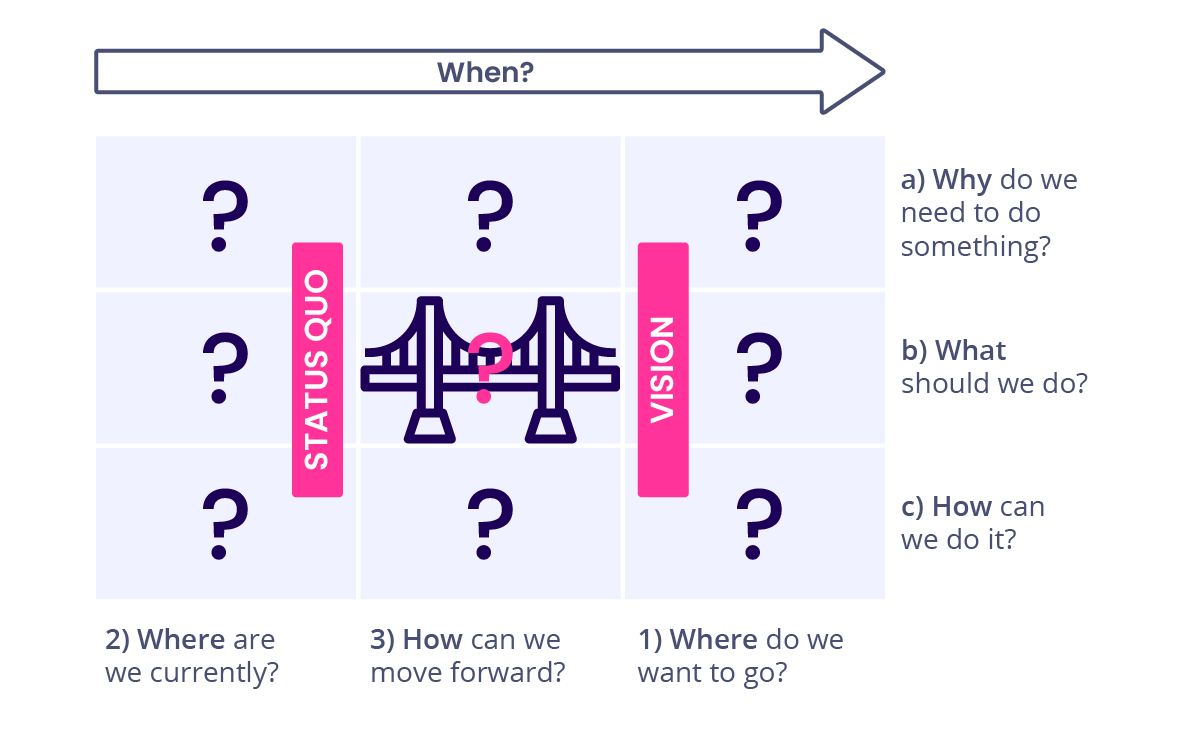
Exhibit 3: The six key questions to answer in strategic planning
Everyone has seen this one. The plan looks solid. Execution stalls. Ownership is unclear. Capabilities are insufficient at the operational level. No review rhythm exists to catch challenges early.
Effective change management here means implementing a cadence that surfaces problems fast and adapts before they compound. It's the handoff from planning to execution — not the planning itself — where most transformation programs actually collapse.
What follows are nine leaders who ran genuine organizational transformations and produced results that held. Each one solved a specific process problem and maintained focus long enough to see it through.
Roland Busch took over as Siemens CEO in 2021 with a clear view of what slows organizational transformation in large companies.
“You cannot afford […] to go all the way up the hierarchy […] push the decision level as low as possible.”
— Roland Busch, CEO, Siemens
His DEGREE framework embedded strategic goals at every organizational level — frontline employees included. By 2024, Siemens achieved a 60% carbon emissions reduction since 2019. That's not a target tracked in a boardroom. That's strategic transformation embedded into the daily job of employees across hundreds of business units.
Nadella inherited a culture in 2014 actively hostile to digital transformation. The "know-it-all" environment punished failure and blocked collaboration.
His response was systematic: new learning systems, new tools for managers, new behaviors reinforced at every level. Organizational culture became an operational change management priority, not a values statement.
Azure's technology market share reached 23% by 2023. Employee satisfaction hit 85%. Organizational culture is the most stubborn barrier in any transformation. A culture of continuous improvement doesn't emerge from declaring it.
Barra's organizational transformation at GM was anchored to one sentence: "Zero crashes. Zero emissions. Zero congestion." Before committing $35 billion to electric vehicles, she sold Opel and Vauxhall.
She stopped funding what didn't fit the strategy, then focused resources on what did.
Organizations that try to adapt while preserving legacy operations simultaneously do neither well. A single public commitment creates the strategic focus and forces the resource tradeoffs that organizational transformation actually requires.
In 2014, Gupta set one desired outcome for DBS: Best Bank in the World by 2020. The board approved $147 million. Every project and change management initiative was measured against that single target.
DBS achieved it two years early. In 2018, Euromoney, Global Finance, and The Banker all recognized DBS as the best bank simultaneously — a first. That clarity works because it's falsifiable.
You either hit it or you don't. It forced the governance, skills, and processes to back it up — rather than managing toward something vague that can always be declared close enough.
Krishna's first major decision as IBM CEO was to spin off Kyndryl in 2021 — removing $19 billion in declining revenue and 90,000 employees in one move, creating two independent firms with distinct strategic focus. IBM refocused entirely on hybrid cloud and AI technology.
Hybrid cloud revenue grew 16% in the first year. The ability to develop faster comes from strategic clarity. Managing two conflicting directions simultaneously doesn't accelerate strategic transformation. It dilutes it.
Fraser's change management strategy at Citi was blunt:
“Do fewer things, and do them better.”
— Jane Fraser, CEO, Citi
She exited 13 international consumer markets, cut approximately 20,000 jobs, and reorganized into five focused business units. Booking loans now takes half the time. Customers get faster answers.
Process improvement follows structural clarity — not the other way around. Leaders who try to implement organizational transformation inside structurally complex organizations are fighting the current the entire time.
Best Buy in 2012 was being written off. Joly ignored growth for the first phase and focused entirely on fixing the internal environment: pricing, supplier relationships, and employee engagement. His "Renew Blue" change management program is a clear example of sequencing done right.
Customers came back because employees had the right tools and felt supported in their jobs. By 2017, Best Buy generated over $1 billion in net profit annually. Stock went from $18 to $65. The sequence matters. Fix the organization before growing it.
Iger's insight was that some capabilities take a decade to build internally — and organizational transformation doesn't always have a decade. Rather than internal development programs, he bought:
Pixar for $7.4 billion in 2006,
Marvel for $4 billion in 2009,
Lucasfilm for $4.05 billion in 2012,
Fox for $71.3 billion in 2019.
Disney's market cap grew from $56 billion to $231 billion. Disney+ reached 100 million subscribers in 16 months. When technology and creative talent are the bottleneck, acquisition speed can matter more than internal development. Identify the gap. Close it before competitors do.
Ford was heading for a $17 billion loss when Mulally arrived in 2006.
His first act: a weekly Business Plan Review where every leader reported using a color-coded system — green for on track, yellow for at risk, red for off plan.
At the first session, every slide was green. Mulally knew that was impossible. When one executive finally went red, Mulally applauded. Within weeks, honest reporting spread across the entire leadership team. Ford posted annual profits every year from 2009 onward without a government bailout. Data transparency isn't a reporting job. It's the foundation of effective change management at scale.
The nine lessons above look different on the surface. Selling a brand. Spinning off a business unit. Changing a meeting format. But underneath each one is the same sequence, repeated across different industries and organizational contexts.
Stop the wrong things before investing in the right ones.
None of them launched a transformation program on top of an unchanged organization. They cleared the ground first. Transformation has a starting condition — and it is rarely where most leaders begin.
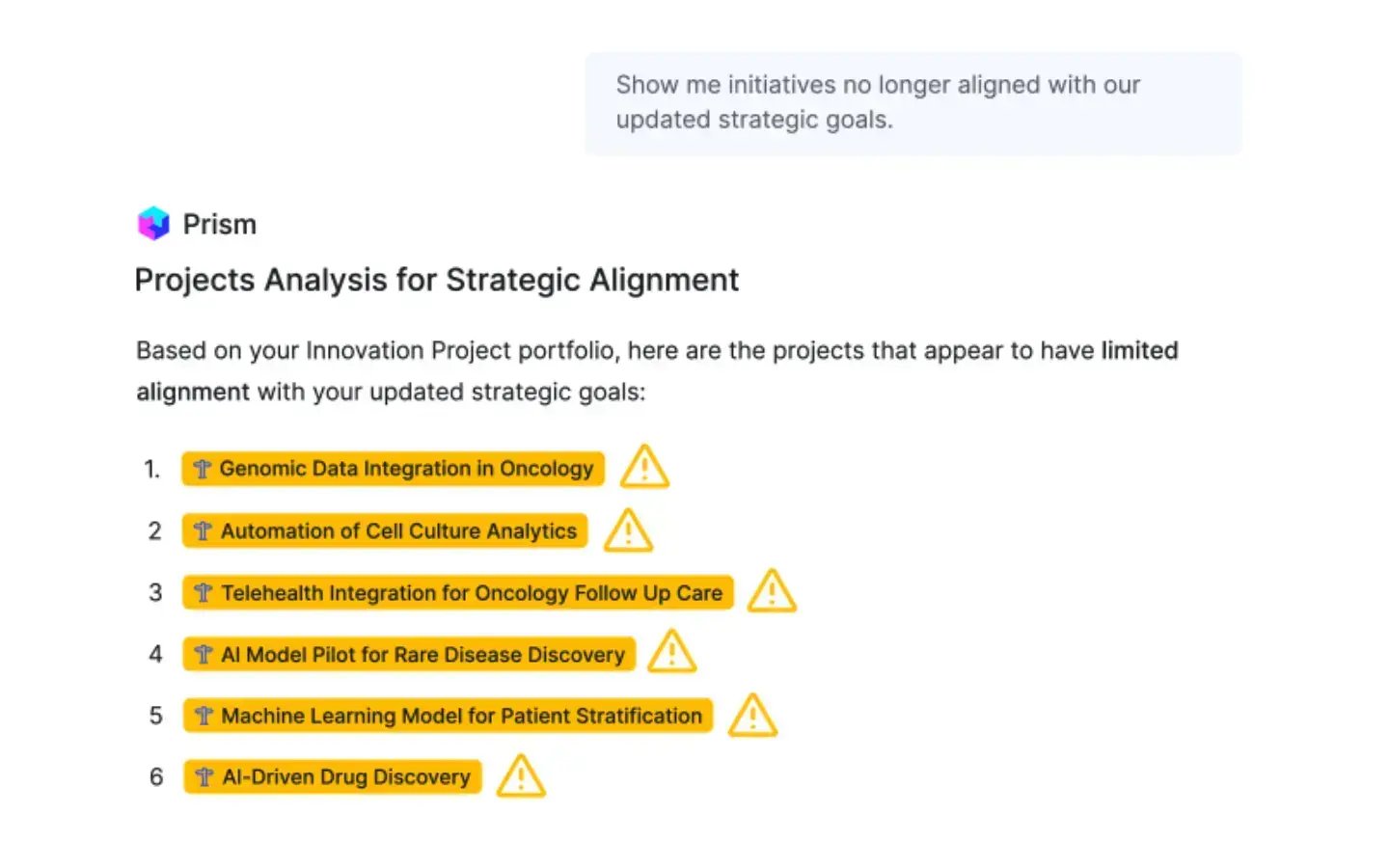
Exhibit 4: ITONICS AI assistant flags off-strategy projects
Change how the organization operates, not just what it is trying to achieve. Vision sets direction. It does not move people.
Each one changed how the organization worked — not just what it was working toward.
Build systems, not projects, that outlast the transformation program. Projects end. Transformation programs get replaced by the next initiative. The leaders who created lasting change built infrastructure that kept working after the launch moment passed.
None of this was a project. It was a new operating reality.
Nine transformation environments. Nine leadership challenges. One consistent finding: leaders who succeeded built operational infrastructure before they needed it.
Most organizations launch transformation without the tools to identify whether it is actually working. Strategy lives in documents. Progress lives in status updates. The gap between the two is where organizational change quietly stalls — and where leadership credibility erodes fastest.
Four capabilities close that gap and enable organizations to develop the operational backbone needed to sustain change through future challenges.
/Still%20images/Roadmap%20Mockups%202025/portfolio-link-projects-teams-and-milestones-2025.webp?width=2160&height=1350&name=portfolio-link-projects-teams-and-milestones-2025.webp)
Exhibit 5: Projects, owners and dependencies shown on one roadmap
Transparent transformation roadmaps give every leader access to what is funded, what is stalled, and what contradicts the strategy. Without them, legacy investments survive by default, and transformation competes with the status quo for resources it rarely wins. A shared roadmap is the foundation that prepares organizations for future change rather than forcing them to react to it.
Ownership lists define who is accountable at every level. Managing organizational change without named owners produces activity, not results. Leadership that cannot point to a specific owner for every strategic initiative is not managing transformation — it is hoping for it.
Real-time performance tracking dashboards replace the illusion of progress with actual data. Mulally's Business Plan Review was essentially this — green, yellow, red, updated weekly, visible to every leader. The benefits showed up immediately: business performance improved because problems surfaced early, and leadership could support teams before momentum was lost.
Feedback loops between execution and strategy ensure the plan adapts as the environment shifts. Gupta built DBS around one measurable target precisely because it forced continuous course correction. That feedback loop enabled DBS to identify future challenges early and sustain change long after the initial transformation program ended.
Build these four capabilities before launching transformation. Without them, the activity-without-change pattern repeats — and the next program starts where the last one failed.
The process gaps that derail organizational transformation affect companies of every size. Implementing effective change management across multiple simultaneous initiatives — ensuring funding follows strategy and planning connects to execution — requires the right tools and infrastructure.
/Still%20images/List%20Mockups%202025/portfolio-oversee-tasks-and-assignments-2025.webp?width=2160&height=1350&name=portfolio-oversee-tasks-and-assignments-2025.webp)
Exhibit 6: A table with conditional formatting rules showing portfolio risks
ITONICS provides that infrastructure. Strategy teams map transformation portfolios, identify project dependencies, and track progress in real time. Innovation managers align emerging technology with strategic priorities. R&D teams assess readiness and allocate budgets to initiatives with the highest strategic fit.
The platform makes visible which initiatives are stalling, which are resourced, and which need management attention — enabling the data-driven approach Mulally built at Ford and Gupta implemented at DBS. For leaders developing the operational backbone of strategic transformation, ITONICS provides the systems and support to turn strategy into measurable, lasting organizational change.