Technology portfolio prioritization: The 5 key frameworks analyzed


Technology portfolio prioritization fails when teams confuse a ranking exercise with a business-critical investment decision. A scoring matrix tells you which projects rank higher. It says nothing about how much R&D is spent to commit to transformational bets versus sustaining core functional technology development.
Apply the wrong framework to clean data, and the answer is still wrong. Mis-weighted R&D spend compounds quietly through budget cycles until portfolio health drifts well off strategy.
| Decision type | Key uncertainty | Time horizon | Best-fit framework |
| Budget allocation | Strategic fit | Annual | Three Horizons |
| Investment comparison | Relative value | Quarterly | Weighted scoring |
| Stage gate review | Technology maturity | Per milestone | TRL |
| Portfolio shaping | Resource constraints | Multi-year | Strategic bucket |
| Exploratory investment | Market uncertainty | Staged | Real options |
Exhibit 1: Overview of the 5 technology portfolio prioritization frameworks
When the wrong framework drives technology investment decisions, low-priority projects survive budget cycles and high-potential technology assets starve. Components, platforms, research programs, and infrastructure all compete for the same technical product development budget.
Without a disciplined technology portfolio management process, resource allocation follows whoever argues loudest. Portfolio managers spend review cycles defending budgets rather than improving decision-making.
R&D efficiency drops. Cost savings erode, and organizations don't identify the root cause until a technology inventory audit reveals the portfolio's performance has drifted from business objectives — usually a year too late.
Technology portfolio management covers four structurally different decision types: Horizon allocation, stage gate reviews, portfolio shaping, and staged investment under uncertainty. Each requires a different framework and a different data set. Most companies run a single prioritization process across all four. The output clears the review agenda but doesn't address the underlying strategic question.
Ranking assumes each technology investment is independent. A hardware call shapes three software roadmaps. A TRL-3 research program feeds future-proof capabilities downstream. Technology assets share infrastructure, management overhead, and asset management processes across the portfolio.
Ranking also produces false precision: criteria weights reflect whoever set the parameters. The most impactful projects get buried. Low-priority projects survive on favorable scoring definitions.
Technology portfolio management spans categorizing projects by strategic fit, setting Horizon allocations, and running stage gate reviews. Each requires different performance data and analysis scope.
Applying a scoring matrix to a portfolio-shaping question yields a ranked list that tells leadership nothing about how to allocate budgets across technology sectors. The process looks rigorous. The resource allocation is still wrong.
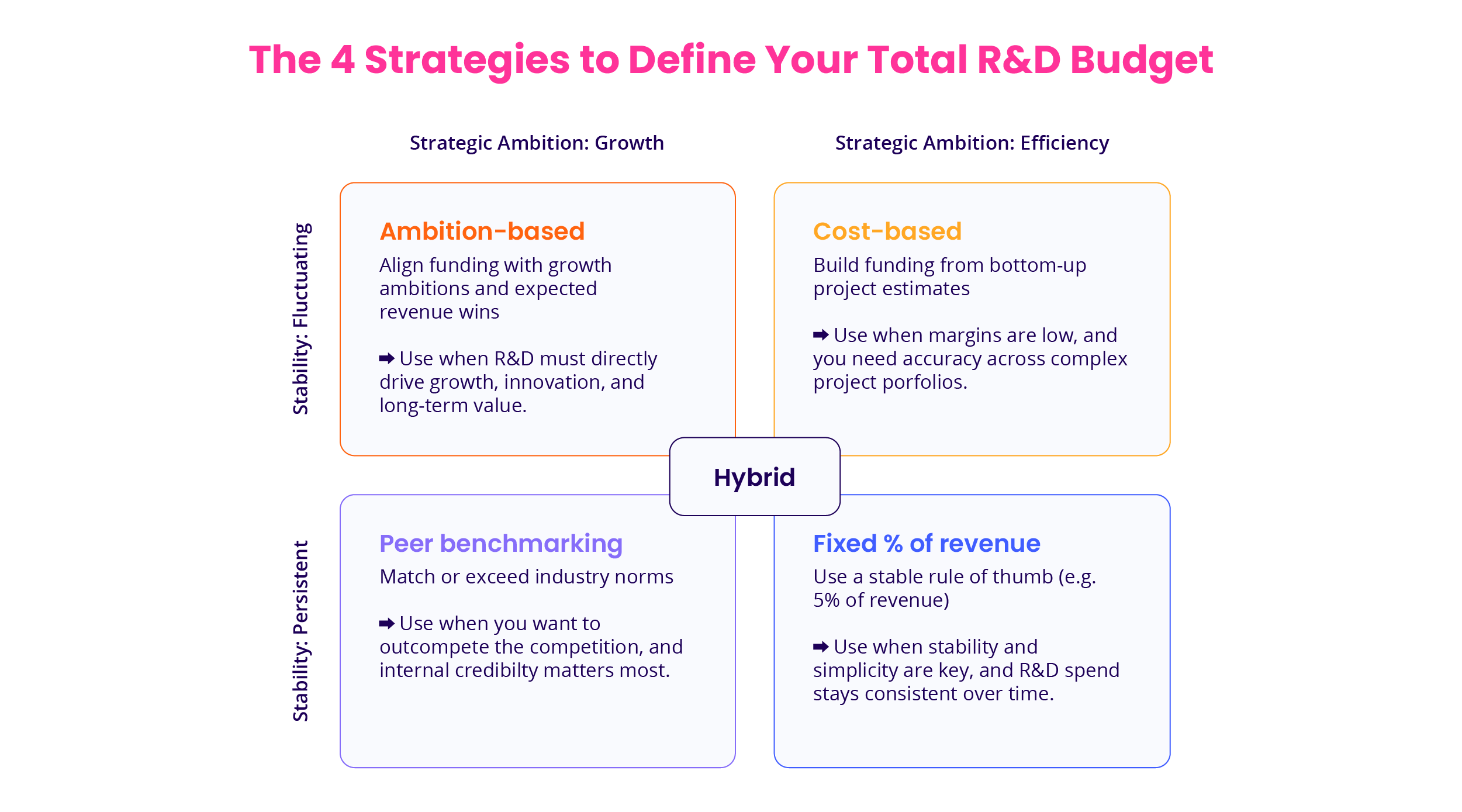
Exhibit: 4 strategies to define your total R&D budget
TRL scores tell you where a technology sits on the S-curve. They say nothing about strategic value.
A TRL-9 technology disconnected from business objectives is a stranded investment. A TRL-3 research program enabling a critical future capability may be the highest-priority line item in the portfolio. Technology portfolio prioritization requires both maturity and strategic fit as independent dimensions.
No single framework covers all decision types in technology portfolio management. The following 5 address the full range of decisions portfolio management teams actually face.
The weighted scoring matrix evaluates technology investments against an agreed set of criteria. Each criterion carries a weight; each project gets scored against it. The weighted totals drive portfolio prioritization rankings.
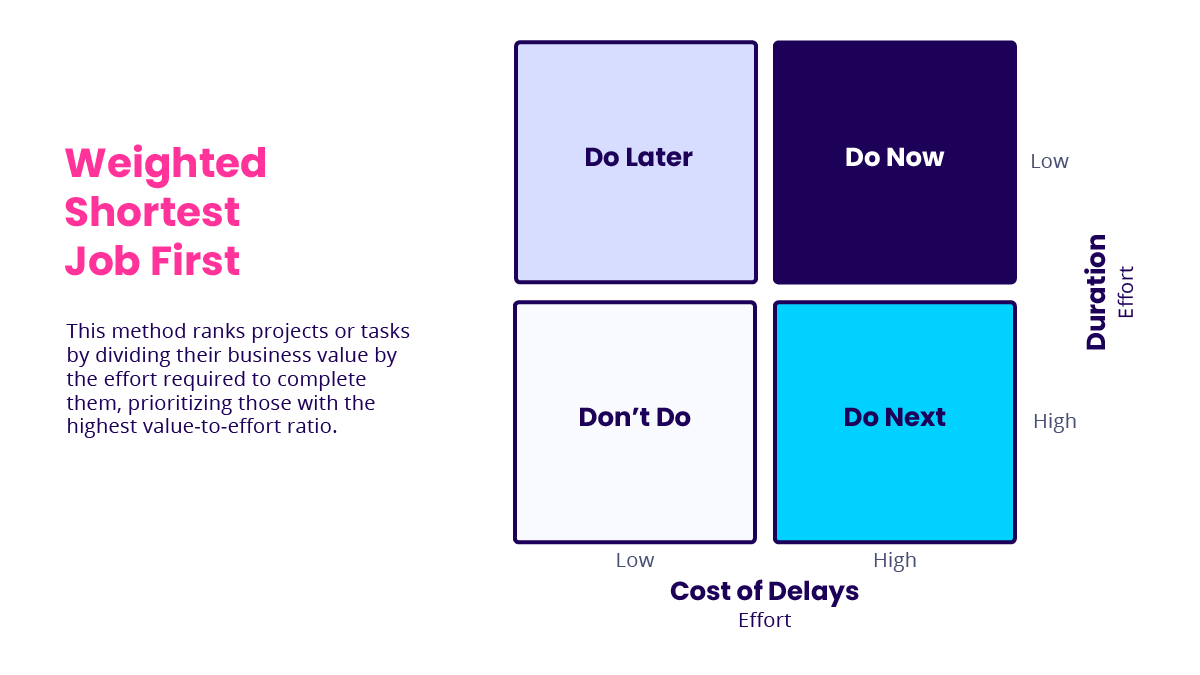
Exhibit: Weighted shortest job first technology prioritization
Common criteria in technology portfolio management:
When it fits: Same-stage technology investments within one technology sector, with agreed criteria and consistent portfolio scope.
When it breaks: When criteria weights are set by seniority rather than strategic goals. Investments spanning different technology horizons in the same scoring run produce meaningless comparisons.
Primary use case: IT investments comparison, software portfolio management, prioritizing projects based on defined organizational goals.
The Three Horizons model allocates R&D budgets across three investment horizons:
Without explicit Horizon allocations, technology portfolios drift toward H1, losing compounding optionality in H2 and H3. Innovation management requires a forcing function; the Three Horizons model provides one. Companies that focus R&D resources entirely on near-term performance sacrifice future-proof positioning.
When it fits: Annual budget allocation decisions and technology roadmap planning against competitors.
When it breaks: When Horizon definitions aren't tied to business objectives. Teams argue about categorizing projects rather than setting allocation thresholds.
Primary use case: Budget allocation and resource allocation across a technology roadmap. Critical when innovation management decisions must connect to longer-term business strategy.
TRL is a 9-point maturity scale (TRL 1 = basic research, TRL 9 = full deployment), developed by NASA and now standard across defense, aerospace, pharma, and industrial technology sectors.
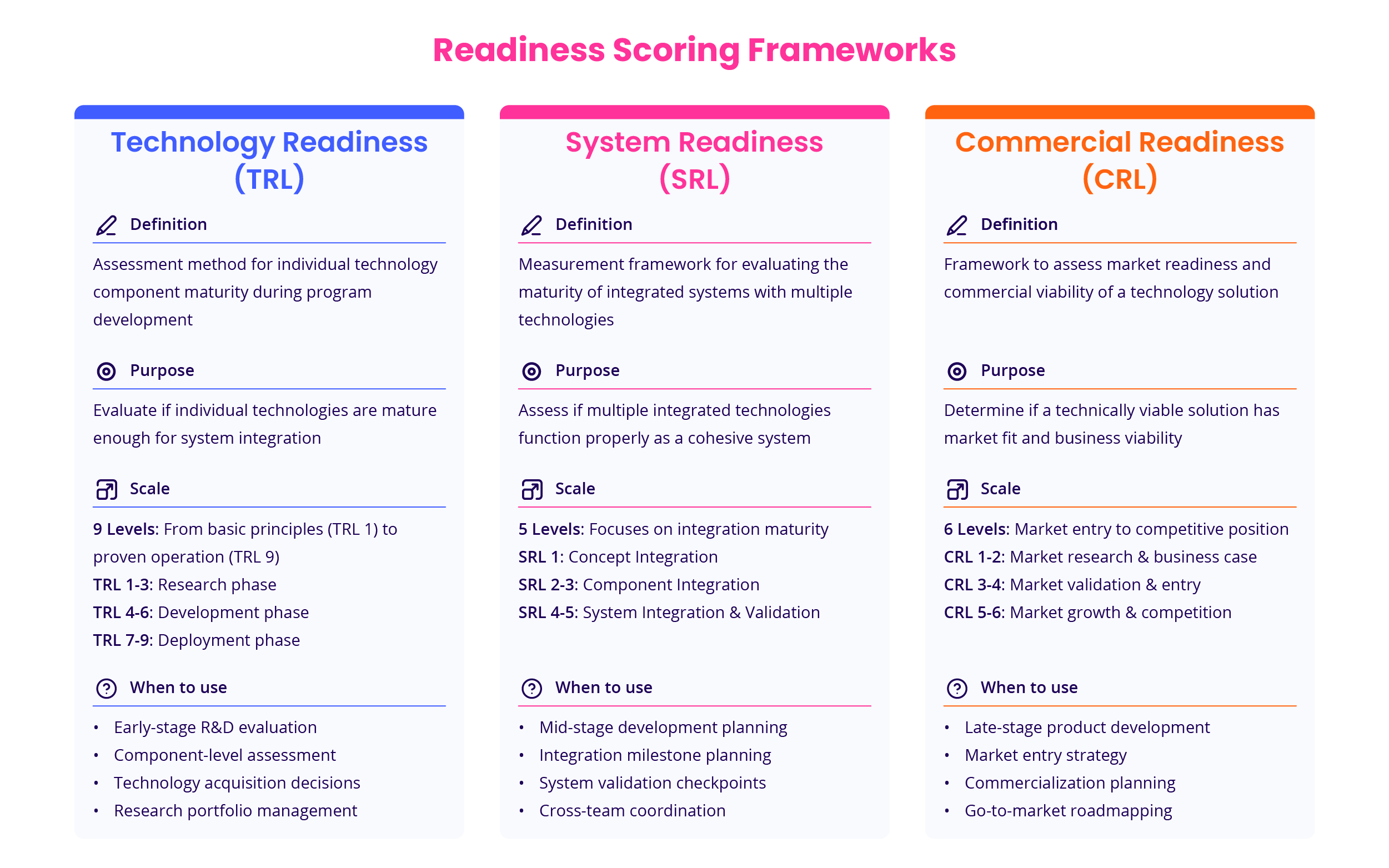
How companies apply TRL to technology portfolio prioritization:
When it fits: Stage gate kill decisions and go/no-go investment reviews. TRL keeps portfolio managers from committing resources to technology assets that aren't ready to scale. Essential in industries where monitoring and control processes must meet compliance and regulatory standards.
When it breaks: When TRL scores substitute for investment thesis evaluation. High maturity doesn't equal high strategic value. TRL data without detailed information about market fit produces a portfolio skewed toward safe, late-stage technology investments.
Primary use case: R&D portfolio management in regulated industries. Risk management for technology investments with safety, control processes, or compliance requirements.
The strategic bucket method pre-allocates R&D budgets into defined categories before evaluating individual projects. Projects compete within buckets, not across the entire portfolio.
%20Innovation%20ambition%20matrix.webp?width=850&height=917&name=6)%20Innovation%20ambition%20matrix.webp)
Exhibit: Innovation ambition matrix
Example Horizon allocation for a technology portfolio:
Each bucket carries its own investment criteria, risk-taking tolerance, and performance benchmarks.
When it fits: When leadership must set portfolio shaping decisions before any project-level scoring begins. Most impactful for companies reallocating resources between growth priorities.
When it breaks: When bucket definitions drift from the actual business strategy. Companies fill buckets with available projects based on inertia. The technology portfolio management process runs correctly but produces no meaningful shift in priorities.
Primary use case: Federated organizations where business units need investment autonomy. Large companies manage multiple technology sectors simultaneously.
Real options valuation applies financial option logic to technology investments: preserve portfolio optionality, limit early commitment, buy information cheaply before scaling capital deployment (also called metered funding).
Standard structure for technology portfolio prioritization:
When it fits: High-uncertainty technology investments in industries evolving at a rapid pace. Effective for exploratory research programs and technology assets where market value is unclear, and risk-taking must be managed through staged capital deployment.
When it breaks: When stage and gate criteria aren't defined before the investment begins. Teams extend stages to avoid reallocating resources away from low-priority projects, keeping stranded investments alive indefinitely.
Primary use case: Exploratory R&D, emerging technology investments in new markets, companies entering technology sectors where competitors haven't established dominance.
The 5 frameworks address different questions in the technology portfolio management workflow. Framework fit depends on four factors.
Name the specific decision before selecting any framework. Most technology portfolio management failures trace directly to this step being skipped — use the table above to match each decision to its framework.
Early-stage technology assets with high uncertainty need staged investment frameworks. Technologies with stable risk management profiles and reliable performance data suit scoring-based approaches.
Applying a weighted scoring matrix to a technology investment with an unknown market trajectory creates false confidence. The data required for accurate scoring doesn't exist at that stage. Teams that focus on framework sophistication here make expensive commitments prematurely.
Strategic bucket decisions require C-level alignment before any project evaluation begins. Weighted scoring for R&D investments executes at the portfolio manager level. Mismatching framework to decision authority leaves portfolio managers running reviews they don't have the scope to close.
Real options need measurable milestone data. TRL stage gate reviews need detailed information about technical progress. Weighted scoring needs consistent performance data across all projects in scope.
Identify what data exists before selecting a framework. Organizations routinely choose the most rigorous approach, then spend weeks backfilling data that should have been tracked from day one. Technology portfolio management built on retrospective data collection produces unreliable investment decisions.
The contingency logic holds across industries.
Bosch applies the strategic bucket method across its technology divisions: mobility, industrial, and consumer technology.
Each division maintains a separate technology portfolio with defined investment thresholds, preventing cross-divisional competition from crowding out higher-growth technology sectors.
TSMC staged EUV lithography technology investments across milestones tied to yield rate performance data rather than committing full resources upfront. Stage gate decisions minimized risk by running on data, not sunk costs. Investment scaled as the technology cleared TRL stages.
Map how your R&D portfolio management process currently handles investment decisions. Ask whether your budget allocation, project comparison, stage gate reviews, and portfolio shaping are all running through the same scorecard? Most companies discover they are.
Start with a technology inventory audit. Count how many current technology investments have a documented link to business objectives. Across most organizations, fewer than 60% do a portfolio health and efficiency problem, not a scoring problem. Fix strategic alignment and focus on structural portfolio gaps before refining any framework.
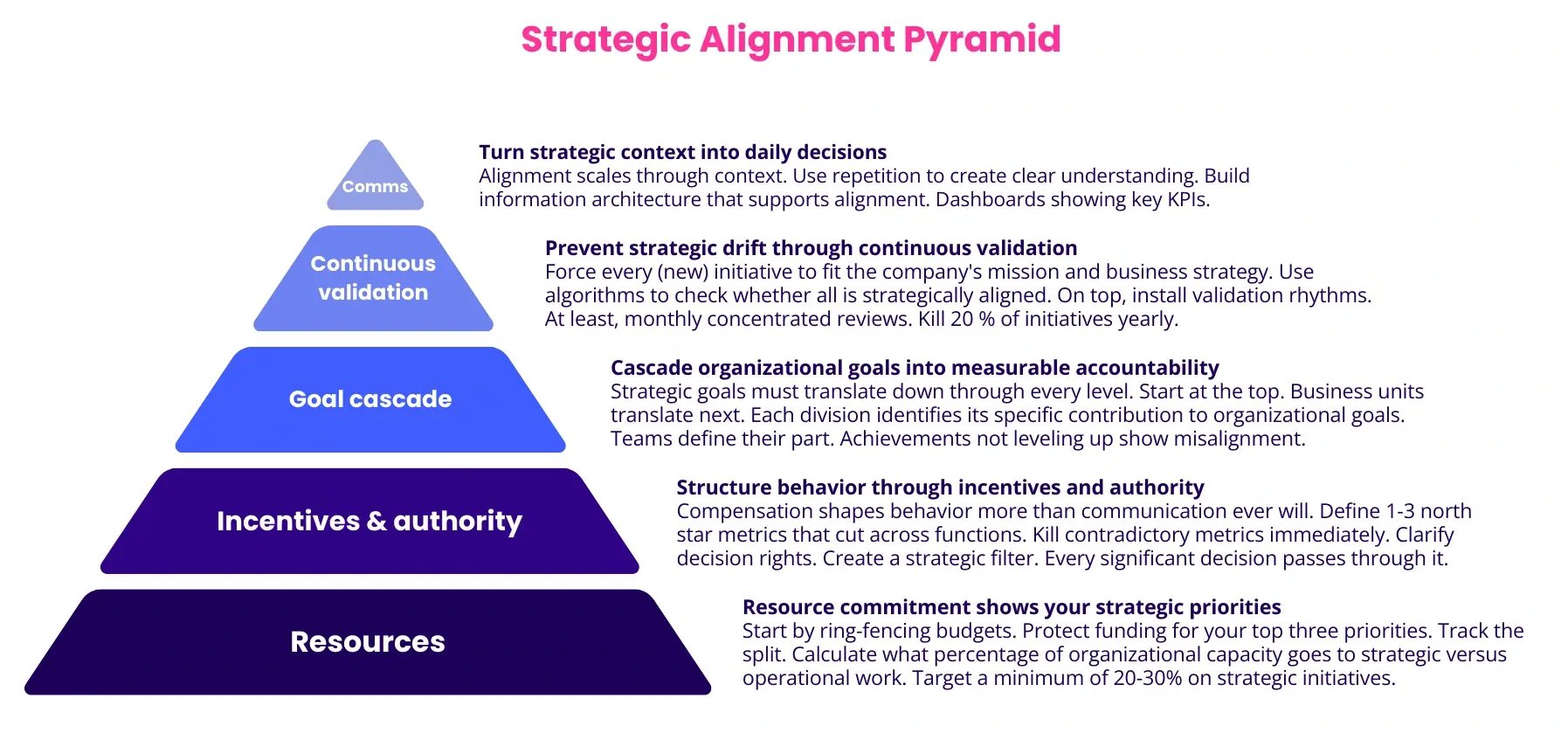
Exhibit: The framework and 5 components to create strategic alignment
Apply the contingency table (Exhibit 1) above. Companies typically run a 6-week pilot for one new framework per decision category. Measure decision quality, not process completion rate.
For every framework, you need to set measurable criteria before allocating any resources:
Weighted scoring needs agreed-upon criteria weights.
Real options need milestone definitions.
TRL stage gate reviews need maturity thresholds and performance data requirements.
Define these upfront, or the framework produces the same subjective outputs as no framework at all, and the technology portfolio management process adds overhead without improving decisions.
Frameworks only work when the underlying data is clean, connected, and current. ITONICS gives R&D portfolio managers a single platform to track technology assets and research pipelines, connect investments to business objectives, and run consistent stage gate and scoring processes across business units.
/Still%20images/Radar%20Mockups%202025/capability-views-ease-multi-criteria-decisions-2025.webp?width=2160&height=1350&name=capability-views-ease-multi-criteria-decisions-2025.webp)
Exhibit: A technology radar, highlighting the impact of Convergence of AI
The platform supports all 5 framework types. Configurable scoring matrices for technology investments and technology portfolio management. Three Horizons dashboards for budget allocation. TRL-based pipeline tracking for stage gate reviews. Strategic bucket views for portfolio-level resource allocation. Staged gate review workflows for exploratory technology and innovation management.
For federated companies, ITONICS enables each business unit to manage its own technology portfolio while leadership holds a consolidated view across assets, projects, and investment categories. Portfolio managers and organizations identify priorities and act on the same live data. No aggregation overhead. No data graveyard.
Teams that spent 3–4 weeks preparing portfolio reviews cut that to days. Stage gate decisions run on live performance data, not assembled exports. Portfolio managers focus on decision-making and efficiency, not spreadsheet management.