Environmental scanning: 5 principles to turn 500+ signals into 5 bets

/How-to-Use-Environmental-Scanning-in-Your-Innovation-Journey-fullwidth.webp?width=1920&height=450&name=How-to-Use-Environmental-Scanning-in-Your-Innovation-Journey-fullwidth.webp)
Most companies treat environmental scanning like a newsletter. They skim it, file it, and never act on it.
But when scanning shifts from trend collection to early identification of opportunities and risks, portfolio decisions become defensible and future-oriented. Organizations that miss this don't fail overnight; they drift out of relevance as competitors spot shifts faster.
Strategic planning cycles now move more slowly than the environment changes. Regulatory shifts reshape market access. Technologies mature faster than expected. New entrants redefine categories. By the time these signals reach quarterly reviews, the window to respond has closed.
/environmental-scanning-process.webp?width=966&height=544&name=environmental-scanning-process.webp)
Exhibit 1: The environmental scanning process
Effective environmental scanning converts signals into portfolio adjustments continuously, not episodically. It answers: Which projects to fund? Which capabilities to build? Which markets to enter or exit?
This article explains how to design an environmental scanning process that informs these decisions, the five principles that separate insight from noise, and the tools required to run scanning at scale.
Environmental scanning is the discipline of observing your external environment to identify opportunities and risks. By the intensity, environment scanning can be scanning, scouting, or monitoring. As it typically spans across different innovation horizons, environment scanning is also called horizon scanning.
Real environmental scanning tracks emerging technologies, regulatory changes, market shifts, and competitive moves continuously. It combines diverse external sources from industry publications to wild-card scenarios in order to inform business decisions. What strategic bet to fund? Where to allocate resources? What are future customer needs?
Environmental scanning converts external signals into insights for the strategic planning process, innovation strategies, and internal pipelines.
Environmental scanning matters most when external conditions change faster than your strategic planning process can adapt.
Economic growth patterns shift. Regulatory landscapes evolve. Technological disruptions accelerate. Without strategic foresight, organizations react to changes that competitors already exploited.
The alternative to systematic scanning is information overload. Teams drown in signals without prioritization. Or they ignore external conditions entirely until crisis forces reaction.
A proactive approach means scanning continuously, not annually. It means identifying risks before they materialize and opportunities before markets validate them.
Strategic planning without environmental scanning assumes tomorrow resembles today. That assumption destroys organizational well-being faster than any external threat.
Organizations structure scanning in two ways:
distributed responsibility, where individuals monitor their domains, or
centralized teams providing corporate foresight as a service to business units.
Both work. Neither works without a systematic process.
Your team receives 50 signals this week alone.
China announces AI export restrictions. A competitor acquires a battery startup. Customer surveys show shifting sustainability preferences. Academic papers describe manufacturing breakthroughs. Policy changes in Europe affect data handling.
Which signals matter? Which demand response? Which threatens your strategy?
Without systematic filtering, environmental scanning produces analysis paralysis, false urgency, or strategic blindness. Teams identify opportunities and risks but cannot prioritize. They react to noise or miss critical shifts buried in information overload.
These five principles convert 500+ signals into 5 strategic bets backed by evidence and business impact analysis.
Define 3-5 strategic objectives before scanning. Every signal must answer: "If this is real, which priority does it accelerate, threaten, or invalidate?"
Cannot answer in 30 seconds? Eliminate it.
Most firms scan broadly, hoping patterns emerge. Define priorities first. Scan only what affects them. This eliminates 60-70% of signals immediately while focusing on external conditions that actually inform decision-making.
One mention is not relevant information. Require three independent confirmations before treating signals as actionable.
One source = noise. Two sources = echo chamber. Three independent sources = pattern.
Three articles citing the same study are one source, not three. Look for different geographies, industries, or methodologies reaching similar conclusions. This separates valuable insights from hype cycles.
Fifty signals about AI applications are noise. One pattern, such as "AI reduces industrial labor costs 20-35% across sectors", is actionable insight.
Most teams collect 200 developments without recognizing that they represent 5 industry trends. Aggregation transforms scattered external sources into coherent insights about your business environment.
Ask: What broader shift do these signals represent?
Most environmental scanning reports describe what is changing. New customer behaviors emerge. Legal factors shift. Artificial intelligence startups launch breakthrough products.
This answers "what" but not "so what."
A 90% probable external opportunity with 2% impact does not deserve attention. A 30% probable trend with 40% revenue impact demands leadership attention immediately.
Quantify both dimensions:
High Impact + High Likelihood = Immediate strategic bet. Resource allocation now. This reshapes your business environment whether you act or not.
High Impact + Low Likelihood = Monitor closely, prepare contingencies. Build organizational readiness. If the probability increases, you move faster than your competitors.
Low Impact (regardless of likelihood) = Deprioritize. Your strategic planning process has higher-value opportunities demanding attention.
Insights without decisions are expensive research projects.
Every validated pattern from environmental scanning must answer four questions:
What changes? Which portfolio decision, product roadmap, or market entry?
What resources? Specific budget and headcount commitments?
When do we act? Decision timeline tied to market maturity?
Who decides? Clear ownership and accountability?
If you cannot answer all four, the insight is not ready for strategic decision-making. Return to validation or deprioritize.
Systematic filtering:
500+ signals → Filter priorities → 150 relevant → Validate sources → 50 confirmed → Aggregate patterns → 15 insights → Quantify impact → 8 high-impact → Resource + timing → 5 strategic bets
This is how organizations build strategic foresight while competitors organize data.
Environment scanning is not one-size-fits-all. Organizations choose different modes based on their goals, uncertainty levels, and resources. The three primary modes (scanning, scouting, and monitoring) each serve distinct roles in identifying and analyzing changes in the internal and external environment for strategic planning (Exhibit 2).
/the-3-types-of-environment-scans.webp?width=966&height=544&name=the-3-types-of-environment-scans.webp)
Exhibit 2: The 3 modes of environmental scanning
Scanning involves a wide-angle, proactive search of the environment to detect weak signals and early-stage trends. It covers diverse sources, e.g., scientific publications, market reports, expert insights, and startup ecosystems, to capture new and potentially impactful information.
Scanning is often more superficial and broader, making it essential for organizations to anticipate disruptive shifts and gain a competitive edge in adjacent horizons.
Scouting is a focused, in-depth investigation of specific technologies, trends, or market shifts.
Often called trend or technology scouting, it helps teams assess feasibility, market readiness, and potential impact.
Methods like focus groups, expert interviews, and surveys gather diverse perspectives to identify patterns and inform innovation strategies and strategic planning.
Monitoring is a structured, ongoing follow-up of established trends, technologies, or market developments. It tracks updates from trusted sources, competitor moves, and evolving customer attitudes. Monitoring enables organizations to assess the evolution of trends and adjust strategic objectives in response to market changes and emerging risks.
A balanced environmental scanning approach integrates all three modes. Scanning broadens awareness of new trends, scouting deepens understanding, and monitoring ensures continuous alignment with the external environment. Together, they help organizations stay informed, adaptable, and strategically prepared for future opportunities and threats.
A structured approach to environmental scanning helps organizations navigate external complexities and develop forward-looking strategies. Proven frameworks enable businesses to categorize, analyze, and interpret external forces, ensuring they stay competitive and innovative.
PESTLE, or STEEP, analysis (Social, Technological, Economic, Environmental, and Political) is a mutually exclusive, collectively exhaustive framework that provides a comprehensive assessment of external factors along the following categories:
Social: Demographic changes, consumer behaviors, market sentiment
Technological: Emerging technologies, artificial intelligence, digital tools
Economic: Market cycles, inflation, trade policies, stock market
Environmental: Climate change, sustainability regulations
Political: Government policies, international relations, legislative changes
This framework is invaluable in environmental scanning, allowing teams to assess all perspectives influencing decisions (Exhibit 3).
/STEEP-framework.webp?width=966&height=544&name=STEEP-framework.webp)
Exhibit 3: The STEEP framework
SWOT analysis (Strengths, Weaknesses, Opportunities, and Threats) combines in-house capabilities with external realities. Unlike STEEP, which focuses solely on external factors, SWOT helps organizations assess how external developments interact with internal strengths and vulnerabilities.
Strengths & Weaknesses (Internal): Competitive advantages, operational inefficiencies, core capabilities
Opportunities & Threats (External): Market trends, technological advancements, regulatory changes
By blending external scanning with internal reflection, SWOT ensures alignment of innovation strategies with potential opportunities and risks (Exhibit 4).
/SWOT-analysis.webp?width=966&height=460&name=SWOT-analysis.webp)
Exhibit 4: The SWOT analysis
Value chain analysis helps organizations map out their activities and identify areas of competitive advantage by evaluating both operations and external influences. It breaks down business workflows into primary (e.g., production, distribution) and support activities (e.g., HR, R&D, procurement) to analyze how external factors impact efficiency and innovation.
By applying environmental scanning to each stage of the value chain (Exhibit 5), companies can identify:
Where external pressures create bottlenecks
Where technological advancements can improve efficiency
How sustainability trends affect supply chains and production
/value-chain-analysis.webp?width=966&height=432&name=value-chain-analysis.webp)
Exhibit 5: The value chain analysis
Choosing the right framework
Each framework serves a different purpose. STEEP ensures broad external awareness. SWOT links external factors to internal realities. The value chain framework focuses on process efficiency. Using them together enables organizations to build a dynamic, future-proof strategy that adapts to external changes while leveraging internal strengths by systematically surveying and interpreting relevant data.
Environmental scanning is a systematic approach to identifying and analyzing emerging trends, weak signals, and future uncertainties (Exhibit 6). It helps organizations anticipate changes before they become disruptive, ensuring they stay ahead of market shifts and technological breakthroughs.
/environmental-scanning-team.webp?width=966&height=196&name=environmental-scanning-team.webp)
Exhibit 6: The steps of the best horizon scanning process
A well-structured environmental scanning process consists of five key steps that guide teams from exploration to strategic action.
Environmental scanning is most effective when structured with the right frameworks, processes, and analytical tools. These tools help organize information, assess relevance, and translate insights into strategic action. Effective strategic thinking is crucial in using these tools to adapt to complex and uncertain future scenarios. Below are some of the most valuable tools for an effective scanning process.
Trend and technology radars help visualize emerging trends, technologies, and market shifts based on their impact and timeframe. By categorizing signals into core, adjacent, and peripheral fields, organizations can prioritize developments and align them with their strategic goals (Exhibit 7).
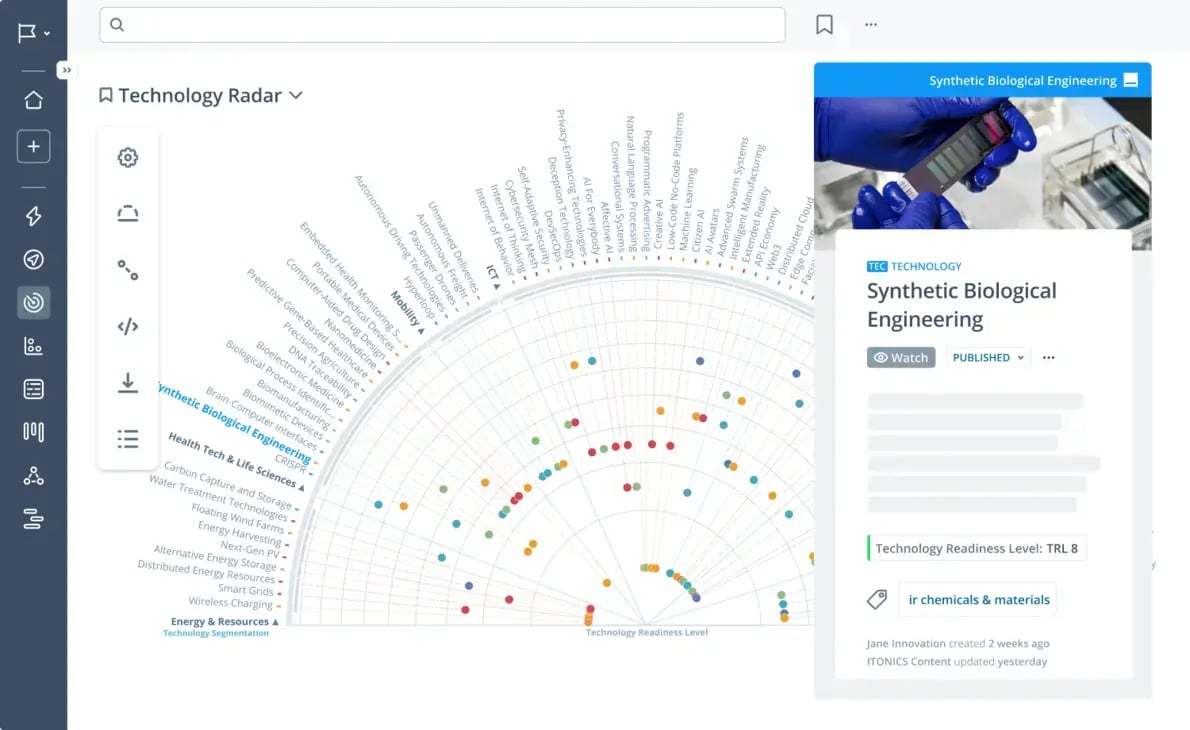
Exhibit 7: Understanding the trends' speed of change
Not all trends and signals carry the same weight. A collaborative rating system allows teams to score environmental scans based on criteria like disruptiveness, feasibility, and urgency. This crowdsourced approach removes bias and strengthens decision-making (Exhibit 8).
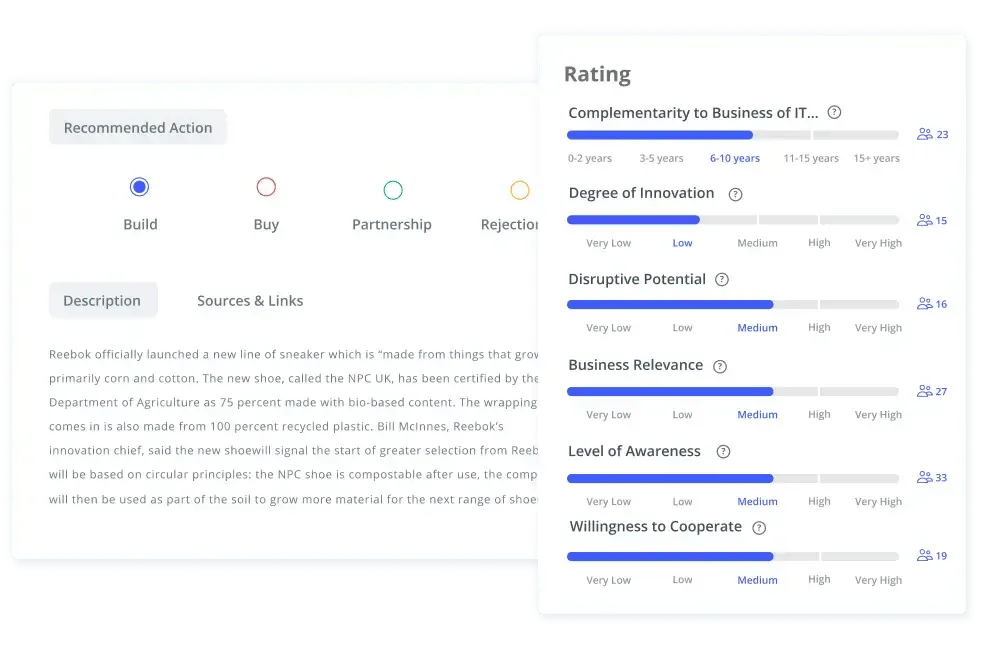
Exhibit 8: Configurable rating criteria allow for every organization's strategy and terminology
AI-driven environmental scanning can automate trend detection by scanning news, research, and patents in real-time (Exhibit 9). This reduces manual effort and ensures organizations capture weak signals early.
/Still%20images/Element%20Mockups%202025/foresight-stay-in-the-loop-2025.webp?width=2160&height=1350&name=foresight-stay-in-the-loop-2025.webp)
Exhibit 9: ITONICS Prism provides context and receives relevant trends and inspirations.
Environmental scanning should not operate in isolation. Creating customized dashboards for different business units ensures that relevant insights reach decision-makers in a format they can act on. These reports can highlight market shifts, competitive intelligence, and emerging risks, aligning foresight with business goals.
Using these tools together ensures a systematic and future-ready scanning process that translates environmental scans into actionable strategies.
The ITONICS Innovation OS provides you with the most interactive and widely used radar views. ITONICS is the only market intelligence software that seamlessly connects your environmental scanning activities with ideation and project portfolio management, enabling business leaders to gain insights and make informed decisions.
/Still%20images/Radar%20Mockups%202025/capability-views-ease-multi-criteria-decisions-2025.webp?width=2160&height=1350&name=capability-views-ease-multi-criteria-decisions-2025.webp)
Exhibit 10: A trend radar, highlighting the impact of the trend convergence of AI
Centralize scouting intel: Gathering insights from diverse external sources, such as industry publications, market reports, and customer feedback, is often inefficient. ITONICS centralizes scouting in one platform, allowing you to organize data on startups, technologies, and trends in interactive radars, making it easy to collaborate, identify patterns, and maintain a competitive edge.
Build engaging reports: Transform your environmental scanning efforts into actionable insights with customizable, data-driven reports in ITONICS. Export your results into PowerPoint, embed interactive radars on webpages, or sync your data with digital tools like Power BI or Tableau, supporting strategic decision making.
Automate opportunity discovery: Manually tracking and evaluating new opportunities takes time and resources. ITONICS automates opportunity discovery using artificial intelligence, keeping you up to date with the latest political, economic, social, technological, environmental, and legal factors. This ensures you stay ahead of industry trends, regulatory changes, and emerging risks, providing valuable insights for your innovation strategies and strategic planning process.